Review Roundup

In today’s round-up:

  • Money Monster (2016)
  • Transformers: Revenge of the Fallen – Big Screen Edition (2009)
  • Headshot (2016)


    Money Monster
    (2016)

    2017 #36
    Jodie Foster | 95 mins | streaming (HD) | 2.35:1 | USA / English | 15 / R
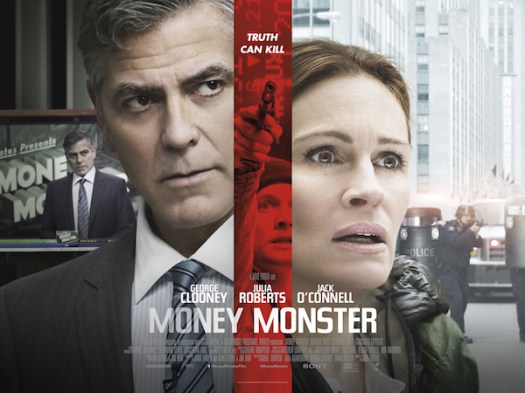
    Money Monster

    Lee Gates (George Clooney) is the host of a silly financial advice TV show, produced by his mate Patty (Julia Roberts), who one day is taken hostage live on air by a guy (Jack O’Connell) who followed one of Gates’ tips and lost big.

    Director Jodie Foster’s topical thriller takes aim at both Wall Street finagling and satirising media consumption, but has bitten off more than it can chew. Some of its points are on target, they’re just so obvious it barely matters. At least it works quite effectively as a straightforward throwback-style thriller (it’s a bit ’90s), especially on a couple of occasions where it subverts expectations — like getting the hostage taker’s pregnant wife on the phone to talk him down, only she starts laying into him; or when the charming TV host pleads with the public to raise a company’s stock price in order to save his life, but the price goes down. That said, in the grand scheme of the movie these are quite minor niceties — the overall narrative goes exactly where you’d expect it to.

    Perhaps its greatest point comes at the end: the Wall Street guy is exposed as a total villain… and everyone just goes back to their lives. We all know these people do bad shit, but because everyone’s just kind of accepted it (and the people with power to perhaps do something about it are disinclined to attempt it, for $ whatever $ reason $), they’re allowed to just keep on going. You can shout about it all you want and however you want — by making a thriller movie with big-name stars, perhaps — but the best you can hope for is a shrugged “yeah, we know, it sucks”.

    3 out of 5

    Transformers: Revenge of the Fallen
    Big Screen Edition

    (2009)

    Rewatchathon 2017 #19
    Michael Bay | 150 mins | Blu-ray | 2.40:1 + 1.78:1 | USA / English | 12A / PG-13
    Transformers: Revenge of the Fallen IMAX

    “Big Screen Edition”? This is the version of the second Transformers movie that was released theatrically on IMAX, and later made available on Blu-ray exclusively at Walmart in the US. Which is why I’m only watching it now, when I picked up a cheap second-hand copy. As well as including two big sequences at a more IMAX-esque ratio, it’s also extended — by 30 whole seconds!

    30 seconds isn’t much in the first, and even a die-hard fan would struggle to spot them because they’re frames-long additions here and there. The full details can be found here, should you care. The expanded aspect ratio of the the IMAX scenes are more noticeable. I love a changing aspect ratio, and these are effective at adding scale to the two sequences they’re used in — the midway forest battle that (spoilers!) results in Optimus’ temporary death, and part of the climactic battle. On the downside, two action scenes in a two-and-a-half-hour movie isn’t very much, really.

    As for the film itself, I don’t know if I enjoyed it more than the first time, because I gave it quite a kind review then, but I kind of liked it (enough) for what it is — a big, dumb spectacle. It’s still too long, poorly written (in part a victim of the writers’ strike), and has all kinds of awkward and uncomfortable bits. It’s not a good film, but it is a decent(-ish) movie.

    3 out of 5

    Headshot
    (2016)

    2017 #92
    Kimo Stamboel & Timo Tjahjanto | 118 mins | Blu-ray | 2.40:1 | Indonesia / Indonesian & English | 18

    Headshot

    The Raid’s Iko Uwais stars in this actioner as Ishmael, a man who washes ashore with amnesia thanks to a bullet wound in his head — so far, so Bourne. Bad people are out to get him, of course, and when they kidnap the kindly doctor who nursed him back to health (Chelsea Islan), Ishmael goes on a violent rampage to save her and uncover his past.

    Beginning with a focus on the sweet kind-of-love-story between Ishmael and the doctor, Headshot has a slightly different feel to your usual beat-em-up-athon at first, almost like an indie romance drama. That changes pretty sharpish, of course, and we’re thrown into an array of highly choreographed punch-ups. It’s pretty entertaining as that, with some inventive bits here and there, but nothing to challenge the pair of films Uwais is best known for.

    Put it this way: I enjoyed it while it was on, but I sold the Blu-ray on eBay the next day.

    3 out of 5

  • The Fugitive (1993)

    The 100 Films Guide to…

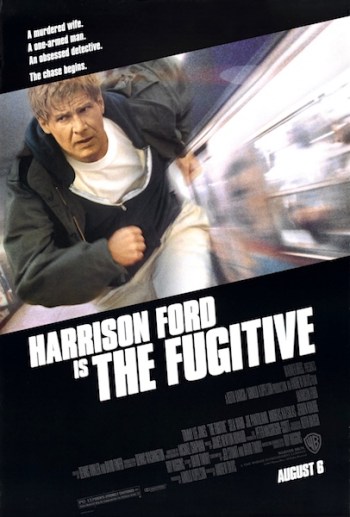
    A murdered wife.
    A one-armed man.
    An obsessed detective.
    The chase begins.

    Country: USA
    Language: English
    Runtime: 130 minutes
    BBFC: 12 (cinema, 1993) | 15 (video, 1994)
    MPAA: PG-13

    Original Release: 6th August 1993 (USA)
    UK Release: 24th September 1993
    Budget: $44 million
    Worldwide Gross: $368.9 million

    Stars
    Harrison Ford (Witness, Air Force One)
    Tommy Lee Jones (JFK, No Country for Old Men)
    Sela Ward (54, Independence Day: Resurgence)
    Joe Pantoliano (Risky Business, The Matrix)

    Director
    Andrew Davis (Under Siege, Holes)

    Screenwriters
    Jeb Stuart (Die Hard, Fire Down Below)
    David Twohy (Waterworld, Pitch Black)

    Story by
    David Twohy (G.I. Jane, Riddick)

    Based on
    The Fugitive, a TV series created by Roy Huggins.


    The Story
    After Dr. Richard Kimble’s wife is murdered, he is framed for the crime. Managing to escape custody, Kimble sets out to prove his innocence, while being pursued by a team of marshals intent on recapturing the fugitive.

    Our Hero
    Dr. Richard Kimble, respected surgeon, convicted of killing his wife, a crime he didn’t commit. When an accident on his way to prison allows me to break free, he goes on the run to clear his name.

    Our Villain
    The mysterious one-armed man who did kill Mrs Kimble. Why did he do it? Why can’t he be found?

    Best Supporting Character
    U.S. Marshal Samuel Gerard is the big dog on Kimble’s trail after he escapes custody. He just aims to bring the doctor back in, but maybe his sense of justice will ultimately prevail…

    Memorable Quote
    Kimble: “I didn’t kill my wife!”
    Gerard: “I don’t care!”

    Memorable Scene
    Kimble runs through drainage tunnels, pursued by Gerard, when he suddenly reaches the outlet — a massive drop over a dam. Gerard approaches, gun raised, his man cornered, Kimble left with no escape route — except to jump…

    Truly Special Effect
    The famous bus/train crash was done for real with a real train and a real bus on a real track, because that was actually cheaper than doing it with miniatures! The scale of the setup meant it could only be done once, so it was shot with multiple cameras — several of which were destroyed and their footage rendered unusable. Conversely, a couple of others were caught up in the crash but continued rolling. Although it may’ve been driven by cost-saving, the fact it was done for real makes it all the more effective, one of cinema’s iconic stunts.

    Letting the Side Down
    Despite years in development that created literally dozens of drafts, filming began without a completed screenplay — and sometimes it shows. Just don’t try to think through the logic of the villains’ nefarious scheme, nor wonder why the supposedly super-smart marshals never twig that maybe Kimble is investigating his wife’s murder.

    Making of
    The sequence in the St Patrick’s Day parade was conceived by director Andrew Davis late in the day — so late that it wasn’t part of the shooting schedule and there wasn’t time to plan it. On the day, the cast and crew made an early start so they could complete all of the schedule material before heading over to the parade. Shooting with a Steadicam, the director, cast, and cameraman improvised the action and shot it more-or-less in real-time.

    Next time…
    Five years later, Tommy Lee Jones reprised his Oscar-winning supporting performance as the lead in U.S. Marshals. It wasn’t as successful. Personally, I didn’t realise it was a sequel for years and have never bothered to see it.

    Awards
    1 Oscar (Supporting Actor (Tommy Lee Jones))
    6 Oscar nominations (Picture, Cinematography, Sound, Editing, Sound Effects Editing, Score)
    1 BAFTA (Sound)
    3 BAFTA nominations (Supporting Actor (Tommy Lee Jones), Editing, Special Effects)
    2 MTV Movie Awards (On-Screen Duo (Harrison Ford & Tommy Lee Jones), Action Sequence (train wreck))
    2 MTV Movie Award nominations (Movie, Male Performance (Harrison Ford))

    Verdict

    It must be at least 20 years since I last watched The Fugitive (it turns 25 next year), and it’s an interesting experience to revisit it today. Once upon a time this was a blockbuster; nowadays it’d be a mid-budget thriller… and probably wouldn’t get made because Hollywood doesn’t do those anymore. It’s a pleasingly ’90s manhunt movie — they can’t just track his mobile phone or zoom in with a satellite or what have you — but, aside from the nostalgia kick, the quality is a bit wobbly at times. It has strong performances, a breakneck pace (at least early on), and some stunning sequences, but the behind-the-scenes story of many, many drafts and a rushed schedule occasionally leave their mark on the screen, mainly in that the film’s whodunnit mystery isn’t all that engrossing or surprising. Maybe I’m just being nitpicky — it’s still a quality thriller. (The Blu-ray is a real dog, though. Could definitely do with a remaster.)

    Arrival (2016)

    2016 #179
    Denis Villeneuve | 116 mins | cinema | 2.35:1 | USA / English & Heptapod | 12A / PG-13

    This review sort of contains spoilers.

    Arrival

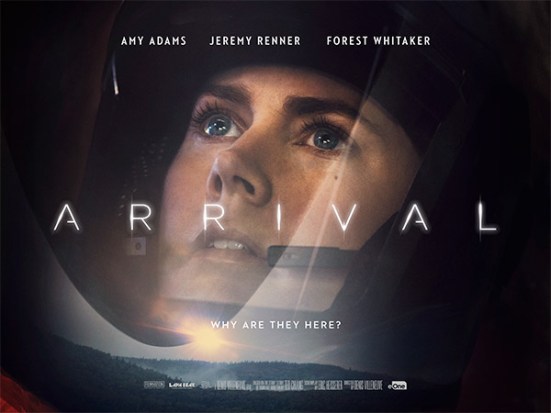
    An intelligent sci-fi movie released by a major studio?* What madness is this? A good kind of madness, because Arrival is one of the best — and, importantly, most humane — science fiction movies for years.

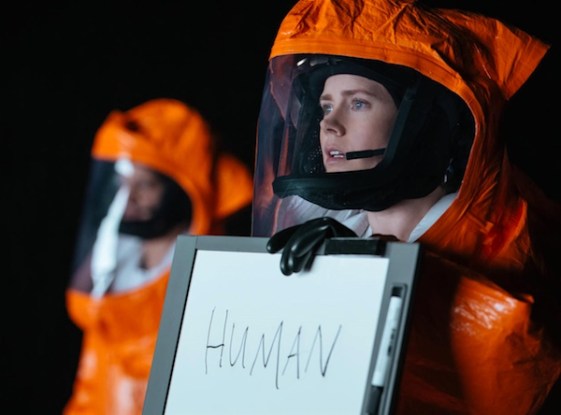
    For one thing, it takes an unusual, but completely pragmatic, approach to alien first contact: how would we communicate with them? Most sci-fi movies gloss over this — either we don’t because they’re just killing us, or the aliens are sufficiently advanced that they already speak our language. Here, however, the focus is on Amy Adams’ linguist. The problem is approached as it would be in real life — the production sought advice from real linguists, and the only tech used is stuff we have access to today. Far removed from the usual glossy high-tech sheen of most sci-fi movies, the most important pieces of kit here are things like whiteboards and scissor lifts. It’s very mundane, and that’s the point — it’s grounded in a world we know. Apart from the aliens, of course. But while the process Adams’ character undertakes may be factual, as she begins to work on the aliens’ language its unique properties begin to have a surprising effect on her…

    At the risk of sounding like one of those people who boasts about guessing a twist, I did develop a fair idea of where the film was going. (Not completely — at one point (massive pseudo-spoiler here) I thought it might be that Jeremy Renner’s character was the future-father of Adams’ past-child, in some wibbly-wobbly timey-wimey all-things-happen-at-once way that I was curious how they’d explain.) But whether you work it out in advance or not doesn’t matter, because Arrival is not a middling M. Night Shyamalan film, dependent on its twist. That it’s a revelation to the characters is enough. The emotional journey they go on is what’s more significant, and Arrival is a powerfully emotional movie. This is all carried by Amy Adams in a subtle, understated performance; one that quite possibly deserved to win the Oscar but, bafflingly, wasn’t even nominated.

    We're only human after all

    Despite the high-concept setup, Arrival is really a character-driven emotional drama that just happens to be about first contact with aliens. Because of that, it’s not a Sci-Fi Movie in the sense that it needs to explain why the aliens are here — despite what some commenters on the (now defunct) IMDb message boards (and similar places) seemed to think. If you’ve seen the film and are thinking “but it does explain why they’re here?”, you’re right, but apparently we need to know more specifics, otherwise the film hasn’t achieved its “stated objectives”. Yes, I agree, people who say that are talking utter bollocks.

    Part of what makes Arrival so good is the way it does work on multiple levels. Despite what I just said, you can enjoy it as a pure science fiction movie, about both the logistics of first contact and some big theoretical ideas that I won’t mention because of spoilers. A lot of effort was put into the concepts underpinning the film, both the scientific theories and the functions of linguistics (the Heptapod language was developed for real; the software used to translate it is a functioning program), so it’s got a dedication to detail that rewards those interested in that aspect. It’s also, again as I said, an emotional drama; effectively a dramatisation of Tennyson’s famous adage “better to have loved and lost than never to have loved at all” through a unique lens. The author of the original story, Ted Chiang, started from more or less that place and then found a sci-fi concept he could use to explore it.

    I think I'm turning Heptapod, I really think so

    In addition to both of those, it’s also got a timely message about the state of humanity and global politics. This factor is even more pertinent now than when the film came out almost a year ago, mainly thanks to Trump. Just look at the recent willy-waggling between the US’s President You’ve-Been-Tango’d and North Korea’s Supreme Leader It’s-My-Party-And-I’ll-Blow-You-All-Up-If-I-Want-To — it’s the very stupidity that Arrival is warning against. In the film, some soldiers who watch too much nutty television and swivel-eyed internet rants almost fuck things up, while level-headed scientists and experts save the day. If only we could take some of the morons in power these days, and the even-worse people who voted for them, and strap them to a chair in front of this movie until they got the point…

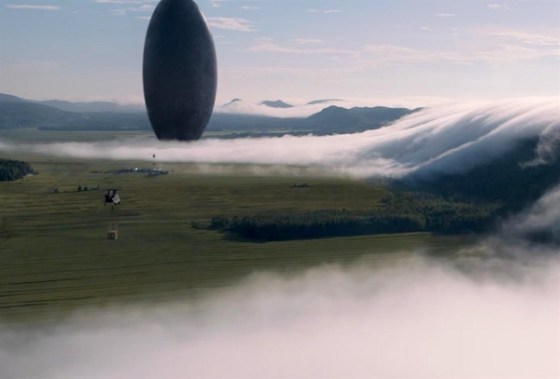
    While its greatest power lies in these analogies and emotional beats, it’s also a beautifully made film. Bradford Young’s photography is a little on the gloomy side at times, but it creates a clear mood — director Denis Villeneuve refers to it as “dirty sci-fi”, by which he means “the feeling that this was happening on a bad Tuesday morning”. It’s a pretty accurate description. That doesn’t preclude the film from generating some fabulous imagery, however. The sequence when they first arrive at the spacecraft by helicopter — which follows the choppers over amassed civilians queuing to see the ship, then transitions to a long oner that flies over the makeshift army base towards the giant, unusual alien craft, as clouds roll in over the hills, before continuing on down to the landing site — is majestic, and indicative of the entire film’s attitude to pace. It’s measured, not slow, and all the more effective and awe-inspiring because of it. That’s emphasised by Jóhann Jóhannsson’s atmospheric score, which almost lurks in the background, his work supplemented by Max Richter’s On the Nature of Daylight during the emotional bookends. (The latter is such an important piece to the soundtrack’s effect that Jóhannsson’s work was deemed ineligible for nomination at the Oscars, which is a shame but I can kind of see their point.)

    Majestic

    Arrival is a multifaceted film, which works well as both a sci-fi mystery and a reflection of current sociopolitical quandaries, but has its greatest power in the very human story that lies at its heart. The mystery and the twist are almost a distraction from this, actually — I watched the film again last night before finishing this review and enjoyed it even more than the first time. That it’s a movie best appreciated when you can see it in totality, watching it with an awareness of how it will end from when it begins, is only appropriate.

    5 out of 5

    Arrival is available on Amazon Prime Video UK from today.

    It placed 6th on my list of The 20 Best Films I Saw For the First Time in 2016, which can be read in full here, and also featured on my list of favourite movies from the past decade, which you can read about here.

    * Only in the US, mind, which presumably means they just bought it after someone else made it, so let’s not give them too much credit. ^

    Shin Godzilla (2016)

    aka Shin Gojira / Godzilla Resurgence

    2017 #108
    Hideaki Anno | 120 mins | Blu-ray | 2.35:1 | Japan / Japanese, English & German | 12A

    Shin Godzilla

    To the best of my knowledge, the Godzilla movies have never been particularly well treated in the UK. With the obvious exceptions of the two US studio movies and the revered 1954 original (which, similar to its inclusion in the Criterion Collection in the US, has been released by the BFI over here), I think the only Godzilla movie to make it to UK DVD is King Kong vs. Godzilla, and that’s clearly thanks to the Kong connection. Contrast that with the US, or Australia, or Germany, or I expect others, where numerous individual and box set releases exist, not only on DVD but also Blu-ray. There were some put out on VHS back in the ’90s (I owned one, though I can’t remember which), but other than that… Well, maybe we’ll be lucky and the tide will now change, because the most recent Japanese Godzilla movie — the first produced by the monster’s homeland in over a decade — is getting a one-night release in UK cinemas this evening. It’s well worth checking out.

    Firstly, don’t worry about it being the 29th Japanese Godzilla film, because it’s also the first full reboot in the series’ 62-year history (previous reboots in 1984 and 1999 still took the ’54 original as canon). The movie opens with some kind of natural disaster taking place in Tokyo Bay, to which the Japanese government struggle to formulate a response. But it quickly becomes clear the event is actually caused by a giant creature, which then moves on to land, leaving a trail of destruction in its wake. Ambitious government secretary Rando Yaguchi (Hiroki Hasegawa) is put in charge of a special task force to research the creature. Soon, the Americans are muscling in, contributing a dossier they’d previously covered up, which gives the creature its name: Dave.

    Alright Dave?

    No, it’s Godzilla, obv.

    Written and directed by Hideaki Anno of Neon Genesis Evangelion fame (and fans of that franchise will recognise many music cues throughout the film), Shin Godzilla is not just a film about a giant beastie stomping on things. Most obviously, it pitches itself as a kind of political thriller, as an intrepid gang of semi-outsiders battle establishment red tape to get anything done. In this respect it’s something of a satire, though not an overtly comedic one. It also seems to be taking on Japanese society, with the in-built deference to age or rank being an obstacle to problem-solving when it’s the young who have the outside-the-box ideas to tackle such an unforeseen occurrence. There’s also the problem of the Americans sticking their oar in, being both a help and a hindrance. Clearly the Japanese feel broadly the same way towards the U.S. of A. as do… well, all the rest of us.

    Anno takes a montage-driven, almost portmanteau approach to the storytelling, flitting about to different locations, organisations, departments, and characters as they come into play. This lends a veracity to the “as if it happened for real” feel of the film: rather than take the usual movie route of having a handful of characters represent what would be the roles of many people in real life, Anno just throws dozens of people at us — the film has 328 credited actors, in fact. It means there’s something of an information overload when watching it as a non-Japanese-speaker: as well as the subtitled dialogue, there are constant surtitles describing locations, names, job titles, types of tech being deployed, etc, etc. In the end I wound up having to ignore them, which is a shame because I think there was some worthwhile stuff slipped in there (possibly including more satire about people’s promotions throughout the film).

    We can defeat Godzilla with maths!

    I’d be amazed if anyone can follow both, to be honest, because the dialogue flies at a rate of knots. Anno reportedly instructed the actors to speak faster than normal, aiming for their performances to resemble how actual politicians and bureaucrats speak. Apparently he cited The Social Network as the kind of vibe he was after, though a more appropriate comparison might be that other famous work from the same screenwriter, The West Wing. Either way, I think he achieved his goal, further contributing to the film’s “real” feel and the (geo)political thriller atmosphere — even if it’s a nightmare to follow in subtitled form.

    Letting the side down, sadly, is actress Satomi Ishihara, who plays an American diplomat of Japanese descent. Apparently she found out she was playing an American after being cast, and was shocked to see how much English dialogue she had to speak. It shows. There’s nothing wrong with her performance on the whole, but casting a Japanese actress as a supposed American is a really obvious mistake to English-speaking ears. All of the English speech in the film is subtitled, which isn’t necessary for American generals and the like, but for her… well, I didn’t always realise she was no longer speaking Japanese. Poor lass, it’s not her fault, but it does take you out of the film occasionally.

    On another level from the politics, Shin Godzilla is also about wider issues of humanity and the planet. The ’54 film was famously an analogy about nuclear weapons, and Anno updates that theme to be about nuclear waste and its effect on the environment, inevitably calling to mind the 2011 earthquake and tsunami that led to the Fukushima power plant disaster. This is less front-and-centre than the thriller stuff — the actions of the humans are what drives the film’s plot, whereas the nuclear/environmental stuff is more thematic subtext. Put another way, I wouldn’t say the film gets too bogged down by this — it’s still about a giant monster blowing shit up with his laser breath.

    Either that or the purple goo he ate earlier really disagreed with him

    Said giant monster is realised in CGI, some of it derived from motion capture, presumably as a tribute and/or reference to the old man-in-a-suit way of creating him. This is not a Hollywood budgeted movie and consequently anyone after slavishly photo-real CGI will be disappointed, but that’s not really the point. It still creates mightily effective imagery, and for every shot that’s less than ideal there’s another that gives the titular creature impressive heft and scale. He’s also the largest Godzilla there’s ever been, incidentally.

    If you come to Shin Godzilla expecting to see a skyscraper-sized monster destroy stuff and be shot at and whatnot for two hours straight, you’re going to leave dissatisfied. There are scenes of that, to be sure, but it’s not the whole movie. If a thriller about a bunch of tech guys and gals fighting bureaucracy while analysing data that will eventually lead to a way to effectively shoot (and whatnot) the monster, this is the film for you. It was for me. I have to mark it down for some of the niggles I’ve mentioned, but I enjoyed it immensely. (You can make you own size-of-Godzilla pun there.)

    4 out of 5

    Shin Godzilla is in UK cinemas tonight only. For a list of screenings, visit shingodzillamovie.co.uk.

    Free Fire (2016)

    2017 #105
    Ben Wheatley | 91 mins | Blu-ray | 2.39:1 | UK & France / English | 15 / R

    Free Fire

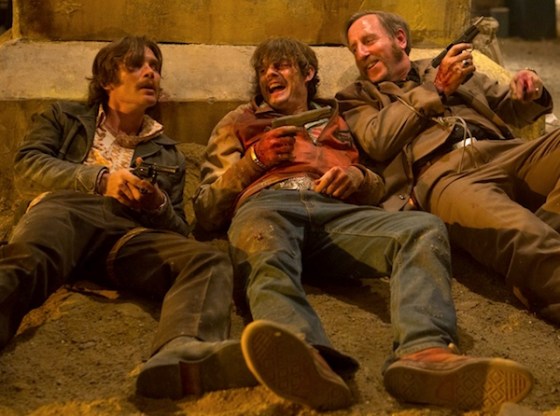
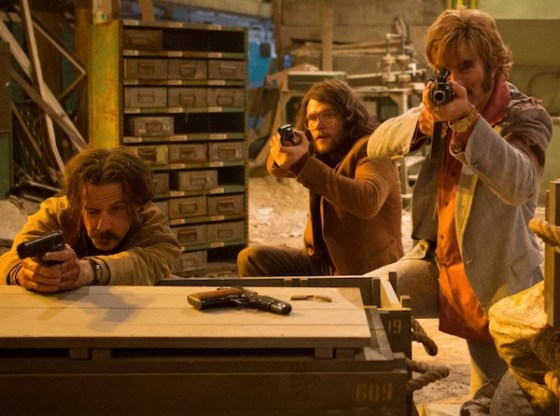
    The latest film from director Ben Wheatley (he of Kill List, Sightseers, A Field in England, High-Rise, and the rest) is by far his most accessible movie yet. Set in Boston in the ’70s, it sees two IRA fellas (Cillian Murphy and Michael Smiley) arranging through a pair of black market brokers (Brie Larson and Armie Hammer) to purchase guns from some arms dealers (Sharlto Copley and Babou Ceesay), with each side bringing along a couple of chaps to carry boxes (Sam Riley, Jack Reynor, Noah Taylor, and Enzo Cilenti). But things go sideways when a couple of those minor participants have a falling out, leading to a protracted shoot-out. “Protracted” as in “two-thirds of the movie”.

    If an hour-long gunfight doesn’t sound like your cup of tea, maybe Free Fire isn’t the movie for you. Conversely, this isn’t a Jason Statham flick: instead of an hour of highly-choreographed gunplay, most of the participants get injured early on and end up seeking cover around the rubble-strewn floor of an abandoned factory, occasionally taking potshots at each other. Most action movies are defined by their characters sprinting about — in this one, they crawl. The screenplay was partly inspired by FBI ballistics reports from real gunfights, so there’s actually some veracity to how things go down.

    Guys with guns

    So, on the one hand, it has a definite grit and reality. Bullet wounds actually hurt, leaving characters dragging themselves around in the dirt. Although there are occasional bullet-flying free-for-alls, just as often every shot counts. Similarly, their guns run out of bullets — frequently. Sometimes, permanently. On the other hand, however, it’s a bit like something Quentin Tarantino or Guy Ritchie might once have made, although thankfully without slavishly duplicating either of their overfamiliar styles. Without being an out-and-out comedy, it’s often pretty funny, thanks to the ludicrous situation and outrageous characters — all while remaining just this side of plausible, that is.

    Unfortunately, the thin premise means it lags a bit in the middle. It feels in need of a clearer overall purpose and one or two more ideas. A better sense of space would help, too. We know who’s shooting at who, but for a long time we don’t really know where they all are in relation to each other. That’s not a deliberate choice to evoke the confusion of a gunfight or something — the characters all seem to know where they need to point their weapons. It’s a lack of filmmaking clarity, exposed in the Blu-ray’s behind-the-scenes featurette when it’s revealed how meticulously and thoroughly the whole thing was mapped out — it’s a real shame that doesn’t translate on screen.

    More guys with guns

    These are flaws that hold Free Fire back from perfection, mind. It’s still a fitfully funny, sporadically tense, gleefully violent hour-long shoot-out. And events occur in real-time, too, which I always have a soft spot for. When all is eventually said and done, I doubt critics and scholars are going to hold it up as a key film of Wheatley’s career, but I’d wager it’s the one most people will get the most enjoyment from.

    4 out of 5

    Free Fire is released on DVD and Blu-ray in the UK today.

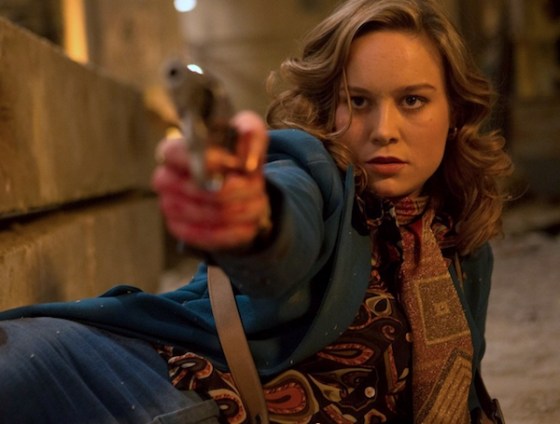
    She isn’t pictured in the review, so here’s a bonus one of Brie Larson being badass:

    Badass Brie

    Ocean’s Eleven (2001)

    The 100 Films Guide to…

    3 casinos.
    11 guys.
    150 million bucks.
    Ready to win big?

    Country: USA
    Language: English
    Runtime: 117 minutes
    BBFC: 12
    MPAA: PG-13

    Original Release: 7th December 2001 (USA & Canada)
    UK Release: 15th February 2002
    Budget: $85 million
    Worldwide Gross: $450.7 million

    Stars
    George Clooney (Batman & Robin, Michael Clayton)
    Brad Pitt (Fight Club, World War Z)
    Matt Damon (The Talented Mr. Ripley, Jason Bourne)
    Andy Garcia (The Godfather: Part III, Jennifer 8)
    Julia Roberts (Pretty Woman, Closer)

    Director
    Steven Soderbergh (Traffic, Magic Mike)

    Screenwriter
    Ted Griffin (Ravenous, Matchstick Men)

    Based on
    Ocean’s Eleven, a 1960 film starring the Rat Pack.


    The Story
    A gang of crooks plot the biggest heist in Las Vegas history: robbing three casinos at once.

    Our Heroes
    Danny Ocean, a charming con man fresh out of prison, planning his biggest job yet — well, anyone’s biggest job yet. To do it he’ll need ten more men, including right-hand-man Rusty, newbie Linus, explosives expert Basher, inside man Frank, old pro Saul, tech head Livingston, gymnast Yen, general double-act support Virgil and Turk, and all of it bankrolled by Reuben.

    Our Villains
    Smug Las Vegas big shot Terry Benedict, owner of all three casinos the gang are targeting. Also: he’s shagging Ocean’s ex-wife.

    Best Supporting Character
    The aforementioned former Mrs Ocean, Tess, who’s shacked up with Benedict in part because he’s a more honest man than her ex. Or so she thinks…

    Memorable Quote
    Danny: “Because the house always wins. Play long enough, you never change the stakes, the house takes you. Unless, when that perfect hand comes along, you bet big, and then you take the house.”
    Rusty: “Been practicing that speech, haven’t you?”
    Danny: “Little bit. Did I rush it? Felt like I rushed it.”
    Rusty: “No, it was good, I liked it.”

    Memorable Scene
    As with any good entry in this genre, the heist itself — which is less “a scene” and more “the third act”, of course — is the highlight of the movie.

    Letting the Side Down
    Don Cheadle’s cockney accent is less Guy Ritchie, more Dick Van Dyke. But then, as we know, that’s how cockneys are meant to sound anyway.

    Next time…
    A pair of less well regarded sequels followed in 2004 and 2007 (ten years ago! Time flies), while an all-female spin-off is out next summer.

    Verdict

    As slick and stylish now as it was a decade-and-a-half ago, Steven Soderbergh’s remake of the Rat Pack comedy-thriller is that rarest of all things in moviedom: a remake that’s better than the original. Apparently Soderbergh said that he saw this as an opportunity to give audiences “pleasure from beginning to end… a movie that you just surrender to, without embarrassment and without regret.” Well, he nailed it. It’s a film packed with likeable characters, memorable lines, snazzy direction, cool music cues, and the raison d’être of a heist movie: a final act that pulls the wool over the audience’s eyes. It’s pretty much perfect entertainment.

    Nocturnal Animals (2016)

    2017 #55
    Tom Ford | 117 mins | streaming (HD) | 2.35:1 | USA / English | 15 / R

    Nocturnal Animals

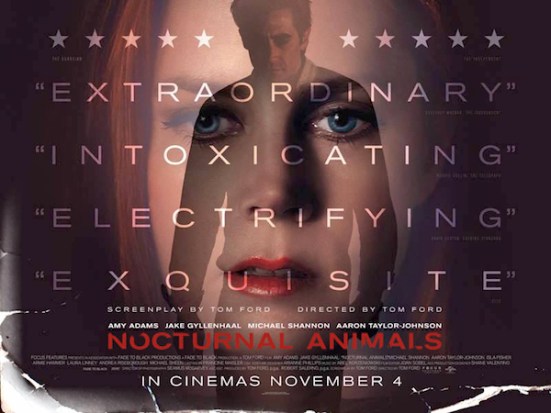
    In her second Oscar-worthy role of 2016 that didn’t even get nominated, Amy Adams plays rich art gallery owner Susan, who out of the blue receives a package from her ex-lover Edward (Jake Gyllenhaal) containing an advance copy of his debut novel, which he’s dedicated to her. With the weekend alone to herself, Susan reads the novel — in which the family of Tony (Gyllenhaal again), wife Laura (Isla Fisher) and their daughter India (Ellie Bamber) are terrorised by a gang led by Ray (Aaron Taylor-Johnson), before copper Bobby Andes (Michael Shannon) helps them seek justice/revenge — in the process reliving memories of her tumultuous former relationship.

    At first the plot of Edward’s novel seems more interesting than the framing narrative that contains it — after all, you’re pitching a tense thriller against a woman reading a book while she remembers falling for a guy. But as it becomes clear that the novel is just a pulpy thriller, and as the flashbacks to Susan and Edward’s history reveal a mystery of their own, the balance begins to shift. The question is not really “why is the book dedicated to Susan”, because she clearly knows that from very early on. Instead, the quandary for the viewer is: what exactly did she do that merits this lurid tale being her… what? Punishment, maybe?

    Although the story is black as night, it’s a beautifully constructed film — as you might expect from someone with a background in design like writer-director Tom Ford. It’s not just the visually appealing work of cinematographer Seamus McGarvey or the film’s various designers that is so striking, though. The three narrative strands are expertly handled. There’s never any doubt about which is which, even when Ford at times intercuts between all three in one sequence, but he hasn’t resorted to simplistic tricks (like vastly different colour grading, say) to pull that off. It’s subtler, and more effective, than that.

    Shocking reading

    To guide the characters through his sombre narratives, Ford has put together a helluva cast. Of course there’s the primaries — Adams, Gyllenhaal, Shannon, and Taylor-Johnson are all superb — but turning up for just a scene or two are the likes of Isla Fisher, Armie Hammer, Laura Linney, Michael Sheen, Andrea Riseborough, and Jena Malone, any of whom could be leads in their own right. It does make it slightly disconcerting when you assume someone that recognisable will turn up again later and then they don’t, but I suppose that just sits with the generally unsettling tone of the film.

    Taking its artfulness to heart, some people have dismissed the film as being no more than an artily-dressed-up simplistic revenge story. Personally, I think the point of the story-within-the-story is to be simplistic. I don’t think Edward is meant to be a very good writer, and that’s why he’s produced a very pulpy novel. What matters is the effect this bluntly allegorical piece of trash storytelling has on the person it’s primarily aimed at — i.e. Susan. And there’s still ambiguity for the audience in just what Susan is interpreting from the novel. I mean, Edward is Tony, that’s obvious; and maybe he’s Bobby, too; and Susan must be Laura… but who is Ray? Is Ray just the concept of what happened between them made flesh? Or maybe Susan is actually Ray? Or perhaps Edward is Ray too? Or perhaps it’s something else entirely, I don’t know.

    Who's who?

    Equally ambiguous is the ending to the present-day framing narrative, but I’m not sure I have much to add to that other than what you can easily find online, so no spoilers here. Other than to say I think the main plot points are all solved (the story-within-the-story wraps up, and how it mirrors the characters’ history has been revealed), but there are some open-ended points that the viewer can choose how to read as they see fit.

    Nocturnal Animals has been a pretty divisive film. Lots of people compare it to last year’s even more controversial The Neon Demon, in one way or another — I’ve seen both “at least it’s better than…” and “it would make a good double bill with…” Well, I really ought to get round to that, then, because I admired Nocturnal Animals very much. It’s a beautiful movie about ugly deeds and ugly thoughts.

    5 out of 5

    Nocturnal Animals is available on Sky Cinema from today.

    Contact (1997)

    2017 #79
    Robert Zemeckis | 144 mins | streaming (HD) | 2.35:1 | USA / English | PG / PG

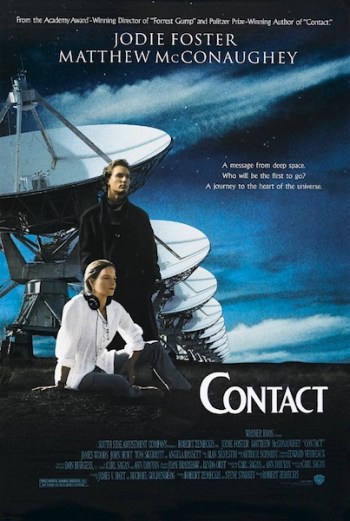
    Contact

    Contact is 20 years old today. I don’t remember it going down particularly well on its release (Rotten Tomatoes backs me up on that: it scores just 62%) and I’ve largely paid it no heed, other than it still comes up now and then. I can’t remember what gave me a sudden urge to watch it last month, but doing so was a bit of a “where have you been all my life?!” experience.

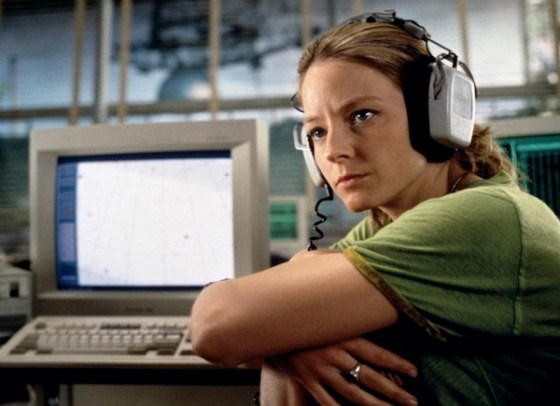
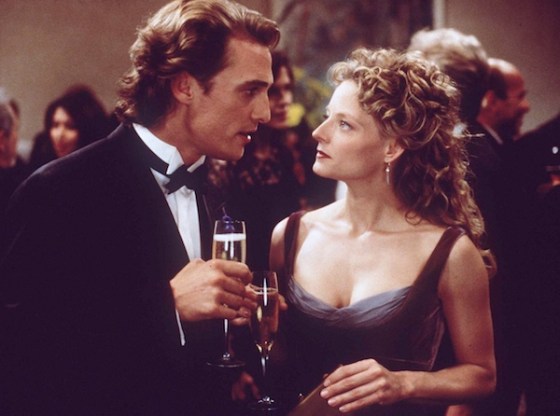
    It stars Jodie Foster as scientist Dr Ellie Arroway, who’s obsessed with scanning radio signals from space for signs of alien life, much to the ridicule of her serious colleagues. While working at an observatory in Puerto Rico, Ellie becomes romantically entangled with Palmer Joss (Matthew McConaughey), a Christian philosopher, in spite of their differing views. Their affair is cut short when Ellie’s government funding is cancelled and she leaves to seek independent financial backing, eventually finding it from reclusive billionaire S.R. Hadden (John Hurt). Beginning research anew in New Mexico, her persistence eventually pays off when her team detect a repeating signal, and suddenly her kooky little project is of global concern.

    '90s beats

    Adapted from a novel by scientist Carl Sagan (of Cosmos fame), Contact is notable for its very grounded and plausible approach to the science of possible first contact. It’s like the anti Independence Day: rather than giant technologically-advanced spaceships turning up out of nowhere and threatening us, we receive a signal with mathematical properties (maths being a universal language) and consider opening lines of communication. Of course, it gets more speculative from there, but that’s unavoidable if you’re telling a story where we hear from aliens. Regardless, all of the science, as well as the political developments that ensue from it, feels very truthful. I’m sure there must be some of the ol’ corner-cutting Movie Science involved somewhere, but that’s usually necessary for the sake of telling a reasonably paced story. Despite that, some viewers find its methodicalness to be “slow” or “boring”. Conversely, that’s part of why I liked it so much: it doesn’t wave its hands around to obscure the discovery part just so it can get to the Cool Stuff — it is the discovery part.

    Concurrent to the “how this might actually go down” plot, Contact seeks to explore the axis of faith and science, putting them in juxtaposition to show that, for all their obvious differences, there are also psychological similarities. That’s the purpose of McConaughey’s character, really: a very religious, but amenable, figure for Foster’s very scientific outlook to bump up against. Their romantic storyline works in favour of keeping this discussion balanced: you don’t end up projecting one as the hero and the other as the villain when they’re both halves of the central relationship. It results in some thoughtful perspectives on where the line between science and religion blurs.

    “One day, I'm going to win an Oscar...”

    Foster gives an impassioned performance as the dedicated Ellie, who’s so committed to both her cause and the truth that she doesn’t compromise, even when it might get her ahead. Her tunnel-vision focus on science means she can come across as a bit of a cold fish, which makes sense given the character’s backstory, but for some viewers that seems to render her too distant to embrace as the heroine. It goes as far as some saying the film’s ending has no heart because Ellie is so cold. Conversely, I think that’s almost why it works. She’s a person who has shut herself down because of her loss, but she still has some small flame of hope that keeps her searching. What happens at the end fully taps into her emotions, fanning that flame. Surely there’s something powerful in that?

    Among the rest of the cast, McConaughey shows he had skills long before the McConnaissance, William Fichtner does a lot with a small supporting role, and Tom Skerritt plays a total dick in a way that feels like a real-life total dick rather than a movie version. By way of contrast, James Woods’ character is the other way round: he’s a good actor, but was perhaps railroaded into being a little heavy-handed as a somewhat-villainous National Security honcho. That said, with the current US administration’s attitude to science, maybe he’s sickeningly plausible today.

    Pod person

    Although not an ID4-style extravaganza, Contact features a great use of special effects — or, rather, that’s why they’re so great: they don’t exist just so they exist; they exist because the story needs them, and they’re more powerful and beautiful for it. This is true not only of some final-act trippiness, but also scenery shots of the giant Machine that gets built, which are made more real by their understatedness. Can you imagine this film now, as it would be made by most directors? There’d be constant helicopter-style shots of the thing. (The exception, of course, would be someone like Denis Villeneuve, as conclusively proven in Arrival.)

    I can understand why Contact didn’t catch on with audiences back in ’97. This was the year after Independence Day became the second highest grossing movie of all time, which shows what interested the minds (or, at least, adrenal glands) of the wider viewership. Nonetheless, I don’t understand why it didn’t find stronger recognition among those who appreciate thoughtful, realistic science fiction. It hasn’t really dated in the past two decades (aside from the chunky desktop computers everyone’s using, anyway), and its debates and messages continue to resonate as a reflection of the society we live in, so maybe there’s time yet for its reappraisal.

    5 out of 5

    Contact placed 11th on my list of The 17 Best Films I Saw For the First Time in 2017, which can be read in full here.

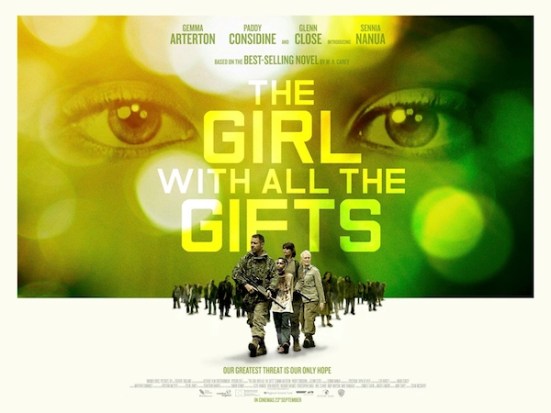
    The Girl with All the Gifts (2016)

    2017 #28
    Colm McCarthy | 111 mins | streaming (HD) | 2.00:1 | UK & USA / English | 15 / R

    The Girl with All the Gifts

    When George A. Romero invented the zombie subgenre in the ’60s, he was more concerned with allegory than blood ‘n’ guts. The latter has come to dominate, as it has with so much of the broader horror genre, but from time to time there’s still room for thoughtful contributions more befitting Romero’s legacy. This low-budget British film, adapted from a young adult novel, is one such effort.

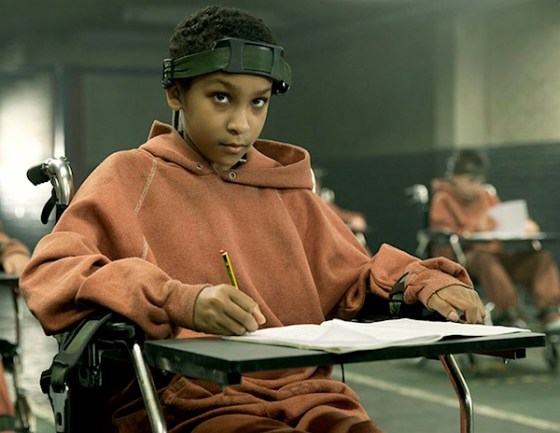
    As the film opens we’re introduced to Melanie (Sennia Nanua), a young girl who sits in a concrete bedroom treasuring her photo of a kitten. Then soldiers enter and, at gunpoint, strap her to a chair, before wheeling her to a classroom with similarly restrained children. It’s just the beginning of a fantastic first act, full of atmosphere and intrigue as this world is rolled out before us. The less you know the better, though the chances of going in so cold that it’s a total mystery are sadly slim. If you’re intrigued enough already to check out the movie on my recommendation alone, stop reading now! Go watch it! If not…

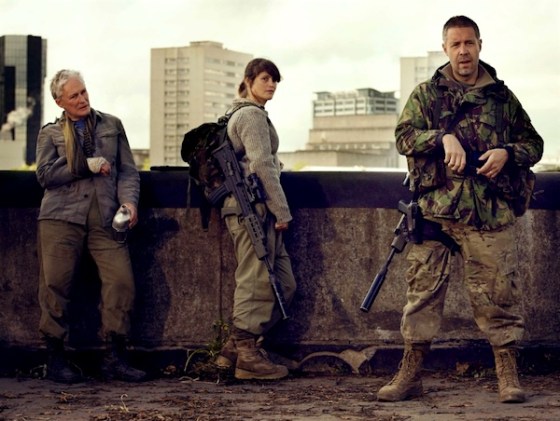
    So, as it turns out, we’re in the near future and a fungal disease has turned most of humanity into zombie-like creatures known as ‘hungries’. They spend most of their time in a dormant trance, but the smell of uninfected blood sends them wild and chompy. Melanie and her classmates are children who are infected but ‘normal’ — unless provoked, when they too turn into ravenous fiends — and they may hold the key to a cure. They live on an army base, but, when it’s overrun by hungries, Melanie and a ragtag group of survivors — including Paddy Considine’s sergeant, teacher Gemma Arterton, and scientist Glenn Close, who’s obsessed with finding a cure at any cost — hit the road in search of safe haven.

    On the road

    In the A.V. Club’s review, Katie Rife asserts that “once this initial premise is revealed and The Girl With All The Gifts leaves the base… this intriguing twist on zombie lore becomes subsumed by postapocalyptic road-trip cliché.” Well, yes and no. There are certainly some familiar beats, but I felt like those just gave a narrative shape to contain otherwise interesting ideas. I haven’t seen enough zombie movies to vouch for The Girl With All The Gifts being 100% original, but I’d certainly not come across some of its ideas before. That goes for both the way it handles the zombie action (though, of course, there are only so many ways you can depict the monstrous undead) and the social commentary, which, as much as anything, tackles the way children and adults interrelate.

    The eponymous girl is fantastic — Melanie is an interesting character, and an interesting type of character too. She’s fantastically played by Sennia Nanua, who may be a talent to watch out for in future (I say ‘may’ because, per IMDb, she’s not got anything else coming up). The more familiar supporting cast are as superb as you’d expect. Glenn Close brings plausibility to what could’ve just been an Evil Scientist role, while Gemma Arterton provides the film’s heart as a motherly teacher. Paddy Considine’s role is best appreciated once all is said and done — he seems to be just the gruff soldier type, but snippets of his backstory are revealed right up until the end, revealing new layers to his character.

    Special school

    Director Colm McCarthy, a veteran of copious amounts of British TV (Spooks, Doctor Who, Sherlock, Ripper Street, Peaky Blinders, and much, much more), keeps the focus on the characters while also giving their world a fantastic sense of scale. The film was made for a pittance (for comparison, it cost about half as much as a single episode of Game of Thrones) but looks incredible. There may be some blurry edges on green screen shots and things like that, but I’ve seen less convincing effects work in movies that cost 50 times as much. Some of the footage was captured by flying over the remains of a town left to rot after Chernobyl, which lends a veracity to the post-apocalyptic vistas (and presumably saved a tonne on CGI). In terms of places you can actually take actors, it was partly filmed in Birmingham, which seems to be becoming a go-to location for dystopian / post-apocalyptic cityscapes (Spielberg’s forthcoming Ready Player One also shot there last year).

    The zombie genre is an overcrowded one nowadays, even if you exclude the innumerable direct-to-DVD knock-offs, but there’s still space for well-made movies that can put the familiar tropes to greater use. The Girl with All the Gifts is an impressively mounted and performed production, and is worth watching if just for that horror-thriller kick. However, it also has something to say. I imagine Romero would be pleased.

    5 out of 5

    The Girl with All the Gifts is available on Sky Cinema from today.

    Inferno (2016)

    2017 #93
    Ron Howard | 121 mins | Blu-ray | 1.85:1 | USA & Hungary / English, French, Italian & Turkish | 12 / PG-13

    Inferno

    Tom Hanks returns as Robert Langdon, Dan Brown’s symboligist-cum-crime-solver (that’s the main character from The Da Vinci Code, for everyone who’s forgotten in the decade-ish since that book was at the top of the cultural zeitgeist) for his third adventure (they made a second, remember?) based on the fourth novel, after the first film was based on the second novel and the second film was based on the first novel (not that that matters, it’s just kinda funny).

    This time, Langdon wakes up in a hospital bed in Florence, with a gunshot wound to his temple that has caused him to both forget the last two days and have terrifying hallucinations of Hell. When an assassin turns up trying to kill him, he escapes with Dr Sienna Brooks (Felicity Jones). Still unable to recall how he ended up in this predicament, Langdon discovers a small projector in his pocket, which contains what will be the first clue to another scavenger hunt of famous old artworks and the like. At the end of the trail: a man-made pathogen that could wipe out 95% of humanity. Pursued by several groups who want the virus for their own nefarious (or not) ends, Langdon and Sienna race against time to save the world.

    If you haven’t guessed yet, Inferno is a bit silly. Not utterly silly, but silly in the kind of way the previous Dan Brown movies have been silly — pretending they’re taking place in a plausible real world, when they’re not. The kind of silly where a villain leaves a trail of clues for someone to follow and make sure his scheme is executed, rather than, I dunno, putting a timer on it. (Incidentally, this is a change from the novel, where (based on what I read on Wikipedia) his plan makes marginally more sense.) The kind of silly where apparently the World Health Organisation is some international enforcement agency with gun-toting special ops units and the power to override local police. (I don’t know much about the real WHO, but I find this version very hard to believe.)

    Brooks and Langdon

    On the bright side, Inferno is not nearly so po-faced as the previous Langdon movies. If you suspend your disbelief, it’s a reasonably compelling mystery (or set of mysteries), where for once the ultimate solution doesn’t feel obvious from the get-go. The same goes for the issue of who to trust. As you’d expect from a race-against-time thriller with an everyman hero, there are multiple different forces in pursuit of Langdon, and you know that one of those groups will turn out to actually be on his side, because that’s how these things always go — but which? Well, I thought it was less blatantly obvious than normal, anyway; though I did guess one other huge twist almost from the start (and I’m sure most viewers who are reasonably versed in this genre of movie will too).

    That’s another point that’s been tweaked from the novel, it turns out. In spite of being a film that is considered pretty faithful to its source, they do seem to have shaved off any detail or plot development that was a little outside the norm of a Hollywood blockbuster thriller, which is rather disappointing in a way. It was the ghost of 82’s review that alerted me to these changes, through the fact that the novel even has a different ending. I looked it up and it sounds much better. It’s totally unHollywood, and I bet the studio vetoed it as soon as they heard it, but it’s more interesting and complex than the standard fight-over-the-MacGuffin climax used here.

    A clue!

    The whole style of the film is similarly standardised. The use of a 1.85:1 ratio and Ron Howard’s unremarkable direction make it all feel very televisual, the only giveaways to its big-screen budget being the stunning locations and the presence of Tom Hanks, Felicity Jones, et al. There are also hand-holding flashbacks and intercuts to things we saw five minutes ago, just like you get on TV dramas that feel uncertain about whether you’re paying full attention or have perhaps tuned in halfway through. Langdon’s gory visions lend a bit of visual spice, but that’s also what they feel like — an attempt to liven things up.

    For all these faults, I actually enjoyed Inferno a fair bit. It’s a decent, pacy thriller; completely implausible, both in its overwrought story and frequently leaden dialogue, but as a race-against-time mystery in beautiful locations, it’s an entertaining 120 minutes. I’d give it 3½, but I don’t do half-stars, so let’s be generous and round it up.

    4 out of 5

    Inferno is available on Sky Cinema from today.