The Meg (2018)

2019 #77
Jon Turteltaub | 113 mins | download (HD+3D) | 2.39:1 | USA & China / English & Mandarin | 12 / PG-13

The Meg

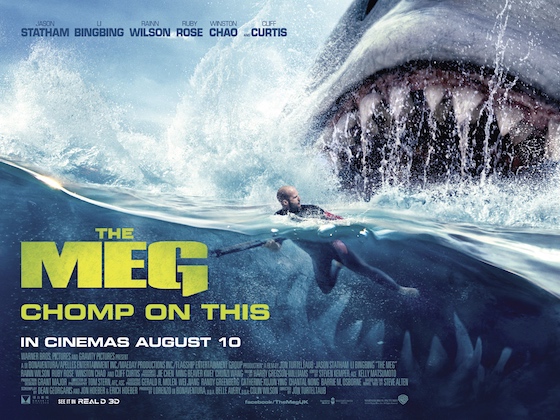
Jason Statham vs. a giant prehistoric shark — what more do you need to know?

Okay, well, despite the obvious pulp-blockbuster nature of this premise, it’s actually based on a novel, which was originally published in 1997 and so I guess arrived in a wave of post-Jurassic Park interest in man vs. prehistoric creatures thrillers. Well, Jurassic Park and the other obvious comparison, Jaws, were also both adapted from novels, so perhaps it’s not so weird after all. I’d never heard of the book before, but apparently it has a dedicated fanbase (there are multiple sequels), who were disappointed with this film because it makes some radical changes to the source material. Clearly, I’m not the right person to make that comparison.

Judged as a film in its own right, then, I thought it was a ton of fun. You know what you’re getting into with that pitch, and doubly so if you’ve watched the trailer. This isn’t some thought-provoking docu-drama about “what if we really discovered a prehistoric creature still lived?” This isn’t even Jaws, a relatively grounded adventure movie about normal people defeating a larger-than-average killer shark. This is a movie about a super-high-tech underwater research facility that accidentally unleashes a prehistoric monster and then all the scientists and submariners and whatnot on board have to track it down and stop it. This is a move about Jason Statham fighting a giant shark.

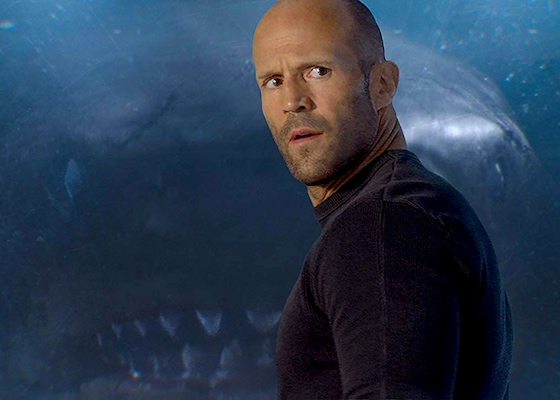
Stath vs shark

All of that said, some people have criticised the movie for not being quite as daft or out there as they wanted from a B-movie-inspired effects spectacular. I guess that’s a real “your mileage will vary” situation. Personally, I had a lot of fun with it. It keeps things more grounded than the utter batshit craziness of, say, Sharknado, but it’s clearly still allowing itself to have fun with the situations and concepts. It also doesn’t feel too samey, which considering there are only so many ways to interact with a giant shark is some kind of achievement.

Other criticisms I’ve read include that it’s too slow to get going, focusing on undersea rescues rather than getting straight to Stath-on-shark action. Again, this was something I actually liked about the film — that it allowed at least some time to build the Meg up as a mysterious unseen force (and, in the grand scheme of things, not that much time — this isn’t Jaws). It also gave the film a certain scope and scale. It’s not like this shark rocks up and they defeat it in an afternoon — the plot spread out over a couple of days, at least. I don’t know, there’s just something I like about that pacing.

Also, the film is a Chinese co-production, and so features many major and minor Chinese characters, and the climax is set in the vicinity of a Chinese beach. I’ve seen people criticise this aspect of the film because… um… Yeah, not liking that aspect smacks of racism, let’s be honest. I’m not saying everyone who dislikes The Meg is a racist — that would be stupid — but some reviews I’ve seen come with this slightly weird sense that part of the reason they dislike it is because it’s 50% (if that) a Chinese blockbuster.

Who fancies Chinese for dinner?

At the end of the day, I come back to what I said at the start: it’s a movie about a giant prehistoric shark being unleashed and attacking humans, and Jason Statham has to fight it. That’s all. It delivered on that in spades for me and I had a great time with it. And I guess tied to that pulpiness, if you have the option and enjoy the effect, I thought it looked fantastic in 3D.

4 out of 5

The Meg is available on Sky Cinema from today.

Snowpiercer (2013)

2018 #251
Bong Joon Ho | 126 mins | Blu-ray | 16:9 | South Korea & Czech Republic / English & Korean | 15 / R

Snowpiercer

Before we knew about Harvey Weinstein’s real, vile crimes, his offences against cinema were already widely discussed. From manipulating the Oscars to re-editing foreign films himself before distribution, he’d managed to become powerful often at the expense of films themselves. Snowpiercer was another example: having acquired distribution rights while the movie was in production, Weinstein later insisted on severe cuts (reportedly 20 minutes) and changes (adding opening and closing monologues), but co-writer/director Bong Joon Ho refused. It was eventually released in the US uncut, but only on a limited number of screens, and the planned worldwide distribution either didn’t happen or was curtailed — I don’t know about other countries where Weinstein had the rights, but there was no UK release at all. But the downfall of Weinstein has seen the rights to various films shopped to other distributors, and so Snowpiercer finally made it onto Amazon Video in the UK last November, and as of this week is available to Netflix subscribers. For my part, I heard the good reviews back on its US release and, with no sign of it coming to the UK, imported the US Blu-ray when it came out in 2014; but, me being me, I only actually got round to watching it last year.

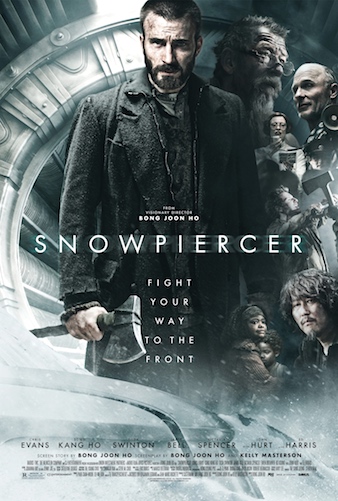
Based on the 1982 French graphic novel Le Transperceneige by Jacques Lob and Jean-Marc Rochette, Snowpiercer is set in the far future, after an apocalyptic event has left the world an arctic wasteland. What survives of humanity all live on the titular train, which constantly circles the planet. The rich people live in luxury at the front; the poor people live in squalor at the back. Numerous attempted uprisings by the lower class have failed, but, with nothing to lose but their shitty lives, they’re going to try again.

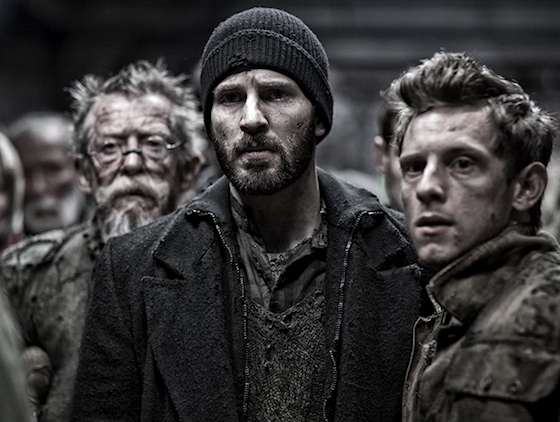
The War Doctor, Captain America, and Billy Elliot step aboard a train...

Yeah, it’s a pretty out-there, not-at-all-plausible premise, but just go with it and the film has rewards aplenty. If you want to get intellectual, the train’s societal structure and how it’s maintained offers an allegorical commentary about class divides and the interdependence of the oppressed and the oppressors. But if that sounds a bit heavy, the film wraps it up in a pulse-pounding action thriller, dressed up further with mysterious backstories ripe for exposing and an array of memorable performances, not least Tilda Swinton as a toothy commandant. So, it’s by turns seriously thought-provoking, outrageously hysterical, and wondrously exciting — there are several superbly staged action sequences as our heroes literally battle their way up the train.

It may’ve taken an unconscionably long time to reach our shores — but hey, what could be more British than a mega-train only turning up after a mega-delay? Unlike our shoddy rail service, however, Snowpiercer proves worth the wait

5 out of 5

Snowpiercer is available on Netflix UK now.

It placed 3rd on my list of The 26 Best Films I Saw For the First Time in 2018. I watched it as part of my Blindspot 2018 project.

Avengers: Endgame (2019)

2019 #67
Anthony & Joe Russo | 181 mins | cinema | 2.39:1 | USA / English & Japanese | 12A / PG-13

Avengers: Endgame

A trilogy each of Iron Mans, Captain Americas, and Thors; a pair of Ant-Mans and two volumes of Guardians of the Galaxy; an Incredible Hulk, a Doctor Strange, a Black Panther, a Spider-Man, and a Captain Marvel; plus, of course, a trio of previous Avengers — they’ve all been leading us here, the culmination of 11 years and 22 movies in the Marvel Cinematic Universe. It’s an unparalleled achievement in moviemaking; a combination of blockbuster scope with TV-esque serial storytelling that is so 21st century. Within its three hours and one minute running time, Endgame encompasses and represents almost all of the tendencies of other MCU movies — for both good and ill. This is not a perfect movie, and this will not be a 5-star review, which I’m saying upfront because massive spoilers may follow. There’s not much to discuss about the film if we limit ourselves to what’s been revealed in trailers and promos, because they’ve purposely kept almost the entire movie a secret, so I’m just going to talk freely.

If you’ve seen the movie then a plot recap is unnecessary. But in case you just don’t care and have decided to read on regardless: Endgame picks up days/weeks after the cliffhanger ending of Infinity War (maybe I missed or misunderstood something, but I swear one character said it had been 23 days then later someone said it had been two days). The surviving Avengers, plus newly-summoned addition Captain Marvel, manage to track down super-villain Thanos and set off to retrieve the Infinity Stones and use them to bring back the 50% of the universe’s population he turned to dust. Unfortunately, Thanos has destroyed the stones. All hope is lost. Cue title card: five years later.

Thanos no more

Okay, we’ll return to the plot in a minute, because this is the first structural oddity of the film. This opening salvo — made up of a pre-Marvel logo sequence in which we learn what happened to Hawkeye and his family, a pre-titles sequence which sets up the plan to beat Thanos, and the pre-timejump action I just described — is almost a self-contained unit dealing with the hangover from the last film. It wouldn’t fit as a closing act to Infinity War — that movie ended at the perfect point in the story — but nor does it really belong at the start of Endgame, which begins properly after the “five years later” card. I have mixed feelings about it, because I like that we see both the heroes’ immediate attempts to rectify the situation, but also that they can’t, so we get to see how they’ve coped (or failed to) over the ensuing years. But, structurally, it felt a little clunky to me; a bit of business from the previous movie that has to be wrapped up before this one can start. I’m not sure what the solution is. If movies still bothered with opening credits, something as simple as separating it all off as a pre-titles sequence might’ve been the answer.

Anyway, back to the plot. It’s five years later and the world is still coming to terms with the snap. There are too many characters in too many different places to recap what everyone’s up to — that’s part of why this film has a three-hour running time, because there’s simply so much to tackle. But in many ways this is the best part of the movie, especially if you’re invested in these characters rather than just here for action or spectacle. It’s a bit grim, obviously — no one’s going to be cheery about half the world being wiped out — but it digs into the differing reactions this would provoke in ways that are character-specific and mostly plausible. I say “mostly” because, when Hulk (or whatever he is now) turns up, I didn’t quite follow the logic of why he’d turned himself into this Banner/Hulk hybrid. Still, seeing how the characters come to terms with their new reality is an effectively thoughtful way to start off.

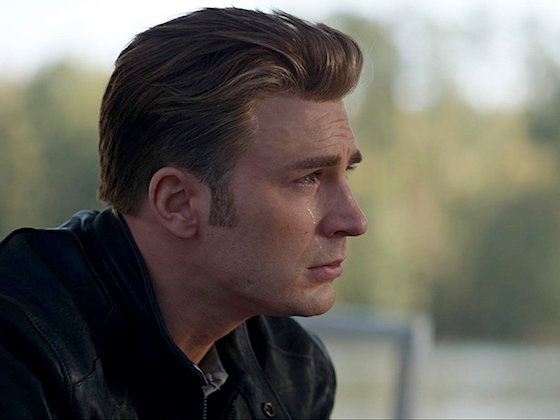
Crying Cap

But that’s not going to fuel a superhero blockbuster, is it? Here the little mid-credit scene from Ant-Man and the Wasp comes into play. Marvel have always used their credit stings to connect up the films, but has it ever been so vital as this? They’re normally little teases, basically trailers to remind you which film is next, but what happens in that Ant-Man 2 scene is vital to the plot of Endgame. Basically, Scott has been stuck in the Quantum Realm for the past five years, but this provides them with an opportunity: it might be possible to use it for time travel, allowing them to go back in time and undo Thanos’ actions. Or something. Endgame’s relationship with time travel is… variable. Time travel movies are always complicated, and because it’s not a thing that’s really possible they get to set their own rules for how it works. The problem is, Endgame isn’t very clear what those rules are. It makes a great show of saying “it’s not like in the movies” and reeling off a slew of pop culture references (Back to the Future is mentioned more than once), but then it struggles to clearly define how it does work in this movie. And once the characters set off into the past, any explanations it did give seem to go out the window.

It’s in this long middle act that Endgame was most often problematic for me. Act one is largely committed to being solemn, and act three is largely committed to being Epic, so it’s in the middle that the film shoots for the MCU’s trademark “light and breezy” tone. Unfortunately, sometimes this is so shoehorned in that it rubs against the serious stuff, resulting in a tonal mishmash. I’ve frequently advocated for movies that mix seriousness and comedy side-by-side, because real life often does the same, but there are points where Endgame undercuts its own stakes or undermines its characters for the sake of a one-liner or a comedy bit, rather than embracing the seriousness of the situation and letting comedy evolve naturally when it’s warranted.

There can be only one...

Conversely, some of the humour is accidental. One of the more egregious examples for me is when Black Widow and Hawkeye are faced with the Soul Stone dilemma: one of them has to die as a sacrifice for the stone to be released to the other. They both decide to sacrifice themselves, which leads to a protracted series of attempts to stop the other from committing suicide first. The constant back and forth of who had the upper hand gets almost to the point where it’s comical — I began to wonder if it was meant to be a comedy bit. But then, just as it was reaching the height of absurdity where I was about to conclude I should be laughing rather than just thinking “this is silly now”, it abruptly stops when one of them ‘wins’ and we get a Tragic Death Scene. It’s clearly meant to be a shocking, affecting moment of heroic sacrifice; instead, I found it a jumble of intentions that neutered any genuine feelings.

Another moment that’s well-meaning but fumbled comes during the big climax, when all the Lady Superheroes unite to do something. It’s a moment of such brazen, uncalled-for “feminism” that it feels like pandering, and that’s a bad thing. I’m searching for a better word to use in that last sentence, because overall feminism is a good thing, but this particular moment is so out-of-nowhere, so fundamentally meaningless (there’s no need for it to be just the women involved), that it’s egregious. When crybaby fanboy trolls scream about unnecessarily forcing political correctness onto genre movies, they’re unerringly wrong… except this time they’ll be right, because that’s exactly how this plays. There’s a broadly similar moment in Infinity War, when a couple of the female heroes defeat whichever of Thanos’ sidekicks is the female one, and I thought that worked, partly because no one made a big deal of it. Here, it’s clear they’re making a point. I’m not sure what the exact goal of it was — to say “women are as capable as men”; to say “look how many female heroes we have now”; or something else — but there are better, subtler ways to make that same point.

Nebulous plotting

Where Infinity War found room for almost all of the MCU’s ongoing franchises and characters (an impressive feat), Endgame cements its finale status by re-centring us on the original lineup from the initial Avengers team-up… er, plus a couple of other characters, who are important to varying degrees for various reasons. It’s that kind of “it’s almost this… but not quite” construction of content and/or theme that belies a certain lack of focus or forethought. If this is a last hurrah for the original team, why is Ant-Man vital to the story even being possible? Why does Nebula get one of the most significant subplots, intimately connected to her character arc from Guardians Vol.1 and 2? Why is brand-new (to the movies) character Captain Marvel repeatedly required to come in and save the day?

This extends to the time travel too: when they go back, it’s into the timelines of specific movies, but why those movies were chosen isn’t always clear. Avengers Assemble? Makes sense — it was where the crazy project of the MCU proved it was working, making that film both the end of the beginning and a beginning in itself. Guardians of the Galaxy? I mean, I guess — it’s where Marvel proved they could turn even the most obscure property into a massive, popular hit; plus it’s where a lot of the Thanos storyline really got going. Thor: The Dark World? …wait, what? Seriously?! Yes, perhaps the greatest trick Marvel have ever pulled is making Thor 2 — one of their least well regarded films — a moderately essential component of this finale. You need to have seen that movie to fully understand what’s going on here, and now you can’t really skip it in your rewatches either.

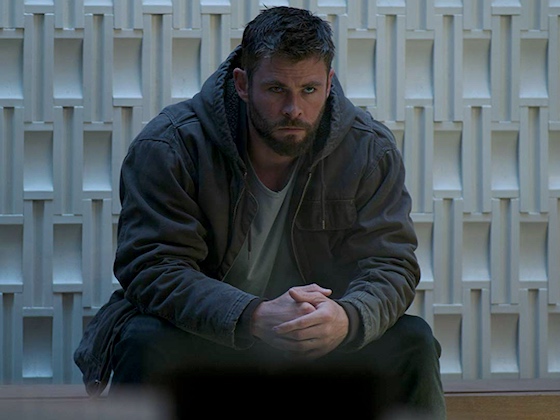
Thor after being told which movie he had to revisit

Talking of connectivity, Infinity War surprised by being a standalone movie, not just a Part 1. Okay, it was a standalone movie which ended with our heroes losing, which you could call a cliffhanger, but if you look at it from the other side — i.e. with Thanos as the main character — it’s a whole, completed, no-more-story-to-tell tale. Therefore it’s a fresh surprise (kinda) that Endgame is very much a Part 2 — and also, in fact, a Part 22 — freely nodding to and paying off stuff from previous movies on the assumption you’ll know what it’s referencing, more like the last instalment of a serial than a standalone film. Anyone who’s skipped a film or two (or three or four, etc) on the way to Endgame is likely to miss all the nuances, at the very least, and perhaps be left with more serious questions too. Newcomers definitely need not apply. But if there’s anyone who’s a fan of part of the MCU but not all of it, they’ll need to find their way into and through Endgame one way or another, because a whole bunch of stuff is wrapped up for good here; some heroes won’t be getting another standalone movie to put a button on their story.

I feel like this review has focused on the negatives and debatable drawbacks of Endgame, but that’s partly because a lot of the discussion right now seems unrelentingly praiseful. I mean, as I type this the film is ranked as the 5th best of all time on IMDb, a position it’s actually risen to over the past 24 hours (it debuted around 19th). I didn’t think it was perfect, or quite as good as that (for comparison: I thought Infinity War was more consistent and successful as a movie, and IMDb raters have currently ranked that 61st), but I did enjoy it overall. I don’t think it needed to be as long as it is (at times it meanders through scenes or comedic bits rather than getting on with things), but it doesn’t drag or bore. It’s a bit of an irreconcilable dichotomy that I think both it didn’t feel excruciatingly long and also that they should’ve tightened it up and brought the running time down.

The end for Tony?

Still, that runtime means they felt there was space for more than just action sequences. Allowing the film to focus on the emotions of the characters (at least some of the time) is suitable payoff for the investment people have in them. Indeed, as I said earlier, in many ways the first act is the film’s best stuff. This isn’t just an empty effects spectacle. But when it is a spectacle, it can be spectacular. Okay, the climax, where two sizeable armies rush at each other on a brown battlefield under a grey sky, degenerates into a massive free-for-all of whooshing pixels where it’s frequently hard to discern exactly what’s going on and who’s doing what to who (it actually reminded me of Aquaman, only with less colour. I’m sure such a comparison to a DC movie will be sacrilege to some Marvel fans, but it’s the truth). But within and around that there are still things that are a thrill, not least the big moment when the previously-dusted heroes turn up en masse in the nick of time. And when all is said and done, the end credits offer a special acknowledgement of the main Avengers who started it all, which was quite possibly my favourite bit of the whole movie.

There are no mid- or post-credit scenes, making this only the second MCU movie without them. (The first was The Incredible Hulk, which basically had its post-credit scene before the credits started. I’m sure they’d’ve placed that scene differently if they’d known it would become a trademark of the franchise.) It’s an appropriate decision: we know this isn’t the end (the next Spider-Man movie is out in a couple of months; many more officially-unannounced Marvel films are on the horizon after that), but this is supposed to serve as an ending nonetheless, and so letting it actually end, rather than attaching a tease for the future, is welcome. Though, really, how much of an ending is it? Yeah, it officially closes off the first era of MCU films, but a bunch of those characters are continuing into the future, and even some of the ones primarily associated with the first era — characters who died here — are coming back in prequels and the like.

Goodbye to MCU

However, the lack of credits scenes did allow me to enjoy some schadenfreude: I knew going in there were no scenes, but that there was a “meaningful sound effect” at the end of the credits. I had nowhere else to be, so I stayed to see what it was. Everyone else who stayed, however, was chattering about what the end credits scene might show. The credit roll came to an end, everyone went quiet in anticipation, that “meaningful sound effect” played, and I started getting ready to leave while all around me stared at a black screen while the cinema’s filler muzak played, thinking they were witnessing the beginning of another scene. It took them a good 30 seconds to twig. (Maybe I should’ve said something… maybe the usher stood at the front of the auditorium should’ve said something… maybe he and I are both just horrible people…)

That literally brings me to the end of Endgame. There’s much more that could be said about it, and will be said about it. For me, an interesting thing now will be to see what is its long-term reception. As I said, right now it’s riding high on a wave of audience euphoria, but it’s only just come out: most of the people who’ve seen it already are the really keen ones; the diehard fans. What will wider audiences think? What will the diehards think when they get a chance to revisit it, removed from the heat of initial emotion? Will the consensus remain that Avengers: Endgame ranks in the echelons of the very greatest movies of all time, or will cooler heads prevail?

4 out of 5

Avengers: Endgame is in cinemas everywhere (except Russia) now.

Teen Titans Go! To the Movies (2018)

2018 #246
Aaron Horvath & Peter Rida Michail | 84 mins | streaming (HD) | 16:9 | USA / English | PG / PG

Teen Titans Go! To the Movies

I don’t think I’d even heard of the Teen Titans Go! animated series until promotion for this big screen version started. Best I could tell, a lot of entitled fanboys hate it — it’s too childish and comical, whereas they’d prefer the ‘grown-up’ seriousness of cancelled animated series Teen Titans — and consequently weren’t at all impressed by it getting the honour of film adaptation. Whatever — I thought the trailer looked funny, and, fortunately, the end product lives up to it.

The Teen Titans are a superhero team made up of erstwhile Batman sidekick Robin, half-robot Cyborg (who, in other iterations, is a member of a certain major-league superhero team), shapeshifter Beast Boy, half-demon sorceress Raven, and alien princess Starfire. After they’re criticised for not having their own movie, the Titans set out to get one made. First step: get an arch-nemesis, for which they target Slade Wilson, aka Deathstroke.

Although ostensibly a children’s series, and therefore presumably a children’s movie, Teen Titans Go is actually full of gags and references aimed at older viewers, without resorting to cheap double entendres or the like designed to fly over kids’ heads, but instead focusing on the wider universe of superhero movies — it has less respect for the fourth wall than a Deadpool movie. It’s often genuinely witty, and burns through plot and jokes at a joyously fast pace (possibly a legacy of its short TV episodes). It also might be the first time I’ve ever seen a fart gag and thought, “that’s actually quite funny and kinda clever (for a fart gag).” That’s a special kind of achievement in itself.

4 out of 5

Teen Titans Go! To the Movies is available on Sky Cinema as of this weekend.

It placed 23rd on my list of The 26 Best Films I Saw For the First Time in 2018.

Resident Evil (2002)

The 100 Films Guide to…

Resident Evil

Survive the horror

Also Known As: Biohazard (in Japan — the film uses the original title of the game it’s based on in the country it originated from, appropriately enough.)

Country: Germany, UK, France & USA*
Language: English
Runtime: 100 minutes
BBFC: 15
MPAA: R
* The end credits call it “a German/British co-production”. IMDb adds the other two.

Original Release: 15th March 2002 (USA)
UK Release: 12th July 2002
Budget: $33 million
Worldwide Gross: $102.98 million

Stars
Milla Jovovich (The Fifth Element, Hellboy)
Michelle Rodriguez (The Fast and the Furious, Avatar)
Eric Mabius (Cruel Intentions, The Crow: Salvation)
James Purefoy (Mansfield Park, Solomon Kane)

Director
Paul W.S. Anderson (Event Horizon, AVP: Alien vs. Predator)

Screenwriter
Paul W.S. Anderson (Shopping, Death Race)

Based on
Resident Evil, a video game by Capcom, directed by Shinji Mikami.


The Story
After a virus kills all the employees at the underground research facility of Umbrella Corporation, a team of commandos are sent in to contain the outbreak. But to do that they’ll have to fight the facility’s megalomaniacal supercomputer, plus all the employees, who aren’t exactly dead after all…

Our Hero
Alice wakes up in her mansion with total amnesia… but soon a bunch of military operatives are whisking her along into a life-or-death situation, which it turns out she’s equally trained for herself.

Our Villains
The undead! Hordes of ’em, as always. Plus an evil supercomputer who controls the entire facility and speaks with the voice of a little girl, because why not. Oh, and we know someone deliberately released the virus — could they now be part of the team investigating the facility? Hmm, I wonder…

Best Supporting Character
Rain is just one of the commandos, but, as played by co-billed Michelle Rodriguez, she gets the lion’s share of the best lines. (I mean, the dialogue is hardly sparkling, but what good lines there are, she gets. Maybe it’s all in the delivery.)

Memorable Quote
Rain: “All the people that were working here are dead.”
Spence: “Well, that isn’t stopping them from walking around.”

Memorable Scene
With the team separated, Alice is exploring the facility alone and comes across some empty animal cages… and, shortly thereafter, the dogs that used to live in them… who are now zombie-dogs out to eat her, obviously. It’s mainly memorable for this bit:

Memorable Music
The score, co-credited to habitual genre composer Marco Beltrami and Goth rocker Marilyn Manson, was explicitly influenced by John Carpenter’s early electronic work, albeit given a very ’00s techno/rock spin by Manson.

Letting the Side Down
There’s so much stuff some would put in this category, but the main jarring point is some middling ’00s CGI. It’s not outright bad (like, say, the Rock-scorpion-thing in The Mummy Returns), but it definitely shows its age.

Previously on…
The first Resident Evil video game was released in 1996. The film is more “inspired by” than adapted from it. Multiple sequels to it came out before the movie finally hit the big screen, and even more have followed since, not to mention various spin-off novels, comics, animated films, and other stuff, like a themed restaurant in Tokyo.

Next time…
Five sequels followed over the next 14 years. Before the series-concluding final film had even made it to home media, a reboot was announced. That’s gotta be some kinda record, even for Hollywood.

Awards
2 Saturn Award nominations (Horror Film, Actress (Milla Jovovich))
3 Golden Schmoes nominations (Most Underrated Movie of the Year, Horror Movie of the Year, Best T&A of the Year — you might read that last category and think “only in the ’00s!”, but I checked and they still award it today)

Verdict

Writer-director Paul W.S. Anderson has managed to sustain a lasting career out of making movies no one seems to really like. With a CV full of video game movies (Mortal Kombat, multiple Resident Evils, the forthcoming Monster Hunter), and B-movie do-overs (Death Race) and emulations (AVP), he’s a bit like a bigger-budgeted, less-objectionable version of Uwe Boll (remember him?). Anyway, the first Resident Evil is actually one of his better efforts. I’ve never played any of the games so have no idea of its faithfulness (“not very” is my impression), but Anderson took inspiration from early John Carpenter movies to create a lean action/thriller/horror flick (again, leaning into those B-movies), which drives the viewer from set piece to set piece with quickly-sketched characterisation (or, in many cases, none at all) and a mysterious backstory to be uncovered. It’s no masterpiece, but it’s a solid 90-minutes-and-change genre fix.

The Past Month on TV #44

Another later-than-usual TV review (originally these were meant to be on the third Thursday every month), which is simply because I didn’t have much to write about. Even still, it’s a less packed one that usual, with little more than a couple of seasons of Deadwood and a couple of episodes of The Twilight Zone to cover. Still, at least that’s some high-quality viewing.

Deadwood  Seasons 1-2
Deadwood season 2One of the early touchstones of the “peak TV” era we’re now right in the midst of, Deadwood is a kind of revisionist Western — revisionist in that it treats the West not as a time of myths and legends, as most movies still do, but as a real historical period like any other, populated by realistic people (more or less — I’ll come to that). The titular town began as a camp in Native American territory, established by gold prospectors. When they found success, more gold hunters followed, plus all the amenities they might require: supplies, tools, food, gambling, whores… Plus, the town was outside the jurisdiction of most law enforcement, thereby attracting a different class of person again. Naturally, illicit activity followed. At one point Deadwood averaged a murder a day — and those are just the ones that were recorded.
It’s a rich place to set a drama, then, especially when you learn how quickly the place changed: although it started as just camp for prospectors, within only a couple of years it had telephones, before major cities like San Francisco, and was eventually consumed into the US proper. Creator David Milch had wanted to tell a story about how society establishes and organises itself set in ancient Rome, but HBO already had Rome in the works (set in an entirely different part of that empire’s history, but the general milieu was similar enough), so he had a rethink and Deadwood was born. It seems at least as fitting a place to present that theme.

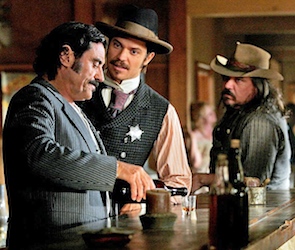
If that sounds like it’d be some heavy treatise, that’s certainly not how Deadwood plays out. It thrives on a human scale, with a large ensemble cast of characters to love and hate, sometimes within the same figure. Yet despite the sheer volume of people on screen, each one is well drawn, believable and relatable. It’s a fantastic feat of both writing and acting. There are standout performances, sure — Ian McShane as saloon owner and Machiavellian plotter Al Swearengen attracted the most attention at the time, and indeed if you had to pick just one he’s definitely the greatest character and performance here; but there are likely a dozen others who, in almost any other show, would overshadow the rest of the cast.

Arguing and alcoholThey’re aided by the extraordinary storytelling. It’s often said to be Shakespearean, but that’s not an empty epithet. The dialogue may be littered with expletives (not as shocking today as it was back in 2004, but still not for the faint of heart) and tailored for the understanding of modern ears, but there are still speeches and exchanges that you could put anonymously alongside writings of the Bard and laypeople would struggle to identify which was which. It’s a structural thing, too — I mean, there are characters who deliver soliloquies! How often do you see genuine soliloquies outside of classical theatre? Plus there’s the way that, again, it’s using personal conflicts to touch on bigger themes and points about human nature and society.

Although it’s based on a real time and place, Deadwood has a wavering attention to historical detail. Many of the characters are named after real people, both relatively unknown (Swearengen, Seth Bullock, Sol Star, E.B. Farnum) and famous from tales of the West (Wild Bill Hickok, Calamity Jane), and sometimes it depicts genuine events from their lives, but only really when it suits the stories Milch wants to tell. Other characters are amalgamations of real-life individuals, or else are archetypes designed to show another facet of life. Alma Garrett, for example, a rich society woman who’s ended up in the camp due to her new husband’s whims, is used to portray the difficulties women faced in this era. But, again, the show does this by making her a believable character with her own storyline, not by contriving to give us a lecture.

Of these initial two seasons, for my money the first is superior. It took me an episode or two to get back into the show’s unique rhythms (in particular, the way it’s shot looked suddenly very dated — a bit like how TV used to be done, a marked contrast to the cinematic visuals we’re used to today), but once the ball’s rolling it’s a thoroughly engrossing set of narratives. Indeed, it’s remarkable how much plot it packs into an episode, without ever feeling rushed or like it’s underserving characters. That’s another contrast to the way premium TV has gone since, where you have to watch a whole season to get a whole story.

Sisters are doing it for themselves... with the help of menSeason two is a little more like the latter, and suffers for it. A major death about two-thirds of the way through comes to overshadow the rest of the season; while it doesn’t completely stall it, things begin to take longer to get anywhere. There’s also an early plot in season two designed to ‘depower’ Swearengen — he’d become such a dominating force in season one, Milch felt it necessary to take some of that away, if only for a while. A justifiable aim, but taking him out of play due to incapacity and recovery makes parts of the second season somewhat less fun. There’s a lot of entertainment value in Al’s scheming and swearing.
The real problem with Deadwood, however, was that it was so short-lived. This is the kind of show that a network would never dream of cancelling today — artistically top-draw and critically acclaimed with it. I have no idea what viewing figures were like, but I remember it being well-discussed at the time, so I can’t imagine they were bad. But apparently there was some kind of dispute between the network and the production company about how much they’d pay for the show, and all that fell through after just three seasons. More on how the show does or doesn’t prematurely wrap-up next month, but it was definitely cancelled without notice, so I can’t imagine it’s too neat an ending. At least now we’re getting a sequel movie to put a proper capstone on it.

The Twilight Zone  ‘Best Of’
The Twilight ZoneUntil a couple of years ago, my experience of The Twilight Zone was limited to the Tower of Terror ride at various Disney theme parks (and recognising the theme that everyone knows, of course). Then in 2017 I watched the anthology film by Spielberg and co, which is good but still not the original. Well, with the new Jordan Peele-fronted revival on the way tomorrow (in the US, at least — no UK broadcaster or streamer has been announced still), Screen Crush ran an article ranking all 156 episodes of the original 1959-64 series. There are probably many such articles out there, but this is the one I saw, and, as I’ve long meant to watch some of the series, what better excuse to cherrypick the best-regarded episodes (cross-referenced with IMDb user ratings) and start there?
Well, I thought I’d have more episodes to discuss here, but I’ve only made time for two so far: the one Screen Crush picked as #1, and the one IMDb users rank as #1. Funnily enough, after watching these episodes I saw this article, in which new series execs Peele and Simon Kinberg recommend their favourites from the original series, a list which is also topped by this pair, so I guess these really are considered the best of the best.

First up, Screen Crush’s pick: season one’s The Monsters Are Due on Maple Street (ranked 5th on IMDb and cited by Kinberg), which presents a parable with a moral lesson about baseless paranoia that feels kinda obvious now. It may be that comes from endless imitation — the episode is 60 years old, after all. That said, it’s sadly a lesson plenty of people could still do with learning. So, the familiarity of the theme lets the episode down when viewed today, but it’s still a cleanly executed version of the story.

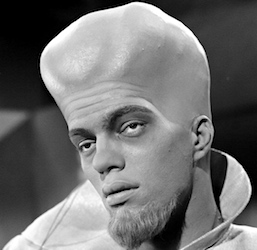
Dopey aliensSecondly, IMDb user’s pick: season three’s To Serve Man (ranked 7th by Screen Crush and cited by Peele). This is, essentially, an entire half-hour story based around reaching a neat twist that’s staring you in the face the whole time, like a well-executed punchline on a dark joke. That’s the kind of thing The Twilight Zone is renowned for, so it feels very apposite as a “best ever episode”. That said, while the punchline attracts our focus, the story that gets us there does have some commentary about the nature of mankind. There’s no explanation for why the aliens spend most of the episode wearing such a dopey expression, though.
Hopefully I’ll tick off some more best-of episodes of the original series next month, and maybe the much-anticipated new incarnation will make its way to UK screens too.

Also watched…
  • Pointless The Good, the Bad and the Bloopers — How is this show ten years old? I don’t mean in terms of quality, but just time — how has it been a whole decade since it first aired? Where does time go?! (I wonder how many results there’d be if you searched this blog for that phrase…) I used to watch Pointless religiously, but then I decided there wasn’t enough time in my life to regularly watch a quiz show. I still think it’s a great format though, and this celebratory selection of outtakes from the last decade was surprisingly amusing.

    Things to Catch Up On
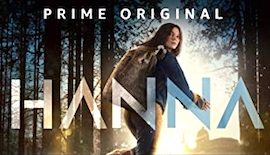
    HannaThis month, I have mostly been missing the back ends of the series I mentioned were starting last month, like Shetland and Baptiste. More recently, there’s Amazon’s TV remake of Hanna — I reviewed the first episode after its 24-hour preview last month, and the whole first season was just released on Friday. Expect a review next month, then.
    Next month… winter is here.

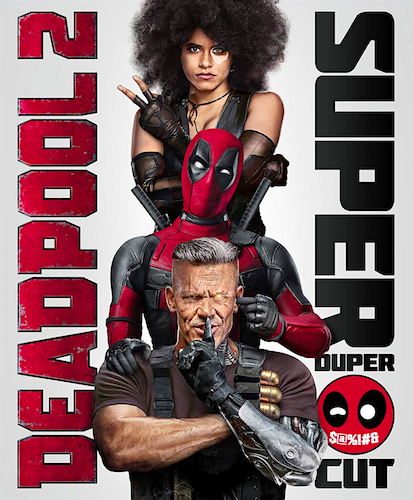
  • Deadpool 2: Super Duper $@%!#& Cut (2018)

    2019 #39a
    David Leitch | 134 mins | Blu-ray (UHD) | 2.39:1 | USA / English, Spanish & Cantonese | 15

    Deadpool 2: Super Duper $@%!#& Cut

    What’s an R-rated comedy without an “unrated” extended home ent version, eh? Well, the first Deadpool didn’t have one, but the sequel certainly does. Branded as the “Super Duper Dollar-At-Percent-Exclamation-Hash-Ampersand Cut”, it runs almost 15 minutes longer than the theatrical cut, with some alternate gags and music cues in the mix as well.

    The Blu-ray’s scene selection menu offers an indication of which chapters feature new material, and the answer is “most of them” — those 15 minutes are spread relatively thinly throughout almost the entire film. There are a handful of wholly new scenes (as many as ten, depending how you count it), most of them quite short (one is under nine seconds), a couple of extended fight sequences, and then lots of added lines here and there. Plus, as I said, there’s a smattering of gags that have been changed for alternatives. The only thing that’s really missing is a fourth-wall-breaking gag about extended cuts — it’s uncommon for the Deadpool franchise to drop the ball like that.

    As ever, Movie-Censorship.com has a thorough list of additions and changes. Their report reckons all the replacement gags are worse than the originals, but it’s certainly a matter of personal taste: there’s nothing so major lost, nor anything so poor gained, that it’s a crying shame. Personally, I think a fair few of the new and additional lines are at least decent. The added action stuff, on the other hand, is all neat, in particular a major extension to the Japanese bath fight that turns it into a single-shot masterpiece, and a fun bit between Domino and Juggernaut. I also thought the way this cut incorporates Russell’s backstory earlier and more fully worked well, adding weight to his motives and actions later in the movie.

    X-Force... kinda

    The net effect of the changes and additions is minimal, however. At the very least, I enjoyed it just as much on a second viewing as I did on the first (which is more than I can say about Deadpool 1). With that in mind, I’d probably pick the Super Duper Cut as my preferred version of the film. I liked most of the additions, and didn’t miss enough of the subtractions for it to bother me, so on balance this version wins. Individual opinions will naturally differ (that Movie Censorship guy obviously wasn’t impressed by the new stuff), but for anyone that enjoyed the theatrical version, this is definitely worth a look. That’s more than most people would say about Once Upon a Deadpool, at least.

    4 out of 5

    The theatrical cut of Deadpool 2 is available on Sky Cinema from today.

    Nausicaä of the Valley of the Wind (1984)

    aka Kaze no tani no Naushika

    2018 #130
    Hayao Miyazaki | 117 mins | Blu-ray | 1.85:1 | Japan / English | PG / PG

    Nausicaä of the Valley of the Wind

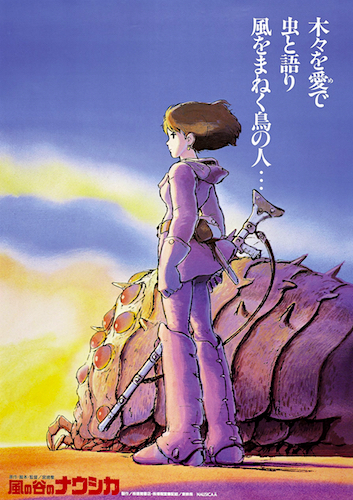
    I watched Princess Mononoke before Nausicaä, and also checked out the Blu-ray’s special features. Those include the film’s original Japanese trailers, which emphasise that it’s “13 years after Nausicaä”, which intrigued me, because director Hayao Miyazaki had made plenty of other films in between. But, having watched the earlier movie, the connection and similarities become clear: Nausicaä features an ecological message, a threat from nature that isn’t, industrial humans (with a female general) being the actual villains, innocent townsfolk that need saving, a princess who’s the only one who understands, and a boy from a different kingdom who helps her. They’re not identical, of course, but there’s a lot of overlap…

    The animation is nice without being quite as mindblowingly good as later Ghibli productions — they certainly hit the ground running, but they would improve too. The full-length English dub was created in 2005 (the original US release was drastically cut and rewritten) and boasts a helluva cast: Uma Thurman, Patrick Stewart, Mark Hamill, Edward James Olmos, plus Alison Lohman as the lead and a young Shia LaBeouf. I don’t mean to disparage those actors who primarily ply their trade dubbing anime, but these starry Disney-funded dubs do add a certain extra oomph to the vocals.

    Nausicaä was only Miyazaki’s second feature, but already shows a lot of the themes and concerns that would go on to characterise his later movies. I feel like maturity and/or experience make some of those later films better, but this is still a powerful demonstration of his talents.

    4 out of 5

    Nausicaä of the Valley of the Wind was viewed as part of my Blindspot 2018 project, which you can read more about here.

    Serenity (2019)

    2019 #27
    Steven Knight | 106 mins | download (HD) | 2.40:1 | USA / English | 15 / R

    Serenity

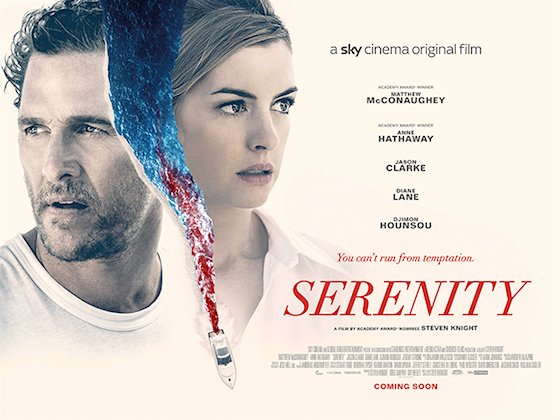
    Sorry, Browncoats — this has nothing to do with Joss Whedon’s sci-fi classic. But if you’re instead worried this might supplant that in the general consciousness, never fear: despite coming with the pedigree of a cast headlined by Oscar winners Matthew McConaughey and Anne Hathaway (plus Jason Clarke, Djimon Hounsou, and Diane Lane), and a quality writer-director in Steven Knight (the man behind Locke and Peaky Blinders), this Serenity is a dud of epic proportions. I mean, the fact that, even with those names involved, it’s being dumped in the UK as a Sky Cinema Original should tell you something…

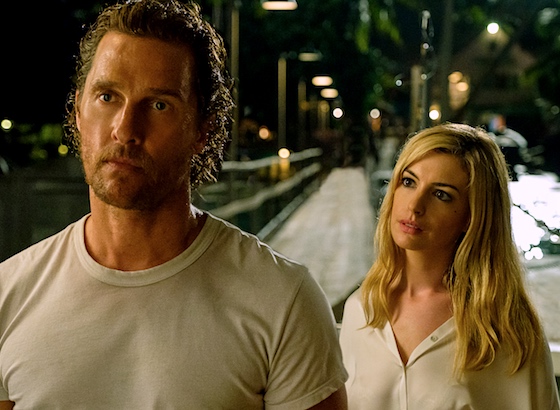
    On the remote tropical paradise of Plymouth Island, Baker Dill (McConaughey) is a fisherman mostly taking tourists out on his boat, but eager to catch that one tuna that eludes him (a tuna isn’t quite as romantic a nemesis as a white whale, but I guess we’ll have to go with it). One day, his ex (Hathaway) turns up on the island with a proposition: she’ll pay him $10 million to drop her abusive husband (Clarke) in the ocean for the sharks. She has extra leverage in that hubby is beginning to get abusive towards the son Baker left behind, but who he still cares about. If that wasn’t enough of a moral quandary, there’s more to Plymouth Island than meets the eye, including a fishing equipment company rep who’s desperate to meet with Baker, but keeps just missing him…

    An indecent proposal?

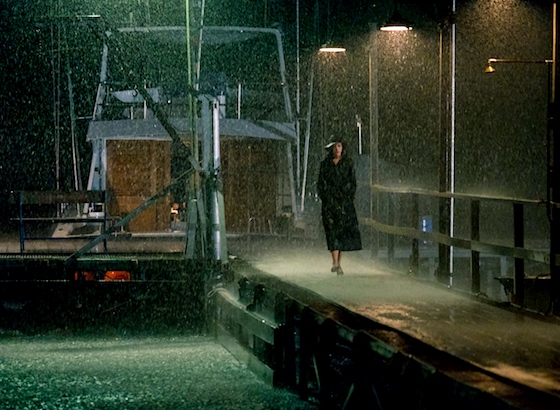
    Serenity pitches itself as an island noir, and on the surface it ticks many of the right boxes, especially once Hathaway turns up, looking every inch the part of a classic femme fatale. You can tell she’s hamming it up a little too, playing into the role (with McConaughey, it’s harder to be sure…) It’s also beautifully lensed by DP Jess Hall, capturing both attractive sunny climes and a more overtly noir-ish vibe once a dramatic storm rolls in. But concurrent to that it’s clear some other mystery is going on, and here things get a bit more awkward, the film fumbling not to give too much away too soon. Personally, I think it fails — I guessed the twist pretty early, which I’m pretty sure was not intended, but if you don’t then it’s not cleverly built up to, it’s just muddled.

    Once the twist is confirmed — and I say “confirmed” rather than “revealed” because, even though I guessed it, it seemed so loopy that I thought I must be wrong — the whole affair takes on a different light. But it’s not a well thought-through one. It’s the kind of twist that changes your perspective on everything you’ve seen, which is usually a neat development, but here it raises way more questions than it answers. To go into them would be spoilery… so, spoilers follow throughout the next paragraph.

    So, we’re supposed to believe this kid has programmed a fishing game starring his dad — not wholly implausible. But it’s one where his dad frequently gets his kit off and shags around for money? I guess we could excuse this as the kid’s been playing too much stuff like Grand Theft Auto and thinks that’s what happens in games, if we’re being kind. But one day he decides to rewrite this game to make it about his dad committing murder, which the character in the game then objects to, and the game turns its own existing rules into an NPC to fight back? What, did this kid accidentally just program a full blown AI? Or several AIs? Or are we going with a Toy Story-esque notion where video game characters are actually sentient? And then somehow his dad actually doing it in-game encourages the kid to murder his real-life stepdad, which we learn thanks to some cheap news voiceover?

    So far so noir

    Serenity is such a ridiculous mess of a movie that it almost swings back round to being entertaining in its audacity. For me, though, it would need to be better constructed to pull that about-turn off. If it had fully considered the twist and its implications, thought it all through and played by all the necessary rules, some of the people who are laughing at it would still be laughing at it just for the basic concept, but I’d admire it at the very least for committing to its bit. Because it doesn’t, the only reason to consider watching is to marvel at its bizarre eccentricity.

    2 out of 5

    Serenity will be available on Sky Cinema from midnight tonight, with a limited UK theatrical release from tomorrow.

    Attack the Block (2011)

    2018 #231
    Joe Cornish | 88 mins | Blu-ray | 2.40:1 | UK & France / English | 15 / R

    Attack the Block

    The directorial debut of comedian Joe Cornish seemed to become an instant cult classic on its release back in 2011 — I distinctly remember US geek websites urging people to see it and even arranging screenings, leaning hard into the kind of word-of-mouth promotion that is often how these small but dedicated fan bases are born. It has the kind of online scores that back up that status: as much as everyone who talks about it seems to love it, it only rates 6.6 on IMDb. I guess you’re either in a cult or you’re not. While I did enjoy it on the whole, I couldn’t quite see what all the fuss was about.

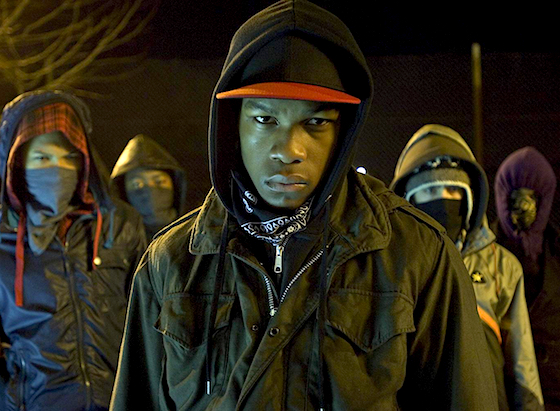
    The film centres on a gang of teenage lads, led by John Boyega in what it turns out was a star-making performance. They roam their inner city London tower block and its surrounding streets, and we first meet them mugging a young nurse (Jodie Whittaker); and, when an alien creature falls from the sky, they savagely beat it to death. Hardly E.T., is it? Of course, murdering the little thing turns out to have been a bad idea, because soon more of the bastards are falling from the sky, and they seem to be particularly targeting our “heroes”.

    I’ve bunged heroes in quotation marks there because this gaggle of protagonists are a right bunch of little so-and-sos (to be polite about it). The film sets itself a hurdle by making them so initially unlikeable, and then struggles to overcome it — frankly, I was cheering on the aliens to give the little chavs what for. You could certainly make a movie where the protagonists are unlikeable and the thrill comes from waiting for them to be slaughtered by the ostensible villains (I feel like someone has, probably something incredibly high-profile, but I can’t remember what it is right now), but I don’t think that was Cornish’s aim.

    Thugs'r'us

    On the brighter side, the boys eventually come across Whittaker’s nurse again, because she lives in the same block as them, and so we have her to root for. Her earlier experience makes her as non-disposed to the gang as I was, and it’s her connecting with them somewhat that comes to rehabilitate them. There’s also Luke Treadaway (that’s the one from Clash of the Titans and A Street Cat Named Bob and Ordeal by Innocence and so on, not to be confused with his brother Harry, who’s appeared in The Lone Ranger and Cockneys vs Zombies and Penny Dreadful and so on; although they’re twins, so, y’know, good luck) as a posh kid trying to score some drugs, and Nick Frost as the dealer he’s trying to get them off, to bring some comic relief. Not that the rest of the film is super serious (it’s about teenage chavs battling ferocious alien bears, c’mon), but their more direct humour is welcome too.

    Despite my reservations about the characters, the film is a great calling card for writer-director Joe Cornish. Although tonal similarities between the movies invite comparisons to what Shaun of the Dead did for Edgar Wright (especially as he’s friends with Cornish and an executive producer here), I feel like Wright’s breakout film was even more assured. Instead I think of something like Guy Ritchie and Lock Stock: an imperfect film in itself, but which suggests a lot of potential from the man behind the camera. Quite why it’s taken eight years for Cornish’s second feature to come around is a mystery.

    4 out of 5

    Attack the Block was viewed as part of my Blindspot 2018 project.

    Joe Cornish’s second feature, The Kid Who Would Be King, is in UK cinemas from tomorrow.