Blade Runner: The Final Cut (1982/2007)

2009 #58
Ridley Scott | 118 mins | Blu-ray | 15 / R
Blade Runner: The Final CutYou don’t need me to tell you about Blade Runner. It’s one of the most popular movies ever, if not with a mass audience then with a significantly-sized cult following and even wider-spread respect. Still, I’m going to go on about it for a bit anyway.

First off let me say that I have seen it before, in the guise of its 1992 Director’s Cut, the only cut available on Home Entertainment/TV since I’ve been old enough to know the film exists, and which is surely to blame for almost every blockbuster getting a Director’s/Extended/Unrated/Ultimate/Complete/etc Cut on DVD these days. Ironic, really, considering it’s a slight misnomer as Ridley Scott wasn’t properly involved with its creation. The Final Cut isn’t fundamentally different to that Director’s Cut, however. Yes, there are an array of editing tweaks and myriad effects fixes, but the meat-and-bones of the story and the content of the scenes — including the removal of the voiceover and the foreshortened ending — remain the same as the Director’s Cut. (If you’re interested in a blow-by-blow account of all the differences between the five cuts now available, try here.)

Normally such minor surface changes wouldn’t warrant a new number on this blog. But this is Blade Runner — or should that be Blade Runner, undeniably one of the most significant films of the last quarter-century thanks to its enduring influence. Yes, it is heavily influenced itself — by the likes of Metropolis and the whole of film noir, primarily — but its dystopian future — all constant night-and-rain, busy streets, neon advertising, canyon-like decrepit skyscrapers towering over dirty streets, high technology rubbing with the everyday detritus of humanity — has been copied everywhere. Without this there’d probably be no Ghost in the Shell, no Dark City, no Matrix, no re-imagined Battlestar Galactica, no thousand other things that have nothing close to the brains but do have the look, the style, the feel. Not to mention Red Dwarf: Back to Earth, of course (he says, as if that has greater significance than the rest!), which sits somewhere between homage and rip-off, surprisingly large chunks of it making almost no sense without at least a passing familiarity with Blade Runner. And the whole thing’s cyclical, because look how The Matrix has gone on to influence countless other lesser efforts. But that discussion is for another time.

In fact, the film can also be seen all over the real world, in what is doubtless the skill of those who predicted its future rather than a genuine influence on Real Life (though you can never be sure). It’s not all true, obviously, but for all the outdated technology (look at the computer displays!) or never-likely technology (flying cars!) there’s an example of the way the world’s headed or already gone. Video phones? Look at Skype, or video inboxes on the iPhone. LA’s skyscrapers, gaudy neon signs, huge video-screen advertisements, rundown areas of the city that are so unrestored they seem to be from decades ago (because they are), the increasingly widespread integration of Eastern culture, photo manipulation available in the home to anyone… it, and more, is all already here, or just around the corner.

But being Surprisingly Accurate does not a popular film make (well, not necessarily), and so of course Blade Runner has a lot more to offer than “ooh, I can do that too!” Putting the future setting aside for a moment, it’s plain to see that the film is as shaped by film noir as by other sci-fi, if not more so. The dark cinematography is perhaps the most obvious area of influence: shafts of light breaking up shadows; imposing cityscapes; constant rain, constant night (with any daytime scenes stuck indoors, often with blinds drawn and/or the light made hazy by smoke). There’s the plot too: it’s packed to bursting with sci-fi concepts underpinned by metaphysical discussions (who is God? what does it mean to be human?), but these are driven by a pure noir narrative, complete with beaten-down reluctant detective (who even loses the final fight), a femme fatale, a questionable moral perspective and a storyline that is predicated on an investigation/manhunt.

That this tale unfurls at a relatively slow pace is surely not to everyone’s taste, but it suits the film’s somewhat intellectual bent. The pacing renders it majestic, stately, both thoughtful and thought-provoking. Even the action sequences tend toward this. This overall languidness frequently allows moments of beauty to leap out, from the visuals, the ideas, the dialogue — Batty’s dying words, for example, are beguiling, elegant and meaningful, mixing the fantastical with an identifiable reality to memorable effect.

The image that most stands out is, appropriately, eyes: the V.K. test, the occasional orange glint in Replicants’ pupils, Batty squeezing out Tyrell’s eyes, the latter’s huge glasses, Pris’ spray-painted eyeliner, Gaff’s odd-looking eyes, and so on. It succinctly reflects the themes of what things seem to be and what they actually are — “seeing is believing”, if you will, although in Blade Runner’s world that clearly isn’t true. The famous photo manipulation scene also feeds into this. One of the great things about the eye motif is that you can’t exactly miss it — the very first thing seen is an extreme close-up of an eye — but it’s obvious not in a batter-you-round-the-head-so-even-the-most-simple-simpleton-will-notice way, but the if-you’re-an-intelligent-viewer-you-shouldn’t-fail-to-spot-it-on-a-repeat-viewing kind of way.

Elsewhere in the filmmaking pantheon, the specials effects are astounding. They look brilliant today, easily besting most of the still-obvious CGI we’re bombarded with. Yes, they’re now aided by some digital clean-up, wire removal and that kind of thing, but the basic models and composites remain untouched and are beautiful. Similarly, Vangelis’ score should by all rights sound dated and discordant, filled as it is with early-80s synths. Fortunately, it has a kind of unusual beauty that matches the visuals it drifts over, complementing as it should rather than providing an uncomfortable reminder of exactly which decade produced the film.

Blade Runner is by any count an incredible piece of work (something the extensive making-of documentary on The Final Cut DVD/BD only emphasises, incidentally). Not everyone will (or does) like it, but I should imagine even they find it hard not to admire (an altogether different thing to “like”). Either way, I think it’s safe to say it can lay claim to a place on the relatively select list of films everyone really must see.

5 out of 5

BBC Two are showing Blade Runner: The Final Cut tonight at 9pm.
Blade Runner: The Final Cut is on BBC Four tonight, 26th September 2013, at 10pm.

I covered the 1992 Director’s Cut as part of my 100 Favourites series, here.
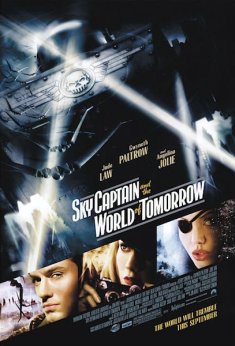
Sky Captain and the World of Tomorrow (2004)

2009 #63
Kerry Conran | 102 mins | TV (HD) | PG / PG

Sky Captain and the World of TomorrowIf the Indiana Jones series was a bit more sci-fi (even than Crystal Skull, that is), it might be rather like this. First time writer-director Kerry Conran evokes ’40s cinema serials more thoroughly than Lucas or Spielberg ever dared with a globe-hopping tale of a mad scientist’s giant robots doing all sorts of damage in a quest for… well, that would spoil the ending.

In the telling, Sky Captain is every inch a Boy’s Own adventure, packing every facet of that genre of storytelling into its brisk running time. There’s secret bases, ray guns, giant robots, flying aircraft carriers, snow-bound Himalayan treks, creature-infested secret jungle islands, huge underground bases, space rockets, planes that are also submarines, tree bridges over impossibly deep gorges… If it’s part of the genre, it’s probably here, and all finally executed with ’00s-level special effects. In some respects it does move between set pieces and locations in an episodic fashion, but then that’s more a trait of the films it emulates — i.e. episodic serials — than a flaw in Conran’s plotting.

Still, some might view Sky Captain as little more than an exercise in filmmaking — it was one of the first movies to be shot entirely on blue-screen, around the same time as Sin City and a couple of others. There’s more to it than that, but it’s also hard to ignore the style this creates. The shooting process is far from perfect if one were trying to recreate real life, but here the whole look is so stylised that it hardly matters. The period setting is nicely evoked, combining myriad influences into an intricately realised retro-future style, coupled with a lovely sepia sheen over everything. It’s beautifully lit, while individual shots and editing are frequently reminiscent of a style from the ’40s (and earlier). Again, Conran is being deliberately evocative of films of the period, rather than a modern film set then; more La Antena than Star Wars.

Another much-discussed feat of technology is the resurrection of Sir Laurence Olivier as the film’s villain. Unfortunately, his brief appearance is underwhelming. Perhaps we’ve become too accustomed to modern technology resurrecting deceased actors for ‘new’ performances (not that it happens that often); but then again, what was done with Oliver Reed for Gladiator — four years before this — seemed more impressive than the small amount of hologram we see here, even though the digitally created shots were equally brief. It’s a shame, because using Olivier for this key role is quite neat, certainly better than casting a glorified extra. In fairness, then, it’s a part so small that very few appropriately-big names would agree to it, which perhaps permisses resurrecting Olivier after all

Among the real performances, the acting is a bit flat. Perhaps this is deliberately in-keeping with the emulated style, though Jude Law is always this bad so maybe not. Similar comments could be made of the screenplay, if one were being unkind. What it does manage is a good amount of humour — an essential part of the genre, as any Indiana Jones fan will tell you, but it’s by no means guaranteed in these over-serious times (thankfully, the likes of Star Trek and Transformers are occasionally breaking down this barrier to fun).

Breaking free of any self-imposed period constraints, Conran also produces a few exciting action sequences, such as a plane chase through the streets of New York. It’s incredibly hard to create spectacle these days, but Sky Captain occasionally manages it. There are also lots of fun little references to other things for the keen viewer to pick out. 1138 crops up, inevitably, but my favourite is some dialogue lifted from Orson Welles’ War of the Worlds.

Sky Captain is a healthy dose of retro-styled fun. Perhaps that makes it an acquired taste, but there’s certainly nothing wrong with that.

4 out of 5

My review of the proof-of-concept short that inspired Sky Captain can be read here.

Transformers: Revenge of the Fallen (2009)

2009 #80
Michael Bay | 150 mins | Blu-ray | 12 / PG-13

Transformers: Revenge of the FallenIf Transformers was “from the director of The Rock and Bad Boys”, then Revenge of the Fallen is “from the director of Pearl Harbor and Bad Boys II”. If you don’t get what I mean by that… well, let me explain…

The most striking thing about Transformers 2, as it inconveniently isn’t called, is that it’s over-long and indulgent. Has Bay never heard of an edit suite? The writers of a delete key? Anyone of quality control? There are too many ideas, when some should’ve been dropped for clarity and speed; the film could — nay, should — have been seriously trimmed down at every stage of production. By my reckoning, as much as an hour could be lost while still retaining all the best bits of action, humour and plot. Consequently, it’s simply not as much fun as the first film, exacerbating rather than fixing all its flaws and losing most of its charm (it didn’t have the last in spades, but it had enough).

There are good bits though. The humourous scenes highlight this contrast the most: some are genuinely amusing, others simply not, and typically go on too long. All the stuff with Sam at college — why? Especially his mum accidentally eating drugs. Or the jive-talking twins, who’d be this decade’s Jar Jar Binks if only they were as memorable. There are countless other examples — if you’ve read almost any other review you won’t need me to mention the robot balls. When the writers don’t try so hard, however, there are pleasurably funny scenes.

This applies to the action too. Some of it is exciting, but Bay has no genuine concept of rest or pause — sequence after sequence is thrown at the viewer with mind-numbing intensity. There are good beats liberally scattered throughout, but so many sequences means no stand-outs are left because there’s no time to properly process any of them. As in the first film, robot-on-robot fighting is hard to decipher. These Transformers are too realistic (as it were) — they’re all made up of thousands of gunmetal-grey parts; as soon as they come into contact you can’t tell which bit belongs to who and what exactly is hitting where. Even with the extended slow-mo shots — of which there are a lot more than in the first film — by the time you’ve actually worked out what you’re looking at, Bay cuts to the next confusing ShakyCam moment.

When things do slow it’s for brazen ‘character development’ or clunky plot exposition, both coming in great big tell-don’t-show info-dumps. At one point, one character literally urges another to “explain the plot”. The character scenes are equally forced, the dialogue functioning at a level of state-the-obvious inanity. Bay treats women with a similar absence of subtlety — every scene featuring a female is shot like a moving version of FHM, all skimpy clothes and slow-mo jiggling. The only exception is Sam’s mother.

Technically, the CGI is almost flawless, only the occasional brief shot failing to achieve little less than photo-real perfection. Bay’s typical tech fetish is also in evidence, suggesting he looked at a couple of car and military mags when he picked up that inspirational FHM. Bizarrely, however, the sound mix strikes me as a flawed technical element. I found it so odd that I had to download the digital copy and listen in plain old stereo to check there wasn’t something haywire in my surround setup. By the end it’s sounding as you’d expect (largely), but throughout there are unusually spartan patches, lacking in the music or hard-hitting explosive sound effects one expects. Perhaps we should be grateful that it’s less bombastic and wall-of-noise than you normally find in such action films, but it renders the soundtrack disconcerting at times.

On its cinema release, Revenge of the Fallen unsurprisingly jumped on the recent bandwagon of having an IMAX release, although at least some parts of the film were shot for the format — just like The Dark Knight, although with nothing like the same level of attention lavished on this in press coverage. According to the BBFC, the IMAX-exclusive version ran 91 seconds longer — 151:16 as opposed to 149:45. According to my player, the Blu-ray runs 149:53. It seems that, despite Bay’s promise of releasing the slightly-extended IMAX cut, complete with Dark Knight-style shifting aspect ratios, Paramount have been less faithful than Warner. Perhaps they considered the typical Transformers 2 fan incapable of grasping such a concept. Not that it really matters — if there’s one thing this film doesn’t need it’s to be any longer.

At times it’s like an uncomfortable amalgamation of Saturday morning cartoon and more adult-orientated action-comedy. On the one hand you’ve got a top-secret organisation with a semi-plausible acronym for a name (NEST) that sees soldiers and good giant robots travelling the world fighting bad giant robots, all without the public noticing. On the other, you’ve got whole sequences about drug use, almost brutal fight scenes, and lad’s mag-level slow-mo shots of girls running, changing and having their short dresses hiked up by robotic tails. (To be fair, there’s only one robotic tail.) In other words: if you’re an average 13-year-old boy, this is the Best. Movie. Ever.

For the rest of us, Revenge of the Fallen is, at best, the kind of blockbuster that might benefit from a second viewing, though probably after some time has passed. It’s not likely to create a better impression of the character development or comedy, but perhaps the MacGuffin-packed plot (there are at least three) would be easier to comprehend, the mythology-dumps easier to stomach, and the massive fights easier to follow. At worst, it’s a hurried production that would have benefitted greatly from some judicious editing from script level upwards. This is what happens when a studio allows someone like Bay an essentially limitless budget and less than two years to turn a blockbuster around.

3 out of 5

Transformers: Revenge of the Fallen is released on DVD and Blu-ray in the UK tomorrow.

Watchmen: Director’s Cut (2009)

2009 #79
Zack Snyder | 186 mins | Blu-ray | 18 / R

This review contains spoilers.

Hitting US Blu-ray so long ago that it’s shameful I haven’t watched it ’til now, and finally arriving in the UK next Monday, the Director’s Cut is Zack Snyder’s final vision of Watchmen: The Movie. The Ultimate Cut (currently available in the US but with no confirmed UK release), which integrates the animated Tales of the Black Freighter into the main feature, is, in Snyder’s words, “an experiment”. Maybe one day he’ll change his mind and say that’s actually his definitive version; I suppose these days — when it seems every major film has a proliferation of different cuts across theatrical release, home entertainment release, and home entertainment re-release — such a thing as a “definitive version” doesn’t necessarily exist. But that’s a debate for another day: for now, this — not The Ultimate Cut, and certainly not the theatrical cut — is Snyder’s Watchmen.

That said, I wouldn’t be inclined to say it’s vastly different to the previously seen version. There are some obvious new scenes and extensions, especially if you’re familiar with the original novel, but ultimately I didn’t find the additional 24 minutes created a vastly different experience. Most of the flaws still remain, from the unfixable — Malin Akerman is somewhat miscast; sometimes episodic storytelling (a largely unavoidable side effect of faithfully adapting a novel that is very much a story in 12 parts, as opposed to a story divided into 12 chunks) — to those that Snyder could potentially have rectified — the alley fight/Manhattan interview crosscutting still doesn’t quite work; Bubastis is inadequately explained; too little time is devoted to the large cast of secondary characters in New York to give Adrian’s plan the same emotional kick it has in the novel; and so on.

By the same token, none of the great bits are ruined, while some are enhanced. Although mostly faithful to the novel, the changes Snyder and co have made are almost all for the better: Rorschach’s “what do you see?” beats the fan-favourite landlady scene (goodness knows why it’s a fan favourite), and Matthew Goode’s slightly built, faintly Germanic Veidt seems a more natural fit for the character now than Gibbons’ more butch version (possibly only in my opinion, that one). Best of all is the modified climax, which retains all the significance of the original but, by changing the way in which it’s brought about, streamlines and tidies up the storytelling. The giant squid is a great comic book image, but this is superior plotting, especially in the abridged form a film adaptation must take.

As for the new bits themselves, some are slightly misguided — Rorschach’s escape from Blake’s apartment, for example, is wholly unnecessary; it shows him injuring a policeman, an incident now referred to over the next few scenes, but we don’t need to see it to follow the references, and showing it gets in the way of the previously perfect match-cut from the Minutemen photo in Blake’s apartment to the same one in Hollis Mason’s. By and large, however, the extensions add depth via little lines and moments. The most noticeable are a better building of Laurie’s backstory, and Hollis Mason’s death. The latter is a little ancillary to the main plot, its excision from the theatrical version easily justified to keep the running time down, but in itself is a well-played and tragic scene that adds further resonance to the end of Dan’s story.

Whatever you thought of Watchmen after the theatrical cut, this extended version is likely to change your opinion no more than any other re-viewing would. That said, with a little extra room to breathe and a few worthwhile extensions, and in spite of the odd tweak that doesn’t work, this is the superior cut of the film.

5 out of 5

Most of the comments in my lengthy review of the theatrical cut still stand, so I invite you to read it here.

Watchmen: Director’s Cut placed 3rd on my list of The Ten Best Films I Saw For the First Time in 2009, which can be read in full here.

Alien vs Predator – Part 3

Having already published my thoughts on the two franchise starters and the remaining films in the Alien series (crikey, has it really been three months since that?), this is the concluding entry in my coverage of the Alien, Predator and Alien vs Predator franchises.

This time, I’ve covered the sole Predator sequel (to date [2015 note: times change]), and how the franchises fared as they came together to move into the new millennium. Be warned: things only get worse. Much, much worse.

2009 #17
Predator 2

“I’ve talked about the Alien sequels dramatically switching genres, but Predator 2 leaves them looking as if they couldn’t be more alike. Where Predator is a behind-enemy-lines/covert mission/jungle/war actioner, Predator 2 is an urban drugs crime police, erm, actioner… though both with a sci-fi twist, obviously.” Read more…

2009 #18
AVP: Alien vs. Predator
(Extended Version)

“Anderson manages to amalgamate a popular and acclaimed film franchise, its almost-as-beloved stablemate, and an equally popular and acclaimed comics & video game series, and then decimate all three in one 85-minute (without credits) swoop.” Read more…

2009 #19
AVPR – Aliens vs Predator: Requiem

“By not withholding the monsters, the characters’ dull lives become even duller. One of the Alien series’ strengths was in making the extraordinary (space travel!) seem mundane (space truckers), but AVPR makes the ordinary seem mundane, and that’s no achievement at all; in fact, that’s a great big failure.” Read more…


And that’s it.

Except not for long, because at some point I’ll surely share another three-film entry covering the various extended versions of the three Alien sequels. And then, of course, Robert Rodriguez is working on a Predator continuation/reboot, supposedly still called Predators, not to mention the much-discussed Ridley Scott reboot/remake/prequel of Alien. Each project has good people involved, but it remains to be seen if any of them can pull it off.

Still, you can’t get worse than AVPR, right?

Though, they said that about AVP

AVPR – Aliens vs Predator: Requiem (2007)

2009 #19
The Brothers Strause | 97 mins* | DVD | 15 / R

AVPRAliens vs Public Relations? Sadly not. And when a joke plot like that sounds more appealing than a rematch between two of sci-fi’s greatest monsters, you know you’re in trouble.

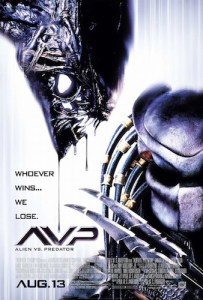
In my last Alien/Predator review, I made sure to attack director Paul W.S. Anderson a bit. As well as being renowned for making rubbish films, Anderson is also quite well known for being sequel-shy… and so it is with the AVP franchise, here handing the reins to the less-than-capable special effects-creating Brothers Strause. They supposedly set out with a fan-pleasing remit: primarily an R-rating, but they even make sure to use familiar fonts and sound effects right from the title card. Though said title card is blurry and unclear, obscuring the film’s very name — a sign of things to come, because their ability to please fans extends no further than some vague surface essentials.

To be fair, it can’t be easy to marshal all the familiar tropes of two different franchises into a single film that does something original with them. But that’s no excuse — things like facehuggers and skinned humans are present as if simply ticked off a list, having neither the surprise and mystery of the original appearance (obviously) nor anything new to make them worthwhile. They’re there because they ‘need’ to be, and while it makes some kind of sense to not play them as surprises, there’s nothing remotely new or different to hold our attention instead. Much of it is so poorly done that it’s not even set pieces strung together, it’s ideas for set pieces strung together.

If you thought AVP spent too much time focusing on the Predators rather than the humans (and I did), you’ll find AVPR even worse. It again tries to emulate the build-the-characters-first approach of the best Alien and Predator films, but intercuts their mundane lives with what the Predators and Aliens are up to. No, no, no. Part of the point of the character-based slow-build is to create tension — there’s none of that here. And by not withholding the monsters, the dull lives become even duller. One of the Alien series’ strengths was in making the extraordinary (space travel!) seem mundane (space truckers), but AVPR makes the ordinary seem mundane, and that’s no achievement at all; in fact, that’s a great big failure.

Even the action sequences are a mixed bag. There’s a nice line in harsh and surprising deaths — major characters are suddenly picked off, and with a cast so full of minor actors you can never be certain who’ll make it; and among them are a young boy, pregnant mums, and most of the town gets nuked by the army because the townsfolk trusted them. The final fight makes admirable use of suits and animatronics over CGI, but it’s so dark you can barely tell what’s happening. Similarly, the PredAlien may be great or it may be rubbish — you never see it well enough to tell. It’s not only the climax: over-dark cinematography and typically choppy editing obscure every action sequence. Why is it that in an age where special effects are so improved and there’s a preference for real actors over stunt doubles, action sequences have become harder to follow?

The overall feel is of a horror B-movie — a direct-to-DVD one. It may be a stock phrase for reviewers, but in this case it’s actually true: AVPR genuinely makes AVP look good. It’s a new low even for the Predator series, and it drags the Alien franchise from once lofty heights right down into the gutter with all the other too-long-running horror franchises. However permissable parts of AVPR might be (when judged on its own terms) (with a kindly eye), the inconceivably thorough degradation of a once-great franchise is its greatest crime.

Alien³ was a charming mess. This is just a mess. An irredeemable one.

1 out of 5

* AVPR on DVD is 7 minutes longer than in cinemas. This seems to be the only cut available (outside of Germany) and isn’t specially labelled, hence the lack of qualifying “Director’s Cut” or “Extended Cut” or “DVD Cut” in my title.

AVPR featured on my list of The Five Worst Films I Saw in 2009, which can be read in full here.

AVP: Alien vs. Predator – Extended Version (2004)

2009 #18
Paul W.S. Anderson | 98 mins | DVD | 15 / PG-13

This review contains minor spoilers.

AVPOnce upon a time — around the late ’90s, when he was only known for Event Horizon (and that video game thing no one wanted to mention) — director Paul W.S. Anderson was seriously and vocally attached to a film adaptation of Doctor Who. At the time it was such a good idea, a bright new hope for Who’s revival, with a Hollywood-level — yet, pleasingly, British — director at the helm. When it didn’t come together it was quite disappointing. In retrospect, I think we can breathe a collective sigh of relief.

Anderson’s films always come in for a critical drubbing and AvP was no exception. Sadly, it was well deserved. The main problems are a weak script, including an abundance of prologues in place of genuine character development, and poor performances, not helped by what sounds like a regular use of bad ADR. Characters make leaps of logic that would be reasonable if they’d seen the preceding six films, but make no sense whatsoever given what they know in context. The story begins moderately well, even pushing to the slow build in the franchises’ best entries (though without as much tension), until just 13 minutes in, when there’s a pointless scene on a Predator ship. Of course we know they’re coming — they’re in the title — but it’s a reveal too soon and ruins any mood Anderson’s managed to create. Constant updates on their progress exacerbate the problem.

There are actually some very inventive ideas scattered throughout — like the captured, frozen Alien Queen — but, in storytelling terms, their reveals are poorly handled, occuring too early and too far from the protagonists. However much time Anderson wants to spend getting his humans into position (a lot, just like the other six filmmakers before him), he clearly doesn’t trust the audience to go along with it without some hints of the creatures (unlike the best of the filmmakers before him). It’s not his only directorial misstep. He makes the fatal mistake of letting his monsters out into the light too much, though the choppy editing almost obscures them again. While effects can now withstand this level of scrutiny, the effect of the creatures can’t — they belong half-hidden in shadow, especially the Alien.

Elsewhere, every facehugger is treated to a graphic slow-mo shot. Once might’ve been cool, but it quickly becomes overkill — especially when the first instance features three, immediately rendering every solo example that follows unremarkable. And then there’s the ending nabbed from Predator 2. And the final beat that, though the groundwork is laid earlier in the film, still doesn’t really make sense (considering how fast chestbursters came out of the humans, or how long the Predator had been dead by the time it popped). When the director doesn’t know how to handle the titular monsters correctly, you know you’re in trouble.

That said, Anderson certainly delivers on the title’s Aliens-fighting-Predators promise. Most of the film’s limited imagination is lavished on these battles, but as with most monster-on-monster bouts we have no stake in either side, leaving them mostly heartless and only engaging on the level of “cool!” The human characters are left by the wayside at these moments, disappearing out of the way — and taking what little plot there is with them — for a few minutes. When they do appear there are some attempts at character development (yes, beyond those prologues) which are well-intentioned but painful. All things considered, Anderson has taken two horror franchises with an action-adventure tinge and turned them into an action-adventure film with a horror tinge.

This ‘extended version’ is a whopping 79 seconds longer than the theatrical cut, adding a whaling station prologue. This exacerbates the issue of revealing the monsters too early, but it does go some way to justifying the otherwise random glimpses of the Predator ship. Nonetheless, to be truly effective we shouldn’t know more about what the aliens are up to than the human characters do and it’s all a mistake. (An unrated version of the film is also available in some territories. It runs eight minutes longer, but the additions seem to just be the deleted scenes included on other releases.)

Flash forward however many years since that mooted Who movie, and Anderson’s career has mostly reverted to video game adaptations and trashing as many franchises as he can. AvP is surely the culmination of his efforts: here he manages to amalgamate a popular and acclaimed film franchise, its almost-as-beloved stablemate, and an equally popular and acclaimed comics & video game series, and then decimate all three in one 85-minute (without credits) swoop. Well done Mr Anderson, your efficiency knows no bounds.

2 out of 5

Tomorrow, AVPR – Aliens vs Predator: Requiem.

Predator 2 (1990)

2009 #17
Stephen Hopkins | 104 mins | DVD | 15 / R

Predator 2I’ve been looking forward to Predator 2 for a number of years after a friend told me that, despite its poor critical standing, it’s actually a jolly good film. (“A number of years” is the average time it takes me to act on such a recommendation; and, knowing this particular friend, “jolly” was probably not the word he used.)
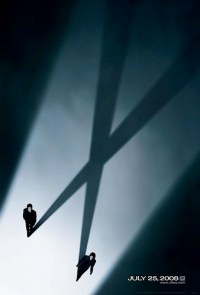
Here, action director extraordinaire John McTiernan hands the reigns over to Brit Stephen Hopkins (probably best to be remembered for helming half of 24’s phenomenal first season, though you can recall the Lost in Space film and A Nightmare on Elm Street 5 instead if you like) and the action is moved from a jungle to the concrete jungle (see what they did there?) of LA, in the near-future year of 1997. Made in 1990, Predator 2 is set in the future for no good reason — sure, there’s a big gang problem, but this is fiction, you can set it now and still make up things like a huge city-affecting change in the status quo; and that way you don’t have to have silly semi-sci-fi guns either. Not to mention the fact that before too long it seems like they’d rather forget this is the ‘future’ and just get on with things. In the end, all it does is seriously date the film: in almost every facet, from screenplay to costumes to direction, it feels more like 1987 than 1997.

Sadly, this isn’t where the problems end. Out of four Aliens and two Predators, this has to be the only one that doesn’t bother in the slightest with a slow build up of tension. Sure, Alien Resurrection gives us the actual aliens much earlier than the others, but they’re not really in force for a fair old while. Predator 2, on the other hand, opens in the middle of a gunfight that lasts for the next ten minutes, and there’s a second before the half hour. This isn’t necessarily a problem in itself but there’s nothing inspired about any of it, especially the gang drug war plot that provides most of the focus.

It’s a shame this fails so miserably, because the franchise re-location is actually a commendable thing. I’ve talked a few times about the Alien sequels dramatically switching genres, but Predator 2 leaves them looking as if they couldn’t be more alike. Where Predator is a behind-enemy-lines/covert mission/jungle/war actioner, Predator 2 is an urban drugs crime police, erm, actioner… though both with a sci-fi twist, obviously. But the vastly different settings and setups mean that, even with the involvement of the same sneaky alien hunter, the films have a vastly different feel too. It’s just a shame Predator 2’s “urban jungle” concept is so poorly executed… for a while anyway, because when it finally reaches the 30-minute climax things suddenly get quite good.

It’s a bit like all the time, effort and money went on creating a good lengthy climax, then any-old hour-long urban crime movie was bolted on the front to create something feature-length. In fairness there are some good bits earlier on, but the final half-hour (or so) feel like it’s from a slightly different, slightly better movie. The dialogue improves, suddenly filled with some decent lines, and it centres on a mano-a-mano (or mano-a-alien, really) fight that’s nicely reminiscent of the first film while being totally different, sprawling through locations and using lots of high technology. There are still flaws — it nicks the government agents’ motivation from Alien wholesale (they want to capture the alien for its weapons technology, which they admire it for) — but they’re largely forgivable.

Perhaps best of all is that throughout the climax it expands what we know of the Predator, rather than just rehashing what we learnt in the previous film, as in so many weaker sequels. There’s more of its weaponry and its medical kit, what amounts to a tour of its ship, hints of its society and culture, and it’s given a nice balance of fallibility — not so indestructible that it’s stupid when the hero wins, but not so weak as to be undramatic or inconsistent. There’s one especially good moment where the Predator discovers a character is pregnant and so spares her, a nice touch both in terms of how it reveals the previously-unknown pregnancy (through the Predator’s heat vision) and in revealing the creature’s morals. It’s this sense of honour and a heightened mental capacity that marks the Predator out from other such creature movies, especially the Aliens, who are essentially animals (it would seem), albeit cunning ones.

Predator 2 is a dire film rescued by an excellent finale. As well as a decent chase and fight, it also builds on the first film’s mythology, revealing a decent amount about the Predators and hinting at more, without going too far or spelling it out too bluntly. If only such qualities could have extended into the opening hour, this could have been a sequel on par with the original.

3 out of 5

Tomorrow, AVP: Alien vs. Predator.

The X Files: I Want to Believe – Director’s Cut (2008)

2009 #44
Chris Carter | 104 mins | DVD | 15

Six years after the once-phenomenal TV series meandered to an inconclusive conclusion, Mulder and Scully were back at the cinema, a decade on from their previous between-seasons big screen outing. The big threat this time was not aliens, however; nor even something more Earthly supernatural; but rather, where they would find an audience? There are now kids old enough to watch this in a BBFC-endorsed fashion who weren’t even born when the series started, and that’s not to mention the misguided attempt to pitch this as a Summer blockbuster.

And if there’s one thing I Want to Believe isn’t it’s a Summer blockbuster, which its snowbound setting arguably gives away to even the most casual observer, while its lack of action sequences and focus on spooky goings-on and character relationships — not to mention that none of these characters are requisitely young enough to head up a typical Summer Movie — should have been the clue to studio execs. And, unsurprisingly, the release strategy failed, leaving audiences either disappointed or not even turning up. As with so many perceived flops these days, it seems to me, I Want to Believe didn’t actually flop: off a $30m budget it made $68m worldwide. Though as only $21m came from the US, where the consideration of box office stats is often highly self-centred, it’s easy to see why many believe it did. Such perception, coupled with poor reviews and that problem of finding an audience, may mean there’s not a third movie, which seems a shame with 2012 on the horizon — quite nice timing for a (last-ever, I should think) instalment.

But let’s return to the issue of how this film was perceived, because I think that’s key to why it was so poorly received. The problem here is that it’s an X Files movie; not because there’s anything wrong with another film for that series, and not because it’s a bad version of The X Files, but because that title carries certain expectations — not only from fans but, with greater relevance to any widespread success, from the general public. Witness the IMDb thread entitled “Where the F were the aliens”, for example. Were this just an entirely standalone supernatural-tinged thriller — and consequently released in a sensible non-Summer slot — it probably would’ve gone down a bit better.

As it actually stands, I Want to Believe is not the kind of X Files most people were expecting — i.e. Something To Do With Aliens, and it’s no spoiler to say that there’s not a single one to be seen — forgetting that the series was never just about extraterrestrials. The idea that I Want to Believe was a bit rubbish and thoroughly disappointing is consequently as much (if not more) the fault of those viewers and reviewers who expected a different kind of film and didn’t get it. That said, it’s a shame that I Want to Believe isn’t wholly successful as the kind of film it’s trying to be either: on the surface, a standalone low-key supernatural thriller — though it fails to explore or explain its fantastical and scientific ideas as fully as one would like, particularly during its lacklustre (anti-)climax — but one that also tackles issues of moving on, obsession and belief, and how they can impact on a relationship — though with all the weight you’d expect in the belated sequel to a sci-fi TV spin-off.

Mainly, however, it’s about belief. The examples of this are too numerous to mention, but a clear one is the subplot involving Scully’s fight to treat a terminally ill boy. The thread bears little relation to the main supernatural plot, which was another point of confusion for many viewers, but if you consider the film as a commentary on and examination of the various forms and merits of belief it begins to slot in a lot better. Perhaps this is another case of a filmmaker attempting something beyond what audiences were expecting to invest in terms of intelligence, although if one accepts it’s there and a significant part of the film it probably begins to pale as a relatively light and underdone exercise. Still, it’s hard to deny that belief is the film’s central theme, which pleasantly turns the title from a generic catchphrase from the series, as it initially appeared, to a none-more-appropriate moniker.

Perhaps distracted by his thematic intents, writer-director Carter rushes some plot points, though he may also be limited by budget constraints and the need to make a distinctly R-flavoured movie hit PG-13. While the Director’s Cut adds three-and-a-half minutes of material, which Duchovny asserts is mainly gore that was cut to avoid an R certificate in cinemas (full details of which can be found here), there’s still nothing that looks as if it would’ve been out of place on conservative US network television, and obviously no effort has been made to give the main plot some breathing space.

The same goes for the guest cast, most of whom are thoroughly underused. Billy Connelly makes a good show of it, but Amanda Peet’s FBI agent has much unfulfilled potential. Yet at other points Carter lets things spool out comfortably — too comfortably, some might argue. One of these places is the relationship scenes between the two leads. The amount of attention lavished on this might lend credence to a theory that the film is as much about a pair of ostensibly retired paranormal investigators as it is this particular case, and through that again a consideration of obsession and belief.

The large amount of time spent on Mulder and Scully’s relationship fortunately doesn’t turn the film into an effort solely for the benefit of ‘shippers’. There’s definite space here for a portrait of two people in a relationship who have tried to move on from their old life but just can’t, and at times I Want to Believe does achieve such lofty aims. Little nuggets of information — such as the fact they’re even in a relationship, or that they once had a child together — drop in almost from nowhere in a way that undoubtedly sounds just like dialogue to a knowledgeable fan, but to a more casual viewer works as a slow uncovering of these two characters. Unfortunately such quality is fitful, especially as the movie goes on, and while the nine-seasons-and-one-movie of backstory initially just add depth if you know about them, it’s some time before the sudden and underwhelming climax that it feels they’re dictating events a little too much. What was shaping up to be a workably standalone depiction of two characters almost becomes just a status update on Mulder and Scully.

And here lies the rub: at times, the Second X Files Movie gets too caught up in being just that. There’s nothing wrong with that per se, but it could do with remembering it’s a Movie and not just another X File — especially if it wants to find any new (or even lapsed) viewers. When Assistant Director Skinner turns up it’s the final nail in the coffin for any shot at independence. As a fan, it’s impossible to begrudge a brief but heroic last-minute appearance from Mulder and Scully’s long-time ally, but as an objective viewer, he’s just some bloke who turns up with no introduction just in time to play a major role in the climax. It’s a misstep that, along with an accumulation of others, seriously damages the film.

But does an X Files movie need to be independent? Should nine seasons (and one movie) of backstory be ignored? Well, yes and no. There’s nothing wrong with making a “where are they now?” fan-pleasing reunion, but that would belong on TV with the bulk of the thing being commemorated. In the cinema, six years distant and billed as a standalone tale (note that it’s not even The X Files 2: I Want to Believe, never mind The X Files 204: I Want to Believe), it ought to stand on its own two feet and work entirely as a self-contained piece of drama. That it fails in this is perhaps the most disappointing aspect of all for me: it makes it infinitely harder to defend this as a supernatural thriller that deserves to be judged entirely on its own terms, rather than with some established knowledge of what The X Files ‘is’, when the makers are relying on those self-same established notions to tell their story.

Never mind finding an allusive audience, this is the film’s real battle: when Carter gets too caught up in making The Second X Files Movie, shifting what’s working well as both The X Files and A Movie into straight-up An X Files Movie territory. It’s this failure to be independent — not to the point of ignoring the series’ backstory, I should clarify, but to a point where this film can be wholly appreciated without ever seeing The X Files — that ultimately holds I Want to Believe back from becoming a great horror/thriller/drama movie in its own right. It’s frustrating because so often Carter comes tantalisingly close to fulfilling such ambitions, and if he had I’d have no qualms about defending this movie as an underrated (though, it is), misunderstood (though, it is) and independent supernatural-flavoured drama. Sadly, however, I think I just want to believe it is.

3 out of 5

The X Files: I Want to Believe premieres on Sky Movies Premiere tonight at 9:45pm, then at various times throughout the week. It’s probably the theatrical cut, but who can say?

Alien vs Predator – Part 2

Five weeks ago (crikey, time flies) I began my series of reviews of the Alien, Predator and Alien vs Predator franchises with my thoughts on Alien: The Director’s Cut and the original Predator, both of which I’d seen before. Over the past few days I’ve moved on to the remaining Alien films, all of which I viewed in their original theatrical cuts and all of which were new to me.

Here’s a handy summary of what you may’ve missed, then, if you somehow had something better to do on a sunny summer weekend than check blogs every day.

2009 #14
Aliens

“Where Alien is a Horror Movie — but in space — Aliens is a War Movie — but in space. The central characters are a team of marines, as opposed to the original’s ordinary guys; where the first film’s design was dark, shadowy and oppressive, here it’s all gleaming tech, tanks and guns and spaceships and the like; and, just to underline the point, the score is full of military drums.” Read more…

2009 #15
Alien³

“Even if in some ways 3 combines the first two — single Alien, claustrophobia, unarmed heroes; but there are lots of them, most with experience of killing — it adds enough variety, especially stylistically… it soon turns dark, dirty and decrepit, abandoning both the the military sheen of Aliens and the old tanker grime of Alien.” Read more…

2009 #16
Alien Resurrection

“the most notable differences are its black humour, where the tastes of both [writer] Whedon and director Jeunet make their mark, and how grotesque it is — almost two extremes walking hand-in-hand. The deformed, perverted Ripley clones; the Hybrid; the Ripley-Alien sex scene — there’s nothing like this in the other films, and that’s a grand thing.” Read more…


In the third and final part of this series I’ll be setting my sights on the allegedly-underrated Predator 2 and the much-hated pair of AVP and AVPR.