
Roland Emmerich | 158 mins | Blu-ray | 12 / PG-13
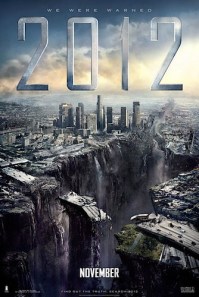 It’s the end of the world, and Roland Emmerich feels fine. The “master of disaster (movies)”, as I’m sure someone (probably himself) has labelled him, here attempts the biggest disaster of them all — as I said, it’s the end of the world.
2012’s end of the world occurs courtesy of messy CGI. I’ve seen better graphics in current-generation computer games than some of the sequences here. And there’s too much of it. Letting Emmerich’s imagination — and budget — run rampant means there’s an assault of imagery that’s just too much for one film. It makes other disaster movies look focused — at least The Day After Tomorrow, for example, was just about everything freezing; here, cities fall into giant earthquakes, supervolcanoes destroy whole National Parks, and numerous other things that I can no longer even remember take their digital toll.
Put these two facts together — the poor effects work and the overabundance of ideas — and it means much of the imagery fails to impress. It either looks too fake to even begin to accept, or there’s too much going on to consider processing it, and long before the end the sheer number of massive disasters means the viewer stops being impressed by them. Even Emmerich no longer seems impressed: instead of granting huge moments the lingering wide shot they deserve, he rushes past with nary a thought — “someone said they’re about to crash into Everest, you don’t need to actually see it”.
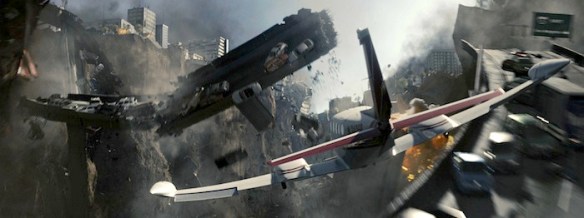
In spite of this, one or two moments are still visually spectacular. The plane escape from a crumbling city — sorry, the first plane escape from a crumbling city (there are many) — produces a couple of incredible shots of Los Angeles disappearing into the earth, the heroes’ light aircraft dodging subway trains that burst from above them and… that kind of thing. I’ve forgotten the details, there were too many.
2012 is the very definition of spectacle. The problem is not only that Emmerich overdoes this, but he also seems to think we might care about the characters. One has to accept that such subplots are inevitable in this kind of film, even when not a single one offers something new, but they’re given too much coverage. Rather than a sketchy portrait of a separated couple who eventually get back together, or a man who has to accept he can’t save his father, or what have you, 2012 serves up multiple lengthy scenes about each. They don’t make us any more sympathetic to the characters, their familiar clichés don’t add any more depth than a brief allusion would, they just make a long film even longer — it’s closer to three hours than two for Christ’s sake.
Despite the lack of decent characterisation, actors like Chiwetel Ejiofor are endlessly watchable anyway. I personally wouldn’t count John Cusack in such an elite bunch, and certainly not Danny Glover, coming across a bit “we couldn’t afford Morgan Freeman” as the US President, but a couple of the cast members hold the screen well enough.
The film is low on credibility throughout, then, but it finally loses any it may’ve clung on to near the climax: earthquakes big enough to swallow cities, volcanoes huge enough to obliterate states, tsunamis tall enough to crush islands… all of this we can accept — but when a mass of plebs hammer at the doors to be allowed on the humanity-saving arks, it’s the one run by Russia, China and Japan that first heed the call to allow them on. Yeah, right.
Still, thank God they scrapped the twee alternate ending, where Adrian’s father is somehow saved and the President’s daughter has some big congratulatory thing with Jackson. Though it didn’t escape my notice that the film does end with a line about the lead character’s 7-year-old daughter no longer needing nappies. Not exactly the expected final note of optimism for the future of humanity. Next time there’s a contest for “worst final line of a film ever”, this is surely a contender.
That aside, 2012 has some good bits. Heck, even the plot isn’t too bad — in its own way, for this type of super-epic sci-fi disaster movie, even if it’s a bit like the love child of The Day After Tomorrow and Knowing — but it far outstays its welcome with repetitious action sequences and dull characters. Speeding things up, aiming for an entertaining running time rather than one that screams “suitably epic!”, might’ve helped spice things up.  On the other hand, you do get more or less what you’d expect from the film. No one’s going into this thinking they’re getting a deep character piece — it’s great big spectacle all the way, and while it’s not the greatest big spectacle ever, it delivers something close enough to prevent it being the ultimate disaster of a movie — but it’s not the ultimate disaster movie either.
It’s a CGI-focused visually epic spectacular built on a story that lacks an original plot or real characterisation. Sounds familiar… Ah yes: Avatar. I’m sure those who loved Cameron’s Oscar-loser will get something from 2012 too.

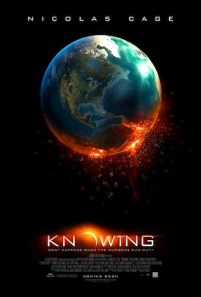 Not many people seem to like Knowing. Quit the opposite, in fact. I must confess, I’m not really sure why. I can read their reasons, of course, but I still thought it was a decent film. Solidly entertaining even, I’d say.
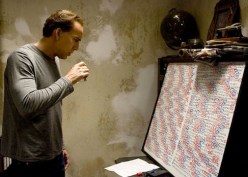
 those numbers down, and other such technical queries, but that seems like needless nitpicking.
 I will accept, however, that the very last shot is arguably a step too far and a little cheesy.
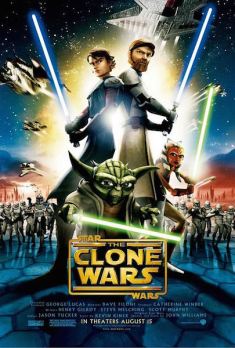 The Clone Wars can boast an awful lot of firsts within the
  Catherine Taber’s Padmé impression is probably the most convincing of the lot and, coincidentally sharing the same scenes, Corey Burton’s Truman Capote impression as Ziro the Hutt is entertainingly obvious. Count Dooku doesn’t particularly benefit from the involvement of Christopher Lee, but at least Samuel L. Jackson is vaguely recognisable lending his actual voice to Mace Windu. Most of the cast deliver the kind of performance you typically find in kids’ cartoons — i.e. not all that good, no doubt due to the pressures of producing as many episodes as possible as cheaply as possible. Dubious line readings abound, though in fairness this may be down to the awkward lines they’re forced to deliver.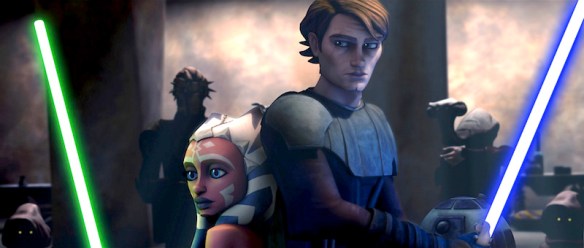
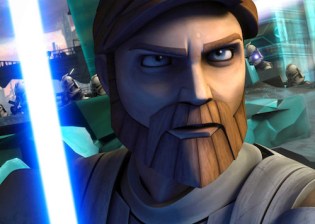 It may sound like a piece of trivia that this was originally conceived as three episodes of
  it just doesn’t have the epic quality that imbued all the other Star Wars films. Not every film has to be an epic, even ones set within the same universe/storyline, but by wheeling out all the main characters and then showing them complete just one moderately low-key mission, The Clone Wars does feel like a single instalment of a TV series and not an appropriately-scaled cinematic experience.
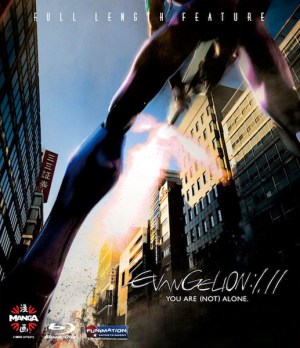 When I (first) reviewed
 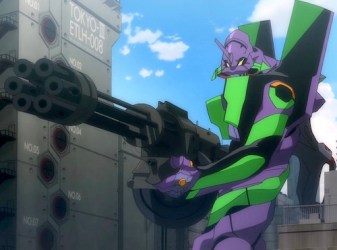 is a new addition I swear, while he also listens to a (digital, at least) cassette player rather than an iPod (other MP3 players are available, naturally). It’s not a major flaw — unlike, perhaps, the fact that the “covert” and top-secret Nerv organisation has great big signs plastered all over town and everyone seems to know about them — but, still, maybe a new bit of animation to replace the tape-playing close-ups would’ve been nice.
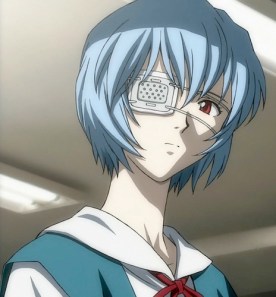 The pros and cons of the series remain. Shinji is alternately interesting, perhaps even complex, and a whiney little irritant. Here he has a character arc at least, suggesting he may be more sufferable next time out. His relationship with Major — sorry,
 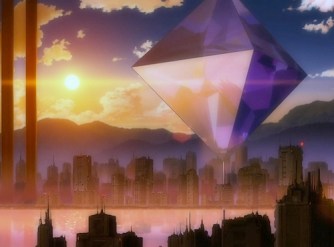 Another factor thrown up by the TV-series-to-feature conversion is the image quality. An HD big screen is a mixed blessing here. On one hand, it looks great on Blu-ray, with crisp lines and solid colours, the result of re-filming, colouring and CGI-ing the original animation elements rather than using the finished TV shots. On the other, such clarity sometimes shows up a lack of detail in the original animation — these elements were created for 4:3 mid-’90s TV, not a hi-def (home) cinema — and the solid colours and money-saving techniques (for example, showing something static rather than a lip-synched (ish) mouth during conversations) can remind the viewer of cheaper TV roots. Perhaps I’m being overly critical though, because much of it does look fabulous; at the very least, the thorough ground-up rebuild means it looks better than the TV series ever will, never mind has.
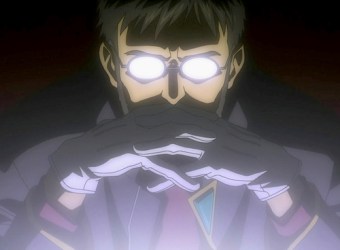 It’s enough to make one scurry back to the series for answers, though the three movies still to come promise whole new characters, plots and a — frankly, much-needed — brand-new ending. After two misfires (one in the series, one in
 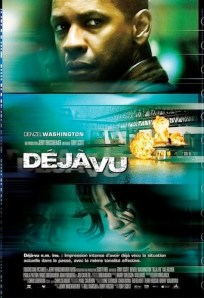 Denzel Washington and Tony Scott have now served as star and director (respectively, as if you didn’t know) on four films, with
  First, a little note on that aka: technically — and, I believe, legally — no such title is attached to this project. However, the initial idea was developed by Koontz and, after he left the project, adapted into his Dean Koontz’s Frankenstein series of novels. Despite the ‘creative disagreement’ (or whatever they chose to call it) that led him to walk away, the film retains significant similarities to the first book. More on these in a moment.
 Before
 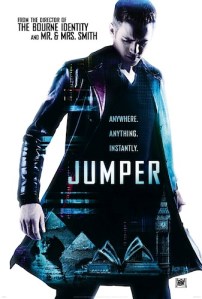 In honour of Jumper’s central conceit — that certain people can instantaneously transport themselves to any other point on the planet — I will conduct this review by jumping about through paragraphs I wrote without bothering to link them properly. (Also done in honour of my laziness.)
 Avatar is The Film That Changed Cinema. The past tense can safely be used, despite the film only having been out a couple of days — it doesn’t matter if we like it, filmmakers and Hollywood executives have decided it’s the artistic and commercial way forward, and so it shall be. It barely even matters if people actually go to see it; not that it’s in much danger of flopping, coming in the wake of years of extreme hype and numerous sycophantic reviews.
 100Films.co.uk