
Marc Forster | 123 mins | Blu-ray | 2.40:1 | USA & Malta / English | 15
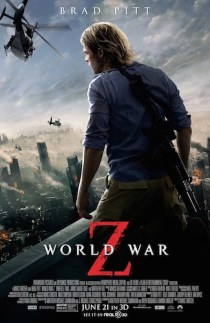 In the weeks leading up to its theatrical release, it was already known that World War Z was going to be an almighty flop. An unscrupulous movie studio had taken a cult novel and thrown away everything but the title, alienating its existing fanbase. They’d spent a fortune making a movie in a traditionally R-rated genre that, if released at R, could never make its money back, and if released at PG-13 would never attract an audience. Then they reshot the entire third act, pushing the budget through the roof and ensuring the resultant film would get critically mauled. A fanbase snubbed, an impossibly huge budget, a genre/rating disconnect, and unavoidably poor reviews to come — World War Z was going to flop, and it was going to flop hard.
Then it came out, and became the highest-grossing film to star Movie Star™ Brad Pitt, and the highest-grossing original film of Summer 2013, and made nearly triple its budget worldwide, and even got fairly good reviews. Maybe I was reading the wrong sources in the run up to its release, or maybe it really was that rarest of things, perhaps even unique: a movie hype-resurrection that was less zombie and more phoenix.
The film sees Pitt’s retired UN investigator called back to duty when a rapidly-spreading plague, which turns people into zombie-like rabid creatures, breaks out around the globe. With his family in tow, he escapes an over-run Philadelphia and ends up with what’s left of the US population on a small fleet of ships, before jetting off around the world on a hunt for answers and, hopefully, a vaccine. Cue large-scale action sequences as director Marc Forster aims for an apocalyptic sci-fi/action epic rather than the zombie genre’s usual stomping ground of claustrophobic supernatural scares.
 That, at least, is something different. The first half-hour races through stuff we’ve seen time and again: zombie attacks, humans turning on humans as they loot supermarkets, etc. Here the zombies are of the 28 Days Later-style speedy variety, all the better for creating blockbuster action sequences, such as a huge chase through crowded streets, or a running fight up the stairways of an apartment building. This is where the PG-13 certificate shows through (even though this cut is technically unrated in the US, the fact both versions received a 15 over here is telling): there’s little focus on violence or gore; which is fine, but won’t satisfy the more blood-hungry genre fans.
It’s after this that things, as noted, turn from claustrophobic to post-apocalyptic. The storyline feels moderately fresh, showing us the global scope of such an outbreak, rather than how a global event impacts a small group of people. I believe this is the closest the film gets to the spirit of the novel (which I’ve not read, so take that comparison with a pinch of salt). However, what’s new to the zombie genre isn’t necessarily new in any other respect, and by the time we get to Jerusalem and the characters are again being chased through crowded streets, it begins to feel a tad repetitive. Some of the sequences work well though, particularly a zombie outbreak on a passenger plane.
The re-shot final act is a breath of fresh air. Apparently the originally-filmed version was yet another epic battle, which has been switched for a more tense creep around a semi-abandoned research facility in… Wales. Yep, a big budget Hollywood action movie climaxes in the middle-of-nowhere in Wales. I quite like that.  It’s a Wales populated by a Londoner, a Scotsman and a Spaniard, but still. I say “more tense” because this is far from the most nail-biting zombie film you could see. The finale is a nice change of pace, and does work as a climax in spite of the bombast that precedes it, but these are zombies as teen-friendly action movie menace, not adult scare-inducers, so don’t except to feel much fear or surprise.
As to the extended cut, it adds only about seven minutes… but there are 121 differences. I can’t even be bothered to read that properly, never mind recount it. There seem to be myriad tiny extensions to all the action sequences, many of them literally lasting a fraction of a second — someone watched this really closely! I can only presume this is actually the original cut, which was then trimmed for the sake of the MPAA to create a theatrical version, because who would consciously go back to add so many little bits? Some are even described as “very unnecessary extension”s by that summary. Other moments do expand on character, though in a subtle fashion (looks like the attempted rape of our hero’s wife, and the murder of one of the wannabe rapists, previously got the snip), or do add to the gore — clearly, it’s too much for a PG-13, but certainly within the realms of a 15. I can’t imagine any of it makes a great deal of difference to the overall experience, however.
Generally, World War Z is a competently entertaining blockbuster. It moves pleasingly fast, with characters quickly and lightly sketched rather than lingered on — not to everyone’s taste, and I imagine some will find it emotionally cold in the way so many recent spectacle movies are. There’s perhaps room for more, particularly from Daniella Kertesz’s Israeli soldier, who is nonetheless somehow the film’s most appealing character;  but I don’t think it was the filmmakers’ aim to make us feel the characters’ plight, but instead to show the scope of a worldwide disaster. It does that pretty well, even if the occasionally-CGI zombies prove to be an I Am Legend-style plasticky distraction, especially when coupled with impossible swooping camera shots — it’s better and more effective in the sections where there’s a grittier feel to the camerawork and practical zombie make-up.
As it lacks the social subtext or extreme gore that the two branches of zombie fandom most value, I don’t think WWZ will find an enduring place in genre-fans’ hearts. As an epic summer action blockbuster, however, it largely passes muster.

World War Z is on Sky Movies Premiere this week, starting today at 4pm and 8pm. It’s also available on Now TV, where the running time suggests it’s the extended cut.
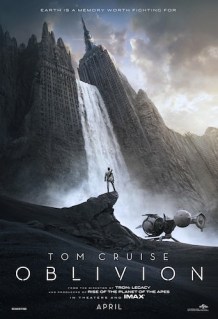 As Oblivion informs us in a hefty chunk of voiceover exposition at the start, the year is 2077, several decades on from a war with aliens that we won but left the Earth in ruins. Humanity fled to a colony on Titan, but the last party to depart remain in orbit aboard a giant space station. Waiting to join them are Tom Cruise and Andrea Riseborough, the last humans on Earth, serving the final few weeks of their mission to watch over the drones that guard giant water-collecting machines, sucking up the oceans for the benefit of the new colony.
 Also, as with many a tale desperate to surprise its audience thus, there are holes in the story and its logic (for a good summary of some of the major sticking points, check out
  I like a good action sequence, and some of the ones Kosinski presents have their moments, but I also found I could have done without most of them. To a degree they seemed to have been slotted in so it could look like an Action Movie in the trailers, the aim (as ever) being to pull in the punters, thereby justifying the budget needed to create such a slick SF world.
 With the aforementioned plot issues, not to mention an ending that some will find too twee (I saw the broad strokes of the epilogue coming from quite a way out, so can’t say I was surprised), Oblivion is not quite all it could have been. But it gets considerably closer than I expected — it’s undoubtedly an A for effort — and that, bolstered by faultless technical aspects, makes for an all-round enjoyable experience.
 January’s films
 “Cruise. Spielberg.” So read the poster and/or trailer for this ’00s-set reimagining of H.G. Wells’ classic novel of alien invasion and domination. Despite the updating, and the sickeningly twee ending, it’s actually a damn good film. Post-9/11, US films were more positive than ever about how all Americans would band together in a crisis. Not so here.


 When
When 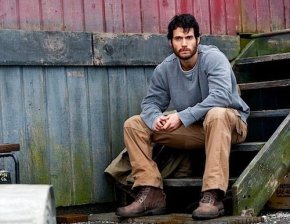 Personally, I find it a valid thing to attempt. Rather than take the Superman mythology as read, here Nolan and co — including screenwriter David Goyer and director Zack Snyder — have tried to imagine what would really happen if an alien baby with incredible powers arrived in our world. So Clark Kent hides his abilities, goes on a trek around the world to ‘find himself’, and when he’s uncovered there’s mass media and military interest. Which is pretty accurate, I think. If some guy started stopping oil rigs collapsing single-handed, or flying around the place, the military’s hardly going to sit back and go, “oh OK then”.
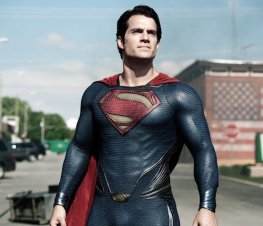 The filmmakers have certainly bought into their own conceit, to a frankly laughable extent. The Blu-ray contains a featurette called All-Out Action, which the menu describes as follows: “The action in Man of Steel soars to new heights with a level of realism never before seen in a super hero film.” Hahahaha! Realism my arse. Once the action kicks in it’s positively comic book. Men are hurled around like rag dolls; Metropolis is destroyed in a huge flying punch-up, which just feels like a less effective re-hash of
 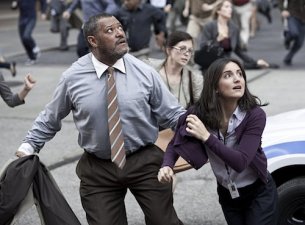 As to the destruction of the city, I think the criticism is right. The city clearly isn’t evacuated before buildings start falling — it’s being evacuated, but no one even knew to start running before the Massive Machine Of Destruction (I forget what it was actually for) turns up and starts destroying things. People run into the streets as buildings fall on them. As a viewer, how can you miss that hundreds, possibly thousands, of innocents are dying? The cinematography makes it look like 9/11 — incredibly like 9/11, in fact. That was 12 years ago by the time of the film’s release, but is it OK to trade on such iconography in a blockbuster entertainment? Should we just ignore the notion that so many ‘extras’ are dying because, hey, it’s just a superhero movie? But aren’t we meant to be taking this as Real World, chaps?
 There’s a lot else that Man of Steel plays with in the Superman legend besides the violence and cinematography. Some people will surely miss the bumbling Clark Kent, the burgeoning relationship with Lois Lane, and so on. These elements are eventually brought in, sometimes in a modified way, which makes it feel like they’ve been put in place — Superman Begins style — to be used in a sequel. Except we know
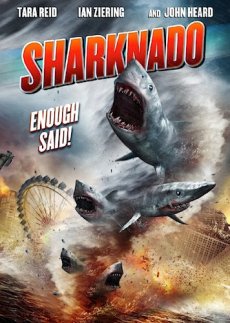 Sharknado is a defining film of 2013. The volume of conversation it generated, which achieved the near-impossibility of higher viewing figures for its repeats, is exceptional. So I was determined to give it its due in a full-length review. But I can’t be bothered — it doesn’t merit such attention.
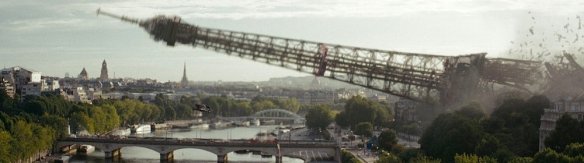
 It’s tough to know where to begin slagging it off — there are too many options. How about the groundwork for any film: the screenplay. Never mind the storyline (a MacGuffin hunt designed to facilitate action sequences), but take a look at the dialogue — it’s all of the “oh hello, brother” / “you are finally home, my wife” / “I’ve not seen you for four years” level. After a while, you just have to accept it’s pushing so-bad-it’s-good; by the final act, I was laughing out loud at nearly every line.
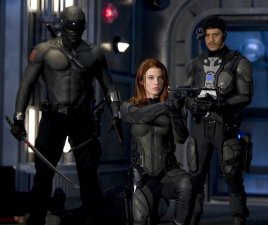 Almost as unintentionally hilarious is
 Once upon a time, Real Steel would have been rated PG, been aimed at 7- to 10-year-old boys, and would probably have been quite the success. In the current Hollywood moviemaking climate, however, it’s rated PG-13, consequently aimed at teenage boys and grown men who still have the tastes of teenage boys, and seems to be regularly slated in online comment sections.
 Some things are also distinctly unresolved: just why was Evil Lady prepared to pay $200,000 for a no-hope junkyard robot? I figured there was going to be some Nasty Secret to come out, especially as there’d been hints of the robot having extra abilities… but no. And what was up with the kid being 11 but Jackman always thinking he was 9? Figured that was going somewhere too. There’s talk now of a sequel — I hope such random bits weren’t intended as elaborate seeding for a follow-up, because that’s just irritating. That said, it would be nice if whoever’s in charge spotted those things and built on them in the sequel’s story.
 Real Steel is a good family movie, masquerading as a teenage-focused robot action blockbuster thanks to its 12 and PG-13 certificates. The true best audience for it will be those around the same age as the central kid: they won’t find him as annoying as older viewers will, and the whole robot fighting thing will just seem exciting.
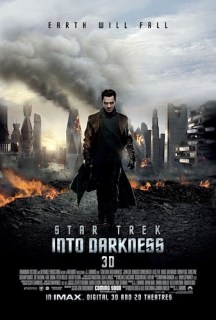 In an ethnically diverse and equal future, white American Kirk and white Vulcan-American Spock are commanded by white American Pike and white American Marcus to lead their crew to capture a Starfleet-targeting terrorist: John Harrison, a white Englishman who may be more than meets the eye…
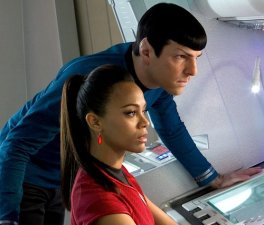 There’s still humour, mind; something which marked the first film out for a kind of geek controversy, as some felt it went too far. Because the original Star Trek TV series was dark and super-serious? An increased role for Simon Pegg’s Scotty provides most of the laughs, as everyone else is busy going Into Darkness. Unfortunately, despite the sporadic likability of several cast members, they don’t seem to have much to give. An inversion of a famous scene from a previous Trek movie ought to be tremendously moving, but doesn’t even stir.
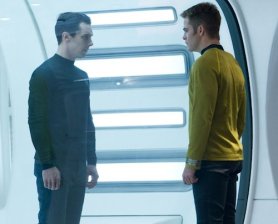 and I think the same process may have been used for some finished scenes. Which is a sarky way of saying that sometimes he phones it in. Take his first proper face-to-face with Kirk, when he’s in the Enterprise’s brig: he’s on Posh British Villain autopilot. There’s no menace, no tension; just words in our accent. It’s Cumberbatch’s Sherlock robbed of any of the charm, wit or intelligence.
 There are good bits — in fact, I’d say that’s a pretty apt description: good bits in amongst mediocrity. There’s an arty dialogue-free bit starring Noel Clarke that’s kind of good… and kind of self consciously “look, we done told a story with no speaking!” Shot on a mix of 35mm and IMAX, the film occasionally looks very nice. I imagine some sequences were visually stunning in IMAX, though Paramount haven’t done us the courtesy of preserving the ratio shifts on Blu-ray (unless you buy some German version, apparently). I felt there was considerably less lens flare this time out too; if it was still there in hefty doses then the film was obviously doing something right because I didn’t notice it.
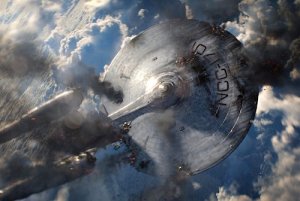 You probably remember that, just a few months after its release, a convention of Trekkies voted Into Darkness the worst Star Trek film ever made. That’s a bit much — for all its flaws, it’s still better than most of
 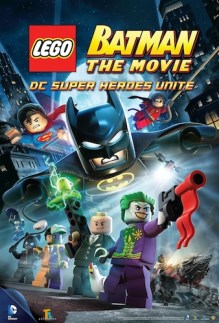 Well. What can I say? Curiosity got the better of me.
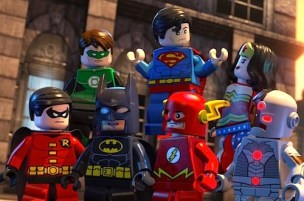 This wouldn’t matter so much if what was left was entertaining, but it’s a little weak. I’ve seen a couple of the LEGO Star Wars TV specials and found them to be quite fun, but LEGO Batman can’t reach their level. It’s not just that it’s almost four times as long as one of those, it’s that the humour it does contain doesn’t hit home in the same way. It’s often too juvenile, too “that’ll do”, too “I can tell this is supposed to be humorous but it’s just not funny”. I know I started by saying that I just watched this through curiosity, but partly it was that I’d found those Star Wars specials enjoyable enough and thought this would be more of the same with superheroes. It wants to be, but it isn’t.
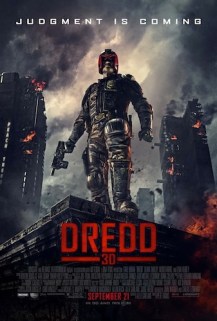 Dogged by comparisons to
 100Films.co.uk