
That title is massively simplified (and therefore technically wrong), but still seems long, doesn’t it? Yeah, wait ’til you see the proper name of that subsection.
Oh, also, I watched some films and stuff. Y’know, what this blog is actually about.
What Do You Mean You Haven’t Seen…?
Continuing apace, this month’s WDYMYHS film is quirky French comedy Amélie.
 July’s films in full
#56 Transformers: Dark of the Moon (2011)
#57 A Late Quartet (2012)
#58 The Raid (2011), aka Serbuan maut
#59 We’re the Millers (2013)
 #60 Video Nasties: Moral Panic, Censorship and Videotape (2010)
#61 Ghost Rider: Spirit of Vengeance (2011)
#62 Pacific Rim (2013)
#63 Cloudy with a Chance of Meatballs 2 (2013)
#64 Frozen (2013)
#65 Amélie (2001), aka Le Fabuleux Destin d’Amélie Poulain
I’ve come over all Modern this month, with all but one film being from the 2010s — to put it another way, that means that all but one come from the last five years; and 40% are from last year alone, too. Well, I do have a lot of catching up to do. And the only film from outside this decade is still from this millennium. Ah well.
In terms of the history of Julys, I’m forming a new pattern: this year I watched ten new films, year before it was four, year before that it was ten, year before that it was four… Funny how these things happen, ain’t it? Year-to-date, ten films puts July precisely in the middle of things: it’s both my fourth-best and fourth-worst month of 2014.
As for having reached #65, that finally puts me ahead of last year, when I’d ‘only’ reached #62 by this point. I say ‘only’ because the goal for the end of July is 58, so both years remain ahead of expectations — indeed, I only need to watch one film next month to reach August’s target.
100 Films has changed home multiple times (deviantART, Blogger, FilmJournal, WordPress), and each time I’ve brought all my old content along with me. The move to WordPress has proven the most awkward in that regard: by the time I made the shift, I’d accumulated something like 700 posts. I’ve been here a couple of years now, regularly reposting old reviews as and when, but still fewer than half of those have made the transition. It’s time for a change… which is why early this month I began a concerted effort to repost at least one archive review every day. I don’t imagine I’ll keep it up full time (I think I’ve missed a day or two already), but it remains an overall goal; one that should see me fully transferred in a year or so — finally!
Each month I’m going to highlight the mass of reposts in this round-up, just in case you missed them. So, the inaugural selection of 24 are…




















My Ranking of the 5 Hugo Best Dramatic Presentation (Long Form) Nominees
The Hugos are the prestigious science fiction and fantasy awards handed out by the World Science Fiction Society at whichever convention is Worldcon that year (this year, it’s LonCon 3), voted for by attendees and members of that convention. This year, I’ll be among those voters… well, by the time this has been posted the deadline will have passed, so I am among those voters. I signed up for two reasons, really: the “voter packet” of free ebooks, which this year included the complete Wheel of Time series (price of membership vs. value of the ebooks more than covered itself); and the chance to give everything Doctor Who-related a boost, as of course these awards are for last year, i.e. Who’s big 50th anniversary. Biased, me? Um…
The Hugos are primarily a literary award, with a dozen categories related to the writing and editing of fiction at various lengths; but in addition to those there are two Dramatic Presentation awards: Short Form (mainly, TV) and Long Form (mainly, films). As a good voter, I’ve made an effort to see all of the latter (and all but one of the former), and as two of them are amongst this month’s viewing, and (as I mentioned) the deadline for voting has just passed, I thought I’d share my final ranking. From best to worst, then…
- Gravity
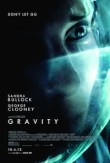 Set in the immediate future using technology that largely exists or is about to exist, some contend that Gravity isn’t a science fiction film at all — it’s a present-day thriller, just one that happens to be set in space. And they’re right, really — there are plenty of “real-world present-day” type thrillers that have more science fictional happenings than Gravity. But it’s on the ballot and it’s an incredible film, so pish, it wins.
 - The Hunger Games: Catching Fire
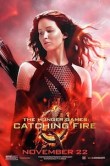 The decision between second and third was a tough one for me — I’d’ve tied them if I could. However, I haven’t posted a review yet for Catching Fire and am still debating my score — does it stretch to a 5? It still could — not only did I really enjoy it, but I think it has a lot more thematic/dramatic heft than your average blockbuster. Anyway, the next film’s locked at 4 stars, so Catching Fire wins the toss.
 - Iron Man 3
 Some people seem to really, really dislike Iron Man 3. Not sure why — it may well be the best entry in what’s an all-round enjoyable trilogy (I still maintain Iron Man 2 isn’t so bad), a different-from-the-norm superhero tale that excites and entertains. It works as a trilogy-capper too (it’s almost a shame he’ll just be back in Avengers 2.) I’d quite like to rank it first… but, sadly, not in this year.
 - Frozen
 Disney’s all-conquering version of The Snow Queen is the only fantasy film on this year’s ballot (seems to me the Hugos skew more SF than F. I suppose they are awarded by a Science Fiction society). I didn’t find it as incredible as the audiences who made it the fifth highest grossing film of all time, but it’s a fine film, whose initially-bland songs improve with re-listening (he says, listening to Let It Go as he writes).
 - Pacific Rim
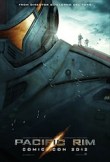 Guillermo del Toro’s Westernised riff on a very Japanese subgenre flopped Stateside — it just crossed $100m, which once would’ve been remarkable, but on a budget of $190m is poor. Internationally, however, it stormed past $300m and so will be sequelised. Del Toro apparently aimed it at 11-year-old boys, and it’s better than most other super-budgeted movies aimed at that demographic.
And the one thing I reviewed as a film but the Hugos count as Short Form…
- Doctor Who: The Day of the Doctor
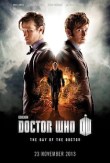 Well, of course they do — it’s a TV episode really, isn’t it? But it is feature-length (long enough to qualify for Long Form) and was released in cinemas, so I maintain you could count it as a film. Still, in Short Form it stands a strong chance of winning — I ranked it #1. My #2 and 3 was another tough decision, but I put Peter Davison’s hilarious spoof The Five(ish) Doctors Reboot in second and, in third, Mark Gatiss’ incredible An Adventure in Space and Time (another feature-length production that could hold it’s own against movies). Neither of those are strictly SF/F, but I guess as they’re Dramatic Presentations rather than books it was felt they belonged here rather than in the Related Works category. In fourth was Game of Thrones episode The Rains of Castamere. It is great as an entire episode, but let’s face it, it’s here because of the Red Wedding, which is the last, what, 10 minutes? Any other year it would probably win, but against four Doctor Who nominees (it’s a transferable vote, so more nominees means a better chance of one winning) at a convention held in Britain? We love Thrones here (more than the US, according to some stats I saw), but Hugo voters everywhere love Who. Finally, unranked by me, were Doctor Who finale The Name of the Doctor (it underwhelmed me — I won’t advocate “no award” above it, but I don’t feel it deserves to beat any of the above nominees), and Orphan Black mid-season ep Variations Under Domestication, which I’ve simply not seen.
Have I been a crazy person and put these in all kinds of the wrong order? And what about the Hugo nominators — are there any science-fiction/fantasy films (or TV programmes) from 2013 that they were fools to leave out? Lemme know.
Next month on 100 Films in a Year…
It’s the summer! Though blockbuster season is almost over already, isn’t it? Never mind. Perfect time of year to stay inside where it’s cool, anyway.
Oh, and watch some films. Which I shall list next time. But you knew that.
 A sequel to the suprisingly-good-in-spite-of-its-name animated comedy, Cloudy with a Chance of Meatballs 2 (innovative title; though better than its original moniker, Revenge of the Leftovers) begins mere minutes after
 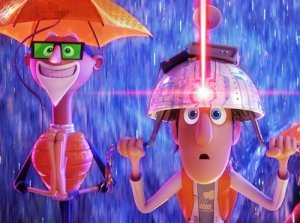 The villain this time is a thinly-veiled riff on Apple and its messianic founder, Steve Jobs. Here they become the aforementioned Life Corp, whose logo (and headquarters) is a giant lightbulb, and the equally-aforementioned Chester V, Flint’s childhood hero. As with almost all hero-since-childhood characters, you can guess where that’s going from the moment he appears at the start of the opening montage. Nonetheless, his storyline and relationship with Flint mostly works — it does take Flint a long time to reach the point of realising The Truth, but for viewers the reveal comes earlier and isn’t treated as an inappropriately big shock. Again, kids less familiar with movie tropes will be even more accepting of it. Plus there’s a Moral Message there for said kiddies (naturally), this time about trusting in your friends. It’s all familiar fare to an adult viewer, but doesn’t dominate to the point of boredom.
 In the end, Cloudy 2 isn’t quite as good as the first film, but not in a “notably inferior” way. It remains relentlessly entertaining, with an admirable energy and drive, which is in part a desperation to not be boring, but not in a shallow way. It may lack the extra little something that the first one has, but if that was an 8-out-of-10 then this is a 7 — which, because it’s fun rather than disappointing, rounds up to:
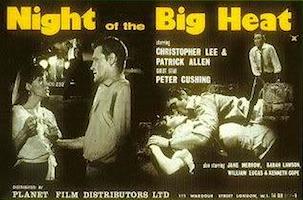 These days largely sold as a horror movie (the old Collector’s Edition DVD is branded as part of a “Masters of Horror” series), probably thanks to its cast (Christopher Lee and Peter Cushing), director (Terence Fisher, of many a Hammer Horror, including five with Cushing and Lee), and rating (an X originally, a 15 now), Night of the Big Heat is not really anything of the sort. Well, maybe a little; but you’re more likely to get scared by a contemporaneous episode of
 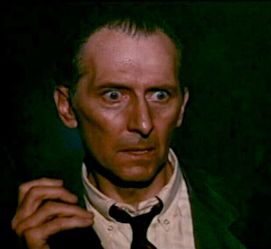 the pair were brought in to redraft because the original screenplay’s dialogue was “unsayable”. Anyone familiar with their ’80s work on Doctor Who, and their associated reputation, will find that highly ironic.) However, when the sci-fi stuff does roll in it’s a bit of a damp squib, leaving the scenes relating to the affair, whether it will be discovered, and what various characters do about their various feelings, as some of the more unique and interesting elements.
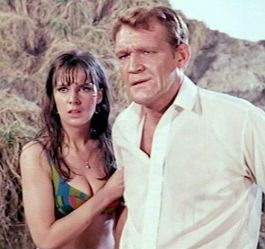 which considering it was shot in February and March is a real achievement. During night shoots the cast had to suck ice to stop their breath being visible, while running around in wet clothing to look like they were drenched in sweat. Poor sods. Said night scenes are a mess of genuine and atmospheric nighttime shooting, alongside the kind of day-for-night filming where everything’s extremely dark except for the sky, and also the kind of day-for-night filming where it’s day and… um… shh!
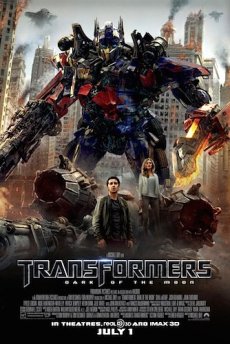 In an era where sequels seem to improve on their predecessors more often than not — building on established characters and mythology for a deeper experience, rather than rehashing the same plot/jokes/action sequences for a second-go-round money-grab — this Michael Bay-helmed series based on ’80s action figures is a throwback to… well, the ’80s. It’s almost appropriate.
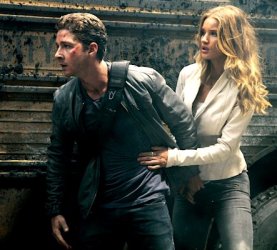 There are impressive visuals, it’s true, but that’s all they are: dramatic pictures. The characters, their motivations and actions that lead to these visuals often make no sense. And to say they “lead” there at all is generous, because just as often things begin to happen for no apparent reason. I swear no one’s thought any of it through — like the moment when the big honourable hero is offered a truce by the villain and, instead of accepting it, immediately executes him. Stay classy, Optimus Prime.
 The year is 2154 (the same year as
  Unfortunately, it seems writer-director Neill Blomkamp (of the acclaimed
  It sounds and looks like she’s struggling with a bizarre accent, while always being American. A similar problem seems to afflict William Fichtner to a lesser extent, so perhaps it’s some incomprehensible deliberate decision to differentiate the wealthy from the normal folk? I’ve read one report that Foster’s entire performance had to be dubbed, which might be a better explanation.
 There’s also something viscerally pleasurable about seeing a decently-budgeted R-rated effects movie these days. You’d think that classification would keep the budget down, but it reportedly cost over $100 million — and it looks it, with epic must-be-CGI situations that are faultlessly rendered. I suppose when the biggest PG-13 blockbusters are seeing their costs spiral towards triple that, a budget that only nudges into nine figures doesn’t look so bad. Hopefully that’s good news for those of us who would like to see more grown-up (whether that be intellectually or violently) effects-requiring movies.
 Blomkamp is a writer-director clearly committed to doing bold work in a film genre that is increasingly about spectacle over story, action over allegory, popcorn-selling over point. Elysium may not be the fully-realised vision he was likely hoping for, and more work on the screenplay would clearly have been a benefit, but top marks to the man for trying to do something worthwhile. Surely he remains one to watch.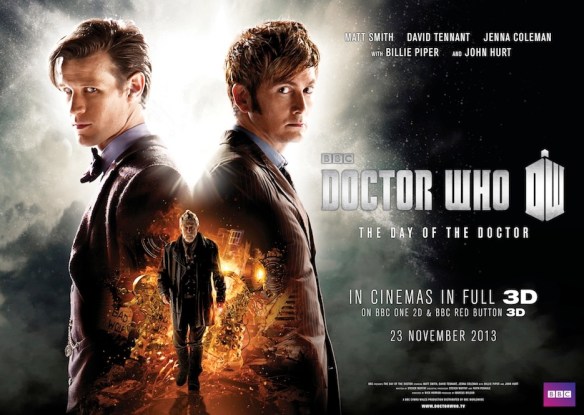
 (and it made more than double per screen what
  The Doctor’s role in the Time War has not only dominated many of his actions and personalities since it happened, but it also stands awkwardly with his persona as a whole. Here’s the man who always does the right thing, always avoids violence, always finds another way, even when there is no other way… and this man wiped out all of his people and all of the Daleks? The same man who, in his fourth incarnation, stared at two wires that could erase the Daleks from history and pondered, “do I have the right?”, before concluding that he didn’t? Doesn’t really make sense, does it?
 I think some fans would have preferred a big party history mash-up; they certainly would have liked to see their favourite faces from the past. But let’s be honest: from the classic era, only Paul McGann could pass muster as still being the Doctor he once was (and he got his own, fantastic, mini-episode to prove it); and how the hell do you construct a story with a dozen leading men? It’s clearly enough of a struggle with three. The Doctor is always the cleverest person in the room, so what do you do with multiples of him? Moffat finds ways to make all of the Doctors here (that’d be David Tennant’s 10th, Matt Smith’s 11th, and John Hurt’s newly-created ‘War Doctor’) have something to do, something to say, and something to contribute — because really, the oldest (i.e newest) Doctor should be the most experienced and have all the ideas, right? There are ways round that, but only so many.
 Along the way, Moffat nails so many other things. The dialogue and situations sparkle, and frequently gets to have its cake and eat it: familiar catchphrases and behavioural ticks of the 10th and 11th Doctors are trotted out to a fan-pleasing extent, and then Hurt’s aged, grumpier, old-fashioned Doctor gets to criticise their ludicrousness, speaking for a whole generation of fans who hate “timey-wimey” and “allons-y” and all the rest. I think it’s this self-awareness that helps so much with selling the episode to everyone, both calling back to well-known elements of the series that many love, and pillorying their expectedness for those that aren’t so keen. Well, it would be a pretty awful party if you had a cake but couldn’t eat it, right?
 Smith and Jenna Coleman are on form too, of course, but as the series’ regular cast members that feels less remarkable. That’s not intended to sell them short, however, as they hold their own against actors who are arguably more, shall we say, established. If there’s one weak link it may be Joanna Page’s eyebrows, possibly the side effect of duelling with an English accent. (Complete aside: I’m rewatching Gavin & Stacey as I write this, and feel horrible even going near criticism of such a lovely person.)
 Credit too to editor Liana Del Giudice, not only for crafting cinematic action sequences, but for stitching together a narrative that is often told with imagery and flashbacks, rather than people stood around chatting. Look at the sequence just after the Doctor sees the painting for the first time as just one clear example. That sequence may be dialogue-driven, but the faded-in and intercut flashbacks and glimpses of other events are what’s really conveying information. This is first-class visual storytelling, not just when compared to the rest of British TV, or international TV, or cinema, but the whole shebang.
 Still, you can’t please all of the people all of the time, and not everyone liked The Day of the Doctor: it may’ve topped DWM’s poll, but there were voters who scored it just one out of ten. But then, that’s true of 239 of the series’ 241 stories; and almost 60% of voters gave it a full ten out of ten — that’s a pretty clear consensus. I didn’t get round to voting myself, but I would’ve been amongst them. There are undoubtedly some weak spots that I haven’t flagged up, but conversely, there are myriad other successes — both minor (the opening! The dozens of sly callbacks!) and major (the use of the Zygons! Murray Gold’s music!) — that I haven’t mentioned either.
 The man who would go on to helm
 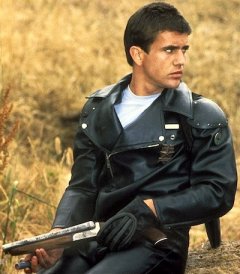 In reading up on the film, a few pieces analyse the ending as Max going to the dark side — becoming as bad as those he was fighting against; or, at the very least, becoming an anti-hero. I didn’t see it that way at first, which I think is the difference between 1979 and what’s happened in movies since. Now we routinely have heroes who do bad things: look at Jack Bauer’s love of torture in
 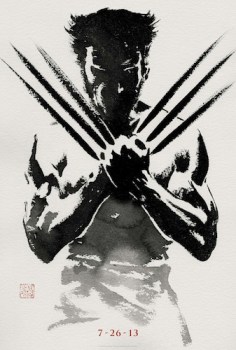 Rather than a sequel to the poorly-received
 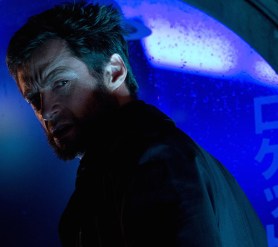 and the end result is a moderately unique movie. OK, it doesn’t ooze originality, but nor does it feel quite like your run-of-the-mill powered-people-punch-each-other comic book yarn.
 Talking of women, you can’t overlook Logan’s lost love, Famke Janssen’s Jean Grey. Considering the build-up pitched The Wolverine as a standalone film, with perhaps the occasional nod to the wider X-universe, including rumours of a Jean cameo, the final film is surprisingly tied-in to previous events: there’s actually loads of Jean (how? Well…), and Wolverine’s personal journey is very much grounded in the events of The Last Stand. I’m sure you could watch this without having seen or remembered a previous X-movie, because the bulk of the plot is indeed standalone, but the emotional journey is invested in what came before.
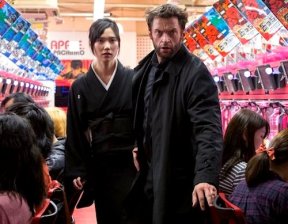 Without seeing all the behind-the-scenes goings-on it’s difficult to know whose fault this was, but it’s equally difficult to imagine the screenplay that Darren Aronofsky (far from your regular blockbuster director) described as “a terrific script” could have concluded this way; and knowing that his replacement, James Mangold, fiddled with the script before shooting commenced… well, draw your own conclusions.
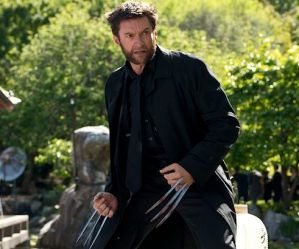 The Wolverine isn’t quite the movie it could have been; nor, I think, quite the one the makers hoped they were producing. Jackman has intimated since that it’s studio interference that pushes for silly-big action sequences and the like, but that fan feedback might slowly be winning them around to the things viewers actually care about. Whether that’s true or not, I guess we’ll see in the next instalment…
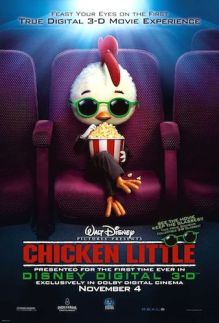 The director of Disney’s woeful
 The writer-director of
 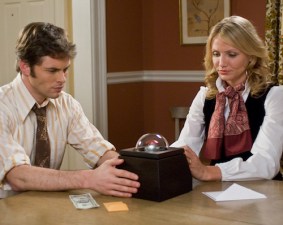 What a nice tribute to his supportive parents and their devotion to one another, eh? At the start, perhaps, but by the end of the film you may be wondering what the writer-director’s subconscious wants to do to his ma and pa…
 What could function well as an indie-level thriller is further undermined by abundant, therefore costly, CGI. Whether that’s Langella’s facial disfigurement (what could’ve been make-up is actually a complex array of tracking dots, green face-paint, motion-control cameras, and so on; all used merely to place him in simple dialogue scenes), or wide shots of ’70s Virginia, with a computer-adjusted skyline, computer-animated cars, and computer-painted snow. It’s not that the effects work is poor (though don’t look too closely at those cars), but that it screams “this must be special effects!” when you don’t want such distractions.
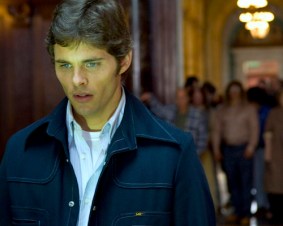 The Box should have been a film we all discussed for years to come, its “what would you do”-ness providing an
 100Films.co.uk