
Bryan Singer | 149 mins | Blu-ray | 2.39:1 | USA & UK / English | 12
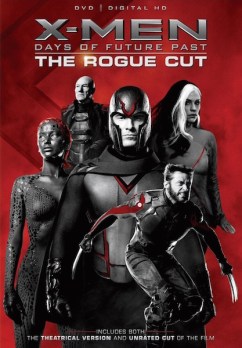 One of the big stories in the run-up to this fifth X-Men film’s release last year (my previous review is here) was that returning cast member Anna Paquin, one of the leads in the original trilogy — certainly, she’s the audience PoV character in the first one — had been virtually excised from the final cut, her subplot deemed extraneous by director Bryan Singer, as well as screenwriter Simon Kinberg, who all but admitted he’d shoehorned her into the screenplay in the first place. Instantly, a director’s cut was mooted by journalists/fans, and almost as quickly Singer and co were on board. So that’s how we end up with The Rogue Cut, which probably has all kinds of bizarre connotations if you’re not aware Rogue is a character in the series.
It remains a bit of a misnomer even if you do, because it’s not like Rogue has a huge part to play. Her subplot is actually more of a showcase for Ian McKellen’s Magneto and Shawn Ashmore’s Iceman, as they rescue her (with a little help from Patrick Stewart’s Professor X) from an enemy-occupied X Mansion. From there, she takes over from Kitty Pryde (Ellen Page) maintaining Wolverine’s presence in the past. In the cut released in cinemas, Kitty kept doing what Kitty was already doing, which is certainly a smoother way of handling things. Kinberg was right: this subplot feels like it’s been half-forced in, mainly to give the future-time cast extra things to do.
This sequence is not the only addition, however; I’m sure this release would’ve been perfectly adequately dubbed an Extended Cut or Director’s Cut were it not for the fan/media focus on the Rogue portions, which earnt it “The Rogue Cut” as a nickname before it was adopted as the official name. In total, the new cut is 17 minutes and 10 seconds longer, though I believe Singer said there were some deletions too, so it may be there’s slightly more than that. Either way, it’s tough to spot everything that’s been added. There are extensions littered throughout — according to the Blu-ray’s scene select menu, of the extended cut’s 44 chapters, 20 include alternate material (including the end crawl, thanks to a mid-credits scene) and two are all-new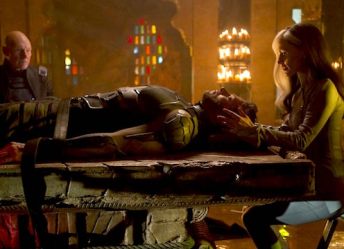 (though the theatrical cut only has 40 chapters, so I’m not entirely sure how that pans out). Most must be teeny extensions, however, and I look forward to Movie-Censorship.com doing a report so I can know all I didn’t spy. Apparently Singer and editor John Ottman discuss the changes quite a lot in their commentary track, but I haven’t taken the time to listen to that yet.
The bulk do come in the aforementioned “Rogue rescue” sequence that has given this cut its name. However, it’s intercut with some new material in the 1973 segments: Raven/Mystique (Jennifer Lawrence) also visits the X Mansion, for a little tête-à-tête with Hank/Beast (Nicholas Hoult). Both have a knock-on effect later in the movie: having taken over from Kitty, Rogue is now present throughout the climax (not that it makes much difference, besides changing Magneto’s method of entry after he barricades them in), and a brief moment — a look, no more — between Raven and Hank in the past.
Oh, and Nixon says “fuck”. That must be new, because you’re only allowed one “fuck” in a PG-13 and I distinctly remember James McAvoy saying it.
So is this cut better? Well, no. Is it worse? Well, not really. It’s just different. On the one hand, here we have some extra fleshing out of Raven and Hank’s characters, more action for future-Magneto and Iceman, and a more decent role for Rogue — though her part still isn’t much cop, all things considered. On the other hand, it makes for a slightly less streamlined film, and the intercutting between past-Magneto retrieving his helmet and future-Magneto rescuing Rogue is built like it should have some kind of juxtapositional weight but, unless I’m missing something, it doesn’t.
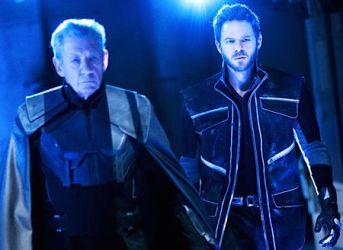 The Rogue Cut is worth seeing for anyone who enjoyed the theatrical version — and, in terms of a copy to own, the Blu-ray comes with both cuts and more special features (though it loses all the extras from the first release, including a few more deleted scenes) — but, unless you’re a huge fan of Rogue or Iceman, it’s not essential.
As it’s fundamentally the same film, my original score stands.

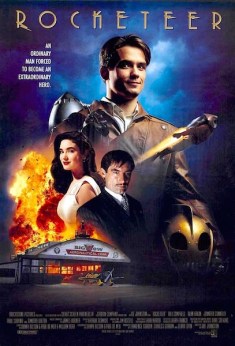 Based on an ’80s-created superhero modelled on the matinee serials of the ’30s and ’40s, The Rocketeer sets its scene in 1938, when stunt pilot Cliff Secord (Billy Campbell) winds up in possession of an experimental rocket pack. Initially donning it as part of the stunt show, when Cliff uses it to rescue another pilot he, a) attracts the attention of the hoods who originally stole it, and b) discovers his true calling as a hero, etc. Throw in a love interest (Jennifer Connelly) who’s a Hollywood extra with connections to the swashbuckling film star (Timothy Dalton) who’s really behind the theft, and you’ve got yourself an adventure!
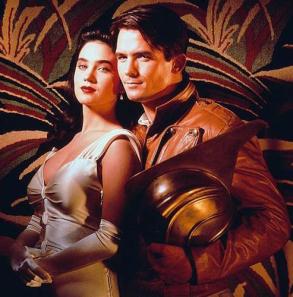 We all know effects alone do not make a good movie, but equally trying to make an effects-y movie when you can’t achieve said effects is a fool’s errand. Fortunately there’s some other derring-do to make up for it, and the climax atop a zeppelin isn’t at all bad.
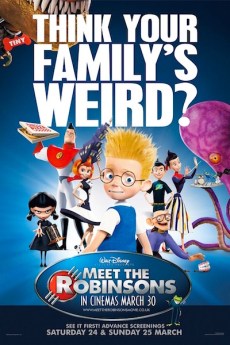 Disney’s 47th Animated Classic comes from their weak ’00s period, after the end of the so-called Renaissance and before what’s apparently been dubbed the neo-Renaissance (presumably no one could think of a synonym). This hails from the tail end of that lamentable era, though, so there are signs of recovery: Meet the Robinsons isn’t bad, just mediocre.
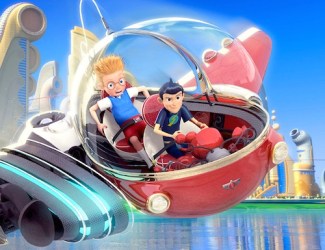 The time travel element of the plot is weakly thought-through. It’s not the point of the film, which is more about family ‘n’ stuff, but it’s central enough that it robs the already-underpowered climax of much weight — you’re too busy thinking “wait, does that make sense?” to be invested in events. Finally, the animation style has aged badly, now looking plain and under-detailed.
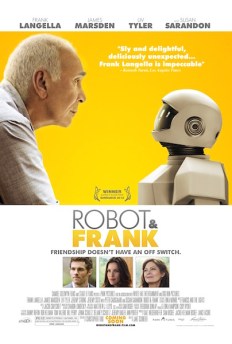 In “the near future”, Frank (Frank Langella) is an ageing jewel thief in denial about his dementia, contenting himself with visits to the local library, which is being taken over by a bunch of yuppies to turn into “the library experience”, and shoplifting from the beauty store that used to be his favourite restaurant. Concerned for his wellbeing, his son (James Marsden) gets him some home help in the form of a humanoid robot (voiced by Peter Sarsgaard). Initially reluctant to accept its presence, when the robot attempts to help by also shoplifting from the beauty store, Frank senses an opportunity…
 (part of a half-realised almost-subplot about robot rights, or something), we not only feel Frank’s (temporary) loss of his friend, but also urge the film to turn the robot back on and get back to what’s really making the movie work. The event serves a purpose (it’s the point Frank realises he’s stopped just putting up with the damn robot and actually come to appreciate its presence), but still.
 Equally, this is of a branch of science-fiction we see all too rarely on the big screen, but which is fertile ground for those wishing to explore it: using fantastical concepts to explore and enlighten our own world. Even if you learn nothing revelatory about old age and the rigours of dementia, the friendship between the robot and Frank is reason enough to enjoy.

 The very low-key nature of Time Lapse will put some people off. If you like your sci-fi full of action or scientists or world-saving/changing endeavours, it’s not for you. If you like sci-fi where an impossible concept throws ordinary people into dilemmas about themselves and each other, this is a well-conceived drama. Add in an engrossing mystery element that keeps you questioning and guessing until the end, and you have a minor gem.
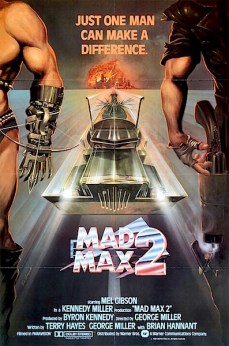 Roaming the outback of a gasoline-desperate post-apocalyptic Australia, “Mad” Max Rockatansky (Mel Gibson) comes across a commune-like oil refinery, whose inhabitants are under siege by a brutally violent gang. Max strikes a bargain: he’ll help them escape with their oil, in exchange for a tank full for himself.
 The most memorable part, however, is the climax. They escape the oil refinery, Max driving the tanker — fitted out with weaponry and defences — and the gang give chase. An almighty action sequence follows, a speeding battle through the outback. It feels wrong to just call it “an action sequence”, like that’s selling it short. You get the sense that this is why the movie exists; that co-writer/director George Miller’s goal with the entire rest of the film has been to get us to this point. It’s not just “the climax”, it’s “the third act”, and it’s stunning — the choreography of it, the editing, the stunts, as dozens of vehicles chase each other, people run around on top of them, jump between them… I don’t think it’s hyperbolic to say it must be one of the greatest action sequences ever committed to film. One of the reasons
 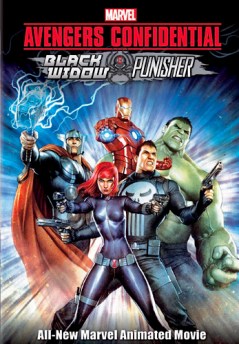 Anime take on Marvel properties. S.H.I.E.L.D. agent Black Widow teams up with vigilante Frank Castle, aka the Punisher, to investigate a threat to global security.
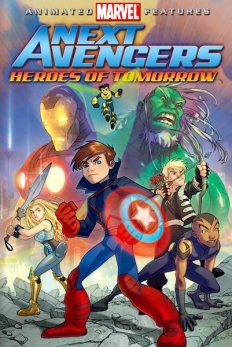 No, not the ’70s spy-fi series
  The rest of the new characters are largely fine, and while they’re clearly grounded in their parents’ personalities, they’re not just carbon copies — Cap’s son James is less worthy than his father, for instance; Black Panther’s son Azari is less elbows-out; and so on. Though Hawkeye Jr. is a little skeevy… Writer Christopher Yost has done a fair job of crafting realistic-enough kids, and in an era when superheroes seem to spend more time fighting amongst themselves than they do against villains, it’s nice that this team largely get on — though not in an overly-rosy “it’s all happy families” way, thankfully.
 Coupled with a good plot, which keeps moving and developing rather than setting up one threat and meandering along until a big fight, as well as a few cameos and maybe even surprises along the way, Next Avengers is the kind of movie you expect to be pretty awful kids-only dross, but turns out to actually be pretty darn good.
 As
As 




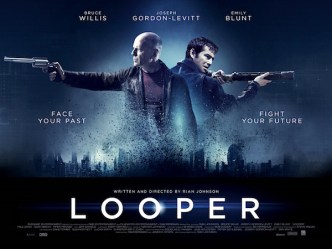 Writer-director Rian Johnson re-teams with the star of
 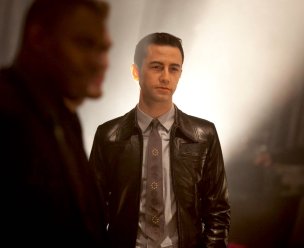 Firstly, the less you know the better. I pretty much knew the above before I went in, and that meant the film had surprises from the get-go. For instance, the near-future world most of the action takes place in has been well-realised by Johnson and his design and effects teams, and time travel is not the only SF concept or imagery employed here, which I wasn’t aware of. Their vision is
 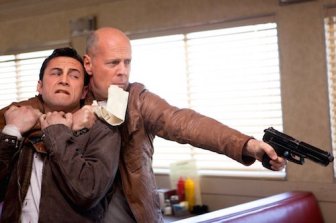 Heading up the cast, Gordon-Levitt does a good Bruce Willis impersonation — believable, but not a slavish impression. That was probably quite necessary, because I don’t imagine Willis has the thespian chops to emulate an older Gordon-Levitt. Notoriously, the younger actor does the whole thing under prosthetics designed to make it more plausible he’d age into Willis. They’re a bit weird: not badly done — far from it, in fact — but you’re always kind of aware they’re there. A highly able supporting cast flesh out the rest of the characters, though most memorable is young Pierce Gagnon as an imperilled child you wouldn’t necessarily mind getting killed. And I mean that in a nice way; about the film and his performance, if not the character.
 Even if there are some logic issues, it doesn’t fatally undermine the movie. Looper comes with the joys of a well-imagined future, a captivating storyline, engaging characters, and enough twists and turns along the way to keep you guessing at the outcome. The best genre movie of 2012? That was a year of stiff competition among SF/F pictures, but Looper may have the edge.
 100Films.co.uk