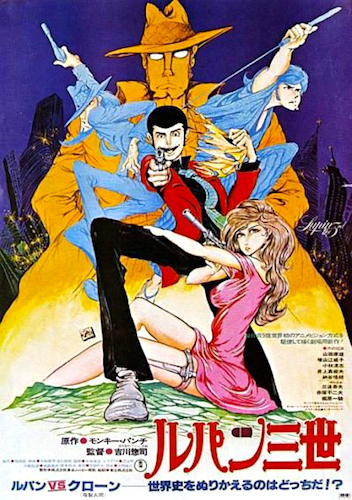
Lupin the Third: The Secret of Mamo (1978)

aka The Mystery of Mamo / Rupan Sansei / Rupan Sansei: Rupan tai Kurōn

2018 #112
Sôji Yoshikawa | 102 mins | DVD | 16:9 | Japan / English | 15 / PG-13

Lupin the Third: The Secret of Mamo

Best known to Western audiences thanks to Hayao Miyazaki’s feature debut The Castle of Cagliostro, Lupin the 3rd is more than just one film in the Studio Ghibli co-founder’s illustrious career — it’s a popular and long-running franchise in Japan, with almost innumerable iterations: starting life as a manga which has run on and off since 1967, it has so far been adapted into six TV series, seven animated films, 26 feature-length TV specials, two live-action movies, and sundry other bits and bobs. Despite all that, this is one of only three Lupin III productions that has been available in the UK since the DVD era (the others being the fourth TV series, titled The Woman Called Fujiko Mine, and Cagliostro, natch), though that increases by one today with the Blu-ray release of the latest complete TV series, Lupin the 3rd: Part IV.

The Secret of Mamo (more commonly known in English as The Mystery of Mamo, or in Japan as Lupin vs. the Clone) was the first big-screen outing for Lupin III. It was produced while the second TV series was being broadcast, with the intention of making a film that was more similar to the original manga, something Japanese censorship standards prevented the TV series from being. So, the tone is kids’ comedic adventure, but there’s nudity, moderately graphic violence, and a scene of sexy torture. Well, it’s not that graphic really… though it depends on your position on these things, I guess. Anyway, I’m certainly surprised the Americans let it pass as a PG-13, just because of the nudity. She may be a cartoon, but it’s not subtle.

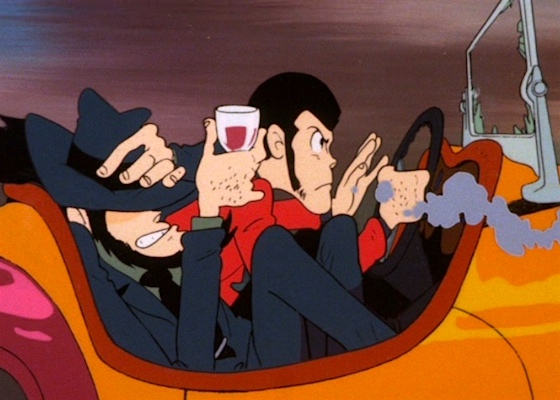
Car chase!

Anyhow, the plot sees master thief Lupin III, along with his regular sidekicks Jigen and Goemon, pilfering the Philosopher’s Stone (I guess Americans would need to call it the Sorcerers Stone) at the request of his on-off love interest Fujiko Mine, who actually wants it for the mysterious Mamo. His nefarious schemes draw Lupin and co into a web that sees them pursued not only by Mamo’s forces, but also the Americans, and Lupin’s regular nemesis, Interpol Inspector Zenigata.

One of the major inspirations behind Lupin the 3rd’s creation was James Bond, and so, appropriately enough, this is a globetrotting adventure that takes in Transylvania, Egypt, France, Spain, the Caribbean, and Colombia. Similarly, it also showcases some great action scenes, particularly an extended car chase through Paris and then the mountains. Unlike Bond, there’s a definite cartoonishness to many of the antics, and the third act takes a turn into outright science-fiction that gets a bit crazy. It’s also not entirely similar to The Castle of Cagliostro, therefore, showing how much Miyazaki brought his own tone and style to that film.

That said, I thought the lead characters’ relationships felt clearer from the start here than they did in Cagliostro, which very much felt like a sequel or spin-off where you were meant to know who everyone was (as I noted in my review). It could just be I’m a little more familiar with them all now, but perhaps the film was indeed made to be more newcomer-friendly — it was the first movie, after all; though it is spun off from a TV series… Well, it’s quite neatly done, nonetheless — this isn’t “Lupin III Begins” with them all meeting for the first time, nor is there a viewer-surrogate being introduced to them all, but it handles how and when each character arrives into the narrative in such a way that it’s kept fairly clear how they relate to one another. It’s subtly done, so, as I say, it could be serendipitous or my own improved awareness.

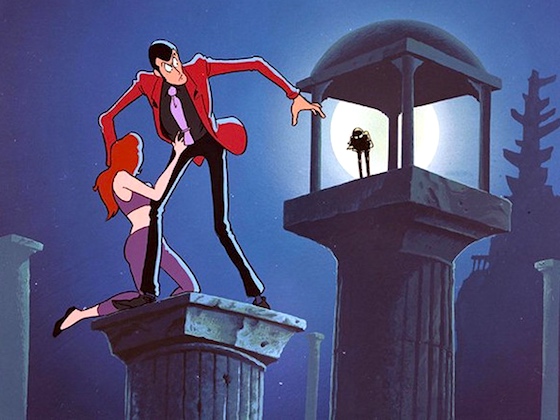
The mysterious Mamo

It’s also perhaps worthy of note that the film is available with four different English dubs. The 2013 US DVD from Discotek Media includes them all, so lucky you if you have that. Everywhere online will tell you that Manga UK’s 2008 DVD includes the dub Manga produced in 1996, which seems logical, but, being the inquisitive soul that I am, I read up on it myself, and I’m 99% certain it’s actually the 2003 Geneon dub. According to Wikipedia, the Geneon dub “took a liberal approach with translating the Japanese dialogue,” so I compared the dub to the subtitles included for the Japanese audio, and they were totally different. You can see why anime fans hate it when discs only include “dubtitles”. Maybe I should’ve watched it in its original language…

Anyway, the film itself is a very fun adventure, with an entertaining anarchism as well as exciting action and mostly amusing humour. Ever since I watched Cagliostro I’ve been meaning to watch some more Lupin the 3rd because I always hoped I’d enjoy it, and so far I’m being proven right. At least I’ve got the two Blu-ray-released TV series to tuck into next, but I’d like to see more of the extensive back catalogue make it to the UK. I guess that probably depends on how the Part IV release sells…

4 out of 5

Lupin the 3rd: Part IV is released on Blu-ray in the UK today by All the Anime.

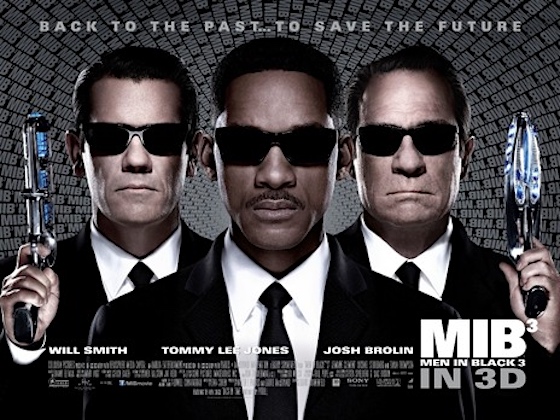
Men in Black 3 (2012)

2017 #167
Barry Sonnenfeld | 106 mins | Blu-ray | 1.85:1 | USA / English | PG / PG-13

Men in Black 3

Maybe it’s something to do with my age, but when Men in Black II came out it felt like a bit of a belated sequel to the mega-hit Men in Black — it had been five years, after all, which is quite a long time for a comedy sequel. Well, Men in Black 3 was another ten years after that… As it turns out, MIB2 is a kind of typical first sequel: memorable-but-small characters get massively increased roles; things are referenced just for the sake of referencing them; jokes are repeated or amped up. MIB3 is more like the typical belated sequel: it stands somewhat divorced from the first two, with the minor stuff all gone, and some more significant changes necessitated by the passing of time.

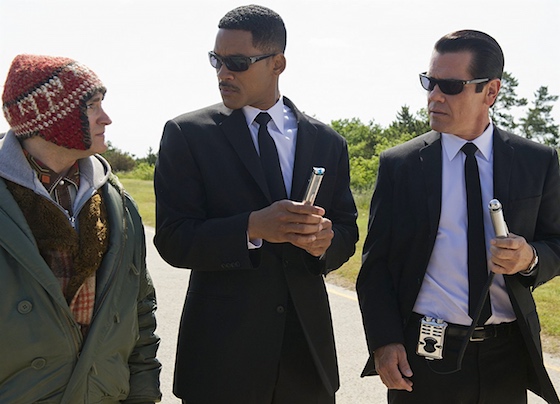
What hasn’t changed are the leads, Agents J (Will Smith) and K (Tommy Lee Jones) — although the latter’s about to, because when an alien criminal he locked up in the ’60s escapes from prison and travels back in time, K is wiped from existence. As the only one who can remember K, it’s up to J to also travel back to the ’60s, rescue the younger K (Josh Brolin), and also save the Earth.

MIB3’s biggest problem is that it’s not funny enough. The first two were sci-fi comedies with the emphasis on the comedy, whereas this is more of a light sci-fi adventure. In some respects it tries to substitute emotional weight for the lack of laughs, aiming for a pay-off that’s designed to put a cap on the whole trilogy. It kind of works, I suppose, but it also feels like a bit of an ill fit. It’s nice that the film’s trying something different, I suppose, but I’d rather the tone was closer to the other movies — more humour, tighter pacing. Director Barry Sonnenfeld used to have an obsession with making his movies shorter (I remember he once said he’d be the only director where a “director’s cut” would actually mean a truncated version of the movie). I don’t know if he’d given up on that notion by 2012, but trimming ten minutes out of this likely wouldn’t hurt.

Someone forgot the dress code...

The best bit is definitely Brolin as Young K, doing a bang-on impression of Tommy Lee Jones while also adding enough to make the part his own. As for the rest of the new cast members, Emma Thompson’s role is fine if you consider her appearance no more than a cameo, but Alice Eve is underused as her younger self. Jemaine Clement chews the scenery double-time as the villain, while the always excellent Michael Stuhlbarg has a fun supporting role as a character who can see all possible futures.

MIB3 is not as weak as the much-maligned first sequel (which I don’t hate as much as some, but it isn’t great), but it can’t equal the freshness of the original, either. Little surprise it didn’t lead to a full-blown revival of the franchise… though, as it still did well at the box office and the series’ popularity endures, it’s also no surprise we’ll be getting a spin-off-ish fourth movie next summer.

3 out of 5

Solo: A Star Wars Story (2018)

2018 #119
Ron Howard | 135 mins | cinema | 2.39:1 | USA / English | 12A / PG-13

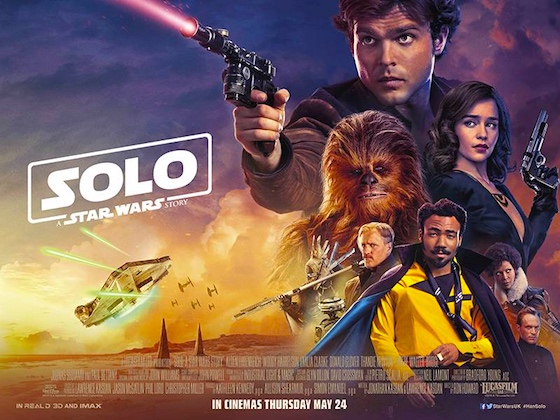
Solo: A Star Wars Story

The fourth movie in the modern age of the Star Wars franchise hit headlines for all the wrong reasons last weekend, as its opening box office frame failed to live up to expectations by quite some margin. As I pointed out on Twitter, by most standards Solo had an excellent debut; but by Star Wars standards, yeah, it was well short. Why did this happen? Theories abound. Did the manbabies’ “Boycott Solo” campaign succeed? Doubtful. Do audiences have “franchise fatigue”, with Solo debuting just five months after The Last Jedi? Possibly, though it doesn’t hurt Marvel films. Were audiences worn out from big blockbusters, after Avengers: Infinity War and Deadpool 2 preceded this in quite a short space of time? Could be. Did the stories of behind-the-scenes strife reach mainstream awareness and put people off? Perhaps. Is it just that people simply aren’t interested in a standalone “Young Han Solo” movie?

None of those sound like a definitive explanation. I guess it was a combination. And I’d like to say it’s a shame because Solo deserves to find a wide audience, but… well, maybe it’s already found the audience it deserves. It’s a decent space adventure flick, but I was sadly a bit underwhelmed by it. Frankly, I wish I liked it more than I did. Not just because I want to like every movie, but because I feel like this should’ve been a movie I really enjoyed — a fun sci-fi/heist/Western adventure kinda deal — but I didn’t love it. I thought it was mostly kinda fine.

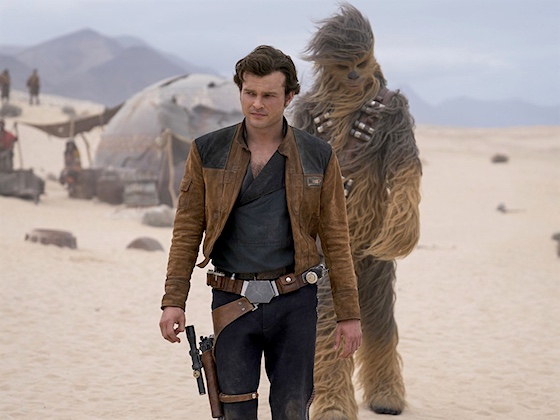
Space Western

There’s not a thing in it I’d single out as poor: the actors are fine (in the trickiest role, Alden Ehrenreich makes for a decent Han Solo), the script is fine (I’d’ve liked more humour — what’s the betting that was toned done after Lord and Miller were fired?), the action scenes are fine (the train heist from the trailer is the best one, though even that lacks a certain je ne sais quoi), the design work is fine (as well as familiar Star Wars stuff, there’s some striking new characters and vehicles)… If there’s one thing I’d criticise it’s possibly the cinematography, because half the film seemed too damned dark, but that might’ve just been the projection (it wouldn’t be the first time I’ve had that complaint about this cinema). Other than that, it looked… fine.

Thing is, “fine” only gets you so far. Solo never really makes you laugh, never really makes you excited, never really makes you feel anything — it just sort of toddles along fairly pleasantly. In fact, I’d also say it’s less than the sum of its parts, because some of those bits that are “just fine” are almost more than that. And maybe, if the whole film was working, those bits would play well. But… it’s just not quite there. The neatest thing about the entire film is how it solves the problem with the famous line from A New Hope about how the Millennium Falcon “made the Kessel Run in less than 12 parsecs” — parsec being a unit of distance, not (as the quote makes it sound) time. I mean, I’m not sure that justifies an entire movie…

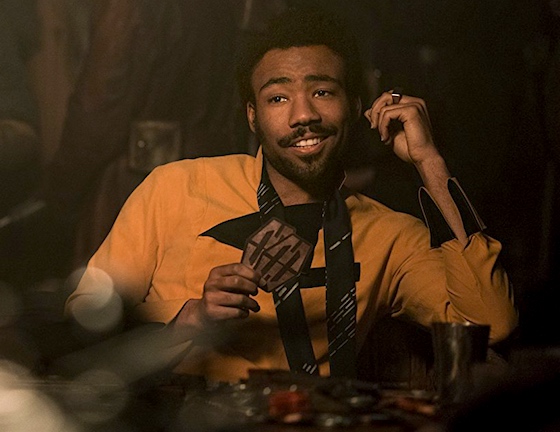
Lando, baby

The thing that most annoys me about Solo’s mediumness, and its relatively poor box office, is that it’s left very, very open for a sequel. Without spoiling anything, we can more-or-less extrapolate how Han and Chewie get from here to a cantina in Mos Eisley, but there are other plot bits left dangling. It’s been fairly well reported that the cast are signed up for three films, and I guess Lucasfilm really meant that, rather than locking them in just in case. And the reason it annoys me is because I want to know what happens next, but with the stink of failure that now surrounds Solo (a drum the media have been only too keen to beat, for no reason other than clickbait) I’m not sure Disney will be too keen on taking that punt.

On the bright side, the Star Wars franchise currently has an admirable predilection for tying its whole canon together. It happened in Rogue One, with Forest Whitaker’s character having originally appeared in The Clone Wars, and it happens here too, with a cameo that is gonna confuse anyone who’s only watched the films and not paid any heed to other media — I shall say no more, but I imagine casual fans were left scratching their heads. So, if we don’t get Solo 2, I guess certain people will pop up in some animated series or comic book or something. Which I probably won’t get round to watching or reading. Hey-ho.

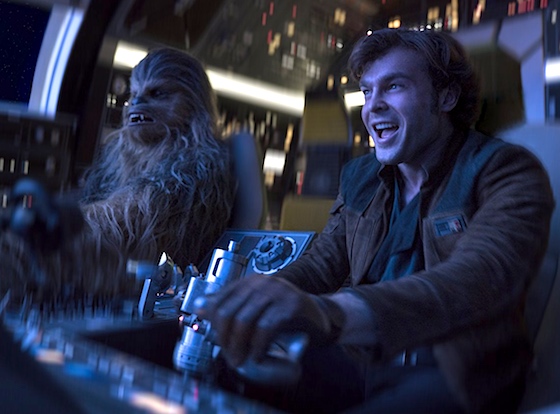
Falcon-flying fun

Maybe the “it’s fun!” tweets and reviews I read before seeing Solo undermined it for me, because I was expecting it to be fun, fun, fun, but instead thought it was just fine, fine, fine. Maybe I’ll enjoy it more when I watch it again on Blu-ray. At least it’ll have the extra pizzazz of 3D for me then. Anyway, this rating feels harsh, but, considering my reservations, the next one up seems generous. It’s another three-and-a-half-star film, but, as ever, I only deal in absolutes here.

3 out of 5

Solo: A Star Wars Story is in cinemas everywhere, for the time being.

Deadpool 2 (2018)

2018 #120
David Leitch | 119 mins | cinema | 2.39:1 | USA / English | 15 / R

Deadpool 2

The quickest way to review Deadpool 2 is simply to say it’s like the first one, but more — in a good way.

A slightly longer (and possibly confusing unless you read it slowly) way to review it would be to say that I enjoyed it less than I enjoyed the first one the first time I saw it, but I enjoyed it more than I enjoyed the first one the second time I saw it. To clarify: when I first watched Deadpool, I loved it, and gave it five stars (just about). When I rewatched it two years later in preparation for the sequel, I was less bowled over. I think a lot of its initial effectiveness was due to the freshness of its whole schtick, which has naturally gone away on a rewatch (not helped by the saturation of it in DP2’s marketing campaign). In particular, I was surprised how sparse I found the humour to be on that rewatch. Maybe that prepared me for this one: the gags aren’t literally non-stop — it sometimes pauses to attempt emotion or to convey plot — but when they do come they’re thick and fast, so much that I’m sure some will get missed (there are too many to remember specific examples, but there was stuff I thought was very funny that didn’t get much of a reaction in my screening. Or it could just be only me that liked those gags, of course.)

So, although DP2 couldn’t equal the sheer newness of watching DP1 for the first time, it’s refined the formula in such a way that I do think it’s a more enjoyable film. Maybe “refined” isn’t always the right word — in some cases it’s just chucked in even more stuff — but I think other elements have been honed. For example, the first film’s plot was a no-great-shakes origin story on which to hang gags and action. The sequel’s plot is still only scrappily adhered to, with the point once again being to deliver humour, but it does have a stronger throughline overall. Partly that comes from the villain, Josh Brolin’s Cable, who has a clear goal that conflicts with what Deadpool’s up to. Partly it comes from some thematic stuff about fatherhood and family. I’m not saying DP2’s overburdened in this department — it’s still an action-comedy — but I couldn’t tell you what the first film was about, thematically, and this one it’s made very evident.

That Deadpool, he'll say anything

That said, sometimes it’s bit heavy-handed. I can see what they were going for by giving the film a heart and some emotion — it builds off the first film, for one thing, where Vanessa was such a motivator for Wade; and they’re trying to add depth and texture to the film — but… it doesn’t work when it’s given too much focus. Everything else in the film is a pisstake turned up to eleven, and the fourth-wall breaking means Deadpool can make a gag about clichés or crappy writing even as the film ploughs ahead and does it anyway. So why isn’t he making gags whenever the film pauses for an emotional heart-to-heart type scene? Why does that sappiness flow on (and on) untouched? Okay, maybe the character cares too much to be wisecracking at those moments… but do we? Does the soppiness fit with the foul-mouthed, gore-splattered irreverence that characterises the rest of the movie? I’m not sure it does.

Other things they’ve oomphed up, but to appropriate effect, included references to the X-Men and the action scenes. In the case of the former, I was surprised how many X-references there were in the first film, but DP2 has even more, including a superb one-shot cameo and a surprise appearance by a character who’s been in a ‘real’ X-Men film but here is done more faithfully. As to the latter, the first film had some fun action beats, but here you can feel the benefit of hiring John Wick/Atomic Blonde director (and former stunt coordinator) David Leitch — everything is slicker, quicker, and bigger. Again, it’s more, but in a good way. Humour aside, if you just wanted a straightforward action flick, I think it would satisfy on that level too.

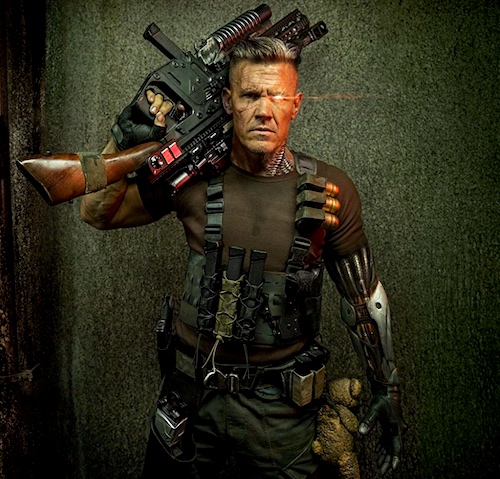
Cable, ready for action

As for its level as a satire of superhero movies, some people have criticised the way it calls out genre tropes but then does them anyway, like Deadpool exclaiming “CGI fight!” right before there’s a CGI fight. But I think that’s almost the point. It’s not trying to deconstruct the genre, just poke fun at it with self-awareness while still being very much a part of it. Would it be cleverer if it went a step further and actually subverted stuff more often? Maybe. Probably. But there is humour in the self-awareness, even if it’s an easier kind for the filmmakers to fall back on — they don’t have to avoid clichés, so long as they humorously point out they’re indulging in them.

Ironically, there are two or three occasions where Deadpool specifically makes a joke along the lines of “well that’s just lazy writing”, which were particularly amusing to me because (as I recall) they were at moments where the writing didn’t need to do more than it did. By which I mean, the writers could’ve been “not lazy” and dressed those moments up, but, functionally, they didn’t need to; so it’s not really lazy writing, just not needlessly tarted up writing… if that makes sense. It’s like movies with MacGuffins: usually they invest time explaining what the MacGuffin is and why it matters, but functionally it could be anything, all that matters is everyone wants it. Deadpool 2 doesn’t have a MacGuffin, but if it did it would be called “MacGuffin” and it would be explained simply as “a thing everyone wants” and Deadpool would say “well that’s just lazy writing”. (Flip side to all this: I can’t recall the exact circumstances of all the “lazy writing” jokes, so I’m prepared to accept they might not actually fit this theory.)

X gon' give it to ya

All of that said, Deadpool 2’s primary goal is plain, clear, and simple: it wants to entertain you by almost any means necessary, be that elaborate action sequences, almost non-stop gags, cultural references, deep-cut comic book Easter eggs, or even changing history (er, kinda). Mostly, it works — it wants to be fun and, if you’re on its wavelength, it is. Sometimes, more is more.

4 out of 5

Deadpool 2 is in cinemas everywhere, still. My review of the extended Super Duper $@%!#& Cut is here.

Vintage Tomorrows (2015)

2017 #120
Byrd McDonald | 67 mins | streaming (HD) | 16:9 | USA, Canada, Czech Republic & UK / English

Vintage Tomorrows

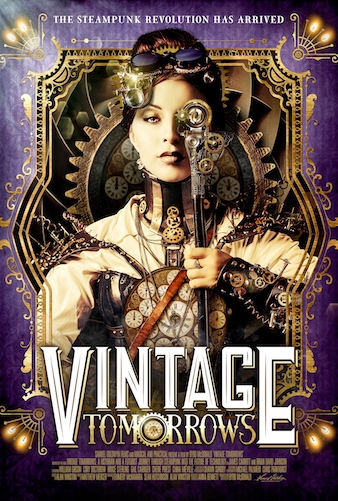
Heard the term “steampunk” but don’t really know what it is? Or have an idea, but you’d like a fuller picture of the whole subculture? Then this is the film for you, my friend, because Vintage Tomorrows is basically Steampunk 101.

For those that don’t know, steampunk is a kind of alternate history, where Victorian-esque technology and fashion rub against advanced technology — think steam-powered cars; clockwork machinery; and cogs. Lots of cogs. Although little more than an hour long, Vintage Tomorrows does a good job of providing an overview of the movement, encompassing the cool literature, fun costumes, impressive self-built gizmos, and so on. It also doesn’t ignore the political dimension: how steampunk does — or, frequently, doesn’t — deal with the dark side of the Victorian era: the poverty, oppression, racism, colonialism, misogyny, and so forth. Mainly, the subculture still needs to “grow up” and tackle that stuff. With plenty of featured interviewees, it’s also interesting to hear the different ideas that different people have about what exactly steampunk is and should be — there are clearly dissenting voices, rather than a homogenous whole. I guess that’s probably true of any subculture, but I imagine particularly one that’s quite counter-cultural.

That said, when some people start placing steampunk in the context of widespread movements like the Beat Generation, hippies, punk, hip-hop — asserting that it’s following in their footsteps — I think they’re possibly going a bit far. It may be inspired by the same mentality (the rejection of the mainstream, the desire to create something different, the search for your own identity and people who share it), but to imply steampunk is having the same influence on wider culture that those earlier movements did… I don’t think so. Not yet, anyway. In the future? Who knows.

Fire!

Indeed, some pretentious assumptions come to the fore when the interviewees get on to the subject of modern technology. They don’t like sleek, minimalist, Apple-esque design — it’s not complicated or tactile enough for them. Fine, if that’s your taste — but it is just your taste. A lot of people love that stuff. And, actually, it’s not a different subculture that loves it, it’s the mainstream. If the mainstream didn’t like it, something else would’ve swept it aside by now. But a level of self-absorption seems to go hand-in-hand with those at the forefront of niche movements, so I guess we should expect such attitudes.

Set aside those occasionally presumptive attitudes, and there’s a lot to like about steampunk. Well, if it meshes with your sensibilities, anyway. It’s not something I’d want to partake in myself, but it looks like a fun alternate reality to be a part of. And if Hollywood saw fit to give us a few more movies that fit into the genre (because there haven’t been many, I believe), I certainly wouldn’t complain.

4 out of 5

Muppet Review Roundup

In today’s roundup:

  • The Muppets Take Manhattan (1984)
  • Muppets from Space (1999)


    The Muppets Take Manhattan
    (1984)

    2018 #48
    Frank Oz | 90 mins | streaming (HD) | 16:9 | USA / English | U / G

    The Muppets Take Manhattan

    Apparently (so I read somewhere) at the time this was intended to be the end of the Muppets — the performers were fed up and wanted to move on to other things, and they conceived this third movie as a capstone on the whole affair. That seems inconceivable now — I mean, just how much Muppet stuff has followed it? To date, five more movies, at least two TV series I can immediately think of, plus other specials, countless guest appearances, a theme park attraction…

    I think that tiredness shows through in the finished product. Or maybe it’s just the changing attitudes — they’d just made The Dark Crystal, which maybe indicates they had a hankering for more serious fare. Supposedly the first draft was dismissed by director Frank Oz as being “way too over jokey”, which is surely a terrible criticism of a Muppet screenplay, but Jim Henson encouraged him to tinker with it to emphasise the characters and their relationships. This was partly in response to The Great Muppet Caper, a particularly wacky effort that hadn’t done well at the box office, so they were toning it down.

    Well, I regard the Muppets as primarily comedy characters, and so it’s no wonder this one seems to miss the mark. There’s some occasional funny stuff, the odd good skit, but mostly Take Manhattan just kinda plods along. Personally I thought Caper was a bit of a poor sequel, but this is less good again. It straight up lacks some of the things that make the Muppets so memorable — there isn’t a single fourth wall break, for instance. There’s all together too much focus on plot, even though it’s a very thin one, and the gang spend most of the movie split up, meaning it lacks their camaraderie. So much for focusing on the relationships!

    Muppets in Manhattan

    There are still celebrity cameos, at least, though I feel they’ve aged particularly poorly. Well, there’s Joan Rivers (even if her younger self is always unrecognisable to those of us who mainly knew her in later made-of-plastic years), Elliot Gould, and Liza Minelli, so it’s not all bad. Other than that, the credits explicitly name who the cameos are, but I didn’t even recognise half the names. In fact, the best one is some other Henson puppets: the cast of Sesame Street! Though the presence of puppets isn’t always welcome: a furious Miss Piggy rollerskating after a mugger, filmed in wide shots that I can only assume feature a human in a Miss Piggy suit, is the stuff of nightmares.

    Nonetheless, I shall give The Muppets Take Manhattan a 3 — just. That’s the same as I gave Muppet Caper, which is a shame (that film was more of a 3.5 whereas this is a 2.5), but it’s not so bad that I can give it an outright 2. It’s middling. It’s fans-only, I guess. Some bits work, some bits are good, but overall it’s not quite there as a Muppet movie.

    3 out of 5

    Muppets from Space
    (1999)

    2018 #75
    Tim Hill | 85 mins | streaming (HD) | 16:9 | USA / English | U / G

    Muppets from Space

    I’m afraid things aren’t going to pick up here: Muppets from Space is the lowest rated Muppet movie on IMDb. Personally, it would not be my pick for the worst film starring our felty friends… but it’s not that great, either.

    Hailing from the same era that gave us the likes of Independence Day (which gets directly spoofed), Men in Black (some of them show up), and The Phantom Menace (no references that I could detect, but they came out the same year, so…), you can see why the Muppet movie makers would’ve been inspired to move into the sci-fi realm. The plot concerns finally explaining just what Gonzo is, which is not only unnecessary but feels kind of against the spirit of the thing — no one knows what he is, there’s only one of him, that’s kind of the joke. Well, not after this film…

    Related to that, there’s almost a good thematic thing about belonging, and who your real family is or can be, but it’s only loosely nodded at early on before sort of popping up right at the end, without enough building blocks in between to really make it work as a payoff. But we don’t come to the Muppets for the themes, we come for the gags, and in that respect From Space is… fine. Well, I mean, it’s not really all that funny… or interesting… It just kind of toddles along until an underwhelming ending (it would’ve been better if (spoilers!) it turned out the aliens weren’t Gonzo’s people, thereby leaving what he is a mystery). And there’s a Dawson’s Creek cameo, because they were filming in the studio next door, which obviously feels terribly dated now, but that’s how these things always go I guess.

    So, I didn’t actively dislike it in the way I did Muppets Most Wanted (that’s why I’m giving it a 3 rather than a 2), but that might be the kindest thing I can say about it. Like Muppets Take Manhattan, it sits firmly in the middle of the field — not expressly unlikeable, if you enjoy the Muppets, but with nothing to elevate it.

    3 out of 5

  • Trekkies & Trekkies 2

    In today’s roundup:

  • Trekkies (1997)
  • Trekkies 2 (2004)


    Trekkies
    (1997)

    2018 #97
    Roger Nygard | 83 mins | streaming | 4:3 | USA / English & Klingon | PG / PG

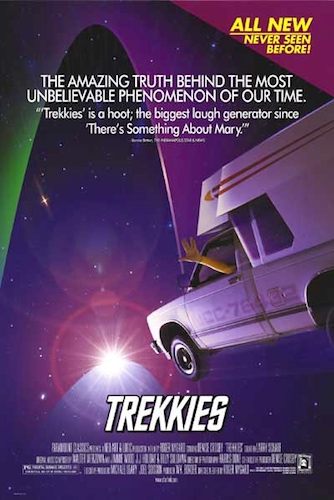
    Trekkies

    There are quite a few fan documentaries out there nowadays (a few years ago… wait, ten years ago? Bloody hell. Anyway, back then I reviewed the likes of Starwoids, Ringers: Lord of the Fans, and Done the Impossible: The Fans’ Tale of Firefly and Serenity). But before all of those, and I think the first of its subgenre, was Trekkies, which examined the phenomenon of Star Trek fandom — or, rather, the wild, weird extremities of it.

    Trekkies begins with the proclamation that “Trekkies are the only fans listed by name in the Oxford English Dictionary.” That’s not true anymore (“Whovian”, at least, is in there), and that speaks to an interesting truth about this entire documentary. When it was released 21 years ago, Trekkies was exposing a niche thing to wider awareness, and these fans were seen as weirdos, fundamentally. Watching it today, though, you see that it’s mostly just cons and cosplay — stuff that’s been virtually mainstream for a few years at this point. It may’ve once seemed odd for these people to define their lives as “Star Trek fan”, but now, for many people (especially younger people), it’s perfectly routine to be defined by which fandom you’re in.

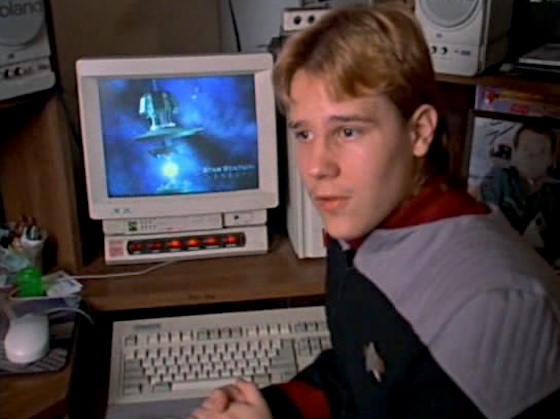
    Gabriel Koerner in 1997

    That said, Trekkies still managed to find some people who are pretty weird by any standard. At the time the filmmakers received some criticism for this — for creating a film that got laughs out of “look at the weirdos!” while ignoring the more normal side of fandom. That’s not a wholly baseless critique, but I didn’t think the film was cruel. As well as going “aren’t these people nuts!”, I think it does try to dig into why they do it, what they get out of it. I’m not sure how well it reveals the former (I mean, how did any of them go from liking a TV show to… this? It must be some personality thing), but it does a decent job of showing what benefits it brings them. And there are some incredible stories (mainly from interviewed cast members) about how Trek has changed, or even saved, people’s lives.

    Trekkies may’ve lost the uniqueness it once had, with elements of the lifestyle it depicts coming to increasing prominence, but it still remains an interesting look at that kind of world, with some very memorable characters. And if you think it might’ve aged into irrelevance after all this time, there’s a bit about the importance of Captain Janeway as a role model for female leadership and what women can do — we’re still having debates and arguments about that sort of thing over twenty years later, which is, frankly, depressing.

    4 out of 5

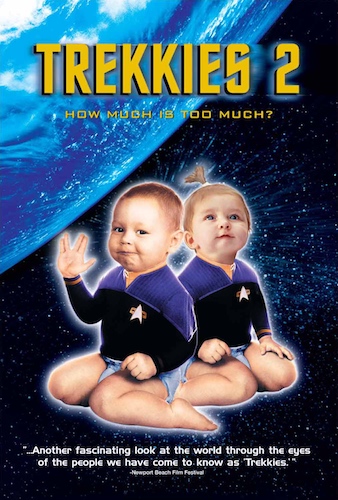
    Trekkies 2
    (2004)

    2018 #98
    Roger Nygard | 93 mins | download | 4:3 | USA / English, German, Italian, Portuguese, French & Serbian | PG / PG

    Trekkies 2

    Such is the strangeness of Time that, just 24 hours after I watched Trekkies, I jumped forward seven years to catch up with some of that film’s featured fans in this lesser-seen follow-up. It’s not just repeat visits to old friends, though — if you thought America had a monopoly on crazies, well, Trekkies 2’s got news for you!

    This time out director Roger Nygard and host Denise Crosby take us to Germany (visiting the set of a fan film); the UK (with a guy who turned his flat into a starship, which he’s listed on eBay for $2 million (a couple of years later it sold for c.$840,000, which was still 16 times what he paid for it)); Italy (where fandom is apparently centred around food); Brazil (where a collector has a rare playset from the ’60s… which Crosby accidentally knocks over); Australia (where the fans mainly seem to be female and obsessed with the sexy male cast members); France (which is really just “more international fans”, to be honest); and Serbia (where the series and its values has brought a lot of hope to people in a tumultuous region).

    We also meet more US fans, as the sequel tries to rectify some of the first film’s shortcomings. For example, there’s a much greater section on filk music (which is, basically, music tied to sci-fi/fantasy fandom), as well as some crazy-funny Star Trek punk tribute bands — there’s a whole scene of that kind of thing in Sacramento, randomly. Plus we’re shown the lighter side of fandom, like the theatre company staging a satirical Trek-ified version of Romeo & Juliet.

    German fan film

    And, as I mentioned, we catch up with some old friends, including Barbara Adams, the lady who wore her Trek uniform while on jury duty (and who has a hilarious Trek vs Wars debate with a coworker that’s like something out of The Office), and the film’s break-out star, Gabriel Koerner. A super-geeky teen in the first movie, seven years later he has a wife and has turned his hobby into a career in visual effects. It just goes to show, there’s someone and something for everyone.

    Indeed, overall it’s not quite as “look at the freaks!” as the first film. It takes time to explicitly discuss what’s going too far and what’s normal, and it also highlights how Trek fandom has been a force for good, like raising money for charity, or giving hope in war-torn regions. Consequently it’s not as funny as last time, but probably in a good way — this one’s a bit more thoughtful, a bit fairer to its subjects as people. Ultimately, I think the two films work quite well as a pair. There’s also been talk of a Trekkies 3, which I hope happens — as I mentioned about the first film, attitudes to this kind of fandom have changed massively in the past decade or so (for example, the rise of Comic-Con and its influence), so it would be very interesting to explore that.

    For my money, the most insightful moment in either film comes from Pierluigi Piazzi, a Brazilian publisher of Star Trek books, when he says that “this is a wonderful way to be crazy. Everybody’s crazy, but it’s wonderful this way.”

    4 out of 5

  • Superman (1978)

    The 100 Films Guide to…

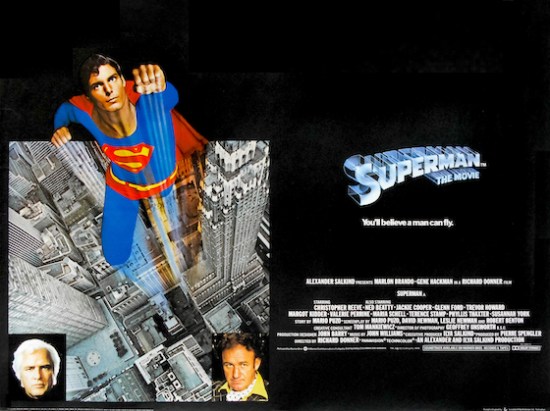
    Superman: The Movie

    You’ll believe a man can fly.

    Also Known As: Superman: The Movie

    Country: USA, UK, Panama, Switzerland & Canada
    Language: English
    Runtime: 143 minutes | 151 minutes (Expanded Edition) | 188 minutes (TV version)
    BBFC: A (1978) | PG (1986)
    MPAA: PG

    Original Release: 11th December 1978 (New York City)
    UK Release: 14th December 1978
    Budget: $55 million
    Worldwide Gross: $300.2 million

    Stars
    Christopher Reeve (The Remains of the Day, Village of the Damned)
    Margot Kidder (Black Christmas, The Amityville Horror)
    Gene Hackman (The French Connection, Unforgiven)
    Marlon Brando (The Godfather, Apocalypse Now)

    Director
    Richard Donner (The Omen, Lethal Weapon)

    Screenwriters
    Mario Puzo (The Godfather, Superman II)
    David Newman (Bonnie and Clyde, Moonwalker)
    Leslie Newman (Superman III, Santa Claus: The Movie)
    Robert Benton (What’s Up, Doc?, Kramer vs. Kramer)

    Story by
    Mario Puzo (Earthquake, The Godfather Part II)

    Based on
    Superman, a DC Comics superhero created by Jerry Siegel and Joe Shuster.


    The Story
    The only survivor of the destruction of his home world, Kal-El is raised on Earth realising he has extraordinary abilities. When he comes of age and comes to understand where he came from, he resolves to use his powers to help mankind — which is handy, because criminal genius Lex Luthor is planning a destructive scheme that only a superman could prevent.

    Our Hero
    Is it a bird? Is it a plane? No, it’s Superman! He can fly, he can withstand bullets, he can see what colour underwear Lois Lane is wearing…

    Our Villain
    Lex Luthor, criminal mastermind and possessor of a suspiciously varied hairstyle, whose latest real estate-based plot is put at risk when Superman emerges.

    Best Supporting Character
    Super-journalist Lois Lane. She may be a strong-willed highly-capable modern woman, but she still swoons at the sight of a muscly superhero.

    Memorable Quote
    Superman: “Easy, miss. I’ve got you.”
    Lois: “You’ve got me? Who’s got you?!”

    Memorable Scene
    As Lois Lane takes off in a helicopter from the roof of the Daily Planet, it snags on a wire, crashing into the rooftop and ending up dangling over the edge. As a crowd gathers below to watch the unfolding tragedy, Lois struggles to climb out, but slips and falls. As she plummets to certain death, in swoops Superman to catch her. Cue: Memorable Quote. And then, with his free arm, he rescues the helicopter too.

    Memorable Music
    John Williams at the height of his powers, composing another of the most iconic main themes of all time, plus an equally epic score to go with it. What more do you need to say?

    Technical Wizardry
    The sets are magnificent, particularly the several huge constructions, like Luthor’s underground lair, or the icy Fortress of Solitude. Reportedly, director Richard Donner was disgusted that designer John Barry didn’t get Oscar recognition for his work, especially as one of the actual nominees for Best Art Direction merely duplicated an existing hotel.

    Truly Special Effect
    You’ll believe a man can fly! Obviously some of the late-’70s special effects have dated 40 years on, but, actually, many of them hold up surprisingly well today.

    Letting the Side Down
    In case you haven’t seen the film, spoilers. If you have seen it, surely you know what this is: when Superman flies around the Earth to reverse its rotation, thereby turning back time. It’s possibly the most scientifically implausible thing to ever appear in a major motion picture, and I’ve seen Geostorm. What’s most disappointing is how it threatens to ruin a near-perfect film right in its closing minutes. Surely they knew that was stupid even in the ’70s? (I say “nearly perfect” because there’s also Lois’ terrible poem/song when Superman takes her flying. But that’s as nothing compared to the sodding time travel.)

    Making of
    There’s lots of great making-of trivia about the film, but one I didn’t even notice: for the sake of continuity, they had Christopher Reeve dub all of young Clark Kent’s dialogue — the voice of the actor who played young Clark, Jeff East, is never heard.

    Previously on…
    As the first superhero, Superman has a long history on screen, starting with the 17 Fleischer Studios and Famous Studios cartoons produced between 1941 and 1943. The first live-action iteration was a 15-part serial in 1948, with a sequel in 1950. The first Superman feature followed in 1951: Superman and the Mole Men, which was designed to promote the TV series Adventures of Superman, which ran from 1952 to 1958. The character returned to animation for The New Adventures of Superman series in 1966, and he was one of the Super Friends from 1973. So it’s no wonder the character was well-established enough that Donner’s film even includes some in-jokes.
    Next time…
    Christopher Reeve went on to star in three more films over the next nine years, with diminishing results. A 19-year wait ensued until the hero’s next big screen outing, with Bryan Singer’s Superman Returns attempting to continue the Reeves series as if III and IV had never existed. It didn’t work. The character was rebooted in 2013’s Man of Steel, with that iteration continuing in Batman v Superman and Justice League, with more expected to follow. Around these there have been several TV series, both live-action (most notably Lois & Clark, aka The New Adventures of Superman, and the long-running Smallville) and animated (including a follow-up to the acclaimed Batman: The Animated Series, the imaginatively titled Superman: The Animated Series, and dozens of direct-to-DVD animated movies). There’s a full list of all this stuff here.

    Awards
    1 Oscar (Special Achievement for Visual Effects)
    3 Oscar nominations (Sound, Editing, Original Score)
    1 BAFTA (Most Promising Newcomer (Christopher Reeve))
    4 BAFTA nominations (Supporting Actor (Gene Hackman), Cinematography, Production Design/Art Direction, Sound)
    5 Saturn Awards (Science Fiction Film, Actress (Margot Kidder), Music, Special Effects, Production Design)
    4 Saturn Award nominations (Actor (Christopher Reeve), Supporting Actress (Valerie Perrine), Director, Costumes)
    Winner of the Hugo for Best Dramatic Presentation
    2 Grammys (Best Album of Original Score Written for a Motion Picture, Best Instrumental Composition (“Prelude and Main Title March”))
    1 Grammy nomination (Best Pop Instrumental Performance (“Prelude and Main Title March”))
    1 WGA Award nomination (Comedy Adapted from Another Medium — it is quite funny, but still…)

    Verdict

    Superman is virtually perfect. Every member of the cast is excellent, though none more so than Christopher Reeve in the dual role of Clark Kent / Superman — he makes them feel like two different people, each equally believable. Richard Donner’s direction is first-rate, keeping our interest through a long storyline that could be slow but in fact never drags. There’s a pure heart here, a childlike sense of wonder and excitement that shines off the screen. Superman’s “boy scout” image could be a barrier in our modern, cynical world, coming across as twee and old-fashioned, but instead the film somehow makes it triumphant and magical. And then the time travel ending is so bloody stupid, it nearly undermines the whole movie. But, when everything else is so great, it’d be churlish to let it get in the way.

    Anon (2018)

    2018 #95
    Andrew Niccol | 100 mins | download (HD) | 2.39:1 + 1.78:1 | Germany / English | 15

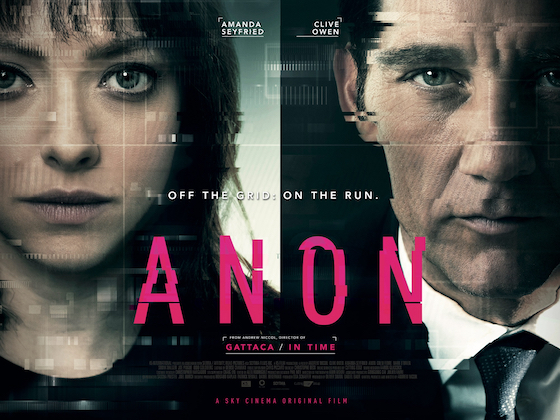
    Anon

    Sky Cinema’s latest acquisition in their attempt to establish a “Netflix original”-style brand is, ironically, also a Netflix ‘original’… just not in the UK (in the US, it was released on Netflix last week). It’s also probably their most promising grab yet… although when its forerunners are Monster Family and The Hurricane Heist, that’s not saying much. But this is a new sci-fi/thriller from the writer-director of Gattaca, so that’s gotta be worth a look… even if he has spent most of the intervening two decades making some, shall we say, less-well-regarded movies.

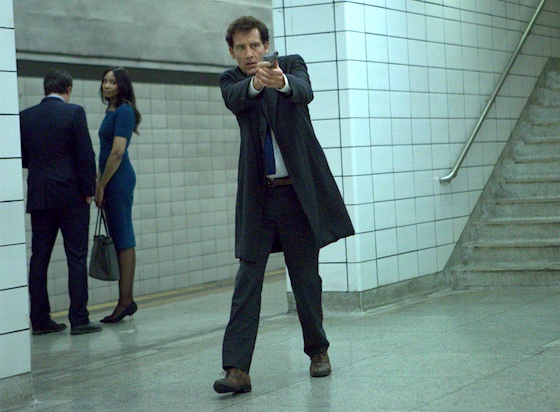
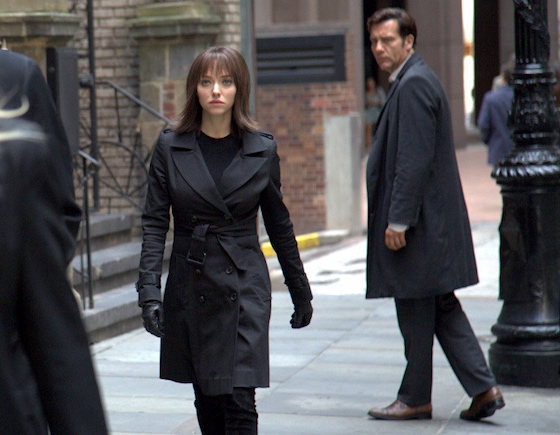
    It’s set in a near future where everyone has ocular implants that feed a constant stream of data, like non-stop augmented reality, identifying people and places, putting digital adverts on the side of buildings, and so on. These devices are connected up to a central network that allows what everyone sees to be monitored and played back when needed — for example, if a crime is committed. It’s the ultimate eyewitness, literally. When someone’s murdered, the police can just play back the last few moments of the victim’s life to see the killer. But when bodies start turning up whose final moments have been tampered with, detective Sal Frieland (Clive Owen) finds himself on the trail of an off-the-grid hacker (Amanda Seyfried) with the ability to alter records — and when the entire system is based on the notion that what’s recorded is unequivocal truth, her skills are a massive potential threat.

    Mad skillz

    Many a lazy review has described Anon as “like a Black Mirror episode”, which is not wholly inaccurate but is getting to be a stale descriptor — Charlie Brooker didn’t invent high-concept dystopian sci-fi about the dangers of future technology, so why wheel out the comparison every time anyone else dares venture into the same ballpark nowadays? Nonetheless, that is the ballpark Anon is playing in, but mixing speculative sci-fi with an equal dose of hardboiled noir to keep things spicy.

    That’s not my only problem with other reviews, though, many of which have put forth low scores and negative reactions. I saw some of them in advance of my viewing, so while watching I kept thinking, “it must go badly wrong later, because so far it’s great.” Well, that moment never came. I wouldn’t say the film is perfect — some parts, especially later on, are a tad hurried, meaning more clarity of motive would be nice — but, for me, the whole worked. There are some interesting sci-fi ideas (all the stuff about being able to trust what you see, including a standout extended sequence where the hacker messes with Sal’s head), plus it feeds some ever-relevant commentary on privacy and surveillance, with the added texture of a noir-shaped plot and atmosphere for good measure.

    In fairness, there’s clichéd stuff too, though I’m not sure how much it should bother us. For one example, it’s not much of a spoiler to say that Sal has a “dead kid” backstory, something which is a bit overdone at this point, but your mileage will vary on how much that stuff bothers you — while some of us just think it’s a tired trope, for others it seems to completely ruin the film. Conversely, I read someone criticise it for using “noir clichés” and just thought “that’s called genre, kid”. I also saw a review which decided the film was worth 1-out-of-10 just because there was a scene where they were smoking indoors, so there’s no accounting for what different people will consider important in their assessment of artistic quality.

    Gunning for other reviewers

    In my opinion, Niccol and co have offered up a well-realised near-future world — not necessarily fully imagined (it’s never explained how we got to a point where everyone has these implants, seemingly enforced by law, but that doesn’t really matter), but the way the tech is depicted and how it affects everyday life is very believable. We’re thrown into the deep-end of this environment, with just enough exposition to keep up, before the film quickly moves onto the intriguing mystery that challenges the rules of this world — and considering we’ve only just learnt the rules, being able to get straight to how they’re being circumvented is impressively economical storytelling. It’s also a neat setup for having to go back to old-fashioned cloak-and-dagger-type detective work in a modern setting — this future is so high-tech, the only way to stop the criminal from detecting the operation against her is to put Sal undercover using no-tech communication.

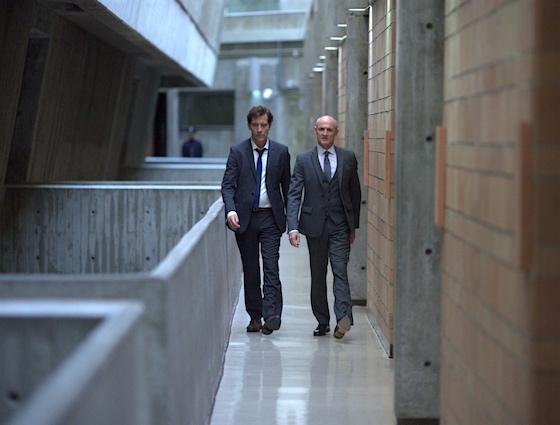
    It’s a really well made film, too. The locations are suitably evocative — the police buildings are defined by huge brutalist concrete slabs — which have been attentively framed and shot, without show-off-y camerawork. Then there’s the on-screen graphics during the point-of-view shots, which are detailed and thorough in their content, design, and execution. Their plausibility lends an automatic verisimilitude to the whole situation. And the POV shots had another nice surprise in store…

    Brutal

    Regular readers may recall that I’m a fan of a good variable aspect ratio, so it was a pleasant surprise to find that Anon features that technique — it’s unusual to see it outside of huge-budget films that have been shot/formatted for IMAX, and even then there’s no guarantee the multi-ratio version will be widely available (cf. Marvel only including them on 3D Blu-rays; Brad Bird not allowing Ghost Protocol to be released with it at all). In Anon, the ‘drama’ scenes are presented in your movie-standard 2.35:1, but it expands to a screen-filling 16:9 every time we see through someone’s eyes. These changes are very effective. The film employs the technique early and then often, so it doesn’t have the “wow” factor that some IMAX films achieve even when viewed at home, but it’s suitably immersive. Indeed, this would probably play really well on a vision-filling IMAX screen. The fact I wouldn’t have a chance to see it even if it did get IMAX showings means I’m not too sad it’s a direct-to-streaming release.

    That said, it’s kind of a shame Sky snapped it up over here. This is anecdotal evidence I know, but I know far more people with Netflix (like, pretty much everyone nowadays) than with Sky Cinema (I’m not sure I know anyone but me, actually, and I only subscribe occasionally), and I’d like to be able to recommend this to people, especially so as to go against the grain of the criticisms that I feel have been unwarrantedly negative. Well, obviously I can still recommend it, but how useful is that if people aren’t going to get the chance to see it on the basis of that recommendation?

    Who's that girl?

    Nonetheless, recommend it I shall. Perhaps Anon can’t equal other works at the top-tier of its genre, but I feel some have been unfair in writing it off. Any familiarities in the shape of its plot are in aid of creating that noir atmosphere, while the sci-fi concepts are reasonably considered and executed. For fans of the genres involved, it’s definitely worth a look.

    4 out of 5

    Anon is available on Sky Cinema from today.

    Avengers: Infinity War (2018)

    2018 #87
    Anthony & Joe Russo | 149 mins | cinema | 2.39:1 | USA / English | 12A / PG-13

    Avengers: Infinity War

    People are incredibly wary of Infinity Wars spoilers right now — understandably — so here’s the deal: this review starts off completely spoiler-free, until a clearly-marked move into spoiler territory. Then the last paragraph (after the picture of Thanos and right above my star rating) is everyone-friendly again. Get it? Got it? Good.

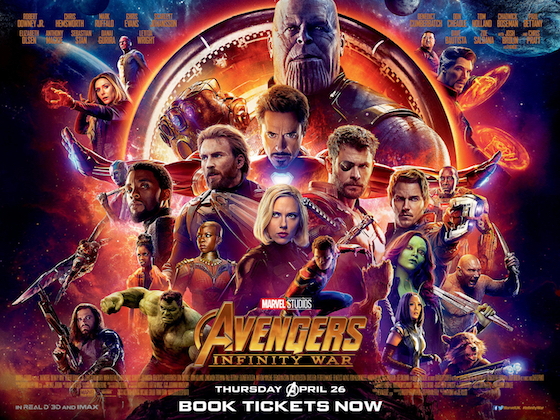
    Ironically, it’s actually quite easy to give a fair summary of the plot without spoiling anything that’s not already been teased in previous films: alien warlord Thanos (mocapped and voiced by Josh Brolin) is out to collect the six Infinity Stones, crystals from the birth of the universe with unique powers, which when amassed together will grant him ultimate power. Out to stop him is pretty much every hero introduced in the previous 18 MCU films.

    I confess, I was all prepared for Infinity War to fail to live up to the hype and hyperbole of the reviews that have swarmed over the internet in the past few days, just like happened for me with Avengers Assemble six years ago. In this case, there’s so much going on, the experience is such a huge rush, that it’s almost hard to get your head around what to think of it. I don’t believe there’s ever been another movie quite like it — so many disparate primary heroes, all needing time, and facing a single huge villain, who also gets plenty of focus… Setting aside any of the usual quantifiable elements, reviewing the film comes down (as it really always should) to one simple question: did I enjoy it? Yes, I did.

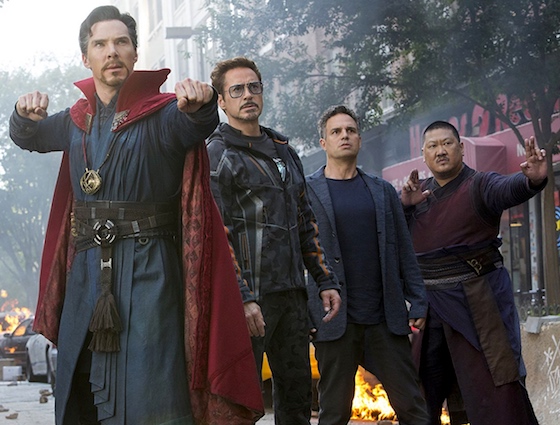
    Avengers (partially) assembled

    Like the first Avengers, it’s certainly a great event of a movie — but more so, natch. It trades off that event status too: the stakes are huge, the pace and size relentless. It could’ve been like a Transformers movie — “a beginning, then AHHHHH! for another two hours or so”, as someone once described them — but thankfully it’s not so one note: as well as big action, there’s room for humour (plenty of that, it being a Marvel movie, but never ill-placed) and emotion (some affecting dramatic scenes, most of them too spoilersome to mention here).

    It’s impressive to join together so many different sub-franchises and manage to create a consistent tone. In some respects it does feel like they’ve chopped up bits from the characters’ individual movies and spliced them together. The most striking for this is the entrance of the Guardians of the Galaxy, when the Russos cut so abruptly into those films’ style that it initially feels misjudged… though I guess a lot of people won’t mind because, hey, everyone loves the Guardians (my audience practically cheered with recognition — not at seeing the characters on screen, but at the very obvious stylistic shift just before they appear). But, across the movie as a whole, it gels well. I suppose some would counter this with “all Marvel films have the same formula and tone so obviously it works”, but that’s not wholly fair — The Winter Soldier and Thor: Ragnarok are hardly the same, are they?

    Science meets magic

    Whatever the cause, the big plus is that none of the characters ever feel inconsistent — you’ve not got funny people suddenly being serious, or serious people suddenly cracking one-liners, just to make it all fit together. On one level that’s just good character writing, but it’s also good story structure: which characters get teamed up together, because each group has a good mix to butt against each other in the right ways. That doesn’t mean every set has one Funny One, one Serious One, etc, because sometimes the film needs to be able to cut from The Serious Group to The Funny Group. Several reviews I’ve read talked about the film’s “surprising team-ups”. Well, maybe… if you haven’t watched any trailers or seen any posters. Whatever, they mostly work very well. Some characters are better served than others, which is inevitable in a film of this scope, but pretty much everyone gets at least a line or a moment. Who your personal favourites are might dictate whether you think the screen time was fairly allocated or not.

    (Spoilers follow.)

    Talking of other reviews, I read one that said that, while the film may be entertaining, it’s ultimately hollow because it has no major thematic throughline to explore. I disagree. It leans quite heavily into the question of “at what cost?” What is everyone prepared to sacrifice to achieve their end goal? Both the heroes and Thanos are presented with this question, again and again. Heck, it’s not only a major test for Thanos, it’s part of his origin story too! Now, you can argue about how well the film expounds on this theme, as you can with any work of art (In this case: several of our heroes make that ultimate sacrifice, only for it to be undone by plot necessity), but to say the theme isn’t there feels disingenuous.

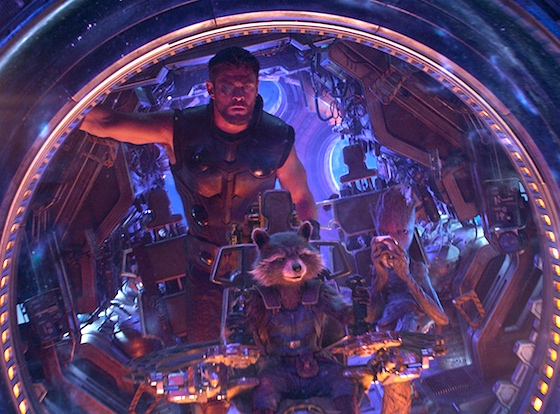
    Thor and Rabbit, off on a whirlwind adventure

    With all of that accounted for, I don’t know what more could be asked of the movie, in some respects. That said, two fairly specific things bothered me. The bigger one was that we only witness Thanos collecting five of the six stones. Why not show us the lot? How he acquires his second stone makes for an effective opening scene — immediately killing off two well-liked characters, as well as defeating two of the MCU’s main heroes, quickly establishes Thanos’ power — but then how he got the first stone is just revealed in some exposition dialogue later on? C’mon, you can do better than that! The other was the random reappearance of the Red Skull, not seen since Phase One. I guess they felt in need of some kind of reveal at that point, but I’m not sure why. Does him being there even make sense? I don’t see how, but then I’ve not watched The First Avenger in the last six years so maybe I’ve just forgotten. They even had to get a sound-alike to do the voice, so clearly they felt it was vitally important!

    Something I’ve previously written about being bothered by in movie franchises are two-part films. As a rule I prefer that, even when a pair of films are connected, they should function as finite units — think Back to the Future Part II and Part III, for example, or the link between The Empire Strikes Back and Return of the Jedi. Avengers 3 and 4 have an interesting history in this regard: originally announced as Parts 1 and 2, this was later changed to them having individual titles, to indicate they were two separate stories… but still connected, because the two films were shot back to back, and Avengers 4’s final title hasn’t been announced presumably because it’s an Infinity War spoiler. Nonetheless, some people seemed to interpret all this as meaning the two films would be completely standalone from each other, and are now annoyed at Marvel because, surprise surprise, there’s a cliffhanger.

    Spider-Man, Spider-Man, does whatever a high-tech Iron Man-esque suit can

    (I know I already gave a spoiler warning, but just in case you read on regardless: the paragraphs between now and the next photo give away, like, everything.)

    So, here’s my take: obviously Infinity War is not entirely isolated from Avengers 4, but I don’t think this is a Kill Bill one-film-split-in-two situation either. Fans who now think the original Part 1 and 2 titles would’ve been apt are maybe taking too simplistic a view of story structure. I mean, look at it this way: it’s only half a movie to us because we know the Avengers are going to come back and win somehow; but if you’re Thanos — the film’s real protagonist, remember — then the story’s over: he did what he set out to do, the end. Maybe this is an academic distinction, but I do think it’s fair enough to have ditched the subtitles that implied it was one movie in two halves. This film tells a whole story (of Thanos trying to wipe out half the universe) and the next film will tell a new story set after it (presumably, how the Avengers try to undo that).

    Either way, the film ends on a cliffhanger — a bloody huge one! But I have to wonder: is it actually too much? By that I mean: it has to be undone. Yes, obviously we know the heroes will win in the end, but none of those final deaths can stick. Even if you took Benedict Cumberbatch at his word that Doctor Strange 2 isn’t confirmed, and James Gunn at his that Guardians Vol.3 might feature a changed line-up, we know they need Peter back for Homecoming 2, T’Challa back for Black Panther 2, and so on. So if it has to be undone — if there have to be resurrections — well, why not also resurrect Loki, and Heimdall, and Gamora, and Vision, and anyone else who genuinely died earlier in the story? In fairness, in this I may be getting too far ahead — how the resurrections occur is absolutely a question for next time, after all. But it’ll have to be a very specific solution — one that undoes Thanos’ final act, but doesn’t undo all the ones that led up to it — to not just seem like a stereotypical death-doesn’t-matter superhero cop-out.

    A final point on these deaths. I’m not sure I can actually remember everyone who lived and died during the wipe-out-half-the-universe finale (there were so many!), but I’m fairly certain they were mostly Phase Two and Three characters. I remember that Iron Man, Thor, Hulk, and Cap all definitely made it, anyway. My point is this: things are now set for Avengers 4 to really cap off the first 11 years and 22 films of the MCU by placing at its core the heroes who started it all. That’s quite neat, isn’t it? You’ve got to assume that’s deliberate.

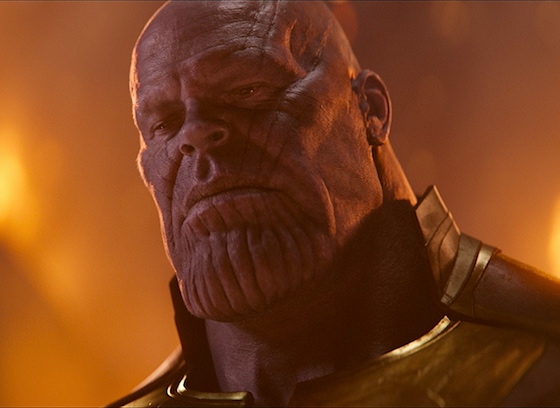
    Thanos

    Avengers: Infinity War is like a massive comic book crossover rendered in live-action. You might think “of course it is”, but it’s not that long ago that this wouldn’t even have been possible (the CGI required is phenomenal), and even less time since it would’ve been considered profitable (remember when all superhero movies had to be “grounded”?) As much as it’s a familiar epic sci-fi action blockbuster, it’s also a new kind of thing to the big screen. There are pros and cons to turning that kind of narrative into a movie, but Infinity War is heavy on the former and relatively light on the latter. When it comes down to it, it’s just marvellous entertainment.

    5 out of 5

    Avengers: Infinity War is in cinemas everywhere (except Russia and China) now.
    The fourth Avengers movie will be released this time next year.

    Avengers: Infinity War placed 6th on my list of The 26 Best Films I Saw For the First Time in 2018.