The 100-Week Roundup XXVII

The 100-Week Roundup covers films I still haven’t reviewed 100 weeks after watching them. Sometimes these are short ‘proper’ reviews; sometimes they’re only quick thoughts, or even just the notes I made while viewing.

This week’s selection includes the first reviews to be rounded up from April 2019

  • The Howling (1981)
  • The Gold Rush (1925)
  • A Good Year (2006)


    The Howling
    (1981)

    2019 #50
    Joe Dante | 87 mins | TV | 1.85:1 | USA / English | 18 / R

    The Howling

    After a near-fatal encounter with a serial killer, television newswoman Karen White becomes emotionally disturbed and loses her memory. On doctor’s orders she’s sent to the Colony, a secluded retreat where the creepy residents may not be what they seem… — adapted from IMDb

    Released the same year as John Landis’s An American Werewolf in London, I think it’s fair to say The Howling has been overshadowed by its UK-set counterpart, which has left a more enduring mark on the werewolf subgenre. But it would be a shame to ignore director Joe Dante’s effort entirely, because it’s a strong movie with its own pleasures — where American Werewolf is mostly quite comical, The Howling is more of a straight-faced horror movie.

    Indeed, at the start it feels more like a ’70s thriller than a campy horror — a Network-esque newsroom drama crossed with a seedy serial killer flick, in which the handheld neon-lit photography of nighttime ‘mean streets’ reminded me of something like The Killing of a Chinese Bookie. When the plot heads out into the countryside, the sub-Hammer antics feel a bit low-rent by comparison; but once the proper werewolf action kicks off, it picks up again. Special makeup maestro Rick Baker may have abandoned this project for American Werewolf, but the special effects feature sterling work nonetheless, including a couple of superb transformations. Hurrah for practical effects.

    There’s room for improvement here — it needs a more cohesive, thorough, better paced screenplay (after an effective opening, it takes time to get going again, but then the climax is a bit rushed) — but the bits that work are so good that The Howling still ends up as a great werewolf movie.

    4 out of 5

    The Gold Rush
    (1925)

    2019 #52
    Charles Chaplin | 95 mins | DVD | 4:3 | USA / silent | U

    The Gold Rush

    Charlie Chaplin’s The Gold Rush exists in two versions: the 1925 original, and a 1942 re-release for which Chaplin cut whole scenes, trimmed others, and reinserted some outtakes and alternate shots, plus adding a synced soundtrack that included voiceover narration by him. The re-release is the ‘official’ version according to Chaplin’s estate (on the 2-disc DVD I own, the ’42 version is by itself on disc 1, with the ’25 version among the special features on disc 2), but from what I read it seems most people regard the ’25 original as the superior version, so that’s the one I chose to watch.

    As with the other Chaplins I’ve seen, it’s an episodic series of skits with a linking theme — this time, his Little Tramp character is prospecting for gold in the Klondike. It’s an interesting mix of the expected slapstick humour with something that’s more… not serious, exactly (although a subplot about a wanted criminal who murders a couple of lawmen is a bit incongruous), but there are sequences that aim at distinctly different emotions, like pathos (not unfamiliar when it comes to the Little Tramp), or overt thrills, including a cliff-edge climax.

    Then there’s the ostensibly happy ending, in which our hero gets the girl. That’d be the girl who stood him up, who doesn’t really care for him, who got railroaded into posing with him and kissing him… but gets with him right after she learnt he’s now a multimillionaire. Are we sure that’s a happy ending?

    4 out of 5

    The Gold Rush was viewed as part of What Do You Mean You Haven’t Seen…? 2019.

    A Good Year
    (2006)

    2019 #54
    Ridley Scott | 113 mins | TV | 2.35:1 | UK & USA / English & French | 12 / PG-13

    A Good Year

    Ridley Scott, the acclaimed director perhaps destined to be best remembered for sci-fi classics like Alien and Blade Runner, and actor Russell Crowe, who made his name with hard-man roles in films like Romper Stomper and L.A. Confidential, have collaborated multiple times. Together they’ve created action-filled historical epics like Gladiator and Robin Hood, and contemporary thrillers like American Gangster and Body of Lies. But in amongst all that they made… this, an oddity on both man’s filmography: a gentle romantic dramedy about a London banker who inherits a vineyard in Provence and learns to love a simpler life.

    Ridley Scott directing a sunny romcom sounds like a daft idea, doesn’t it? Well, turns out it’s not only daft, it’s quite bad. Apparently Scott conceived the story, and everything (apart from scenes in London) was shot within eight minutes of his home in Provence. In some hands that might lead to a very personal story, but I don’t think that’s the case here. I once read someone argue that the entertainment an artist enjoys consuming isn’t necessarily the same as what they’re good at creating, and this seems like a case in point. The storyline and atmosphere may’ve been inspired by Scott’s love for the region he’s made his home, but it doesn’t match his skills as a filmmaker very well at all.

    It’s as inappropriately directed as you’d expect, with moments of almost slapstick comedy that feel decades out of date, and other parts that are shot and scored more like a thriller than a breezy comedy-drama. In front of the camera, Russell Crowe does his best to be Hugh Grant, and he could be worse, but it does make you appreciate how good Hugh Grant was at being Hugh Grant. His love interest is Marion Cotillard, playing a character whose name sounds like “Fanny Chanel” — one character responds to being told that with “ooh la la”, which might be the most succinct “British person’s view of the French” dialogue exchange ever written.

    Much as Crowe’s continued exposure to the region and its people slowly charms him, so did I gradually warm to the film. When Scott isn’t trying too hard it has a certain laidback good humour, with the bonus of beautiful scenery and beautiful women, so that it becomes not unpleasant to watch. If that sounds like damning with faint praise… well, it is. A Good Year is not a good film, but it is, ultimately, a mostly pleasant one.

    3 out of 5

  • The 100-Week Roundup XXVI

    The 100-Week Roundup covers films I still haven’t reviewed 100 weeks after watching them. Sometimes these are short ‘proper’ reviews; sometimes they’re only quick thoughts, or even just the notes I made while viewing.

    This week’s selection, the final two films from March 2019, includes a pair of awards-worthy short animations — the first won an Oscar, the second was nominated for one. I was going to include more films in this week’s roundup (effectively bundle two weeks into one), but it felt like a disservice to this pair.

  • Paperman (2012)
  • Waltz with Bashir (2008)


    Paperman
    (2012)

    2019 #48a
    John Kahrs | 7 mins | Blu-ray (3D) | 1.85:1 | USA / silent | U / G

    Paperman

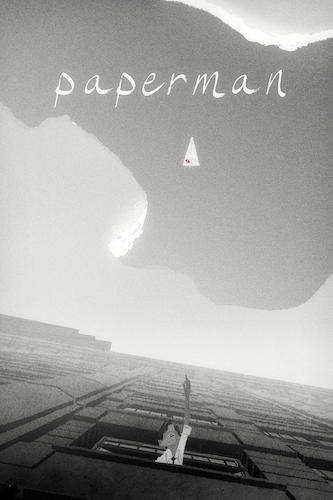
    This Disney short was originally released alongside Wreck-It Ralph (and can now be found on that film’s Blu-ray; as well as on Disney+, I presume) and, as I recall, attracted a lot of praise at the time, primarily for its visual style. That was an innovation in creating 2D-looking animation via a 3D system — so it seems a bit daft that I watched it in 3D. I have to wonder if the added visual dimension highlights the underlying 3D animation, because it’s quite obviously been created in 3D with a 2D style over the top.

    That said, it look gorgeous, however you cut it. There’s an inherent beauty in how it’s executed, while the chosen black-and-white style emphasises the apparent setting (’40s New York) and also gives it a timeless quality. The 2D/3D combination works well, giving it the fluidity and dynamism of CG animation, but with a certain roughness — a hand-made-ness — that comes from 2D cel animation. Of course, that’s artificial, injected via design choices (like scruffy outlines on the characters), but it feels authentic.

    As for the actual story, it’s a charming little romantic number involving paper aeroplanes… until those sheets of folded paper become sentient and omniscient, at which point it lost me with its silliness. But as an exercise in style: lovely.

    4 out of 5

    Waltz with Bashir
    (2008)

    aka Vals Im Bashir

    2019 #49
    Ari Folman | 87 mins | TV | 16:9 | Israel, France, Germany, USA, Finland, Switzerland, Belgium & Australia / Hebrew, Arabic, German & English | 18 / R

    Waltz with Bashir

    One night at a bar, an old friend tells director Ari Folman about a recurring nightmare in which he is chased by vicious dogs. They conclude that there’s a connection to their Israeli Army service in the first Lebanon War of 1982. Ari can’t remember that period of his life, so he meets and interviews old friends and veterans, hoping to discover the truth about that time and reconstruct his own memories of the conflict. — adapted from IMDb

    This search for the truth has led Waltz with Bashir to be labelled an “animated documentary”, which sounds like an odd idea, almost oxymoronic — you can tell a true story with animation, of course, but can you document something? Well, yes. Rather than talking heads, what animation allows is the visualisation of the narrators’ memories and dreams alike, and means we can flow between them, too. On a practical level, it allows the film to stage scenes that would be impossible in live-action without a huge budget, meaning it doesn’t have to compromise on the stories it tells. More thematically, having a shared style between ‘reality’ and ‘dream’, plus the distancing effect of it being drawn, not ‘real’ — of being unequivocally created, not just filmed — helps to underscore larger points about the reliability (or otherwise) of memory. The dreams are connected to the memories; are the memories a kind of dream?

    Given the time period being remembered, of course the film is about war and how that affects the mind of its participants, but it’s also memory in general, I think. You’d think such extreme, unique experiences would be unforgettable, and yet the workings of the mind and memory aren’t that straightforward. One strand I found particularly fascinating was the way people are haunted by the suffering of animals in the conflict, perhaps more so than by the human-related atrocities they saw. Is this just a coincidence of the people Folman spoken to? Is it a particular interest of Folman himself? Or is it a genuine phenomenon? I don’t know the answer, but (outside of, say, War Horse) I don’t remember it being such a clear thread in a war-related film or documentary before.

    I’ve seen people say they couldn’t connect with Waltz with Bashir because they didn’t know the history of the period well enough. Conversely, I felt that was part of why the film was so effective: not really knowing what was going on or what was being referred to, I was discovering it as the character did. Some parts along the way could perhaps have used further clarity or explanation for those of us entirely unfamiliar with the conflict, but there’s enough information disclosed to be going on with. I found the film’s ending to be powerful beyond words, and part of what makes it so shocking and impactful is not knowing about it, of learning about it for the first time with the characters.

    5 out of 5

  • The 100-Week Roundup XXI

    I’m sure regular readers — who hungrily consume every word I publish with a near-religious commitment, right? — are well aware of the purpose of these 100-week roundups; but for the sake of newcomers discovering them for the first time, perhaps stumbling here wearily via an IMDb link, I feel it’s overdue that I come up with some kind of generic introduction to stick on each one. Maybe something like this:

    The 100-Week Roundup covers films I still haven’t reviewed 100 weeks after watching them. Sometimes these are short ‘proper’ reviews; sometimes they’re only quick thoughts, or even just the notes I made while viewing. This week’s collection includes the final film leftover from January 2019 and the first few to be rounded up from that February

  • The Player (1992)
  • The Guernsey Literary and Potato Peel Pie Society (2018)
  • First Reformed (2017)
  • Gods and Monsters (1998)


    The Player
    (1992)

    2019 #8
    Robert Altman | 124 mins | Blu-ray | 1.85:1 | USA / English | 15 / R

    The Player

    Robert Altman’s satirical look at the world of Hollywood filmmaking stars Tim Robbins as a studio executive who rejects tens of thousands of prospective screenplays a year. When he begins to receive threatening postcards from an anonymous rejected writer, at the same time as his job seems under threat from a new employee, he’s led down a rabbit hole of suspicion and paranoia that may ruin more than just his career…

    You don’t get movies that are much more “insider Hollywood” than The Player, concerned as it is with the workings of the studio system, and packed to the rafters with cameos, both famous (big-name actors) and not (several of the guys who pitch in the film are real screenwriters). Such a focus would seemed primed to make a film inaccessible — witty and clever to those in the know, but leaving the rest of us shut out. That’s not the case here. While there’s no doubting the truthfulness (at least, in a satirical sense) of Altman’s depiction of Hollywood’s inner workings, he’s taking general aim at the entire world of it. Plus, there’s always the mystery/thriller storyline to keep us hooked.

    And in its insightfulness, the film is ahead of its time. As observed by Sam Wasson in his essay for the film’s Criterion release — written in 2016, but only more accurate five years further on — “today, when it’s the IP and not the script, or the director, or even the actor, that gets the movie made, when films are green-lit before they are written, and studios, I keep hearing, hire weaker directors because they’re easier to control, I think of that meeting, midway into The Player… when [Robbins] muses aloud to a roomful of colleagues, ‘I was just thinking what an interesting concept it is to eliminate the writer from the artistic process. If we can just get rid of these actors and directors, maybe we’ve got something here.’” I guess someone was taking notes…

    5 out of 5

    The Player was viewed as part of Blindspot 2019.

    The Guernsey Literary and
    Potato Peel Pie Society

    (2018)

    2019 #12
    Mike Newell | 123 mins | digital (HD) | 1.85:1 | UK, France & USA / English | 12

    The Guernsey Literary and Potato Peel Pie Society

    In the aftermath of World War II, a writer (Lily James) forms an unexpected bond with the residents of Guernsey when she decides to write about the book club they formed during the island’s Nazi occupation. — adapted from IMDb

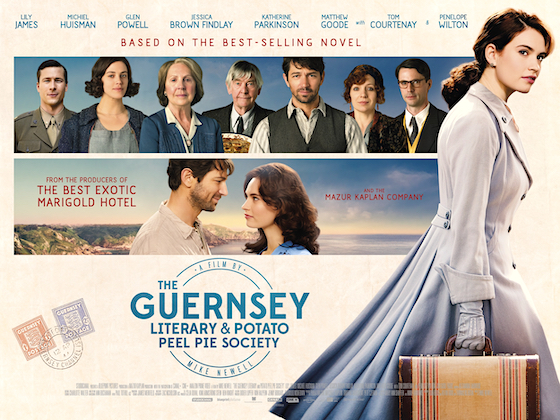
    Here we have a film that seemed to come in for a fair bit of flack in critical circles, and I can’t help but wonder if it a large part of it is simply down to the title. As I wrote in the February 2019 Arbies, it’s self-consciously whimsical, but “I can kind of see what they were going for… but they took it too far and now it’s a more horrible mouthful than the pie itself.”

    In fairness to the film’s detractors, that wasn’t their only nitpick. Another is that, although she’s ostensibly the protagonist and therefore a proactive character, James’s role is basically to keep asking the other characters what happened in the past until they explain the plot to her. That’s not an entirely inaccurate assessment of how the story unfolds. Virtually the only dramatic tension comes from the fact the other characters, all of whom know what went on, won’t reveal it until they (or, rather, the plot) decide it’s time to. Then again, stuff like having an active protagonist is one of those rules of drama that I sometimes feel is a rule just because it’s a rule — if your story is engrossing and entertaining anyway, why not have the ‘hero’ be little more than a narrator to guide us through what went on? Anyway, I’m not sure Literary and Potato Peel Pie Society was built to support such technical debates.

    Naturally, there’s a romance storyline too. That’s all very twee, of course, but the flashbacks to life under occupation give the film more grit than some gave it credit for. This isn’t a hard-hitting war movie, but nor is it simply an airy-fairy romance in pretty locations with an overdose of the sugary quirkiness that the title implies. Taken as a whole, it’s a perfectly decent melodrama-ish movie, that delivers on both a “chick flick”-ish romantic level and as some kind of recognition for the efforts of ordinary people during the war.

    4 out of 5

    First Reformed
    (2017)

    2019 #13
    Paul Schrader | 113 mins | digital (HD) | 1.37:1 | USA, UK & Australia / English | 15 / R

    First Reformed

    The pastor (Ethan Hawke) of a small church in upstate New York is asked for help by a pregnant parishioner (Amanda Seyfried) whose husband is a radical environmentalist. When the situation takes a tragic turn, the pastor must cope with mounting despair brought on by tragedy, worldly concerns, and his tormented past. — adapted from IMDb

    My first note about First Reformed is: I’m glad I didn’t watch the trailer first — it gives away almost all the salient details of the climax. So there’s a warning to you, too. (Naturally, the above plot description is written to not give too much away.)

    Continuing in that non-spoiler-y vein, then, all I can share from my notes about the ending is that it definitely seems designed to provoke debate — about the rights and wrongs of what does and doesn’t happen; about the choices made; about the way it chooses to conclude. The problem (or, some might feel, advantage) of being vague about this is that there’s no meaningful way to engage with said debate. Oh well.

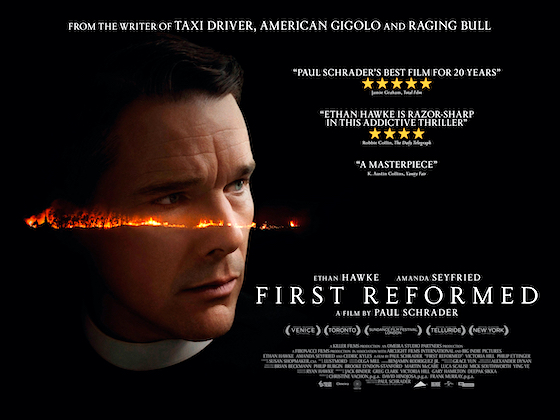
    Before we get to the contentious conclusion, First Reformed appears to be a quiet little drama about personal despair and grief. It sort of morphs into something very different — almost a polemic about climax change. I say “sort of” because it also retains its smaller character-specific focus by using such big world-affecting things as a metaphor or mirror for individual dejection and hope. The character in question is Ethan Hawke’s pastor, and it’s very much a character study of him (Amanda Seyfried, a big name given co-billing on posters, etc, doesn’t have a huge amount to do — even when her character is involved in several exceptionally emotional situations, she remains very calm). With the whole film on his shoulders, Hawke is excellent, navigating us through his character’s rather internal conflicts with an assured performance.

    It was a good enough turn to put him in the awards conversation, as I remember, but not to secure any major nominations. The film did get an Oscar nod for its screenplay, written by director Paul Schrader, but it lost to Green Book. The less said about that the better, maybe.

    4 out of 5

    Gods and Monsters
    (1998)

    2019 #16
    Bill Condon | 105 mins | digital (HD) | 16:9 | USA & UK / English | 15 / R

    Gods and Monsters

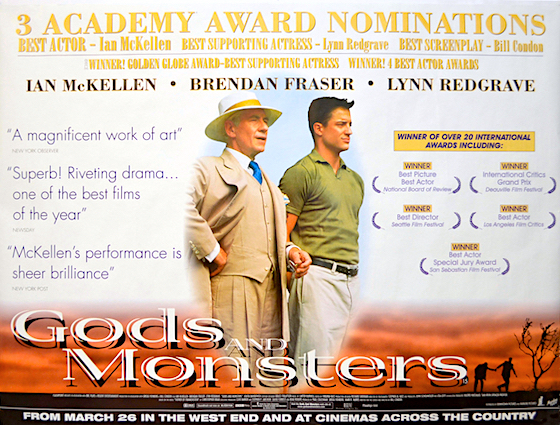
    James Whale (played here by Ian McKellen) was the director of such acclaimed classics of the 1930s as Frankenstein, The Invisible Man, and Show Boat. By 1957, he was long since retired, and when he suffers a stroke it causes him to reflect on his memories — of his earlier life in England; of his movie career; and of his time in the trenches during World War I. He recounts these experiences to his new gardener, Clay (Brendan Fraser), a strapping ex-Marine who Whale persuades to model for him. Their friendship grows, even as Clay is wary of Whale’s homosexuality, and Whale’s health deteriorates.

    Viewed now, there are definitely parallels between this and another film starring Ian McKellen and directed by Bill Condon, Mr. Holmes. Both concern a dying old man (McKellen), cared for by a characterful housekeeper (here, Lynn Redgrave), who connects with a younger male while reflecting on former glories. No offence meant to Condon, but if he were a more noted director then I guess more people would have discussed the similarities between the two works, for good or ill (are they mirrored explorations of a similar theme, or just self plagiarism?) Of the two, Gods and Monsters is probably the more effective, benefitting from being based on a real person and true events in its exploration of who this person was.

    4 out of 5

  • The 100-Week Roundup XVIII

    Here we are, then: the final reviews from December 2018, which are also therefore the final reviews from 2018 (er, aside from that one I’m keeping for another time).

    Also worthy of note: buried in the middle of this selection is the 2,000th feature film review I’ve published on this blog. It was way back in August 2019, 16 months ago, that I reached 2,000 films listed for review, so it’s taken me quite a while to catch up.

    So, reviews number 1999, 2000, and 2001 are…

  • Torment (1944)
  • Music in Darkness (1948)
  • Hachi: A Dog’s Tale (2009)


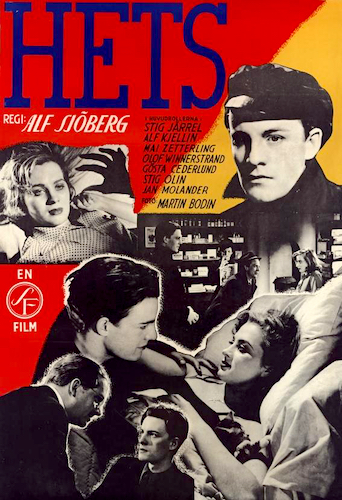
    Torment
    (1944)

    aka Hets

    2018 #249
    Alf Sjöberg | 97 mins | DVD | 4:3 | Sweden / Swedish | 12

    Torment

    Torment won a prize at Cannes and was nominated at Venice, but it’s most noteworthy for being the first film in the career of Ingmar Bergman: he was the screenwriter, and also served as assistant director — in which capacity he directed the film’s very final scene, meaning this film technically contains his first work as a director.

    Initially it seems like just a classroom drama — students vs a demanding teacher — but it takes a very different turn once one of the boys becomes involved with a girl of ill repute. She’s being tormented by a sadistic stalker — guess who that might turn out to be.

    With its realistic location photography and attitudes about schoolboys (disrespectful of schoolmasters; smoking; talking about getting girls pregnant; expressing opinions like “all women are tramps, and if they’re not they want to be”; and a lead female character who demonstrates they might be right), Torment feels more like a film from the ’60s film than the ’40s. But perhaps that’s just because it took Puritan America a while to catch up.

    The film is also critical of the strictures and pressures of the education system, which is still an accurate observation over seven decades later. In particular, a speech by a doctor about how schoolboys are overworked, and so they’re justified in trying to dodge some of that work, could be repeated word for word in a modern setting. There’s another scene where a kindly teacher berates a harsh one about his methods that, hopefully, we’ve moved slightly past, although I imagine every school still has teachers that are thought of as bastard taskmasters.

    Outside of its social views, the film does seem more of its time in its shot choices and production style, though not in a bad way — there’s some very effective stuff, like a bit of misdirection into a dream sequence, or its use of shadows. There’s one moment on a staircase that’s worthy of a horror movie — it’s almost a jump scare — and a chilling sequence follows which, again, feels like it’s from a different genre entirely.

    I liked a lot of Torment, not least the way it went beyond a tragic plot twist to explore the fallout in a fairly realistic manner — the lack of justice, the lack of revenge — but, unfortunately, the ending didn’t quite land for me. There’s a kind of justice for one character, but another ends up seemingly positive and optimistic, getting over events a mite too quickly. That said, it’s a quality production overall. It’s a shame it seems destined to relegation as a minor work (it’s not even in Criterion’s “comprehensive” Bergman box set), because I think it merits a wider rediscovery.

    4 out of 5

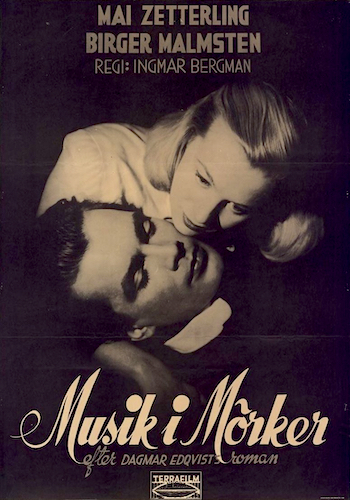
    Music in Darkness
    (1948)

    aka Musik i mörker / Night is My Future

    2018 #255
    Ingmar Bergman | 84 mins | DVD | 4:3 | Sweden / Swedish | PG

    Music in Darkness

    This is an early film by Ingmar Bergman — his fourth as director, from an era when someone’s fourth movie was an early one rather than their second or third studio blockbuster. That said, what Music in Darkness most feels like is a Hollywood romantic drama of the era, albeit with a couple of artistic flourishes and a flash of nudity, just so you know it’s definitely European.

    The film begins when master pianist Bengt Vyldeke suffers an accident that leaves him blind. Not a terrible inciting incident on paper, but on screen it’s so implausible it’s like a spoof: he’s injured while trying to save a puppy on a military shooting range. Where did that puppy come from?! Then there’s a kinda-experimental dream sequence, before we’re finally off to the races with a fairly standard romantic melodrama.

    Bengt may‘ve saved the life of a puppy, but he turns out to be a bit of a git. At first it seems his grumpiness stems from despair at his new situation, but then he begins to soften as he spends time with Ingrid, a maid who’s helping him. Sweet-natured, romantically-minded Ingrid is played by the ‘loose woman’ from Torment, Mai Zetterling; a remarkably different kind of role. So far, all so standard. But maybe Bengt saw Torment before he was blinded, because he starts calling Ingrid a wench and a last-resort marriage prospect behind her back. Yeah, maybe he’s not such a reformed character after all.

    Anyway, more tribulations follow, but eventually they overcome what was separating them to get together — hooray, and all that. But that’s not the end: next, there’s some minor palaver over getting married, the organising of the wedding, etc… but then that’s solved and they leave together, newlyweds… the end. All of which seems thoroughly extraneous — the story ends when they (suddenly, out of nowhere, without either really saying anything to the other) finally get together, not after some faffing about with wedding planning.

    Perhaps this is the European sensibility again, lacking the strict formal awareness of a Hollywood studio production. I don’t make that comparison as a criticism, incidentally. Like many a solid studio programmer, Music in Darkness is perfectly fine for what it is; but little about it truly stands out, either.

    3 out of 5

    Hachi: A Dog’s Tale
    (2009)

    2018 #259
    Lasse Hallström | 89 mins | TV (HD) | 1.85:1 | USA & UK / English & Japanese | U / G

    Hachi: A Dog's Tale

    Inspired by the true story of Hachikō, a dog in 1920s Japan who every day would wait at the train station for his owner to return — and continued to do so for almost ten years after the owner died. The tale was made into a Japanese film in 1987, which clearly caught the attention of someone in Hollywood, with this remake relocating the action to modern-day USA.

    This is really a film for people who like dogs. Without the pooch, it would be a terribly twee Hallmark TV movie — any scene where Hachi is absent is excruciating. In other words, if you don’t care for dogs, give it a miss. For the rest of us, fortunately, the pup’s is in most of it. The story takes us on an emotional rollercoaster, its impact only emphasised by the fact it’s (fundamentally) a true story. Of course, the dog dies — he wouldn’t have stopped waiting at the train station if he didn’t, would he, because he’s a very good boy.

    Yeah, if you hadn’t already guessed, this is an unabashed tearjerker for any dog lover.

    4 out of 5

  • Luxor (2020)

    AMPLIFY! film festival starts today, and one of the launch films is Luxor, which is also on general release in the UK today (though not in cinemas, what with them all being closed again). It’s available digitally via an array of services, but, psst, AMPLIFY! may well be the cheapest.

    Other titles available on AMPLIFY! from today are…

    …and there’s much more to come over the next couple of weeks (the festival ends on Sunday 22nd). For info on all the films, check out the AMPLIFY! programme.

    I’ve already seen some of those films, so I intend to review them in the next day or two; but for starters, here are my thoughts on Luxor

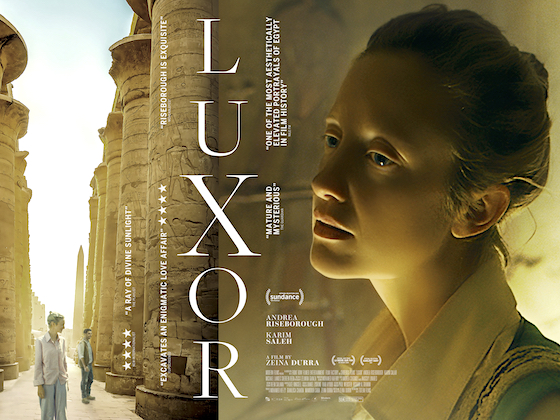
    Luxor
    (2020)

    2020 #226
    Zeina Durra | 86 mins | digital (HD) | 1.85:1 | Egypt, UK & UAE / English & Arabic | 12A

    Luxor

    Hana (Andrea Riseborough) arrives in Luxor, Egypt, for a break — as we will come to learn, she’s a doctor who’s been working on the Syrian border, and the traumatic things she witnessed have clearly taken their toll; and Luxor isn’t just a scenic place to visit, but somewhere she spent a significant time, a couple of decades ago, in her 20s. While touring the sights, she happens to bump into Sultan (Karim Saleh), an old friend from back in the day — and, clearly, more than a friend. He’s an archaeologist on a dig, and so they begin to see more sights together, and their connection is rekindled…

    Luxor plays like it’s part gentle romantic drama, part tourism video. There are multiple scenes of Hana leisurely roaming around ancient monuments, soaking in the atmosphere and history. (According to writer-director Zeina Durra, “the film had a whole load more of those silent walking scenes but we had to take them out for the sake of the audience’s sanity!”) There’s a lot going on internally for these characters — a lot of stuff we’re not privy to — which will work for some viewers and wholly turn off others. I found Hana’s mental state to be infectious, to a degree. There’s evident nostalgia for her previous time there, tinged with a certain amount of melancholy. Well, nostalgia is inherently quite a melancholic emotion, with its longing for unobtainable pleasures, but Hana is definitely at a time in her life when she’s considering both the past and possible futures. It’s so palpable that Luxor is, at times, the kind of film that’s so seeped in nostalgia it can make you long for a place you’ve never been.

    Sightseeing

    Unfortunately, these things I liked about the film begin to lose footing somewhat as it goes on and hunts around for a conclusion. There’s a thread of spiritual, almost magical realism stuff, which doesn’t feel inappropriate given the history of the place, but it doesn’t sit wholly with the romantic drama bit either. It’s the kind of thing that has to be measured out very carefully if you’re going to mix it into an otherwise grounded drama, and I’m not sure how much the film commits to it. It culminates in a dream sequence that I didn’t buy into. Also rubbing me up the wrong way were the occasional chapter-like title cards, which felt like a pointless addition (I’m tempted to say affectation) because they didn’t seem to add anything, not even a shape or structure, that wasn’t there otherwise.

    I liked Luxor at lot at first (if describing it as “a tourism video” sounds negative, well, it’s set in the kind of enchanting place you’d like to watch a travel video about, so that’s ok), but by the end it had kind of lost me. I thought it was better when it had less of a plot, even — I’m not normally the kind of critic to take such a view (I like a story in my films, thanks), but I was succumbing to its relaxed tenor quite pleasantly. In the absence of the option for real-world trips abroad right now, others may well feel the same. What unfolds after that is, I think, on reflection, a meditation on a specific kind of female middle-age. I suspect that, too, will play better with some viewers more than others.

    3 out of 5

    Luxor is screening on AMPLIFY! until Thursday 12th November.

    Disclosure: I’m working for AMPLIFY! as part of FilmBath. However, all opinions are my own, and I benefit in no way (financial or otherwise) from you following the links in this post or making purchases.

    The 100-Week Roundup XIII

    Horror, comedy, romance, and singing Nazis in this week’s roundup…

  • TiMER (2009)
  • Suspiria (1977)
  • Matinee (1993)
  • The Producers (1967)


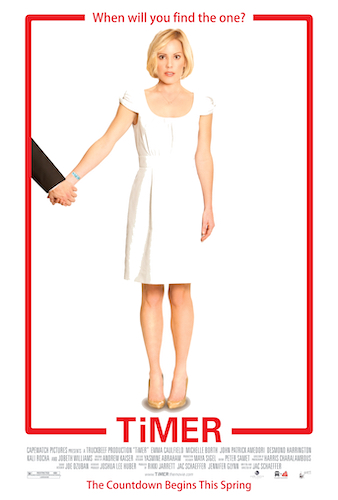
    TiMER
    (2009)

    2018 #210
    Jac Schaeffer | 100 mins | streaming (HD) | 1.85:1 | USA / English & Spanish | 15 / R

    TiMER

    The debut feature of writer-director Jac Schaeffer (who hasn’t helmed a feature since, but is now the showrunner of Marvel’s WandaVision) is a sci-fi romcom that doesn’t sell out its high concept to make its romance work. Said concept is that you can buy an implant that will count down to the day when you meet your soulmate. So, there’s the usual romcom “will they/won’t they” shenanigans, but with this added SF complication.

    As a sci-fi fan, I thought the concept was very well done indeed. At it’s core it’s quite a simple idea — I mean, such a device is hardly something that would change the entire world, but it would certainly affect our attitude to relationships and dating. The writing has thought through those effects, the way it would modify people’s reactions and behaviour and so on, and applied all of that to its story in a natural way; that is to say, it influences what happens, rather than the plot being little more than an exercise in exploring the permutations of the concept. Couple that with a solid romcom element, and you have a likeable little film.

    4 out of 5

    Suspiria
    (1977)

    2018 #211
    Dario Argento | 98 mins | Blu-ray | 2.35:1 | Italy / English | 18

    Suspiria

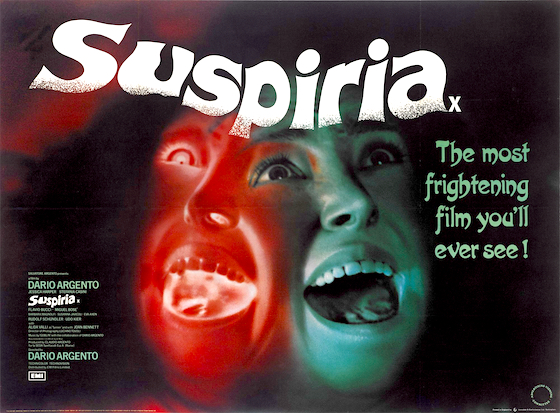
    Perhaps horror maestro Dario Argento’s best-known movie, Suspiria is the story of American ballet dancer Suzy Bannion (Jessica Harper), who travels to Germany to train at a prestigious dance academy, where she instead uncovers many creepy goings-on.

    There’s a bit more to the story than that, but, really, Suspiria is more about its unnerving atmosphere, creepy scares, and strikingly brutal murders than emphasising a traditional narrative. According to the film’s Wikipedia page, “film scholar L. Andrew Cooper notes ‘aesthetic experience is arguably the ultimate source of ‘meaning’ in all of Argento’s films’,” and that was certainly my main takeaway here — as I wrote in my year-end summary, it’s a masterpiece of uneasy atmosphere, with striking colours and music.

    There’s a lot more that could be written about Suspiria (and, of course, has been written in the 43 since its release), but if you were expecting deep-dive insight in a roundup column, you’re in the wrong place.

    5 out of 5

    Suspiria placed 16th on my list of The Best Films I Saw in 2018. It was viewed as part of Blindspot 2018.

    Matinee
    (1993)

    2018 #213
    Joe Dante | 99 mins | TV | 1.85:1 | USA / English | PG / PG

    Matinee

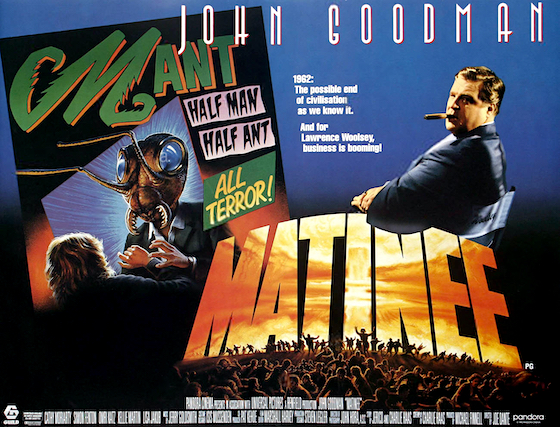
    I confess I’d not even heard of Matinee before Arrow put out a Blu-ray a few years back, but it seems to be something of a cult favourite — it’s laden with high-scoring reviews on Letterboxd nowadays. It’s about a producer of horror B-movies (modelled on William Castle) who attempts to promote his latest piece of monstrous schlock, Mant, to a military-base town during the Cuban Missile Crisis. Thematically, it’s a tribute to and evocation of the magic of the movies, which probably explains its popularity on a movie-logging website. That’s definitely its strongest aspect, with John Goodman getting to deliver some nice speeches about the wonder of going to the pictures. Shame today’s cinema managers and employees don’t seem to share his romanticism for the experience…

    Other than that, I thought it was a bit something and nothing. The movie-within-a-movie is a lot of fun, and setting a good chunk of the film during its premiere screening is a neat bit of structure, but overall the antics get a bit daft.

    There’s a bit of unintended mirroring in the inclusion of a school drill for the atomic bomb about to drop, with safety precautions that would be fundamentally useless were it to actually happen — it calls to mind how today US schools do drills for school shooting situations, again with virtually useless advice (or so I’ve heard). You could possibly draw out some commentary on the changing nature of threats to US citizens (it used to be from without, now it’s from within), but Matinee was made in 1993, so the chances of it being intentional are nil.

    3 out of 5

    The Producers
    (1967)

    2018 #216
    Mel Brooks | 86 mins | DVD | 1.85:1 | USA / English | PG / PG

    The Producers

    Writer-director Mel Brooks is best known for his fourth-wall-breaking movie parodies like Young Frankenstein, Spaceballs, and Robin Hood: Men in Tights, but his debut feature is a different kettle of fish. It takes place in (broadly speaking) the real world, where failing Broadway producer Max Bialystock (Zero Mostel) and accountant Leopold Bloom (Gene Wilder) come up with a moneymaking scam that involves putting on a show so terrible that it closes on opening night.

    Cue a mix of black humour (the play they settle upon is called Springtime for Hitler: A Gay Romp with Adolf and Eva at Berchtesgaden) and slapstick, with scenes and moments indicating the direction Brooks’ style would later take (like an aside about another character being delivered direct to camera, or someone answering a comforting “there, there” with “where, where?”).

    Although originally opening to mixed reviews, the film was a box office hit, earnt Oscar nominations (Best Supporting Actor for Wilder) and wins (Best Screenplay for Brooks), and was eventually adapted into an actual Broadway musical (you couldn’t make this up) which was then (re)made as another film (you really couldn’t make this up) and as recently as 2016 was used as the basis for a spoof of Trump (sadly, he’s not made up either). That, I think, speaks to the enduring hilarity of the original.

    4 out of 5

  • The 100-Week Roundup XII

    In the interests of catching up, this roundup combines two separate weeks.

    The first contains two of the most acclaimed films of all time (both feature on numerous “greatest ever” lists, including those from IMDb, Letterboxd, TSPDT, and Empire), which happen to be my final reviews from September 2018.

    The second is a pair of movies I watched back-to-back in October 2018 that share an obvious pregnancy theme — but, oh, they could hardly handle it more differently.

    This week’s films are…

  • Network (1976)
  • Ran (1985)
  • Prevenge (2016)
  • Bridget Jones’s Baby (2016)


    Network
    (1976)

    2018 #201
    Sidney Lumet | 121 mins | digital (HD) | 1.85:1 | USA / English | 15 / R

    Network

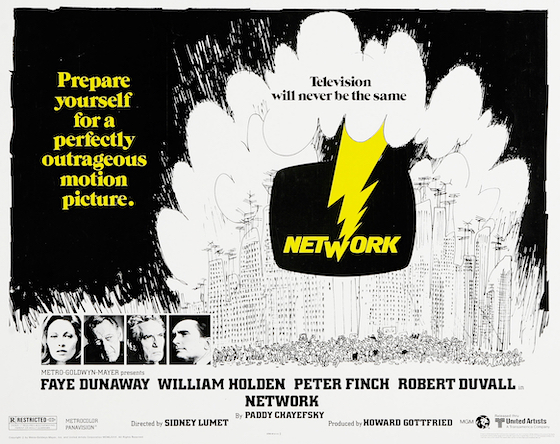
    no predictor of the future — not even Orwell — has ever been as right as Chayefsky was when he wrote Network.

    So wrote Aaron Sorkin, who has cited Network’s screenwriter Paddy Chayefsky as a major inspiration on his own writing; he even cited the man when accepting his Oscar for The Social Network; and Sorkin’s TV series The Newsroom feels like it could’ve been called Network: The Series.

    Well, maybe not. The first half-hour or so of Network feels like The Newsroom (which was a series very much aimed at being realistic, to the extent that it was set in the recent past and mostly used real news stories for its plots), whereas Network spirals off into its own level of satirical craziness, far beyond what Sorkin’s series attempted.

    But whereas The Newsroom looked to the recent past and real events, Network is as indicative of the future as Sorkin said in that opening quote. The film may be 44 years old, but I’m pretty sure you could Chayefsky’s this screenplay, change only a couple of minor specific words, and film it as being set today. It forecasts the future of TV news as angry men ranting as if they were prophets (this was 20 years before Fox News launched), as well as commentating on the place of terrorism in driving TV ratings.

    It’s cynical and ultimately bleak, but, worst of all, it’s entirely accurate.

    5 out of 5

    Network placed 21st on my list of The 26 Best Films I Saw For the First Time in 2018.

    Ran
    (1985)

    2018 #203
    Akira Kurosawa | 161 mins | Blu-ray | 1.85:1 | Japan & France / Japanese | 12 / R

    Ran

    Akira Kurosawa returns to Shakespeare (after Throne of Blood quite closely adapted Macbeth and The Bad Sleep Well may or may not have been based on Hamlet) for an adaptation of King Lear, relocated to feudal Japan. At the time, it was speculated to be his final film. It wasn’t — he made three more — but this was his last large-scale work.

    The title translates roughly as “chaos”, “pandemonium”, or “turmoil” — I guess they didn’t bother retitling it for the West because the original is a nice, simple word we can understand. But the original meaning is clearly apt, because the film depicts the mayhem that ensues when a warlord abdicates and tries to divide his kingdom between his three sons.

    It’s testament to Kurosawa’s greatness that he can make a movie this magnificent and I wouldn’t even put it in his top five. That might be my failing, though — this is a longer and more complex work than, say, Throne of Blood or Sanjuro. I need to revisit all of Kurosawa’s movies, but none more so than this.

    5 out of 5

    Ran was viewed as part of What Do You Mean You Haven’t Seen…? 2018.

    Prevenge
    (2016)

    2018 #208
    Alice Lowe | 88 mins | TV (HD) | 2.35:1 | UK / English | 15

    Prevenge

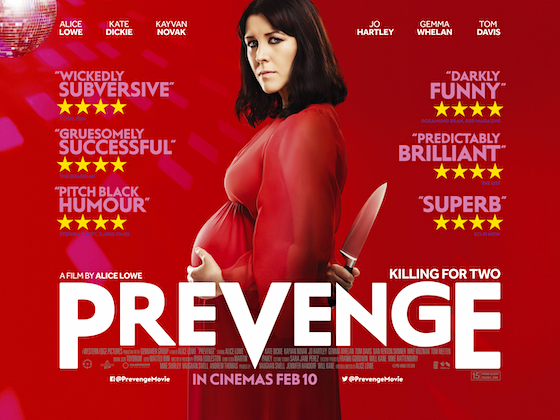
    Seven-months-pregnant Ruth (played by Alice Lowe, who also writes and directs) believes she can hear the voice of her unborn baby, and it’s telling her to kill people. Why is a mystery… unless you read the Wikipedia entry, which just tells you upfront. (Don’t read the Wikipedia entry.)

    The behind-the-scenes story of Prevenge is impressive: it was made while Lowe herself was pregnant; she wrote it in just four days, and shot it in just 11. Speed is no indicator of quality, either positively nor negatively, but Prevenge is very good. The premise is obviously absurd, but it leans into that by being darkly funny. As a horror movie, it’s not scary, more kind of creepy, although not even quite that — it’s not playing on those kind of thrills.

    Perhaps this means it fails to satisfy “horror fans”, thus explaining its fairly low score on IMDb, which I think is unwarranted. But it’s also not what people have started to call “elevated horror” (i.e. horror that is acceptable as a Quality Movie too), because it’s too transgressive for that. Perhaps it is best taken as an exceptionally black comedy.

    4 out of 5

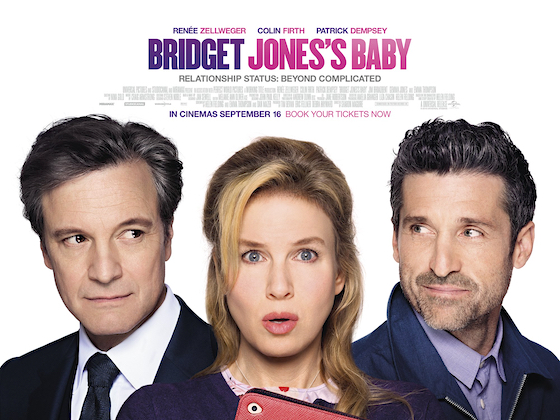
    Bridget Jones’s Baby
    (2016)

    2018 #209
    Sharon Maguire | 123 mins | digital (HD) | 2.39:1 | UK, USA, France & China / English | 15 / R

    Bridget Jones's Baby

    I first and last watched the original Bridget Jones’s Diary and its sequel, The Edge of Reason, many years ago (probably close to when they were originally released, in 2001 and 2004 respectively; certainly well before this blog existed). I didn’t dislike them, but all I can really remember about them is broad-sweep stuff, including barely anything from the second one. So I didn’t come to this belated third movie as an all-read-up fan; but, just like the first two, I didn’t dislike it… and, 100 weeks later, can barely remember any details about it. (I read the detailed plot description on Wikipedia and some of it came back to me.)

    The storyline is mostly pretty obvious — it’s a recycle of the previous films’ love triangle thing, now with the added complexity of a pregnancy — which means the over-two-hours running time feels somewhat excessive (I continue to believe all comedies should be about 90 minutes). In spite of that, it’s often pretty funny. Some of the riffs on modern media and whatnot are a bit tired (“those young people, just posting photos of their food on Instagram!”), but other gags land well enough.

    In the earlier movies, Renée Zellweger attracted praise for her ability to inhabit a British lass. It feels like she’s forgotten how to do the accent in the 12 year gap; or maybe it’s just thanks to the work she’s obviously had done on her face… At least she’s helped by a supporting cast so stuffed with quality performers from UK comedies that some literally just appear in the back of shot (presumably there were deleted scenes).

    Reasonably successful at what it sets out to do, then; enough so that there’s been talk of a fourth one.

    3 out of 5

  • Before Midnight (2013)

    2018 #205
    Richard Linklater | 109 mins | Blu-ray | 1.85:1 | USA & Greece / English | 15 / R

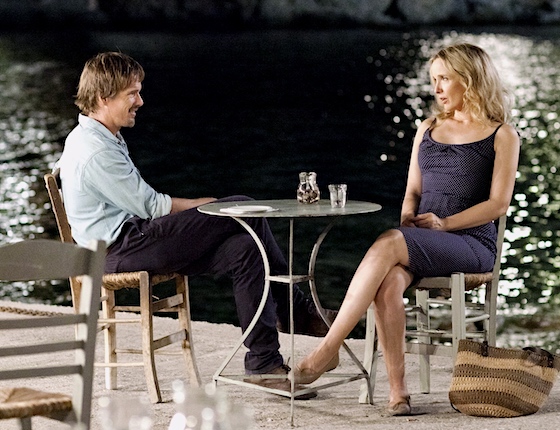
    Before Midnight

    The third film in co-writer/director Richard Linklater’s Before trilogy catches up with couple Celine (Julie Delpy, also a co-writer) and Jesse (Ethan Hawke, the third co-writer) in middle age, after years of being together, with two kids (plus his kid from a previous relationship) and a host of problems bubbling under the surface.

    Linklater got a lot of attention for shooting coming-of-age drama Boyhood in real-time over 12 years, but for my money he’s used a similar technique to much better effect in this trilogy. It’s a different way of handling it, of course: Boyhood was filmed across all 12 of those years, following the characters closely as they grow and change; whereas the Before films drop us in for a crucial few hours once every nine years, thereby offering a more concentrated experience of time on screen, but covering so much more in what’s discussed and implied about the time in between our visits.

    The first two films — 1995’s Before Sunrise and 2004’s Before Sunset — are marked by an unreserved romanticism. Midnight is notably different, abandoning that lovey-dovey-ness and replacing it with a powerful examination of the tension in a long-term relationship. In some respects, it’s all the better for it. That’s in no way a criticism of the previous films (I still think Sunrise is first among equals), but it’s realistic that, as time goes on, people change. They can’t be young-spirited and full of the joys of first love forever. Well, they could, but it wouldn’t be life and relationships as most of us know it.

    Jesse and Celine

    Their interpersonal turmoil is all the more affecting because we’ve connected with these characters on and off in real-time for a couple of decades. Consequently, I can’t remember the last time I went on such an emotional rollercoaster. It’s not just realistic, but brave, to choose to swing the film in such a quarrelsome direction, rather than just show them rekindle old passions (again). It leads to an entirely different effect: the first two leave you feeling warm and fuzzy; this is more like being punched in the gut. And yet I wouldn’t have it any other way. Rather than feeling out of place when put next to its forebears, Midnight feels like a necessary addition.

    My original reviews of Sunrise and Sunset from 2007 (linked earlier) are both marked as 4 out of 5, but I don’t stand by that. I watched them again before Midnight and would unequivocally give them each 5 stars. I wouldn’t want anyone to read all three reviews and think I’m rating Midnight as better than its predecessors. As a trilogy, they’re all almost equally good. I say “almost” because the hard-hitting emotional realism of this one is kinda depressing, while the unabashed romanticism of the first two is lovely. Maybe how you are as a person dictates which of those ends of the spectrum you prefer, because the dramatic shift in tone does not presage a shift in quality. Put another way, on a qualitative level I think they’re all 5s, but I love the first two that bit more because they’re nicer… but perhaps less real. Either way, together they are one of the greatest trilogies ever made.

    I really hope they do a fourth one, though. Maybe it’s just because I want to spend more time with these characters, but I also feel a little that the series might need balance. As I’ve said, the first two are so of a piece, the third isn’t, so perhaps there’s room for one more ‘act’ to even that up. Or, hey, why not just make another one every nine years until the inevitable? (Now I’m just getting greedy.) Ethan Hawke has observed that Sunrise begins with Celine and Jesse watching a couple in their 40s arguing and Midnight is about Celine and Jesse as a couple in their 40s arguing, so maybe it’s an apt place to stop. But he also says that all it takes is for one of them to have an idea that excites the other two and they’d do it again, so perhaps we can look forward to Before Midday in 2022 after all.

    5 out of 5

    Before Midnight placed 2nd on my list of The 26 Best Films I Saw in 2018.

    Love on a Leash (2011)

    2020 #173
    Fen Tian | 86 mins | digital (SD) | 16:9 | USA / English

    Love on a Leash

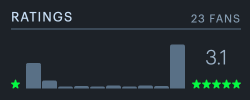
    Love on a Leash first gained a degree of notoriety when some YouTuber happened upon it on Amazon Prime and made a video about it, in which he instructed his followers to rate it 10-out-of-10 on IMDb. Enough of them did that it apparently resulted in his account being banned. (At time of writing, it has a score of 9.2 from almost 6,500 ratings.) I came across it more recently on Letterboxd, where it was featured on a list of divisive films. You only have to look at its ratings spread to see why:

    Love on a Leash Letterboxd ratings

    Are the 1,504 people who’ve rated it 5 stars in on the same joke as those YouTuber’s fans who rated it 10 on IMDb? Or is there in fact something to this movie that makes some people think “this is worth full marks”? You might be surprised to learn that, actually, I think it’s the latter.

    The film tells the story of Prince, a golden retriever who is actually a man turned into a dog (and whose human name may have been Alvin Flang. Or maybe not — I feel like the dog is an unreliable narrator). How has this happened? Why? Who knows? Who cares? (The film has a lot of random shots of ducks for no obvious reason (it’s almost Lynchian), so my guess is they did it to him. Still don’t know why, though.) Prince learns (from a magic rock-pool) that he can only return to human form by finding the true love of a woman. Enter unlucky-in-love shopgirl Lisa (Jana Camp), who meets Prince in a park and eventually takes him home. What unfolds is not as straightforward as the Beauty and the Beast narrative you might imagine, but to describe any more of the craziness would be to ruin half the fun. The plot’s constant twists and developments beggar belief — it’s genuinely imaginative, in its own way. By which I mean I don’t think you’ll have ever seen anything else quite like this.

    Pizza-faced cinder block and Alvin Flang

    I give full credit to Love on a Leash for just going for it. It’s hard to pigeonhole what genre it was even aiming for. The poster and basic concept suggest a cheesy kids’ film or Hallmark movie; the way it initially plays, you kinda assume it wants to be a romcom; but then it gets so fucking dark (suicide attempt! abusive coworkers! dead dog!), and there’s so much fantastical strange stuff… it’s so much weirder, wilder, and more unique than you can imagine. That’s without even mentioning the bizarre production quirks, like the fact Lisa only wears green clothes and lives in a green house with a green phone and green mugs and green plates… Or that it’s shot with a kind of documentary realism… um, maybe; or maybe it was just done quickly on digital video. There’s definitely no music, though. Like, at all. Even though there’s a composer credited.

    Well, except for a couple of songs the dog sings. Prince is constantly chatting away to himself in voiceover, and sometimes sings little childish ditties too (I suspect they weren’t actually composed by anyone). He can be a right snarky little bugger (he describes the love of his life as a “pizza-faced cinder block”), to the point that I suspect it may all have been improvised by the voice actor in post-production — he seems to be taking the piss out of what’s going on as often as we are.

    Love on a Leash was written and directed by Fen Tian, a 64-year-old Chinese woman who came to America in her 40s “with fifty dollars in her pocket, and not one word of English in her possession,” according to her production bio. It asserts that the screenplay won an award and funding from the Taiwan government, and at one point she took an American cast and crew to China to shoot it but funding fell through. After decades of trying, the film was eventually produced “with barely enough money to cover craft services”, and during post-production she “slept on the couches of her editors, dragging around her blanket, toothbrush, pillow and thirty-nine DV cam reels” and “spoiled” her team by “cooking up huge feasts of homemade Chinese food, and fixing her crew’s love lives with a motherly heart and some Chinese wisdom.” I feel like this deserves a Disaster Artist-type biopic…

    What people get up to in the privacy of their own homes...

    So, we come to the issue I touched on at the start: how do you rate a film like this? As an exercise in moviemaking, it’s a 1. The storyline is borderline nonsensical; it’s shot like an amateur using a camcorder for the first time; the sound mix is so unfinished I’m not sure it was ever started… And yet it’s constantly enjoyable, partly through a “so bad it’s good” hilarity (see the aforementioned terrible filmmaking), but also for the barminess with which it conducts itself, the relentless forward momentum of the storyline leading us in unpredictable narrative directions. Like famous cult favourite The Room, it transcends its amateur awfulness to be an artistic experience all of its own. In fact, it achieves a higher level of genuine artistry than The Room for me, because Wisseau’s film sometimes mires itself in wannabe-seriousness and runs out of stuff to laugh at, whereas Love on a Leash is restless in its creativity and consequently almost non-stop entertaining. It transcends its obvious awfulness through a kind of perverse innovation; a commitment to not hewing to any recognisable conventions. And it’s really funny — sometimes deliberately, often not.

    With reservations duly noted, then, I honestly and unequivocally give Love on a Leash full marks.

    5 out of 5

    The Man Who Laughs (1928)

    2020 #189
    Paul Leni | 110 mins | Blu-ray | 1.20:1 | USA / silent | PG

    The Man Who Laughs

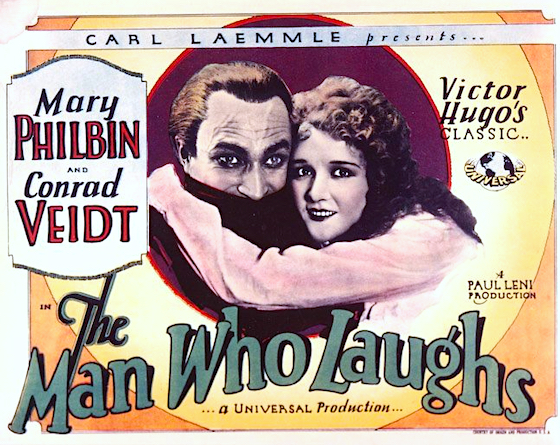
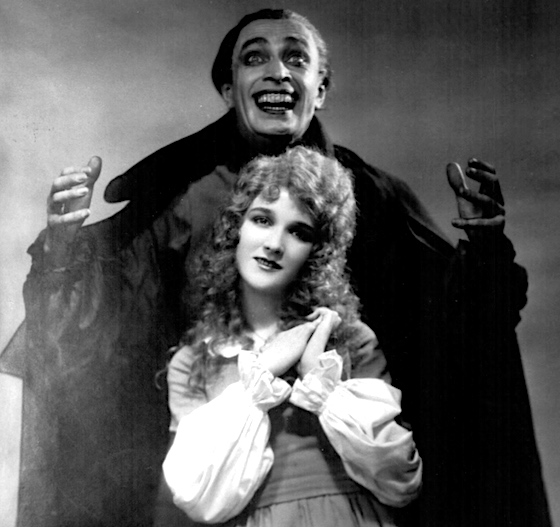
    Just over 90 years ago, in the final years of the silent era, The Man Who Laughs was a “super-production” — an expensive and major release, designed to follow in the footsteps of successes like The Hunchback of Notre Dame and The Phantom of the Opera, with an acclaimed imported director (Paul Leni, Waxworks) and star (Conrad Veidt, The Cabinet of Dr Caligari), a shared leading lady from Phantom (Mary Philbin), and adapted from another novel by the author of Hunchback (Victor Hugo). It did, I believe, live up to its pedigree and expectations. But today it’s primarily remembered for one thing: being the visual inspiration behind a certain comic book supervillain…

    Perhaps because of the connections to the aforementioned films, and because it inspired such a violent character, and because of the publicity stills that inspired that look, and because its production studio (Universal) would shortly become renowned for their iconic interpretations of the cornerstones of horror (Dracula, Frankenstein, et al), The Man Who Laughs has often been cited as a horror movie. It isn’t. Well, some of the first 15 minutes do play a bit like one — execution by iron maiden; mutilation and abandonment of a child; dangling corpses of hanged men — but then it jumps forward in time and becomes a romantic melodrama, with a bit of antiestablishment satire and a swashbuckling climax thrown in for good measure.

    I was only Jokering

    The story begins in 1690, with King James II punishing a rebellious lord by handing his son, Gwynplaine, to comprachicos (invented by Hugo for the novel; it means “child-buyers”) who mutilate the boy’s mouth into a permanent grin. And then he executes the lord in an iron maiden for good measure. When all the comprachicos are later exiled, they abandon the boy. Wandering through the snow, the kid finds a woman frozen to death, but her baby still alive in her arms. (Like I said, the first 15 minutes are pretty bleak.) He rescues the baby, who it’ll turn out is blind, and soon the pair are taken in by a wandering performer, Ursus (Cesare Gravina). Jump forward a couple of decades and Gwynplaine (Veidt) is now a popular attraction himself thanks to his laughing face, and the baby has grown into a beautiful young woman, Dea (Philbin), and the pair are in love. Let’s not think too much about the background to that relationship, eh? Gwynplaine feels unworthy of Dea’s love because he’s so hideous, but she doesn’t care because she’s literally blind.

    Meanwhile, Gwynplaine’s fame and unique facial features lead to it being discovered that he’s really a noble, kicking off a bunch of courtly intrigue — I could explain it, but then we’d just be getting into the plot of the entire movie. Suffice to say, it involves a scheming courtier, Barkilphedro (Brandon Hurst), who was partly responsible for Gwynplaine’s dad’s death; a horny duchess, Josiana (Olga Baclanova), who we first meet while a peasant messenger spies on her having a bath (nothing explicit is actually seen — it cuts away just in time — but it was still too risqué for British censors, who cut away even sooner); and Queen Anne (Josphine Cromwell), best known today as “the one Olivia Colman played in The Favourite (there’s considerably less swearing, gout, lesbianism, and bunny rabbits in this version).

    With the “beauty and the beast” angle to the film’s central romance, the film does withstand comparison to other variations of that story — like, um, Beauty and the Beast, but also, again, The Hunchback of Notre Dame. The difference here is in how people react to the ‘beast’. Only he himself seems to find him monstrous. The public find him inescapably hilarious, which isn’t nice for him to live with, but has made him popular and beloved rather than reviled. The love of his life is besotted with him unconditionally. Josiana comes to see his show and for some reason finds him instantly attractive (in fairness, I think she’s attracted to any man with a pulse).

    Tale as old as time...

    A more apt comparison is to a film made over 50 years later, David Lynch’s The Elephant Man — a parallel I spotted for myself, but also is mentioned in two essays in the booklet accompanying Eureka’s new Blu-ray release, so I’m certainly not alone in feeling this. Both concern a man who is physically disfigured and has fallen in with fairground sideshow folk, who despises himself but comes to find love and compassion from others. They even both climax with a grandstanding speech where the man in question declares his worth to the world, with the famous “I am a human being!” bit from The Elephant Man seeming like an echo of a scene here where Gwynplaine, forced to join the House of Lords by order of the Queen, eventually rejects her command, declaring his independence with the assertion that “God made me a man!” As Travis Crawford writes in the aforementioned booklet, “while sinister clowns would ultimately become an unlikely horror cliche, Gwynplaine’s gruesome disfigurement makes him a figure of pity, not menace… more Pierrot than Pennywise.” The Man Who Laughs is less concerned with examining and affirming the fundamental humanity underneath ‘freaks’ than Lynch’s film (this is a classical melodrama, after all), but it’s certainly an aspect of the story that, despite how he looks, Gwynplaine is still a human being; that, despite his fixed grin, he’s full of all the emotions of any human being.

    Before I go, a quick word on the film’s soundtrack. “But it’s a silent movie.” Yes, but as you surely know, silent movies aren’t meant to be watched actually silent. The Blu-ray release (both the new UK one and an earlier US one from Flicker Alley) comes with two audio options: a new 2018 score by the Berklee Silent Film Orchestra, and the original 1928 Movietone sync track, which is not just general music backing but also includes some music clearly framed as diegetic, plus occasional sound effects, and even dialogue (in the form of background crowd noise, mostly). Now, the film was originally released as silent, then withdrawn and re-released with this accompanying soundtrack, so I guess the option of a new score isn’t wholly unmerited. Nonetheless, it still seems slightly off to me that you’d supplant an authentic original track with a modern creation. As if to underline this point, the booklet reveals that the new score is actually little more than a final-year project by a group of students! It’s lovely for them that they were able to present their work at the San Francisco Silent Film Festival and it was well received, and that it’s now included as an option on the film’s official releases… but presenting it as the primary audio option? No thanks. I suggest you choose the 1928 soundtrack.

    I said it's NOT a horror movie!

    It’s probably unlikely that The Man Who Laughs can escape its status as a trivia footnote for the Joker at this point (heck, Flicker Alley’s release even plays up the connection on its cover, taking the film’s most Joker-esque photo and decorating it in the character’s colours of purple and green). Certainly, no one should watch it for that reason alone — the inspiration for the Joker begins and ends with the grinning-man imagery; there’s nothing in the film itself that contributes to the character. There’s also little here to support its reputation as an influential early horror movie — those seeking horror thrills shouldn’t watch for that reason either. But for all the things The Man Who Laughs is not, what it is is a well-made and performed drama; one that deserves to stand and be appreciated on its own merits, not those that others have mistakenly conferred on it.

    4 out of 5

    The Man Who Laughs is released on Blu-ray in the UK today.