
Alfonso Cuarón | 111 mins | download | 15 / R
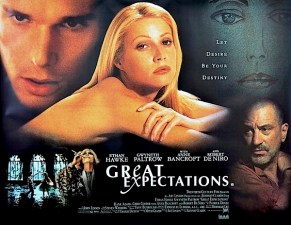 After re-enjoying the classic David Lean version of Great Expectations (which I reviewed in 2007) last week as part of my adaptations module, it’s now the turn of this American-set re-imagining. Despite a generally-held negative opinion toward this version, I found it to be more of a mixed bag.
Its main problem is that it can’t escape its roots. Not a fault in an adaptation, you might think, but in the case of one so radical as this it is a flaw: you’re left comparing and contrasting it with Dickens’ novel and Lean’s film, rather than appreciating it as a film or narrative in its own right. It comes across more as an academic exercise in turning a British Victorian novel into a modern American movie than a believable tale that works in isolation. Indeed, many of the changes appear to be designed purely to help distance it: the changed character names, the focus on the love story, and so on. Yet it directly recreates many scenes from the novel, and it obviously retains its title, despite there being no reference to that in the film itself.
Another product of this re-imagining is an unremitting sexualisation of everything. When Pip — sorry, Finn’s — hand is placed on Ms Havisham — sorry, Ms Dismoor’s — chest his first guess is that it’s her “boob” rather than her heart; when 10-year-old Estella kisses Pip — Finn, even — it now comes with added tongues; Finn — Pip — Finn! — draws now, and what he draws are nudes of Estella; and then they have sex too; and there are undoubtedly other examples that have since slipped my mind. This was pre Y Tu Mamá También, of course, where perhaps Cuaron exorcised this sexual preoccupations — they’re certainly not so evident in Children of Men or (unsurprisingly) his Harry Potter. His penchant for long takes, as seen constantly to great effect throughout Children of Men, also put in the odd pleasing appearance here.
By the end, it’s tricky to know what to make of this Great Expectations. It’s nicely faithful for a modern version, and yet that forbids it from striking out as its own work — it’s a fairly basic romantic film, bookended with some bizarre American Gothic trappings. I think it must stand as neither a success nor a failure, but as an interesting curio in the canon of Dickens adaptations.

That picture was the only one I could find in high enough quality to make a banner image. Honest.
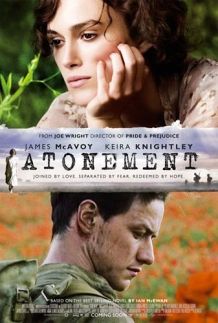 “The Most Nominated Film of the Year” proudly proclaims a sticker on the cover of Atonement’s newly released DVD. Well, not quite: according to
 I wound up accidentally watching this on TV, and was ultimately glad I did.
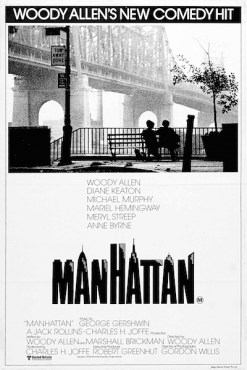 Drama (though it does include some very funny bits) focusing on the interrelationships of a handful of 40-something New Yorkers.
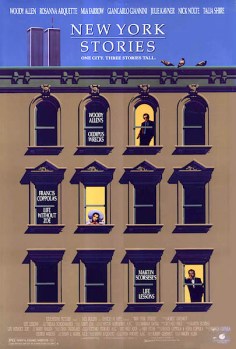 Anthology of three shorts, connected only by the New York setting (which, incidentally, may as well be anywhere in all but the last segment).
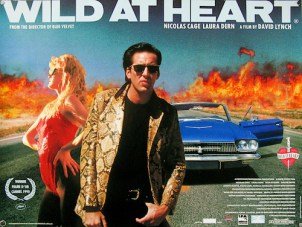 My experience of David Lynch’s work has so far been limited to
 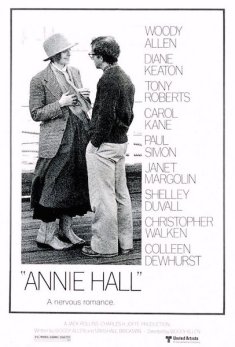 Widely considered to be Woody Allen’s breakthrough movie and winner of four of the ‘Big Five’ Oscars. One might call it a romantic comedy, but it’s very much an indie comedy-drama (for one thing, it utilises the ever-popular tactic of not taking place in chronological order), rather than the mainstream cliché-fest that first springs to mind whenever “rom-com” is mentioned.
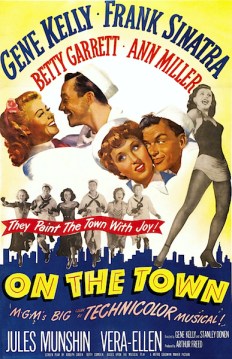 Gene Kelly and Frank Sinatra lead the cast in this musical comedy about three sailors who have 24 hours of shore leave in New York. The plot is sometimes predictable, but at least it’s not as standardised as many. Equally, none of the songs are truly memorable but most are fun while they last.
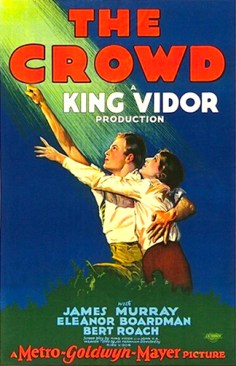 Late silent-era drama — though you’d be forgiven for thinking it was a comedy until halfway, when the light antics of a young couple in ’20s New York give way to some increasingly dark drama (interesting trivia: seven endings were shot for distributors to choose from, some happy and some sad; all chose sad ones. However, the copy we saw (taped from an ’80s TV showing) had a happy ending).
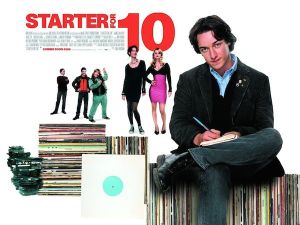 A predictable British rom-com, enlivened only by a few good moments and performances, as well as the excellent ’80s soundtrack.
 100Films.co.uk