2011 #40
Gareth Edwards | 94 mins | Blu-ray | 12 / R
Six years ago… NASA discovered the possibility of alien life within our solar system.
A space probe was launched to collect samples but broke up during re-entry over Mexico.
Soon after new life forms began to appear and half the country was quarantined as an INFECTED ZONE.
Today… The Mexican & US military still struggle to contain ‘the creatures’…
 So begins Monsters. Expecting an epic SF-action movie where soldiers kitted out with futuristic weaponry battle an alien menace? You might be disappointed. Indeed, the relatively low IMDb rating suggests people have been. Monsters isn’t an action movie. It’s barely a sci-fi movie. And that’s not a bad thing.
It is a science-fiction movie — it’s set in the near future (about 2017, it would seem) and there is an alien presence on our planet — but this is a science-fiction film that transcends the sci-fi genre. It’s got more in common with Lost in Translation or Before Sunrise than it does with Independence Day or Battle: Los Angeles. This probably explains its low rating on IMDb: I imagine most viewers are SF fans in search of an action/horror experience, something this film resolutely does not provide. It also doesn’t deal particularly with SF concepts, so I can see the more intellectual SF fan being disappointed too.
What it has instead is a real-world aesthetic and a human story. It’s certainly science-fiction, because it’s set in the future and the titular monsters are extraterrestrials, but the story is rooted in humanity: it’s about two twenty-somethings trying to get home and having a very grounded ‘adventure’, learning about each other and the world and all that. 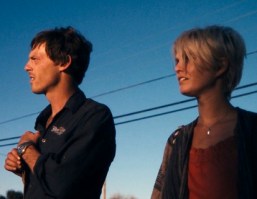 Only without being as worthy or on-the-nose as that makes it sound, I promise. As writer-director, Edwards has made a film that’s relatively Arty (for want of a better word), with lingering shots and wordless scenes. It tells the story visually quite often, letting the Infected Zone signposts or candlelit shrines to dead children or stunning scenery do the talking when dialogue isn’t necessary.
There’s a slight documentary aesthetic to the whole thing, and not only because Edwards (also acting as cinematographer) has shot it handheld — that’s everywhere these days and when it’s unnecessary it pisses me off, but here it fits. Rather, it’s like one of those films which don’t hide the fact the main story and characters are fictional, but has been shot in the real locations and has used real people for extras. Take, for instance, a sequence where Kaulder and Sam (our two twenty-somethings) are in the jungle spending the night with their Mexican escorts. The men talk about what it’s like to live in these conditions, prompted by questions from their American charges, and it plays for all the world like real people really living in this situation telling their stories; like the bit with the fascists in It Happened Here, say. Obviously it’s all fake — we’re not in 2017 and we don’t really have aliens roaming across Mexico (just in case you forgot) — but it plays as real, and that grounds the whole film.
 The CGI is virtually faultless, which is doubly impressive as the vast majority of it is on shaky handheld shots, not nice clean plates. And Edwards created it all by himself I believe. Writer, director, cinematographer, single-handed visual effects unit — it’s no wonder much of the focus on Monsters has been on the clearly considerable skill of its creator. Much of the CGI would, I imagine, pass the casual viewer by: everyone knows the aliens are CG, but the film is littered with signposts and other such set and scenery extensions. It’s the kind of thing a bigger budgeted film would simply have created physically, but, working with next-to-no money, Edwards has managed to paint flawless versions of everything from simple road signs up to border checkpoints with his computer (and even bigger things, but they’d be CG’d in a big-budget movie too, so… well, hopefully you see my point). There’s the odd thing that doesn’t sit with complete realism, but even that depends how hard you’re looking. I’d say they’re the exception rather than the rule and very easy to forgive — nothing ruins its own shot, never mind the whole film.

The next paragraph is spoilersome. Not wholly spoilersome — I’m protecting you from yourself a bit, gentle reader — but if you want to go in knowing nothing of the ending, please skip it.
The ending of Monsters is at the beginning. Normally this irritates the hell out of me, as regular readers may have noticed, but Edwards uses the trope to a slightly different effect. For starters, the line is blurred: the film starts with green night-vision footage of a military strike on a creature, before jumping into full-colour ‘the film proper’ with a scene of devastation and the dead remains of an alien —  it’s easy to think what we saw in the night-vision sequence has led to this. But it hasn’t, because the military were Americans and we’re in Mexico. I’d wager this passes some viewers by, and perhaps it’s meant to, but there’s another clue: one of the soldiers whistling the Ride of the Valkyries; and when we get to the end of the film, as a pair of humvees trundle out to retrieve our heroes (by this point stranded in an evacuation zone just inside the US border), we hear the same soldier whistling again. And here’s where the change comes: rather than reaching the bit we’ve already seen and going beyond it, Edwards cuts off before he even reaches it. To put it another way, the chronological end of events is only at the beginning. It’s quite clever, and it also obscures what happens to the characters (how I shan’t say). That’ll irritate some, especially as even when you piece it back together it’s inconclusive. I’ll leave it to others to argue whether that’s the point and whether it matters. The final shot is clever though: instead of closing on the characters’ finally kissing, it ends on them being pulled apart. Technically their separation is only temporary — they’re both going with the military after all — but, as we saw at the beginning, one of them might not survive the journey home; a more permanent pulling apart. Nice metaphorical linking, Edwards.
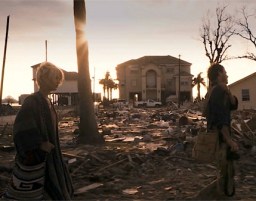 Another review I read somewhere commented that it’s a shame the title Aliens was already taken because it would suit this film down to the ground. And they’re right. Damn you, James Cameron! It has to be said, as simple and iconic as “Monsters” is, it doesn’t really describe the film. Perhaps if this was like Spielberg’s War of the Worlds, with every human a bastard out for themselves — “are the aliens the monsters or is it us? gasp!” and all that kind of fairly obvious palaver — it would fit, but Edwards’ film is a bit above that and perhaps deserves a more reflective title. It might also have led to less people being misled — it’s certainly not the kind of film I thought it was going to be when I first heard about it and saw the first trailers. Perhaps the title belonged to an earlier concept of the film, one with less heart; or perhaps there are human monsters in the film after all — the US presence, for instance, is entirely militaristic; we see even less of it than the creatures and it’s arguably more brutal and devastating, and therefore more monstrous and/or alien.
But the issue of the title and expectations are an aside, really, because taken on its own terms — as all films should be — Monsters is a triumph. The word visionary is overused in trailers these days (mainly, Zack Snyder trailers), but with filmmakers like Edwards, Duncan Jones* and Niell Blomkamp**  emerging with their low-budget, story/concept-driven genre films, not to mention Chris Nolan being allowed to do more or less what he likes in the big budget sphere, it’s easy to see why this is a very exciting time to be a lover of proper science-fiction. If they all continue to make films like this, we can look forward to an astounding future.
Monsters is out on DVD and Blu-ray next Monday in the UK. The US Blu-ray is region free, has more extras, and is barely more expensive even with international shipping. Just sayin’.
Monsters placed 6th on my list of The Ten Best Films I Saw For the First Time in 2011, which can be read in full here.
* not that I’ve seen Moon, still. ^
** or District 9. I’m a bad bad fanboy. ^

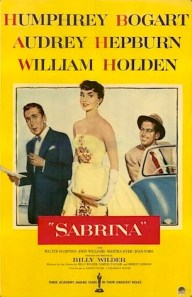 Audrey Hepburn’s next leading role after her star-making turn in Roman Holiday sees her playing a role that seems almost the opposite: going from European princess to servant girl for a rich American family. She’s still the romantic lead wanted by all the men, though.
 But it actually feels very mean-spirited — Sabrina is likeable enough that we dislike his machinations. Which means that, for me anyway, there’s no truly supportable lead character. And then at the end he genuinely falls for her, which I found an equally implausible development — as well as seeming totally out of character, it did nothing to redeem what had come before. And he’s old enough to be her dad.
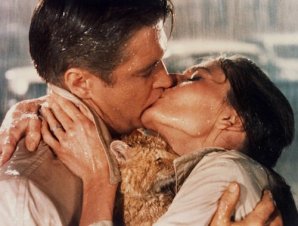
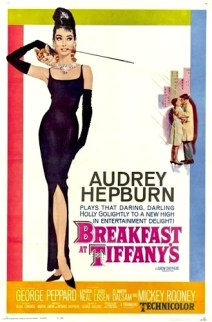 Breakfast at Tiffany’s is a stonkingly famous film — it’s the one most of the famous images in the cult of Audrey Hepburn come from — this despite the fact that, as
  but it works here, especially when sung plainly by Hepburn.
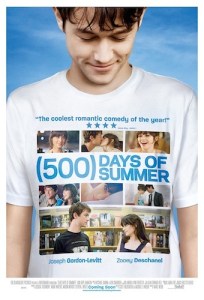 Directed by Marc Webb (
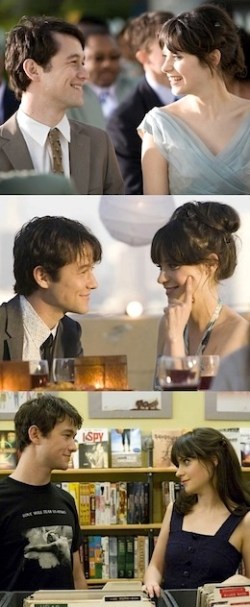 They all sit surprisingly well within the story though — yes, some (perhaps all) are showing off a bit, but in a way that, by and large, works. And I’m a little bit glad I can’t quite list them all, because half the fun of (500) Days of Summer is watching what looks like a borderline-mainstream indie rom-com that suddenly throws these curveballs at you.
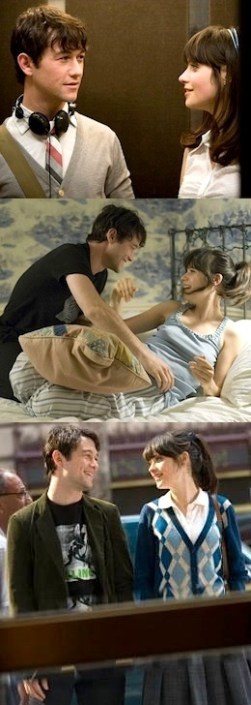 Not that those three roles are identical by any means, but you can see how one led to the other.
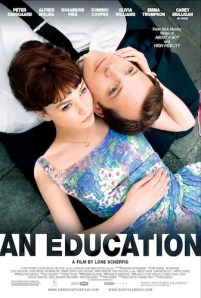 It seems that every year, come Oscar season, there’s a British-made film we’re led to back so thoroughly that it gains nothing but incessant praise from every (British) quarter. Just to look at recent years, from the 2006 selection it was
  Based on a true story, the film tracks 1960s schoolgirl Jenny (Carey Mulligan) as she falls for an older man (Peter Sarsgaard) who represents a culture- and glamour-filled escape from her drab suburban life and its focus on getting a place at Oxford. It’s a romance and a coming-of-age tale, albeit one with a more naturalistic bent than your regular offering; more down-to-Earth and British than either something Hollywoodised or American-indie-fied. There are, perhaps, few massive surprises in the plot — anyone who doesn’t guess this won’t end well has somehow failed to encounter a “schoolgirl falls for glamorous older man” story before — but Nick Hornby’s screenplay and Scherfig’s direction execute it all with admirable conviction. You don’t feel like you’re watching something familiar.
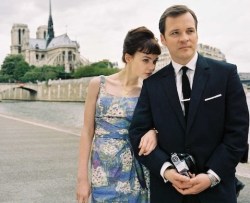 I’ve read some complain there’s no ending. I can only presume they walked out of the cinema or stopped their DVD before the film reached, y’know, the end. Sometimes I appreciate how people can criticise the lack of an ending, even when I disagree (see:
  The film hangs on Carey Mulligan, justly nominated for her performance. Quite aside from whether the performance is awards-worthy or not, it’s effortlessly watchable. Mulligan is exceptionally easy to fall in love with — if you haven’t already when she was Ada Clare or Sally Sparrow, I’m sure Jenny Mellor will enchant you. On the other hand, some have found her character too pretentious or naïve — maybe your own background will dictate if you see these negative traits. Jenny is probably a little of both, but I wouldn’t say she’s wholly naïve and I wouldn’t say she’s pretentious, exactly — she’s clever, and she wants to experience the world. What’s wrong with that?
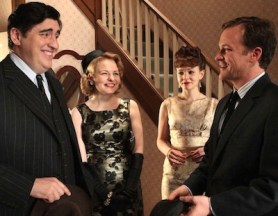 It’s slightly remiss of me not to mention Peter Sarsgaard, what with him being the other half of the film’s romantic relationship. He’s good, his Colin Firth-esque accent pitch-perfect, but while he’s spot on in the part — absolutely no complaints — I can’t think of any scenes where there isn’t someone else (usually Mulligan or Molina) grabbing the spotlight.
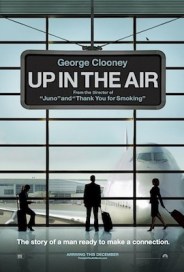 Sometimes, it’s best to just come clean: I don’t have much to say about Up in the Air.
 Cowriter-director Jason Reitman has created a surprisingly likeable film. It’s easy to see how Clooney’s character — very much the centre of the piece — could be irritating or vapid or any number of other negative adjectives, but instead he’s… well, he’s George Clooney, isn’t he? He’s all charm. If you were going to be fired, you’d probably want George Clooney to be doing it. For a character who is essentially an expansion of the
  Up in the Air got its Best Picture nom in the first year the Oscars went back to 10 nominations for the big prize. I’m not sure many would disagree that it’s one of The Other Ones — one of the ones that quite probably wouldn’t’ve been there if it hadn’t been for the category doubling in size. And if it was, it’d be The Other One — the token indie/comedy nomination that everyone knows isn’t going to win but was quite good all the same.
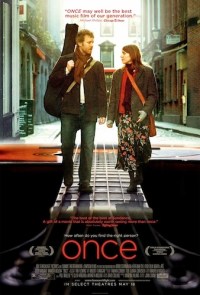 Once is a very modern indie musical. And I mean indie as in “indie film”, not “indie music”. Lord save us from a musical of indie music.
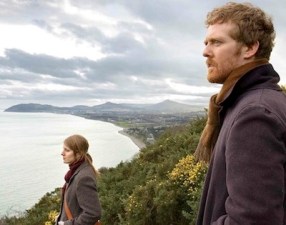 It’s a testament to the strength of the lead performances and the story they create that it’s not until the end credits roll you realise you never even knew their names.
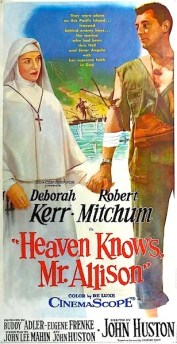 The title may sound like a ’40s rom-com or a ’70s TV sitcom, but Heaven Knows, Mr. Allison is nothing of the sort. It’s set in the south Pacific in 1944, at the height of World War II, and begins with titular US Marine Allison (Robert Mitchum) washing up on an island that’s occupied only by a novice nun, Sister Angela (Deborah Kerr). He was the only survivor of a Japanese attack on a submarine; she ultimately the only survivor of a Japanese raid on the island. With no hope of rescue they must plot their own escape.
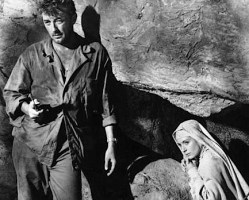 There’s also a kind of burgeoning romance between the two — as a novice nun she has yet to take her final vows — which creates a different kind of will-they-won’t-they than the usual love-hate dynamic. It all leads to a pleasing ending, where your expectations for what a Hollywood film will do (especially with the groundwork that’s been laid) are subverted in favour of a more plausible turn of events. It’s not the kind of ending that makes the film — it’s already done more than enough to hold one’s interest — but if done wrong I think it would have undermined the rest.
 A World War II espionage thriller about the OSS — spies, basically, and the forerunner to the CIA. Despite all the thrills this should elicit, especially when directed by Fritz Lang, I wasn’t particularly impressed.
 This is probably the benefit of being based on a non-fiction book.
 Roman Holiday is the kind of film where its list of achievements don’t quite precede it — Best Picture nominee (it lost to
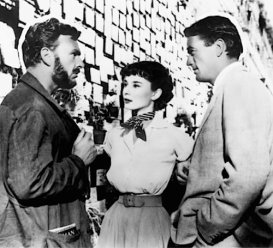
  the Princess as they take her on a day messing about in Rome.
 If, instead, you remember that he’s Fundamentally Kind, it might be less troubling that he has a secret plan most of the time.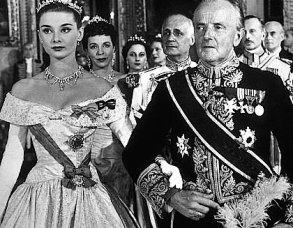
 100Films.co.uk