aka The Other Woman
2012 #76
Don Roos | 98 mins* | Blu-ray | 2.35:1* | USA / English | 15 / R
 It’s funny what movies sometimes pique your interest. I saw a trailer for relationship drama Love and Other Impossible Pursuits (or, as it was retitled in America, The Other Woman) on some completely unrelated US Blu-ray earlier this year (I forget which film it was, but the only connection was the disc’s distribution company) and wondered why I’d never heard of it before — after all, it looked like a Worthy Drama, starring Oscar Winner Natalie Portman and Lisa Kudrow From Friends. Turns out it was shot in 2009 but not released until 2011, when it was slated by critics (a measly 39% on Rotten Tomatoes), flopped at the US box office (it opened at an unimaginably painful 67th place (who knew there were that many films out at once?), grossing just $25,423 total), and went straight to DVD in the UK. Ouch.
So, me being me, the double-whammy combination of “that looks like it might be quite good” and “wow, that’s meant to be terrible” put it straight at the top of my rental queue.
Emilia (Portman) is the titular Other Woman, but rather than the film telling the well-trod story of an affair, that part’s long over before the film begins — she’s living with Manhattan lawyer Jack (Scott Cohen, the magnificent Wolf in underrated miniseries The 10th Kingdom), trying to build a relationship with his son William (Charlie Tahan), who’s more attached to his mother (Kudrow). Colouring everything is the fact that, some time shortly before the film begins, Emilia and Jack had a baby who died.
 As I was brought to the film by its trailer, it pays to say it’s actually very different. The advert hides the baby’s death but hints at it, as if it’s a Big Reveal they clumsily didn’t want to give away. But no, it’s brought up within the first five or so minutes and actually drives a lot of the film. The emphasised “other woman” facet is present, though in a slightly different way to normal: this is how such relationships continue as a long-term status quo, rather than the immediate impact of an affair.
Or a version of that, anyway, because the presentation is a bit melodramatic. Melodrama can be fine; good, even — but it’s a style, arguably a genre; a heightened one, and that runs counter to realism. This is a film that shoots for realism and slides into melodrama, and that’s not good. There are powerful ideas for scenes, but most are badly handled. Portman and Kudrow are quality actresses who deliver some good bits, but also some that go OTT. Especially from the latter, who’s not given enough screen time to move far beyond a caricature of the vengeful ex-wife.
The single worst bit comes 13 minutes in: an extended flashback, the film’s only one (which, structurally, makes it stick out like a sore thumb), in which we see the affair I said they were doing so well not covering. Emilia and Jack fall in love. Why? Because the plot tells them to. It’s also the nadir of another irritant, the film’s sappy plinky-plonky music.
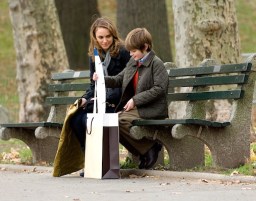 I can imagine that flashback working within the shape of a novel, where structure works differently. Indeed, I got the impression the book is probably very novelistic; maybe a character study, even. Those are two things that don’t always transfer well to film. I don’t think it’s about Being The Other Woman, despite the US title; nor do I think it’s about Being The Stepmother; nor is it about Losing A Baby. Those things are all in there, certainly, but rather than any of them be The Story, they’re elements in the exploration of the character of Emilia. I’m not sure that works for a movie; not for this one at any rate.
Not a complete disaster, but nowhere near a success. This score is perhaps a tad harsh, but any more would’ve been generous.
* Two quick notes about the UK Blu-ray. Firstly, according to IMDb, the film ran 119 minutes at the Toronto International Film Festival, but was cut to 102 by the US release. The UK BD is the shorter cut at PAL speed. Secondly, the original aspect ratio was apparently 1.85:1, but the BD has been cropped (or widened) to 2.35:1. Not sure I’ve ever seen that before, but there you have it. ^

 Time flies: this is 13 years old! Originally a Jim Carrey vehicle (feels obvious once you know), Ben Stiller is the prospective son-in-law meeting Teri Polo’s parents (Robert De Niro, Blythe Danner) for the first time. Disaster ensues in a riot of unfortunate events targeting our hapless hero.
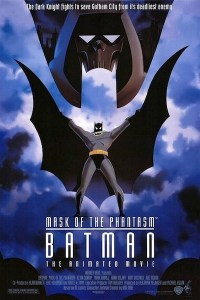 Batman movies have a habit of provoking strong reactions.
 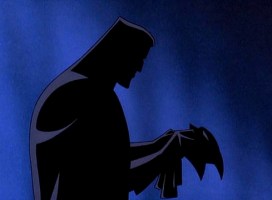 One of the main reasons the film succeeds is that look back at Bruce Wayne’s early days as a crime fighter. Batman’s origin is oft told — too oft, truth be told — but they thankfully don’t rehash it here. Instead, early in Batman’s career Bruce falls in love and finds happiness, causing him to question whether to continue down the path he’s already dedicated his life to. The scene where he talks to his parents’ grave, expressing his guilt at potentially finding happiness after so much mourning, is one of the most powerful, emotional moments in all of Batman’s many iterations.
 But instead of falling in some nasty halfway-house, Phantasm turns up trumps on all fronts.

 Controversial supernatural mystery drama. Nicole Kidman’s rationalist husband dies suddenly; years later, as she gets engaged to another man, a boy arrives claiming to be her husband reincarnated. More realistic art house drama about grief and insecurity than thrill-giving occult mystery, it nonetheless keeps you guessing as Kidman is slowly convinced by the boy’s tale, while family relationships collapse around her. Full of quiet understated performances, Kidman is particularly captivating and, as the boy, Cameron Bright is mesmerisingly unreadable. Poorly received, with some
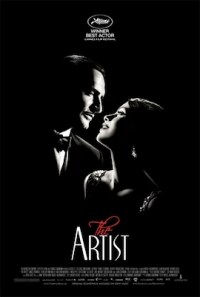 Beginning in 1927, you could (and some have) accuse The Artist of being a remake of
  Besides which, it isn’t a real silent film, and not just because it uses sound on one or two occasions, to very specific effect. Made 80 years after the invention of sound revolutionised cinema over night, The Artist is a tribute and homage to that great era — it’s not trying to beat them at their own game. It’s certainly not the first ‘modern silent’ either, but it’s an appropriate one to have received the most widespread attention (
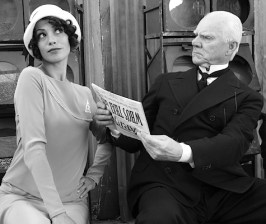 you’d believe they were a precisely-planned specially-constructed set, and unceremonious symbolism is created with former-star George being on the way down and Peppy being on the way up.
 or just faithfully following George around, he draws your attention. I might think that was just me (we’ve been over my love of terriers
 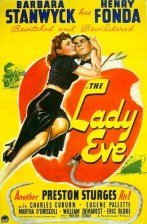 Screwball romantic comedy starring Barbara Stanwyck as a con woman who falls for her latest mark, ale heir Henry Fonda, until he discovers the truth and ditches her — and she vows revenge by conning him again. Packed with wit, Stanwyck shines as a slightly kooky, thoroughly daring con artist. Hers is the role with all the power, but Fonda’s gentler portrayal of her unconfident target is equally vital. It’s only let down by the ending, which rushes a conclusion in two minutes and didn’t seem to quite make sense. It doesn’t ruin the film, but it makes an unfortunate dent.
 Despite winning a bunch of Canadian film awards, this First World War drama seems to have been really poorly received by critics — the
 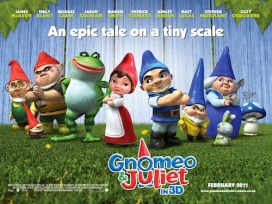 Gnomeo & Juliet is the latest British attempt to crack the lucrative CGI animated kids’ movie market, after the lack of success (or, alternatively, failure) from the likes of
 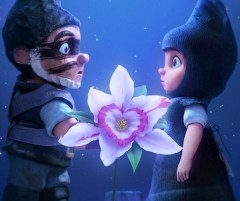 My only other note is that it ends with a truly awful cover of Crocodile Rock by Nelly Furtado. A storyboarded “all’s well that ends well” ending (included on the BD, and the DVD for all I know) looks much better.
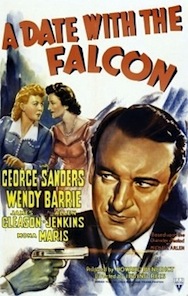 The second Falcon film sees George Sanders’ gentlemen detective investigate the disappearance of a scientist.
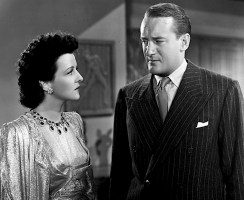 Anyway, aside from him there’s a ‘suicide’ bid and the crowd below’s reaction to it. Again it’s mostly comedy, but unlike some of the series’ DOA running gags it’s actually funny.
 A couple of years ago I discovered the ’40s Gothic noir thriller
  There are about three suspects in the entire tale. One is so clearly being set up from the off that you know it can’t be him; one barely even registers as a suspect; and it’s not the third one. But the film doesn’t pull off a twist because the attempt (by dragging that middle character back into it) comes so out of the blue as to make no sense. They don’t even bother to try to explain it properly! It’s about the only time the film holds back on painful over-exposition, and it’s about the only time it needs it. Either way, it’s not the same as the original film’s, and it’s not as good.
 The original story is clearly suited to a Gothic historical setting (the ’40s film didn’t keep the novel’s time period, but it chose one similar enough), but that doesn’t mean a modern-set rendition isn’t without potential. Or maybe it is — it’s hard to be certain from a movie that certainly doesn’t realise what potential there may be. Yet for all its countless weaknesses, I can’t quite bring myself to entirely despise it. Can I really give this wholly derivative remake 2 stars? It may be some kind of Stockholm Syndrome — after 90 minutes with it, I can’t help but find some point in it all; some thing to like.
 100Films.co.uk