Maleficent (2014)

2016 #84
Robert Stromberg | 93 mins | streaming (HD) | 2.35:1 | USA & UK / English | PG / PG
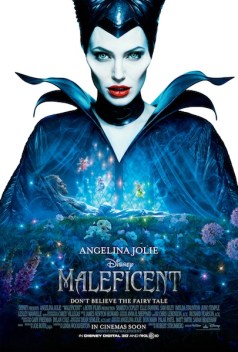
Disney seem to be embarking on a project to remake all of their most beloved animated movies in live action,* with Cinderella being one of the highest grossing movies of last year, The Jungle Book currently doing gangbusters at the box office worldwide, an all-star Beauty and the Beast hotly anticipated for next year, and others in the pipeline that include Mulan, Pinocchio, The Sword in the Stone, both Peter Pan and Tinkerbell, another 101 Dalmatians, an Aladdin prequel, Winnie the Pooh, and Tim Burton’s Dumbo. (No, I did not make those last two up.)

But it all started… back in 2010, when Tim Burton’s Alice in Wonderland was an unexpectedly ginormous hit. But then there were a couple of years off, so you could argue the current wave started here: a revisionist re-telling of Sleeping Beauty from the point of view of its villainess. In this version, we meet Maleficent as a child, protector of some fairy kingdom that borders the human kingdom. One day she meets a trespassing human boy, Stefan; they fall in love; eventually, he stops visiting, set on making his fortune in the king’s castle. After Maleficent has grown up to be Angelina Jolie doing an English accent and Stefan has grown up to be Sharlto Copley doing a Scottish accent (goodness knows why), the human king decides to invade the fairy land. Maleficent repels his forces, and the dying king vows whoever can defeat her will be named heir. So power-hungry Stefan does something terrible, and we’re on the road to the story we know… more or less.

It’s an interesting idea to take an archetypal villain who’s evil for evil’s sake and try to give her motivation, to understand why she did terrible things. Maleficent makes a fair fist of this, beginning long before the familiar tale to establish a run of events that tip the titular character to the dark side. What Stefan does to her to win power is pretty dark, and a clear analogy to a real-world crime that you wouldn’t expect from a PG-rated Disney movie. Our sympathies, at this point, lie with Maleficent. Of course, then she goes and condemns an innocent child to eternal slumber, so that’s less nice.
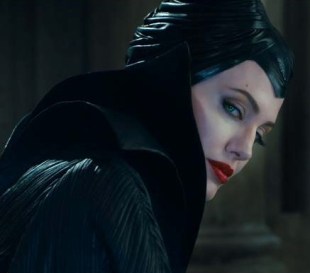
However, this is a Disney movie — you don’t get to turn a villain into the central character and have her be evil throughout. This is where the film gets really revisionist, because Maleficent keeps an eye on cursed Princess Aurora (Elle Fanning) as she grows, doing more to keep her alive than the trio of fairies she’s supposedly in the care of, and her heart is gradually warmed to the girl. Unfortunately, Maleficent was too good at the cursing malarkey: unable to lift her own spell, it plays out regardless, and the film serves us new renditions of the impassable thorns, giant dragon, and true love’s first kiss. It’s in the last where Maleficent is thematically revisionist rather than just a massive rewrite. Your mileage may vary on whether this version is obvious and cheesy, or actually more meaningful and (for the primary audience of little kiddies) more thought-provoking than the original’s — I’d go with the latter.

So in some respects, Maleficent is a success. In others, it’s a bit of a mess. For all the additional character development given to Maleficent herself, the rest of the characters are two-dimensional at best. It’s ironic that, in a movie all about fleshing out and understanding the villain, the new villain (i.e. Stefan) is so flat. Other elements are just pointless or nonsensical, like the corridor of iron spikes Maleficent & co briefly have to squeeze along. It’s not a bad idea per se — it’s been established that iron hurts fairies (goodness knows why, but there you go), so it’s a reasonable concept for a physical obstacle — but it’s really poorly integrated into the story, and it’s bested by… walking through it carefully. Thrilling.
Parts of the film test-screened poorly — mainly the first act, with audiences wondering why it took so long for Jolie to turn up. Consequently, the whole thing was thrown out and reshot; in the process, Peter Capaldi and Miranda Richardson were deleted (and after they’d had to endure hours of transformative prosthetics for their roles, too), and Maleficent was given a new backstory. How far this extended into the rest of the movie, I’m not sure, but at times it feels like stuff has been cut or rearranged. Certainly the story flies past — if it wasn’t trimmed down in the edit, it needed expanding back at the screenplay stage.

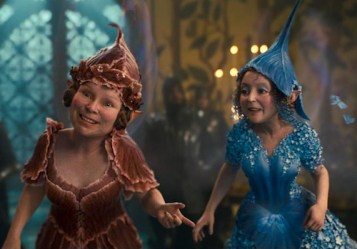
Then there’s the uncanny-valley-tastic rendition of the three fairies, with mini plasticky-CGI versions of Imelda Staunton, Juno Temple and Lesley Manville floating around until they jarringly turn into live action; the unintentional hilarity of the Prince Charming-type apparently being from the kingdom of Ofsted (it’s actually Ulfstead, but still); and the original film’s famous song, Once Upon a Dream, being slowly murdered by Lana Del Rey. Perhaps surprisingly, the work of production-designer-turned-director Robert Stromberg is pretty decent, though over-fond of crash zooms during action sequences, and an overall visual style that’s reminiscent of the likes of Burton’s Alice in Wonderland and Sam Raimi’s Oz the Great and Powerful — both of which Stromberg designed, funnily enough.

For all its faults, Maleficent was still the fourth highest grossing movie of 2014 — though the top grosser was Transformers: Age of Extinction and second was The Hobbit: The Battle of the Five Armies, so that shows what quality matters to the box office. Nonetheless, it’s no wonder Disney have kicked into gear with the live-action remakes, and even a Maleficent sequel is in development. (No idea how that’ll work — Sleepier Beauty?) On the bright side, there is something more interesting going on here than just an animated film being re-done with real people (and copious CGI). Certainly, anyone interested in fairytales being deconstructed and/or reconstructed should be sure to check it out.

3 out of 5

Maleficent is available on Netflix UK as of this week.

* At least they’re not trying to tie them together as another shared universe! ^
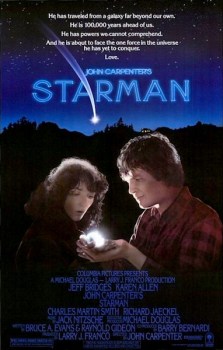
Starman (1984)

2016 #14
John Carpenter | 115 mins | streaming (HD) | 2.35:1 | USA / English | PG / PG

In this sci-fi romance, an alien intercepts the invitation included on the Voyager 2 space probe and tries to visit Earth, but is shot down. Taking the form of Karen Allen’s recently deceased husband, Jeff Bridges, he forces her to drive him to Arizona, where his people will rescue him in three days — if they can escape the attention of the government agents chasing them, anyway.
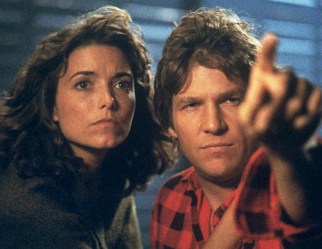
Starman can most pithily be summarised as “John Carpenter does Steven Spielberg”. Almost literally, in that it’s like a cross between E.T. and Always: Bridges’ comical alien learns Earth customs while trying to get home, and Allen’s widow deals with her bereavement while her husband is still ‘there’ (sort of). Of course, Always was actually made five years later, but Columbia Pictures in fact turned down the project that would develop into E.T. in favour of this movie. That’d be E.T., the highest-grossing film of all time for 11 years. Oops.

Although it may not have been the same box office hit or developed into the same cultural touchstone, Starman is certainly not a bad movie. Bridges negotiates a fine line between alien and mannered as the titular visitor who speaks faltering English and struggles with our ways, and I’d argue he always comes down on the right side of said line. Oscar voters certainly agreed, rewarding his performance with a Best Actor nomination (he lost to F. Murray Abraham for Amadeus). Allen is an engaging presence also, and between work like this and Raiders of the Lost Ark it’s a wonder she wasn’t a bigger star.

The film is an oddity on director John Carpenter’s CV, which came about due to The Thing being a box office disaster — Carpenter needed to make a very different kind of movie so he could keep getting work in Hollywood. Nonetheless, Carpenter’s horror roots are on display: there are stalking POV shots as the alien arrives at Allen’s house, and then it grows a human body, a sequence in which the ugliest (prosthetic) baby you’ve ever seen stretches and creaks as it grows into an adult in mere minutes. It’s pretty freaky. Indeed, as per the BBFC, Starman “contains mild language, sex, violence and sci-fi horror”, but is rated PG. Ah, the good old days!
Though it may not quite be a genre classic, the recently-announced remake from Shawn Levy, director of Night at the Museum, Date Night, and Real Steel (not to mention the lambasted Pink Panther reboot) seems ill-advised. While I liked the two of his movies I’ve seen well enough, Levy is a long way from being a John Carpenter, and I don’t envy whoever gets the lead role — copy Bridges and you’ll likely be a pale imitation; do something different and you’ve got to measure up to a very effective take on alienness.

On the bright side, maybe it will shine more attention on this half-forgotten original. I only watched it because I was on a bit of a Carpenter kick and it was available on Netflix, but I’m glad I stumbled across it.

4 out of 5

Starman is on Film4 at 6:45pm today.

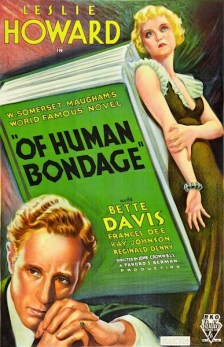
Of Human Bondage (1934)

2016 #68
John Cromwell | 83 mins | download (HD) | 1.33:1 | USA / English | PG

W. Somerset Maugham’s semi-autobiographical novel Of Human Bondage is, per Wikipedia, generally agreed to be his masterpiece, and regarded as one of the best English-language novels of the 20th Century. I’ve never read it, but I’m going to begin by recapping its plot (again courtesy of Wikipedia), the relevance of which will become clear after. Spoilers abound, should you be so concerned.
So, Maugham’s novel tells the life story of Philip Carey, a boy with a club foot who is orphaned and sent to live with his aunt and uncle. They quickly dispatch him to boarding school, where he struggles to to fit in due to his disability. Although groomed for an Oxford education, Philip insists on travelling to Germany, where he eventually takes an apprenticeship. Again he fails to fit in, his co-workers resenting him for being a gentleman. On a business trip to Paris, he decides to quit his job and become an art student. A fellow student falls in love with him; he doesn’t realise, and she eventually commits suicide.

(I know, you came here for a film review, not a plot summary, but bear with me.)

Realising he’ll never make it as an artist, Philip returns to England, eventually deciding to enter medicine. While struggling as a student, he meets a waitress, Mildred, who he falls in love with. She leaves him heartbroken when she announces she’s marrying another man. Philip begins seeing an author, but when Mildred returns, pregnant and unmarried, he breaks off the relationship and begins to support Mildred. Despite his kindness, she falls for one of Philip’s friends and runs off with him. Later she returns, now a single mother, and Philip takes her in again. This time she makes advances on him, which he rejects, so she destroys his belongings and disappears. Eventually he meets her again, when she’s in search of his medical opinion. She has contracted syphilis from working as a prostitute, but rejects Philip’s advice to quit. Her ultimate fate remains unknown.
(Nearly done…)

Meanwhile, Philip is left penniless by poor investments, and unable to complete his education. He’s taken in by the family of a patient, who find him a job at a department store, which he hates, although his talent for art earns him a promotion. After his uncle dies, the inheritance Philip gains allows him to return to his medical tuition and finally become a doctor. He takes a temporary placement at a hospital, where a senior doctor takes a shine to him and offers a stake in his practice. Philip declines. On a summer holiday with the patient who took him in earlier, he meets one of the man’s daughters, Sally, who likes him. She winds up pregnant, so Philip abandons his plans to travel the world, deciding to marry her and accept the doctor’s partnership offer after all. It turns out the pregnancy was a false alarm, but he decides to settle down anyway.

Phew! What a life.

All of that plays out over 700 pages. How do you adapt it into an 80-minute movie? The answer, at least for RKO in the ’30s, is that you cut most of it out.

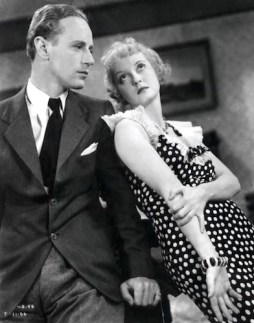
The film begins in Paris, with Philip (Leslie Howard) being told he’ll never make it as an artist. He instantly decides to become a medical student, during which time he meets Mildred (Bette Davis). From there, the rest of the film follows the plot described in the second paragraph, albeit with some notable modifications (which I’ll come to later), with parts of the third paragraph (the patient, his daughter, abandoning travel for marriage) surfacing during the third act.

As I said, I’ve never read the novel, but it strikes me this is less “an adaptation” and more “a partial adaptation”. I’m not sure how Maugham fans feel about that. Even more surprising, at least to me, is that it seems no one’s ever attempted a more faithful retelling. There were two more film adaptations, but the last of those was 52 years ago and, from a quick glance at some plot descriptions, it sounds more like they’re remakes of this film than fresh adaptations of the novel. Considering the book is so acclaimed, it’s a wonder someone like the BBC has never given it the miniseries treatment, especially considering it’s been so long since the last film.

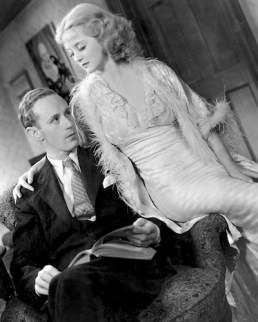
It would probably withstand a new treatment, too, because this version is not exactly highly acclaimed. Not that it’s a bad film, but there is only one real reason to watch it: Bette Davis, giving the performance that made her a star. She overcomes a terrible cockney accent (we’re talking Dick Van Dyke-level bad) to map out the sad decline of Mildred, starting out as a rude and dismissive waitress (it’s hard to see what Philip sees in her, but he’s a bit of a drip so we’re not exactly on his side), slipping to a struggling single mother desperately throwing herself at her one-time admirer, to a final terrible state: gaunt, dead-eyed, looking like she’s almost rotting away before our eyes. Maybe it’s not as gruesome as that sounds — this is a ’30s drama, not The Walking Dead — but it’s still striking.

In the film it’s not syphilis that does for her, but tuberculosis, and prostitution is never mentioned, or even really alluded to. The changes were no doubt due to the infamous Production Code. (There are paintings of naked French women all over Philip’s apartment, though, but I guess that counts as Art. Sadly, there’s no meta-funny dialogue about painting anyone like one of his French girls.) Of Human Bondage is often labelled as a Pre-Code film — as coming from that narrow era between the Code being invented and anyone seriously bothering to apply it. The latter came about in 1934, when an amendment to the Code stated that any film released after July 1st 1934 had to receive a certificate of approval before it could be released. Of Human Bondage premiered on June 28th, which I guess is why it gets labelled a Pre-Code film, but it went on wide release from July 20th, so fell under the Code’s new remit after all. The print held by the Library of Congress (used for the US Blu-ray release) even has the Code certificate at the start (it’s #53, if you’re curious).
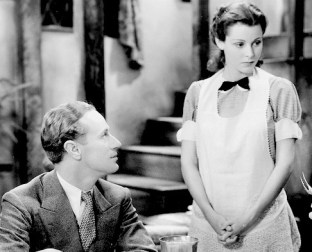
Anyway, back to Mildred: her final degraded state is one of two parts that really mark Davis’ performance out. The other is a monologue delivered after Philip finally rejects her, a screaming force of nature that tears off the screen. Part of its effectiveness lies in the contrast to Davis’ work in the film up to that point, which has been calmer and emotionally reticent, her feelings concealed from Philip because, as it turns out, she has none for him. When she bursts forth with a tumult of fury, an explosive anger based in her lost ability to manipulate this weak man, it’s both a surprise and entirely expected of her selfish character.

When Davis is off screen, it feels like the film is waiting for her to return. Her arc aside, it’s a take-it-or-leave-it damp squib of a drama — there’s nothing wrong with it, it’s just not all that engaging. Howard has definitely been better; his romance with Sally arrives too late to have much emotional weight, though it’s easy to believe he could fall in love with Frances Dee at first sight.
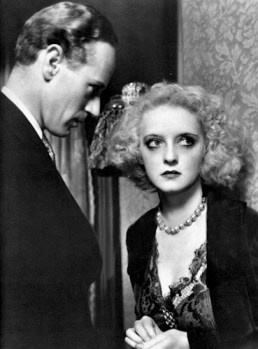
More interesting than the plot of the film is the behind-the-scenes story, which brings us back round to Davis. At the time she was a contract player at Warner Bros, and feeling her career was going nowhere. Of Human Bondage had been rejected by some major actresses due to Mildred’s distinct unlikeability, but Davis saw it as an opportunity. She begged Jack L. Warner to lend her to RKO, which he resisted because he believed it would tarnish her image. However, he ultimately relented when Warners wanted an actress from RKO (Irene Dunne for Sweet Adeline, if you’re interested), and because he believed she would fail. Obviously that didn’t happen, much to the chagrin of Warner executives, who were embarrassed by one of their actresses having such success in a rival studio’s film. When there was talk of her winning an Oscar, Jack Warner began a campaign to discourage Academy members voting for her. At that time the vote counting was handled internally by the Academy itself, so Warner was able to get his way, successfully keeping her off the nominations. However, outrage by voters led to a write-in campaign. Davis ultimately placed third, but the effects were longer lasting: write-in votes were banned, and independent firm Price Waterhouse were hired to manage the voting next year — a job they still do today.

That might make quite a good film, actually; the kind of thing that might win some Oscars…

Award-winning or not, Davis’ performance is the main reason to watch Of Human Bondage. Maybe the novel is a great work, but the film is little more than adequate, with one exception. It may take a while to get past that accent, plus the addition of some dramatic fuel to allow Davis to catch light, but when she does it’s clear how this was a star-making turn.

3 out of 5

This review is part of the Bette Davis Blogathon. Be sure to check out the many other fantastic contributions collated by host In the Good Old Days of Classic Hollywood.

Casablanca (1942)

100 Films’ 100 Favourites #17

They had a date with fate in Casablanca.

Country: USA
Language: English
Runtime: 102 minutes
BBFC: U
MPAA: PG (1992)

Original Release: 7th December 1942 (Brazil)
US Release: 23rd January 1943
UK Release: December 1942 (BBFC)
First Seen: DVD, 2006

Stars
Humphrey Bogart (The Maltese Falcon, The Big Sleep)
Ingrid Bergman (Notorious, Autumn Sonata)
Paul Henreid (Now, Voyager, Deception)
Claude Rains (The Invisible Man, Notorious)
Conrad Veidt (The Cabinet of Dr. Caligari, The Thief of Bagdad)

Director
Michael Curtiz (The Adventures of Robin Hood, Mildred Pierce)

Screenwriters
Julius J. Epstein (Arsenic and Old Lace, Cross of Iron)
Philip G. Epstein (Arsenic and Old Lace, The Last Time I Saw Paris)
Howard Koch (The Letter, Letter from an Unknown Woman)

Based on
Everybody Comes to Rick’s, an unproduced play by Murray Burnett and Joan Alison. (Despite the film’s popularity, a legal dispute between the playwrights and Warner Bros meant it wasn’t staged until 1991.)

The Story
Controlled by the German-subservient French government, Morocco in 1941 is a congregation point for German officials, collaborating French, and refugees attempting to get to neutral America. When letters of transit allowing that passage come into the possession of nightclub owner Rick Blaine at the same time as the love of his life, Ilsa Lund, walks into his joint with her husband, Resistance leader Victor Laszlo, Rick has some tough decisions to make — and quickly, with corrupt police captain Renault hunting for the letters and German Major Strasser gunning for Laszlo…

Our Hero
Of all the gin joints in all the towns in all the world, everybody comes to Rick’s. That’s because Rick is Humphrey Bogart. You’d go to a bar run by Humphrey Bogart, wouldn’t you?

Our Heroine
The most beautiful woman to ever visit Casablanca (a gross understatement), here’s looking at you, Ingrid Bergman. (Yes, I added this section pretty much just to say that.)

Our Villains
It’s set during World War 2 so, I mean, who do you think?

Best Supporting Character
Claude Rains was the Invisible Man, but here he’s Captain Louis Renault, a corrupt copper who — despite being fourth-billed in a film packed with memorable dialogue — still gets a good many of the best lines.

Memorable Quote
“Of all the gin joints in all the towns in all the world, she walks into mine.” — Rick

Quote Most Likely To Be Used in Everyday Conversation
“Louie, I think this is the beginning of a beautiful friendship.” — Rick

The Most Famous Misquote in Movie History
“Play it again, Sam.” — Rick
(Ilsa says “Play it once, Sam,” and “Play it, Sam.” Rick says, “You played it for her, you can play it for me. If she can take it, I can take it, so play it!”)

Memorable Scene
As Laszlo boards the plane out of Casablanca, Ilsa thinks she’s staying with Rick… until he convinces her to go. Standing in the doorway of an aircraft hanger, it’s probably the film’s most iconic scene — if you’ve not seen it, you’ve certainly seen it parodied.

Memorable Song
You must remember this: a kiss is just a kiss, a sigh is just a sigh. The fundamental things apply, As Time Goes By. Play it again, Sam!

Making of
Casey Robinson re-wrote the film’s romantic scenes and was offered a credit, but turned it down because he only took credit for screenplays he wrote entirely himself. Of course, with that decision he missed out on winning an Oscar.

Awards
3 Oscars (Picture, Director, Screenplay)
5 Oscar nominations (Actor (Humphrey Bogart), Supporting Actor (Claude Rains), Black-and-White Cinematography, Editing, Score)

What the Critics Said
“bear in mind that it goes heavy on the love theme. Although the title and Humphrey Bogart’s name convey the impression of high adventure rather than romance, there’s plenty of the latter for the femme trade. Adventure is there, too, but it’s more as exciting background to the Bogart-Bergman heart department. Bogart, incidentally, as a tender lover (in addition to being a cold-as-ice nitery operator) is a novel characterization” — Variety

Score: 97%

What the Public Say
“the script’s greatest strength is not quotability. It’s character development. Rick, Ilsa, Renault and Laszlo are complex individuals, about whom we care, no matter their flaws. Sam (Dooley Wilson), an African American pianist, is layered by loyalty to Rick and emotional acuity, while Major Strasser, the antagonist, is not a comic book villain. Because he’s a Nazi, we do not like the Major, but director Michael Curtiz and his writers are smart enough not to make him stereotypically evil, instead opting to develop him as determined and efficient. Because all of the characters are so genuine, the filmmakers earn our emotional investment” — Josh, Cinema Parrot Disco

Verdict

Casablanca is remembered now as much for its selection of ever-quotable lines as for anything else — you don’t have to have seen the film to know that if you go walking into all the gin joints in all the towns in all the world and someone’s looking at you, kid, then maybe not today, maybe not tomorrow, but soon you should round up all the usual suspects again, Sam, for the beginning of a beautiful friendship. Or something. It’s much more than that, though: an engaging romantic drama, with enough overtones of noir to keep it snappy, set in perhaps a ’40s equivalent of the Wild West. It may be three-quarters of a century old next year, but it still merits playing again.

#18 will see… Bond begin.

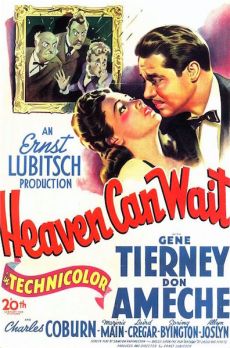
Heaven Can Wait (1943)

2015 #198
Ernst Lubitsch | 108 mins | TV | 4:3 | USA / English | U

My first experience of Lubitsch’s US output concerns a man who arrives on Hell’s doorstep and reflects on his life to explain why he’s there.
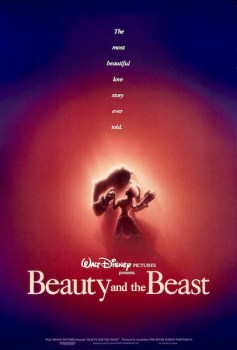

It starts brilliantly: the bookend scenes are excellent, and the early parts of the plot are buoyed by consistent wit and enjoyable characters, particularly Charles Coburn as a slyly raucous grandfather. As it heads into its second half, it loses momentum and focus, the most entertaining characters disappear, and it takes its time plodding to a finale.

An enjoyable film with a lot of amusement value, just a little too long for its own good.

4 out of 5

Beauty and the Beast (1991)

100 Films’ 100 Favourites #10

The most beautiful love story ever told.

Country: USA
Language: English
Runtime: 84 minutes | 92 minutes (special edition)
BBFC: U
MPAA: G

Original Release: 15th November 1991 (USA)
UK Release: 9th October 1992
First Seen: VHS, c.1993

Stars
Paige O’Hara (Beauty and the Beast: The Enchanted Christmas, Enchanted)
Robby Benson (Ice Castles, Dragonheart: A New Beginning)
Angela Lansbury (The Manchurian Candidate, Bedknobs and Broomsticks)

Directors
Gary Trousdale (The Hunchback of Notre Dame, Atlantis: The Lost Empire)
Kirk Wise (The Hunchback of Notre Dame, Atlantis: The Lost Empire)

Screenwriter
Linda Woolverton (Alice in Wonderland, Maleficent)

Story by
Deep breath… Roger Allers, Brenda Chapman, Burny Mattinson, Brian Pimental, Joe Ranft, Kelly Asbury, Christopher Sanders, Kevin Harkey, Bruce Woodside & Robert Lence.

Based on
La Belle et la Bête, a French fairy tale originally by Gabrielle-Suzanne Barbot de Villeneuve, but in this case (and most others) adapted from the retelling by Jeanne-Marie Leprince de Beaumont.

Music
Alan Menken (Aladdin, Hercules)

Lyrics
Howard Ashman (Little Shop of Horrors, Aladdin)

The Story
An arrogant prince is transformed into a beast, with one hope of redemption: someone must fall in love with him before his 21st birthday; if not, the curse’s effects become permanent. When elderly inventor Maurice is imprisoned by this Beast, his bookworm daughter Belle offers to take his place. Spying a chance to alleviate the curse, the Beast agrees. With only a short time until his 21st birthday, could a girl ever learn to love a beast?

Our Hero
A girl who’s strange but special — a most peculiar mademoiselle. With a dreamy far-off look, and her nose stuck in a book, she really is a funny girl, a beauty but a funny girl, that Belle.

Our Villain?
The Beast’s got fangs, razor sharp ones; massive paws, killer claws, for the feast. He was mean and he was coarse and unrefined, but now he’s dear and so unsure. Perhaps there’s something there that wasn’t there before…

Our Villain!
No one’s slick as Gaston, no one’s quick as Gaston, no one’s got a swell cleft in his chin like Gaston. Uses antlers in all of his decorating, my what a guy, that Gaston.

Best Supporting Character
The comedy double act of French candlestick Lumiere and English clock Cogsworth, voiced (respectively) by Law & Order’s Jerry Orbach and M*A*S*H’s David Ogden Stiers. Funny old business, acting.

Memorable Quote
“Try the grey stuff, it’s delicious / Don’t believe me? Ask the dishes / They can sing, they can dance / After all, miss, this is France / And a dinner here is never second best.” — Be Our Guest

Quote Most Likely To Be Used in Everyday Conversation
“It’s not right for a woman to read. Soon she starts getting ideas, and thinking…” — Gaston. (I didn’t say it should be used.)

Memorable Scene
The film’s prologue tells the story of how the Prince became the Beast through the medium of stained glass windows. It’s a beautifully realised fairy tale within a fairy tale.

Best Song
Titular Beauty and the Beast may’ve won the Oscar (“Tale as old as time, song as old as rhyme” — that one), but the actual best song is clearly Be Our Guest. A toe-tapping tune married with fun lyrics, fantastic choreography and superb animation combine to make it, for me, one of the greatest numbers in any musical, animated or otherwise.

Making of
Be Our Guest was originally to be sung to Belle’s father, Maurice, when he’s trapped in the castle. It was writer Bruce Woodside who pointed out that it was in the wrong place because such a key song shouldn’t be performed to a secondary character, so it was moved later to be sung to Belle. This is why you should always listen to writers.

Previously on…
Beauty and the Beast is Disney’s 30th Animated Classic, their official canon of animated movies. It’s the third film in the “Disney Renaissance”, the decade-long period (starting with The Little Mermaid and ending with Tarzan) when the studio enjoyed revived creative and financial success. In terms of this particular retelling of the tale, it owes a clear debt to Jean Cocteau’s La Belle et la Bête.

Next time…
Two direct-to-video animated sequels and a spin-off educational live-action TV series. In 1994, it was the first Disney animated film to become a Broadway musical. In 2002, it was extended with a new song, and in 2012 was re-released in 3D. An all-star live-action remake is out next year.

Awards
2 Oscars (Original Song (Beauty and the Beast), Original Score)
4 Oscar nominations (Picture, Sound, Original Song (both Belle and Be Our Guest))
2 BAFTA nominations (Original Score, Special Effects)
2 Saturn nominations (Fantasy Film, Music)
2 Annie Awards (Animated Feature, Individual Achievement in the Field of Animation)
Nominated for the Hugo for Best Dramatic Presentation.

What the Critics Said
“A lovely film that ranks with the best of Disney’s animated classics, Beauty and the Beast is a tale freshly retold. Darker-hued than the usual animated feature, with a predominant brownish-gray color scheme balanced by Belle’s blue dress and radiant features, Beauty engages the emotions with an unabashed sincerity.” — Variety

Score: 93%

What the Public Say
“The voice cast are perfectly suited to their roles and imbue them with dexterity and flair. Paige O’Hara splendidly combines strength and touching bravery as Belle. Her singing voice is a marvel as well, singing with clarity and loving kindness. Robby Benson’s deep but engaging voice is ideally suited to the Beast, and gives him depth and mournful sorrow that subsides into happiness as he develops feelings for Belle.” — vinnieh

Elsewhere on 100 Films
Back in 2010 I reviewed The Special Edition of Beauty and the Beast (to give its full on-screen title), describing it as “impossible to fault in any significant way. The design and animation are beautiful, the voice acting spot-on, the score exquisite, the story fast-paced and enthralling […] It’s hilariously funny, remarkably exciting, surprisingly scary, relentlessly romantic […] Every [song] bursts with memorable tunes, witty rhymes, genuine emotion — even the Soppy Girly Song is a good one!” Beat that, verdict section…

Verdict

Beauty and the Beast was, famously, the first (and, for a long time, only) animated movie to be nominated for Best Picture at the Oscars, and you could hardly think of a more deserving candidate. Every element of it displays artistry, from the the witty dialogue and lyrics, to the likeable and engaging characters, to the fluid and detailed animation, to the songs which help the film to run the gamut of emotions. In the field of Broadway-style Disney musicals, Beauty and the Beast is animation perfection.

#11 will be… a long nap.

Morning Glory (2010)

2015 #194
Roger Michell | 107 mins | streaming (HD) | 16:9 | USA / English | 12 / PG-13

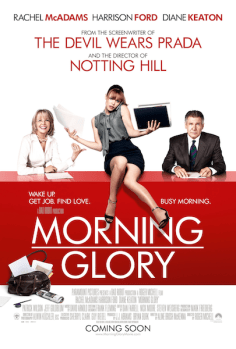
Rachel McAdams takes a break from time-jumping rom-coms to lead a film where the romantic subplot is merely tacked on, presumably for marketing purposes. Really, it’s about a woman in love with her job.

McAdams plays the producer of TV’s worst-rated breakfast show, but her dream career faces ruin when it’s scheduled for cancellation. If only she can persuade her hero, investigative reporter turned disgruntled host Harrison Ford, to toe the line…

Overlong, predictable, and not the sharpest newsroom-based comedy, Morning Glory’s likeable cast nonetheless carry it to a level of entertaining amusement. Not the disaster it’s been painted as.

4 out of 5

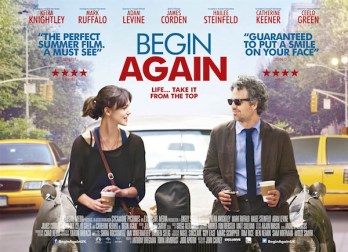
Begin Again (2013)

2015 #188
John Carney | 104 mins | streaming (HD) | 1.85:1 | USA / English | 15 / R

Once’s writer-director returns with a film that could’ve been dubbed Once 2: New York.

Mark Ruffalo’s out-of-favour record exec discovers Keira Knightley’s singer-songwriter, stranded after her ex became a hit. Convinced she could salvage his career, he persuades her to record an album. They bond; will there be romance?

The songs aren’t as catchy (though some are decent) and the shape of the story is overfamiliar, but likeable performances from the stars, plus James Corden and Hailee Seinfeld, keep Begin Again a pleasant experience — albeit one that occurs more in the imagination of dreamy creative types than the real world.

4 out of 5

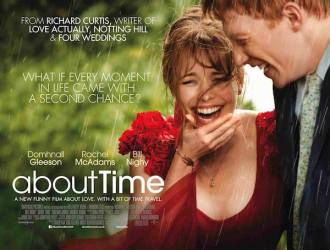
About Time (2013)

2015 #192
Richard Curtis | 123 mins | streaming (HD) | 2.35:1 | UK / English | 12 / R

After Tim (Domhnall Gleeson) learns he can time travel back through his own life, his father (Bill Nighy) cautions him not to attempt anything too drastic — so he sets about finding love.
Ostensibly another of Curtis’ oh-so-British rom-coms, it plays that way for a while, but long before it’s done develops into something deeper: Tim gets the girl (Rachel McAdams), then learns about life, family, and what you might really want to do with such power.

About Time ultimately displays an emotional depth and maturity that marks it out from its science-fiction stablemates, and the rest of Curtis’ oeuvre too.

4 out of 5

Tomorrow: more time travel in my next 100 Favourites selection.

Lady of Burlesque (1943)

2016 #5
William A. Wellman | 89 mins | streaming | 4:3 | USA / English | PG

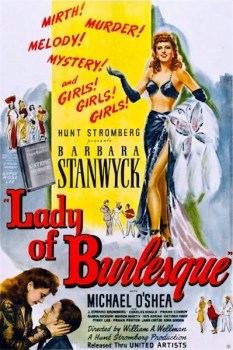
Based on the novel The G-String Murders by Gypsy Rose Lee (as in Gypsy), Lady of Burlesque stars Barbara Stanwyck as Gypsy surrogate Dixie Daisy, a performer in a burlesque show in New York where the backstage arguments turn murderous.

The story unfurls in the traditional Christie-esque shape of a murder mystery: we find out all the different reasons why everyone hates a particular character, then that person dies and they all have motive. For set dressing, instead of the English country houses and other upper-middle-class establishments of Christie, we have the slightly seedy, slightly risqué world of ’40s burlesque… tempered by the strictures of the production code, of course. Stanwyck may get out on stage and wiggle around, but she’s largely shot from the waist up; and it may’ve been released as Striptease Lady in the UK (allegedly), but the clothes remain on (I can’t imagine anyone expected anything else, then or now).

Nonetheless, the world of the story adds some sparkle to proceedings. The investigations are largely confined to a couple of lengthy scenes when the cops turn up, led by Charles Dingle’s meticulous Inspector Harrigan (“This is my first experience with burlesque. It’s a surprising profession.”), and question everyone in one room. These bits have their moments, but feel a little heavy-handed. Around them, the world of burlesque, and the relationships between its performers, rolls on.

Stanwyck carries the film, both on stage and off. Her “will they/won’t they (of course they will)” romance with Michael O’Shea’s comic is kept aloft by her biting ripostes to his advances, and when a comedy sketch is interrupted by backstage noises she saves the day by breaking into song, doing the splits, a cartwheel, and the Cossack dance in quick succession. Not bad for a 36-year-old!

Ostensibly a murder mystery, in practice Lady of Burlesque plays as all-round entertainment with a bit of everything: comedy, romance, songs, shoot-outs, and, yes, both mystery and murders. It’s not the kind of film that will linger long in the memory (apart from Stanwyck’s gymnastics, that is), but it’s entertaining while it lasts.

3 out of 5

This review is part of the Remembering Barbara Stanwyck Blogathon. Be sure to check out the many other fantastic contributions collated by host In the Good Old Days of Classic Hollywood.