100 Films’ 100 Favourites #41
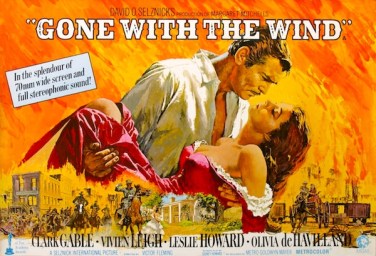
The most magnificent picture ever!

Country: USA
Language: English
Runtime: 233 minutes
BBFC: A (cut, 1940) | PG (1988)
MPAA: G (1971)
Original Release: 15th December 1939 (premiere in Atlanta, Georgia, USA)
US Release: 17th January 1940
UK Release: 18th April 1940 (premiere)
First Seen: TV, c.2005
Stars
Clark Gable (It Happened One Night, Mutiny on the Bounty)
Vivien Leigh (Fire Over England, A Streetcar Named Desire)
Leslie Howard (Of Human Bondage, 49th Parallel)
Olivia de Havilland (The Adventures of Robin Hood, The Dark Mirror)
Hattie McDaniel (Show Boat, Song of the South)
Director
Victor Fleming (The Wizard of Oz, A Guy Named Joe)
Screenwriter
Sidney Howard (Arrowsmith, Dodsworth)
Based on
Gone with the Wind, a novel by Margaret Mitchell.
The Story
The American South, 1861: wealthy teenager Scarlett O’Hara spends her days attending parties and flirting with her many admirers, though she only really has eyes for her neighbour, Ashley. After he declares his intention to marry his cousin Melanie, a furious Scarlett meets Rhett Butler, a practically-minded gent who only serves his own interests. When the American Civil War breaks out, Scarlett has to apply her manipulative nature to survival, as down the years she engages in a love/hate relationship with the similarly-tempered Rhett.
Our Heroes
Scarlett O’Hara is the perennial belle of the ball in her Southern community, until the American Civil War comes and she’s forced to grow up. Her innate selfishness and tendency to manipulate people (or try to, at least) helps her survive the conflict in more-or-less one piece. Equally self concerned is Rhett Butler, a gentleman not afraid to stand up to Scarlett, which is why they clash, and why they’re probably made for one another.
Our Villains
Those damn Unionists, with their trying to get rid of slavery and everything!
Best Supporting Character
Hattie McDaniel is memorable, likeable, and Oscar-winning as the O’Haras’ maid, Mammy. Whether her performance was a good thing for the African American community or just an ‘Uncle Tom’ is another matter.
Memorable Quote
“As God is my witness, as God is my witness they’re not going to lick me. I’m going to live through this and when it’s all over, I’ll never be hungry again. No, nor any of my folk. If I have to lie, steal, cheat or kill. As God is my witness, I’ll never be hungry again.” — Scarlett O’Hara
Quote Most Likely To Be Used in Everyday Conversation
“Frankly, my dear, I don’t give a damn.” — Rhett Butler
Memorable Scene
In the streets of Atlanta, Scarlett comes across the casualties from the battle. First we only see her face as she comes upon a shocking sight. Then it cuts to a long-shot: Scarlett stood by some soldiers, a couple of wounded men on the ground before her. The camera tracks back as Scarlett walks forward, gradually revealing the field of wounded soldiers she’s walking among. It continues to pull back, up into the sky, for a full 55 seconds, the injured stretching as far as the eye can see as a damaged Confederate flag flutters into view in the foreground.
Technical Wizardry
The Technicolor photography by Ernest Haller is absolutely gorgeous, and looks better than ever nowadays thanks to new restoration techniques developed in 2004 (12 years ago?! Where does time go?) That restoration is where the real wizardry lies. Gone with the Wind was shot with Technicolor’s three-strip process, in which a prism split the light entering the camera into its green, red and blue parts, which were each exposed on a strip of black-and-white film. These strips were then dyed the appropriate colour, before being combined onto a new film to create the final full-colour print. Naturally this process was liable to human error: misalign one of the strips by even the slightest amount and you get errors; small and almost unnoticeable, maybe, but less than perfection. In 2004, they went back to the original three strips and, using complicated new computer programs, realigned them from scratch. This perfect alignment revealed details that have always been on the film but would never have been seen before, meaning these movies (they also did it for the likes of The Wizard of Oz, Singin’ in the Rain, and The Adventures of Robin Hood) literally looked better than they ever had. Magic.
Letting the Side Down
There are a raft of criticisms that can be levelled at Gone with the Wind, from its depiction of black characters, to making the South seem not so bad, to the faithfulness of its adaptation (too much). The second half is certainly less focused and less memorable than the first, but the whole overcomes that, for me.
Making of
The search for an actress to play the leading role of Scarlett O’Hara is legendary — it was even dramatised in an Emmy-winning TV movie in 1980. In all it lasted two years, including an open casting call that interviewed 1,400 unknowns (useless for casting, great for publicity), and the formal screen-testing of 31 actresses, including the likes of Lucille Ball, Clara Bow, Joan Crawford, Bette Davis, Katharine Hepburn, Ginger Rogers, Barbara Stanwyck, and many more. In the end, it of course went to a young British actress, then unknown in America, called Vivien Leigh. The rest is screen history.
Next time…
Fans and filmmakers alike tried to get Margaret Mitchell to write a sequel until her death in 1949. In the ’70s, her brother agreed a deal with MGM and Universal under which a novel would be written and simultaneously adapted into a film. Despite a 775-page manuscript being produced, the deal fell apart. Numerous sequel novels have been published, and in 1994 one of these, Alexandra Ripley’s Scarlett, was adapted into a miniseries starring Joanne Whalley as Scarlett and Timothy Dalton as Rhett, with a supporting cast that includes Sean Bean, John Gielgud, and Ann-Margret. Apparently it’s not very good.
Awards
8 Oscars (Picture, Actress (Vivien Leigh), Supporting Actress (Hattie McDaniel), Director, Screenplay, Color Cinematography, Art Direction, Editing)
1 Honorary Award from AMPAS (for “outstanding achievement in the use of color for the enhancement of dramatic mood”)
1 Technical Achievement Award from AMPAS (for being “pioneering in the use of coordinated equipment”)
5 Oscar nominations (Actor (Clark Gable), Supporting Actress (Olivia de Havilland), Score, Sound Recording, Special Effects)
What the Critics Said in 1939
“There has never been a picture like David O. Selznick’s production of Gone With the Wind. It is so true to Margaret Mitchell’s novel of the Civil War, as it was fought in and around Atlanta, that the film is of the same epic quality as the book. […] Vivien Leigh, the little English girl imported to play the role of Scarlett, gives a magnificent performance. No other actress in Hollywood, or on the New York stage, could have come close to equalling it. […] She is pert and beautiful, lacking in erudition but the possessor of all the arts and allure of the vital female. She is quick-tempered, selfish, untruthful, sturdy and wilful as a lioness. No attempt has been made to gloss over Scarlett’s weaknesses and sins. As she is, she dominates the picture from its gay and light-hearted beginning to its tragic close.” — Kate Cameron, New York Daily News
What the Critics Said in 1973
“The most interesting way to consider GWTW today is in comparison with the film that may eventually surpass it in profits, The Godfather. Look at the similarities. Both originated in best-selling American novels. Both are very long. Both are about predators. Both are ultra-American yet are very closely allied to Europe (Walter Scott and Sicily). And, most important, both live within codes of honor, and both codes are romances. William R. Taylor has shown, in Cavalier and Yankee, that the ‘Walter Scott’ antebellum South was largely a literary fabrication, concocted at the time, not retrospectively; as for The Godfather, our newspapers show us daily that ‘They Only Kill Each Other’ is just another escape hatch to allow us to blink facts. ‘Us,’ by the way, means the world, not just the United States, since the whole world flocks to both films. And that’s interesting, too, because it leads to a difference, not a likeness. In a new age, when the ‘realistic’ Godfather is packing them in, the romantic GWTW is still popular. There’s a crumb of comfort in that: at least culture is still more pluralist than some of our propagandists would have us believe.” — Stanley Kauffmann, The Atlantic
What the Critics Said in 2015
“Its stereotype of happy slaves and kindly masters has never been more wince-inducing […] But no one watches Gone with the Wind for historical accuracy. What keeps us coming back is four-hours of epic romance in gorgeous Technicolor. Slavery, the Civil War, the burning of Atlanta, a street knee-deep in dead soldiers—all just a backdrop to the main event, Scarlett ’n’ Rhett. The feminist jury is still out on Southern belle Scarlett O’Hara (Vivien Leigh). Nothing but a serial husband-thief? Or a resilient modern woman doing what she can to survive? You decide.” — Cath Clarke, Time Out
What the Public Say
“What’s striking almost 75 years on is how fresh and modern both Rhett and Scarlett remain. Gable’s eyes twinkle as he rolls Sidney Howard’s dialogue around his mouth, but there’s also a sadness there and a resignation that, no matter how hard he tries, he and Scarlett can never last. Leigh, who came through a tortuous audition process to land the part, positively crackles. Although still one of the feistiest and most driven female parts committed to screen Scarlett is, for the most part, pretty damn annoying and does little to enamour herself as the film progresses. […] Rhett sums Scarlett up perfectly when he remarks that she’s ‘like the thief who isn’t the least bit sorry he stole, but is terribly, terribly sorry he’s going to jail’.” — Three Rows Back
Elsewhere on 100 Films…
I briefly reviewed Gone with the Wind after a re-watch way back in 2007, when I assessed that “the direction is brilliant, displaying styles you think weren’t invented for another 20 years; all of the design work is gorgeous; and the story is epic and expertly told, moving across genres (romance, war, melodrama, comedy) with ease. It’s easy to see why this is the most popular film ever made.”
Verdict
Last week I wrote about the enduring mass popularity of The Godfather, and here’s another case in point. Gone with the Wind may not rack up the ratings in the same circles as Coppola’s opus, but it has consistently been voted America’s most favourite movie, and its numerous massively successful re-releases mean that, adjusted for inflation, it’s still the highest grossing movie of all time. It’s an epic in the truest sense of the word, with a story spanning many years and many miles, passing by historical events in the process. However, at its core it’s the story of a tumultuous romance between two people, who may love each other or may hate each other, but who, with their unique, selfish, manipulative perspectives, are surely perfect for each other.
#42 will be… #42 will be… #42 will be…

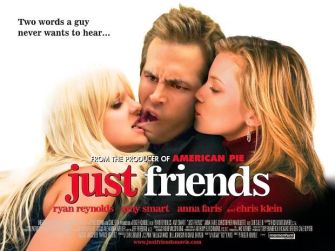 I was aware of the existence of Just Friends in the way you’re aware of any movie with name actors that came out during the period in which you were cognisant of films that were being released — that is to say, I knew it was a film and it was a comedy, and I had paid it no heed beyond that. Until a couple of months back, when an article at the A.V. Club about a different topic referred to it as a “pop culture dud”, and the comments section got half overtaken with people defending it. Couple that with it being available free on Amazon Prime Instant Video and my curiosity was suitably piqued.
 For all kinds of reasons, Just Friends spends a long time feeling like a morally bankrupt movie. It’s unclear if it’s praising or condemning Chris’ frivolous lifestyle, if he needs saving by coming home, or if he deserves revenge on the people who mistreated him. We know what the standard Hollywood perspective on these things is, so kudos to some degree for dodging it (at least for a while), but it doesn’t commit to the other direction either. What the story really amounts to is wish fulfilment on an epic scale. Its message is essentially: you can go back to your past and make it better. Maybe I’m just a cynic, but that’s not something I believe.
 One lesson I took from watching Just Friends (as if I didn’t know this already) was that just because a bunch of people defend something they like in a comments thread on the internet, it doesn’t mean you’ll like that thing too, even if that comments thread is on the A.V. Club. Nonetheless, while Just Friends is not any kind of “must see” film, as a 90-minute diversion — with, at this temporal distance, a splash of mid-’00s nostalgia — it’s passably entertaining.
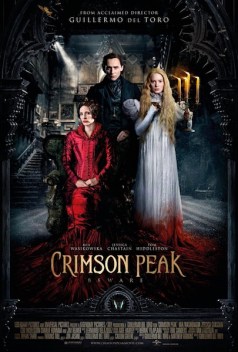 Mia Wasikowska stars opposite a British thesp best known for playing a comic book villain and a red-headed repeat-Oscar-nominee, in a Gothic drama-thriller from an acclaimed non-Anglo director? That’s a description of
 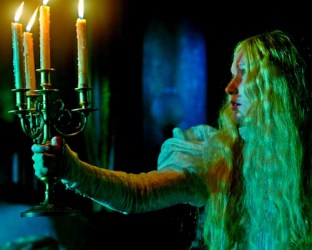 The story actually concerns Edith Cushing (Wasikowska), a well-to-do businessman’s daughter in upstate New York who is occasionally haunted by ghosts. She falls for visiting English gent Sir Thomas Sharpe (Hiddleston) and, long story short, moves with him and his haughty sister Lucille (Chastain) back to their crumbling — literally — pile in the English countryside. The house hides many secrets, and ghosts, too. Having said it’s not a horror movie, it would be unfair to class Crimson Peak as simply a tame drama — as you’d expect from writer-director Guillermo del Toro, those ghosts can be bleedin’ scary, and there are certainly a smattering of good old fashioned jumps to boot.
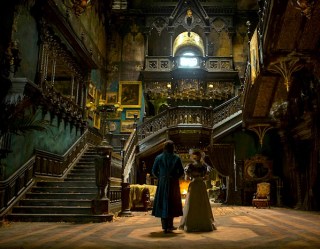 Whatever one’s thoughts on the story and tone of the film, it can’t be denied that its technical merits are extraordinary. Every inch of the design work is gloriously imagined, and the cinematography — the lighting in particular — is spectacular. And that gigantic house set…! And the climactic ‘limbo’ set, too — incredible work. (That’s not a spoiler, incidentally: it was the set’s nickname, not its literal location.) The ghost effects are excellent too — original, creepy, and executed in a way that blurs the lines between make-up, animatronics, and CGI. It’s a shame the film as a whole wasn’t better received, because I imagine that’s all that held it back from numerous awards-season nods.
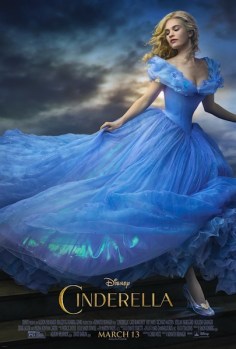 Disney’s animated classic is re-imagined in live-action, losing the songs but expanding the story. The latter serves to find a little more realism in the setup (how Cinders became a servant to her stepmother, etc), as well as in the characters’ motivations and actions.
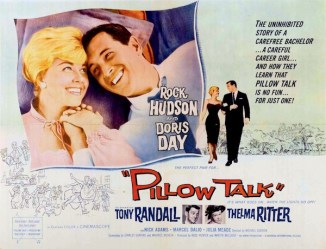 Doris Day and Rock Hudson star in this Oscar-winning rom-com hit.
 Hugh Dancy (of
  than some of her movie choices would have you believe, and roles like this prove that. Bonus points to the writing here for Beth not just accepting everything Adam does — that’s much more realistic than him happening across an endlessly understanding saint of a woman. But boo to the critics who didn’t buy that a privileged “daddy’s girl”-type could ever possibly fall for someone with autism — how judgemental are you?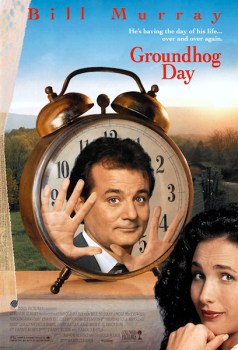
 Score:




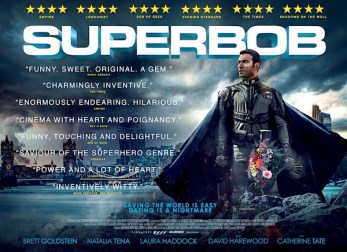 Comedies about superheroes tend to come in the form of big-bucks mainstream-aimed effects-y pieces (
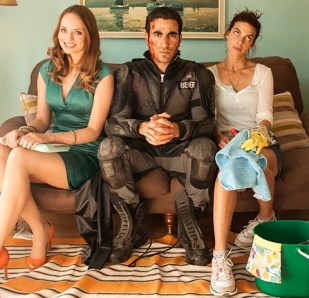 though, because the conceit is all but dropped fairly early on, and the film begins to develop in nice directions. It starts out as pure comedy, and while it doesn’t lose that aspect, it does develop a strand of endearingly genuine sweetness. That helps to see it through the predictable rom-com beats that follow, leaving you (or this viewer, at least) not minding that it’s predictable where the story’s going to go because, thanks to the characters, that’s where you want it to go.
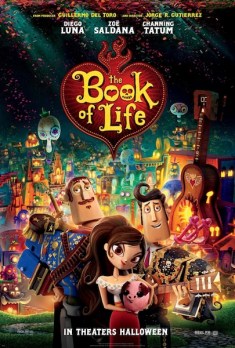 A myth-like animated musical adventure based around Mexico’s Day of the Dead, most notable for its unique art style that presents gorgeous visuals throughout.
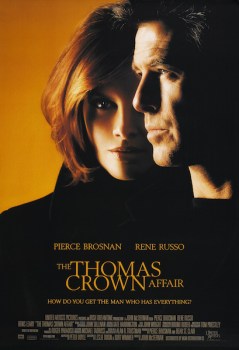 Once upon a time, John McTiernan was an action auteur, known for films that sat comfortably on the “mainstream modern classics” scale, like
 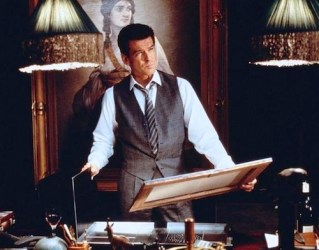 McTiernan’s action background comes to the fore in a pair of extended heist scenes at either end of the movie, which are surely the standout parts. The seductions and plot twists in between these bookends are certainly entertaining and may even keep you guessing, but it’s the heists that pack the most entertainment. They’re the kind of thing we don’t see so much nowadays, at least not in mainstream movies, because any sequence designed to provide excitement is a fight of some kind, and most of those are shot in the shaky-cam style. There’s none of that palaver here, just perfectly choreographed cutting between the various players in each heist, and some well-chosen music — as if being ably to do awesome stuff accompanied by the James Bond Theme wasn’t cool enough, here Brosnan gets to do the same to Nina Simone’s Sinnerman.
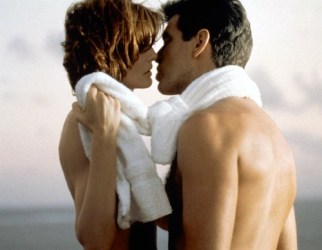 The Thomas Crown Affair may not be the best film on any of its principals’ CVs (well, except perhaps for Russo’s), but it’s a consistently enjoyable light thriller with a couple of particularly memorable sequences and a fun central dynamic. Apparently it’s better than the original, too. There’s long been talk of a sequel, but it seems to have gone the way of McTiernan’s career, which is a shame.
 100Films.co.uk