
James Franco | 99 mins | streaming (HD) | 2.39:1 | USA / English | 15 / R
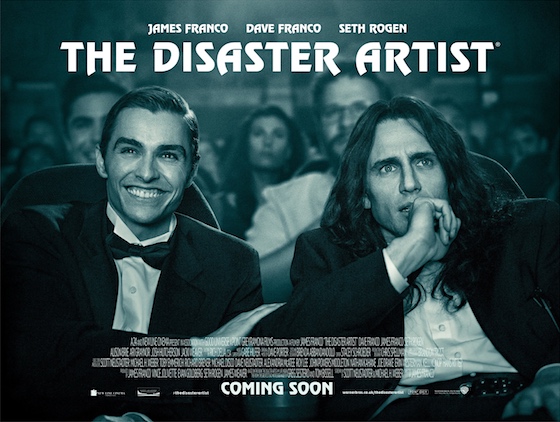
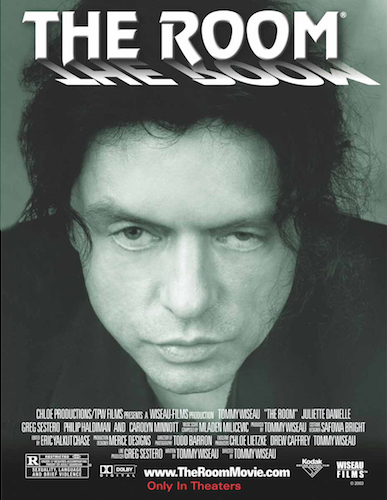
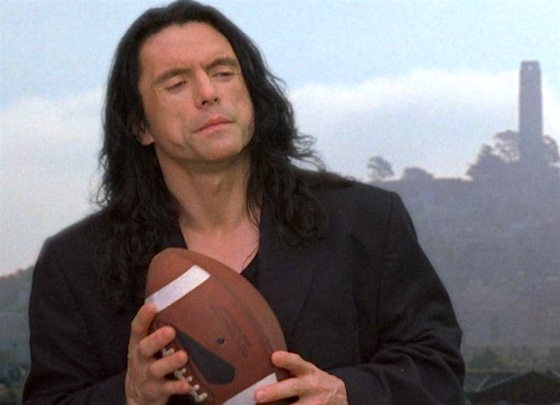
James Franco’s 18th feature as director* is the story of the making of The Room, the cult favourite “Citizen Kane of bad movies”. Franco also stars as the bizarre Tommy Wiseau, a figure of mysterious background who one day decides to make a movie, funded out of his own inexplicably wealthy pocket. Along for the ride is Greg (Dave Franco), a wannabe actor who befriends Tommy at acting class before inspiring Wiseau’s divergence into auteurism. So unfurls a crazy tale of ultra-independent moviemaking by someone who doesn’t seem to know how to be human properly, never mind produce a movie. By which I mean Wiseau, not Franco.
Franco and friends (the lead cast includes his brother, his brother’s wife, and his best mate) seem to be having a jolly old time recreating their favourite bad movie, and they’re certainly not above patting themselves on the back for how well they’ve done it (there’s a self-congratulatory “look what a good job we did recreating the film!” montage at the end that lowered my opinion of the film somewhat. By all means put that as a Blu-ray special feature, but putting it in the film itself feels boastful). Of course, for aficionados of The Room such dedication pays off: there are lots of fun references — not just the obvious stuff (the recreation of actual scenes), but scattered lines and nods throughout the movie.
For those of us uninitiated, The Disaster Artist provides mixed results. For example, the sequence about the shooting of the famous “Oh hi Mark” line, which played so well as the teaser trailer, is more long-winded in the final film (unsurprisingly), but consequently it doesn’t work as well — it’s lacking the conciseness of the trailer, which emphasised the ludicrousness of the process and therefore made it funny. But, hey, if you haven’t seen the trailer…
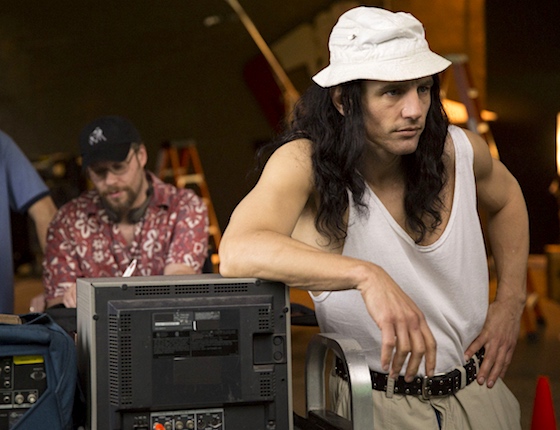
Where the film manages to surprise is that it kind of has something serious to say. Obviously it’s funny — the premise, the very fact of Wiseau’s existence, inherently calls for that — but around the laughs it wants to comment on the worthiness of dedication to artistic endeavour. Wiseau may be a weird guy who made a terrible movie, but he still made that movie — when Hollywood rejected him, he had the dedication to write and produce his own film, following his own vision. His weird, terrible vision. It’s little surprise that Franco — the guy who’s somehow made 20 feature films (including another two since this came out less than a year ago, with three more beyond that completed or in post) — should be on board with that as a worthwhile achievement.
The trailers mismanaged my expectations for The Disaster Artist. They promised more hilarity than the film delivers — it’s played a little straighter than you might assume, especially given the people involved. But while it’s not consistently funny enough to land as a pure comedy, it’s also not quite heartfelt and meaningful enough to sing as a drama. It’s good, but I felt like it could’ve been better.

The Disaster Artist is available on Sky Cinema from today.
* That’s not a typo — James Franco has directed 17 other movies that you’ve probably never heard about. And now you’re probably wondering, “how can someone as famous as James Franco have directed 17 movies without me ever hearing about it?” I know, because I’ve been there. ^











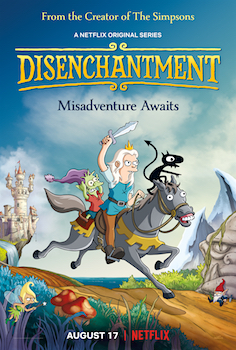 The first new series from The Simpsons creator Matt Groening in almost 20 years, Disenchantment is a riff on the fantasy genre. It follows the misadventures of Princess Bean of Dreamland, a rebellious sort who prefers to sneak out of the castle and get drunk in the pub than… well, do anything else. In the first episode, she and we are introduced to her personal demon, Luci, and Elfo, an elf who has left his happy-clappy kingdom to explore the misery of the wider world. This trio form the heart of the show, though naturally there’s a wider ensemble to help fuel storylines.
 Loosely based on the US series Web Therapy, this new sitcom stars Stephen Mangan as Richard Pitt, a therapist offering his services over the internet. The filming style (each client only appears for a few minutes per episode, popping up now and again throughout the series, always via webcam) allowed them to attract a rather phenomenal supporting cast, including the likes of David Bradley, Charles Dance, Celia Imrie, Richard E. Grant, and David Tennant. The way each episode pingpongs around the various clients and Richard’s many, many personal problems (his marriage, his kids, his parents, his siblings, his bank balance) makes for a whip-crack pace that has pros and cons — each episode seems to disappear in a flash, having at once both dashed through some plot and also gone nowhere. Partly this is the result of an abundance of characters — some of the clients are basically one-off sketches, which is fine, but the regulars’ stories can only advance in small increments. I’m left wondering if it might’ve actually worked better with less going on. Still, the quality cast means characters do get rounded out speedily, and when it works it can be pretty funny.
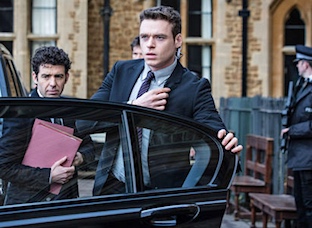 This month, I have mostly been missing Bodyguard, the new BBC One thriller from Line of Duty creator Jed Mercurio that premiered with a two-day double-bill last weekend. It seemed to go down well, based on the ratings and what I saw on Twitter (while avoiding spoilers!) As usual, I intend to wait until the whole series has aired (or most of it, at least) and then whisk through the lot.
 100Films.co.uk