2011 #43
Sidney Lumet | 120 mins | DVD | 15 / R
Director Sidney Lumet sadly passed away a week ago today. In tribute, I watched one of his many highly-regarded films…
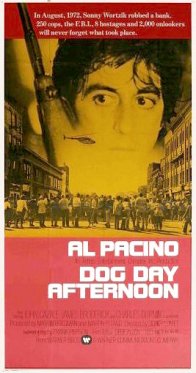 On August 22nd 1972, John Wojtowicz and Salvatore Naturile attempted to rob a Brooklyn bank to raise money for Wojtowicz’s male wife to have a sex change operation. The ensuing hostage situation was watched live on TV by millions of New Yorkers. If you made it up people wouldn’t believe it — especially in the ’70s — which is why this film, closely based on those events, strives so hard for naturalism. And it succeeds, and then some.
There are multiple reasons it works so well, and I’m glad I for once got round to watching all the DVD extras because they reveal these factors very nicely. I’m going to use a liberal sprinkling of those facts as a way into my thoughts on the film, so if you’ve watched those features some of this may seem too familiar. Sorry.
Let’s start where all films do (well, should): the screenplay. Written by Frank Pierson, based on a magazine article about the true story, it was his screenplay that attracted both director Sidney Lumet and star Al Pacino to the project. It’s immaculately structured, from the excitement of the opening — a confused, amateurish bank robbery — through negotiations with police, emotional telephone conversations, and on to a nail-biting finale at JFK airport. The pace is well considered. It doesn’t rush through events but it never flags; the tension is maintained but important emotional scenes are never sped through. More on that in a moment. Importantly, the plot’s numerous reveals are well managed too — for instance, Sonny’s homosexuality and transgender partner are revealed quite far in, by which point we’ve already built a firm opinion of the characters. This was important for a ’70s audience (as Lumet suggests in his commentary), 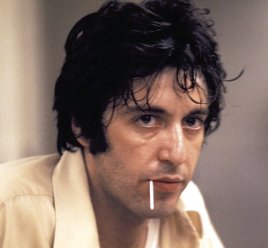 to try to circumvent built-in prejudices that would’ve adversely affected an audience’s reaction too soon. It still works now — it’s not a twist, per se, but it is likely to change one’s perspective on the film and its characters mid-flow, which is always interesting.
The dialogue is also spot-on, but that’s not all down to Pierson. While rehearsing, Lumet was so keen to capture a realistic tone that he allowed the actors to improvise the dialogue. This was working so well that he had it recorded, transcribed, and Pierson rewrote the dialogue based on the cast’s improvisation. (His scenes and their order remained intact, just the words were changed.) This, coupled with additional improvisation techniques used on set, lends a believable tone to the characters’ actions and words — they’re not speaking dialogue, they’re just speaking.
In terms of performance, this is a real showcase for Pacino. As Sonny — the movie’s version of John — the whole film rests on his shoulders, and he’s more than capable of bearing the weight. Some roles allow an actor to subtly be good throughout the film; others allow a few grandstanding set-pieces where they can Act; but Dog Day Afternoon gives Pacino both. The latter are, naturally, easier to recall: the way he works the crowd (“Attica!”), the pair of draining phone calls to his wives; but most of all, the will-writing scene. As the climax looms, Lumet allows the time for Sonny to dictate his will in full to one of the bank girls. Pacino is brilliant, understated but — in a combination of performance and writing (though, in this case, the text is taken from the real-life will) — revealing, cementing some of the conflicting forces that have pulled on Sonny throughout the film.
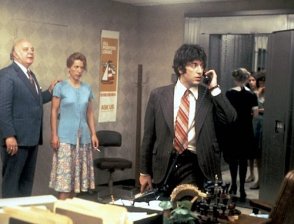 In trying to get a handle on the real Sonny when he was starting on the screenplay, Pierson talked to various people who knew him, but struggled to reconcile their conflicting accounts of the same man. The link he found was that Sonny was always trying to please people, and that’s what he used: in the film, he’s not just out for himself or his boyfriend, but also trying to placate and please his hostages, the police, the media, his partner, his mum, his other wife… Pierson and Pacino do indeed make him a different man to all of them, and this is one of the reasons Sonny is such a great character and a great performance: he’s genuinely three-dimensional. All of us behave differently, to some degree, when we’re with different people — we don’t necessarily realise it, because they’re all facets of the same us, but we do it — so to put that into a character is to make him real.
Pacino is propped up by a spotless supporting cast, all of whom get their moment(s) to shine and use them to excel. Of particular note is John Cazale as Sal, the other robber. It’s a largely quiet role, but he nonetheless conveys an awful lot with it. Lumet says that Cazale always seemed to have a great sadness in him, which you can always see come out in his performances, and he’s certainly right here. We learn very few facts about Sal during the film, but we still know him, you suspect, as well as anyone does.
Chris Sarandon is also superb (and Oscar nominated) as Leon, the gay wife who wants a sex change. Lumet was keen to avoid presenting a stereotypical homosexual type, 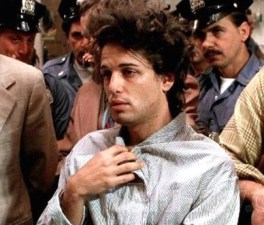 throughout the film trying to avoid turning any of these unusual characters into freaks, and Sarandon pitches it right. He plays the truth of a conflicted, confused character; a man who is perhaps easily led but hard to please, I think. As with the rest of the cast, the little touches he brings — such as starting a sure-to-be-emotional phone call to a man currently in the middle of a tense hostage situation with “so how are you?” — sell the reality of the piece.
Capturing reality is clearly Lumet’s prime concern — it’s reiterated multiple times across all the special features — and I think he succeeds admirably. Some things we might not even notice — the film is lit with natural light outside, the bank’s real fluorescent lights inside, and the nighttime sequences by a genuine police van reflecting off the white front of the bank — while other things, like the complete lack of a musical score, are more readily apparent. I say that, but that’s not readily apparent: one may well notice, but it’s such a perfect decision that it never rears it’s head. Lumet argues that having an orchestra chime in to underline an exciting or emotional moment would have broken the realism of what we’re watching, and he was right — there’s not a single scene here that could be improved by music, but several that would have been damaged by it.
The way the film’s shot supports this too. This is from the ’70s remember, before the craze for faux-documentary and everything being handheld, so it still looks like a film, but it’s not one that’s been precision-staged. Indeed, quite the opposite. Everything is kept loose — sometimes actors block each other’s shots, or talk over each other, or the handling of a prop goes wrong, and so on — but Lumet leaved it all in, even plays it up at times, and makes it work to his advantage. Rather than being the obvious “we’re trying to make this look real”  of today’s grainy shakycam stuff, this just feels real; the heart and truth of it come through, not the surface sheen of it being documentary footage. That’s more important.
There’s great editing by Dede Allen too, though most of the time it goes unnoticed: in keeping with the aim of letting the audience ‘forget’ this is a film, most of the cutting is simple and natural. Two examples leap to attention, however, and those are the two times (the only two times) guns are fired. Lumet and Allen recreate the confusion and violence of such an event with a smash of fast, sub-one-second cuts on both occasions. We see mindless fast cutting all the time now, but this incongruous example shows the effectiveness a fast montage can have when done by the right hands. The soundtrack also jumps with each cut, which is equally vital to the slightly disconcerting way it works — they’re not just smoothing over this series of flashing images, we’re being deliberately disorientated by them.
Remember earlier I mentioned Pierson’s pace? The editing plays a role in that too, naturally. After the film had been tightened for the final time, Lumet felt it had lost something, especially when it came to the will-dictating scene, which now felt slow. So with Allen he went back and added six or seven minutes of footage back in — as with his staging, making it a bit looser, more naturalistic, and in the process fixing the pacing issue and making the important will scene feel right again. Without being able to see that cut it’s hard to say just how necessary it was, but as the final result feels so right it seems his instinct was a good one.
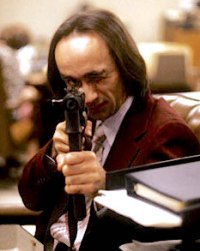 Pierson’s screenplay won at the Oscars. The film was also nominated for Best Picture, Actor, Supporting Actor and Editing, but this was the year of One Flew Over the Cuckoo’s Nest so that took most of the big awards. That’s another of those all-time classics I’ve not seen, so I can’t offer my personal take. What I will say is that it goes to show (as most of us I’m sure already know) that the Oscars are as much about the year you’re in as the film itself: Dog Day Afternoon is better than masses of films that have won the same awards before and since, but clearly it got an unlucky year.
I’ve written quite a lot here but, brilliantly, I’ve still only got a certain way beneath the surface — there’s plenty more in there. That’s always the mark of a good film. And there’s certainly more memorable anecdotes and interesting directorial techniques I learnt from the special features that I’ve left out. Lumet set out to make a believable film about an unbelievable situation, and I do believe he achieved that goal. These are normal human beings with normal emotions — not like you and I, perhaps; taken to an extreme, certainly — but in a very bizarre set of circumstances. It was important to Lumet that they didn’t come across as freaks and, with the help of Pacino and the rest of his cast, I think they’ve achieved that too.
 The film treads a delicate line between drama, comedy and thriller, but doesn’t once tip too far in any direction. It’s got several genuine laughs, but none compromise its serious side or claim to reality — it’s tense and touching too. Anyone else making a film about an extraordinary situation, be it a true story or from the mind of a crazed writer, would do well to look at Lumet’s work here.
Dog Day Afternoon is on ITV tonight, 19th November 2014, at 2:30am.
See also my review of the documentary short about the making of Dog Day Afternoon, which is also on the DVD, Lumet: Film Maker.

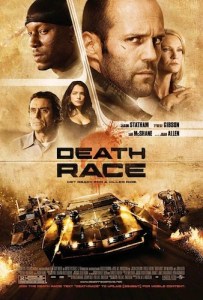 Sometimes, I wonder what I’m playing at. The list of films I haven’t seen but really should is quite extraordinary, from enduring classics like Lawrence of Arabia and Seven Samurai to recent praise-magnets like Scott Pilgrim and Black Swan (and those are just from some of the ones I actually own), yet I choose to spend my evening watching B-movie tosh like Death Race because it happens to be on telly.
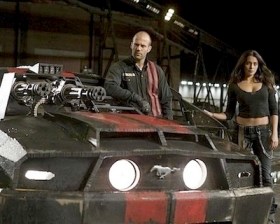 And I expect it says something about that intended audience that the end credits begin with a “do not attempt this at home” notice.
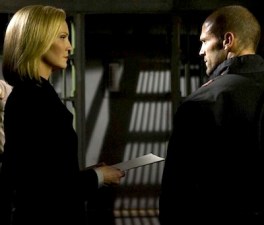 Even if it’s all about the action, it could be worse: I’ve seen plenty of films featuring weaker dialogue, weaker acting and an even less relevant story. Death Race does everything it sets out to do competently, delivering a couple of decent action sequences and even a couple of laughs along the way. Not exceptional enough to be particularly memorable, but it is fun — if you like this kind of thing — while it lasts.
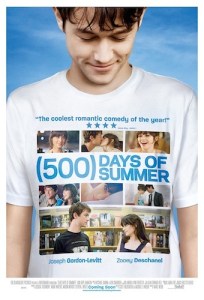 Directed by Marc Webb (
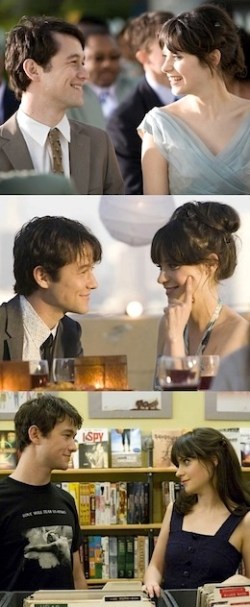 They all sit surprisingly well within the story though — yes, some (perhaps all) are showing off a bit, but in a way that, by and large, works. And I’m a little bit glad I can’t quite list them all, because half the fun of (500) Days of Summer is watching what looks like a borderline-mainstream indie rom-com that suddenly throws these curveballs at you.
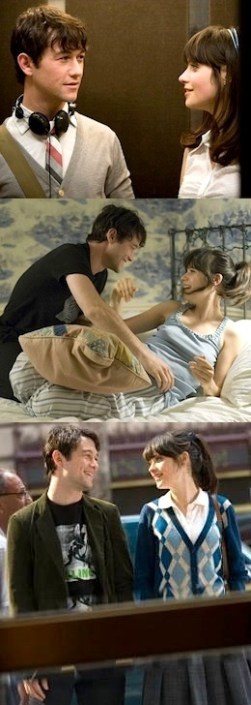 Not that those three roles are identical by any means, but you can see how one led to the other.
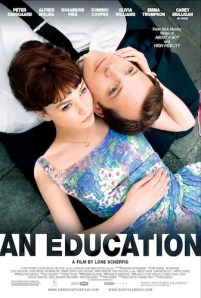 It seems that every year, come Oscar season, there’s a British-made film we’re led to back so thoroughly that it gains nothing but incessant praise from every (British) quarter. Just to look at recent years, from the 2006 selection it was
  Based on a true story, the film tracks 1960s schoolgirl Jenny (Carey Mulligan) as she falls for an older man (Peter Sarsgaard) who represents a culture- and glamour-filled escape from her drab suburban life and its focus on getting a place at Oxford. It’s a romance and a coming-of-age tale, albeit one with a more naturalistic bent than your regular offering; more down-to-Earth and British than either something Hollywoodised or American-indie-fied. There are, perhaps, few massive surprises in the plot — anyone who doesn’t guess this won’t end well has somehow failed to encounter a “schoolgirl falls for glamorous older man” story before — but Nick Hornby’s screenplay and Scherfig’s direction execute it all with admirable conviction. You don’t feel like you’re watching something familiar.
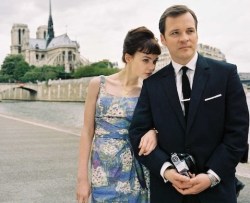 I’ve read some complain there’s no ending. I can only presume they walked out of the cinema or stopped their DVD before the film reached, y’know, the end. Sometimes I appreciate how people can criticise the lack of an ending, even when I disagree (see:
 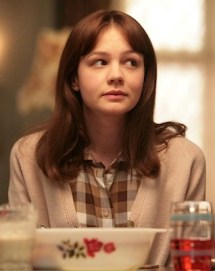 The film hangs on Carey Mulligan, justly nominated for her performance. Quite aside from whether the performance is awards-worthy or not, it’s effortlessly watchable. Mulligan is exceptionally easy to fall in love with — if you haven’t already when she was Ada Clare or Sally Sparrow, I’m sure Jenny Mellor will enchant you. On the other hand, some have found her character too pretentious or naïve — maybe your own background will dictate if you see these negative traits. Jenny is probably a little of both, but I wouldn’t say she’s wholly naïve and I wouldn’t say she’s pretentious, exactly — she’s clever, and she wants to experience the world. What’s wrong with that?
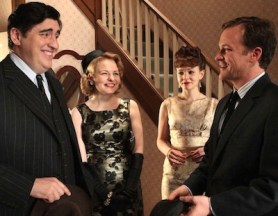 It’s slightly remiss of me not to mention Peter Sarsgaard, what with him being the other half of the film’s romantic relationship. He’s good, his Colin Firth-esque accent pitch-perfect, but while he’s spot on in the part — absolutely no complaints — I can’t think of any scenes where there isn’t someone else (usually Mulligan or Molina) grabbing the spotlight.
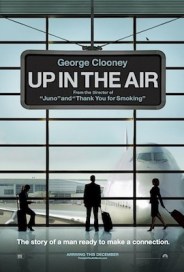 Sometimes, it’s best to just come clean: I don’t have much to say about Up in the Air.
 Cowriter-director Jason Reitman has created a surprisingly likeable film. It’s easy to see how Clooney’s character — very much the centre of the piece — could be irritating or vapid or any number of other negative adjectives, but instead he’s… well, he’s George Clooney, isn’t he? He’s all charm. If you were going to be fired, you’d probably want George Clooney to be doing it. For a character who is essentially an expansion of the
  Up in the Air got its Best Picture nom in the first year the Oscars went back to 10 nominations for the big prize. I’m not sure many would disagree that it’s one of The Other Ones — one of the ones that quite probably wouldn’t’ve been there if it hadn’t been for the category doubling in size. And if it was, it’d be The Other One — the token indie/comedy nomination that everyone knows isn’t going to win but was quite good all the same.
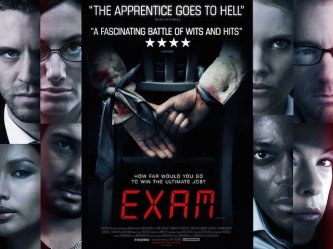 There’s an argument that the less you know going into any film the better. Naturally there are some films this applies to more than others, and Exam is one such film. Eight young professional types go into a job exam/interview; the next hour-and-a-half is all mysteries and riddles — which is why you wouldn’t want to know too much.
 Such a contained story relies heavily on its characters and the actors’ performances. Largely a cast of un- (or little-) knowns, all are decent — one or two may be subpar, but I’ve seen a lot worse. I don’t quite understand how some viewers can find White, played by Luke Mably, to be a completely likeable character in spite of his obvious flaws — he has his moments, but surely he’s not agreeable overall? Not a jot. That said, his is the standout part, a scene-stealing performance from Mably. There’s no clear-cut audience-favourite, which (from reading a few reviews) seems to be a problem for some viewers. As far as I’m concerned, it’s a good thing: never mind the realism of there being one perfect person every viewer will love, audience-favourites will either predictably win or be shockingly dispatched, so what’s the point?
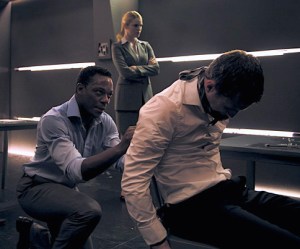 it’s quite nice to find a plot that doesn’t feel the need to tie everything in to its reveal; a plot that can wrong-foot you by occasionally focusing on something that’s ultimately irrelevant.
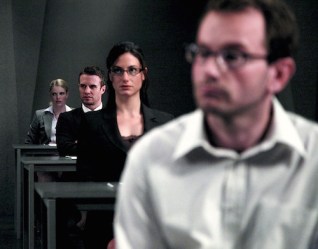 and films that invite pondering tend to invite repeat viewing; but then again it works equally well (better, ultimately) as a straight-up “what’s going on?” thriller.
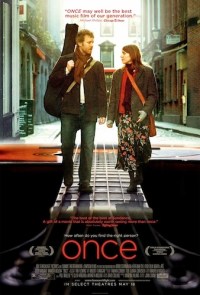 Once is a very modern indie musical. And I mean indie as in “indie film”, not “indie music”. Lord save us from a musical of indie music.
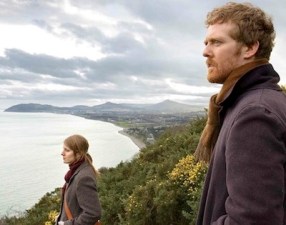 It’s a testament to the strength of the lead performances and the story they create that it’s not until the end credits roll you realise you never even knew their names.
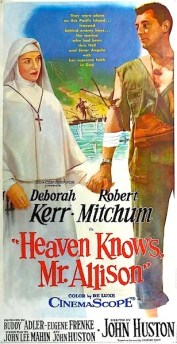 The title may sound like a ’40s rom-com or a ’70s TV sitcom, but Heaven Knows, Mr. Allison is nothing of the sort. It’s set in the south Pacific in 1944, at the height of World War II, and begins with titular US Marine Allison (Robert Mitchum) washing up on an island that’s occupied only by a novice nun, Sister Angela (Deborah Kerr). He was the only survivor of a Japanese attack on a submarine; she ultimately the only survivor of a Japanese raid on the island. With no hope of rescue they must plot their own escape.
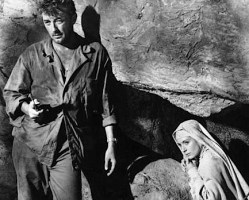 There’s also a kind of burgeoning romance between the two — as a novice nun she has yet to take her final vows — which creates a different kind of will-they-won’t-they than the usual love-hate dynamic. It all leads to a pleasing ending, where your expectations for what a Hollywood film will do (especially with the groundwork that’s been laid) are subverted in favour of a more plausible turn of events. It’s not the kind of ending that makes the film — it’s already done more than enough to hold one’s interest — but if done wrong I think it would have undermined the rest.
 The first sequel (I say that in the hope there’ll be more) to
  there’s a perhaps surprising undercurrent of genuine emotion and serious issues. This is one of the things that marks these two films out from the overcrowded kids’ film genre: they’re prepared to tackle things in an appropriate way, never allowing them to overwhelm and make an Issue Film but not sanitising them because It’s For Kids. The ending to a lovely picnic may well bring a tear to your eye.
 CGI is also used again to magical effect. And, even more than that, to very cute effect. It feels like a bunch of scampering CG piglets, or a cuddly CG baby elephant, should be a little disturbing and wrong, but they’re not — they’re all incredibly cute, in fact. Aww. And they get up to plenty of funny and entertaining things. As with most of the enjoyment in both Nanny McPhees, it may be aimed at children, but I think it’s done in a way that appropriately-hearted adults can enjoy too.
 I loved the first Nanny McPhee, which always sets a sequel up for failure. However, Thompson (though she’s not in the director’s chair I think we can be certain she’s in charge of this series) doesn’t disappoint. She’s taken a brave route by setting the film in a completely different era with an all-new supporting cast (except for one lovely last-minute surprise for the attentive), but it’s paid off handsomely. This is at least as magical as the first, perhaps even more so.
 100Films.co.uk