
Michel Hazanavicius | 101 mins | Blu-ray | 1.33:1 | France, Belgium & USA / English | PG / PG-13
With the important awards finally arriving (the BAFTAs this Sunday, the Oscars in a fortnight), last year’s winner is on Sky Movies Premiere from today. What better time to review it?
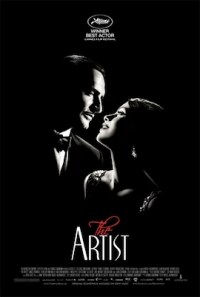 Beginning in 1927, you could (and some have) accuse The Artist of being a remake of Singin’ in the Rain, only swapping the milieu of the musical for that of the silent film — both equally alien to modern audiences! The story concerns a silent movie star, one of the biggest names in the business, who is ousted when sound arrives and the public want new faces. Concurrently, an ordinary girl he bumped into (literally) at a premiere rises to become one of the new era’s biggest names.
I remember hearing about The Artist when it debuted at Cannes in 2011. It garnered some acclaim and sounded interesting, especially to someone who’s interested in both silent film and modern versions thereof. But I also got the impression it was seen as a curio, no more than a film fan’s film, and so hoped it would somehow make it over here eventually and I’d one day get a chance to see it. Things turned out a little differently, of course.
Some have said The Artist is over-praised and not a patch on any of the real silent films it seeks to emulate. I take umbrage with that. While it may not be to the level of the very best the silent era has to offer, in that case you’re comparing it to the crème de la crème of some 30 years of cinema; a time of invention and innovation to boot. They churned ’em out in those days, and I’d wager The Artist is more than equal to the period’s average output.
 Besides which, it isn’t a real silent film, and not just because it uses sound on one or two occasions, to very specific effect. Made 80 years after the invention of sound revolutionised cinema over night, The Artist is a tribute and homage to that great era — it’s not trying to beat them at their own game. It’s certainly not the first ‘modern silent’ either, but it’s an appropriate one to have received the most widespread attention (La Antena was a bit weird and The Call of Cthulhu a bit niche, for two other recent efforts). I think the general public still think of silent cinema as either a mustachioed villain tying a damsel to the tracks, people walking at double-fast pace, or slapstick comedy, so it can only be a good thing that The Artist gained such wide acclaim and introduced more people to a fairer understanding of the films of the time.
The film itself has much to admire, although it’s hard to put aside that its greatest impact is as a silent movie made in the 21st century. The black-and-white cinematography is frequently gorgeous, the 4:3 frame always precisely composed. LA’s Bradbury Building (now restored, but most familiar to film fans as one of the rundown locations for Blade Runner) lends its particular style to one memorable sequence: the long shots reveal staircases and floors so symmetrically squared 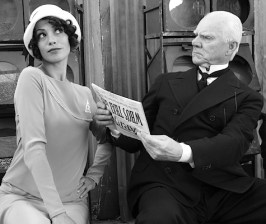 you’d believe they were a precisely-planned specially-constructed set, and unceremonious symbolism is created with former-star George being on the way down and Peppy being on the way up.
Director Michel Hazanavicius litters the film with subtle but clear markers such as this — the man and woman statues that move further apart on the sideboard as George and his wife grow distant; a marquee advertising Lonely Star as George slopes away from an auction of all his possessions; and so on. It may not be taxing to spot such allusions — I’m sure a hardened cinéphile would bristle at the very notion such visible signs could be considered symbolism at all — but they’re still neat.
As George, Jean Dujardin exudes all the requisite charm of a silent movie idol, while later silently conveying his sliding confidence and sink into depression. Bérénice Bejo is equally charming as kind-hearted Peppy, while James Cromwell offers able support as a loyal chauffeur.
There’s no denying the real star of the film, though. Winner of the Palm Dog and a fixture of the red carpet this time last year, Uggie steals every scene he’s in. Whether he’s doing a trick (his party piece, pretending to be shot, makes a neat throughline to a tension-breaking pay-off)  or just faithfully following George around, he draws your attention. I might think that was just me (we’ve been over my love of terriers before), but his near-constant presence during last year’s awards suggests otherwise. And boy can he run!
Sometimes acclaimed films suffer when divorced from awards season hype. Some people have certainly felt this way about The Artist. Personally, I think they do it a disservice. As a tribute to silent cinema, made in a flawless imitation of the style, it’s marvellous. As a romantic comedy, it’s sweet and funny with an occasional dramatic edge (more than you might expect from all the cheery trailers and clips). Much like its stars — all three of them — I found it charming.

The Artist is on Sky Movies Premiere twice daily until Thursday 14th February. The British Academy Film Awards 2013 are on BBC One at 9pm on Sunday 10th February.
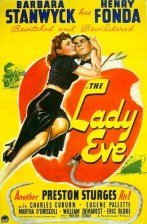 Screwball romantic comedy starring Barbara Stanwyck as a con woman who falls for her latest mark, ale heir Henry Fonda, until he discovers the truth and ditches her — and she vows revenge by conning him again. Packed with wit, Stanwyck shines as a slightly kooky, thoroughly daring con artist. Hers is the role with all the power, but Fonda’s gentler portrayal of her unconfident target is equally vital. It’s only let down by the ending, which rushes a conclusion in two minutes and didn’t seem to quite make sense. It doesn’t ruin the film, but it makes an unfortunate dent.
 I had heard Scre4m (Scream 4, if you prefer) was dreadful; a misguided, belated attempt to revive a once-popular franchise. Personally, I thought it was fun.
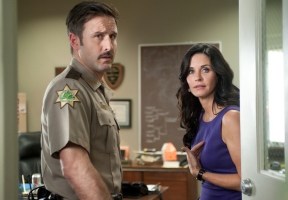 It also leads to quite a good extended bit where some characters reel off a list of recent remakes, which rather highlights just how far it’s gone now. There’s lots of examples of this fun ‘meta’ stuff for film fans; for real-world-stuff too, including references to Courtney Cox and David Arquette’s marriage, Emma Roberts being in the shadow of Julia Roberts, and so on.
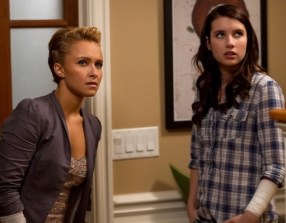 But, ultimately, all the discussion of horror movies and their rules is just window dressing: if there aren’t rules any more (which there don’t seem to be), it’s impossible for the characters to use them to survive, or for it to lend much self-reflexive weight to how the killer behaves. The only moment when it might be of use is when they predict the climax will occur at a party, and it turns out they’re having a party that very night! But then they go ahead with anyway. So much for that then.
 Though as the main development has been torture porn, and it criticises that explicitly from the very first scene, perhaps that’s still OK. In fact, they’re one step ahead again, with a nod to the most most-recent development (the
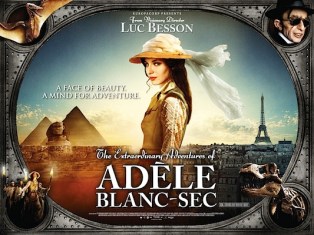 Based on the long-running bande dessinée (aka “comics”) by Jacques Tardi, The Extraordinary Adventures of Adèle Blanc-Sec is occasionally sold to English audiences with a handy quote
 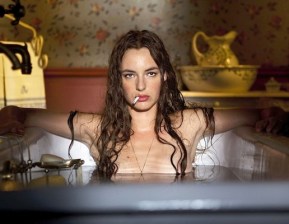 And if that doesn’t put you off, the introduction-heavy opening minutes might, dense with introductions for disconnected characters and locations. Stick with it, it sorts itself out.
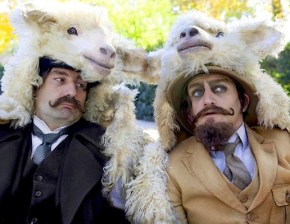 Director Luc Besson managed to build up something of a following with a regular output of films through the ’80s and ’90s, perhaps culminating artistically with the exceptional
 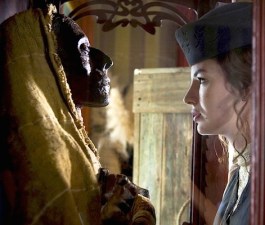 I suppose Adèle Blanc-Sec won’t be to everyone’s tastes. Comparisons to
  The two-part animated adaptation of Frank Miller’s comic, regularly voted among the top three stories ever told in the medium, concludes here. If you’ve not seen
 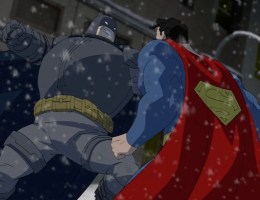 Nonetheless, a pair of big battles form the cruxes around which the story works: Batman vs the Joker, and Batman vs Superman. I won’t spoil the outcomes for those who’ve not read the book, but both are excellently realised on screen. Action can be tricky in comics — you’re stuck with a series of still images to convey fast-paced, often intricate movement. I also generally have the impression that action sequences are not 2D animation’s forte — too many frames need to be drawn, too many different angles to make it quick and exciting enough. The Dark Knight Returns is one of the exceptions, however, and the two big sequences in Part II — as well as a couple of smaller ones — outclass anything in Part I, which was good in the first place. I’d go so far as to say the Superman fight improves on the novel’s version, at least in a visceral sense — Miller delivers Batman’s internal monologue and a certain pleasing disregard of Supes, while Oliva wisely skips any kind of voice over and delivers the entire duel blow for blow. It’s a fantastic climax.
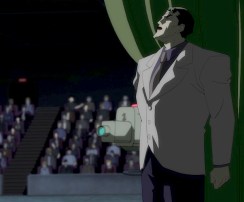 The story may provide some déjà vu for those only acquainted with live-action Batman, because Christopher Nolan borrowed liberally from Miller’s TDKR for his TDKR,
  There were many sceptics when DC first announced they were going to tackle such a sacred Bat-story, and not all were convinced by Part I. I don’t imagine Part II will change their minds, but for those of us who did enjoy the first animated interpretation of Miller’s seminal tale, this is even better. In fact, even without its first half, I’d say it joins the ranks of my very favourite Bat-films.
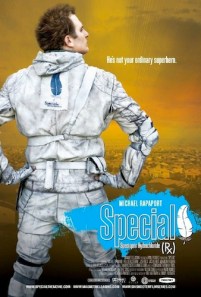 A lot of praise was slung
 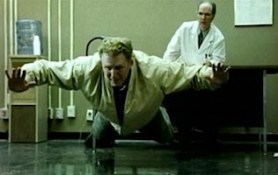 Those after a more genre-aware “real world superhero” movie would do better to stick with Kick-Ass or Super, but those who might embrace something a little different — especially something with an indie sensibility — would do well to take a look. Indeed, being a comic fan is certainly not a prerequisite for enjoyment here.
 From the makers of the successful Christmas TV shorts
 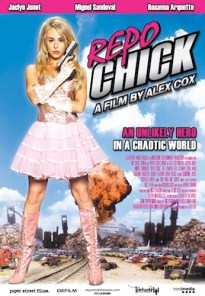 Alex Cox’s belated non-sequel (despite the title, there are apparently no links besides some cast members) to cult favourite (and
  True, the other characters are mostly dim and unlikeable, but is that a problem? We don’t need a film full of characters we like (otherwise we’d never have villains) — do we need there to be any? Or is the problem not that we don’t like them, but that their dimwittedness makes them too-easy targets for humour? I suppose it’s easier to just hate the film than grapple with such questions.
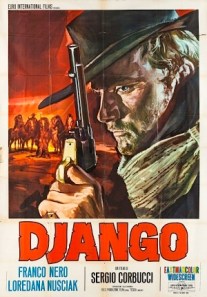 The ’60s were a pretty exciting time for cinema. In France, the Nouvelle Vague were tearing up the rulebook and pushing forward their own techniques; in Britain, the James Bond series was ditching kitchen sink drama in favour of reinventing the action movie, turning itself into a global phenomenon in the process; and in Italy (and Spain) they were pulling a similar trick on that most American of genres, the Western.
 Much of the film plays as an action movie. There’s a lot of atmospheric ponderousness at the start, but once things kick off they rarely let up. In just over 90 minutes the film rattles through a damsel-in-distress rescue; a blink-and-you’ll-miss-it shoot-out; a 40-on-1 massacre; a raid on a fort; a barroom brawl (one of the stand-outs, that — anyone who thinks handheld ShakeyCam fights are a modern invention should take a look); a tense, silent escape; a brutal punishment (or two); a valley ambush; and a graveyard stand-off. I think that’s all, but I may have missed some. It’s practically a definition of bang for your buck, which I’m sure goes a long way to explaining its popularity.
 but it’s like watching something on a not-quite-correctly-tuned analogue TV; like you’ve found the channel, but you’re one or two points off the optimum frequency. Or, to put it another way, it’s really snowy. As I said, I’m no expert in BD quality, but this looks like it needs a sympathetic dose of DNR. No one but fools want a
  Moonfleet is probably what you’d call a curio. It’s a colour CinemaScope Hollywood adventure movie from a director best known for epic German silents or dark film noirs; it’s not been passed by the BBFC since its original release in the ’50s, meaning it’s never been released here on DVD or (presumably) even VHS; I believe it’s also unavailable in the US; yet despite this dearth of attention in both the country that made it and the country in which it’s set, a
 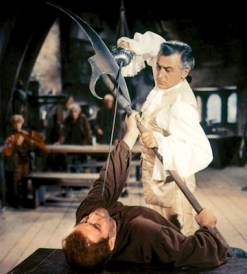 fights and chases of various kinds, a dramatic shoot-out on a beach, midnight escapes, and so on.
 100Films.co.uk