On the Waterfront (1954)

2013 #104
Elia Kazan | 103 mins | DVD | 1.33:1 | USA / English | PG
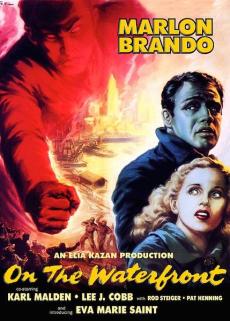
On the WaterfrontSo much more than one famous scene, On the Waterfront is a movie about a magic jacket, which causes anyone who owns it to stand up for what’s morally right even in the face of oppression, but also to suffer badly when they do.

OK, that’s not what it’s about. But you keep your eyes on that jacket and, I tell you, it may as well be.

The story, based on a series of Pulitzer Prize-winning articles, is actually about corruption in the dock worker union of New Jersey, with Marlon Brando witnessing what happens to those who attempt to blow the whistle, but deciding to do so himself anyway. Rather than a hollow issue-driven morality play, it becomes a tense and engrossing character drama in the hands of director Elia Kazan, screenwriter Budd Schulberg, and a capable cast. The latter includes Karl Malden as an initially quiet priest who resolves to stand up and fight the system too, even if he can’t persuade many workers to do the same; Lee J. Cobb as the self-serving man at the top, bitterly clinging to power ’til the last; Rod Steiger as Brando’s brother, part of the corrupt union architecture, but driven to protect his family at the sharp end of the wedge; and Eva Marie Saint, making her screen debut as the potential love interest, whose brothers was murdered doing the right thing but nonetheless persuades Brando to do the same.
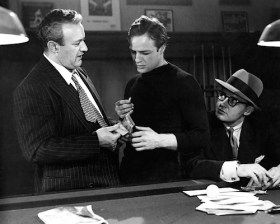
Magic jacket beats moneyThe only potential downside to this comes if you dig behind the scenes. Kazan was one of those who testified before the House Committee on Un-American Activities during its 1940s and ’50s witchhunt for Communists in Hollywood, naming eight men who were later blacklisted. If you consider the film to be Kazan’s answer to critics of his actions (as it “widely” is, according to Wikipedia), then presumably Brando is meant to be Kazan, calling out those who are doing ill to good hardworking Americans. But many a great film has been made with poor motive — just because Kazan thinks what Brando’s character does and what he did are the same thing doesn’t mean we have to. Even then, the issue of Kazan’s testimony is not so straightforward: a former Communist himself, he faced the end of his career if he didn’t testify, and the names he gave up were already known to the committee. The controversy dogged him for the rest of his career, though: when he received an honorary Oscar in 1999, several notable audience members refused to applaud.
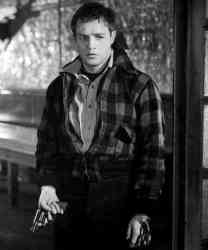
That's one MethodWhile subtext is undoubtedly a meaningful thing, and using one situation to comment on another is a tried and true way of presenting an argument or criticism, I’m not a proponent of offhandedly dismissing work(s) just because we don’t agree with the actions or beliefs of the person who made it. On the Waterfront is a powerful film, exemplarily made by skilled craftsmen. Whatever Kazan was trying to atone for with its message about standing up to bullies in defence of what’s right, the sentiment is true. And you don’t need a magic coat to do it either.

5 out of 5

On the Waterfront is on TCM UK tomorrow at 10:45am.

It was viewed as part of my What Do You Mean You Haven’t Seen…? 12 for 2013 project, which you can read more about here.

Fast Five (2011)

aka Fast & Furious Five / Fast & Furious 5: Rio Heist

2014 #3
Justin Lin | 125 mins | TV | 2.35:1 | USA / English | 12 / PG-13

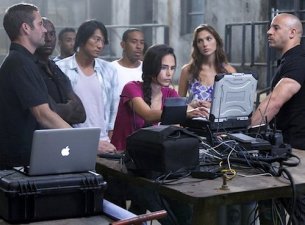
Fast & Furious 5Like a Doctor Who anniversary special, the fifth film in the Fast and the Furious franchise brings together its previous eras in an attempt to reach new heights of… something. Box office, most likely. Which worked. Fortunately, it also paid off as perhaps the most entertaining film in the series to date.

In hiding following the events of the last film, Paul Walker, Vin Diesel and Jordana Brewster end up sucked into a bit more criminal activity, which goes wrong — in the process drawing the ire of a local crime boss (24 season three’s Joaquim de Almeida) and an FBI super-squad, led by Dwayne Johnson. Cue an audacious heist plan and more action than you can shake a (gear)stick at.

Although it started out as a series about street racing, with some light criminal activity on the side, the fourth film tried to move F&F on a bit — but failed, thanks to being distinctly crap. Five is what that film wanted to be. It’s still not clever, but it is big — a big, somewhat daft, perhaps too long in the middle, but ultimately fun, Action Movie. It contains as much fisticuffs, shoot-outs and foot chasing as it does bits with cars, though naturally the climax is one huge motor-based action sequence.

Ocean's Eleven without the starsThe plot is essentially “Ocean’s Eleven with cars”, which is a surprisingly good concept. It also facilitates both the “getting the band back together” tone and a drip-feed of adrenaline. The notion of bringing in characters from every previous film serves its (presumed) purpose of making this feel like a bigger movie, a kind of celebration of the series to date. Whether it deserves such a party is beside the point — it ties together an increasingly disparate run of movies, in the process creating a surprisingly likeable team dynamic.

The oddest thing is that, between the “one last hurrah” tying-together and an ending that I won’t reveal but is tidy, the whole thing feels very conclusive — and I say that’s “odd” because it was never intended to be the final one: the foreshortened title was meant to be an indication that there was a ‘second half’ to come (hence why the next film is sort-of called Furious 6), and there is indeed a last-minute cliffhanger (depending on your point of view, it’s either a good twist or a tiresome comic-book-y move).

The Fast & Furious series has no right to have survived as long as it has, nor as successfully — it seemed destined for failure as its recognisable cast slowly abandoned it and the box office faltered. Yet somehow it came back fighting, There are still cars in itwith both this and last year’s sequel proving huge hits, and a seventh instalment rushed into production so quickly it lost its director. Even though the series’ longevity to this point was largely unmerited, if the makers can continue to produce films as unpretentiously entertaining as Fast Five, it earns its current place in the cinematic landscape.

4 out of 5

Fast Five is on Film4 HD tonight at 9pm. Fast & Furious 6 is currently available on Sky Movies and Now TV.

World War Z: Extended Action Cut (2013)

2014 #14
Marc Forster | 123 mins | Blu-ray | 2.40:1 | USA & Malta / English | 15

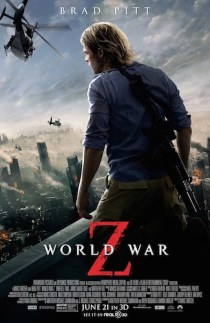
World War ZIn the weeks leading up to its theatrical release, it was already known that World War Z was going to be an almighty flop. An unscrupulous movie studio had taken a cult novel and thrown away everything but the title, alienating its existing fanbase. They’d spent a fortune making a movie in a traditionally R-rated genre that, if released at R, could never make its money back, and if released at PG-13 would never attract an audience. Then they reshot the entire third act, pushing the budget through the roof and ensuring the resultant film would get critically mauled. A fanbase snubbed, an impossibly huge budget, a genre/rating disconnect, and unavoidably poor reviews to come — World War Z was going to flop, and it was going to flop hard.

Then it came out, and became the highest-grossing film to star Movie Star™ Brad Pitt, and the highest-grossing original film of Summer 2013, and made nearly triple its budget worldwide, and even got fairly good reviews. Maybe I was reading the wrong sources in the run up to its release, or maybe it really was that rarest of things, perhaps even unique: a movie hype-resurrection that was less zombie and more phoenix.

The film sees Pitt’s retired UN investigator called back to duty when a rapidly-spreading plague, which turns people into zombie-like rabid creatures, breaks out around the globe. With his family in tow, he escapes an over-run Philadelphia and ends up with what’s left of the US population on a small fleet of ships, before jetting off around the world on a hunt for answers and, hopefully, a vaccine. Cue large-scale action sequences as director Marc Forster aims for an apocalyptic sci-fi/action epic rather than the zombie genre’s usual stomping ground of claustrophobic supernatural scares.

Panic in the streetsThat, at least, is something different. The first half-hour races through stuff we’ve seen time and again: zombie attacks, humans turning on humans as they loot supermarkets, etc. Here the zombies are of the 28 Days Later-style speedy variety, all the better for creating blockbuster action sequences, such as a huge chase through crowded streets, or a running fight up the stairways of an apartment building. This is where the PG-13 certificate shows through (even though this cut is technically unrated in the US, the fact both versions received a 15 over here is telling): there’s little focus on violence or gore; which is fine, but won’t satisfy the more blood-hungry genre fans.

It’s after this that things, as noted, turn from claustrophobic to post-apocalyptic. The storyline feels moderately fresh, showing us the global scope of such an outbreak, rather than how a global event impacts a small group of people. I believe this is the closest the film gets to the spirit of the novel (which I’ve not read, so take that comparison with a pinch of salt). However, what’s new to the zombie genre isn’t necessarily new in any other respect, and by the time we get to Jerusalem and the characters are again being chased through crowded streets, it begins to feel a tad repetitive. Some of the sequences work well though, particularly a zombie outbreak on a passenger plane.

The re-shot final act is a breath of fresh air. Apparently the originally-filmed version was yet another epic battle, which has been switched for a more tense creep around a semi-abandoned research facility in… Wales. Yep, a big budget Hollywood action movie climaxes in the middle-of-nowhere in Wales. I quite like that. The original ending was axedIt’s a Wales populated by a Londoner, a Scotsman and a Spaniard, but still. I say “more tense” because this is far from the most nail-biting zombie film you could see. The finale is a nice change of pace, and does work as a climax in spite of the bombast that precedes it, but these are zombies as teen-friendly action movie menace, not adult scare-inducers, so don’t except to feel much fear or surprise.

As to the extended cut, it adds only about seven minutes… but there are 121 differences. I can’t even be bothered to read that properly, never mind recount it. There seem to be myriad tiny extensions to all the action sequences, many of them literally lasting a fraction of a second — someone watched this really closely! I can only presume this is actually the original cut, which was then trimmed for the sake of the MPAA to create a theatrical version, because who would consciously go back to add so many little bits? Some are even described as “very unnecessary extension”s by that summary. Other moments do expand on character, though in a subtle fashion (looks like the attempted rape of our hero’s wife, and the murder of one of the wannabe rapists, previously got the snip), or do add to the gore — clearly, it’s too much for a PG-13, but certainly within the realms of a 15. I can’t imagine any of it makes a great deal of difference to the overall experience, however.

Generally, World War Z is a competently entertaining blockbuster. It moves pleasingly fast, with characters quickly and lightly sketched rather than lingered on — not to everyone’s taste, and I imagine some will find it emotionally cold in the way so many recent spectacle movies are. There’s perhaps room for more, particularly from Daniella Kertesz’s Israeli soldier, who is nonetheless somehow the film’s most appealing character; Daniella Kertesz’s Israeli soldierbut I don’t think it was the filmmakers’ aim to make us feel the characters’ plight, but instead to show the scope of a worldwide disaster. It does that pretty well, even if the occasionally-CGI zombies prove to be an I Am Legend-style plasticky distraction, especially when coupled with impossible swooping camera shots — it’s better and more effective in the sections where there’s a grittier feel to the camerawork and practical zombie make-up.
As it lacks the social subtext or extreme gore that the two branches of zombie fandom most value, I don’t think WWZ will find an enduring place in genre-fans’ hearts. As an epic summer action blockbuster, however, it largely passes muster.

4 out of 5

World War Z is on Sky Movies Premiere this week, starting today at 4pm and 8pm. It’s also available on Now TV, where the running time suggests it’s the extended cut.

North by Northwest (1959)

2013 #81
Alfred Hitchcock | 136 mins | Blu-ray | 1.78:1 | USA / English | PG

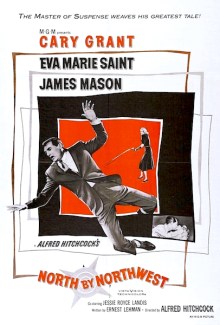
North by NorthwestAlfred Hitchcock is famous for a good many movies — I wager most people would jump to Psycho if asked to name one, but that’s not to ignore Rear Window, Vertigo, Rebecca, Dial M for Murder, Strangers on a Train, Notorious, Rope… And those are just the others on the IMDb Top 250 — what about The Birds, or The 39 Steps, or… so many more. But of them all, North by Northwest is so packed with his trademark plots, characters, and style, that it is perhaps the ultimate Hitchcock movie.

A ‘wrong man’ spy thriller, it starts with Cary Grant’s New York exec, Roger Thornhill, being mistakenly snatched by some hoods. Quizzed by their boss, he can’t answer any of his kidnapper’s questions because he doesn’t have a clue who they think he is. Before long he finds himself on the run from the police, and on the tail of the mysterious criminals, desperate for the truth and to clear his name. Along the way we’re treated to a blend of suspense, humour and action that could be a tonal mess but, under such a sure guiding hand, feels more like all-out entertainment.

The big set pieces (the crop duster; Mount Rushmore) may be well known now, but being aware of them isn’t the same as seeing them play out in full in context, and they remain fabulous. The direction is as glorious as you’d expect, not just in those big action sequences but in any given scene, be it a simple conversation or an auction room face-off. Throughout there’s gorgeous cinematography by Robert Burks, which looks utterly stunning on Blu-ray. There’s great special effects work too — not something you commonly call on in a ’50s thriller, but it helps to create some especially memorable imagery.

The hills have eyes... and noses... and mouths...Grant is as wonderful as ever, a perfect ‘everyman’ to guide us through the crazy turns of events, but also finding the appropriate level of humorous edge where it exists. Eva Marie Saint is a textbook ‘Hitchcock Blonde’, attractive but duplicitous — women, eh? James Mason makes for an excellent English-accented villain — today it may be a terrible cliché to use Brits as villains in Hollywood movies, but we’re so damn good at it. That said, Martin Landau makes for a deliciously creepy henchman, so there’s no monopoly. There’s also Leo G. Carroll, who to me will always be best known from Science Fiction/Double Feature, but is equally memorable here as the apparent head of US intelligence.
Perfection is a rare — perhaps impossible — thing to achieved in film… and far be it from me to criticise Hitch, but I’m going go. I think it’s revealed far too early that (spoilers!) George Kaplan doesn’t really exist. Wouldn’t it be more effective as an ‘end of act two’ twist, when Thornhill himself finds out? He’s our figure of identification after all. Still, in the grand scheme of things this is a minor complaint: though it may’ve been even more effective if we didn’t find out until much later, the story and excitement still work regardless of the audience having that knowledge.

While Psycho may stand out from Hitchcock’s filmography for the common man, it’s not particularly typical of his oeuvre as a whole. For that, it’s difficult to imagine a film that is a better summation, distillation, and celebration of his work than North by Northwest.

5 out of 5

North by Northwest was viewed as part of my What Do You Mean You Haven’t Seen…? 12 for 2013 project, which you can read more about here.

It also placed 4th on my list of The Ten Best Films I Saw For the First Time in 2013, which can be read in full here.

The Taking of Pelham 1 2 3 (2009)

2014 #2
Tony Scott | 106 mins | Blu-ray | 2.40:1 | USA & UK / English | 15 / R

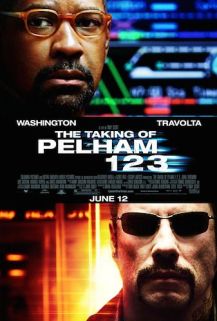
The Taking of Pelham 1 2 3Based on a novel by Morton Freedgood (writing as John Godey), previously adapted into a classic ’70s thriller (and a forgotten ’90s TV movie), The Taking of Pelham 123 (aka 1 2 3, aka One Two Three) concerns the hijacking of the titular New York Subway train (that being the 1:23pm from Pelham) by a mysterious gang of men (led here by John Travolta) who begin negotiating with a regular-joe train controller (played here by Denzel Washington) for money in exchange for the lives of their hostages.
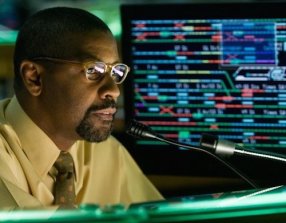
As with most remakes, the need for this film to exist is questionable. Reportedly the original novel tells the story from the perspective of more than 30 characters, “keeping readers off balance because it is unknown which characters the writer might suddenly discard”, but the 1974 film focused in on the relationship between the hostage taker and the de facto lead negotiator. This film emulates that dynamic. While Denzel Washington and John Travolta are both actors who veer between competent and great, and so could theoretically match the performances of Walter Matthau and Robert Shaw in the earlier film, unfortunately they just don’t. Compared to the memorable characters created before, here the acting is crushingly adequate.

The writing doesn’t help, with stapled-on backstory additions that promise development and twists but ultimately go nowhere. Even the minor part played by the hostages is lesser here. In my review of the ’70s version I commented that I didn’t think they had enough to do, but that film did have a pleasing element of the hostages being more unlikeable than their captors. DenzelNone of that here, where the captives are either even more unnoticeable, or heroic off-duty military types. So far so standard.

Otherwise, the film can be characterised as Tony Scott’s extraordinarily expensive take on a relatively straightforward story. Believe it or not, they pumped $100 million into this movie. Watching the disc’s making-of material, it becomes apparent how they managed to spend so much, but it remains strikingly needless. There was a tonne of research into how something like this might go down for real, including hiring former gang members for some of the supporting roles. Such attention to detail doesn’t come over on screen, the film still feeling like a Movie-Land thriller rather than a real-world drama. There was also a lot of Doing It For Real, including much filming in active subway tunnels. A headache to organise, and I’m sure an authentic experience for the cast and crew, but is the result on screen any better than they would’ve got from doing it on a soundstage? The makers clearly think so. I’m not convinced.

If those behind-the-scenes decisions are lost in the final film, then you can’t miss Scott’s whizz-bang direction. It’s the same grab-bag of visual tricks and ticks that dominated the latter stages of his career — jerky cutting, weird saturation, step printing, anything that makes the film look like it’s been massively over-processed. For me this extreme style sometimes worked (Man on Fire, Beat the Devil, even the unloved Domino), but, on balance, he probably went too far with it too often. TravoltaApplied here to such a meat-and-potatoes tale, it feels like they’re trying to jazz it up because it can’t sustain itself otherwise.

Thing is, it can. Just about. There’s nothing special here; nothing to make modern audiences look back on it fondly in decades to come, as many do to the ’70s version. For fans of the genre, though, this is a solidly adequate experience.

3 out of 5

The Taking of Pelham 1 2 3 is on Film4 tonight at 9pm.

Zero Dark Thirty (2012)

2014 #8
Kathryn Bigelow | 150 mins | streaming (HD) | 1.85:1 | USA / English & Arabic | 15 / R

Oscar statue
2013 Academy Awards
5 nominations — 1 win

Winner: Best Sound Editing (tied with Skyfall)
Nominated: Best Picture, Best Actress, Best Original Screenplay, Best Film Editing.


I was going to, in the run up to this year’s Oscars, post a series of reviews looking back at last year’s Best Picture nominees. Unfortunately the viewing for that didn’t really come off (February’s been dismal all round, as you’ll find out in a few days in the monthly update) — but I did manage one, and here it is:

Zero Dark ThirtyThe writing and directing team from The Hurt Locker reunite for another perspective on the last decade-and-a-half-(almost)’s ‘War on Terror’. They set out to make a film about the CIA’s decade-long failed search for Osama bin Laden… and then he was found, immediately leading the film to be restructured as the story of the CIA’s decade-long successful search for Osama bin Laden.

The film focuses on Maya (Jessica Chastain), a fresh CIA agent in Pakistan who, in 2003, latches on to a piece of information about a messenger. No one else has much interested in this lead, but she pursues it for the next however-many years, most of the time getting nowhere — until eventually it results in something concrete…

Zero Dark Thirty feels like a dispassionate film, a characteristic that has debatable merits. The goal is clearly to present an objective, fact-driven account of how the CIA eventually found their most-wanted target, but how successfully it does that has been called in to question multiple times: there were those who felt it justified the use of torture, and those who claimed its facts were all wrong. On both these facts, any one viewer’s mileage might vary. I don’t think it defends torture, but nor does it condemn it — just as bad, in some people’s eyes. Do the agents in the film get information from torture? Some — but by no means all, and the quality of what little they did get is queried by other characters. I don’t think the film is pro-torture, but by trying to be objective and not really criticise the torture and torturers either, it doesn’t go in the direction some would wish it did.

The life of a film criticAs for the veracity of the facts, I have no idea. Nothing seems implausible. And when condensing eight years of a manhunt into around two hours of screen time, of course some details will be lost, or truncated, or slightly modified to support the flow. I think those who allege the film is poppycock are accusing it of more than minor tweaks, but nonetheless, that’s inevitably part of the process. What’s perhaps most interesting is it hasn’t whitewashed the facts to make a film that feels like A Movie — this isn’t a relentless thriller-shaped eight-year chase, but a more methodical, occasionally messy, real-life-like quest for information.

For me, that worked. It takes a little time to get going, to settle down into its rhythm and to let us identify the important characters, but once it does that, it’s suitably gripping. Not in a nail-you-to-your-seat way like, say, a Bourne film, but in an ever-more-engrossing fashion. It can feel a bit like watching a drama-documentary, however, because there’s very little investment in the characters. There are maybe two or three brief scenes in the entire thing where we’re invited to identify with these people, or even consider them as people, with emotions beyond the methodical drive for information. Some people will hate that, but I don’t think Bigelow and screenwriter Mark Boal really want us to focus on the human toll of this almost-never-ending investigation, they just want us to follow what happened. The focus is on how it was done, not the people who did it.

Signed, SEALed, deliveredThis carries through to the final half-hour (or so), which is a near-real-time rendition of the Navy SEAL mission to invade bin Laden’s compound in Pakistan. The unit assigned to the task turn up and get on with it — like the rest of the characters, they are no more than sketches. I read a review that asserted this is where the film’s focus should have been — on who these men were, what their home lives were like, on their training for the mission, and what effect it had on them after. All of which are valid points for a film, but that’s not what Zero Dark Thirty is trying to be.

When we see the mission executed, it feels like a well-researched and detailed recreation of what happened — who moved where and when, how the building was entered, who got shot, etc — rather than asking us to identify with what these characters are thinking or feeling. Nor does it really seek to elicit too much emotion from the audience — it’s not forcing events into a standard action sequence template, with split-second cutting and a thudding soundtrack; it’s not trying to create tension and excitement, or at least no more than is inherent in the real events. I think Bigelow is borderline documentarian in her aims throughout the film, here as much as anywhere else. Clearly some people find that cold, or at least it leaves them cold, but I think it works. Would it be a better film if it came loaded with a greater exploration of the characters as people, or with a depiction of the events in more regular Thriller terms? I’ll let you know when someone makes that film.

Gimme gimme gimme a man after midnightThe one other criticism I do agree with is that we don’t see enough of the SEALs’ preparation. They built a full-scale replica of the compound and trained on it — was that not worth putting on screen? I know this is the story of Maya and her investigation, not the SEALs and their assault, but I think a bit of time could have been spent on that fascinating aspect of the raid. On the bright side, there’s a sequence where our characters collect their still-in-development super-top-secret stealth helicopters from Area 51. Yes, really. I guess that must be true, because without the reality-claim of the previous two hours it would come across as Independence Day-level sci-fi!

I imagine debates about the moral stance and veracity of its facts will continue to dog Zero Dark Thirty, as well as the question of whether its too emotionless. For me it nonetheless made for an effectively modern and realistic take on the spy thriller.

5 out of 5

In the UK, coverage of the 86th Annual Academy Awards is on Sky Movies Oscars from 11:30pm on Sunday 2nd March 2014.

HBO Binge Madness and the Art of the Spoiler-Free

I could virtually have written this myself, so close is it to my thoughts. (Apart from the bit about Game of Thrones season 3, because I’ve not watched it yet. If anyone spoils what the Red Wedding entails, I shall reenact it on you. Once I know what it actually is.)

ghostof82's avatarthe ghost of 82

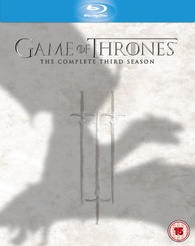
GOT3 If you’ve seen it, you’ll know what I mean- there’s a point near the end of the ninth episode (its always the ninth episode with this show) of this third season when my jaw near dropped to the floor. “What?!” I cried out loud, stunned  at what I was seeing;  “What!?”  And then the end-credits followed in sudden silence, as if sharing the numbness of every viewer who hadn’t seen the events coming.

Just how good is HBO’s  Game Of Thrones?

I won’t discuss what it was that happened for fear of spoiling it; no-one , save someone who has read the books, should ever see this series having been spoiled of its secret delights, its twists and turns. Its something special. Readers of the books may say otherwise, but to me, this show is darn near perfect.

I love stuff like this. When something happens that takes…

View original post 752 more words

Oblivion (2013)

2014 #7
Joseph Kosinski | 119 mins | streaming (HD) | 2.35:1 | USA / English | 12 / PG-13

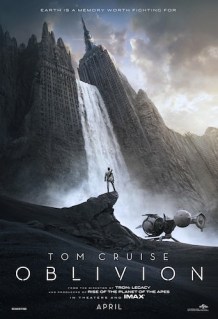
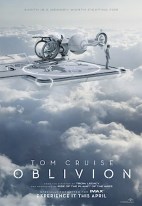
OblivionAs Oblivion informs us in a hefty chunk of voiceover exposition at the start, the year is 2077, several decades on from a war with aliens that we won but left the Earth in ruins. Humanity fled to a colony on Titan, but the last party to depart remain in orbit aboard a giant space station. Waiting to join them are Tom Cruise and Andrea Riseborough, the last humans on Earth, serving the final few weeks of their mission to watch over the drones that guard giant water-collecting machines, sucking up the oceans for the benefit of the new colony.

Any film that begins with a screed that long just to explain what the heck is happening is setting itself up for a fall, and it’s a shame that Oblivion feels the need to. Indeed, the only reason it ‘needs’ to is for the benefit of the instant-fix blockbuster crowd, at which the film is at least partially aimed. The whole shebang is recounted again by Cruise to Olga Kurylenko when she turns up about a third of the way through — the intelligent viewer would, I think, be prepared to go with it until then. Fortunately, it doesn’t destroy the film: unlike the twist-ruining narration from the opening of Dark City’s theatrical cut, this at least is genuinely the initial setup, on which twists will later be performed.

You could probably have generated a whole film about this world as it appears to Cruise and Riseborough, but it’s obvious from the very start that there’s something more going on. The guessing game is part of the fun, and as with almost any film with twists some viewers will get them bang-on and feel it’s all blatant, and some will be genuinely surprised. Grand designsAlso, as with many a tale desperate to surprise its audience thus, there are holes in the story and its logic (for a good summary of some of the major sticking points, check out ghostof82’s review). Your mileage will vary on whether they undermine the entire enterprise or wash; for me, it hangs together well enough… while you’re watching, at least.

There are a lot more science-fiction films around these days than there used to be, thanks to both the lowering costs of special effects and a generation (or two) of new(er) filmmakers who grew up with Star Wars and all that followed. Most of these films are regular old action-adventure movies just with more expensive trappings, but occasionally you get something that tries to engage with sci-fi ideas or concepts. Credit where it’s due to story-creator/director Joseph Kosinski for attempting that here. Some have accused it of stealing those ideas from previous movies, but I think such criticisms are over-emphasised. There are only so many stories and ideas in the world, after all, and only so many concepts and ways to explore them. Oblivion isn’t so derivative that you can clearly pick out one, or even two, things it’s ripped off.

Don’t worry if you do prefer your sci-fi blockbusterised, though, because Oblivion comes with its fair share of action sequences. Even though it doesn’t rush through events (it has the kind of pace where I thought it was nearing the end just 40 minutes in, which seemed to be a problem until I accepted it was telling a different, longer story than I’d thought), there’s an array of appropriately-timed shoot-outs and spaceship chases to keep the mainstream happy. Cruise in for a bruisingI like a good action sequence, and some of the ones Kosinski presents have their moments, but I also found I could have done without most of them. To a degree they seemed to have been slotted in so it could look like an Action Movie in the trailers, the aim (as ever) being to pull in the punters, thereby justifying the budget needed to create such a slick SF world.

If that’s the case, it was worth it, because the visuals are one of Oblivion’s strongest points. The design department give us a sleek and glossy style, but one that still feels plausible — like an expensive Grand Designs project, rather than the plastic-and-lens-flare of J.J. Abrams’ Trek movies. The vistas of a ruined Earth complement the industrial design well, with only the odd dud CG shot in a movie overloaded with visual effects. The drones seem to be a mix of practical props and must-be-CGI, which gives them a solidity and therefore threat that at times feels palpable. This is emphasised by Kosinski’s well-composed shot selection, supported by Richard Francis-Bruce’s editing and Claudio Miranda’s cinematography, both of which are wonderfully classical (no shaky handheld camerawork or cut-to-shreds action; at least, not that I recall). The scene where a drone invades Cruise’s home particularly sticks in my mind.

ComposedWith the aforementioned plot issues, not to mention an ending that some will find too twee (I saw the broad strokes of the epilogue coming from quite a way out, so can’t say I was surprised), Oblivion is not quite all it could have been. But it gets considerably closer than I expected — it’s undoubtedly an A for effort — and that, bolstered by faultless technical aspects, makes for an all-round enjoyable experience.
4 out of 5

Oblivion comes to Sky Movies from today, debuting at 4:10pm and 8pm on Sky Movies Premiere. It’s also already available on NOW TV.

The Big Lebowski (1998)

2014 #4
Joel Coen | 112 mins | DVD | 1.85:1 | USA & UK / English | 18 / R

I was going to post this review today anyway, but let’s nonetheless take it as a moment to acknowledge Philip Seymour Hoffman, who has a memorable supporting role here. He was an exceptional talent, gone before his time.

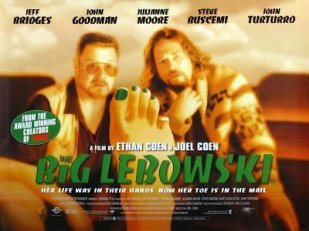
The Big LebowskiI confess, I’ve never really got on with the Coen brothers. I liked Fargo well enough, but I didn’t ‘get’ The Man Who Wasn’t There (in fairness, I was young and need to revisit it), felt Burn After Reading was aimlessly daft, and find No Country for Old Men to be a vastly overrated self-conscious bore, of which even the thought of re-watching to re-assess makes me groan. The Big Lebowski, however, is good fun.

In a plot that clearly and repeatedly references film noir, Jeff Bridges is everyman Jeffrey “The Dude” Lebowski, who is attacked in his own home when mistaken by Bad Men for Jeffrey Lebowski, rich businessman. The Dude visits his namesake seeking recompense, and ends up suckered into a kidnap and ransom plot that takes in so many wild asides and diversions there’s no point explaining them all here — that is the film.

Known for all its cult — and, to an extent, broader critical — popularity, there now seems to be quite a backlash against The Big Lebowski online, based on the comments boards of various websites. There’s a newfound consensus that it’s overrated, a meandering and unamusing nothing of a film. The DudeI don’t wholly agree, though I didn’t unabashedly love the film as some do. It’s perhaps a bit “of its time” now, and getting a little “you had to be there”; coming to it almost two decades later, it exemplifies a ’90s American mainstream/independent-borderline filmmaking sensibility; the kind of bracket the early works of Tarantino might also fall into, for instance.

So while it’s true that it does meander a bit, and has a certain relaxed manner that isn’t going to be for everyone, I think that’s a valid stylistic choice rather than a filmmaking error. It’s perhaps a film to relax with, to laze even, rather than one to expect to grip you and hold your attention tight for two hours. I also think that another common accusation — saying it’s no more than “a stoner movie for stoners” — is unfair. Indeed, I was pleasantly surprised how little of that kind of humour or content there was — it’s barely featured, never discussed, and the characters don’t seem defined by it. In fact, if I didn’t know that’s what people accuse it of being, I might even have missed it completely. (That’s not my kind of thing, so I’m not looking for it, but nor do I easily write it off.)

The other dudeIf one did want to look into Lebowski more deeply, the most interesting facet is that noir one. It’s quite lightly of that genre — very much an updating and re-appropriation of certain tropes, rather than a straight-up example of where the modern version(s) of the genre is (are… or were). It feels like the Coens were consciously putting a present-day(-then) character through the paces of a traditional noir plot. Whether that was the deliberate structural conceit or just a side effect of making a noir pastiche, I couldn’t say.
It would seem the cult of Lebowski is fading with time, increasingly limited to those who saw it at the right time or worship anything by the brothers Coen. But to write it off entirely is also a shame, because there is much to enjoy even for those who don’t partake in certain recreational substances.

4 out of 5

The Big Lebowski was viewed as part of my What Do You Mean You Haven’t Seen…? 2014 project, which you can read more about here.

January 2014 + 5 Tom Cruise SF/F Films

Pinch, punch, first of the month, and no returns.

Except to January — let’s return to January…


OblivionJanuary’s films

#1 G.I. Joe: Retaliation (2013)
#2 The Taking of Pelham 1 2 3 (2009)
#3 Fast Five (2011), aka Fast & Furious 5
#4 The Big Lebowski (1998)
#5 Premium Rush (2012)
#6 Tower Block (2012)
#7 Oblivion (2013)


Analysis

Oh dear.

Simple maths tells us that to watch 100 films in a year you need to watch about eight per month. Seven is less than eight. It’s also my lowest January total in five years, which makes it disappointing in multiple ways.

On the bright side, as we have seen many a time, no individual month provides an accurate approximation of where my year will end up, and certainly not January. If I apply myself in February and March I can catch up easily; and as I usually do apply myself in February and March, I shall expect to.


What Do You Mean You Haven’t Seen…?

One thing did go right in January, however, and that was the start of WDYMYHS 2014. Those of you with a surprisingly good memory may have spotted that The Big Lebowski is this month’s viewing from that list.

I nearly watched one or two more, but I’m trying to pace myself. Considering January’s total, maybe I shouldn’t be.


Milestone

Also this month, I reached the 800th film to be covered on 100 Films in a Year. That’s not #800, mind: thanks to alternate cuts and random reviewing of films I’ve seen before, I’ve covered 800 films but not counted 800 films. And because I’m behind on reviews, I haven’t even posted that 800th review yet… but I’ll be sure to mention it when I do.

(Incidentally, the official #800 will be this year’s #48.)


5 Tom Cruise SF/F Films

Tom Cruise is the kinda guy who does sci-fi movies, right? I mean, we can all name at least a few he’s been in, including one that was out last summer and one that will be out this summer — that’s one per year! Right?

Wrong. So wrong, in fact, I couldn’t even fill a top five with Tom Cruise sci-fi films. So here are five — the five — sci-fi and fantasy films that (have already been released and) star Mr Mapother IV.

  1. OblivionOblivion
    This one was pretty obvious — it inspired the list, after all. Set in 2077, it sees Cruise working on a desolated Earth to repair drones that guard the planet from aliens. I won’t say too much more lest I spoil it, but you could also count… no, I’ll leave it here. Just watch it, it’s pretty good.
  2. War of the Worlds
    War of the Worlds“Cruise. Spielberg.” So read the poster and/or trailer for this ’00s-set reimagining of H.G. Wells’ classic novel of alien invasion and domination. Despite the updating, and the sickeningly twee ending, it’s actually a damn good film. Post-9/11, US films were more positive than ever about how all Americans would band together in a crisis. Not so here.
  3. Minority ReportMinority Report
    Cruise is a copper who arrests people before they commit crimes, but what happens when it’s predicted he’ll commit one next? In the 12 years since Minority Report’s release I think it may’ve turned into a classic. Well, some people think so. I expect I’d be one of them if I’d watched it this decade. Which I haven’t. But I really should.
  4. Interview with the VampireInterview with the Vampire
    Ooh, another good one I’ve not watched for ages (maybe I should’ve picked something where I’d watched the films more recently…) Here, Cruise is a centuries-spanning vampire; so some would say that’s Horror, but it’s not really about the scares, it’s about the psychology. And Cruise and Brad Pitt looking Pretty.
  5. LegendLegend
    Unlike the other films on this list (which I’ve seen, just not recently), I have never seen Legend. But it’s definitely a fantasy movie.


And then there’s…

    Vanilla SkyVanilla Sky
    I’ve seen Vanilla Sky — again, ages ago. I remember quite liking it. I remember it being all kinda weird and mysterious and stuff. But I can’t for the life of me remember what the explanation was. Was it science-fictional? Fantastical? Religiousical? Maybe no one knows. That wouldn’t surprise me.

Have I managed to miss any Cruise films that are actually SF or F? Should we be including the Mission: Impossibles thanks to some of their more OTT leanings? Lemme know below.


Next month on 100 Films in a Year…

I should watch nine films to make up for January’s shortfall. It’s good to have goals, right?