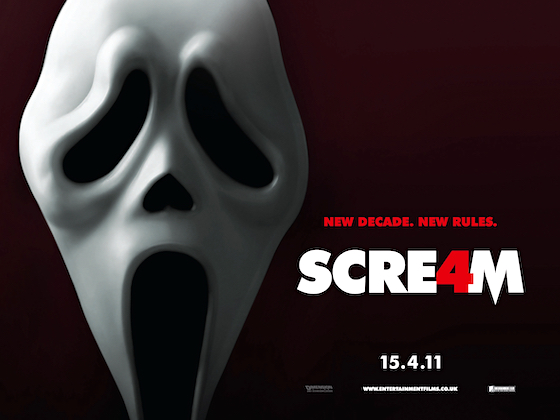
Scre4m (2011)

The 100 Films Guide to…

Scre4m

New Decade. New Rules.

Also Known As: Scream 4. Not in the film itself, though. Nor on any of its marketing. But most places on the internet? Apparently. Quite why certain online movie databases are so resistant to listing the film by its proper title, I don’t know.

Country: USA
Language: English
Runtime: 111 minutes
BBFC: 15
MPAA: R

Original Release: 13th April 2011 (Belgium, Egypt & France)
US & UK Release: 15th April 2011
Budget: $40 million
Worldwide Gross: $95.99 million

Stars
Neve Campbell (Scream (1996), Scream (2022))
Courtney Cox (Scream 2, Scream (2022))
David Arquette (Scream 3, Scream (2022))
Emma Roberts (Wild Child, We’re the Millers)
Hayden Panettiere (I Love You, Beth Cooper, Scream 6)

Director
Wes Craven (Wes Craven’s New Nightmare, Scream)

Screenwriter
Kevin Williamson (Scream, I Know What You Did Last Summer)

The Story
Ten years since the last Ghostface killings, and the tragic events have faded into festivity for the teens of Woodsboro, who now celebrate the anniversary of the first killings. But this year is a special one, because Sidney Prescott is back in town, and someone has donned the mask to go on a new killing spree…

Our Heroes
Sidney Prescott, perennial survivor of multiple Ghostface killers, must face one again as she returns to her hometown for the first time in years to promote her new book. Dewey — now Sheriff — and Gale — now his wife — are back, too, along with an array of fresh faces ready for the slaughter.

Our Villain
After a decade away, Ghostface is back! Except, as always, it’s a new killer (or killers) behind the famous mask. They’re still stalking Sidney, her friends and her family, but who is it and what’s their motive this time?

Best Supporting Character
Each new Scream film has introduced fresh faces (the films have a habit of killing off most of the supporting cast each time round, funnily enough, so you kinda have to), but the “whole new generation” angle of Scre4m makes it feel like there are even more this time round. While many are clear mirrors of characters from the first film (deliberately so), perhaps the one that manages to stand out the most in her own right is Hayden Panettiere’s Kirby, sassy best friend to Sidney’s cousin Jill. Yeah, she’s he new version of Rose McGowan’s Tatum, but, unlike some of the other characters, she doesn’t just feel like a 2011-painted carbon copy of the original. Plus, (major spoiler alert!) there’s a reason that, despite this film leaving her for dead, she’s set to reappear in Scream 6.

Memorable Quote
The Voice: “It’s time for your last-chance question. Name the remake of the groundbreaking horror movie in which the vill—”
Kirby: “Halloween, Texas Chainsaw, Dawn of the Dead, The Hills Have Eyes, Amityville Horror, Last House on the Left, Friday the 13th, A Nightmare on Elm Street, My Bloody Valentine, When a Stranger Calls, Prom Night, Black Christmas, House of Wax, The Fog, Piranha. It’s one of those, right?”

Memorable Scene
The film begins with two teen girls at home choosing a movie to watch, when a mysterious caller with a gravelly voice threatens their lives. What happens next would be a spoiler… but, from the very start, Scre4m sets out its stall as a movie that, in true franchise tradition, is going to play with the rules and expectations of movies.

Previously on…
After a hugely successful and acclaimed first film, Scream did what so many popular movies have done in the past few decades: got turned into a trilogy. Really, it’s only fitting that it got in early on the 2010s trend of “reviving a once-popular but thought-finished film series”.

Next time…
And now it’s getting in on the “just keep making more films forever” trend that once used to be more-or-less limited to James Bond and shitty horror sequels but nowadays is the defining feature of the entirety of Hollywood. First there was a new film simply titled Scream (the fact it’s not called 5cream or Scream5 is a sin), and next is… a second/sixth film that no one seems quite sure what the final title will be. I guess we’ll find out when it’s released next March.

Awards
2 Scream Awards nominations (Horror Actress (Neve Campbell), Best Cameo (Anna Paquin & Kristen Bell))

Elsewhere on 100 Films…
I originally reviewed Scre4m after I first watched it back in 2012, when I felt the film was “kind of old school. It fits better in the era of the original trilogy and/or earlier horror films than with the development of the genre in the intervening decade.” I went on to suggest it “plays best to those who saw the first three at the right age, i.e. mid-to-late teens or so. I shouldn’t think it would engage a new audience all that much, especially ones versed in the gorier Saw and Final Destination franchises. But for those of us with fond memories (to one degree or another) of the first three films, it’s kind of a nice little revisit.”

Verdict

The original Scream trilogy was the defining horror franchise of the ’90s, so reviving it over a decade after its last instalment seemed like the usual Hollywood BS of revisiting any recognisable IP. But with the original last, screenwriter, and director all returning, the film actually did what Scream has always done: be part scary movie, and part commentary on the horror genre landscape. And this time it throws in some social commentary for good measure, with some slightly-ahead-of-its-time satire of social media celebrities. It’s only become more pertinent with the stratospheric rise of YouTubers in the additional decade since the film came out.

One criticism I’ve seen levelled at Scre4m a few times is that it takes on remakes when it isn’t a remake itself. Well, that wouldn’t work, would it? For the characters to know they’re in a ‘remake’, they’d have to know there was an original — which by default would mean it’s not a remake but a continuation. In fact, the film does address this: it points out that we’re back in the original town, with killers who are following the pattern of the original movie (in-universe, that’s Stab, which seems to be a pretty faithful telling of the ‘real-life’ events shown in Scream). Most of the new characters are analogous to ones from the first film, too. So, Scre4m is, in fact, a remake… while also not being one, obviously.

All in all, the eleven years between Scream 3 and Scre4m gave the filmmakers enough fresh material to chew on to make the film a more-than-worthwhile addition to the franchise. For my money, the fresh perspectives make it easily the series’ best film since the first.

Scream 3 (2000)

The 100 Films Guide to…

Scream 3

The most terrifying scream
is always the last.

Country: USA
Language: English
Runtime: 117 minutes
BBFC: 18
MPAA: R

Original Release: 4th February 2000 (USA & Canada)
UK Release: 28th April 2000
Budget: $40 million
Worldwide Gross: $161.8 million

Stars
Neve Campbell (Three to Tango, The Company)
David Arquette (Ravenous, Ready to Rumble)
Courtney Cox Arquette (Commandments, Zoom)
Liev Schreiber (Sphere, X-Men Origins: Wolverine)

Director
Wes Craven (The Last House on the Left, My Soul to Take)

Screenwriter
Ehren Kruger (Arlington Road, The Ring)

The Story
As production gets underway on Stab 3 — the latest in the series of horror movies based on the Woodsboro killings — someone wearing a Ghostface costume starts killing the cast. But really, they want to know one thing: the whereabouts of perpetual murder-target Sidney Prescott…

Our Heroes
With Sidney in hiding at a remote location known only to a handful of people, the initial investigation into the new killings falls to the other survivors of the previous films: Dewey, now working as a consultant-cum-security on Stab 3, and his former love interest, intrepid reporter Gale Weathers.

Our Villain
The Ghostface killer is back, now terrorising Hollywood — but who’s behind the mask this time? As with the first two films, this technically counts as a whodunnit, though well done if you guess anywhere near the correct conclusion — it’s hardly Christie-level…

Best Supporting Character
Mark Kincaid (Patrick Dempsey) is the Hollywood homicide detective investigating the murders. As someone who grew up around the movie biz, he’s as au fait with the rules of cinema as most of the characters have had to become — but does that mean he fits right in, or has all the knowledge necessary to be the new Ghostface?

Memorable Quote
“Is this simply another sequel? Well, if it is, same rules apply. But here’s the critical thing: if you find yourself dealing with an unexpected backstory and a preponderance of exposition, then the sequel rules do not apply. Because you are not dealing with a sequel, you are dealing with the concluding chapter of a trilogy.” — Randy

Memorable Scene
Looking for someone, Sidney wanders into the abandoned Stab 3 soundstage — to be confronted by a perfect full-size replica of her childhood home. As she wanders inside, remembering the terrifying events that occurred there, she begins to suspect the killer is also lurking. Cue a clever re-staging of one of the first film’s most memorable scenes, as the new killer chases Sidney around her old home.

Making of
Neve Campbell was busy shooting a TV series and another film during the production of Scream 3, meaning her availability was limited to just 20 days on set. That’s why Dewey, Gale, and the new supporting cast get so much more screentime now, with Sidney mostly by herself. But whoever was in charge of scheduling around Campbell’s availability actually did a pretty good job maximising her presence, spreading her appearances throughout the film, with a few key interactions with the rest of the cast. If you didn’t know the behind-the-scenes story, you might not even realise what they had to do.

Previously on…
The first Scream garnered much acclaim for its amusing deconstruction of slasher movies. Naturally, Scream 2 applied the same modus operandi to sequels.

Next time…
Scream 3 was supposedly the end of the series… but if there’s one thing popular horror movie franchises do, it’s keep coming back. So, a little over a decade later, the series was revived with Scre4m in 2011. Then it was turned into an unrelated TV series that ran for two seasons in 2015 and 2016. Then that was rebooted as Scream: Resurrection in 2019. Then the original movie continuity was returned to earlier this year, in the confusingly-titled Scream. That’s getting a sequel next year. Goodness knows what they’re gonna call it.

Awards
2 MTV Movie Award nominations (Female Performance (Neve Campbell), Comedic Performance (Parker Posey))
1 Fangoria Chainsaw Award (Supporting Actress (Parker Posey))

Verdict

The Scream movies were always noteworthy for the metatextual way in which they addressed and engaged with the tropes and clichés of slasher movies, but actually setting this one in Hollywood on the set of a slasher movie based on the events of the previous movies is perhaps taking the whole self-awareness thing one step too far. It pushes its luck even further with some cameos that are kinda fun, but also kinda too silly (Jay and Silent Bob?! So the Scream movies are canonically set in the View Askewniverse…) Plus, the attempt to retcon in a series-overarching motive for the killer, in aid of making it a true trilogy rather than just “another Scream movie”, is as forced and unsatisfying as it sounds.

All of which said, the film still has effective moments and individual sequences, and a smattering of entertaining gags that are still on the money. Even if it remains the least of the Scream films, but it’s far from the disaster it’s often been painted as.

Scream 2 (1997)

The 100 Films Guide to…

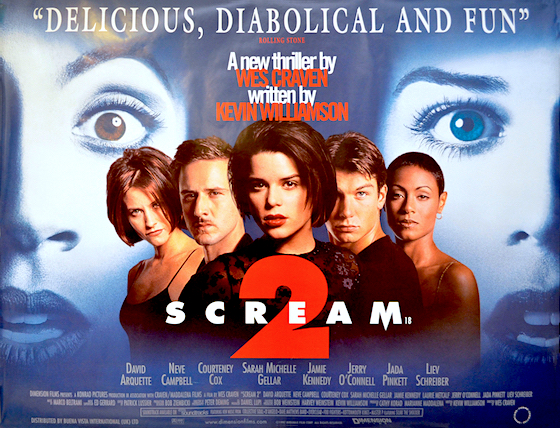
Scream 2

Someone has taken their love of
sequels one step too far.

Country: USA
Language: English
Runtime: 120 minutes
BBFC: 18
MPAA: R

Original Release: 12th December 1997 (USA & Canada)
UK Release: 1st May 1998
Budget: $24 million
Worldwide Gross: $172.4 million

Stars
Neve Campbell (54, Skyscraper)
Courtney Cox (Masters of the Universe, Bedtime Stories)
David Arquette (Wild Bill, Eight Legged Freaks)
Jamie Kennedy (Romeo + Juliet, Son of the Mask)

Director
Wes Craven (The Hills Have Eyes, Cursed)

Screenwriter
Kevin Williamson (Teaching Mrs. Tingle, Cursed)

The Story
Sidney is now at college, but when a movie is released based on the Woodsboro murders, a new killer dons the Ghostface mask and begins targeting her fellow students.

Our Heroes
The sequel natural reunites the survivors of the first film (spoilers!) — target Sidney Prescott, police officer Dewey Riley, reporter Gale Weathers, and film nerd Randy Meeks — while adding a host of new victims / suspects. It’s full of faces that were TV-famous at the time and/or have gone on to be better known since: Jada Pinkett Smith, Omar Epps, Liev Schreiber, Sarah Michelle Gellar, Joshua Jackson, Timothy Olyphant, Jerry O’Connell, Laurie Metcalf…

Our Villain
Ghostface — but unlike other slasher franchises with supernatural villains, this is just a mask, worn by different killer(s) in each film. Who is it this time? Well, that’d be a spoiler — the Scream movies are effectively murder mysteries. Not particularly good murder mysteries (they don’t function in that Christie-esque way of laying out suspects and clues so we can have a fair guess at whodunnit), but they’re technically murder mysteries nonetheless.

Best Supporting Character
Some of the new characters give their best shot at being memorable, but sorry, it’s Randy again (see this category in the first Scream). That said, there is a nice little cameo from the ever-excellent David Warner.

Memorable Quote
Randy: “The way I see it, someone’s out to make a sequel. You know, cash in on all the movie murder hoopla. So it’s our job to observe the rules of the sequel. Number one: the body count is always bigger. Number two: the death scenes are always much more elaborate. More blood, more gore. Carnage candy. Your core audience just expects it. And number three: if you want your sequel to become a franchise, never, ever—”

Memorable Scene
Sidney and her roommate Hallie are being escorted to safety in the back of a police car when Ghostface appears out of nowhere, hijacks the car, and crashes it into roadworks. With the car’s back doors locked, the girls’ only chance of escape is by climbing into the front seat and out the driver’s window — right past the unconscious serial killer…

Previously on…
The original Scream was such a hit that this sequel was in production just six months later, and eventually released less than a year after the first.

Next time…
As the horror franchise of the ’90s, naturally Scream has continued into the ’00s and beyond: Scream 3 wrapped up the trilogy in 2000, before the series was revisited with Scream 4 (actually titled Scre4m) in 2011, and then revived earlier this year in a film simply titled Scream. That’s getting a sequel next year, which obviously poses titling issues. There have also been a couple of TV incarnations, both entirely unrelated in story terms: Scream: The TV Series ran for two seasons in 2015 and 2016, and Scream: Resurrection (or season 3, if you prefer) in 2019.

Awards
1 MTV Movie Award (Female Performance (Neve Campbell) — she beat Kate Winslet in Titanic!)
3 Fangoria Chainsaw Awards (Wide-Release Film, Supporting Actress (Courtney Cox), Screenplay)
2 Fangoria Chainsaw Award nominations (Actress (Neve Campbell), Supporting Actor (Liev Schreiber))
3 Saturn Award nominations (Horror Film, Actress (Neve Campbell), Supporting Actress (Courtney Cox))

Verdict

Where the first Scream was a forensic deconstruction of the slasher genre, the second is more of a vague gesture in the general direction of sequel tropes — less focused, less insightful, less funny. But, crucially, it’s still quite entertaining. There are abundant references for movie buffs to enjoy (primarily to other sequels and, er, other Friends cast members), while Wes Craven’s ever-skilful thrill sequences ensure the tension doesn’t slack too much. There are even a few jump scares for the more susceptible. It’s not a genre-(re)defining classic like the first movie, but it’s still a solid scary movie.

Scream (1996)

The 100 Films Guide to…

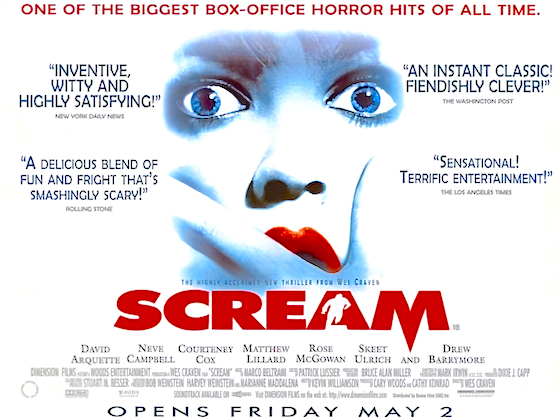
Scream

Someone has taken their love of
scary movies one step too far.

Country: USA
Language: English
Runtime: 111 minutes
BBFC: 18
MPAA: R

Original Release: 20th December 1996 (USA)
UK Release: 2nd May 1997
Budget: $14 million
Worldwide Gross: $173 million

Stars
Neve Campbell (The Craft, Wild Things)
David Arquette (Buffy the Vampire Slayer, Never Been Kissed)
Courtney Cox (Ace Ventura: Pet Detective, 3000 Miles to Graceland)
Drew Barrymore (Firestarter, 50 First Dates)

Director
Wes Craven (A Nightmare on Elm Street, Red Eye)

Screenwriter
Kevin Williamson (I Know What You Did Last Summer, The Faculty)

The Story
In the quiet town of Woodsboro, a mysterious man in a mask starts murdering teenagers, first taunting them with horror movie trivia questions.

Our Hero
Sidney Prescott is an ordinary high school girl… apart from the fact her mother was murdered a year ago, and it was her eyewitness testimony that saw a man sentenced to death. Now, a serial killer seems to be targeting her — could the events be connected?

Our Villain
A slasher movie has to have a distinctive-looking, nicknamed serial killer at its centre, and here it’s Ghostface — although he’s actually only called that once in the film itself. His costume is a generic Halloween outfit bought from any old store, and is technically called Father Death. Why didn’t that name stick instead? Probably because it’s a bit shit.

Best Supporting Character
The film has severable memorable supporting turns, but perhaps the key one is nerd and video store employee Randy (Jamie Kennedy). He knows all the rules of horror films, and when it turns out his friends don’t, he helpfully gives them an explainer — which also works for any audience members who maybe aren’t so au fait with the genre either.

Memorable Quote
“No, please don’t kill me, Mr. Ghostface, I wanna be in the sequel!” — Tatum

Memorable Scene
The opening scene: everyday teenage girl Casey (played by Movie Star™ Drew Barrymore) is preparing to watch a movie when she gets a phone call. It seems like a wrong number, but the man keeps calling back. At first their chat is a bit flirty, but then it begins to get a bit weird, and soon… well, if you haven’t seen it, I wouldn’t want to spoil it for you.

Making of
The movie’s climax takes place at a house party the kids are having to take their mind off the killings, or something. But you wouldn’t guess it was the climax to start with, because it begins a little over halfway through the film — the ‘scene’ altogether lasts 42 minutes. It was shot across a gruelling 21 days of night shoots. After it was finally done, the crew had T-shirts made saying “I Survived Scene 118”.

Next time…
Two direct sequels followed in 1997 and 2000. More recently, the franchise has been subjected to the usual rounds of revivals: it took on parodying the ‘legacy sequel’ with a continuation in 2011, then did the same again with another one in 2022. A sequel to that is on the way next year. In between, there was a spin-off TV series that lasted three seasons. Season 1 and 2 were a reboot, unconnected to the movies; then it rebooted itself for season 3, still with no connection to the movies.

Awards
1 MTV Movie Award (Movie)
1 MTV Movie Award nomination (Female Performance (Neve Campbell))
4 Fangoria Chainsaw Awards (Wide-Release Film, Actress (Neve Campbell), Supporting Actress (Drew Barrymore), Screenplay)
1 Fangoria Chainsaw Award nomination (Supporting Actor (Skeet Ulrich))
3 Saturn Awards (Horror Film, Actress (Neve Campbell), Writer)
3 Saturn nominations (Director, Supporting Actor (Skeet Ulrich), Supporting Actress (Drew Barrymore))

Verdict

By the mid-’90s the once-popular horror genre was languishing in a mire of endless sequels to the same old titles — but then Scream came along and gave it a much-needed kick up the rear end. Originally titled Scary Movie (in some ways, a more apt title), Scream is a horror movie that knows it’s a horror movie — a kind of self-awareness, often (arguably mistakenly) referred to as post-modernism, that was ever so popular in the ’90s. But it worked for a reason: it treated the audience with respect. It said, “you know the rules, so let’s not pretend.” And that facilitates two things: by acknowledging the rules, it can play with them to make you laugh; and it can break them to surprise you. Thus Scream is simultaneously a spoof of the slasher genre and a genuine entry in it. It’s potentially a tricky tightrope to walk (several major directors were rejected because they thought the film was just a comedy), but Wes Craven nails the tone so perfectly that he makes it look easy. So what might have been a last-hurrah commentary on what had already been instead turned out to be the beginning of a new wave; one which has helped fuel the genre for over 25 years since.

2022 | Week 22

Maybe I should’ve called this post “Weeks 21–22”, to ensure that the titles of these roundups had a complete run of weeks throughout the year. But I didn’t actually watch anything new in Week 21 (my only film that week was the Challenge-qualifying rewatch of On the Town), so it seemed inaccurate to include it.

Week 22, on the other hand, was moderately busy, with this lot…

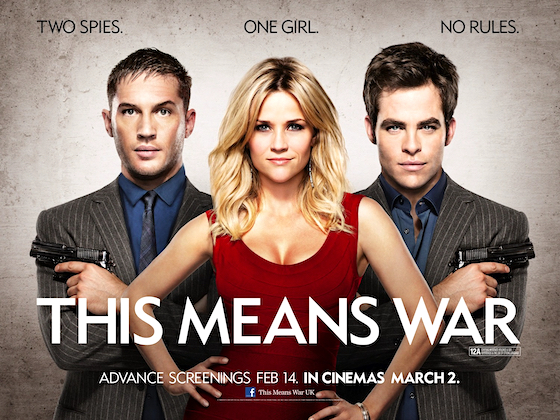
  • This Means War (2012)
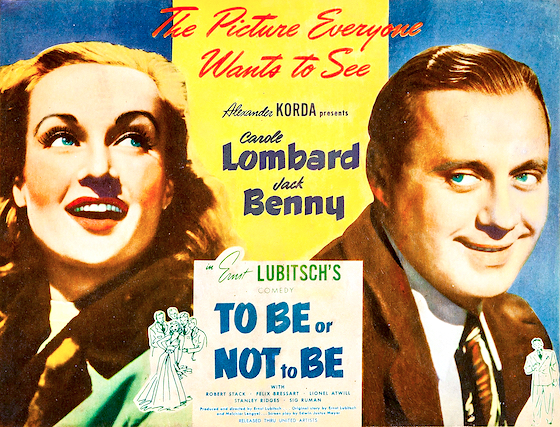
  • To Be or Not to Be (1942)
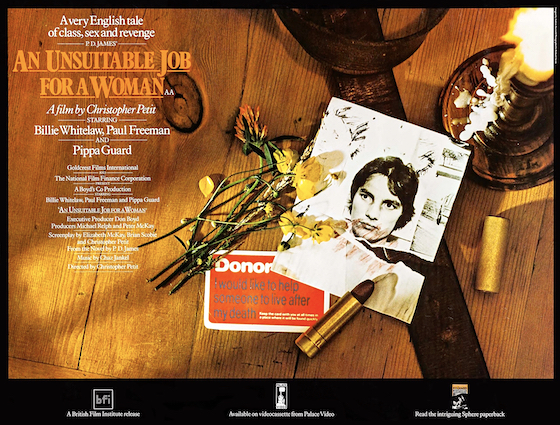
  • An Unsuitable Job for a Woman (1982)
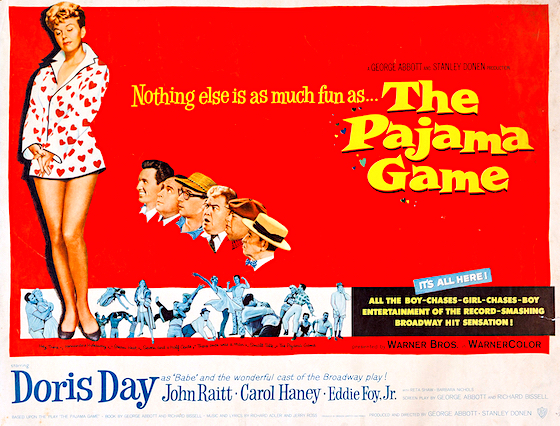
  • The Pajama Game (1957)
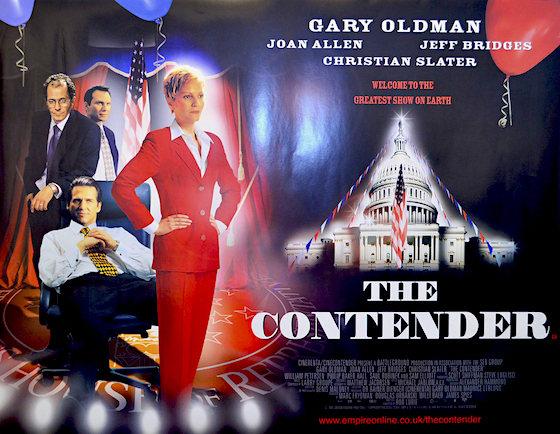
  • The Contender (2000)


    This Means War

    (2012)

    McG | 98 mins | digital (HD) | 2.35:1 | United States / English | 12 / PG-13

    This Means War

    I bet whoever came up with this thought they were a genius: “spyfi action-adventure + rom-com? It’s the perfect date movie!” Of course, what you actually end up with is a film that struggles to do either part well.

    It stars the unlikely combo of Chris Pratt and Tom Hardy (you definitely can’t imagine Hardy doing a movie like this today) as BFF CIA agents who independently fall for the same woman, played by Reese Witherspoon. Uh-oh. Hilarity ensues as the guys deploy their CIA tricks and tech to influence the relationships. Yeah, it’s the kind of concept that once upon a time sounded like a fun and quirky rom-com, but nowadays seems at best morally dubious, at worst downright creepy. And, indeed, that’s how it plays out, with situation after situation that’s played for laughs but feels a little uncomfortable.

    Of course, the big question is “who ends up with who?” This is one of those films so committed to its storyline, so structured to lead to one correct answer, that… they shot multiple endings so they could decide in post. The one they went with doesn’t feel quite right, but, if you imagine the alternatives, most of them don’t either. Well, I say that: I don’t think it’s really a spoiler to tell you that Witherspoon ends up with one of the guys, when the correct choice would’ve been “neither of them. Run from the stalker-ish CIA agents! Find a normal man!”

    2 out of 5


    To Be or Not to Be

    (1942)

    Ernst Lubitsch | 99 mins | digital (HD) | 1.37:1 | USA / English | U

    To Be or Not to Be

    Ernst Lubitsch’s satire concerns an acting troupe in occupied Poland who become mixed up in a soldier’s efforts to capture a German spy before he can undermine the resistance. Made while World War II was still in full force, the film attracted criticism in some quarters for being a comedy about such tragic and ongoing real-life horrors. Lubitsch defended his work, writing to one critic to say, “What I have satirized in this picture are the Nazis and their ridiculous ideology. I have also satirized the attitude of actors who always remain actors regardless how dangerous the situation might be, which I believe is a true observation.” He’s right, of course; at least about the first part. Ridiculously, such debates about whether you can satirise the Nazis persist to this very day — just look at some of the responses to Jojo Rabbit.

    Lubitsch’s film is subtler than Waititi’s, though still undoubtedly a comedy. I mean, with its plucky resistance members taking occupying Nazis for fools, I couldn’t help but think of this as a classier version of ’Allo ’Allo… but I’ve never actually seen a whole episode of that show, so don’t hold my comparison in too high a regard. Whereas that sitcom is famous for its catchphrases and bawdy gags, To Be or Not to Be is less overt, preferring to paint the Nazis as fundamentally incompetent and derive its humour there.

    Despite the distaste some felt, it obviously works for most people, as it appears on several “great movies” lists, not least both the IMDb and Letterboxd Top 250s. To be honest, I feel like I need to give it another spin to digest it more fully, but these thin thoughts will have to suffice for now.

    4 out of 5

    To Be or Not to Be is the 35th film in my 100 Films in a Year Challenge 2022. It was viewed as part of Blindspot 2022.


    An Unsuitable Job for a Woman

    (1982)

    Christopher Petit | 94 mins | Blu-ray | 1.85:1 | UK / English | 15

    An Unsuitable Job for a Woman

    I’ve never read the P.D. James novel on which this is based, but I’m assured it’s longer and more complex — the film rather lacks for plausible suspects, making the central murder mystery thoroughly guessable.

    That said, I’m not sure co-writer/director Christopher Petit is all that concerned with producing a true whodunnit. Put another way, I think he’s more interested in the characters, who happen to be involved in a mystery, than in the mystery itself. Which is fine, but I’m also not sure the film does as good a job as it could digging into those characters. I mean, the way the kinda-naïve young investigator becomes obsessed with the deceased subject of her inquiries — almost falling in love with him, it seems, like some kind of gender-flipped riff on Laura — is more nodded at than explored.

    In the end, I felt like I wanted to like the film more than it was actually giving me things I needed to really like it. It’s not bad, but perhaps it could have been great.

    3 out of 5


    The Pajama Game

    (1957)

    George Abbott & Stanley Donen | 101 mins | digital (SD) | 4:3 | USA / English | U

    The Pajama Game

    This minor musical is primarily of note for two things: the original Broadway staging featured the choreography debut of one Bob Fosse; and it features the song Hernando’s Hideway — if you don’t recognise the title, I’m sure you’ll recognise the tune. I had no idea this is where it originated.

    The story is about a pay dispute in a pyjama factory (given the current strikes and arguments here in the UK, you might think I watched this deliberately. Nope, total coincidence). On one side there’s the leader of the union’s grievance committee (Doris Day, one of just a handful of replacements made to the original cast when they transferred the stage production to the screen). On the other, the new superintendent (John Raitt, clearly a success on Broadway but less so on film). Of course, they fall for each other, before the pay conflict tears them apart. Can their love overcome such trials? What do you think?

    I saw someone describe The Pajama Game as an overlooked classic, which is taking things a bit far. It’s mostly likeable and quite fun, but rarely transcends that level. The undoubted highlight is Fosse’s choreography, which gives even the lesser numbers a polished dynamism. There are a couple of decent songs, but nothing really stands out, bar the aforementioned. It gets a bit too farcical in places, with some of the storylines ultimately taking a turn into very broad territory that feels misjudged. One primarily for genre fans only.

    3 out of 5


    The Contender

    (2000)

    Rod Lurie | 126 mins | Blu-ray | 16:9 | USA, Germany & UK / English | 15 / R

    The Contender

    I only picked this up on disc because it was part of a bundle of other titles I really wanted, but it also sounded like the kind of thing I’d like. Strange that I’d not heard of it before, then. I guess some films just get lost in movie history, especially when they’re a lesser member of a whole wave of movies. This is a political thriller of the kind they seemed to make quite a few of during the ’90s and into the early ’00s, but don’t really do anymore. I guess they exhausted the well, especially after 156 episodes of The West Wing.

    In this case, the story revolves around Laine Hanson (Joan Allen), the first woman nominated to be Vice President (it only took another two decades for that to happen in real life). There’s the familiar battle between the Democrats to get her confirmed, and the Republicans who’d like to do anything to thwart the Democrats. Amongst the scheming between the two sides, the big revelation is that Laine possibly engaged in a scandalous sex act while in college. She refuses to confirm or deny the rumour — it’s her personal business and shouldn’t affect her appointment. Except, of course, it does.

    Various other allegations come and go throughout the confirmation process, the two sides continuing to go back and forth in their attempts to win. It’s not necessarily the point the film is making, but it’s a reminder that politics is all a game to those involved, even as it can have serious effects on the lives of the rest of us. More overtly, the film tackles the different standards a woman is held to when trying to take public office. Fortunately, it’s not as overbearing with that as it could be. Indeed, all round the film is fairly understated. It’s a solid, unflashy, procedural-based kind of thriller.

    That is until the end, when it throws away the understatement for a grandstanding speech based around a fundamental belief in the greatness and goodness of the American political system. It would be heavy-handed in any circumstance, but the past few years (if not longer) of American politics have shown it for the total lie it always was. It doesn’t wholly undermine what’s gone before, but it does end the film on a sour note.

    4 out of 5


  • High and Low (1963)

    aka Tengoku to jigoku

    Akira Kurosawa | 144 mins | Blu-ray | 2.35:1 | Japan / Japanese | 12

    High and Low

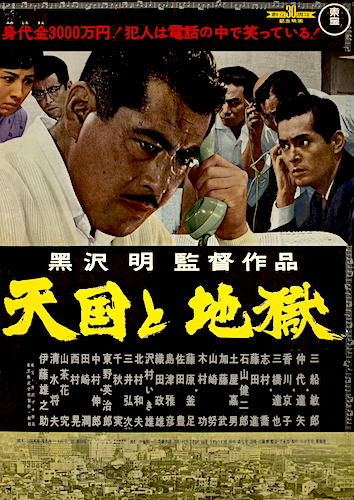
    Akira Kurosawa has a good many classic films to his name, but, according to users of both IMDb and Letterboxd, this is the second best of them all — and, on the latter’s list, the 12th greatest film ever made, to boot. No pressure.

    Adapted from the American crime novel King’s Ransom by Ed McBain, the film stars Toshiro Mifune as a business executive who we first meet being wooed to join a potential coup of the company. (The film rattles through a few twists early on to set up its initial dilemma, which I’m now going to spoil, so if you want to go in completely cold, jump to the next paragraph.) In fact, Mifune is plotting his own takeover, paid for by leveraging everything he has. But then, his young son is abducted, with the kidnappers demanding a huge ransom — if he pays, his carefully-laid plans will be impossible to execute; but it’s his son! But then, it turns out it isn’t his son — the crooks took the wrong boy, instead kidnapping the son of Mifune’s lowly chauffeur. But they don’t know that, and there’s no way in hell the poor chauffeur could pay a ransom. What’s a man to do?

    Some might power a whole film on that storyline and dilemma, but it’s only the beginning of High and Low. Its original Japanese title (天国と地獄) literally translates as Heaven and Hell, and, as both monikers indicate, this is a film of two halves; of opposing forces; of extreme choices. Without wishing to spoil any more of what goes down, I’ll say that almost the first hour of the film takes place almost entirely in a single room. It feels like the whole thing might unfurl there, a la Hitchcock’s Rope — almost a formal exercise in telling a story from a single setting. But then it moves to an immediately more dynamic locale — a train — for a properly thrilling sequence, around which the story and structure pivots. The rest of the film goes ultra-procedural. A lengthy scene early in this half depicts a police debriefing in a manner that feels almost documentarian, as if we’re witnessing a genuine meeting filmed and presented in real-time, as various detective duos update senior officers and their colleagues on the specific aspect of the case they’ve been working.

    Hanging on the telephone

    This eye for detail, presented with a degree of mundanity, makes the film feel extra realistic. That extends to the final details. No spoilers, but, although you may call this a Thriller due to the type of story being told, it doesn’t climax with a big twist or revelation; no reveal of some super-clever grand plan that, with implausible foresight, anticipated and accounted for everything that’s happened. Rather, the film seems to proceed methodically and logically through every thread of investigation and consequence for its primary characters, until it simply has no more left to tell.

    It’s certainly a fine piece of work — although, on first watch, I’d say I’ve seen several better examples of the genre and several better films by Kurosawa. But that isn’t truly a criticism of the film, rather of its high placing on the lists mentioned at the start. Awareness of such accolades has a tendency to overshadow any first viewing of a film that warrants them (just witness how many people are underwhelmed by Citizen Kane), so I look forward to returning to High and Low sometime under less pressure.

    5 out of 5

    High and Low is the 30th film in my 100 Films in a Year Challenge 2022. It was viewed as part of Blindspot 2022. It placed 6th on my list of The Best Films I Saw in 2022.

    2022 | Weeks 12–13

    So, it’s already the 15th — fundamentally halfway through the month — and this is just my ffith post in May. (It would’ve been third, but then my West Side Story and F9 reviews felt like they should have their own posts.) In my mind, I’ve raced this batch out as quickly as possible following my start-of-month posts, but it certainly doesn’t feel very speedy when you look at the dates.

    And, talking about messing with time, this roundup begins by taking us all the way back to March: week 12 ended on the 27th of that month. I might’ve posted sooner, were it not that week 12 seemed too small to run by itself. For what it’s worth, week 13 ended on 3rd April, so I’m still over a month behind now.

    Anyway, here are the rest of the new films I watched that fortnight…

  • Muriel’s Wedding (1994)
  • Cobra (1986)
  • Django & Django (2021)
  • A Man Escaped (1956), aka Un condamné à mort s’est échappé
  • Death on the Nile (2022)


    Muriel’s Wedding

    (1994)

    P.J. Hogan | 101 mins | digital (HD) | 1.85:1 | Australia & France / English | 15 / R

    Muriel's Wedding

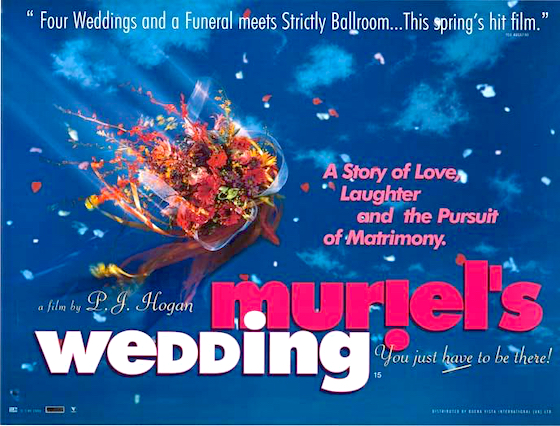
    This is one of those films I’ve been sort of aware of forever, but never really paid a huge amount of attention, until suddenly I’m watching it almost on a whim. It’s the story of the misadventures of small-town Australian girl Muriel (a breakout performance from Toni Collette), who doesn’t fit with her family or ‘friends’ and so sets off to the big city for a different life.

    I don’t know what I was expecting from the film, exactly — a kooky Aussie romcom, I guess — but not a surprisingly dark, quirky almost to the point of being twisted, black comedy. Not that that’s a bad thing, but it kind of bamboozled me by being a lot odder and more tonally complex than I’d anticipated. I liked it, but it’s a weird one.

    4 out of 5


    Cobra

    (1986)

    George P. Cosmatos | 87 mins | digital (HD) | 16:9 | USA & Israel / English | 18 / R

    Cobra

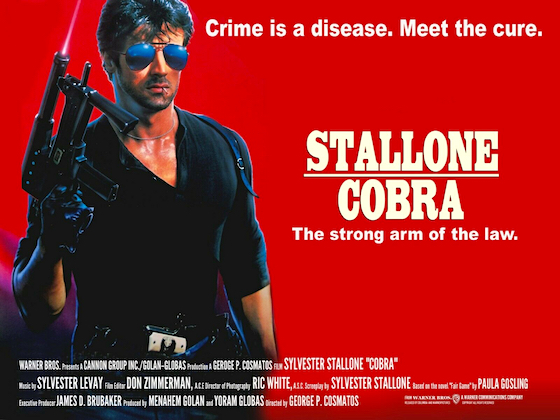
    This is the kind of film I might never have watched were it not for my WDYMYHS challenge. It’s a film I’d heard very little about, and what I had heard wasn’t good, but when it came to selecting the 12 most significant films I hadn’t seen from 1986, it scraped in. I’m glad things like that happen, because while Cobra is far from being a new favourite or something, I did enjoy it.

    Sly Stallone stars as a hot-shot cop on the trail of a serial killer with cult affiliations. That’s about it for the plot. This is a film that’s all style and no substance — though, when you’ve got this much style, maybe that is the substance. It’s so much a stereotypical ’80s macho action fest that it plays like a spoof of itself in places, with over-the-top editing, performances, and one liners that all seem driven by some sense of ‘cool’. I kinda love it for that. Take the car chase at the halfway mark: it’s a ludicrous sequence (one bit barely connects to the next; cars explode when shot; etc), but it’s filmed and cut with style and packed with excitement. It’s epic.

    Remarkably, it’s based on a novel. I say that’s remarkable because novels are devoid of being able to show off flashy visuals or dynamic action sequences, so you think of them as being heavier on things like plot and character — but, as discussed, this has very little plot, and even less character development. The already-brief running time seems to mostly contain music montages and extended action scenes. Reportedly the original cut was around two hours, which was then mercilessly shorn down to the under-90-minute final cut in an attempt to squeeze in more screenings per day. I imagine a lot of what went was the plot, although apparently there was also a lot of graphic violence — and what we’re left with still earnt an 18.

    I guess if a “director’s cut” was going to surface it would’ve done so by now (given all the other films that got them back in the ’00s). It’s something of a shame, because perhaps that version would round out the storyline enough to match the flair that’s all we get from the existing cut. Really, it’s a trashy film, but I rather enjoyed its trashiness. As stated, it’s all style and, at just 87 minutes, all business.

    3 out of 5

    Cobra is the 23rd film in my 100 Films in a Year Challenge 2022. It was viewed as part of “What Do You Mean You Haven’t Seen…?” 2022.


    Django & Django

    (2021)

    Luca Rea | 77 mins | digital (UHD) | 16:9 | Italy / English, Italian & French | 15

    Django & Django

    The work of the “second-best Spaghetti Western director”, Sergio Corbucci, is analysed by admirer Quentin Tarantino, and supplemented with a handful of anecdotes from a couple of people who worked with him. The small number of interviewees means the film is lacking in the depth you get from having multiple perspectives, but it’s a fine overview of Corbucci’s work nonetheless.

    Indeed, the title — implying a focus on two specific films — is a bit of a misnomer. Not only is it about Corbucci’s career as a whole, with Django just one film among many, but there’s only a single clip from Django Unchained, when QT mentions how Corbucci’s style influenced his choice of Southern setting. That’s it for discussion of Tarantino’s own work — barring a lengthy opening aside into the alternate history of Once Upon a Time in Hollywood; a ‘short story’ about Rick Dalton’s time in Italy and his meetings with Corbucci. Tarantino relates these events as if they’re historical fact — the guy really did thoroughly imagine his alternate history!

    3 out of 5

    Django & Django is the 24th film in my 100 Films in a Year Challenge 2022.


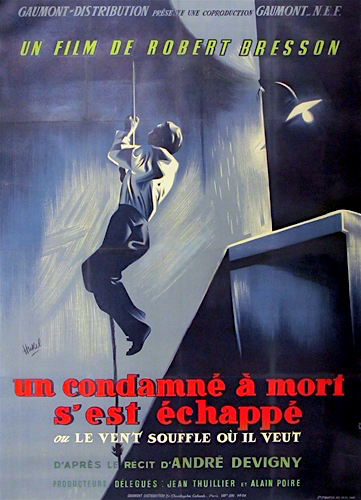
    A Man Escaped

    (1956)

    aka Un condamné à mort s’est échappé ou Le vent souffle où il veut

    Robert Bresson | 101 mins | digital (HD) | 1.33:1 | France / French & German | U

    A Man Escaped

    Most “prisoner of war” movies are about plucky Brits and/or Yanks stuck in jail somewhere behind enemy lines, working out ways to escape almost as a time killer, or at best a matter of honour. A Man Escaped is something different. Based on the memoirs of André Devigny, a member of the French Resistance held in a French prison by the occupying Germans during World War II, and written and directed by Robert Bresson, who was also imprisoned by the Germans as a member of the Resistance, you can’t doubt its pedigree for authenticity. Indeed, Devigny was an adviser on the film, and lent the production the actual ropes and hooks he had used in his escape. More than these points of fact, it’s the film’s overall tone that’s striking — more dour and pessimistic than the usual POW drama, at least as I remember them. Here, the need to escape isn’t a game, it’s literally life or death.

    Bresson certainly knows where he wants his focus to be. The film begins with our hero, Fontaine (François Leterrier), arriving at the prison, although an escape attempt on the way there sees him immediately condemned to solitary confinement. Nonetheless, we remain by his side, never leaving him or his point of view, right until the end, when… well, that would be a spoiler. In terms of background, there’s only what we can pick up along the way; the barest outline of who he is, why he’s there, and what awaits him on the outside. That’s extraneous detail — this is all about his time in prison, his mentality in prison, and how he intends to escape the prison.

    To that end, Bresson spends a lot of time detailing very little. The process by which Fontaine fashions ropes, or chips away at a crack in his door to facilitate a way out, is shown in almost-excruciating detail. It’s all about the prep. When something truly dramatic does happen — like Fontaine gaining a roommate, and the question of whether that man can be trusted — it’s dealt with quickly, confined to a couple of quick scenes. I can only think that’s part of the point: much of the work to escape prison is tedious preparation, but when a spanner gets in the works it has to be dealt with quickly lest it derail the whole enterprise. Such ‘big things’ are a potential threat, but it’s arguably the little things that are even more dangerous. Accidentally drop something noisily, thus alerting the guards to your suspicious activities, and it’s all over.

    As a film, it doesn’t feel as strikingly stylised as the other Bressons I’ve seen, but it definitely has a stripped-back simplicity that’s part of his overall ethos. It’s debatable if we need the semi-monotone voiceover that describes exactly what we can see on screen — I’m no expert, but such an unnecessary and purely cinematic addition seems out of sorts with Bresson’s usual style. That said, at points it adds insight into Fontaine’s thought process, so the narration is not without merit.

    4 out of 5

    A Man Escaped is the 25th film in my 100 Films in a Year Challenge 2022. It was viewed as part of Blindspot 2022.

    Death on the Nile

    (2022)

    Kenneth Branagh | 127 mins | digital (UHD) | 2.39:1 | USA & UK / English & French | 12 / PG-13

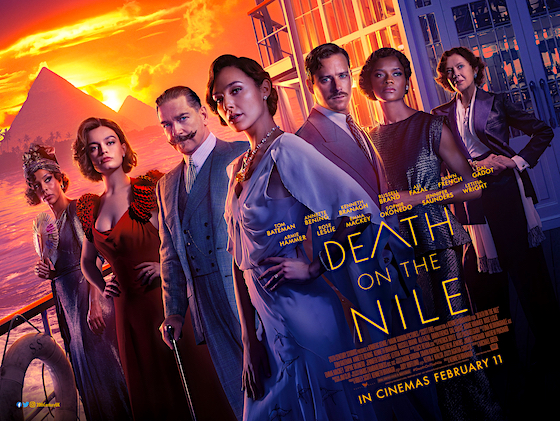
    Death on the Nile

    Kenneth Branagh returns as both director and star for another Hercule Poirot mystery, after the somewhat-surprising success of his Murder on the Orient Express — “surprising” in the sense that it did better at the box office than I think anyone expected. It performed less well with critics, but I enjoyed it. Sadly, this followup is not its equal… though that’s not necessarily saying it’s bad.

    For me, it was a film of two halves — although, often as not, those two halves occurred simultaneously. For example: there’s an over-reliance on CGI for the Egyptian vistas makes many scenes look disappointingly fake; but then there’s a fantastic, huge set for the boat where much of the film takes place, and the real-life elements are quite handsomely shot on 65mm. Story-wise, there’s been a lot of rejigging (try to line up the cast with who played the roles in previous adaptations, for example, and you’ll soon discover a lot of the characters are amalgamations), but Christie’s typically excellent plotting survives mostly intact. That said, the ratio of buildup to detective work feels off, with the murder seeming to occur quite late in the film and the subsequent investigation feeling rather rushed.

    The motive behind screenwriter Michael Green’s remixing seems to be a serious attempt to make the film All About Love — not just the motive for the crimes, but all the subplots and whatnot too. I guess they were seeking some kind of justification for why this story is being filmed again, and what makes it worthy of the all-star movie treatment, rather than being just a run-of-the-mill, see-it-every-week-on-TV whodunnit. Plus, there’s a bizarre attempt to provide a backstory for Poirot’s moustache. No, seriously.

    Branagh initially seemed miscast as Poirot, but wasn’t bad in Orient Express, and that continues here. His version of the character is rather likeable, imbuing the Belgian with a neat sense of humour that marks his interpretation out from previous incarnations (Ustinov often played it for laughs too, but with less subtlety). There’s the customary all-star supporting cast, but they’re somewhat wasted, with some big names or talented performers left with too little to do. Though, when about half of them are employing dodgy accents, maybe that’s no bad thing.

    A mixed bag, then. It’s far from my favourite Christie adaptation; although it might actually be my favourite Death on the Nile by default, because I don’t think the previous versions (a Ustinov film and Suchet TV episode) are the best their respective series have to offer either. Whatever — I love this kind of stuff, and I’m glad to hear they’re intending to forge ahead with a third outing.

    3 out of 5

    Death on the Nile is the 26th film in my 100 Films in a Year Challenge 2022.


  • 2022 | Weeks 7–8

    It’s been a hectic time, both at work and in my personal life, these past few weeks. I’ve managed to carve out a small amount of time for some film watching (though not as much as I’d like), but little for film reviewing — hence why there’s not been an Archive 5 for a fortnight, and why this update comes over two weeks after the period it covers.

    But better late than never, and the only way to get back on track is to get on, so…

  • Shot in the Dark (1933)
  • The Brits Are Coming (2018), aka The Con Is On
  • Ode to Joy (2019)
  • The Courier (2020)
  • The Misfits (2021)


    Shot in the Dark

    (1933)

    George Pearson | 52 mins | digital (SD) | 4:3 | UK / English

    Shot in the Dark

    The works of Agatha Christie and G.K. Chesterton are casually evoked in this ‘quota quickie’ murder mystery, adapted from a novel by H. Fowler Mear, a screenwriter whose Wikipedia entry describes him as “competent but uninspired”. (FYI, the film is often listed as A Shot in the Dark online, I presume due to confusion with a couple of slightly later films that go by that title. As the title card makes plain, there’s no A here.)

    When a wealthy old man dies of a gunshot, it’s ruled a suicide; but when the family gather to listen to the will he recorded, the deceased claims he must have been murdered. Before he can make any further accusations from beyond the grave, the record goes missing. Fortunately, the local vicar (O.B. Clarence) happens to be passing at the time, and sticks his nose in — to find both the record and the murderer.

    There’s nothing particularly special about the mystery that unfolds. As a detective, the vicar is a cut-price Father Brown knockoff; a weak caricature of the Sherlock Holmes type: every time he interviews someone, he seems to already know everything they’re going to tell him, if not more. It’s quite fun that almost everyone confesses to the murder at one time or another, only to turn out to not actually be responsible, but I have trouble crediting that as a deliberate gag — it’s not emphasised enough for that to be the case. When the actual culprit is eventually revealed, how and why the crime was committed isn’t properly explained. This is the kind of film that doesn’t see the value in wasting valuable screen time on things like “motive” and “plausible opportunity” and “plot twists” when it can offer dark & stormy nights and people storing poison next to medicine and secret passageways. Indeed, when they find a secret room, it turns out to have its own secret room — that’s the kind of work we’re dealing with here.

    All in all, it’s not <i<bad for a quick little murder mystery, but it’s not strictly good either. It scrapes a 3 by the skin of its teeth.

    3 out of 5

    Shot in the Dark is the 16th film in my 100 Films in a Year Challenge 2022.


    The Brits Are Coming

    (2018)

    aka The Con Is On

    James Haslam | 91 mins | digital (HD) | 2.35:1 | UK & USA / English | 15 / R

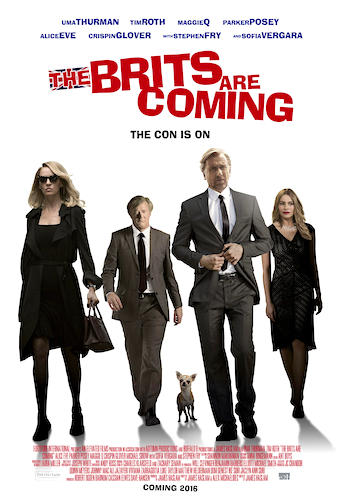
    The Brits Are Coming

    Uma Thurman and Tim Roth star as a couple of British crooks who accidentally gamble away a pile of cash belonging to a crime lord (Maggie Q), so flee to LA to steal the expensive new engagement ring of his ex (Alice Eve).

    As a crime-comedy caper, you feel like this must have read funny — how else to explain such a starry cast in such a cheap-feeling production? Assuming that’s the case, something definitely got lost between page and screen: almost everything about The Brits Are Coming seems as if it should work, and yet almost none of it does. The occasional moment lands, amid a barrage of F-words so unnecessary you wonder if the film was in some kind of competition to use as many as possible. You sense the cast might’ve been having fun, at least, though supporting appearances from the likes of Stephen Fry and Crispin Glover do little to elevate the material.

    1 out of 5


    Ode to Joy

    (2019)

    Jason Winer | 97 mins | digital (HD) | 2.35:1 | USA / English | 12 / R

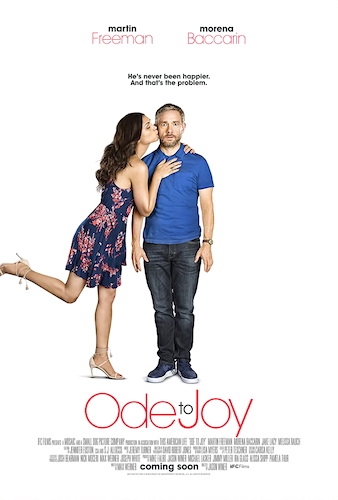
    Ode to Joy

    Charlie (Martin Freeman) has cataplexy, a rare neurological condition that means if he feels a strong emotion — in his case, happiness — he passes out. Unfortunately for Charlie, he seems to be a bit of a softy: even just seeing someone with their baby or cute dog on the street is liable to make him wobbly. So Charlie lives an uneventful life, working in a library (what better place for calm?) and never doing anything particularly interesting. Certainly never dating. But then one day he defuses a situation involving Francesca (Morena Baccarin), who takes a shine to him; and of course he’s interested in her, because, duh, it’s Morena Baccarin. Can Charlie manage to be happy… but not too happy?

    If it all sounds a tad far-fetched, you should know that it’s inspired by a true story (there’s even a writing credit acknowledging the journalist behind the original piece). Nonetheless, the fictionalised version could easily have turned the premise into something ridiculous, but a solid screenplay and great cast ensure it stays balanced on just the right comedy-drama line. Freeman is perfect casting for “man who would like to be happy but must keep himself miserable”, playing to strengths he’s displayed ever since his breakthrough role in The Office. As his love interest, Baccarin could probably have got away with just looking pretty, but there’s more zest to her character than that. Among the supporting cast, The Big Bang Theory alum Melissa Rauch is particularly hilarious as Francesca’s ‘boring’ friend who Charlie ends up dating instead. She’s the closest thing the film has to an outright “comedy character”, but the screenplay and Rauch’s performance manage to round her out.

    Ode to Joy could’ve coasted on easy (if probably repetitive) gags derived from Charlie’s condition, or it could’ve more-or-less ignored it as simply a hook for a bog-standard romcom. Instead, it’s something a bit more thoughtful, exploring what it really means to be “happy”, as well as where and how we find happiness. Not to mention that age-old question, what’s the point in living if you don’t feel alive?

    4 out of 5


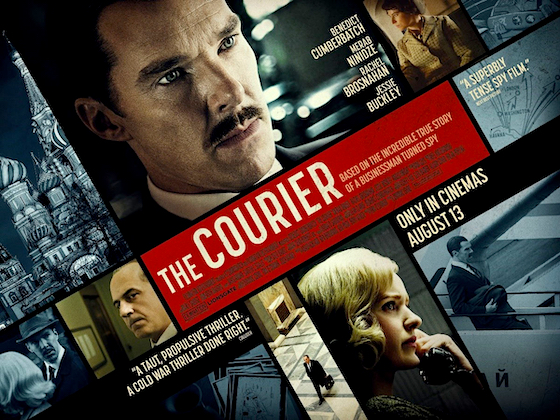
    The Courier

    (2020)

    Dominic Cooke | 112 mins | digital (UHD) | 2.39:1 | UK & USA / English & Russian | 12 / PG-13

    The Courier

    A fascinating true story that I wasn’t the slightest bit aware of, The Courier stars Benedict Cumberbatch as nondescript businessman Greville Wynne, who was recruited during the Cold War by MI6 and the CIA to travel to Russia and collect information offered by an asset in Soviet military intelligence, Colonel Oleg Penkovsky (Merab Ninidze), at that time the highest-ranked Soviet to leak intelligence to the West. Definitely sounds like spy novel stuff, but, as I said, it’s all true (well, except for the bits tweaked for dramatic licence, obv).

    As regular readers will no doubt have inferred from my reviews of James Bond, John le Carré adaptations, and other similar fare, I love a bit of Cold War espionage. Normally that’s of the fictional variety — I guess most of the true stories aren’t quite as exciting, or remain too classified — but there’s nothing quite like knowing the events you’re witnessing actually took place. That said, the events depicted here fall under the latter category, as they’re officially still classified. Screenwriter Tom O’Connor reportedly pieced the narrative together from various sources, which I imagine helps make this as close to the truth as we’re likely to get, for now at least.

    Either way, it’s a suitably thrilling tale, powered by two superb lead performances from Cumberbatch — initially reluctant and floundering, but increasingly self-assured and moralistic — and Ninidze — controlled and honourable, but with an emotional undercurrent. Strong supporting turns, too, from the likes of Jessie Buckley and Rachel Brosnahan, don’t let us forget the very human cost of the spy games, especially if things should turn sour…

    By the end, you definitely feel that the actions of Wynne and Penkovsky should be better known. Perhaps the need for keeping official secrets has stymied that — although (without wishing to spoil what happens) some events did make news at the time, and this isn’t the first drama or documentary to cover the case — but The Courier stands as a valiant effort to bring their tale to a wider audience.

    4 out of 5


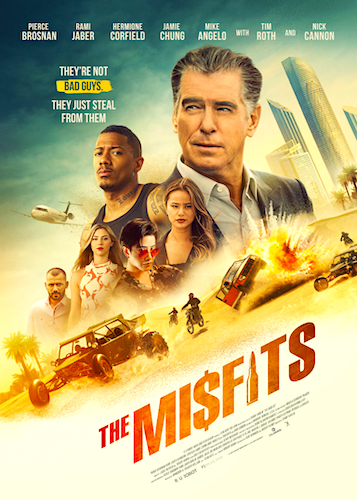
    The Misfits

    (2021)

    Renny Harlin | 95 mins | digital (HD) | 2.39:1 | USA, UAE & Finland / English | 15 / R

    The Misfits

    If you thought Michael Bay’s 6 Underground was bad, The Misfits is here to show you what a properly poor “former crooks do good deeds from the shadows” action movie looks like.

    The eponymous ‘Misfits’ are a small group of international Robin Hoods, preying on the rich and selfish for the benefit of the poor and helpless. Their latest job is to steal the gold reserves of a terrorist organisation, which are kept safe in a prison owned by Warner Schultz (Tim Roth, slumming it again), so they recruit his nemesis: thief and multi-time Schultz prison escapee Richard Pace (Pierce Brosnan, only half succeeding to reconjure the roguish charm he deployed decades ago in similarly-themed films like The Thomas Crown Affair).

    Despite the involvement of a couple of big-ish names in front of the camera and a former blockbuster director behind it (Renny Harlin, whose credits included Die Hard 2 and Cliffhanger before a couple of flops relegated him to rental-shelf-filler fare), The Misfits looks like it was made for £3.50 and a favour from the Abu Dhabi tourist board (the city appears glamorous and expensive, unlike anything else about the film).

    The screenplay feels like it was generated by an AI fed on every low-rent heist movie from the last 30 years. It’s not just clichés, but the way it drifts along with a “this is the sort of thing that happens in this sort of movie” logic, not particularly caring if it makes objective sense. The construction is sloppy, too. For example, a ton of time is devoted upfront to introducing the ‘Misfits’, only for most of them to be 2D one-trick pies (a thief, a fighter, an explosives expert, etc) who are supporting characters in what is really Brosnan’s film. I thought it was going to be a case of bait-and-switch marketing — make the famous actor prominent on the poster, only for his role to be little more than an extended cameo when the film is really about these other guys — but no, he’s genuinely the lead, it’s just the film is weirdly built. And that’s before we get onto the centrepiece heist itself, where the inevitable twists and reveals are either too clearly telegraphed, or simply pulled out of thin air (the gold isn’t there, it’s here! Except it’s not here, it’s there! But it’s not there, it’s here!)

    If you are exceptionally forgiving, The Misfits has vague merit as entertainment, but it’s a very hollow kind of fun. If you’re in the mood for the particular joys of a heist movie, and you can’t think of or get hold of another one at that minute, it would probably scratch the itch.

    2 out of 5

    The Misfits is the 18th film in my 100 Films in a Year Challenge 2022.

  • Knives Out (2019)

    2020 #55
    Rian Johnson | 130 mins | Blu-ray (UHD) | 1.85:1 | USA / English | 12 / PG-13

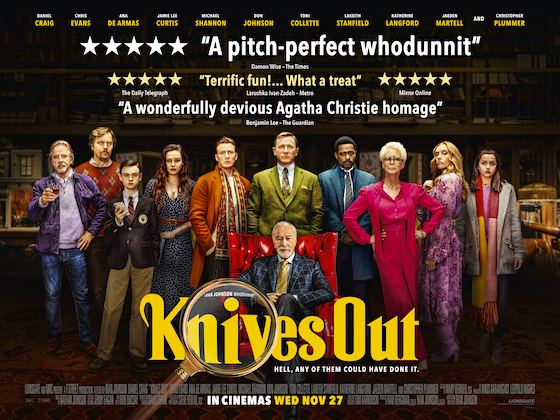
    Knives Out

    After creating the widely beloved and totally uncontroversial Star Wars instalment The Last Jedi, writer-director used his newfound filmmaking cachet to quickly launch a passion project that he’d been working on since after his debut feature, Brick: a whodunnit murder mystery in the Agatha Christie mould, a genre of which Johnson is a lifelong fan.

    The story revolves around crime novelist Harlan Thrombey (Christopher Plummer) and his family of hangers-on, played by an all-star cast (including the likes of Jamie Lee Curtis, Michael Shannon, Chris Evans, Toni Collette, and Don Johnson). When Harlan dies, seemingly by suicide, freelance detective Benoit Blanc (Daniel Craig) has reason to suspect foul play, and teams up with Harlan’s nurse, Marta (Ana de Armas), to find out which of the family members dunnit.

    Knives Out is clearly built like a Christie story, though perhaps with a touch more satire and humour. That’s not to say it’s an outright comedy (though I’ve tagged it as one, because it’s often amusing), but this is a heightened world we’re in; it’s the real world, but filtered through the lens of a genre. And rather than follow the familiar formula of a Poirot- or Marple-type case, the film is like one of Christie’s other novels; one of the ones where the broad shape is the same, but there’s some twist or variant in how it’s told. Here, it’s that the detective isn’t actually our POV character, and at times we know a lot more than him (or, at least, different stuff to him). That leads to some effective twists that I won’t spoil, but which certainly keep you thinking and on your toes. I made a prediction as to the true solution before the halfway mark, and it turned out to be wrong, so that was fun (I don’t mean to boast, but plenty of murder mysteries are thoroughly guessable).

    The name's Blanc, Benoit Blanc

    That said, I wasn’t a million miles off with my guess, but that also doesn’t matter. As I noted in my summation of the film for my 2020 top ten, it’s not so important who actually dunnit when it’s so much fun spending time with the outrageous suspects and Craig’s implausibly-accented detective. That means it achieves something many mystery-based films miss: it’s highly rewatchable, because knowing the outcome isn’t the be-all and end-all. And yet, to achieve that, it doesn’t sell out the mystery entirely — I say “it barely matters who dunnit”, but it’s still an engaging riddle on first viewing.

    Knives Out was a notable success, eventually leading Netflix to pay a frankly ludicrous sum for two sequels. I’m glad there’ll be followups, because more mysteries in this vein promises more fun, but it’s a shame that what could’ve been a non-superhero non-action-based big-screen franchise has been nipped in the bud by the streamer. I expect that was literally their goal (and why they paid so very, very much money), but that’s a whole other debate.

    5 out of 5

    The UK network TV premiere of Knives Out is on Channel 4 tonight at 9pm. It placed 13th on my list of The Best Films I Saw in 2020.

    Netflix’s currently-untitled sequel is due for release later this year.

    2022 | Weeks 4–6

    It’s been a busy start to the year… at my day job, which has had the knock-on effect of lower film viewing than has been the case in recent years. (I say that, but as February passes its midpoint, I’ve actually watched slightly more films than I had at the same point in 2020; but the last time I was lower than that was right back in 2014, so…)

    As well as work, there’s the psychology of my new reviewing practices. These regular up-to-date roundups have taken me right back to the days when I used to review everything in order, and how not being caught-up on my reviews made me not want to watch anything more. I’m getting those same kinds of twinges now. I need to try to use them to my advantage — take the time to read more books or something.

    Anyway, enough about me — let’s have some film reviews…

  • Voyage of Time: An IMAX Documentary (2016)
  • L’avventura (1960)
  • She’s Gotta Have It (1986)
  • Don’t Look Up (2021)
  • Jackass: The Movie (2002)
  • Jackass Number Two (2006)


    Voyage of Time

    (2016)

    aka Voyage of Time: An IMAX Documentary / Voyage of Time: The IMAX Experience

    Terrence Malick | 46 mins | digital (UHD) | 1.90:1 | USA / English | NR / G

    Voyage of Time: An IMAX Documentary

    Calling a film “a visual poem” sounds either clichéd or pretentious, or both, but how else to accurately describe this work by Terrence Malick? It’s labelled “a documentary”, because only because it’s not strictly fiction — if you come looking for the kind of education you’d get from something narrated by David Attenborough or Brian Cox, say, then I think you’d leave disappointed.

    No, film-as-poetry is the most appropriate way to attempt to engage with Voyage of Time; and, as with so much written poetry, your personal tolerance for and interest in it will vary. That’s how I found it, anyway: like most poetry, I felt I should appreciate it, but really was glad it was quite short. (The non-IMAX version of the film, subtitled Life’s Journey, runs about twice as long.) There’s some stunning photography, of everything from the birth of the universe to prehistoric vistas (presumably shot in remote modern-day locales rather than computer-generated), and Brad Pitt occasionally whispers some abstrusely meaningful ponderings over the top. As much as the pretty pictures are a draw, you can also find gorgeous nature photography in a BBC Attenborough documentary, and you’ll learn something at the same time.

    The IMAX version of the film has been streaming on MUBI since the end of last year, and they definitely sold it on the visual experience, boasting about offering it in 4K. I found the quality to be variable, with the stream unable to keep its end up for the whole running time, sometimes sinking to sub-1080p levels, becoming blocky and compressed. This is why physical media remains the best, when possible.

    3 out of 5

    Voyage of Time: An IMAX Documentary is the 11th film in my 100 Films in a Year Challenge 2022.

    L’avventura

    (1960)

    aka The Adventure

    Michelangelo Antonioni | 143 mins | digital (HD) | 1.85:1 | Italy & France / Italian, English & Greek | PG

    L'avventura

    I don’t have a great track record for enjoying acclaimed classic Italian cinema (neither Bicycle Thieves nor were to my taste, for example), so I’ve put off watching L’avventura for years, expecting I wouldn’t get on with it. But, inevitably, I had to face it someday… and, as it turned out, I really liked it… for a while…

    The film begins with Claudia (Monica Vitti) and her wealthy friend Anna (Lea Massari) meeting up with the latter’s wealthy boyfriend, Sandro (Gabriele Ferzetti), to go for a cruise on the yacht of some other wealthy friends. When they dock on a small island, Anna goes missing. The party scour the island, but there’s no sign of her. Police and divers arrive, but no luck. Reports suggest maybe she boarded another boat; possibly she was kidnapped. The wealthy friends quickly drift back to their lives, but Claudia and Sandro keep searching, following scant clues. Soon they too begin to get distracted — by each other.

    I don’t think it’s a spoiler to say that L’avventura starts out looking like a missing-person mystery only to get sidetracked into being a kind of romantic drama. I certainly knew that going in; and it’s probably beneficial to know it, spoiler or not, so as to manage your expectations of the film appropriately. Anyone expecting a Christie-style hunt through clues and suspects until the truth is unearthed will come away severely disappointed. No, this is the Mystery genre reimagined through an arthouse lens: it’s inconclusive, more interested in the characters than the hunt they’re on, and notoriously slow paced.

    With that in mind, I was surprised by how effective I found the mystery part of the movie. It’s not a whistle-stop action-adventure, but it’s not significantly slower than your average murder mystery, and accusations of it being uneventful seem misplaced — if I were expecting it to unfold like a regular mystery, there’d be plenty of places to look out for clues. It’s as the film shifts more towards Claudia and Sandro’s burgeoning romance that it begins to drag. The pair start just hanging around places as tourists, at which it does begin to seem like nothing’s happening and so what’s the point? The conceit of them falling for each other when they’re meant to be searching for someone they mutually care about is a good storyline, but I wasn’t convinced by how it played out. There doesn’t seem to be any time when they’re actually falling in love, they just suddenly are. Maybe I’m missing some point there. Or maybe it’s beside the point. Until I can work that one out, I’m going to have to chalk this up as half great, half A Shame.

    4 out of 5

    L’avventura is the 12th film in my 100 Films in a Year Challenge 2022. It was viewed as part of Blindspot 2022.

    She’s Gotta Have It

    (1986)

    Spike Lee | 84 mins | digital (UHD) | 1.66:1 | USA / English | 18 / R

    She's Gotta Have It

    Spike Lee’s post-student debut concerns twentysomething Brooklynite Nora Darling (Tracy Camilla Johns), who’s openly dating three men: upright ‘nice guy’ Jamie (Tommy Redmond Hicks), preening model Greer (John Canada Terrell), and streetwise Mars (Lee himself). And let’s not be coy (because the film certainly isn’t): she’s not just dating them, she’s sleeping with them all. The story of this love ‘square’ is partially narrated to camera by its four participants, as well as some of Nora’s other friends and acquaintances.

    It’s kinda crazy to think that the American indies were making sexually frank films like this and sex, lies and videotape in the late ’80s (a precursor, no doubt, to the wave of ‘real sex’ movies in the early ’00s), while nowadays we regularly get young people on Twitter arguing that no movie ever needs to have a sex scene, ever. So while I’m tempted to describe the film’s views on promiscuity as “then-modern”, perhaps just “modern” will still suffice — it’s certainly taken most (arguably all) of the intervening decades to get rid of the double standard for men and women as regards having multiple partners. That said, what has perhaps changed is our idea of what counts as “sexually explicit”. The film was obviously quite shocking back in its day, with the MPAA insisting on cuts before they’d give it an R (the unrated “director’s cut” had a Criterion LaserDisc release, but hasn’t surfaced anywhere else since), but you’ll see more nudity, more thrusting and moaning, on certain TV shows nowadays.

    Sexual stereotypes are not the only ones Lee sought to subvert here, as he also attempts to combat stereotypical depictions of African-Americans on screen — note the prominent message in the end credits that “this film contains are no jerri curls!!! and no drugs!!!” (punctuation as seen on screen). It extends beyond those basic signifiers; for example, how Nora’s three lovers are such different personalities. Partly that makes sense for the plot — that different sides of Nora’s personality like different types of guy — but also it shows different ideas of male Blackness; that The Black Guy is not just one thing. The jazzy score is another definite contrast to what you’d expect from a Hip Young Black Movie in the ’80s. Maybe that’s just Lee’s personal preference, but maybe it’s another conscious subversion of expectations.

    Lee’s politics are clear and forthright, but his filmmaking still needed some work. A lot of the film looks great, mostly shot in high-contrast black-and-white (plus one striking, ultra-saturated colour sequence), but some of the editing and performances could use refinement. Rough round the edges though it may be, She’s Gotta Have It is so clearly the calling card of a talented and individual voice with something brand-new to say that those rough edges are almost more of a feature than a bug.

    4 out of 5

    She’s Gotta Have It is the 13th film in my 100 Films in a Year Challenge 2022. It was viewed as part of “What Do You Mean You Haven’t Seen…?” 2022.


    Don’t Look Up

    (2021)

    Adam McKay | 138 mins | digital (UHD) | 2.39:1 | USA / English | 15 / R

    Don't Look Up

    Oscar statue2022 Academy Awards
    4 nominations

    Nominated: Best Picture, Best Original Screenplay, Best Editing, Best Original Score.

    Having targeted those responsible for the 2008 financial crash in The Big Short, and Dick Cheney and his responsibility for everything bad that’s happened in the last few decades in Vice, writer-director Adam McKay now turns his satirical attention to a fictional scenario, basically so he can have a go at anyone and everyone he feels like. The plot concerns a giant asteroid headed for Earth; an extinction-level event just 6½ months away. But, despite a handful of scientists trying to warn everyone, nobody seems in a great rush to do anything about it. It’s all an allegory for America’s carefree attitude to climate change, see.

    Really, this is a film I should be fully onboard with. It’s setting its sights on vacuous mainstream culture and Trumpian politics, after all. The problem is, these targets are low-hanging fruit, and — somewhat ironically, given its title — Don’t Look Up is satisfied with only plucking those lowest branches. Repeatedly. Unhurriedly. When they said the comet was 6½ months away, I didn’t expect the rest of the film to feel like it was covering that in real-time. It needed a better editor, or perhaps a studio who exerted a bit more quality control than Netflix’s famed “do what you want, we’ll just release it” approach. There are funny moments, certainly, but they’re literally few and far between when the pace is languid and the satire so broad, simplistic, and repetitious. Indeed, the most laugh-inducing stuff has nothing to do with the satire at all, just funny bits of business along the way (the best is a running gag about a general and snacks, which keeps cropping up unexpectedly).

    And for a film that’s entire thesis is being critical of American attitudes, it’s (again) ironic that it depicts this global crisis as so America-centric. Sure, there are cutaways to people watching events in other parts of the world, and a couple of belated nods to the idea that other countries might have their own thoughts on this impending disaster, but that’s all they are — sops and nods. “If America’s not going to fix this, no one can,” says the film. Ah, fuck off.

    2 out of 5


    Jackass: The Movie

    (2002)

    Jeff Tremaine | 85 mins | digital (SD) | 16:9 | USA / English | 18 / R

    Jackass: The Movie

    Jackass never appealed to me. I was a 14-year-old boy when it started, surely the franchise’s target audience; but I was an intelligent 14-year-old boy, so I was above it. Sorry, not sorry. But with everyone going on about the new movie, and reevaluating the whole franchise as some kind of essential classic of Cinema, I thought it was finally time to see for myself.

    For those not au fait with the series, it’s about a bunch of men who clearly aren’t old enough to know better performing stunts and pranks that no one in their right mind should ever want to do anyway. They’re frequently designed to induce pain. They’re often trying to be as crude or gross as possible. Some may make you feel ill just by watching them. And yet others are almost on the level of wholesome fun… albeit “wholesome fun” where you know participants will come away with bruises, at the very least.

    Almost everything the guys get up to is “dumb” — that’s kinda the point — and yet… It borders on “educational” when, for example, lead troublemaker Johnny Knoxville submits to being shot by “less lethal” riot control ammunition. The plan was for him to be shot in the chest, but the guys who make the stuff say if it hits his heart it could kill him, so they revise it to him being shot in the abdomen. Whereas most of the other stunts are followed by cutaways to the rest of the crew in hysterics, here the shocked silence of their reaction is telling. Or how about the kinda-feminism of a segment called “Ass Kicked by a Girl”, in which one of the gang enters the ring against a world champion female kickboxer. There’s no “haha, I can take her easily ’cause she’s a girl” posturing: the guy knows he’s about to get his ass handed to him. There’s some kind of respect for women in that, anyway, which you might not expect given the rest of the laddish antics.

    Taken as ‘a movie’, it’s rather formless — I suspect the TV show was exactly the same, just shorter — but the rapid-fire, standalone-stunt style does mean that no sketch hangs around too long. Some are literally seconds. But there’s not even a sense of escalation, say — it’s not like they save the largest or most outlandish stunt for the end (although there’s a post-credit scene that seems like it was probably the film’s most expensive single sequence). In some respects it doesn’t matter (who cares about the structure of a Jackass movie?), but in others, it’s what keeps it at the level of “feature-length special” rather than true Movie.

    But, ultimately, the important thing is this: some of it is funny. Reader, I laughed.

    3 out of 5


    Jackass Number Two

    (2006)

    Jeff Tremaine | 88 mins | digital (HD) | 16:9 | USA / English | 18 / R

    Jackass Number Two

    Even Jackass isn’t immune from the law of diminishing returns: after three seasons on TV plus a movie, this second big-screen outing feels kinda uninspired, like they’ve used up all their truly great ideas and are mostly running on fumes. That said, there are some good sequences — a variety of rodeo-based stunts with real live bulls are among the highlights — but other pranks feel reheated, or are just underwhelming; things you suspect would have been rejected in favour of better material before.

    In that sense it almost feels like it was rushed out to capitalise on success, but there’s a gap of four years, the TV show had ended, and they hadn’t necessarily intended to do any more — surely the only reason to return, then, was fresh ideas? Or, perhaps, being given the budget to do things they couldn’t before. That might be the case, because some of the material does feel like it’s got too much money and/or time behind it. I say “too much” because I think Jackass works best when it has a rough, cheap, “made at home” vibe. The finale here — a big “old Hollywood”-style musical number, with stunts mixed in — feels particularly out of place. Obviously it’s all a big joke, but the glossy, clearly-expensive visuals don’t feel of the right style.

    Plus, at various points you can feel some of the cast are getting genuinely fed up with this shit. Maybe they’d been doing it for too long by this point (I say there was a years-long gap, but some had been involved in spinoff projects). Whatever the reason, it serves to undermine the fun somewhat. One of the reasons you can enjoy these fools doing life-threatening stunts is because they’re volunteering for it and they seem to be having fun, however much they’re getting hurt or disgusted. But if they’re not enjoying it, aren’t we just watching people be tortured for our entertainment? It almost tips it from being stupid-but-funny into exploitative bullying. And we shouldn’t be having to think about anything that deep during a Jackass movie.

    As I’ve given both films 3 stars, let’s be clear: I’d definitely rate the sequel lower than the first movie, just not a whole star lower — it doesn’t merit being pulled down to a 2, while the first doesn’t merit a retrospective bump up to 4. If this kind of tomfoolery tickles you, there’s still plenty of entertainment to be had in Number Two, it’s just (mostly) not their finest output — which I guess is kinda apt, given the title.

    3 out of 5

    Jackass Number Two is the 15th film in my 100 Films in a Year Challenge 2022.