2015 #141
Carol Morley | 102 mins | streaming (HD) | 1.85:1 | UK / English | 15
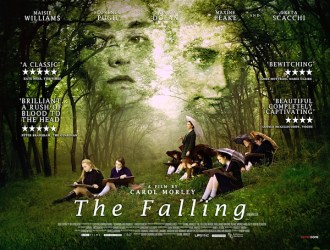 Inspired by real events, The Falling stars Game of Thrones’s Maisie Williams as Lydia, a 1960s teen with an awkward home life who is a student at a repressive girls’ school. She’s best friends with the popular and charismatic Abbie (newcomer Florence Pugh, next to be seen as the lead in Lady Macbeth (which seems to have bugger all to do with Shakespeare)). When Lydia starts fainting for no apparent reason, it leads to a fainting epidemic at the school that no one can explain. Is it caused by illness? Fakery? Something psychological? Or possibly even some kind of dark magic?
On Amazon Instant Video (where it’s available free to Prime subscribers from today), The Falling is billed as “a mesmerising psychological drama”, which isn’t too wide of the mark. However, presumably because of the prominent pentagram on the cover image there, all of the “customers also watched” recommendations are called things like The Exorcism of Molly Hartley, The Houses of Halloween, Haunt, Demonic, and Sinister House, or are other obviously-cheap-trashy-horror-looking films with less blatant names (like The Canal, Awaiting, and Robert (chilling!)). No wonder it has a low user rating if it’s a “psychological drama” being mainly watched by people who choose to pay to watch that kind of low-rent horror crap!
The Falling is certainly not low-rent horror crap. Is it a horror movie? Not really — there are no monsters, no jump scares, none of the obvious tropes; but it does have a distinctly unnerving air a lot of the time, and there are definite references to and hints about some kind of mysticism playing a role. It’s often incredibly atmospheric, with some beautiful cinematography courtesy of DP Agnès Godard and effective editing by Chris Wyatt.  Writer-director Carol Morley has kept the pace and tone slow, in an enchanting rather than ponderous fashion, but it’s a “not for everyone” pace nonetheless. For me, it only really lost its way as it moved into its final stages. Without wanting to spoil where it goes, in my opinion too much was explained, but at the same time it explained nothing.
Indeed, I feel it might’ve fared better overall if it had stuck with the magical-realist / folk horror / olde-worlde magik styles it veers towards early on. But then Lydia says she’s a rationalist, and I suspect Morley is too, and so they well know that such things as spells and lay lines have no bearing on the real world. If one wants to present the possibility of a real-world explanation for the film’s events — and, as they were inspired by actual events, I presume Morley does — leaving things at “because magik” isn’t going to cut it.
The immediately obvious explanation — certainly as far as the school’s teaching staff are concerned — is that the girls are faking for attention. One comment-review on a website asserts that “one of the central questions of the film is whether or not the girls were faking their illness,” before going on to outline how this could’ve been improved to make the film into an “entertaining thriller”. I think this is a prime example of reviewing what the reviewer expected or wanted rather than what they were given, because it didn’t seem to me that the issue of fakery was the “central question” here. Of course, that’s only my interpretation of the filmmaker’s intent, so no more or less valid than this other commenter’s; but I really don’t understand how you can watch The Falling and think it was anyone’s goal for this film to be considered an “entertaining thriller”. It’s simply not that kind of movie.
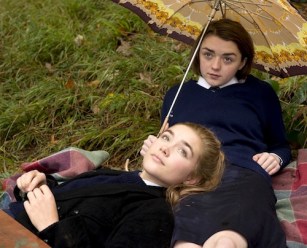 An element I do think was at the forefront of consideration is sensuality and sexuality, which plays a large and significant part in the film. Pretty much any movie bar “bawdy high school comedies starring obvious twentysomethings” seems to veer away from schoolgirl sexuality these days, wary of inevitable “OMG u a pedo” reactions, I guess. Sexuality does not equal pornography, though; and, as I alluded, here it’s played out as much through a heightened, tactile sensuality. It does probably ‘help’ that it’s a film written and directed by a woman — it would carry a very different, more Lolita-ish air if it had been written or directed by a man. What exactly it’s saying with all this is arguably as mysterious as the cause of the fainting epidemic, but then it’s all tied together: teenage years are a period of sexual awakening, of course, and if you’re in an environment where nearly everyone is of the same gender, and where such things are massively repressed… well, how is it going to manifest itself? If “sex” is somehow the cause of the fainting, it’s not because sex is bad, it’s because there’s no other appropriate outlet for it.
Or maybe that’s got nothing to do with it at all.
A lot of this has to be carried on the shoulders of a relatively young cast, but all are capable. Maisie Williams is by far the best known of the girls, though viewers of Ripper Street will recognise Anna Burnett. She was good in the Victorian detective series, but she’s even better here. Williams gives a strong performance too, afforded the ability to show some range and variety from Arya Stark (unlike her appearance in the currently-airing Doctor Who two-parter-that-isn’t, for instance). There’s also a quality adult supporting cast, including the likes of Maxine Peake (in an initially quiet but ultimately key role), Greta Scacchi, and Monica Dolan, while Peaky Blinders’ Joe Cole acquits himself well in the subtly complex role of Lydia’s brother.  Best of the lot, however, is Florence Pugh. Reportedly discovered when The Falling’s casting directors visited her school, you can see why she’s quickly been snapped up for a leading role. I wouldn’t be surprised if Hollywood come knocking looking to make her the next Kate Winslet/Keira Knightley/Gemma Arterton/etc “English rose”-type lead in some blockbuster or other.
The Falling is an odd film, really; though in many respects that shouldn’t come as a surprise. Some will love it; many will despise it. Personally, I felt a lot worked very, very well, but the bits that didn’t, well, didn’t. For what it’s worth, I ranked it 3.5, aka 7, on sites that have half-stars or are out of ten. It would’ve been a solid 4 if not for those niggles, but equally they’re not so bad to drag it down to a 3. Some viewers seem to put the niggles aside entirely and push it up into the 4.5 or even 5 margin; for others it doesn’t work at all, dragging it down much lower. Everyone’s reaction to any film is completely subjective and personal, obviously, but this is the kind of film where it’s more true than others — you can’t pigeonhole it like you can a superhero actioner, or a rom-com, or, well, most movies, to be honest. It’s part high school coming-of-age drama, part supernatural thriller, part kitchen sink drama, part arthouse tone poem. How well that uncommon mix works is entirely down to the individual viewer’s personal predilections.
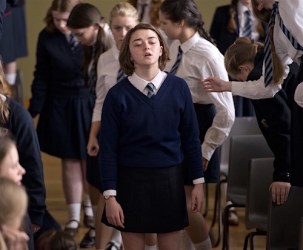 For me, it’s the kind of film that, with time and subconscious reflection, I may come to remember more fondly and be keen to see again, or all but forget. It’s the kind of film I could, without even re-watching it, re-evaluate and want on my year-end top ten, or could see on my top ten contenders long-list come January 1st and wonder, “dear God, what was I thinking?!” It’s the kind of film I’m not sure I wholly liked, but I’m glad I’ve seen.
As mentioned, The Falling is available on Amazon Prime Instant Video from today.
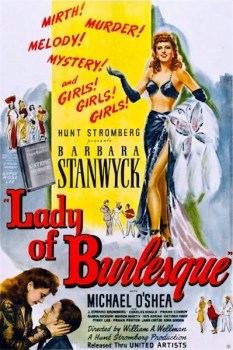 Based on the novel The G-String Murders by Gypsy Rose Lee (as in Gypsy), Lady of Burlesque stars Barbara Stanwyck as Gypsy surrogate Dixie Daisy, a performer in a burlesque show in New York where the backstage arguments turn murderous.
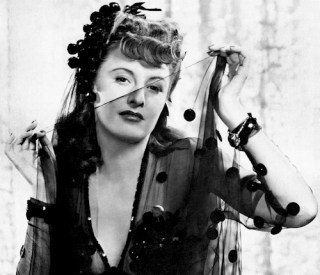 Stanwyck carries the film, both on stage and off. Her “will they/won’t they (of course they will)” romance with Michael O’Shea’s comic is kept aloft by her biting ripostes to his advances, and when a comedy sketch is interrupted by backstage noises she saves the day by breaking into song, doing the splits, a cartwheel, and the Cossack dance in quick succession. Not bad for a 36-year-old!
 Screened in UK cinemas simultaneously with its TV premiere (and coming to the big screen in various other countries over the next week or so, too), the latest episode of the BBC’s modern-day Sherlock Holmes series is actually a standalone adventure set in the character’s original Victorian time period.
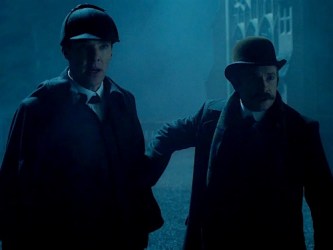 The case they find themselves embroiled in is a little more period than usual, however, with lashings of Gothic and some of the trappings of a Christmas ghost story. The episode is co-written by series creators Mark Gatiss and Steven Moffat, and anyone familiar with Gatiss’ wider work can clearly see his influence here. Moffat brings his trademark fast-paced intricately-tricksy plotting, for which individual viewers’ mileage varies greatly: some find it genius, some find it tedious. Is it clever, or does it just think it’s clever? Is it impossible to follow, or were you just not paying enough attention? As to the first question, I think it’s a bit of both; as to the second, I think the episode ultimately answers everything, but you might need to realise a few things for yourself.
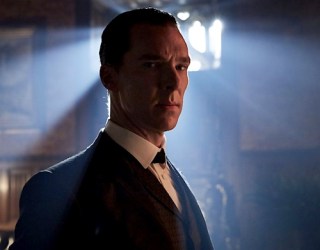 Until the last half-hour or so, anyway, when the modern version suddenly comes crashing in. At first it seems like a clever interlude; a little reminder of the true time period for this version of the characters, and a tease for season four. But it quickly transpires that, no, this episode isn’t actually a wholly standalone aside from the main series — Gatiss and Moffat have found a way to integrate it into continuity. For me, this is where the special begins to come apart at the seams; not because I inherently object to this integration, but because from that point on the episode begins to jump back and forth between the present, the imagined past, and various other dream-state asides. It’s almost entirely justified by the beautifully-shot Reichenbach Falls sequence, but a spot of cinematographic prettiness doesn’t really excuse the way the story goes a little haywire. The least successful part of all, for me, is that it calls into question the solution for the case we’ve just been presented with… but then doesn’t get round to offering another, meaning you kind of feel like the case hasn’t been solved, even though it presumably has been, with the first solution. I think.
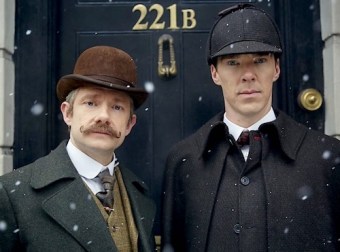 As someone who enjoys Sherlock Holmes in his proper era but is also a fan of this modern day version (I would say “a big fan”, but I’m not one of those people), I’d rather they’d played this a little more straightforward. Not a lot — it’s still under the umbrella of Sherlock after all, and the era-transposed stylistic flourishes in the first hour-ish worked very nicely in my opinion — but the mixed-up mishmash of the final act dilutes the effectiveness of the entire experience. There’s fun and thrills to be had along the way, but in another form it could perhaps have been a Sherlockian classic in its own right.
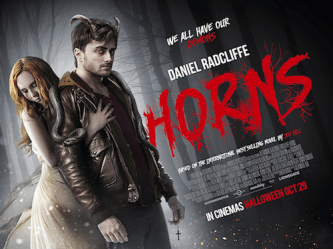 Did Daniel Radcliffe murder his girlfriend? Sprouting devilish horns doesn’t help his case…
 Once-great detective Sherlock Holmes (Ian McKellen) has retired to the countryside with his housekeeper (Laura Linney), her son Roger (Milo Parker), and his bees, but an unsolved case from late in his career troubles his dementia-addled mind. As he tries to remember the events, we also learn the significance of a trip he recently made to Japan, and the benefits of his growing friendship with Roger.
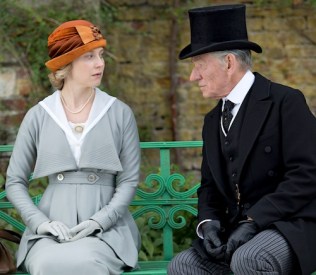 Alongside him, the lad, Milo Parker, is very good, managing to holding his own against the knight of the realm. Also excellent is Hattie Morahan, playing the object of the case in Holmes’ flashbacks. She’s probably best known for playing embattled fellow parent Jane in
  Astronauts head to a Saturnian moon to examine its water in this scientifically-accurate drama.
 A gaggle of famed detectives are summoned to a remote mansion to solve a murder in this detective spoof by playwright Neil Simon. The twist is, all the characters are spoofs of famous literary/film/TV ‘tecs. Also, that the murder hasn’t happened yet. And also, that the person inviting them is Truman Capote. Not “someone playing Truman Capote”, but “Truman Capote playing someone”.
 James Coco as the film’s version of Poirot. There are some neat send-ups of the genre — the literally-impossible mysteries and all that — as well as some good old-fashioned wordplay and silliness. The only downside is it loses its way a bit by the end. I suppose it doesn’t strictly need a satisfactory conclusion to the mystery, because it’s only a spoof ‘n’ all, but I feel like it would’ve benefitted from a stronger finale nonetheless.
 After the
  Perhaps it’s just because she’s clearly struggling with an atrocious variable accent, the quality of which makes it rather distracting whenever she opens her mouth. Having used Moriarty plenty, the series finally accepts that he’s dead and moves on to his right-hand man, Col. Sebastian Moran. Considering the identity of the conniving colonel is a mystery for most of the movie, however, his involvement is perhaps no great shakes.
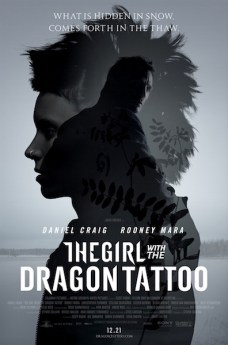 Stieg Larsson’s much-hyped novel comes to the screen for the second time in David Fincher’s much-hyped English-language re-adaptation. Somewhere between the pre-release build-up (do you remember the fuss over the trailer’s release? And all those magazine covers and articles?) and now, something clearly went awry: its UK TV premiere back in March was buried mid-week on ITV2.
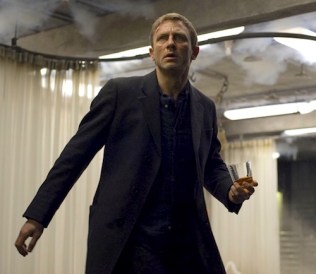 There are certainly changes, but nothing especially major. For example, the ending has been tweaked — not “completely changed”, as some reports had it, but just streamlined slightly. Some will struggle to even remember the difference if their experience of a previous version was long enough ago. Die hard fans, however, seem to regard it as a massive re-visioning of events. It isn’t.
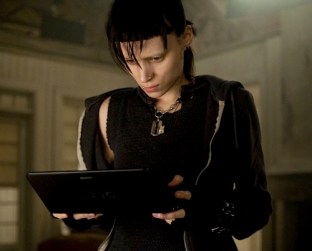 in particular, it’s beautifully shot, and there’s a vein of interest to be mined in discussing the fact it was consciously made using a five-act (as opposed to the usual three-act) structure (but not here today, sorry) — it feels unable to innovate or hone the genre in quite the way Se7en or
 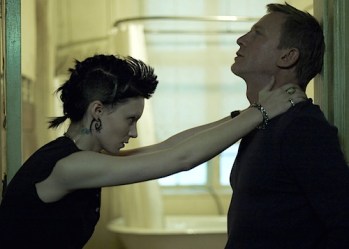 So my rating may come as a bit of a surprise given the focus of this review, which is primarily my fault for finding it so tough to shrug off all those contexts and comparisons. But hey, that’s something the film itself struggles with in many people’s eyes, too. If the viewer can divorce it from those ties, however, I think it’s still an exceptionally good thriller.
 Paul Thomas Anderson — the fêted writer-director of
 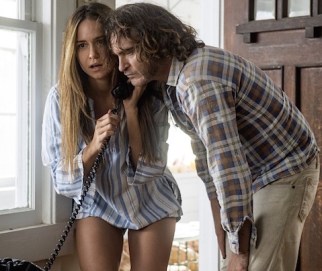 Anderson chooses to realise the movie mostly in long, unbroken takes, which not only lets the photography shine, but also allows his cast free rein to construct their own performances. I’m not sure how much that pays off, but it’s certainly not a hindrance. Turns from the likes of Josh Brolin and Martin Short border on the memorable, though your mileage will vary on if anyone truly achieves it, with the possible exception of Katherine Waterston, who surely deserves more — and more prominent — roles. Other recognisable faces (Jena Malone, Eric Roberts, Reese Witherspoon) are wasted in one- or two-scene appearances, which I suppose we could kindly call cameos.
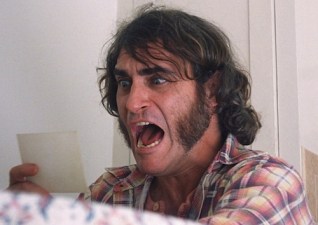 I am in neither of those groups, however. The aforementioned fleeting aspects of quality weren’t enough to swing it for me either. Sadly, I’ll be chalking this up alongside
  100Films.co.uk