The 100-Week Roundup VIII

As I mentioned last time, these films are technically from the same week as that last bunch, but seven films seemed a lot for one post. Plus, although they were all watched in the same week, they were watched in different months: the last four were my final films from July 2018, whereas these three are some of my first from August 2018.

In this roundup…

  • Beneath the Planet of the Apes (1970)
  • Pride and Prejudice and Zombies (2016)
  • The Quiet Earth (1985)


    Beneath the Planet of the Apes
    (1970)

    2018 #174
    Ted Post | 95 mins | Blu-ray | 2.35:1 | USA / English | 15 / G

    Beneath the Planet of the Apes

    Beneath the Planet of the Apes is the sequel no one wanted to make, including the studio — quite a different attitude to today, eh? But Fox were in financial troubles. For his part, Heston managed to negotiate a reduced role and suggested an ending that would kill off the potential for any more sequels. Well, that worked

    Picking up where the first film left off, it sees Heston’s character, Taylor, disappear mysteriously. After a second Earth spaceship crashes on the planet, its only survivor teams up with Taylor’s girl, Nova, to find him, which leads them to encounter a society hiding (you guessed it) beneath the planet of the apes.

    Overall, this feels like trashier sci-fi/adventure than the first one, with a certain B-movie aesthetic to the underground mutants, and a first half that’s just a bunch of running around. Yet, despite that, there are some powerful ideas and solid social commentary here, mainly about blind faith and the terror of military leadership. Plus, the mutants’ use of telepathy as a weapon is quite clever, and their unmasked designs are suitably eerie rather than just ugly. It also has one of the most brutal and bleakest endings ever seen in a Hollywood blockbuster — or probably outside of one, come to that.

    The violence in the final act was originally cut in the UK, and when it was finally released uncut on video some 17 years later, it earnt a 15, a rating its retained ever since. In the US, it’s always been rated G. Those Americans and their insouciant attitude to violence…

    Obviously I watched this two years ago, and at the time I assigned this three-star rating. But I will say that I remember it more fondly than that. As noted above, it takes a while to get going, and it doesn’t have the same classy aspirations as the first film, but its unrepentant fatalism is almost admirable.

    3 out of 5

    Pride and Prejudice and Zombies
    (2016)

    2018 #175
    Burr Steers | 103 mins | TV (HD) | 2.35:1 | UK & USA / English | 15 / PG-13

    Pride and Prejudice and Zombies

    Here’s another one I found more enjoyable than I feel I should have.

    For starters, it’s wild this ever actually got made. I mean, the title is an amusing idea — it’s basically a five-word gag, isn’t it? — but ponder for a moment how that’s going to play out as a full narrative. To live up to its title, it has to make an effort to follow the plot of the novel, and there lies the rub: no one wanting a zombie movie really wants to sit through a Regency romance, and no one wanting a Regency romance really wants it sullied by zombie-based action and gore. Well, inevitably someone will fall into that Venn diagram, but, as someone who’ll quite happily watch either of those genres in isolation, even I struggled to find the idea of such a mash-up too appealing. It needs a clever hand on the tiller to negotiate those treacherous waters, and I’m not sure the director of 17 Again and Charlie St. Cloud was that person.

    But, as I said at the start, I did find it surprisingly watchable. It does have a certain amount of wit and fun with the concept, like turning arguments about accomplishment into ones about fighting style. Sometimes the zombies and fights are tacked on to the existing story, but sometimes the narrative is neatly remixed to include the zombie threat. And like any true action movie, scenes of high emotion are settled not with words but with a good dust-up. There’s a solid cast too, including Lily James (always a bonus) and reliable stalwarts like Charles Dance, although, as Darcy, Sam Riley sounds like he’s battling a nasty throat infection. But Sally Phillips is basically a perfect Mrs Bennet for this or any other version, and the same could be said of Douglas Booth as Bingley, or Matt Smith, on fine comedic form as Mr Collins.

    Pride and Prejudice and Zombies and Knickers

    It does drop the ball sometimes. The climax doesn’t put enough effort into eliciting tension (it’s like they ran out of money or time or effort: “can the heroes make to the bridge in ti— oh, they just did”); at least one apparent subplot doesn’t go anywhere at all; and a mid-credits scene suggesting the story isn’t over feels lame. It definitely pulls some punches in aid of landing a PG-13 rating in the US, which is unfortunate — it’s a mad concept; it needs to do it properly, go all out and get an R. (I’d still say it’s perhaps a bit too gruesome for PG-13, which is why it landed a 15 over here.)

    I still think the director is the problem. A surer hand would’ve made more of the verbal sparring during the physical sparring; would’ve sold the tension of the action. Apparently David O. Russell was original set to direct, which is mad — can you imagine choosing to follow awards-winners like The Fighter, Silver Linings Playbook, and American Hustle with this? Apparently other directors “considered” included Matt Reeves, Neil Marshall, and Lord & Miller. Presumably they turned it down rather than any producer thinking Burr Steers was a better pick — Lord & Miller, in particular, probably would’ve nailed the tone. But, all things considered, what we got could’ve been a lot worse.

    3 out of 5

    The Quiet Earth
    (1985)

    2018 #178
    Geoffrey Murphy | 91 mins | Blu-ray | 1.85:1 | New Zealand / English | 15 / R
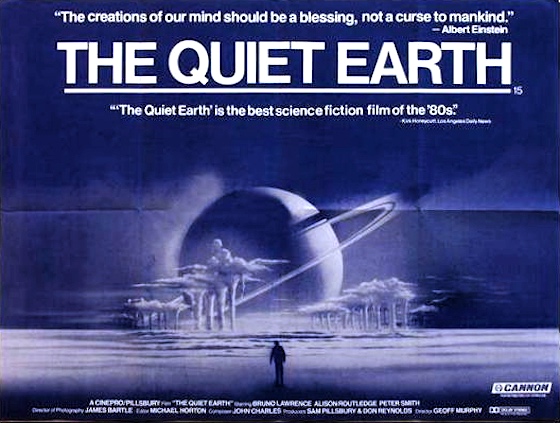
    The Quiet Earth

    Here we reach the first real hurdle in these two-year-old roundups, because it turns out I made no notes whatsoever after viewing The Quiet Earth. I did note down some quotes from the booklet essay accompanying Arrow’s Blu-ray release, but it seems a bit rich just to list those excerpts.

    What I can tell you is that The Quiet Earth is a science-fiction film about a scientist who wakes up one morning to find everyone else has disappeared — not fled, not died, just gone. What unfolds from there is a mix of mystery (what happened?) and a kind of existential character examination, both of this man and of ourselves — what would you do if you were the only person on Earth? Only, it doesn’t play quite as heavily as that makes it sound. There are more plot developments, but to say too much would spoil the discovery. And it is a film worth discovering. As Amy Simmons puts it in the aforementioned essay, it’s a “deeply relevant work which reflects darkly upon our age of estrangement and isolation. […] Shifting in tone from horror to comedy to pathos and back again, the film’s great strength is in the themes it explores and satirises — namely nuclear fears, technophobia, and cultural and geographical isolation — which are even more urgent now than when the film premiered in 1985.”

    I’m doing it a disservice with this pathetic little ‘review’, but hopefully someday I’ll revisit it and come up with something more insightful.

    4 out of 5

  • The Head Hunter (2018)

    2020 #101
    Jordan Downey | 72 mins | download (HD) | 1.78:1 | USA / English | 15

    The Head Hunter

    Originally released in 2018 but not making its UK debut (as a direct-to-DVD release) until earlier this year, The Head Hunter is a low-budget independent fantasy/horror movie. Such a description might conjure up images of fancy-dress-like costumes, plastic props, locations that venture no further than a mate’s back garden and a nearby bit of forest, cinematography with all the hallmarks of digital video, and some embarrassingly basic and boxy CGI. None of this is true of The Head Hunter, which marries some impressive production design to an understanding of its limits — its low budget shows only in its small scale, rather than uncomfortably forcing its reach to exceed its grasp.

    The setting: a medieval fantasy world. It could pass for our medieval times (in Germany it was retitled Viking Vengeance), were it not for the presence of nasty monsters. The title refers to the film’s unnamed protagonist (Christopher Rygh), who lives alone in the a remote shack in the woods, where he prepares weapons and potions. Occasionally he hears a distant horn, which beckons him to ride out in full armour. When he returns, he carries a new monster’s head for his wall of trophies, and some serious injuries too. Fortunately, his potions seem to have magic-level healing properties. He once had a daughter, who now lies buried beneath a nearby tree. One day, the opportunity arises for him to hunt the monster who slew her. “This time it’s personal,” and all that. Only things don’t quite go to plan…

    I have, perhaps, described altogether too much of the plot there, because there’s not much more to the film than that, narratively speaking. Not only does the film run under an hour-and-a-quarter, including credits, but it’s more about moody atmospheric shots than plot; more about the preparation for battle than the fight itself. The Head Hunter may ride out to meet various monsters during the course of the film, but we don’t get to go ride along to see him at work.

    That's a nice head. I'll have that.

    This is where the small budget shows. It was made for just $30,000, which would buy you under two seconds of a Hobbit film (literally — I did the maths), with a cast and crew of no more than five on set at any one time. All the more impressive that it looks as good as it does, then, from the Head Hunter’s detailed and threatening suit of armour to the remote locations that pass through a couple of seasons. It’s a film that relies on atmosphere more than thrills, and it has that in spades, with cold, misty daytime scenes and fire-lit nighttime sequences, where who-knows-what lurks in the shadows.

    As impressive as it is, all things considered, it nonetheless feels a bit drawn out at feature length (even at under 70 minutes before credits). It would probably have made an incredible 30-minute short, though then it would likely have had an even harder time finding an audience than it already has. But that’s not to say it’s not worth your time. If an action-lite atmosphere-heavy fantasy/horror movie sounds appealing, this may just scratch an itch. And it should serve as a great showreel calling card for co-writer/director Jordan Downey, who hopefully will convert it into bigger — or, at least, more story-filled — things.

    3 out of 5

    The Head Hunter is available on Sky Cinema and Now TV from today.

    The 100-Week Roundup II

    I had a nice little introduction written for this post when T2 3D was going to be part of it, but then that got too long and I posted it separately. So, anyway, here are three other films I watched almost two years ago but haven’t reviewed yet…

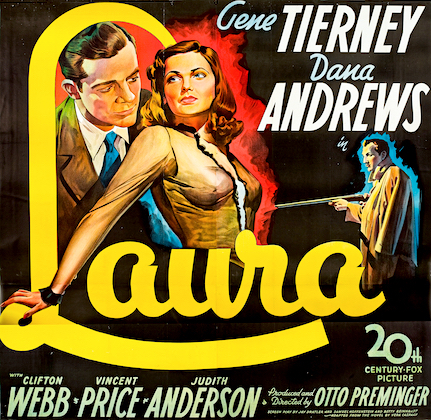
    Laura
    (1944)

    2018 #93
    Otto Preminger | 85 mins | download (HD) | 4:3 | USA / English | U

    Laura

    This classic film noir stars Dana Andrews as a New York detective investigating the murder of an advertising exec and society girl played by Gene Tierney, the eponymous Laura. And there’s a good twist halfway through that completely turns the film on its head, so I’ll keep this vague. (We can debate the merits or otherwise of openly discussing plot points from 75-year-old films another time. Heck, go on Twitter — I’m sure someone’ll be ranting about it from one side or the other right now.)

    As a murder investigation, Laura is a decent little mystery — there aren’t a huge number of suspects, but enough to keep you guessing; though I did eventually wonder if it actually hangs together 100% as a case. But that doesn’t matter when everything else about the film plays out so well. For starters, it’s noticeably well directed by Otto Preminger, with some nice shot construction and editing. Then the screenplay (based on a novel by Vera Caspary, and penned by three credited writers and one uncredited, as per the interweb) boasts lots of great dialogue. It’s rarely show-off-ily snappy, but it is effective and sometimes witty. That’s only appropriate considering one of the characters (Clifton Webb’s Waldo Lydecker) has a rep as a wordsmith — that wouldn’t fly if he didn’t have plenty of bons mots to offer.

    The rest of the cast are similarly noteworthy. Tierney is very plausible as the kind of gal everyone would fall in love with, and Andrews is equally so as the solid copper. A key supporting role is filled by a young-ish Vincent Price. (Can we call 33 “young”? As someone who was born in 1986, I’m going to go with “yes”.) It’s an accident of history how effective his casting is — not that his performance is bad in and of itself, but his later reputation brings certain expectations about how things might pan out. Is that warranted? Well, you’ll have to watch it to see…

    5 out of 5

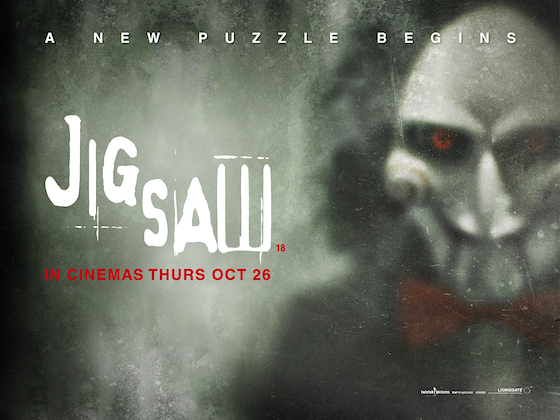
    Jigsaw
    (2017)

    2018 #104
    The Spierig Brothers | 92 mins | streaming (HD) | 2.35:1 | USA & Canada / English | 18 / R

    Jigsaw

    After seven films between 2004 and 2010, the Saw series seemed well and truly done. But nothing once-popular can stay dead for long in Hollywood, and so 2017 saw this revival (and this year will see another, pandemic permitting). It seemed to go down quite poorly, and I’m curious as to why. It’s a Saw film through and through — if you don’t like the series, there’s no reason you should like this — so, I mean, why would you want or expect a Saw film to not be a Saw film? Maybe it’s just people who don’t actually liking Saw films all that much but chose to watch an eighth one anyway? Well, it’s up to them how they choose to spend their time…

    Anyhow, as a Saw film, I thought it was one of the better ones. Not the very best (that’s still the first), but definitely top end. I liked the final reveal, which is a big part of these films’ appeal — what twist they’re going to pull in the final moments. Sure, I’d guessed part of it well in advance, but it still had some neat aspects. (I do wonder how many people were fooled into thinking Jigsaw was still alive, somehow? He died many, many films ago; he’s not coming back.) In terms of the whole series, it does raise a load of questions — but digging into them is really getting navel-gazing about the series’ continuity. I’m not sure it’s worth worrying about.

    3 out of 5

    Inferno
    (1953)

    2018 #107
    Roy Baker | 84 mins | Blu-ray (3D) | 1.37:1 | USA / English | PG

    Inferno

    3D and film noir aren’t things you readily associate with each other, but there are a couple of them — see here for a few. Some might count Hitchcock’s Dial M for Murder, too. Inferno here is another borderline case. The plot definitely has a whiff of noir — a husband left for dead by his wife and her lover, which cause her moral quandaries but him not so much — but the telling is more of an Adventure movie, some might even say a Western, with the husband struggling through an arid wilderness. Plus it’s all shot in brightly-lit Technicolor.

    Whether you count it as noir or not, it’s most noteworthy for its 3D. It was one of the last films made in the format during the fleeting ’50s experiment, especially as its studio, Fox, were backing CinemaScope as a TV-beater instead (well, I guess they were right). It doesn’t make blatant use of its 3D — there’s no stuff poking at the camera (until the punch-up finale) — but it often brings a nice sense of depth often, including to the wide-open desert vistas. It was well received, too, with the New York Times saying it was where “3-D comes of age”, and others comparing it favourably to other movies of the era, which treated 3D as no more than a gimmick and squandered its potential. All of that said, a climactic fight does indulge in all the in-your-face aspects we associate with classic 3D movies — but it was a late addition forced on the film by studio head Darryl F. Zanuck, who wanted to see more overt 3D action. In summary up, director Roy Ward Baker commented, “the critics gave it unanimous applause, largely because it has a good story to which the process contributed greatly, as opposed to the usual stereo films which were simply exploitation stunts. However, we did include a few of the cliches, at the behest of DFZ. I guess he was right at that.”

    It is a pretty good tale. Baker wanted to make a film in which “the leading character spends long periods alone on the screen, where the interest would be in what he does, rather than what he says.” Nonetheless, we’re given a voiceover narration from the hero, which gets a bit twee, albeit with an enjoyable dry wit now and then, and an interesting pragmatism about his situation. There’s some neat editing to juxtapose his situation with that of his condemners, too: when he’s starving it cuts to wifey enjoying a lavish meal; as he digs in the desperate hope of water it cuts to her lover casually fixing himself a drink. Said wifey is played by Rhonda Fleming, who apparently was known as “the Queen of Technicolor” because of her complexion and vibrant red hair. Everyone in the film is in love with her — even the cops who’ve just met her comment on it — and, yeah, I buy that. There’s an amusing bit where her lover is desperate to throw caution to the wind and visit her room that night simply because it’s “been four days”, wink wink nudge nudge. Men, eh?

    4 out of 5

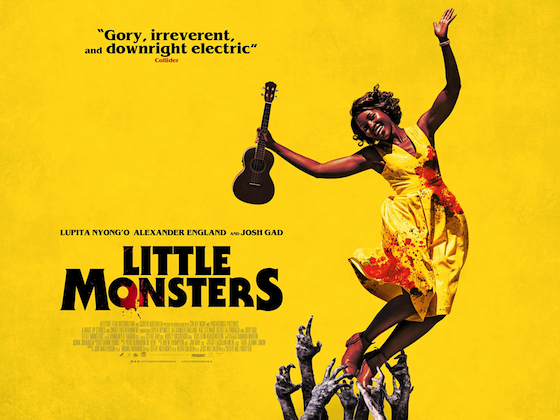
    Little Monsters (2019)

    2019 #138
    Abe Forsythe | 94 mins | cinema | 2.39:1 | Australia, UK & USA / English | 15 / R

    Little Monsters

    The zombie comedy — or zom-com — is basically a recognised subgenre (or sub-subgenre, really) at this point, birthing both high-profile hits (Shaun of the Dead, Zombieland) and smaller cult successes (Cockneys vs Zombies). For some reason this doesn’t seem to work with other monsters (Lesbian Vampire Killers, anyone?), so what is it about zombies that lends them to comedy? Perhaps it’s their roots in social satire. Perhaps it’s just that an enemy who can only shamble along slowly is inherently ridicule-worthy.

    Whatever, the latest entry in this sub-subgenre comes from Australian writer-director Abe Forsythe. We’re introduced to Dave (Alexander England), a washed-up wannabe musician whose argumentative long-term relationship has just imploded, leaving him on his sister’s couch being a bad influence on his young nephew, Felix (Diesel La Torraca). After he meets Felix’s kindergarten teacher, Miss Caroline (Lupita Nyong’o), Dave is smitten, agreeing to be a chaperone on a class trip to a farm. There they first meet kids’ TV star Teddy McGiggle (Josh Gad), and then an outbreak of zombies from a nearby military research facility.

    I guess taking a leaf out of Shaun’s playbook, Little Monsters invests a lot of time in its setup before it gets to the promised zombie action. As we witness Dave’s life fall apart, it feels more like a blokey indie comedy than a genre sendup, and it’s an age before Nyong’o turns up, never mind the zombies. I guess this is meant to be character stuff to get us invested, but its problem is it’s not terribly original — Dave is basically Dewey from School of Rock, and/or every other character that has already imitated that. Later, Teddy McGiggle is revealed to actually hate kids; he wanted to be a serious actor; now he’s an alcoholic; etc, etc. Asking us to invest in the characters is fine, but it helps if their arcs aren’t entirely predictable.

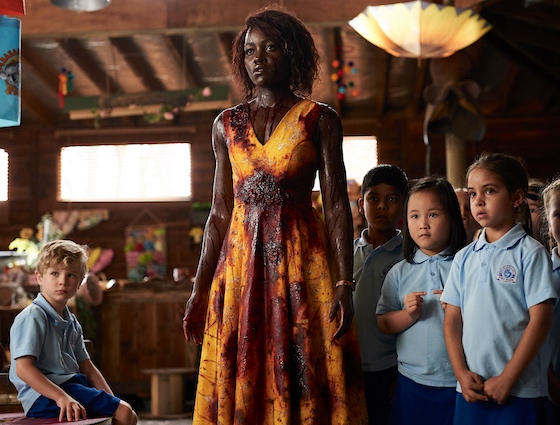
    Miss, you've got red on you

    Strumming a ukulele in her yellow sundress as she communicates with children on their level, Miss Caroline screams “Manic Pixie Dream Girl”. Fortunately, in the hands of Oscar-winner Nyong’o, there’s more to her than that, be it her savvy handling of Dave (clearly the latest in a long line of lustful dads) or wielding a spade to fight the undead. That sentiment perhaps extends to the film as a whole: it may be constructed from familiar building blocks, but its peppered with enough little moments of freshness that it provokes plenty of laughs. Most of that comes from having a class-full of little kids in tow, with the adults trying to pretend it’s all a big game for their benefit. Especially when watched with a late-night crowd up for the experience, it’s good fun.

    Often with films of this nature I say they’re “for genre fans only” or something like that, but I wonder if Little Monsters might actually play best for those unfamiliar with all the other movies it’s a bit like. Of course, forgiving genre fans will also be entertained. It doesn’t reinvent the wheel, but it’s a light and largely likeable hour-and-a-half.

    3 out of 5

    Little Monsters is released on Sky Cinema and in some cinemas in the UK today.

    The Twilight Saga: Breaking Dawn – Part 2 (2012)

    2019 #132
    Bill Condon | 110 mins | streaming (HD) | 2.35:1 | USA / English | 12 / PG-13

    I may’ve been pretty quiet for most of October, but it’s Halloween today and that means it’s time to uphold a tradition I’ve had since 2015 — but for the final time! Well, all good things must come to an end. Fortunately, so too must Twilight.

    The Twilight Saga: Breaking Dawn - Part 2

    As usual with films this deep into an ongoing story, I won’t bother making much of an effort to set it up for newcomers. Film series like this are more like miniseries, just with feature-length episodes that are released theatrically and years apart. You wouldn’t just watch Episode 5 of a five-part TV series, would you? That goes double here, as the title indicates: it’s also the second half of the final book.

    Ah, the title… As regular readers may’ve picked up by now, I’m a stickler for title accuracy (heck, it’s literally my job at the minute). The ‘correct’ title is what’s on the film’s title card… which you’d think is pretty straightforward, but every now and then something challenges that methodology. The Twilight films have consistently been a problem with that. Always promoted as “The Twilight Saga: [Film Title]”, the main title card in the films themselves use just the individual title bit. But Breaking Dawn has decided to be even more irritating, because Part 1 was called Part 1, but Part 2 is called Part Two. No, seriously. Look, I know this kind of thing matters not a joy to most viewers, but I feel like it’s indicative of the amount of effort and attention that was actually spent on these movies. (Despite all that, I’ve gone with Part 2 for the title of this review to match my Part 1 review, because I appreciate consistency, at least.)

    Numerical formatting inconsistencies aside, the opening titles are really nice. I mean, they’re not so amazing that you should go seeking them out especially, but they look good. And for once, it’s not all downhill from there!

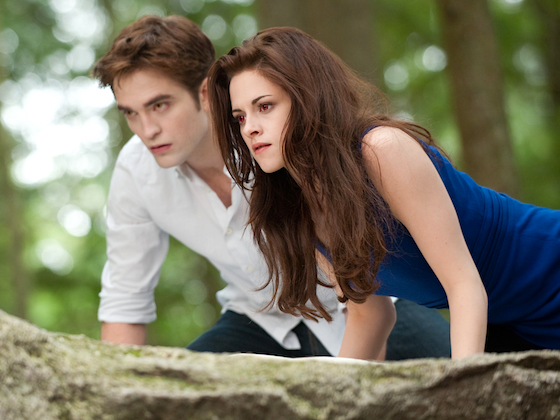
    Bella the vamp

    But only because the climax is probably the highlight of the whole saga — unless you’re primarily here for the romance stuff, which was mostly tied up in previous movies. It does make you wonder somewhat who this final part is for, actually. The central couple got married in the last film — that’s the end goal of all conservatively-minded relationship stories. You get married, then you live happily ever after, so naturally there’s no story beyond that point. (Heavy eye roll.) But Twilight isn’t quite an ordinary conservative romance, what with one of the pair being a vampire, so there’s some mythology stuff left to tackle. Well, no spoilers (yet), but Breaking Dawn isn’t ultimately very conclusive in that regard. Maybe author Stephenie Meyer was deliberately leaving room for a further book.

    As a commercially-minded theory, that seems a reasonable presumption. But the narrative of Breaking Dawn suggests Meyer was more than ready to move on. Out of almost nowhere, everyone starts developing superpowers (element manipulation, forcefield projection, the ability to deliver electric shocks, etc), which they must then learn how to use. Sound familiar? I can only assume Meyer got bored of writing shitty novels about vampires and werewolves so decided to make this one a shitty version of the X-Men instead.

    Further evidence of restlessness comes from the amount of plot we’re treated to. In almost all my Twilight reviews I’ve specifically noted how slow the films are, or that nothing happens; but this time so much happens they have to condense events with montage and voiceover. New characters are introduced at a rate of knots, simply to fill out an ‘army’ for the final battle. Any writer worth their salt would’ve known this was coming and spent time introducing these people earlier — it’s not as if there hasn’t been room for it in the sparsely-plotted earlier instalments. Simply, this saga is exceptionally poorly paced.

    Almost all of these characters are introduced in this film

    It’s certainly not the film’s only technical flaw. Apparently it cost $136 million, so why does it look like it was made for £3.50? Inadequate CGI has always been a feature of these films, so what possessed them to think they could pull off a CGI baby/toddler?! The result is fucking creepy; the very definition of the uncanny valley. Sometimes I think the people who made these movies shouldn’t be allowed to work again. The dialogue, the editing, the obvious green screen, the cheapo effects… it’s not just that it’s a crummy story with dubious morals, it’s that the films are so shittily made.

    But, as I said earlier, there’s almost some redemption. First, Michael Sheen rocks up as the head of the Volturi, who are the top vampire coven or something (I don’t really remember, it was explained three films ago). I think he’s thoroughly aware it’s all rubbish (I believe I read he only did it because his daughter was a fan), so he gives a delicious performance. It’s not over the top — he’s not just phoning it in for the payday — but it also seems aware that it’s all daft, so why not have some fun? He’s the Big Bad, so his presence enlivens the climax, which also benefits from a good old “two armies face off across the battlefield with rousing music” approach.

    And then they fight… and, wow, they should’ve called this The Twilight Saga: Breaking Off People’s Heads. It’s possibly the best of the series simply because of how fucking brutal it is. If you watched the previous films thinking, “I wish most of these characters would just die horrible deaths”, this is the sequel for you. And it’s still rated PG-13! They pull a woman’s head and arms off, and toss the head into a fire, and then they toss a toddler into the fire too… and it’s still rated PG-13! But half a glimpse of a woman’s nipple and you get an R. You’re fucked up, America.

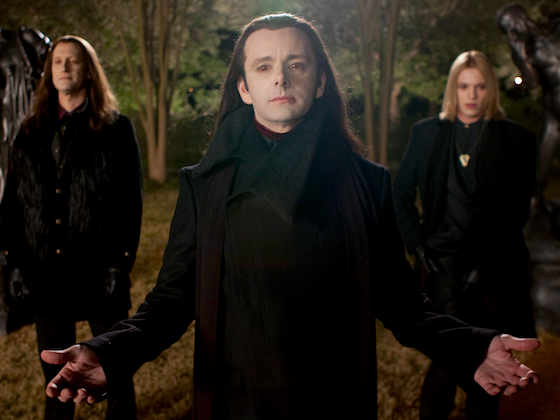
    Michael Sheen shines

    Post-fight, the film has one final good bit. I’m just going to spoil it, because if you’ve got this far I figure you don’t care. It’s revealed that the entire battle — which, note, killed off a slew of major supporting characters — was all a premonition. “It was all a dream” is frowned upon as a rule, but here it’s actually quite a neat twist. I didn’t see it coming, anyway. I guess I didn’t think anyone involved with Twilight was capable of such structural ingenuity. How I wish it was in a better film, more deserving of its effectiveness.

    Oh, but it’s not all sunshine and roses. It means the fight never happens, which means the bad guy isn’t actually defeated, he just decides not to bother (because he’d lose). But is he happy about it? Duh, no. So he… just goes home… still in a position of power, still not happy with our heroes… Is that a victory? Or has the villain gone away to cook up a new plan? As I said, it feels open for a further story. A pair of characters who wanted the good guys to win for their own nefarious reasons basically tell the heroes, “you’re all fools, the Volturi might’ve left but they’ll never forgive what happened”… and all the good guys just laugh, because they’ve won, because they’re the good guys. But they haven’t won, have they? They didn’t defeat him. They didn’t convince him. It won’t take much for him to come up with a new, better plan. Fuck it, I was glad this was over, but now I want to see The Twilight Saga Episode 6: The Volturi Slaughter All Those Cocky Bastards.

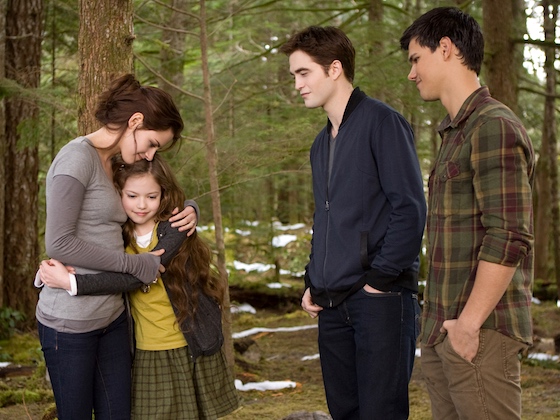
    Happily ever after

    But there isn’t a sixth instalment. This is it. I have completed The Twilight Saga, just over a decade since it first came to the big screen. Back then it was a relatively significant part of pop culture, with a rabid fanbase clamouring for the movies to be recognised, and turning them into major, much-discussed hits. But they were always critically reviled, both in print and on screen, and now it feels like their relevance is waning, presumably as old fans grow up and new ones fail to materialise. Or maybe they still do good numbers in book sales / TV airings / Netflix streams, but we just don’t talk about them widely because they’re not new anymore. Who knows. The only reason I care is because I’m wondering if I’ve spent ten hours of my life watching something I knew would be poor, spurred merely by its cultural significance, only to find that significance has quickly evaporated.

    Oh well. At least I’ll always have Face Punch.

    2 out of 5

    Review Roundup

    This small selection may at first look a little disparate, including as it does two comedies, with release dates separated by a quarter of a century, and a horror movie. The two points of connection are that I watched them all last year, and I didn’t really enjoy any of them.

    In today’s roundup:

  • Phantasm (1979)
  • National Lampoon’s Vacation (1983)
  • Step Brothers (2008)


    Phantasm
    (1979)

    2018 #92
    Don Coscarelli | 89 mins | TV | 16:9 | USA / English | 15 / R

    Phantasm

    A cult classic horror that spawned a pile of sequels and numerous novelty-packaged disc releases, Phantasm is about a supernatural undertaker, the Tall Man (Angus Scrimm), who (to quote Wikipedia) “turns the dead of earth into dwarf zombies to be sent to his planet and used as slaves.” Sounds totes plausible, right?

    Well, implausibility is no sin — many great fantasy or horror movies feed off setups that are just as outlandish. No, the problem here comes from the storytelling, because what happens in Phantasm is resolutely illogical. None of it makes any sense. No one behaves plausibly. Is there a mythology? I don’t know, because it all seems random. It appears to operate on some kind of dream logic, wherein stuff… just happens. And then at the end it’s revealed that it was, in fact, all a dream! Eesh. Are either of those things ok? Telling a story with “dream logic”, maybe. But then again, why should that be ok? We can’t control dreams, so we can’t expect them to obey the rules of narrative; but films are consciously made, so surely they should aim for coherence? And as for an “it was all a dream” ending, that’s just about the most despised device in storytelling for a reason. (Of course, there’s an “or was it?!” final twist, because it’s a horror movie and that’s how they always end.)

    It doesn’t help matters that the film simply isn’t well made. No one can act. Characters turn up out of nowhere. Most of it is cheaply shot and uninterestingly edited. There are a couple of good bits of imagery, but the rest of the movie is so nonsensical that that’s all it is — imagery. There’s no meaning attached.

    And yet the Phantasm series has its fans (or, predictably, “Phans”). Perhaps, if we’re being kind, we can say it’s an acquired taste — you either get something from its strangeness or you don’t. Clearly there are people (“Phans”) who see something in it. I wasn’t one of them.

    2 out of 5

    Phantasm featured on my list of The Five Worst Films I Saw For the First Time in 2018.

    National Lampoon’s
    Vacation

    (1983)

    2018 #140
    Harold Ramis | 98 mins | streaming (HD) | 16:9 | USA / English | 15 / R

    National Lampoon's Vacation

    Written by John Hughes and directed by Harold Ramis, Vacation certainly has strong pedigree (I’m not even going to begin to list all the classic comedies attributable to their names). It also spawned three sequels and a remake, so it’s clearly popular. Unfortunately, something about it didn’t click with me.

    It’s about a family going on a summer holiday; specifically, a cross-country road trip from Chicago to California, to visit Disney Walley World. Naturally, the journey doesn’t go to plan, and a series of episodic hijinks ensure. These include such hilarious escapades as meeting some black people (who of course steal their hubcaps); falling asleep at the wheel and careening through a town; hanging out with a cousin who French kisses his own daughter; and accidentally dragging their aunt’s dog along behind the car until it dies. Good times!

    There’s also a song by Lindsey “Fleetwood Mac” Buckingham, called Holiday Road, which is played again and again throughout the film. I started out hating it, but by the end I was listening to it on loop while I updated all my post-viewing lists. It’s sort of gloriously terrible. Sadly, I didn’t have the same Stockholm syndrome reaction to the film itself.

    2 out of 5

    Step Brothers
    (2008)

    2018 #204
    Adam McKay | 98 mins | streaming (HD) | 2.35:1 | USA / English | 15 / R

    Step Brothers

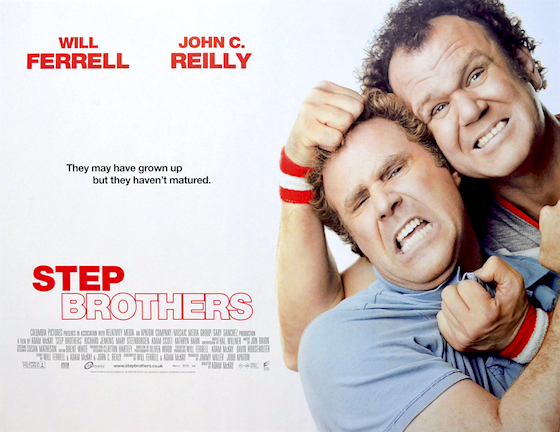
    Will Ferrell and John C. Reilly star as two developmentally-stunted man-children who are forced to live together after the former’s mom (Mary Steenburgen) and the latter’s dad (Richard Jenkins) move in together.

    The movie relies on the notion that watching two 40-year-old men behave like bratty 10-year-olds will be constantly hilarious. Spoiler alert: it isn’t. Unlike the infamous recent collaboration between Ferrell and Reilly, Holmes & Watson, this effort does at least manage some funny bits, though they generally occur when it moves away from the primary conceit for a moment. It also has the most implausible sex scene this side of The Room, which is some kind of achievement, I guess.

    2 out of 5

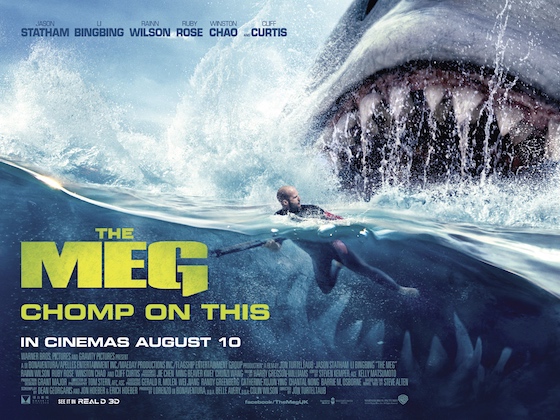
  • The Meg (2018)

    2019 #77
    Jon Turteltaub | 113 mins | download (HD+3D) | 2.39:1 | USA & China / English & Mandarin | 12 / PG-13

    The Meg

    Jason Statham vs. a giant prehistoric shark — what more do you need to know?

    Okay, well, despite the obvious pulp-blockbuster nature of this premise, it’s actually based on a novel, which was originally published in 1997 and so I guess arrived in a wave of post-Jurassic Park interest in man vs. prehistoric creatures thrillers. Well, Jurassic Park and the other obvious comparison, Jaws, were also both adapted from novels, so perhaps it’s not so weird after all. I’d never heard of the book before, but apparently it has a dedicated fanbase (there are multiple sequels), who were disappointed with this film because it makes some radical changes to the source material. Clearly, I’m not the right person to make that comparison.

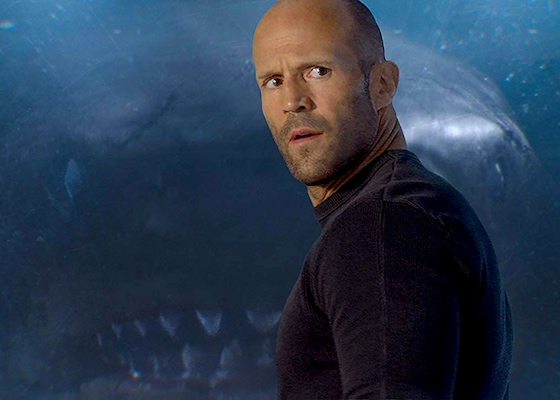
    Judged as a film in its own right, then, I thought it was a ton of fun. You know what you’re getting into with that pitch, and doubly so if you’ve watched the trailer. This isn’t some thought-provoking docu-drama about “what if we really discovered a prehistoric creature still lived?” This isn’t even Jaws, a relatively grounded adventure movie about normal people defeating a larger-than-average killer shark. This is a movie about a super-high-tech underwater research facility that accidentally unleashes a prehistoric monster and then all the scientists and submariners and whatnot on board have to track it down and stop it. This is a move about Jason Statham fighting a giant shark.

    Stath vs shark

    All of that said, some people have criticised the movie for not being quite as daft or out there as they wanted from a B-movie-inspired effects spectacular. I guess that’s a real “your mileage will vary” situation. Personally, I had a lot of fun with it. It keeps things more grounded than the utter batshit craziness of, say, Sharknado, but it’s clearly still allowing itself to have fun with the situations and concepts. It also doesn’t feel too samey, which considering there are only so many ways to interact with a giant shark is some kind of achievement.

    Other criticisms I’ve read include that it’s too slow to get going, focusing on undersea rescues rather than getting straight to Stath-on-shark action. Again, this was something I actually liked about the film — that it allowed at least some time to build the Meg up as a mysterious unseen force (and, in the grand scheme of things, not that much time — this isn’t Jaws). It also gave the film a certain scope and scale. It’s not like this shark rocks up and they defeat it in an afternoon — the plot spread out over a couple of days, at least. I don’t know, there’s just something I like about that pacing.

    Also, the film is a Chinese co-production, and so features many major and minor Chinese characters, and the climax is set in the vicinity of a Chinese beach. I’ve seen people criticise this aspect of the film because… um… Yeah, not liking that aspect smacks of racism, let’s be honest. I’m not saying everyone who dislikes The Meg is a racist — that would be stupid — but some reviews I’ve seen come with this slightly weird sense that part of the reason they dislike it is because it’s 50% (if that) a Chinese blockbuster.

    Who fancies Chinese for dinner?

    At the end of the day, I come back to what I said at the start: it’s a movie about a giant prehistoric shark being unleashed and attacking humans, and Jason Statham has to fight it. That’s all. It delivered on that in spades for me and I had a great time with it. And I guess tied to that pulpiness, if you have the option and enjoy the effect, I thought it looked fantastic in 3D.

    4 out of 5

    The Meg is available on Sky Cinema from today.

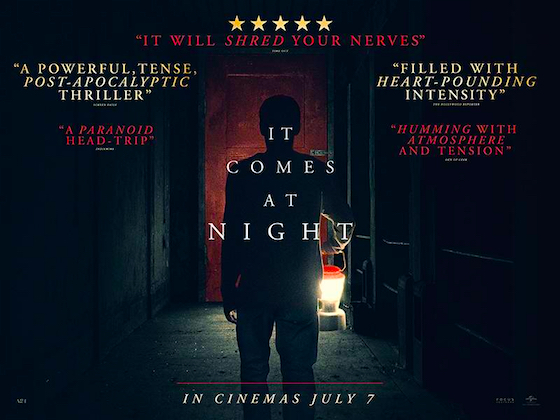
    It Comes at Night (2017)

    2018 #55
    Trey Edward Shults | 88 mins | streaming (HD) | 2.40:1 | USA / English | 15 / R

    It Comes at Night

    Described by Kim Newman in his Empire review as “existing between a Sundance and a FrightFest film”, which is a neat way of putting “arthouse horror”, It Comes at Night went down very poorly with many viewers, seemingly because it was mis-sold by its trailers. As someone who went in pretty much cold, however, I thought it was very good.

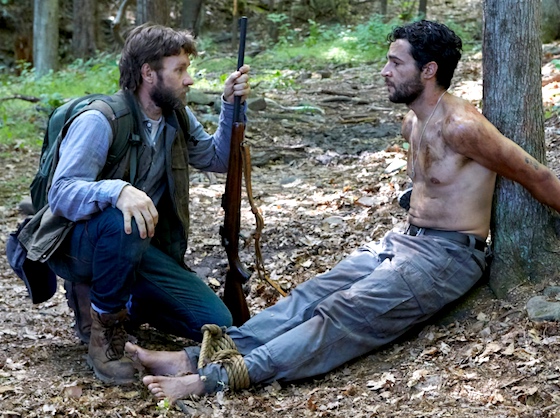
    Sometime after some kind of contagion has wiped out civilisation, we’re introduced to a family — Paul (Joel Edgerton), his wife Sarah (Carmen Ejogo), and their teenage son Travis (Kelvin Harrison Jr.) — who’ve sequestered themselves in a secure house deep in the woods. But their existence is disrupted by the arrival of a couple (Christopher Abbott and Riley Keough) and their young son seeking refuge. Although Paul is deeply distrustful, he agrees to take them in. But is there some one, or some thing, else waiting for them in the woods?

    Well, I should be careful there, lest I slip into doing what the trailers did. I watched one after the movie, and it certainly wasn’t a great representation of the film. So was it wrong to advertise it as a horror movie? Yes and no. I mean, it’s not your typical horror flick, but it is moody and creepy and tense, and scary because of it. I’m tempted to compare it to something like The VVitch, though their styles do diverge as they go on (I could say how, exactly, but it might be construed as a spoiler). It partly depends how you define genre. You could argue It Comes at Night is actually a psychological thriller with a dash of sci-fi (thanks to its post-apocalyptic setting) — and it definitely is those things — but, functionally, it’s a horror movie. It’s built to unnerve and scare you. It’s only really once those immediate terrors are out of the way — i.e. when the film ends — that what it leaves you to chew over is its commentary on paranoia and trust.

    Distrust

    In the case of the latter, and the way it executes its sci-fi-ish setting, it all feels very realistic and plausible. That realism is underscored by the pace, structure, and characterisation. The combination of the writing and an array of good performances mean all the characters come across as believable, supportable people — there are no clear heroes and villains here. And even things that look like clues to solving some mystery turn out to be, if not red herrings, then functional dead ends.

    It’s a very well-made film on the whole. The cinematography by Drew Daniels looks incredible. Well, some of the daytime stuff just has a grainy, handheld, documentary-ish feel, which is appropriate and well done if fundamentally unremarkable; but everything in the house after dark — seemingly lit only by handheld lanterns and torches — looks fantastic. And all that darkness is suitably scary, of course. Plus film grammar nerds are going to love something subtle the visuals do later on, if they even notice it — it’s that low-key that it might pass you by, but it’s really effective. (Writer-director Trey Edward Shults discusses what it is, and why they did it, in this interview. I had so much of that article copied into my notes for this review that I decided I may as well just share the whole thing.) I also liked the score by Brian McOmber. Sometimes it feels a mite familiar from other movies of this style, but it remains highly effective — not overblown, but atmospheric, without being a mere background hum.

    The best way to see It Comes at Night is as cold as possible — perhaps off the back of a positive, accurate review, say. A lot of the low viewer scores and negative comments do seem to stem from being mis-sold by the trailers, and I hope that, divorced from that, the film will be able to latterly find an appreciative audience; one not interested in gore and jump scares, but in tension, paranoia, and the psychology of fear.

    4 out of 5

    The Silence (2019)

    2019 #58
    John R. Leonetti | 90 mins | streaming (HD) | 2.35:1 | Germany & USA / English & American Sign Language | 15 / PG-13

    The Silence

    A 15- / PG-13-rated horror movie in which the world is under attack from creatures who hunt and kill via sound, and we follow a family who attempts to survive by hiding in a remote farmhouse, aided by the fact they’ve all learnt sign language to communicate with their deaf teenage daughter.

    If you’re thinking “wait a minute, that’s a description of A Quiet Place,” you’re right, it is. It’s also a wholly accurate summary of this new direct-to-Netflix film.* Yes, really, they are that similar. At first glance it seems utterly ludicrous that Netflix would release such a blatant rip-off, especially just one year after the previous film; but, as ever, there’s a little more to it than meets the eye: The Silence is based on a novel published in 2015, and filming began back in September 2017. It seems it got unlucky, and is now doomed to be dismissed as no more than a shameless rip-off. But while it’s not The Silence’s fault that A Quiet Place beat it to the punch, it is the film’s own fault that it’s not very good.

    The real problem here seems to be the screenplay. John R. Leonetti’s direction is fine, if unremarkable, and there are decent performances, particularly from leads Kiernan Shipka and Stanley Tucci, but they’re all saddled with a poorly rendered narrative. Early on, backstory is dumped via some random teenage-diary-level voiceover narration, making sure to shoehorn in some information that we then never actually need to know. One part of that asserts something along the lines of “everyone has a story of where they were when it happened; this is our story,” and then just minutes later we cut away to an event happening that’s completely unconnected to the main story. To make matters worse, it only does that once. It’s like they could only come up with one other idea for what might be going on during this disaster.

    Just going for a nice family walk

    The way The Silence handles its deaf character is another case in point, especially when contrasted with A Quiet Place. The latter embraced its deaf character and the family’s sign language communication (far more of the dialogue was signed than spoken), whereas The Silence sees to be doing its best to avoid or cover for that fact: she only went deaf when she was 13, so she still speaks, and she can lip-read so well people that other people don’t always bother signing to her either. There’s a bunch of little moments that undermine it as well. For example, at one point she has a video call conversation with her boyfriend, when for reasons of both situation (she’s sat in the back of the car with her family) and character (she’s deaf) it would make more sense for them to be texting. But later, the film flips all this on its head: once they full accept they need to stay as quiet as possible, they start mouthing things and signing all over the place, but the film doesn’t bother to subtitle it… although, ironically, if you turn on the hard-of-hearing subtitle track, it is subtitled. What a mess.

    Even coming in the wake of A Quiet Place, The Silence had a chance to mark itself out by telling a slightly different story: here the event is just beginning, so we’re witnessing the stuff the other film skipped over. Except A Quiet Place skipped it for good reason: we’ve seen this “the apocalypse begins” rigmarole in many films before. The Silence doesn’t have any significantly new perspectives on it. Eventually it introduces a cult of religious nutters to threaten the family, but it does so with less than half-an-hour of the film left, consequently racing through to a conclusion at breakneck speed. It’s weirdly rushed after the almost methodical hour that preceded it.

    It’s not an unmitigated disaster — there are moments that work, and Shipka and Tucci are both very watchable — but the overall concoction is poor, with shortcomings that are only emphasised by how well it was done in A Quiet Place.

    2 out of 5

    The Silence is available on Netflix now.

    * Unless you’re in Germany, where it’s instead getting a theatrical release next month. ^

    Resident Evil (2002)

    The 100 Films Guide to…

    Resident Evil

    Survive the horror

    Also Known As: Biohazard (in Japan — the film uses the original title of the game it’s based on in the country it originated from, appropriately enough.)

    Country: Germany, UK, France & USA*
    Language: English
    Runtime: 100 minutes
    BBFC: 15
    MPAA: R
    * The end credits call it “a German/British co-production”. IMDb adds the other two.

    Original Release: 15th March 2002 (USA)
    UK Release: 12th July 2002
    Budget: $33 million
    Worldwide Gross: $102.98 million

    Stars
    Milla Jovovich (The Fifth Element, Hellboy)
    Michelle Rodriguez (The Fast and the Furious, Avatar)
    Eric Mabius (Cruel Intentions, The Crow: Salvation)
    James Purefoy (Mansfield Park, Solomon Kane)

    Director
    Paul W.S. Anderson (Event Horizon, AVP: Alien vs. Predator)

    Screenwriter
    Paul W.S. Anderson (Shopping, Death Race)

    Based on
    Resident Evil, a video game by Capcom, directed by Shinji Mikami.


    The Story
    After a virus kills all the employees at the underground research facility of Umbrella Corporation, a team of commandos are sent in to contain the outbreak. But to do that they’ll have to fight the facility’s megalomaniacal supercomputer, plus all the employees, who aren’t exactly dead after all…

    Our Hero
    Alice wakes up in her mansion with total amnesia… but soon a bunch of military operatives are whisking her along into a life-or-death situation, which it turns out she’s equally trained for herself.

    Our Villains
    The undead! Hordes of ’em, as always. Plus an evil supercomputer who controls the entire facility and speaks with the voice of a little girl, because why not. Oh, and we know someone deliberately released the virus — could they now be part of the team investigating the facility? Hmm, I wonder…

    Best Supporting Character
    Rain is just one of the commandos, but, as played by co-billed Michelle Rodriguez, she gets the lion’s share of the best lines. (I mean, the dialogue is hardly sparkling, but what good lines there are, she gets. Maybe it’s all in the delivery.)

    Memorable Quote
    Rain: “All the people that were working here are dead.”
    Spence: “Well, that isn’t stopping them from walking around.”

    Memorable Scene
    With the team separated, Alice is exploring the facility alone and comes across some empty animal cages… and, shortly thereafter, the dogs that used to live in them… who are now zombie-dogs out to eat her, obviously. It’s mainly memorable for this bit:

    Memorable Music
    The score, co-credited to habitual genre composer Marco Beltrami and Goth rocker Marilyn Manson, was explicitly influenced by John Carpenter’s early electronic work, albeit given a very ’00s techno/rock spin by Manson.

    Letting the Side Down
    There’s so much stuff some would put in this category, but the main jarring point is some middling ’00s CGI. It’s not outright bad (like, say, the Rock-scorpion-thing in The Mummy Returns), but it definitely shows its age.

    Previously on…
    The first Resident Evil video game was released in 1996. The film is more “inspired by” than adapted from it. Multiple sequels to it came out before the movie finally hit the big screen, and even more have followed since, not to mention various spin-off novels, comics, animated films, and other stuff, like a themed restaurant in Tokyo.

    Next time…
    Five sequels followed over the next 14 years. Before the series-concluding final film had even made it to home media, a reboot was announced. That’s gotta be some kinda record, even for Hollywood.

    Awards
    2 Saturn Award nominations (Horror Film, Actress (Milla Jovovich))
    3 Golden Schmoes nominations (Most Underrated Movie of the Year, Horror Movie of the Year, Best T&A of the Year — you might read that last category and think “only in the ’00s!”, but I checked and they still award it today)

    Verdict

    Writer-director Paul W.S. Anderson has managed to sustain a lasting career out of making movies no one seems to really like. With a CV full of video game movies (Mortal Kombat, multiple Resident Evils, the forthcoming Monster Hunter), and B-movie do-overs (Death Race) and emulations (AVP), he’s a bit like a bigger-budgeted, less-objectionable version of Uwe Boll (remember him?). Anyway, the first Resident Evil is actually one of his better efforts. I’ve never played any of the games so have no idea of its faithfulness (“not very” is my impression), but Anderson took inspiration from early John Carpenter movies to create a lean action/thriller/horror flick (again, leaning into those B-movies), which drives the viewer from set piece to set piece with quickly-sketched characterisation (or, in many cases, none at all) and a mysterious backstory to be uncovered. It’s no masterpiece, but it’s a solid 90-minutes-and-change genre fix.