2013 #97
George A. Romero | 95 mins | Blu-ray | 1.78:1 | USA / English | 18 / R
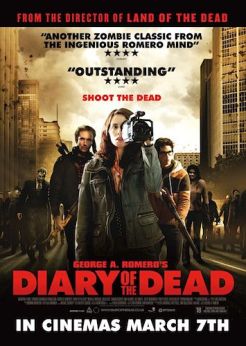 While making a horror movie in the woods, a group of friends hear news of the dead coming back to life. As they try to reach home, their aspiring documentary-maker director keeps his camera rolling, recording their encounters with the living dead…
After his first living dead movie, it took writer-director George A. Romero a full ten years to have a concept for a follow-up. Then it was seven years before he produced another, and then he skipped a decade entirely before he produced a fourth twenty years on. But it was only two years after that before he returned to the subgenre he’d spawned almost 40 years earlier.
The quick turnaround was thanks to Romero being inspired by the rise of ‘citizen journalism’ — that’s people who document events with mobile phone cameras and the like, telling their own alternative version of the news on blogs, YouTube, Twitter, and the rest. It gave him an idea for another of his zombie movies, which he rushed to make before anyone else could do it first. Too late, George: although he managed to get Diary of the Dead into festivals in 2007, its wider cinematic release came after Cloverfield, the high-profile big-budget version of Romero’s concept that’s rather kickstarted a whole found-footage subgenre. And anyway, both of them owe a clear debt to a film released eight years earlier, The Blair Witch Project.
I liked Cloverfield, and Blair Witch. I don’t object to found-footage as a genre when it’s done well. Diary of the Dead is… well, it’s a funny one. It marks Romero’s return to independent feature making, after producing Land of the Dead for a major studio, but he perhaps went a little too independent: with a clear low-budget ethic and a cast of unknown actors, criticism from some quarters that this is little better than a Syfy TV movie are not without basis. And the technological aspect is already beginning to feel dated after just six years (people use MySpace!), 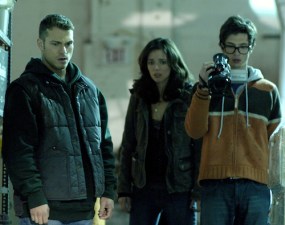 so goodness knows how it’ll look after even ten. Thing is, despite all that, Diary still has one ace up its sleeve: it’s written and directed by George A. Romero.
What does that mean, then? Well, it means clear social commentary, as usual. Some people say that’s not as subtle as it used to be — again, as usual. Romero’s targets this time are the news: how the mainstream media lies to us, and how we’ve turned to alternative sources. But he’s also aware of the limitations of those alternatives: the lack of real-world contact, interacting with each other through cameras, phones and computers; processing the world not by going to see it but by watching it in little boxes on a screen.
In taking on this world, Romero has produced a movie that fits right in amongst it. Diary feels like it was made by some just-out-of-film-school kid rather than a 67-year-old moviemaking veteran. Romero is clearly a stylistic chameleon (as I noted on Land of the Dead), but that’s the surface sheen: the digital HD visuals, the syndicated-TV-level ability of the cast, the cut-price CGI… It’s also, sadly, sometimes the writing: the dialogue isn’t all it could be, and the characters are sketchy and archetypal — though, in fairness, that’s not unheard of from a Romero supporting cast. But, as ever, Romero adds his own spin by attempting to engage with social themes; not only those I’ve mentioned, but several more: “do we deserve to survive this?” is the closing note — again, taking on one of Romero’s pet subjects, the violence of humanity, against ourselves and others. Earlier in the film the military turn up, very briefly, but they are the opposite of all they should be. It’s not just that Romero hasn’t changed his views in 30 years or more, it’s that the world hasn’t changed either.
 That said, the thematic concerns feel less resonant than in Romero’s previous work. The found-footage has led him to frame this as a film-within-a-film — the first title card reads The Death of Death, followed by one noting it’s “a film by Jason Creed”, the aforementioned aspiring director — complete with montages of news footage and, at times, a voice over narration. This rather rams the point home at times, over-explaining features that previously Romero would have allowed us to spot for ourselves. In some respects you can’t blame him being more obvious in this day and age — it needs to be on the nose to get through to some people — but it’s less satisfying, the blunt information coming across as a statement rather than asking us for our own interpretation, which I feel can lead to a more insightful analysis.
This is coupled with arguably a greater focus on action and gore than ever before. The first three films limit the majority of their violence to a final-act brawl — think Night’s trip to the gas pump/zombie break-in, the bikers in Dawn, the zombie break-in (again) in Day, the zombie, er, break-in in Land — but here we’re given a smattering throughout, with no all-or-nothing finale. That’s not a bad thing, but it makes it feel more pervasive — even more so than Land, which was an action-adventure movie through and through. Is Romero playing to his crowd, here? The ones who have always looked to his films foremost for their zombie-killin’ special effects; the ones who think Zack Snyder’s Dawn remake is superior to most/all of Romero’s films? (Seriously, those people exist.)
 Such folks, and even genuine Romero fans, seem to have two major problems with Diary (aside from arguments about the acting, the storyline, or even the entire concept). First, the gore: where Land added CGI to the traditional mix, Diary’s almost exclusively courtesy of computer wizardry. That’s the age we live in: computer effects are so commonplace that they’re now the cheap and easy thing to achieve, rather than men with buckets of red food colouring and entrails from the local butcher. For me, it’s a mixed bag. I don’t think this is the worst CGI I’ve ever seen (unlike some commentators), but I do think it lacks the distinctive Romero feel — there’s none of his trademark eating of intestines, for instance, or the tearing a human in half that’s become a key visual in every film since Dawn. Perhaps that’s because of the realism angle? No one would film that; they’d turn away. Of course, when zombies get shot/beaten/etc, that’s different; that we can watch.
In fact, Romero kind of has his cake and eats it. There’s CG gore aplenty, and new and inventive ways to kill the zombies, but he still criticises that “violence for the sake of it” attitude, particularly in the film’s closing moments. He also takes pot-shots at fast-moving zombies and the treatment of women in horror films, but those are deserved, especially as they generate a laugh here. Nonetheless, said inventiveness is somewhat entertaining. There’s a particular good bit with an Amish man (the film’s best character) and a scythe, and another with a kid and a bow & arrow. I guess gorehounds will never be satiated by CGI, instead always moaning it looks cheap, but here at least it’s fine — doubly so for a film of such low budget.
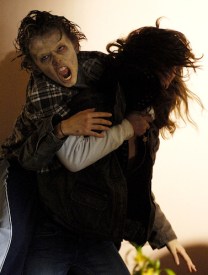 The other problem bemoaned by fans is that this is a reboot, of sorts. Romero’s previous zombie films feature no recurring characters and don’t sit properly within the same timeline, but they nonetheless feature an evolution of the zombie epidemic: it spreads from a one-night issue in Night to a dragging problem in Dawn, to an all-consuming one by Day, in which we see the zombies gaining in intelligence, to the point where they consciously form an invading force in Land. But Diary scraps all that, going back to the start of the epidemic. It doesn’t remake Night — in fact, it handles a few things notably differently (in Night the radio and TV report factual and helpful information; in Diary, they obscure the fact the outbreak is even happening) — but it does disregard the development Romero had taken the undead through.
This may, then, be the time to mention that Romero doesn’t consider his films to be sequels, because each one starts with a new set of characters and tells a self-contained story. He has a point: consider any of the first four films in isolation and you’ll realise you don’t need to have seen the preceding movie(s) to follow them, they just don’t take the traditional move of starting from the birth of the zombie problem. This is perhaps most evident in Land: the sci-fi-esque dystopian world, born of ours but notably different, is the setting for dozens of movies; we’re used to jumping into that without three films’ worth of exposition on how we got from here to there. So if you choose to consider each film as a standalone, self-contained entity, Diary going back to the start doesn’t seem quite so odd. It’s even necessary for the film’s theme: the premise requires it to be set in a present-day we recognise that’s then transformed by the zombie epidemic, rather than a sci-fi future set post-Land.
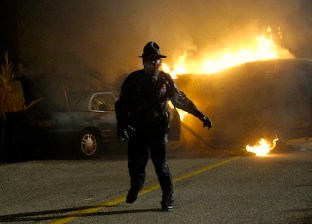 But, nonetheless, the epidemic did develop and evolve across Romero’s previous films, and that’s been lost here. Maybe there’s nowhere further to go with it? I’m not convinced of that. Perhaps Romero will have another idea and get to tell that story someday in the future, leaving Diary (and Survival) as an aside to his once-a-decade continuing series.
I disagree with those who think Diary is without interest or merit — clearly, as I’ve gone on this long about it. Romero brings a class to the concept that a lesser director wouldn’t, but it’s also a concept a lesser director could have realised much of in a similar fashion. It’s unquestionably the weakest of Romero’s first five ‘Dead’ films, then, but that still leaves it notably better than many, many other contributions to the genre.
Part of Week of the Living Dead for Halloween 2013.

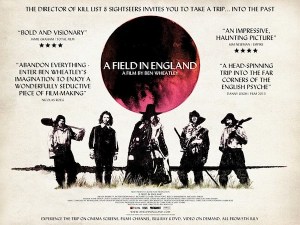 Much was written about A Field in England at the time of its release, so if you frequent the right places online or in the press you can’t’ve missed it. Nonetheless, there’s a good chance you’ll have heard of it more for its release format(s) than for anything in the film itself: the fourth feature in just five years from new British critical darling Ben Wheatley, it was released to cinemas, DVD, Blu-ray, download, video-on-demand, and shown on free TV all on the same day, a first for British cinema. Any casual viewers who checked it out for that reason were in for a shock, because this certainly isn’t an easily-digested mainstream experience.
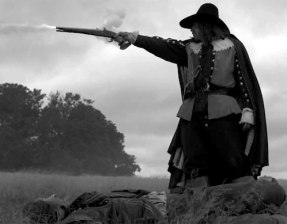 That very subtlety leads some viewers to write this kind of movie off — and fair enough, because if you’re searching for any kind of mass acceptance you don’t do it with a black-and-white film about a few blokes in period dress running around a field doing weird, inexplicable things. Though you might top it off with a shoot-out that is arguably one of the year’s best action sequences, something Wheatley and co do do. And without making it feel tonally out of place, either. Impressive. In keeping but even more memorable is the moment you’ve surely heard about — “when he comes out of the tent with that look on his face”. I wasn’t able to watch the film until something like 24 hours after its Big Premiere, by which time I’d already heard everyone talk about that, and yet it was still uncomfortably uncanny. Kudos, Reece Shearsmith, you’re an odd’un.
 In terms of the new funding models and simultaneous multi-format release and all that… well, it depends what their goals were. If it was to make interesting, alternative, minority-interest films… fantastic, they’ve done it — and got a remarkable amount of interest in the process. If it was meant to be a way of turning a profit, or of reaching a bigger audience… well, it succeeded this time — but how many of those viewers are going to come back? A Field in England is definitely the kind of film that appeals to some people, but it is defiantly not “mainstream cinema”. No bad thing, and something that should be encouraged, supported and funded in some way; but however you do it, it’s not going to continuously bring in big bucks.
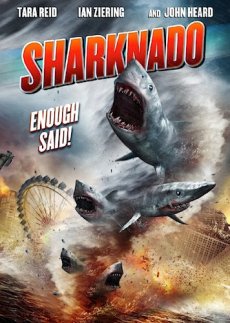 Sharknado is a defining film of 2013. The volume of conversation it generated, which achieved the near-impossibility of higher viewing figures for its repeats, is exceptional. So I was determined to give it its due in a full-length review. But I can’t be bothered — it doesn’t merit such attention.
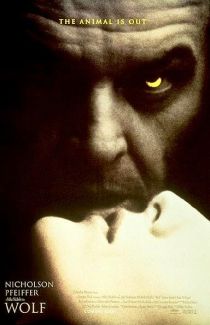 Without meaning to spoil anything, Wolf is rated R for “language and werewolf attacks”! I love the ludicrous specificity the MPAA indulge in sometimes. I know the BBFC’s famous “mild peril” is pretty useless, but at least they draw from an academic- and objective-sounding pool of phrases in their summaries, rather than throwing in ‘advice’ that is meaningless (there are perfectly PG werewolf attacks in other movies).
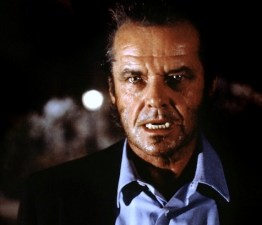 It’s those early sections where the film is at its best, when it tries to stay grounded in some form of realism. Any time it gets too Fantasy, it begins to get a tad silly. The climax in particular seems to come from a different film: Wolf abruptly moves from being an office politics drama with a fantasy edge, to a full-on manwolf-vs-manwolf brawl. As a straight dramatic director, Mike Nichols doesn’t seem to quite have the chops to pull off this fantasy/horror stuff without it beginning to look daft. That might not be entirely his fault, however, as reportedly the film was delayed by months to re-shoot the entire third act. Perhaps originally it had something more in-keeping? That said, he did want Michelle Pfeiffer to wear a red-hood sweatshirt during the finale! She refused, fearing it would harm the film’s credibility. She was right — it’s quite silly enough as it is.
 I can only presume there were hefty paydays for Nicholson and Pfeiffer, both megastars at the time, and possibly Christopher Plummer’s supporting role, maybe Nichols, and on scoring duties (obviously), Ennio Morricone. And maybe those re-shoots were really extensive. Or perhaps they spent it all on the nighttime aerial photography of Manhattan, which is gorgeous — that would’ve been worth it.
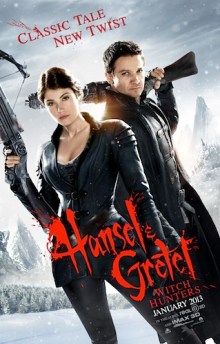 Having heard only bad things, I expected a soul-crushing dud of
  Sean Bean and his ragtag band of knights investigate an unaffected village during Ye plague-adled Olden Days in this folk horror from the director of
 Once, zombie auteur George A. Romero commented that he’d hoped to make one zombie film a decade — witness
 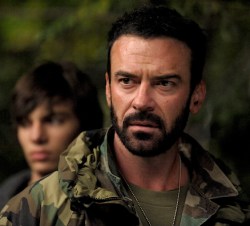 Well, that little gang of military types are back — and now they’re the heroes. Survival even takes the time to flashback to Diary, noting the release of the film-within-a-film led to the military gang’s leader, Sarge (Alan van Sprang), being recognised. It’s not a plot/character thread Romero chooses to develop further — there’s no about-turn in his values, or a desire to hide from said recognition — which is a shame, actually, because the plot supports such a move.
 It’s also here that they meet a character known only as Boy (Devon Bostick), who had been co-opted into the gang of hunters. Turns out he’s handy with a weapon himself, and resourceful and clever. What an intriguing mystery. But don’t get too caught up — Romero never again alludes to where such skills materialised from. In fact, he so doesn’t return to the Boy’s abilities that I wonder if we weren’t even really meant to notice. Which doesn’t make sense. Is he left over to be revisited in a third in this new zombie series? Romero doesn’t seem to be in any rush to produce one… but then, Survival was an almighty flop (it even went straight to DVD here), so I guess we’ll never know.
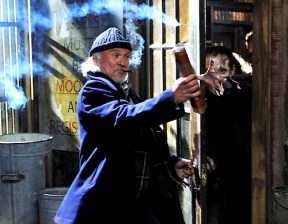 also a definition of US foreign policy, is it not. And I’m sure it’s no coincidence that the islanders are Irish; and not just Irish in the way so many Americans claim to be “Irish” or “Italian” or whatever just because 200 years ago they had some relatives who emigrated, but properly, thickly-accented Irish. Which, yes, is kinda odd on an island off the coast of America, but hey, why not.
 I have no problem with CG blood splatter or what have you, and it’s as palatable here as it was there. There’s also a welcome return for his brand of humour, which went somewhat AWOL in the last couple of films. Those who criticise the film for being too comedic have, in my view, become too obsessed with modern cinema’s uber-serious tone. Lighten up folks, it’s a horror/sci-fi/fantasy movie.
 #84a Dr. Who and the Daleks (1965)
 #92 The Tale of Zatoichi, aka Zatôichi monogatari (1962)
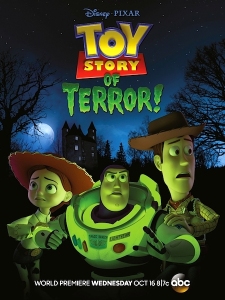 The fourth
 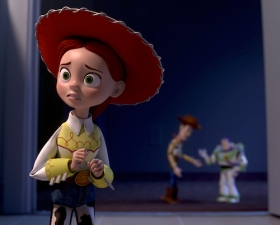 The second half is more familiar Toy Story stomping ground — indeed, if there’s one bum note, it’s that the villain and his ‘plot’ are almost a rehash of
 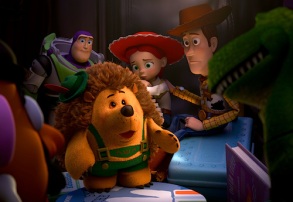 Apparently Toy Story of Terror! spent two years in development. While that might seem excessive for a mere under-half-hour animation, the time and effort have paid off handsomely: the result is a thoroughly entertaining short — and one that actually embraces its seasonal theme, rather than forcing it in as an afterthought. Terrific.
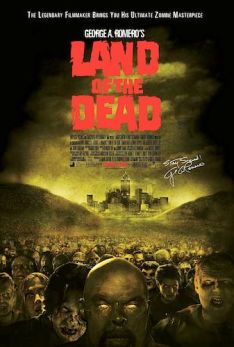 While the first three ‘Dead’ films (or “the original trilogy”, to put it in
 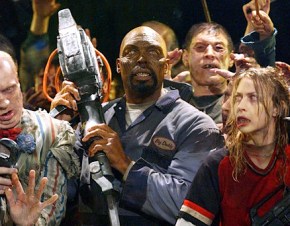 and then a desire for revenge, when he sees the glittering lights of the city in the distance. Lead he does, corralling the other zombies into a slow march towards their target.
 In the world of the humans, meanwhile, we also have an oppressed majority: the slum dwellers. Attempts at revolution there are soundly ignored, with the rich quietly taking the opposition out as ‘trash’ whenever able (which, I guess, is whenever they want). The people are controlled by drink, drugs, gambling, prostitution, and any other cheap entertainment you can imagine, all secretly managed from on-high to keep the general populace docile. And those entertainments are getting increasingly extreme, too: the zombie-on-zombie cage fights previously used cat or dog meat as motivation, but now they throw in Asia Argento. Again, Romero is holding a mirror up to present-day America, where the illusion of a ‘free society’ with easy social mobility is supported by the mega-rich in order to keep the poor down. It takes the zombie invasion for anything to change, which may be a case of Romero “following the story” rather than reflecting a political reality — who’s going to invade the US?
 Those commenters that do acknowledge these facets claim Romero’s just not as subtle as he used to be, which is also poppycock: Dawn’s criticism of consumerism is as blatant as anything listed here — perhaps even more so, because you can just watch Land as a near-future science-fiction humans-vs-humans-vs-zombies action flick, whereas I think Dawn’s ‘subtext’ is unmissable.
 If you want to see people getting ripped apart by zombies with their guts spilling out everywhere, in traditional Romero style, then… seriously, what’s wrong with you people?! But, erm, you should be satiated.
 100Films.co.uk