
Ernst Lubitsch | 104 mins | DVD | PG
 Sumurun seems completely different to any film yet seen in the Berlin box set, yet this is more in line with the style of film that would ultimately lead Lubitsch to Hollywood.
As the alternate title would suggest, this is primarily an Arabian Nights-style drama… but, while on the surface this looks entirely at odds with Lubitsch’s previous comedy work, it actually concerns itself with the same topic: romance, and the various entanglements and complications that lead to it. What’s different here is that instead of being wholly comic it’s often deadly serious (literally, as it turns out), and instead of one simple girl-meets-boy trajectory (as in the preceding three films) there’s two girls and four boys between them, in various combinations. It’s a many-stranded, relatively complex narrative: there’s a group of travelling minstrels, an old sheikh, a young sheikh, a cloth merchant, a bevy of harem girls — all of whom are connected and interact in varying ways with varying objectives, though most are related to love — or lust.
The change in style is no bad thing. Lubitsch was clearly versatile, turning his hand well to this type of storytelling. His comedies are all based around romance, one way or another, and so treating the subject with a little more seriousness seems no great leap. He keeps control of the plot, despite the numerous strands and complexities, and his comedy background allows the tropes of farce to be employed in furthering the story. His previous use of fantastical realms, like the dolls’ world of Die Puppe, aids a succinct establishment of Lubitsch’s version of Arabia and its specific rules. Indeed, with its fantastical setting and shortage of character names (only Sumurun, Nur al Din and his two slaves — Muffti and Puffti — are known by more than their title, job description or physical impairment), Sumurun may be as much of a parable as some of the comedies.
And still, comedy creeps in round the edges. Lubitsch is arguably showing restraint by not letting every sequence descend into it, but there is a fair amount of wit and humour lurking throughout. It’s mostly applied wisely though, furthering character, story or both: the ugly hunchback who smiles at a child only to make him cry; the harem girls giving their eunuch guardians the runaround (multiple times); the two wannabe-thieves accidentally stealing a pretend-dead body and desperately trying to hide or dispose of it — the last a subplot which ultimately plays a key part in the climax.
What’s a little unclear is why it should be called Sumurun. Perhaps it’s no more than a vestige from the source, because while the titular harem girl is quite significant, she’s no more so than several other characters. Pola Negri’s namless dancer in particular seems more central to the narrative — indeed, she connects most of the disparate groups and plot strands; certainly more of them (and more significantly) than anyone else. But then, Sumurun survives to the end, and — along with her man, Nur al Din the cloth merchant — is the purest, most righteous, most deserving of all the main characters. Conversely, all the ‘bad’ (and, as noted, nameless) characters meet their end: the sheikhs are both fickle, and the old sheikh clearly a nasty piece of work; the dancer is flirty and adulterous; the hunchback, however, is devoted to her, and his tragedy effectively balances the “and they all lived happily ever after” of the freed harem girls and Sumurun and Nur al Din finally getting each other. If this is a parable, there’s quite a clear message about fidelity.
Sumurun may lack the straightforward fun of Lubitsch’s comedies, but by creating a complex and engrossing Arabian epic he entertainingly demonstrates that there was more to him than just the talented comedian.

Read more reviews from Lubitsch in Berlin here.
 Culloden tells the story of the 1746 battle — famously, the last fought on British soil — and the events that followed it, as if it were covered by a modern TV news report (albeit a feature-length one).
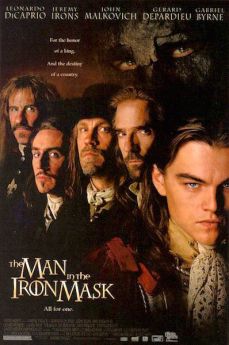 From the off it’s clear that The Man in the Iron Mask is not going to go well. It’s an adaptation of a tale of the Three Musketeers, so naturally is set in historical Paris… where everyone has a different accent and very few of them are French. It is, to be blunt, a horrid mishmash — much like the whole film.
 Ed Zwick seems to like war. More accurately, Zwick likes making films about war, but clearly isn’t a fan of the act itself. Since gaining attention with multi Oscar-winner Glory, about the first black regiment during the American Civil War, he’s directed a number of films concerned with wars and those that fight them:
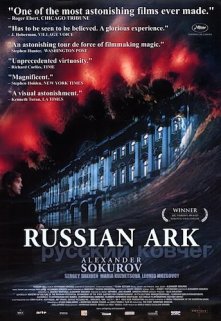 Russian Ark has received boundless praise from some quarters, and not just for being shot in a recording-smashing single take — to cite
 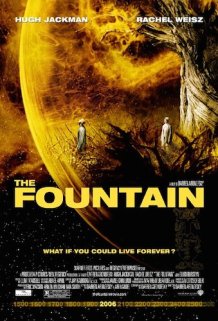 The Fountain was one of the more critically divisive films of recent years, eliciting genuine “love it or hate it” reviews all round. I find myself leaning more towards the former. While I can’t claim to fully understand (let alone explain) much of what it means, and while I usually dislike things that can pretentiously be described as “film as poetry” (or similar), there’s something in the qualities of The Fountain that engaged me.
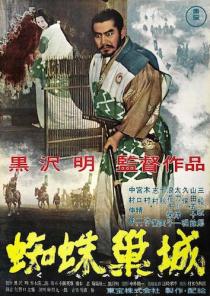 Kurosawa moves Macbeth from Scotland to 16th Century Japan in this retelling of Shakespeare’s infamous Scottish Play. I’ve heard this described as a loose adaptation — perhaps those reviewers have never read the play. Kurosawa sticks very closely to the structure of Shakespeare’s version of the story (though based on real events, Shakespeare changed key details), often choosing to adapt it scene-for-scene. It works well in the new setting, with some of the themes — honour, respect, betrayal — perhaps becoming more understandable when placed in samurai culture. Kurosawa changes other elements too — character names are understandably localised, there’s only one witch, there’s no version of the famous “Is this a dagger which I see before me?” monologue, and so on. It’s not all omissions however, as Kurosawa adds imagery and symbolism of his own. Again this helps to place the story in its new context, but also covers the loss of Shakespeare’s original language (a major sticking point for some critics).
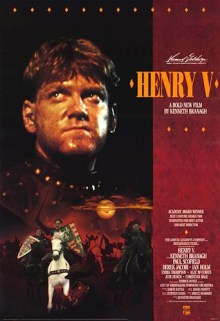 Once more unto the breach, dear friends, as I delve into a second version of Henry V in as many (viewing) days. (I dread to think how many reviews of this film began with a similar quote-based pun.) Inevitably, having watched them so close together, this is as much a comment on the relative merits of Branagh’s and
  Or The Chronicle History of King Henry the Fift with His Battell Fought at Agincourt in France, as the title card (and therefore
  Back to catching up on last year’s films that I missed, this time with Beowulf in its Director’s Cut form — which, much to my amusement at the time, prominently featured a BBFC 18 icon on its initial cover art but only received a 12 when classified. Clearly the BBFC didn’t feel the “bolder, never-before-seen images” were any more unsuitable for kiddies than the originals. Personally, I’m not so sure. This version of the film is bloody violent (literally); more so than
  100Films.co.uk