Sorry to Bother You (2018)

2018 #250
Boots Riley | 111 mins | download (HD) | 2.39:1 | USA / English | 15 / R
Sorry to Bother You

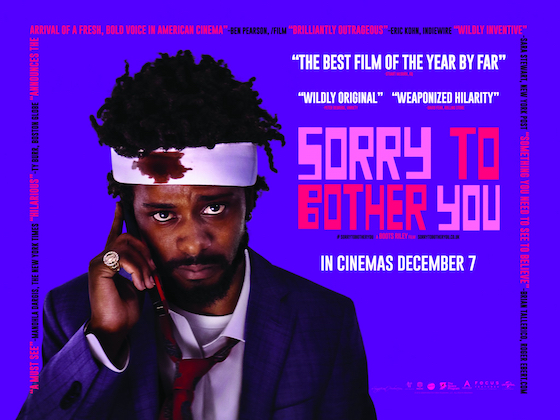
It felt like everyone was on about Sorry to Bother You early this year, after it was released in the US in July. It’s taken ’til now to make it to UK screens — I don’t know if that was a conscious delay, or if the outpouring of recommendations from critics and audiences on social media had something to do with creating demand for distribution. Anyway, it’s fortunate that, as a small movie, most of the discussion (that I saw) was about urging people to see it and not giving away the twist (naturally, this review is equally spoiler-free), because it is indeed a helluva turn to come across unaware. As for the rest of the movie, well, I was less convinced.

Set in a like-our-world-but-not-quite present day Oakland, the film centres around Cassius “Cash” Green (Lakeith Stanfield), a down-on-his-luck chap who lives in his uncle’s garage with his artist girlfriend, Detroit (Tessa Thompson). He manages to land a lowly job as a telemarketer, but struggles to sell anything. As his equally unsuccessful colleagues attempt to unionise, Cash discovers the key to the job and is soon on his way up the company, where there are dark secrets to be discovered…

That’s the simple version, anyway. First-time writer-director Boots Riley clearly has a lot on his mind, and it seems he wanted to say it all in this one film. The unifying theme seems to be “mega-corporations treat their workers like slaves and will go to extraordinary lengths to exploit them”, which is a worthwhile point but hardly a revelatory one. In the film, the concept is primarily satirised by the company Worryfree, which offers customers a home, employment, and food for life, in exchange for living in their facilities, working their jobs, eating their food, and not getting paid because they’re providing all you need. As a business concept you can kinda see the appeal, actually, but obviously it’s a form of slavery really. Capitalism is bad, y’all.
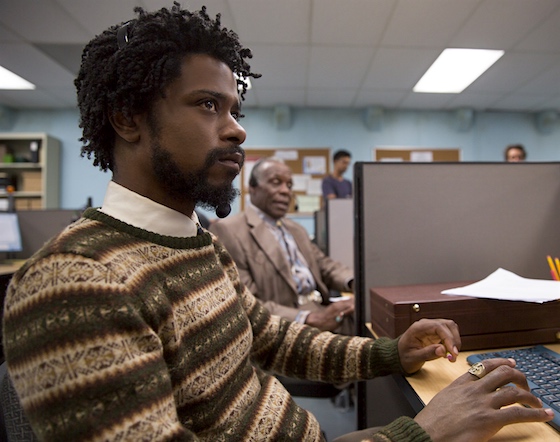
Too young for this shit

Naturally, with a black writer-director and black main cast, there are connections to be drawn out to history and the present black experience, and here the film finds somewhat more subtle and fertile ground. For example, the key to success in business turns out to be for Cash to use his “white voice” when selling — sounding literally like a white man, to the extent that Riley has these scenes dubbed by a white actor (in Cash’s case, David Cross; other characters’ white voices include Patton Oswalt and Lily James). As I say, it’s only “somewhat” subtle, but it’s effective. The film’s best scene, for my money, sees Cash attend a party thrown by Worryfree’s founder (Armie Hammer, perfectly cast), who urges Cash to rap — because all black guys can rap, right? Cash can’t. He tries. It’s painful. Then he hits upon an idea… I shall say no more (partly because I’d just have to censor it), but it’s both hilarious and true.

As for the aforementioned big twist, it’s absolutely barmy and out of left-field. Its utter craziness I have no problem with, but for me the film seems to fall apart after that point, as if including such a batshit insane idea was felt to be enough. Riley doesn’t seem to quite know where to go with it, except, frankly, some pretty obvious places. Arguably, the twist is too out there — it’s shocking and funny at first, but it completely disconnects the film from reality (and the connection was a little loose in the first place, thanks to the way all other parts are satirically presented). It makes the bad guys into cartoon villains with a crazy plan, rather than the scheming corporate overlords we recognise from real life. There’s plenty of other stuff in the film that doesn’t have 100% fidelity to reality, but they work in the name of satire. The twist isn’t really satire, it’s barminess for the sake of barminess; and in that sense I’m down with it, but it also means it somewhat undermines the film’s satirical goals, and that’s a shame.
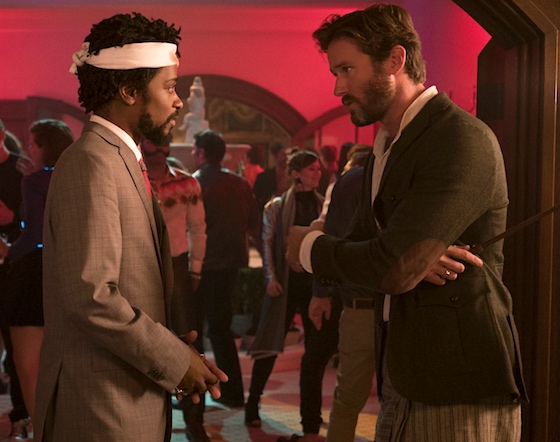
Does he look worry-free to you?

While the finale might be the most obvious example, this lack of focus permeates the film, with scenes that are a total aside or subplots that go literally nowhere. Perhaps the most egregious example is a mystery VIP room in the shitty bar the characters drink in. It’s featured in one early scene, doesn’t introduce any characters or plots, and isn’t related to any of the film’s themes — it just is; a sketch-like vignette of silliness. Most viewers probably forget about it, even, because it occurs so early on and has literally nothing to do with anything else that happens, but that’s exactly what’s wrong with it, and why it should probably have been cut.

Riley clearly has a surfeit of ideas, which sometimes works to the film’s merit — there are effective, memorable visuals and concepts, a few solid characters (Stanfield is great as just an ordinary guy getting swept along by shit; the kind of person most of us would be, I feel), and a bunch of funny lines and exchanges. But there are so many different things all being rammed onto the screen at once that it becomes a tumult of stuff that the first-timer in charge can’t quite control (as a counterpoint to Stanfield, the regularly-brilliant Thompson struggles gamely to bring some depth to her thinly-sketched girlfriend/performance artist character, and can only partially succeed).

Sorry to Bother You seems to lack the behind-the-scenes acumen to make everything come together as a single, focused movie. It’s certainly an interesting film (well, apart from when I began to get a bit bored, frankly, as it dragged itself through that surprisingly predictable finale), and I can see why it got Film Twitter talking back on its US release, but I don’t think it coalesces into a fully satisfying whole.

3 out of 5

Sorry to Bother You makes its belated debut in UK cinemas tomorrow.

February Review Roundup

As 2018 races towards its finish line, I’m sat on a pile of nearly 130 unwritten reviews. Oof. And to think, I started that page when I first got 10 behind.

Anyway, as my (likely in vain) attempts to reduce that number continue, today’s roundup includes three reviews of films I watched all the way back in February:

  • WarGames (1983)
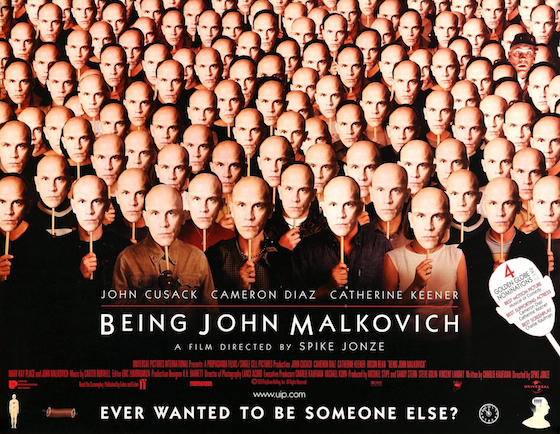
  • Being John Malkovich (1999)
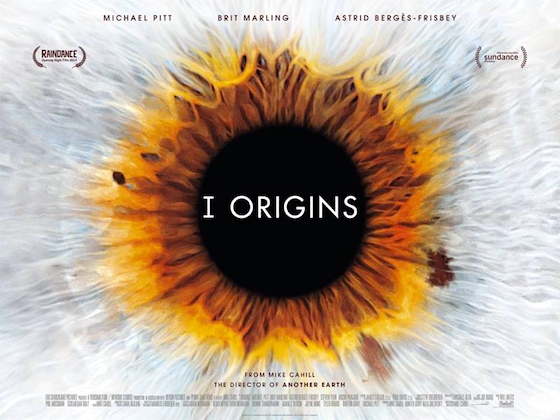
  • I Origins (2014)


    WarGames
    (1983)

    2018 #22
    John Badham | 113 mins | streaming (HD) | 1.85:1 | USA / English | 12 / PG

    WarGames

    It’s Ferris Bueller’s Third World War as Matthew Broderick plays a precociously talented high schooler who unwittingly hacks into a government war planning supercomputer and instigates a countdown to nuclear annihilation.

    It’s a funny old mashup of genres that I’m not sure you’d get away with today. It starts out as a Cold War thriller, feeling almost like a Tom Clancy adaptation; then suddenly it’s a John Hughes high school comedy; then the two have to awkwardly mesh, before it turns fully into a young adult techno-thriller. Young Adult fiction is almost synonymous with dystopian future adventures nowadays, but WarGames reminded me nonspecifically of the kind of thing YA books used to be about when I was the right age for them — and, considering that would’ve been in the mid ’90s, those books were quite possibly inspired by this film.

    So, it’s inescapably of its era, but no worse off for that… though how The Youth Of Today would take to it, God only knows. If you stop to think too much (or at all) about the ins and outs of the plot then it becomes thoroughly implausible in so many different ways, but if you let those things slide and go along with the film on its own terms then it’s a cracking adventure yarn.

    4 out of 5

    Being John Malkovich
    (1999)

    2018 #28
    Spike Jonze | 113 mins | streaming (HD) | 1.85:1 | USA / English | 15 / R

    Being John Malkovich

    The film that introduced the world to the kooky imagination of screenwriter Charlie Kaufman (almost 20 years ago now!), Being John Malkovich is about a failing puppeteer (John Cusack) who starts a new job in a bizarre office, where he develops an unreciprocated infatuation with a coworker (Catherine Keener) and discovers a hidden portal into the mind of actor John Malkovich (John Malkovich).

    Even with that mad premise, Being John Malkovich wasn’t the film I thought it was going to be. Well, I don’t know what I was expecting exactly, especially as it’s a Kaufman film so I knew to expect “weird”. But I guess I anticipated that it would focus on people inhabiting Malkovich and doing kerazy things as him, or something, rather than it being a four-way love triangle (in an Escher-esque way rather than an “uh, I think you mean love quadrilateral” sense) in which the whole “inhabiting Malkovich’s body” thing is more a means to an end rather than the film’s raison d’être.

    Said end is an exploration of identity and relationships — indeed, the screenplay reportedly started life as “a story about a man who falls in love with someone who is not his wife” and the kooky body-swap antics came later. I’ve read reviews that frame it in the context of films like Mulholland Drive and Persona as a “comedic meditation on identity”; though what it actually says about identity, I’m not sure (but then, I wasn’t really sure what Mulholland Drive and Persona were saying either, so maybe this is just me). But I wonder: does it just tip its hat in that direction while playing around with the situation to see what happens? Are the filmmakers “yeah, whatever”ing the broader psychological implications (as one of the characters does) while playing out the full bizarreness of the premise to its logical extreme? I’m not sure “logical” is quite the right word for what goes on in this movie, but what I mean is it works through the fullness of the idea, extrapolating it through various events and to a conclusion. Can you even consider the true psychological implications with something so out-there and not-real?

    Well, maybe. Indeed, the film kinda does, through its relationships. One character falls in love with another, but only when the latter is in Malkovich’s body; but then they’re tricked into falling for someone else in Malkovich’s body; but that doesn’t work out in the long run, and the first pair end up together in real life — so the physical body is the initial attraction, but it’s ultimately irrelevant to the actual person inside. Basically, is this just a kooky, crazy, bizarre film whose message is the age-old “beauty isn’t just skin deep”?

    4 out of 5

    I Origins
    (2014)

    2018 #36
    Mike Cahill | 103 mins | TV (HD) | 2.39:1 | USA / English | 15 / R

    I Origins

    The second film from Another Earth writer-director Mike Cahill, I Origins is another science-fiction drama with the emphasis on “drama” more than “sci-fi”. It’s about a scientist, Ian (Michael Pitt), who’s mapping the evolution of the human eye with his lab partner (Brit Marling), hoping it will help discredit the superstitious religious ideas that he despises. At a party, Ian is drawn to a masked woman (Àstrid Bergès-Frisbey) by her eyes, and they end up dating — but developments in their relationship send his research in surprising directions…

    I Origins is a consistently engaging, intriguing film; the kind of story that continues to develop and evolve its premise throughout its whole running time, so that I’ve had to be a bit vague to avoid just giving away the entire plot. My only real query is that I don’t know what it all signified in the end. Something to do with there being room for spirituality even in dyed-in-the-wool scientists? Or maybe it’s just about the personal journey of its lead character? Or maybe, as it was developed as a prequel to an unmade script, the really significant stuff lies there, and this is just backstory? (Cahill sold the rights to that screenplay in 2011, but it’s still not been produced.)

    It feels a bit disingenuous to praise a film where I don’t really know for sure what the point was, but I liked it quite a lot all the same.

    4 out of 5

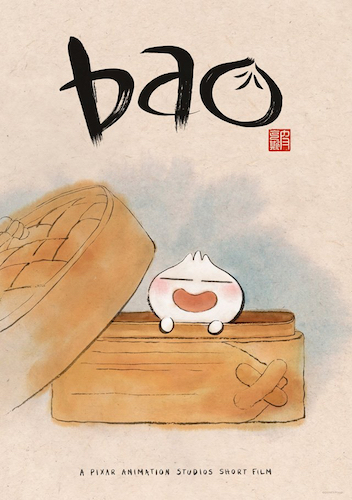
  • Bao (2018)

    2018 #233a
    Domee Shi | 8 mins | Blu-ray (3D) | 1.85:1 | USA / silent | PG / G

    Bao

    This short film from Pixar played before Incredibles 2 in cinemas, so naturally it accompanies it on Blu-ray too. In it, a Chinese-Canadian woman is steaming dumplings (the titular bao) when one comes to life and grows into a little dough boy, who she begins to raise as a son.

    As with many of the best short films, Bao takes a simple theme (though to say what the real core of the short is would give away some of the ending) and executes it succinctly. As is often the case with Pixar’s work, it aims at packing an emotional wallop, using it’s fantastical story to elucidate a real-life situation. It also doesn’t stint visually, with an overall animation quality that wouldn’t be out of place in a feature.

    Bao is perhaps most notable as the first Pixar short to be directed by a woman. It only took 35 years and 35 shorts to get there. Considering some of the recent stories about the company, and the reputation it was gaining as a “boy’s club”, I guess this couldn’t come at a better time, though perhaps it’s to their credit that they didn’t seem to harp on about this aspect (I stumbled across the fact on Wikipedia). Given the quality and clarity of work on display, perhaps writer-director Domee Shi will get to be Pixar’s first female feature director too.

    4 out of 5

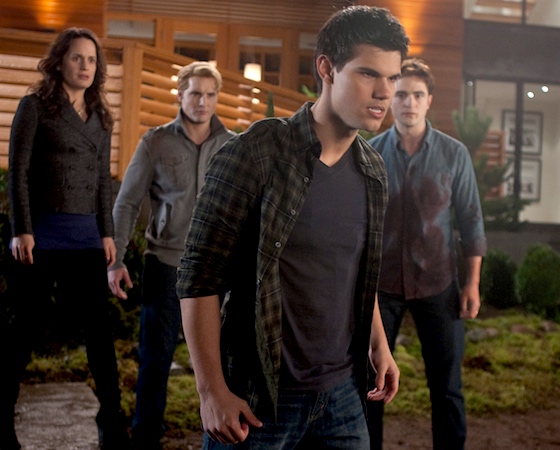
    The Twilight Saga: Breaking Dawn – Part 1 (2011)

    2018 #207
    Bill Condon | 113 mins | streaming (HD) | 2.35:1 | USA / English & Portuguese | 12 / PG-13

    The Twilight Saga: Breaking Dawn - Part 1

    And so we reach the final book in the Twilight Saga… but not the final film, because Breaking Dawn hails from the era when Young Adult adaptations routinely split their final book in two, all the better to make more money fully adapt the story. Sparked by the success of Harry Potter and the Deathly Hallows, said “era” lasted all of five years, taking in Twilight and The Hunger Games, before the two-part adaptation of the Divergent series’ finale was cancelled halfway through due to poor box office.

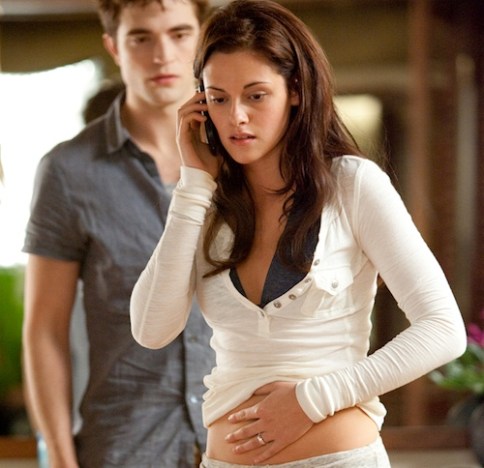
    But back to Twilight. Breaking Dawn, Part 1 starts with an event promised by the end of the previous movie: the wedding of human Bella (Kristen Stewart) to vampire Edward (Robert Pattinson). Sorry, Team Jacob; but let’s be honest, he never stood a chance. The double-length running time afforded this book means the film can spend its whole first half-hour indulging in the nuptials, which I imagine is the kind of thing fans of this series would revel in, so fair enough.

    Then Bella and Edward head off on a romantic honeymoon, and after spending three movies being an analogy for the wonders of chastity, the lead couple getting married means they can finally get. it. on! PG-13 style, of course (I believe some thrusting was cut to retain the teen rating in one or both of the UK and USA). Nonetheless, Edward’s so vigorous that he completely destroys the bed — well, the poor guy has been waiting for about 100 years. He also leaves Bella with some cuts and bruises, making him reluctant to go again. This leads to an extended montage where the newly wed girl desperately tries to get laid while the newly wed guy does his best to avoid it. It’s almost transgressive in its role reversal, except Twilight is too coy to present this quite explicitly enough to really nail that gag. Besides, if you’re looking for a human-vampire relationship that nails the sexual politics of teen relationships, Buffy got there over a decade earlier.

    PG-13 fucking

    Despite the paucity of their lovemaking, and the fact that one of the pair is technically dead, Bella winds up pregnant, with the baby growing in super-double-quick time and sucking the life out of her. Well, it is at least half vampire — that’s kinda their thing. All this means trouble for Bella’s life, but she insists on keeping the foetus — or baby, as one character forcefully points out when another refers to it as a foetus. Hm, I wonder what the conservatively-minded author might be drawing parallels with now? In fairness, it depends a certain amount on how you choose to read it. Screenwriter Melissa Rosenberg has said she is pro-choice and wouldn’t have agreed to do the film if she felt it violated her beliefs, while acknowledging she had to find a way to not offend the beliefs of “the other side”. So, almost everyone tries to dissuade Bella from sticking with the pregnancy, but they let her make her own choice… and (major spoilers!) it ends up killing her. So they were right, basically.

    And that’s the entire movie, more or less. Well, it is only half the story. I think it’s the knowledge of it being only half the book that led many critics to describe the film as slow and light on content (you always see such comments about multi-film adaptations of single books), because while it’s hardly fast-paced, I didn’t think it was notably less incident-packed than previous Twilight movies. Mind you, that probably says less about the pacing of this film and more about how little actually happens in all these movies.

    Angry like the wolf

    However, despite choosing to adapt only half the story, it still feels like the plot is making jumps at times. For example: Jacob (Taylor Lautner) and his werewolf buddies factor into things because they want to kill Bella’s devil-kid, but there’s also the matter of a treaty between the vampires and wolves (which I can’t remember the details of, so don’t ask). The film makes a point of emphasising that the wolfpack leader doesn’t want the treaty to be broken, then later on it’s stated that in his mind the treaty is broken. Now, okay, we can connect those dots ourselves, but really it’s missing a scene where the guy undergoes this about-turn of opinion. And yet, despite such missing links, director Bill Condon finds time for numerous sequences where people do nothing while a mournful song plays.

    On the bright side, Condon does manage to create a sequence that is the nearest this series has ever got to being an effective horror film (well, apart from Edward being a creepy stalker in the first film). It’s basically the ending of the movie, so, again, massive spoilers. So: Edward eats the baby out of Bella, who promptly dies, forcing Edward to flood her corpse with venom by biting her all over, which seems to do pretty awful things to her organs — that’s the scary bit, though it doesn’t sound particularly terrifying when you put it like that. Potentially more emotionally scarring is that, meanwhile, Jacob is off falling in love at first sight with Bella and Edward’s baby. That’d be their creepy CGI baby, which is roughly as convincing as a plastic one in a Clint Eastwood movie.

    “Is it a boy or a girl?” “I think it's... pixels.”

    Not that the acting of the humans is much more convincing. Kristen Stewart had a promising career before Twilight, and seems to have managed to reignite it as something of an arthouse darling afterwards, but here she’s just a personality vacuum. The film starts with her delivering a couple of lines of voiceover, and even from just that she manages to sound terminally bored. Later she asks, “why can’t you see how perfectly happy I am?” Probably because you’re not putting any effort into your performance, love. And yet, the less said about the rest of the cast, the better. Lautner doesn’t even get to wheel out his surprisingly-effective comedy chops this time.

    But for all the terribleness, I sort of feel I can’t hate it, because the rubbish bits are too funny, and the mad bits too bonkers (for a movie that is primarily aimed at romantically-inclined teenage girls, at least). While I wouldn’t say I enjoyed it, it was entertaining to sit through — kind of like The Room, for example, only still not quite as transcendently appalling.

    2 out of 5

    Join me this time next year when I finally finish this thing off. Unless I decide to do it next month, because Part 2 is currently sat on Netflix going “finish meeee”…

    Batman Ninja (2018)

    2018 #146
    Junpei Mizusaki | 85 mins | Blu-ray | 1.78:1 | Japan & USA / English | 12 / PG-13

    Batman Ninja

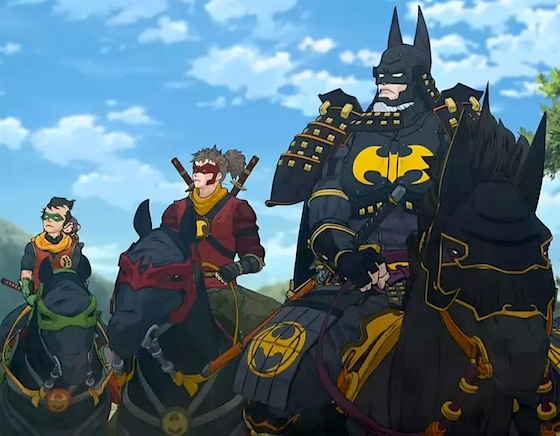
    “This is madness,” exclaims Batman at one point relatively early on in this anime interpretation of the DC superhero. He could be speaking on behalf of us viewers… although, at that point, he — and we — don’t even know the half of it…

    The story begins when a scientific experiment gone wrong hurtles Batman, most of the Bat-family, and Arkham Asylum’s inmates back in time to feudal Japan. Due to a quirk of the machine, the Dark Knight himself arrives years after everyone else, which has given the villains a chance to take control, each establishing their own fiefdom. Batman and his allies must find a way to send everyone back to the present day, before history is irreparably altered.

    That’s just the start of the bonkers stuff that goes down in this film — never has the term “bat-shit crazy” been more appropriate. I mean, as if the basic setup wasn’t inherently barmy enough, by the time it gets to (spoilers!) a climax where the villains’ mansions morph into giant robots that then combine into a Joker-headed super-giant robot that fights against a giant monkey-samurai made up of hundreds of flute-controlled little monkeys, you’ll be wondering just how strong the filmmakers’ drugs were. And that’s not even the end of it. I don’t think there’s any rational way to assess the quality of the plot here — either you go with it and revel in the madness, or you just give up because it’s too much.

    Na-na-na-na-na-na-na-na Ninja!

    The sense of possibly-drug-induced unreality is only heightened by the chosen animation style. The film’s clearly been produced with 3D computer animation, but rendered in a style designed to emulate 2D cel animation. It has the frenetic hyper-real movement made possible by the former, while otherwise trying as hard as possible to look like the latter, which makes for a weird disconnect. When you marry that up to the over-detailed, sometimes grotesque character and location designs, plus an overabundance of eye-popping colour, it becomes a surreal sensory overload. Oh, and at one point it changes style completely, just because it does, into some kind of sketchy watercolour thing, but only for a little while.

    Batman Ninja is a strange movie all around. I wouldn’t say I enjoyed it, but it was certainly an experience. Would our collective culture be better off if such madness was reined in, or is the world a better place for having this kind of battiness? You may have to judge for yourself, though I think only the bold or the foolish need apply.

    3 out of 5

    Batman Ninja is now available on Netflix UK.

    Happy Death Day (2017)

    2018 #43
    Christopher Landon | 96 mins | streaming (HD) | 2.35:1 | USA / English | 15 / PG-13

    Happy Death Day

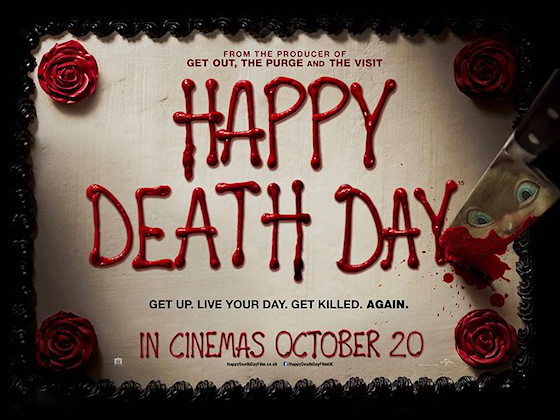
    How much does pure originality matter? Happy Death Day is a high-concept slasher movie that could be described as Groundhog Day meets Scream via Legally Blonde. Normally those kind of “X meets Y” descriptions give a general sense of tone or some coincidental similarities, but if you could put those three films in a blender, Happy Death Day is almost certainly what would come out. (There’s probably a more apposite sorority comedy than Legally Blonde for the third ingredient, but that’s not my subgenre of expertise.) But while there’s no doubt that Happy Death Day is derivative, that doesn’t mean it’s not entertaining.

    The film introduces us to college student Tree (Jessica Rothe), who wakes up hungover in a stranger’s dorm room on what turns out to be her birthday. Later that day, she’s murdered… after which she wakes up hungover in the same stranger’s dorm room on her birthday. Later that day, although she takes steps to avoid it, she’s murdered again… after which she wakes up hungover in the same stranger’s dorm room on her birthday. Yes, she’s in a time loop — one which, she theorises, can only be stopped if she finds and stops her killer.

    It’s a clever conceit — yes, borrowed from Groundhog Day, but utilised in a different way. For me, the plot/structural similarity is easy to overlook because, hey, it’s a great idea, why not recycle it with a different kind of story? This variation is enjoyably done, too — not an outright comedy, but with enough wit to make for a fun movie. There’s a very real danger of it being repetitive — repetitiveness is baked into the very concept, obviously — but, like Groundhog Day, it dodges that with amusing variations and intelligent filmmaking. Okay, the logic is sometimes a little askew (for example: no matter how quickly or slowly Tree leaves the dorm room at the start, the same random events happen outside), but that’s storytelling expediency rather than a major problem with the film’s logic, in my opinion.

    Screaming groundhog

    In the lead role, Jessica Rothe is excellent. She fills what could’ve been a pretty standard slasher movie heroine with different levels of reconcilable personality and a surprising amount of heart. She’s a likeable, root-for-able character to spend the day with over and over (and over) again. And when you know how the movie was filmed (i.e. like almost every other movie: not chronologically, but by location, having to shoot scenes from different time loops side by side), the way her performance is accurately nuanced becomes even more impressive.

    In my opening comparison I picked Scream specifically because Happy Death Day has the feel of those late ’90s / early ’00s teen horror movies — the heyday of franchises like Scream, Final Destination, I Know What You Did Last Summer, etc. Back then this surely would’ve been a huge hit, but I feel like very few people were talking about it when it came out last October. That said, it achieved a respectable Rotten Tomatoes score (70%), grossed $122.6 million (off a budget of just $4.8 million), and this week they made headlines by announcing the sequel’s title, Happy Death Day 2U, which seemed to go down rather well. So maybe I just missed everyone celebrating it first time round.

    I hope it continues to find a wider audience, because I think it’s a lot of fun. It may be built from blocks borrowed from other films, but they’ve been arranged in such a way that I think it still feels fresh, and they’ve been assembled skilfully enough that it’s enjoyable either way.

    4 out of 5

    Happy Death Day 2U is scheduled for release on Valentine’s Day 2019.

    Gods of Egypt (2016)

    2018 #198
    Alex Proyas | 127 mins | download (HD+3D) | 2.40:1 | USA & Australia / English | 12 / PG-13

    Gods of Egypt

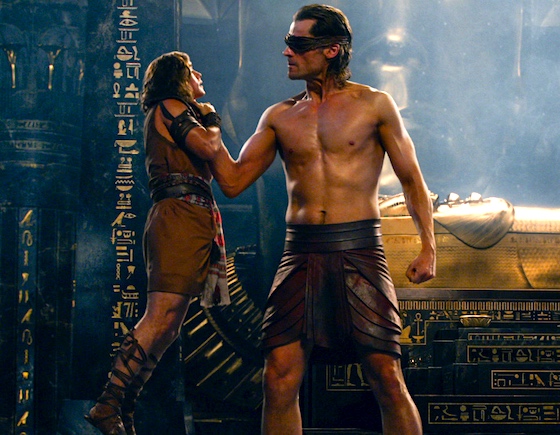
    If you remember Gods of Egypt, it’s likely because it was excoriated on its release back in 2016.* Many were predisposed to hate it before it even came out thanks to its whitewashed cast: as the title might indicate, it’s set in Ancient Egypt and many of the characters are Egyptian gods, but most of the lead cast are white; and of those that aren’t, none are Egyptian. Even if that didn’t bother you, it was slated for its poor dialogue, flat performances, bland direction, reliance on green screen, and cheap-looking CGI. Oh dear. But every film is for someone and there’s someone for every film, and it turns out I’m one of the few (the very, very few) who actually rather enjoyed Gods of Egypt.

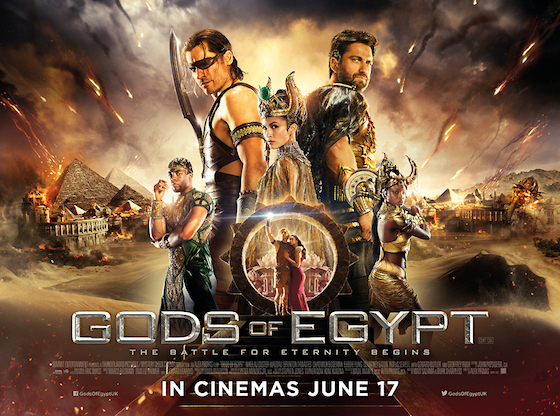
    Based more on legend than any relation to history whatsoever (in one rather stunning sequence, we see that the world is, in fact, flat), it’s set in a time when super-powered gods walked the Earth among humans. Well, less “among”, more “ruling over”. A squabble between the gods sees nasty-piece-of-work Set (Gerard Butler) steal both the throne and eyes of heir-apparent Horus (Nikolaj Coster-Waldau), before going on to steal the abilities of other gods to make himself more powerful. Human thief Bek (Brenton Thwaites — between this and Pirates 5, dude must’ve thought he was gonna be a star… ’til they came out) doesn’t care for the gods, but he wants to free the love of his life (Courtney Eaton and her cleavage — I don’t want to be lecherous, but seriously, her costumes are all boobs, boobs, boobs), and the only way to do it involves stealing back one of Horus’ eyes and using it to persuade the god to take on Set.

    Gods and men

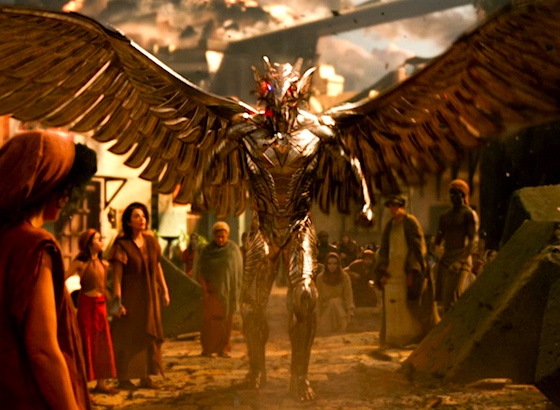
    And that’s the part of the plot that’s kinda reasonable. No, really: it gets a whole lot madder as it goes on. In fact, everything about it is so consistently batshit crazy — the concepts, the plot, the visuals — that it wins you over with its utter barminess. Or maybe it won’t win you over. Maybe you’ll think all those things make it utterly awful. As I said at the start, you certainly wouldn’t be alone. But the “you couldn’t make it up (except someone did)” mentalness of it will win over a certain kind of viewer. A viewer like me.

    I’m not really going to deny any of those criticisms I cited in the opening paragraph, because it is kind of a terrible film… but if you embrace it, it’s also campy fun. It’s a film where the men are burly, the women are breasty, and the CGI is blurry, but there’s a certain irreverence that stops it from being stodgy, and a light-hearted tone to the dialogue that occasionally hits home. For all the whizzy video game-ish visuals, it’s an old-fashioned adventure quest at heart, capable of pulling off the occasional thrilling sequence or amusing verbal exchange.

    All of that said, one does have to wonder how director Alex Proyas ended up here. If you don’t recognise the name, he was once known for visionary noir-ish filmmaking in the likes of The Crow and Dark City. At some point he wound up sidelined into less invigorating fare, like Will Smith vehicle I, Robot and Nic Cage vehicle Knowing, but while neither were groundbreaking they had a certain something (and, personally, I quite liked them both). Here, though, the direction is so… uninspired. Anyone competent could’ve made it. And people say filmmaking is collaborative and directors don’t deserve all the credit, but bear this in mind: Gods of Egypt and critically-beloved Oscar winner Mad Max: Fury Road share 295 cast & crew members.

    Robot god... on a budget

    I don’t know who deserves credit for the film’s 3D, but it’s consistently excellent and occasionally spectacular. That’s the benefit of almost all the film being created in a computer, I guess. But still, the colourful visuals and wide-open locales really help with the effect — what looked gaudy and ludicrous in 2D trailers… still pretty much is, let’s be honest. But it’s less bad when it’s doing so much to help create an epic-scaled dimensionality.

    I know I should hate this silly, cheap-looking, over-CGI’d, whitewashed hot mess… but I actually thought it was a lot of daft, campy fun. There are plenty of very good movies that I’ll likely never get round to watching again — probably some great ones, even — but I’d wager Gods of Egypt is going to end up in my Blu-ray collection someday. In 3D, of course.

    3 out of 5

    The UK network premiere of Gods of Egypt is on Channel 4 tonight at 9pm.

    * I was going to say “summer 2016”, but that wouldn’t be entirely correct: weirdly, although it was a February/March release in much of the world, it somehow got given summer status in the UK and Ireland (and, er, Spain…?) ^

    The Tree of Life (2011)

    2018 #192
    Terrence Malick | 139 mins | Blu-ray | 1.85:1 | USA / English | 12 / PG-13

    The Tree of Life

    Writer-director Terrence Malick made just five films in the first 38 years of his directorial career, this being the fifth. In the seven years since it came out, he’s made five more. Why the long gaps before, or the sudden increase now? Who knows — Malick is notoriously interview-shy. But the answer may indeed lie with this film, sitting as it does at the fulcrum of his career. It was a project Malick had on his mind for decades (he shot material for it as far back as the ’70s), which for various reasons — primarily funding and technology, I think — it took him until this decade to achieve. Many think it was worth the wait: lots of people love it, including the Cannes jury, who awarded it the Palme d’Or. Many others… don’t: plenty of people regard it as pretentious, or at least too abstruse to care about. It’s a film that, I think, can only elicit an entirely personal reaction. So here’s mine.

    The Tree of Life is about… um… oh dear, we’ve hit a snag already. Well, once it settles down (which takes the best part of an hour), what it’s literally about is a family living in Waco, Texas, in the 1950s — dad (Brad Pitt), mom (Jessica Chastain), and their three sons, Jack (Hunter McCracken), R.L. (Laramie Eppler), and Steve (Tye Sheridan). The kids play around doing the kind of thing young lads did in the ’50s — running around in the woods, swimming in rivers, throwing stones through windows, murdering frogs — while being torn between the influences of their parents: their kind, gentle, caring mother, and their strict, authoritative, borderline abusive (or just straight abusive?) father.

    But the film also occasionally shows us Sean Penn as grown-up Jack, working some high-level job in a present-day city. And it also shows us an extended sequence about the birth of the universe and the evolution of life on Earth. And that’s to say nothing of the epilogue… Or, indeed, the prologue, which introduces a massive event in the family’s life that is then, arguably, unreferenced by the rest of the movie.

    So… yeah.

    Pondering or ponderous?

    Much of The Tree of Life is more like visual poetry than a traditional narrative film. Beautiful images glide before our eyes, some with obvious meaning, others less so. Some of the images resonate or rhyme with each other, urging us to infer our own interpretation of what we’re seeing, and why, and what it signifies. This is mostly true of the opening chunk — which lasts a good 45 to 60 minutes — and the ending. In between, more of a narrative is discernible — the stuff about the young family — although it’s constructed in a poetic fashion, with minimal dialogue, lots of vignettes, fragments of day-to-day life that don’t necessarily have an immediate significance.

    To me, it felt like we were watching someone’s dreams or memories, presented as we really remember things: random fragments from our lives. If you think about your memories of childhood, they don’t take the form of a neat narrative in concise scenes with all the important landmarks accounted for. We do remember big events, of course, but also many small things; and some things we remember extensively, but others only fragmentarily. If you could view a person’s memories, they’d create, not a biopic, but an impressionistic collage or our lives — and this film is that, I think.

    But that can still leave the viewer to question what it’s all about, especially given the extended sequence of space gases, forming planets, burgeoning microscopic lifeforms, and dinosaurs. Yes, in arguably the film’s most baffling sequence (there are many contenders), we see an event in the life of some dinosaurs. Actually, I say it’s the most baffling, but only if you stick to the film itself: of all the confusing things herein, that’s the one with the most concrete explanation, thanks to visual effects supervisor Michael L. Fink having a little chat with critic Jim Emerson about Malick’s intentions for the scene. Not everyone likes firm answers to this kind of stuff, so I’ll just link to where you can read it if you want to.

    Motherly love

    That said, some of the stuff I’ve already mentioned in passing I only know definitively thanks to extra-textual sources. Well, if you count the film’s end credits as extra-textual, which I suppose they’re not. But it’s only thanks to those that I know for certain which of the boys Penn was supposed to be, or that the creation-of-the-universe stuff is indeed meant to be that (based on genuine science, donchaknow), and that these scenes show us the “astrophysical realm”, because there are effects credits for that. And more still can be learnt from, of all places, the Blu-ray’s chapter menu: the long creation sequence is indeed called “creation”, in case you weren’t sure. The ending is “eternity”, followed by “was it a dream?” Others include “grief”, “innocence”, “mother”, “father”, “I do what I hate” — all showing us the way towards important themes… maybe. Or perhaps they’re just convenient chapter points…

    Praise for the film’s imagery is due not only to Malick, but also cinematographer Emmanuel “Chivo” Lubezki. And it’s not even the guy’s best work — I’d argue for consistent beauty he’s surpassed it with some of the stunning, Oscar-winning stuff he’s done since — but you can see how he got from here to there: the very best shots in The Tree of Life are kind of what he does all the time in films like The Revenant. As for constructing those images into a meaningful flow, I’m never sure how much is down to an editor’s own creativity and how much is them operating machinery under the director’s instruction — I guess, like most things in the movies, it’s a collaborative mix of both. Anyway, the film has five credited editors — Hank Corwin, Jay Rabinowitz, Daniel Rezende, Billy Weber, and Mark Yoshikawa — who I’m sure must’ve been vital to the process. (Relatedly, here’s a fun anecdote from IMDb: “an Italian cinema showed the film for a week with the first two reels switched. Even though the film starts with production logos, no one in the theater noticed and thought it was all part of Terrence Malick’s ‘crazy editing style’.”)

    Creation

    There’s a lot of really great music and sound design as well — something Malick clearly considered important to a Lynchian degree, given that before the film plays the Blu-ray flashes up a notice advising you to “play it loud”. Alexandre Desplat is credited for the music, but a very, very long list of sourced tracks too hints at what actually happened: most of his music went unused in the final cut, with only a few minutes making it in. I imagine that feels quite unedifying, to have your work sidelined; but maybe it’s better than being ditched entirely in favour of a new score, as has happened to plenty of other composers in the past.

    It’s easy to get hung up on all this filmmaking when thinking about The Tree of Life, because that’s where its own focus seems to be, as opposed to the usual things a reviewer might think to discuss first, like the screenplay or performances. But there are still actors here, and good ones at that. The movie is really centred around Hunter McCracken, and he’s very good. The casting directors saw thousands of Texan school kids while trying to cast the boys, and the effort paid off; though McCracken hasn’t done anything else since, so maybe not for him personally. The other two brothers don’t have so much to do; in fact, I kept almost forgetting one of the trio existed, so little is he on screen or relevant to events. Ironically, he’s the only one of the three who’s gone on to have a career: it’s Tye Sheridan, most recently seen as the lead in Ready Player One.

    As for the adults, Sean Penn is one of the many lead actors in a Malick film whose performances have wound up on the cutting room floor. According to Lubezki, there’s enough deleted footage to make a whole movie focused on Penn’s character. Yep, sounds like Malick! Obviously such a movie would be completely different to this one, but I’d be curious to see it. More screen time is devoted to Jessica Chastain and Brad Pitt, who both achieve a lot with comparatively little. Chastain is the focus early on, but it later becomes apparent that Pitt has a showier role, in a way, because of his character’s arc. There’s a pullquote on the back of the UK Blu-ray that calls it “the strongest performance of his career”, but considering his performances in the likes of Se7en and The Assassination of Jesse James, or that he’s been Oscar-nominated for his turns in Twelve Monkeys, Benjamin Button, and Moneyball, I thought that was a bit of an outlandish claim to make. To each their own, though.

    Affection or headlock?

    Anyhow, all this is “technical” stuff quite apart from what The Tree of Life is really about. Not that I’m totally clear on what that is, still. I guess maybe it’s there for us to infer what we like from it, be that religious, scientific, humanistic, or, for many a viewer, just boredom. Whether you love it or hate it — and there are certainly plenty of perfectly reasonable people at both extremes — it’s definitely an Experience; one every person who considers themselves serious about film appreciation needs to have.

    4 out of 5

    A new edition of The Tree of Life, which includes a different cut that’s 50 minutes longer (but, intriguingly, is not an extended cut), is released by Criterion in the US tomorrow and in the UK on November 19th.

    Conquest Program No.9

    2018 #158a-d
    30 mins | DVD | 4:3 | USA / silent (English)

    Conquest Program No.9 advertisement

    We all know the cinema experience of today: 20 minutes of TV adverts that we’d fast-forward at home but have no say in on the big screen, followed by 10 minutes of movie trailers that we’ve already watched on YouTube, and, finally, the film we’ve paid to see. But back in the day the theatrical programme was less unedifying, with short films of various stripes preceding the headline film (hence the term “feature film”, obv.)

    For her DVD release of the 1917 feature Kidnapped (more about that in my review here), Fritzi Kramer of Movies Silently was able to source the four short films that were bundled with it as part of “Conquest Program No.9”. The Conquest Programs were the idea of distributor George Kleine and created by Thomas Edison’s film company. Eleven were created in all, each one bundling together a feature film and a mix of shorts to create a complete bill of wholesome entertainment. By specifically recreating Program No.9, the Kidnapped DVD doesn’t just offer an approximation of what a night at the movies in 1917 might’ve been a bit like, but rather a genuine was-definitely-shown-in-theatres programme from the time.

    Friends, Romans and Leo

    The programme opens with a twelve-minute comedy short, Friends, Romans and Leo, directed by Alan Crosland, who also helmed Kidnapped, and featuring several of the feature’s leading players too. It’s a bit of Roman farcing about, concerning an “emperor” who’s so in debt he lets the moneylender marry his daughter rather than call in the mortgage on his garage. I’m sure that’s exactly how Roman politics worked. Then, an unwanted and useless servant is cast into the gladiatorial ring to face the hulking Brutal Brutus, and also Leo, a man in a lion costume… er, I mean: Leo, a lion. This bit, at least, has some amusing pratfalling. It’s not big (it’s a short film, after all), it’s not clever (characters speak in a mix of Olde Worlde English (“thou hast been good to me”) and modern slang (“that’s a twenty-karat rock, girlie!”)), and it’s not particularly amusing to today’s eyes either, although the second half is at least diverting enough. Certainly, a grown man titting about in a lion suit has its own kind of charm.

    Up next is a seven-minute “fairy tale in silhouette”, Little Red Riding Hood. I’d assumed it was going to be some kind of puppet animation job, but no, it’s live-action shot in silhouette, presumably for a kind of stylistic, picture-book-ish look. This means we’re treated to another man in an animal costume — the wolf, of course — but this outfit is less good than Leo’s, something even the silhouetted visuals can’t hide. The short rattles through the traditional story with no significant variations, which feels a little quaint viewed from the vantage point of over a century later. That said, it does include this immortal line: “It must be grandmama for it is her cap, but how very strange this bad cold makes her look!” Because people can always be identified by their caps, and colds make you look like a wolf.

    Little Red Riding Hood

    Talking of quaint, that clearly wasn’t a concept alien to 1917 audiences, as the third short implies. Titled Quaint Provincetown, it’s a seven-minute travelogue about a quiet little seaside town and its almost throwback way of life (even for 1917!) A series of lifestyle scenes rather than a narrative documentary, it’s a fascinating window into the past, which arguably makes it the most interesting of these films for the modern viewer. That said, how much of it was captured actuality and how much was staged, who knows — for example, at one point we watch a couple of boys have a fight in the street while their friends egg them on, which you feel the filmmakers can’t’ve just happened upon. Still, kids, eh? I guess some things never change.

    Finally, Microscopic Pond Life is a four-minute look at… well, what it says on the tin. This is, broadly speaking, stuff we’re nowadays familiar with from a young age thanks to science lessons and whatnot, but I imagine it must’ve been quite incredible to see these minuscule organisms in action for the first time. You’re not going to learn a lot of detailed scientific information from a 100-year-old short like this, but it remains a fascinating glimpse of the tiniest of lifeforms.

    Microscopic Pond Life

    Viewed today, this selection of short films is, at worst, an insight into a time long gone — one of the nearest experiences we’re likely to get to time travel. At best, the films themselves retain some inherent interest and entertainment value. As Fritzi puts it in her booklet accompanying the DVD, “the ninth Conquest program is not filled with hidden masterpieces, just good solid programmers that would have entertained the average American audience in 1917.” Very true, and fair enough.

    3 out of 5

    Read my review of Conquest Program No.9’s feature film, Kidnapped, here.
    The DVD is now available to purchase from Amazon.com.

    Christopher Robin (2018)

    2018 #180
    Marc Forster | 104 mins | cinema | 2.39:1 | USA / English | PG / PG

    Christopher Robin

    Disney appear to have found a rich seam to mine for box office gold when it comes to live-action remakes of their most popular animated properties. Some have been variations different enough to almost stand on their own two feet; others have been straight-up remakes, because why mess with success. Christopher Robin is, perhaps, the most original so far. There have been many Winnie the Pooh adaptations down the years, as well as original movies and TV series featuring the same characters, so rather than remake any of those, here Disney have set about telling another brand-new story (although it begins with an adaptation of one of A.A. Milne’s very best Pooh stories, which is nice). This new tale justifies its live-action form by moving beyond the confines of the Hundred Acre Wood; and it also, smartly, trades on our own childhood nostalgia for the silly old bear.

    We all remember Christopher Robin as a small boy, but small boys grow up, and now Christopher (Ewan McGregor) is an adult in post-war London with a wife (Hayley Atwell) and young daughter, Madeline (Bronte Carmichael). He works for a luggage company that is facing the prospect of firing most of Christopher’s team, unless he can find 20% of cuts; so instead of going away with his family for a nice weekend in the country, he must stay and work — again. With both his personal and professional lives on the brink of collapse, Christopher is very stressed.

    Pooh in the park

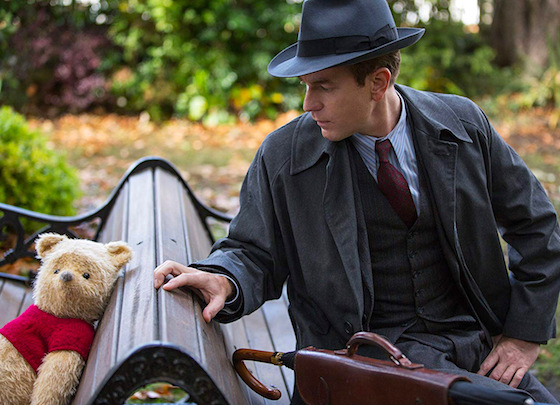
    Meanwhile, in his childhood playground of the Hundred Acre Wood, Winnie the Pooh (a convincingly cuddly CGI creation, given voice by Pooh’s regular performer, Jim Cummings) awakens one morning to find all his friends are missing. Deeply concerned, he wanders through the door through which Christopher Robin used to appear, and finds himself in London, where who should he bump into but his old childhood friend — now all grown up and serious. But Pooh is still a childlike innocent, of course (don’t worry, they haven’t given him a Ted-style makeover), and maybe that attitude is just what Christopher needs.

    Having said they haven’t made Pooh into Ted (thank goodness — I like Ted, but that really isn’t the spirit of this franchise), there’s more than a little whiff of Paddington here. It’s not the exact same plot, but the overall theme — of a naïve but good-hearted bear arriving to help humans overcome their problems with kindness — is certainly similar. Indeed, many beats of the story that unfolds are familiar — the climax is somewhat borrowed from Mary Poppins, for example; and you’ll know how every subplot will end as soon as it’s introduced. For some viewers, this will render the film pointless and clichéd. For others… well, it’s not really the point.

    The joy of Christopher Robin is it takes those recycled elements and filters them through the prism of Pooh. If you too loved Pooh as a child, or an adult, then Christopher’s journey to rediscover that connection is relatable and supportable. And it’s simply a delight to spend time with the characters, as Pooh casually (and accidentally) dispenses heartfelt wisdom that both delights and, occasionally, may even cause you to think.

    Tigger on the loose

    The other denizens of the Hundred Acre Wood do pop up too: miserable old Eeyore (Brad Garrett) stole the show for the audience I watched with; Tigger (also Cummings, after test audiences objected to Chris O’Dowd’s English-accented take on the character!) is as exuberant as ever; and Piglet (Nick Mohammed) remains the voice of caution and cowardice, and as sweet as ever. As “the main ones”, those four get the most to do in the story, but there are also appearances from Rabbit (Peter Capaldi), Owl (Toby Jones), Kanga (Sophie Okonedo), and Roo (Sara Sheen) to complete the set; and with actors that good providing the voices, they make their mark.

    But, really, this is all about Pooh. Well, Pooh and Christopher Robin — the title’s not inaccurate. For those who don’t feel a connection to the bear of very little brain, I guess the familiarity of the narrative he’s part of in this film will drag down enjoyment — this, I presume, is why the reviews have been somewhat mixed. But, in my opinion, a little Pooh goes a long way — as Christopher says, he may be a bear of very little brain, but he’s also a bear of very big heart. The combination makes for a film that is amusing, sweet, and thoroughly delightful.

    4 out of 5

    Christopher Robin is in UK cinemas now.