Batman (1966)

2009 #47
Leslie H. Martinson | 100 mins | TV (HD) | U / PG

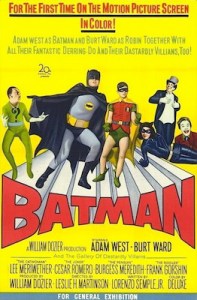
Batman (1966)Having only recently subjected myself to the full horror of Batman & Robin (though, based on the lack of review, it was before this blog began — that “recently” to me means “within the past four years” probably indicates why seeing ‘just’ 100 films in a year is a challenge), this spin-off from the ’60s Batman TV series remains the only significant cinematic outing for the Dark Knight to have escaped my scrutiny (well, unless you count Mask of the Phantasm, which we probably should). Except that’s (still) not entirely true: I once tried to watch it and gave up because it was dreadful. But the desire to be a completist — and an HD showing from Channel 4 — have led me to try again. Thank God I did, because it’s actually brilliant.

Some Bat-fans are immediately wondering what I’m on now, but I can assure you I watched it entirely sober. Batman has more than his fair share of over-serious fans and this film is anathema to them — it’s mad, camp, illogical, hilarious, vibrant, comic, comical… but all deliberately so. It perhaps goes on too long, perhaps pushes it too far at times… but then, if you’re on board with the concept and style, it’s pretty hard to criticise — it’s so ridiculous, and so aware that it’s ridiculous, that it goes beyond criticism.

In every respect, it has a real feel for what comics were like at the time — the vibrant colours, silliness, larger-than-life characters, nonsensical plots, plus there’s a nice line in risque humour, keeping the adults happy in what’s really a kid-focused film. The effect is akin to what Joel Schumacher wanted to do, only done with more rule-breaking conviction and, therefore, more success. It saves the series’ most famous element — the visual sound effects — for the climax, a submarine-set free-for-all to rival any other climactic mess/fight as Batman, Robin, the major villains and a bunch of sailors all end up floundering in the sea.

Talking of the series, was it this barmy? I don’t remember it being so ridiculous, but then I was young when I last watched it. There’s every chance kids young enough would take this completely seriously, and unquestionably enjoy it in that frame of mind, whereas those of us old enough to realise what’s going on — and, more importantly, old enough to get past the fact that it’s taken the moodiest, broodiest, angsty-teenager-friendly of superheroes and turned him into perhaps the campest ever — can enjoy it on all the levels the makers had in mind.

Batman is so many different things. These days it’s generally accepted that he’s The Dark Knight, a moody crimefighter lurking in the night to battle gangsters and unhinged supercriminals. But in the past he’s been so many other things, and this is just one facet. Those who dismiss it as missing the point of Batman, or any other such criticism of it not being Dark and Serious, are too caught up in our present perception of the character to see that it’s just another of his many sides. Is it a better film than The Dark Knight? No, of course it isn’t; and nor is it better than either of Burton’s Batman outings, nor Batman Begins… but then again, that’s personal preference.

Perhaps this demonstrates better than anything why Batman is one of the most enduringly popular superheroes, has one of the widest fanbases, has more graphic novels available than any other character ever: because, across all his forms, he has been treated in so many different ways by so many different people and for so many different people. You can’t really reconcile this as the same Batman and Joker who fought their way to the top end of the all-time box office pile 18 months ago, but nor were those the same characters who battled it out in 1989, or in thousands of pages of comics. In an age where we’re more obsessed with ‘canon’ and ‘continuity’ than ever (indeed, such concepts probably didn’t exist back when this Batman was being conceived), it’s oddly beautiful and so very freeing to imagine a character so unrestrained. It’s a glorious thing.

If you disagree — if you think Batman must always be dark, moody and deadly serious — well, fine; and you’ll be well catered for, because I doubt the film franchise is giving up that way any time soon (if ever). But as far as I’m concerned, to ignore the mad, frivolous and zany sides of the character — not to mention all the various other ones that could be described with equally unusual adjectives — is your loss.

4 out of 5

(Originally posted on 26th February 2010.)

The Gruffalo (2009)

2009 #89a
Max Lang & Jakob Schuh | 27 mins | TV

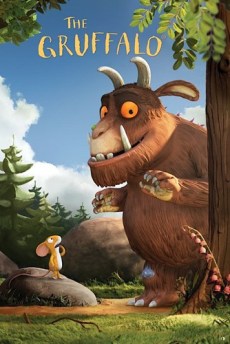
The GruffaloJulia Donaldson and Axel Scheffler children’s book The Gruffalo was a bit after my time but, I’m told, is incredibly popular with The Youth Of Today (not the ones that hang out on street corners earning ASBOs, obviously). It’s certainly a pleasant read, with rhythmic poetry and the kind of repetition that allows children to join in with ease, but it’s also quite short — fine for a children’s book, but not so good for attempting a screen adaptation of any length.

Having turned down numerous offers for feature-length versions, Donaldson accepted the half-hour short film treatment. Thank God she did, because even at under 30 minutes there’s some padding in evidence. There’s a brief bookend narrative featuring some squirrels, plus a leisurely pace throughout that takes in the scenery and wildlife of the forest world these character inhabit. Seeing a segment in isolation the film can look far too slow, with uncomfortably long pauses between each line of the original verse. As a whole, however, the viewer settles into its style and it rarely if ever feels forced.

The CG animation is well pitched. The textures and style at times left me wondering if the film was actually stop-motion animation, and consequently it carries the warm, cosy, intimate feel that such productions achieve and CGI almost universally fails at (even from Pixar). Whether it was the intention to emulate claymation or just a side effect, it’s certainly more effective than the work on Flushed Away, Aardman’s first CG outing that deliberately set out to look like their traditional stop-motion.

The voicework is equally spot on. John Hurt sounds fabulous in anything, Rob Brydon’s vocal changeability lends appropriate sibilance to the snake, it’s difficult to imagine anyone other than Robbie Coltrane providing the monsterly tones of the titular beast, and even James Corden fits as the mouse. Tom Wilkinson and Helena Bonham Carter also do fine work, meaning there’s not a weak link among them.

Despite being primarily aimed at kids — who hopefully won’t struggle too much with the languid pace — the very listenable poetry of the text and hand-made look of the visuals provide much for older children and adults to enjoy as well. Super.

4 out of 5

The Gruffalo can still be seen on the BBC iPlayer until 7:29pm today. It is also available in HD.

(Originally posted on 2nd January 2010.)

Harry Potter and the Half-Blood Prince (2009)

2009 #84
David Yates | 153 mins | Blu-ray | 12 / PG

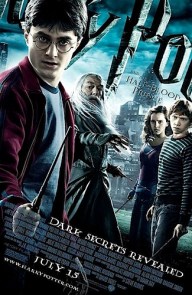
Harry Potter and the Half-Blood PrinceBy this point I imagine everyone has a pretty clear idea what they think of Harry Potter, and this latest film certainly isn’t going to change that. That’s not to say it’s bad — in fact, it’s rather good — but Harry Potter is what it is, and nothing’s going to change that, least of all these thoroughly faithful adaptations.

This particular entry is well adapted from its huge source. I remember the novel as being somewhat turgid, a 600-page slab of flashbacks and exposition provided so one could understand the events of Deathly Hallows (for the uninitiated, that’s the final book, arriving as two films in 2010 and 2011). Thankfully, returning screenwriter Steve Kloves (who has adapted every Potter bar the previous one) and director David Yates liven it up considerably.

Adapting a 600-plus-page book is always a gargantuan task, something the Potter series has struggled with before (at times, Order of the Phoenix felt like an hour-long highlights montage), but Kloves manages to keep the thrust of the dark primary plot while peppering it with humour- and romance-based asides. (Calling it ‘romance’ may be a little generous — ‘teenage snogfest’ seems to be the preferred term by critics. And it is that, really. But ‘snog’ is such an ugly word, so I shall stick to ‘romance’.) The film could have been all Dark and Grim — and people doubtless expected, and probably would have accepted, that — but the sizable amounts of humour and romance keep the tone more appropriate to the series’ kid-centred roots, as well as adding light to the shade in a way that should please everyone. The titular Prince, however, is barely a subplot, but that’s a flaw of the novel rather than Kloves’ work.

Yates pitches the humour right, though the romance is occasionally overbearing for my taste, but the action sequences are well handled. Unfortunately, while entertaining in their own right, the majority are an aside to the main plot, which is perhaps where the two-and-a-half-hour running time comes from. The return of Quidditch is welcome to some fans, but would surely have been dropped without the fan pressure. That said, it feeds into both the Luck potion and romantic subplots, as well as providing its own doses of humour and action. Still, it’s a missed opportunity to further establish the character of Katie Bell, who has a moderately significant part to play a bit later on.

Worse is the opening bridge attack, which feels fairly pointless. Again, in itself it’s a dramatic event, expanded from a passing reference in the novel, but it bears little relation to the rest of the plot. In the novel it has a point — the wizarding world is finally impacting on the normal one — but that thread remains unexplored by the rest of the film, rendering the opening a visually exciting but empty sequence.

The still-young cast are intermittently believable. Rupert Grint still has a talent for comedy — enough to fulfill his role here, anyway — while Tom Felton is finally treated to a decent part as Draco. Formerly just an irritating bully, here he has a larger and more complex part to play, allowing Felton room to become one of the few child actors who can still live up to their part now. The adults are excellent as ever, particularly Jim Broadbent in a guest-star-level part and, naturally, Alan Rickman, who remains underused but may yet be treated to some material worthy of his talents in the final films. Additionally, Julie Walters conveys more with one expression in her brief cameo than some actresses can manage with half a dozen scenes.

With numerous plot elements left brazenly gaping ready for the next instalment (just as in the novel, of course) — including at least one thrown into the mix in the closing seconds — and Yates’ promise of an ‘urban thriller’ style for at least Part I (a genre he mastered in the outstanding State of Play), the two-part Deathly Hallows is a relatively tantalising prospect. Just eleven months to go…

4 out of 5

Avatar [3D] (2009)

2009 #89
James Cameron | 162 mins | cinema | 12A / PG-13

AvatarAvatar is The Film That Changed Cinema. The past tense can safely be used, despite the film only having been out a couple of days — it doesn’t matter if we like it, filmmakers and Hollywood executives have decided it’s the artistic and commercial way forward, and so it shall be. It barely even matters if people actually go to see it; not that it’s in much danger of flopping, coming in the wake of years of extreme hype and numerous sycophantic reviews.

What’s almost more irritating than that, however, is that it’s actually quite good. Flawed, unquestionably, and probably undeserving of the volume of advance praise heaped upon it, but far from a disaster.

It’s too long, for one thing. The end of Act Two feels like the end of the film… until it insists on going on for goodness-knows how long (my watch stopped working, I couldn’t check). It might not be so bad if it didn’t take its time getting to this point. Swathes of it feel like a dramatised nature documentary, only this time it’s about a fictional alien world. Talk of Cameron having created a fully-realised, living, breathing ecosystem are over-egged: there’s a half dozen creatures, at most, and their only relation is that they have these weird tentacle things in their hair that allow them to connect up to one another, like nature’s own biological USB. Maybe he knows who eats what and when and how and mating rituals and all that jazz, and if he does we should be thankful it’s not plastered all over the screen, but the creature creation/world realisation here isn’t anything beyond Jurassic Park.

The story itself isn’t bad. It certainly has an epic quality, which at least justifies the running time, though it’s a collation of elements from elsewhere. Of course, such things can be said of most stories these days, but with Avatar it seems even more obvious — a bit of Aliens here, a bit of The Matrix Revolutions there, a bit of An Inconvenient Truth for good measure, and so on with countless other recognisable tropes. The sin Cameron commits is that he mostly does it in quite a clichéd manner — it’s not just that you have seen it before, but it feels like you have too. Even the learning-to-fly bit, much praised in some quarters, reminded me of something else: slightly-rubbish TV miniseries Dinotopia, of all things. And don’t get started on the dialogue — “Try not to think of anything. That shouldn’t be too hard for you.” Dear God, how many times have we heard that line?

Towards the end Cameron does pull a few things out of the bag, mainly involving who gets killed and who doesn’t. Mostly, the story is a framework to allow the visual spectacle and an ecological/anti-war message. It’s as subtle as a nine-foot-tall blue alien. From crystal clear uses of familiar phrases like “shock and awe” and “hearts and minds”, to unconcealed references to our dying planet, Cameron attempts to criticise both American military tactics (invade, crush the locals…) and the destruction of the planet (…take all the natural resources for ourselves, no matter what the cost). It’s not that the message is wrong, it’s just that Al Gore did it with greater subtlety in a 90-minute lecture on that specific subject. From the outset, the military — specifically marines, of course — are quite clearly The Bad Guys Here, which is a refreshing change from the man who brought us Aliens. Quite what the American public are/will make of this outright criticism of both its military and energy consumption remains to be seen.

All this is realised through unrelenting CGI. It’s very good, but here Avatar falls victim to its own hype once again, because it’s still not 100% perfect. Perhaps it’s the closest yet seen — it certainly remains consistent throughout — but nothing had me wondering if they’d perhaps used prosthetics in addition to the CGI, as Davy Jones did at several points during Dead Man’s Chest, and I remain convinced that wonderful modelwork, as seen in the likes of Lord of the Rings, is still an unbeatable tool for creating convincing environments. Some will argue that we remain unconvinced of the alien creatures’ authenticity because we know they can’t be real, but some occasionally exhibit the plasticky shine of CGI or the jerky movement of motion capture. The Na’vi are certainly a step up from Robert Zemeckis’ dead-eyed humans in The Polar Express or Beowulf, but are they that much better than Gollum? Or even Jar Jar Binks? (In terms of the competency of the effects, I hasten to add.)

It’s hard to resist flaw-spotting with Avatar after reading so many praise-filled reviews. At the risk of sounding like one of those irritating people who sits at their keyboard declaring “ah-ha, I’ve realised something all you professional reviewers weren’t clever enough to see!”, I think this is in part due to the final act. Avatar has a stonking finale, from a huge Apocalypse Now-styled 9/11-echoing moment of destruction, to a thrilling and epic final battle (albeit interrupted by a mass of unwelcome pace-challenging plot). These sequences excel on almost every level, from visual wonder to the odd spot of emotion. And this is what your final impression of the film is, which can banish memories of the crawl through the middle, replete with those niggling flaws. I won’t be surprised if DVD/Blu-ray reviews commonly lose a star, robbed as it will be of the huge screen spectacle and reviewers forced to remember what they had to sit through to reach the big climax.

Oh yes, and Avatar’s meant to be convincing us that 3D is the future, isn’t it? And actually, 3D is quite nice. This is the first time I’ve seen a film in RealD, so I was pleased to discover how perfectly it works. No ghosting that I noticed and minimal discomfort even after such a long film, so from a viewing point of view I was happy with it. It adds depth to the image as well, rather than throwing things in your face — this too was pleasant. As I’ve noted on previous 3D reviews, this depth can bring a scene to life… not in the sense that you believe it’s genuinely happening behind that screen in front of you, but it does liven the images up.

What it doesn’t do is improve the storytelling — but then, what does? Some actors in a black box can convey a story wonderfully — look at Dogville, or any number of theatre productions — you don’t need sets, or costumes, or CGI, or even music or any number of other things we associate with the film experience. You could lump 3D in with these, or you could say it’s even less necessary — sets, costumes, and all evoke a time and place and create a realistic world in a way a black box doesn’t, but what does 3D bring to the table? It’s purely about spectacle, in the same way CGI or helicopter shots or using IMAX usually are. And that’s fine. But directors who’ve expressed an interest in shooting a ‘normal’ domestic drama in the format may be overestimating its import.

But for all the derivative plot, blunt message, cheesy dialogue, thrilling action, spectacular imagery, pretty good CGI and debatable 3D, Avatar may have a greater problem in gaining anything like widespread acceptance. It’s set 145 years in the future, on an alien world with floating mountains and other such fantastical elements, where a significant chunk of the story centres on a group of nine-foot-tall aliens (who fall in love and kiss, much to the loud derision of a group of 13-year-old boys in my screening) in a weird alien jungle with prehistoric-like alien creatures, and semi-scientific religious imagery and plot points that I haven’t even touched on… It’s pretty hard science-fiction, to put it simply. It’s not the accessible historical romance/disaster of Titanic, it’s not the real-world-styled action-based superheroics of The Dark Knight, it’s not an accessible adaptation of a widely-loved book like Lord of the Rings or Harry Potter… One could go on in this vein through all the highest-grossing movies of all time.

Instead, it’s the cover art from a pulp science-fiction/fantasy novel or short story magazine writ large with the budget required to pull it off, and it’s that for almost three hours. For every SF/F-loving sycophant there’ll be a member of the general public who thinks it’s a load of old tosh. The truth is somewhere in between, as ever, but I won’t be surprised if the style of Avatar’s business is closer to Watchmen than Titanic. (I don’t think this is too delusional, incidentally. It will perform more strongly than Watchmen, obviously, because it has that all-important PG-13 certificate in the US and a helluva lot more hype in the mass media. But I remain convinced it won’t manage to be a phenomenon to rival Titanic or The Dark Knight, or The Lord of the Rings, or Harry Potter or Pirates of the Caribbean or Star Wars.)

Avatar is a significant film. Thanks to the hype and importance attached to it, by both Cameron and the industry at large, this can never be taken away from it — even if we’ve heard its story before, seen 3D before, seen effects as good before. I don’t believe The Future Of Film is riding on it as much as some would claim — after all, so convinced are They of its status as a hit that an endless stream of 3D movies heavy on CGI have arrived ahead of it and will continue for years after. In itself, it’s quite entertaining and probably deserves to be seen on the big screen. But, as expected, it’s not the revolution that was promised.

4 out of 5

The Thief of Bagdad (1940)

2009 #66
Ludwig Berger, Michael Powell & Tim Whelan* | 102 mins | TV (HD**) | U

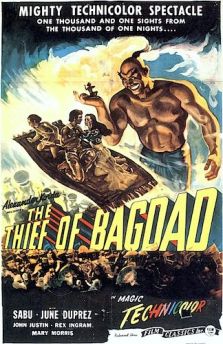
The Thief of BagdadThe Thief of Bagdad is, in many respects, one of the forefathers of the modern spectacle-driven blockbuster, packed with innovative effects designed to dazzle the viewer. One can only imagine how incredible the special effects looked to a 1940 audience. Today the flaws are obvious, but, surprisingly, not by much.

There are too many enchanting sequences to mention — the ginormous genie, the flying mechanical horse, the giant spider, the toys, the flying carpet… Models, huge life-scaled props, matte paintings, early blue screen — all this and more are put to use beautifully. The ingenuity of the effects work contains more artistry and charm — and, frequently, more excitement — than the bland, wannabe-perfect CGI we’re force fed today; and, because of this, and in spite of being almost 70 years old, the sense of wonder remains. It doesn’t matter that it’s not 100% believable — in fact, that’s almost the point: the child-like ability to suspend one’s disbelief and accept the fantastical seems to be the message of the film (or, at least, one of them).

All of this is emphasised by the cinematography. This is one of the earliest films to use Technicolor and use it it does. Everything is vibrant and lush, vivid and otherworldly; especially to the audience of the time, I should imagine, not accustomed to foreign holidays and endless TV travel shows as we are today. But the film’s world is a heightened version of reality and, as with the effects, the fantastical style means it doesn’t really date. Wish You Were Here has nothing on this.

The story itself has a bit of everything: romance, fantasy, action, adventure, humour and, no doubt, more. The cast are up to the task, with John Justin swashing his buckle Errol Flynn-style as dethroned prince Ahmed; Conrad Veidt perfect as slimily evil vizier Jaffar “the usurper”; Sabu suitably valiant, amusing and clever as a peasant hero; and Rex Ingram making a memorably self-centred genie. If Disney fans think some of this sounds familiar, it must seem obvious to anyone who’s seen Aladdin that The Thief of Bagdad was a major influence on the 1992 animated classic.

These days, The Thief of Bagdad may be something of an acquired taste — some viewers will struggle to engage their sense of make-believe enough to accept the rough-round-the-edges effects and fantastical storyline — but that’s their loss, quite frankly. For those of us with some imagination to spare, it remains a magical experience.

5 out of 5

* Although only these three are credited on screen, six directors were reportedly involved. The others were producers Alexander Korda, Zoltan Korda, and William Cameron Menzies. ^

** Though listed by the Radio Times as being in HD, the D didn’t look particularly H to me. ^

Watchmen: Director’s Cut (2009)

2009 #79
Zack Snyder | 186 mins | Blu-ray | 18 / R

This review contains spoilers.

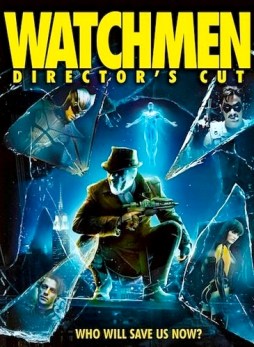
Hitting US Blu-ray so long ago that it’s shameful I haven’t watched it ’til now, and finally arriving in the UK next Monday, the Director’s Cut is Zack Snyder’s final vision of Watchmen: The Movie. The Ultimate Cut (currently available in the US but with no confirmed UK release), which integrates the animated Tales of the Black Freighter into the main feature, is, in Snyder’s words, “an experiment”. Maybe one day he’ll change his mind and say that’s actually his definitive version; I suppose these days — when it seems every major film has a proliferation of different cuts across theatrical release, home entertainment release, and home entertainment re-release — such a thing as a “definitive version” doesn’t necessarily exist. But that’s a debate for another day: for now, this — not The Ultimate Cut, and certainly not the theatrical cut — is Snyder’s Watchmen.

That said, I wouldn’t be inclined to say it’s vastly different to the previously seen version. There are some obvious new scenes and extensions, especially if you’re familiar with the original novel, but ultimately I didn’t find the additional 24 minutes created a vastly different experience. Most of the flaws still remain, from the unfixable — Malin Akerman is somewhat miscast; sometimes episodic storytelling (a largely unavoidable side effect of faithfully adapting a novel that is very much a story in 12 parts, as opposed to a story divided into 12 chunks) — to those that Snyder could potentially have rectified — the alley fight/Manhattan interview crosscutting still doesn’t quite work; Bubastis is inadequately explained; too little time is devoted to the large cast of secondary characters in New York to give Adrian’s plan the same emotional kick it has in the novel; and so on.

By the same token, none of the great bits are ruined, while some are enhanced. Although mostly faithful to the novel, the changes Snyder and co have made are almost all for the better: Rorschach’s “what do you see?” beats the fan-favourite landlady scene (goodness knows why it’s a fan favourite), and Matthew Goode’s slightly built, faintly Germanic Veidt seems a more natural fit for the character now than Gibbons’ more butch version (possibly only in my opinion, that one). Best of all is the modified climax, which retains all the significance of the original but, by changing the way in which it’s brought about, streamlines and tidies up the storytelling. The giant squid is a great comic book image, but this is superior plotting, especially in the abridged form a film adaptation must take.

As for the new bits themselves, some are slightly misguided — Rorschach’s escape from Blake’s apartment, for example, is wholly unnecessary; it shows him injuring a policeman, an incident now referred to over the next few scenes, but we don’t need to see it to follow the references, and showing it gets in the way of the previously perfect match-cut from the Minutemen photo in Blake’s apartment to the same one in Hollis Mason’s. By and large, however, the extensions add depth via little lines and moments. The most noticeable are a better building of Laurie’s backstory, and Hollis Mason’s death. The latter is a little ancillary to the main plot, its excision from the theatrical version easily justified to keep the running time down, but in itself is a well-played and tragic scene that adds further resonance to the end of Dan’s story.

Whatever you thought of Watchmen after the theatrical cut, this extended version is likely to change your opinion no more than any other re-viewing would. That said, with a little extra room to breathe and a few worthwhile extensions, and in spite of the odd tweak that doesn’t work, this is the superior cut of the film.

5 out of 5

Most of the comments in my lengthy review of the theatrical cut still stand, so I invite you to read it here.

Watchmen: Director’s Cut placed 3rd on my list of The Ten Best Films I Saw For the First Time in 2009, which can be read in full here.

Dark Floors (2008)

2009 #26
Pete Riski | 82 mins | DVD | 15 / R

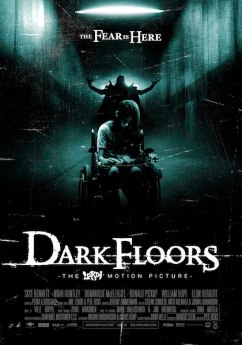
Dark FloorsYou may remember Lordi, the surprise winners of the 2006 Eurovision Song Contest. If that doesn’t help, they were the Finnish rockers all dressed up in monster suits. Here in the UK we gave them our highest number of points.

You’d be easily forgiven if you had forgotten them, but clearly someone hasn’t as they not only made this film, someone thought they were big enough to use in its promotion — it’s subtitled “The Lordi Movie” on posters, DVD covers and what have you. Maybe they’re still well-known in Europe. Or Finland. Yet despite the country of origin, Dark Floors is in English, with a predominantly British cast, and it appears to be set in America. On top of which, it has a surprising level of glossiness (albeit glossy gloominess) that, if you didn’t know better, would suggest a moderately budgeted US horror flick. Apart from the monster costumes.

In fact, expectations are gratifyingly knocked down at every turn. Riski’s direction and the cinematography are very slick, though some of the action/horror sequences lack much tension — the film effectively builds tension for these sequences, but rarely, if ever, delivers genuine scares on the back of it. While this isn’t always a bad thing, one begins to learn the tension being built isn’t likely to lead anywhere, robbing it of much impact. Effects, music and sound design also lend the project a higher budget feel than initial impressions suggest. As mentioned, Lordi’s costumes are the weakest bit, neutered either by familiarity — there’s no chance of genuine shock value if you recognise them from brightly-lit TV performances — or quite simply not having been designed for this kind of scrutiny or story. Riski does his best, hiding them with lighting, angles and special effects, but it’s not perfect.

Monsters aside, performances are pretty good. No one is outstanding but equally there’s nothing glaringly awful, always a plus for B-movie-level horror. At times the characters seem to accept the bizarre events that are occurring with too little reaction, though in fairness this is partly the fault of the script. What the latter occasionally lacks in believability (within a fantasy/horror context, obviously) it makes up for in efficiency. Admittedly this also means the whole cast are stereotypes, but it’s the world they find themselves in that’s of more interest.

Indeed, Dark Floors features more intriguing mysteries than it can keep a handle on, merrily setting them in motion but ultimately failing to pay many off. It’s packed with interesting imagery and good ideas, many of which aren’t hammered home, but equally many are never explained — key among these being… well, The Whole Thing. The final scenes seem to suggest there is some meaning, but it never comes close to a clear revelation. Having read around, it’s clear that it can be interpreted multiple ways (one of my favourites references an old Finnish children’s song), and so perhaps the makers are after a Cube vibe. Despite some surface similarities to that film’s awful first sequel, the overall effect thankfully sways closer to the original.

Some have called Dark Floors boring, but I think this is again a case of misaligned expectations — I found it never less than well-made and thought-provoking. There are undoubtedly weak spots, yet you’ll find weaker in plenty of major movies. That doesn’t excuse the flaws, but it shouldn’t be written off as a meritless B-movie because of them. One can’t help but think the project would have been better received if it hadn’t been conceived by and starred a slightly camp Finnish rock band who are never seen out of their monster costumes. It is, I feel, one of many cases where if you changed the credits to name certain other directors it might be beloved and endlessly debated by a certain sector of film fans rather than dismissed as “a glam rock band trying to be deep”.

It may even provide greater rewards on repeat viewings, especially if one wants to decipher the ending, because of its circular storytelling. Some elements of this are clear immediately (when Ben shoots up the stairwell, for example), others half-clear (it treats the audience with an above-average degree of intelligence in this respect), while other bits may only make sense (if they do, that is) with another viewing and/or some interpretation. Tobias and Sarah spend a lot of time repeating things or saying things out of context, for one — might these find a greater meaning second time through?

In a similar vein, I can’t help but wonder if in trying to be quite clever Dark Floors ultimately alienates the core horror audience who might pick it up; the people who’ll miss their straightforward scares and gratuitous gore and nudity. By so obviously billing it as “The Lordi Movie” and slapping on quite a lurid cover, the marketers have done nothing to suggest the film might actually benefit from the application of some brain power. True, this same problem can be alleged of the film itself — it’s only a horror film after all, and with somewhat ludicrous monster costumes at that — but I can’t help but wonder what might lurk within if people chose to look past these unfortunate style choices.

Naturally the counter argument goes that there’s not actually anything there, it’s just pretending there is instead of having a proper plot. I’m not certain which to believe.

Ultimately, an appreciation of Dark Floors comes down to its ending. The whole film is stylishly made — surprisingly so in fact — but there are no concrete explanations for what happened during it. If you like ambiguous endings there may be enjoyment in that very fact — and there are certainly plenty of theories floating around the ‘net for the interested to explore — but if you require your entertainment neatly wrapped up, I’m prepared to guarantee you’ll hate it. If, on another hand, you don’t care about the plot of your horror film as long as it’s scary… well, that all depends on your horror threshold, but if you’re a hardened horror fanatic I don’t imagine there are many chills to be had here.

I’m not entirely sure what to make of Dark Floors in the end, but err on the side of generosity because it’s well-made and has left me thinking — something I certainly never expected.

4 out of 5

Watchmen (2009)

2009 #9
Zack Snyder | 162 mins | cinema | 18 / R

This review contains major spoilers.
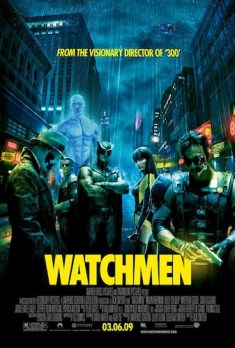
Watchmen didn’t flop. Let’s get that out of the way.

Did it do less business than expected? Yes. Were expectations unreasonably high? Unquestionably. After the barnstorming success of The Dark Knight I think some expected a repeat run, but they forgot that while TDK was dark, it still had clear heroes, clear villains, a massively popular franchise and — let’s be honest — a highly-publicised, highly-acclaimed final performance from a certain tragic young actor. Watchmen, by comparison, is densely plotted, morally ambiguous, a tad on the long side, with unknown characters, an unclear story (in the marketing at least) and no mass recognition. And it was rated R. All this considered, it did phenomenally well, and at the end of the day it’s WB’s fault for spending $150m on something that, realistically speaking, wasn’t going to make that back on opening weekend.

But this isn’t meant to be a rant about the box office. Now that the dust has settled somewhat from the initial flurry of reviews — which on the whole seemed to either hail it as an instant classic or an unrelenting mess (though some more reasonable ones found the middle ground) — and with the dubiously-featured UK DVD and Blu-ray releases just announced, it seems about time to add a few of my thoughts to the already-overflowing mix. In doing this I find it impossible to fully divorce myself from the fact that I’m a fan of the book, so can only really view this adaptation from that perspective; just as I think anyone who’s read the book can’t truly imagine quite how a non-reader will take this, whatever they may claim. The only people who can do that are people who haven’t read the book, and there have been plenty of those reviews around too.

But even as a fan, my opinions are not as predetermined as some might think. Watchmen is incredibly faithful to its source material (some notable tweaks and omissions aside), but while some have loved it for this, others have viewed it as weak or pointless. Perhaps some of the complaints about faithfulness stem from the fact that we’re actually unused to seeing faithful superhero adaptations — “adaptations” being the operative word. Across seven Batmans, five Supermans, four X-Mens, three Spider-Mans, two Hulks, and countless others, how many actually adapt a specific book? Most, if not all, develop their own story around the notion of the character(s), or take some degree of inspiration from various storylines, tailoring a new tale for the different medium (well, theoretically). In choosing to adapt the source rather than make a film starring the same characters, Watchmen places itself more in line with other literary adaptations than other superhero movies. Some would argue this context still renders it more of a Da Vinci Code than a Godfather, but it’s perhaps still appropriate to debate that rather than if it’s more a Hulk than a Dark Knight.

The consistent faithfulness is a bit of a mixed bag. For much of the film it’s a great story well re-told, and its climax actually manages to improve on the original’s to the extent that, if Alan Moore ever actually watched it (which he won’t), I’d like to think he’d be man enough to admit that this one change at least was an improvement. Similarly, in the novel I wasn’t convinced Rorschach’s final moments made sense — it seemed out of character. On screen, however, Jackie Earle Haley completely sells it, his final scream becoming one of the film’s most memorable moments. Other elements are retained with no thought, however: the intercutting of Dan and Laurie’s alley fight with Dr Manhattan’s press conference is an effective (if blunt) sequence in the novel, but on screen makes little sense — even though I know the story and know the events of both scenes, this choice left me struggling to follow events. Even worse, the sudden and unexplained presence of Ozymandias’ pet big cat is almost baffling to a viewer familiar with the source, and so I can only imagine how little sense Bubastis must make to a new viewer. Consequently, his demise has no emotional weight.

The final scene is a bit of a misstep as well. In the book it’s a perfect little coda, beautifully ambiguous and tied to several of the novel’s themes. On screen, Snyder overplays it, allowing it to drag on with pointless dialogue and leaving the point of the scene feeling forced — equally a fault of David Hayter and Alex Tse’s script, then. Part of the problem is that it’s lumbered with introducing a subplot and its characters for the sake of the payoff, both of which develop slowly and appropriately in the novel. The details of that particular subplot are not the only elements that are missed from the original: the novel contains a lot of details of street life in Manhattan, for example, which makes the city’s ultimate destruction more personal for the reader. Some of these scenes have been filmed and, knowing that an aptly-titled (for once) Director’s Cut is on the way, it’s at times hard not to view the theatrically-released Watchmen as an abridged version. While it is still more complex than some critics (both pro and fan) give it credit for, the missing nuances and subplots would strengthen the whole experience. We can but hope it’s these that the Director’s Cut will include, rather than just a collection of completist-pleasing trims.

It’s easy to complain about Watchmen — clearly — but, actually, I really enjoyed it. Snyder has arguably created a live-action version of the graphic novel rather than creating a film in its own right, but is that really a bad thing? It’s what many literary adaptations aspire to, the only difference here is there were already some pictures to directly transfer. Some will disagree, and if you do then this is a perfect argument for why Non-Fans should be in charge of film adaptions — Fans are too concerned with pleasing other Fans, in this case being rigorously faithful; Non-Fans often just want to make the best movie possible based on the source material, rather than making the best translation (or, perhaps, re-appropriation). Perhaps it’s too fine a line to walk; perhaps Snyder was too afraid to change anything; or perhaps it’s just a case of damned if you do (“it’s exactly the same, what’s the point?”) and damned if you don’t (“he changed too much, it’s not Watchmen!”).

In their faithfulness, Snyder, Hayter and Tse retain much of the story and character elements that made the original great. If the aim was to take the page and put it on screen, the screenplay is near flawless, embellishing some moments and even fixing others, while excising subplots so wisely I didn’t miss much. As stated, however, the definitive cut is surely the forthcoming one. As for Snyder’s direction, he mostly does a good job, recreating iconic panels — occasionally with too much reverence, true — but enlivening other sequences in his own way. In fact, for all the moans of reverence, some of the novel’s more filmic ‘cuts’ are actually abandoned (I’m thinking specifically of the ins & outs of flashbacks during the Comedian’s funeral). Photography wise, most of the film was far too dark, and I couldn’t help but wonder if it had been shot too much with DVD/Blu-ray in mind and suffered when projected. I suppose we’ll see later…

Snyder certainly left a clear directorial stamp on one element of the film: occasionally the action sequences smash into slowmo, sometimes to the point of freeze frame… exactly like they did for most of 300’s fights. Whereas there it looked kinda cool and felt like a stylistic tick unique to that film, here one can’t help but think time is being wasted that would be better spent on expanding the dense plot. And rather than being a stylstic quirk of 300, it now becomes one of Snyder’s; which means that, from the very first scene, “A Zack Snyder Film” is stamped all over this like a young boy with an abundance of name stickers. There’s nothing wrong with making it his own film, of course — I’m sure Gilliam’s or Greengrass’ versions would’ve slotted comfortably into their distinctive oeuvres — but it would be nice if it weren’t quite so intrusive. On the other hand, could it be that the expectation of this makes it seem worse than it is, and if any other director had pulled the same tricks it wouldn’t seem as apparent?

Similarly, the violence is incredibly brutal, gory and graphic — but that’s the point. Though they live in a heavily stylised world, these are ‘real’ superheroes, and real violence isn’t pretty. The level of brutality is appropriate to the theme but never lingered on more than is reasonable and rarely over-done. Those who aligned it with ‘torture porn’ flicks like Hostel in their criticism of the film were missing the point.

The film’s soundtrack has also come in for criticism in some quarters, where certain tracks have been accused of being entirely out of place and others have been suggested as replacements. However, the tracks lambasted and others put forth suggest that these particular critics (usually amongst fandom) have a rather narrow taste in music, with the suggestions often too obscure to suit. In fact, Watchmen’s soundtrack provides a nice variety of contemporary songs, spanning styles in order to quickly define an era rather than to evoke what a specific genre was doing at the time — so a 1970s riot is accompanied by disco, for example, rather than a niche rock track. It makes absolute sense from a filmmaking standpoint and, for those of us with broader tastes, is perfectly pleasant. Elsewhere, the choice of music references both the original text — Rorschach and Nite Owl’s arrival in Antarctica is set to Jimi Hendrix’s All Along the Watchtower (while the novel quotes Bob Dylan, here its use as an action cue means Hendrix fits better) — and other films — the Vietnam sequence is knowingly set to Ride of the Valkyries. There are some missteps — the use of Leonard Cohen’s Hallelujah over the sex scene is presumably meant to create a moment of euphoric triumph, but is instead laughably cheesy — but, most of the time, it’s a success.

The other major addition from the graphic novel is, of course, a cast. As already noted, Jackie Earle Haley is incredible in the default-lead role of Rorschach. He may’ve nicked Christian Bale’s Batman voice, but it’s much more suited here. Patrick Wilson’s Dan Dreiberg/Nite Owl II is also great, showing the benefit of hiring proper actors rather than stars. Jeffrey Dean Morgan and Matthew Goode hold their own in potentially challenging roles. Some didn’t — and don’t — think Goode was right for Adrian Veidt, but I preferred his portrayal so much that the more butch-looking Ozymandias of the novel now seems wrong to me. The female leads suffer more. Malin Akerman is about passable, but Carla Gugino is quite possibly miscast. It’s a tricky part to get right, having to be both young and sexy in the flashbacks but an old woman in the story’s present day, and so it may be more the fault of some poor old-age makeup than Gugino’s.

That’s not to mention Billy Crudup, who has the double challenge of playing a man who has become God-like, and of giving this performance underneath a big pile of CGI. And with a CG penis on show too. Personally I didn’t find the CG manhood as distracting as many others seem to have, and Crudup’s actual performance is captivating — there’s a thin line between aloof otherworldliness and reading dialogue aloud in a monotone, but Crudup managed to fall on the right side of it.

Surprisingly, I’ve made it through almost 2,000 words without mentioning the title sequence. There’s no need to describe it any more, it is simply brilliant. More dioramas were shot than made it into the final cut, so I can’t help but hope they’ll be reinstated in later versions.

In summary (if this ramble around Watchmen can be summarised), Zack Snyder’s Watchmen Film is not “the big screen equivalent of Alan Moore’s Watchmen” — that would be a movie, likely very different to the graphic novel, that examined and deconstructed representations of superheroes in cinema and television. Instead, Zack Snyder’s Watchmen Film is “Alan Moore’s Watchmen on the big screen”, a blisteringly faithful adaptation of the source. Crucially, however, it is not (always) blindly faithful — the ending being a case in point — but some will still ponder its relevance. Judged as an artistic work in its own right, then, it perhaps comes up lacking. Judged in comparison to other faithful adaptations of great literature, however, it’s arguably as good as many others. At the very least, it’s exposed a wider audience to the characters, themes and debates of the original, and, whether they like it or not, that can only be a good thing.

In closing, I’m reminded of a comment made by Danny Boyle when discussing his favourite film ever made: “it’s imperfect; which every film should be.”

5 out of 5

My review of Snyder’s preferred Director’s Cut can now be read here.

That version placed 3rd on my list of The Ten Best Films I Saw For the First Time in 2009, which can be read in full here.

La Antena (2007)

aka The Aerial

2009 #10
Esteban Sapir | 95 mins | TV | PG

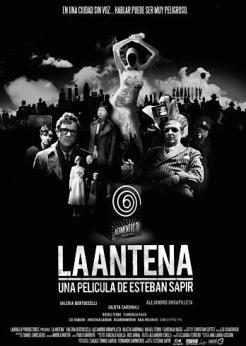
La AntenaLa Antena is a Silent Film. And by that I mean there is no dialogue, though there is music, and it’s in black and white with low-budget (looking, at least) effects, though it was made in the 21st Century — but it is entirely in the style of those films made in the era before sound was technically possible. It could sit comfortably alongside ‘real’ silent films to the extent that the uninitiated might reasonably be fooled into believing it was one.
In some respects this is neither here nor there, though it will undoubtedly put some viewers off. For those with a more open mind or who are fans of silent movies, however, it’s a joy. This is mainly because it’s incredibly imaginative, especially with its visuals, which are often pleasantly barmy. The setting is a dystopian future (or alternate reality) where people can no longer speak (thus justifying the silent film styling), and this world is wonderfully realised without a hint of realism or awkward attempts to explain why things are the way they are. These days it’s a rare filmmaker who doesn’t feel the need to explain everything and make it fit in relation to our world, but Sapir is one of the few who trusts us to accept what’s going on — much as the great silent film directors did.

Sadly it isn’t flawless. Some elements of the plot get forgotten as things roll on (what happened to Mr TV’s son, for example?), perhaps a victim of the 50 minutes of cuts they chose to make for pace. Most of the symbolism is also fairly heavy handed, though one could argue that’s in keeping with the style, and at least means it’s all nicely noticeable. Even then a few bits are unavoidably leaden — particularly, the use of the swastika and Star of David felt uncomfortably irreverent to me.

Ratings-wise, La Antena is borderline — the sort of film I give four stars to now but then beats most five-star films to a high place on my year-end top ten (like The Prestige or Hellboy II or the five others that have done it). In which case it seems only fair to run the risk of awarding it full marks.

5 out of 5

Oscar-winning modern silent movie The Artist is on BBC Two tonight, Saturday 24th January 2015, at 10pm, and is reviewed here.

Flash Gordon (1980)

2009 #27a
Mike Hodges | 107 mins | DVD | PG / PG

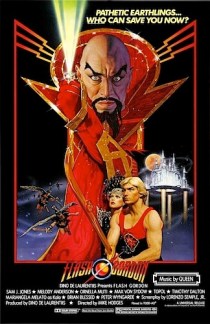
Flash GordonI hadn’t been intending to review Flash Gordon — it’s not as if I don’t have enough new films to review — but though I have seen it before it was a long time ago and I was very young, so watching it again now I wasn’t quite prepared for just how good it is.

Flash often seems to be dismissed as an unintentionally campy load of nonsense, perhaps with some ironic appeal. What this assessment misses is how knowing it is. Yes, it’s ridiculously camp, the dialogue is cheesy, the performances equally so, and it’s brighter and more colourful than any under-5s TV show ever produced. But it knows it is, and because it does it with nary a nod nor a wink I think that passes some viewers by.

The sheer volume of things there are to love in this film makes them hard to list without watching it and pointing them out as they appear, but I’m sure I can manage a few. For one, there’s the design work — the sets, the costumes, the spaceships — all huge, vibrant, retro and often ridiculous, and all wonderful for it. The special effects are truly special, creating skies full of swirling rainbow colours, rainbow clouds for the spaceships to float through, platforms that tilt over a rainbow vortex… Do some of them look primitive? Well, a bit — but they have more charm than CGI ever will, and they don’t get in the way either.

The plot is ludicrous, built from B-movie elements and predicated on cliffhangers — which is exactly as it should be. The dialogue is packed with quotable lines, many so patently ridiculous that it can only have been deliberate. There’s not a single bad performance — everyone’s either in on the joke or playing the straight man to it. Of particular note are Max von Sydow’s properly villainous villain (who, to be quite honest, still has more depth than too many nemeses we see today); Peter Wyngarde as his scheming right-hand-man, granted a fantastic death; Mariangela Melato as his right-hand-woman, granted some of the very best ‘bad’ lines; Topol as a somewhat loopy Dr Zarkov; and, of course, Brian Blessed — no more need be said.

The fights and assorted other action scenes are exciting, frequently epic, and tinged — like so much of the film — with a perfectly judged level of humour. Arguably the best is a harem-set tussle between between Dale Arden and Princess Aura, watched by sniggering servants as they wrestle on a giant bed. It’s beyond knowingly handled by Hodges, the brief cutaways to the servants indicating the deliberate commentary on such voyeuristic lesbian-lite wrestling matches in other films.

Then there’s the score by Queen. As with Brian Blessed, what more needs to be said? (Incidentally, I got a big laugh when Blessed screams, “who wants to live forever anyway?”, forgetting that Highlander was still six years off when this was made.)

So, in all that, what’s wrong with Flash Gordon? When I noticed how much I was enjoying it — about five minutes in — I began keeping my eyes open for flaws, any niggling thing that detracted from the experience Hodges created. I couldn’t find a single thing. Not one.

Which means I can now become known far and wide as the blog that only awarded Star Wars four stars, but gave Flash Gordon a perfect

5 out of 5