
Cody Cameron & Kris Pearn | 95 mins | Blu-ray | 2.40:1 | USA / English | U / PG
 A sequel to the suprisingly-good-in-spite-of-its-name animated comedy, Cloudy with a Chance of Meatballs 2 (innovative title; though better than its original moniker, Revenge of the Leftovers) begins mere minutes after the first film ended; so closely, in fact, that someone decided it would be wise to begin with what is essentially a “Previously on Cloudy with a Chance of Meatballs…” montage. Well, it has been four years in cinema-time.
Following the worldwide effect of Flint’s invention in the first film, the clean-up operation is being spearheaded by Californian mega-company Live Corp, founded and run by our hapless hero’s life-long idol, Chester V (can you see where this is going already?) The island of Swallow Falls has to be abandoned for the clean-up, but things only get worse when it turns out Flint’s machine wasn’t destroyed and is still churning out food. When his teams fail, Chester V persuades Flint to return to the island to destroy the machine (again); and, naturally, Flint ropes in all his friends — read: “your favourite characters from the last film!” Hijinks ensue.
That’s the quick version, anyway; though the film isn’t exactly slower: it moves at a restless rate of knots, much as the first one did. That’s not something to be sniffed at, as it throws plot and humour at the viewer with wild abandon. Sometimes such a methodology is a recipe for “chuck everything at the screen and see what sticks” — with the latter usually being “not a huge percentage” — but here it creates a pretty fine hit rate. It helps that new directors Cameron & Pearn (the original pair of Phil Lord and Chris Miller off furthering their career with 21 Jump Street and The Lego Movie) don’t just rehash the best-remembered jokes from the first film, instead forging into largely-new territory. The humour is mostly of the “silly” variety, never missing an opportunity for a pun or bit of daftness (including breaking the fourth wall, very briefly, but quite neatly). The result could be groan-inducing, but instead is quite delightful.
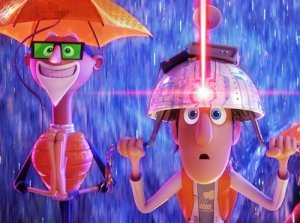 The villain this time is a thinly-veiled riff on Apple and its messianic founder, Steve Jobs. Here they become the aforementioned Life Corp, whose logo (and headquarters) is a giant lightbulb, and the equally-aforementioned Chester V, Flint’s childhood hero. As with almost all hero-since-childhood characters, you can guess where that’s going from the moment he appears at the start of the opening montage. Nonetheless, his storyline and relationship with Flint mostly works — it does take Flint a long time to reach the point of realising The Truth, but for viewers the reveal comes earlier and isn’t treated as an inappropriately big shock. Again, kids less familiar with movie tropes will be even more accepting of it. Plus there’s a Moral Message there for said kiddies (naturally), this time about trusting in your friends. It’s all familiar fare to an adult viewer, but doesn’t dominate to the point of boredom.
Elsewise, the film is visually and conceptually inventive, particularly in its array of Foodimals. There are far more racing around than the film can hope to feature in major roles, which creates the impression of a rounded world and boundless creativity to match the boundless energy. There’s also a nice array of nods and references to other movies — nothing too overt, we’re not in spoof territory, but you can spy bits of everything from Jurassic Park and its first sequel to Predator, and probably several other jungle-set adventure flicks to boot. Such things go over kids’ heads, I’m sure, but it’s another element for grown-ups to enjoy.
 In the end, Cloudy 2 isn’t quite as good as the first film, but not in a “notably inferior” way. It remains relentlessly entertaining, with an admirable energy and drive, which is in part a desperation to not be boring, but not in a shallow way. It may lack the extra little something that the first one has, but if that was an 8-out-of-10 then this is a 7 — which, because it’s fun rather than disappointing, rounds up to:

Cloudy with a Chance of Meatballs 2 is available through Now TV and Sky Movies On Demand from tomorrow, and comes to Sky Movies Premiere a week Friday.
 Nicolas Cage fulfils his long-held wish of playing a comic book hero in this peculiar effort from the writer-director of
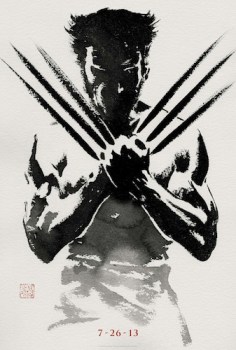 Rather than a sequel to the poorly-received
 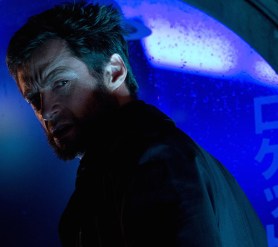 and the end result is a moderately unique movie. OK, it doesn’t ooze originality, but nor does it feel quite like your run-of-the-mill powered-people-punch-each-other comic book yarn.
 Talking of women, you can’t overlook Logan’s lost love, Famke Janssen’s Jean Grey. Considering the build-up pitched The Wolverine as a standalone film, with perhaps the occasional nod to the wider X-universe, including rumours of a Jean cameo, the final film is surprisingly tied-in to previous events: there’s actually loads of Jean (how? Well…), and Wolverine’s personal journey is very much grounded in the events of The Last Stand. I’m sure you could watch this without having seen or remembered a previous X-movie, because the bulk of the plot is indeed standalone, but the emotional journey is invested in what came before.
 Without seeing all the behind-the-scenes goings-on it’s difficult to know whose fault this was, but it’s equally difficult to imagine the screenplay that Darren Aronofsky (far from your regular blockbuster director) described as “a terrific script” could have concluded this way; and knowing that his replacement, James Mangold, fiddled with the script before shooting commenced… well, draw your own conclusions.
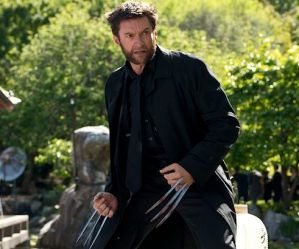 The Wolverine isn’t quite the movie it could have been; nor, I think, quite the one the makers hoped they were producing. Jackman has intimated since that it’s studio interference that pushes for silly-big action sequences and the like, but that fan feedback might slowly be winning them around to the things viewers actually care about. Whether that’s true or not, I guess we’ll see in the next instalment…
 The year 1600: British ship’s captain Solomon Kane is not a nice man, a mite too fond of pillagin’ and killin’ and quite possibly other not-nice things ending in —in’. That is until he has a run in with the Devil’s Reaper. Hell has claimed his soul, and its time to collect. Solomon does not plan on being collected, renouncing his former life and trying to hide at a monastery in England. But as a gang of possessed men lay waste to the countryside, burning its towns and enslaving its people, will Solomon be able to stick to his newfound pacifism? Yeah, we all know the answer to that…
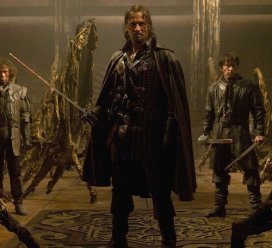 but also a more-than-requisite amount of swordfighting and the like — all told, Kane is more period action-adventure (with demons) than period horror.
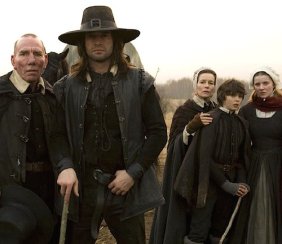 In support there’s the likes of Pete Postlethwaite, Alice Krige and Max von Sydow, all of whom bring instant heft to roles that need it. I don’t mean to say the screenplay doesn’t contain it, but the shorthand the actors bring with them certainly does favours. Cameo-sized appearances by Mackenzie Crook and Jason Flemyng are also effective, and watch out for a pre-
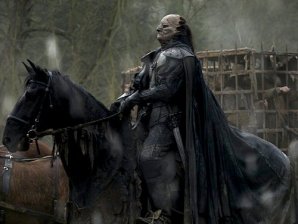 My praise also extends to those responsible for the film’s location shooting. Shot in the Czech Republic, for once that genuinely looks like Britain. OK, the style of some buildings give the game away occasionally (in particular the monastery), but until I read different, I just assumed the fields, forest and coastline had been found in our real South West, on the moors or what have you.
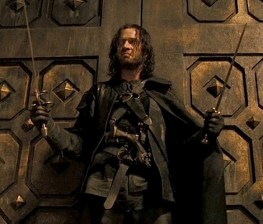 At the end of the day, Solomon Kane is a period fantasy action-adventure, something which doesn’t seem to be everyone’s taste — it has relatively weak scores on the likes of IMDb and Rotten Tomatoes (though, in the context of how this kind of movie often performs in those arenas, they’re far from awful). For my money, however, it’s a great little film. It looks beautiful, it renders the tone of pulp fantasy brilliantly, its action sequences are exciting (so many swordfights! Heaven!) and its creepy bits unnerving. It may not be ‘trash’ elevated to art — it’s not a Tarantino movie — but it is pulp fiction treated with due reverence.
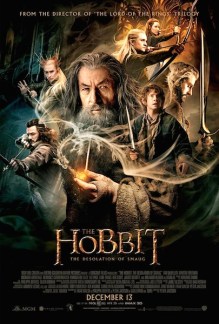 The Desolation of Smowg-not-Smorg begins in the same way
 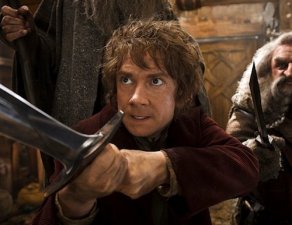 It’s my understanding that the originally-planned (and shot) two-part version of Jackson’s Hobbit adaptation was transformed into a trilogy by, essentially, taking what was to be film #2 and splitting it in half. That might explain why individual sections are allowed to go on so long here: to bulk up the running time to the kind of epic proportions audiences expect from a Middle-earth movie. Anything less than two-and-a-half hours isn’t going to cut it. But when your climax is a battle between a giant dragon (cool!) and a small army of dwarves (kick ass!) around a deserted underground city (hell yeah!), but my main thought afterwards is, “God that went on a bit”, then you’ve failed at something.
 Meanwhile, Luke Evans’ Bard is as Welsh as the actor’s name suggests, which is a little bit of a surprise. But then the dwarves’ accents have all the rest of the UK covered, so why not. Benedict Cumberbatch sounds like Benedict Cumberbatch playing ‘big’ as Smowg-not-Smorg. It feels like this should be an iconic villain performance but, while good, I found it somehow lacking. Expectation may be scuppering him; maybe I’ll warm to it on future viewings.
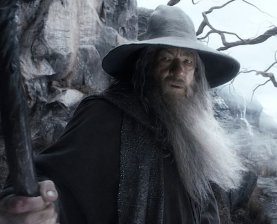 I haven’t picked apart everything that’s wrong with the film (what purpose is there switching from one made-up-for-the-film orc general to another?!), but then nor have I praised everything that works (there are some quality actors in amongst all that crashing and banging). It seems a fair few people liked this Hobbit instalment more than the first; the best explanation I can find is, “because it’s got more action”. Far be it from me to accuse other film viewers of being shallow, but… really? I genuinely enjoyed An Unexpected Journey as a return to the beloved realms and peoples of Middle-earth. The Desolation of Smowg-not-Smaug has some of that, and the charm of introducing us to new parts of the world too, but it’s drowned out by so much aimless noise. Here’s hoping it improves with repeat viewings and/or the inevitable extended edition, because this time I nearly slipped down to a lowly 3 stars.
 Few would deny that Peter Jackson’s extended versions of
 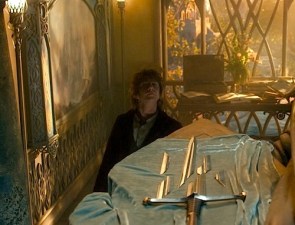 There’s not as much extra time with the dwarves as I expected, though, with most of the character time still going to Bilbo.
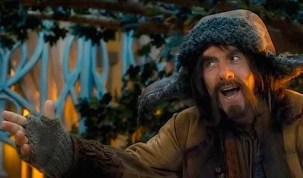 having to work alone on a green screen for many of his scenes with the smaller characters), but newcomers Martin Freeman, Richard Armitage and James Nesbitt shine too. This is Freeman’s film to be the centre of attention, but Armitage and Nesbitt will have much more to do in the follow-ups, and the groundwork is nicely laid here.

 January’s films
 “Cruise. Spielberg.” So read the poster and/or trailer for this ’00s-set reimagining of H.G. Wells’ classic novel of alien invasion and domination. Despite the updating, and the sickeningly twee ending, it’s actually a damn good film. Post-9/11, US films were more positive than ever about how all Americans would band together in a crisis. Not so here.


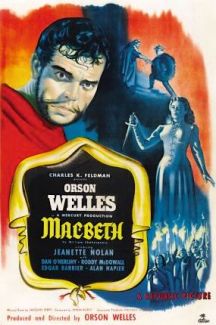 Twelve years on from his innovative, acclaimed, career-bolstering ‘
 The low budget and quick schedule affect the film across the board, for good and ill. There’s much dramatic staging, with grand sets and doom-laden lighting. The shadow-drenched cinematography may well be a result of the cheap production, but the resulting effect is marvellous. Indeed, all the camerawork is great. There are some striking long takes, including the majority of the night of the murder occurring in one long unbroken shot. The costumes, on the other hand, look like a ragtag bunch of Past Clothing from the studio’s store… which is because they essentially were.
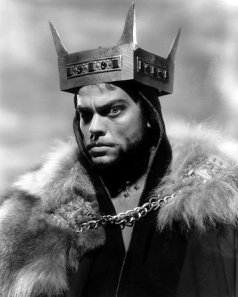 Macbeth himself is hardly in possession of all his faculties at that point, acting like a drunkard; but rather than make the sequence appropriately sinister (it’s in this state that he orders the execution of Banquo and Fleance, for example), it plays up the silliness, which is a shame.
 When
When  Personally, I find it a valid thing to attempt. Rather than take the Superman mythology as read, here Nolan and co — including screenwriter David Goyer and director Zack Snyder — have tried to imagine what would really happen if an alien baby with incredible powers arrived in our world. So Clark Kent hides his abilities, goes on a trek around the world to ‘find himself’, and when he’s uncovered there’s mass media and military interest. Which is pretty accurate, I think. If some guy started stopping oil rigs collapsing single-handed, or flying around the place, the military’s hardly going to sit back and go, “oh OK then”.
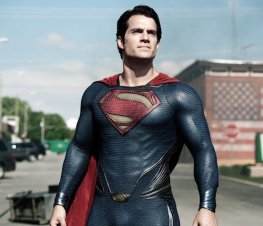 The filmmakers have certainly bought into their own conceit, to a frankly laughable extent. The Blu-ray contains a featurette called All-Out Action, which the menu describes as follows: “The action in Man of Steel soars to new heights with a level of realism never before seen in a super hero film.” Hahahaha! Realism my arse. Once the action kicks in it’s positively comic book. Men are hurled around like rag dolls; Metropolis is destroyed in a huge flying punch-up, which just feels like a less effective re-hash of
 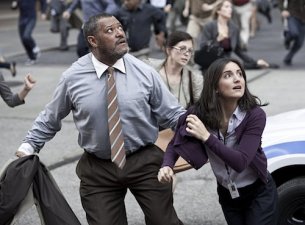 As to the destruction of the city, I think the criticism is right. The city clearly isn’t evacuated before buildings start falling — it’s being evacuated, but no one even knew to start running before the Massive Machine Of Destruction (I forget what it was actually for) turns up and starts destroying things. People run into the streets as buildings fall on them. As a viewer, how can you miss that hundreds, possibly thousands, of innocents are dying? The cinematography makes it look like 9/11 — incredibly like 9/11, in fact. That was 12 years ago by the time of the film’s release, but is it OK to trade on such iconography in a blockbuster entertainment? Should we just ignore the notion that so many ‘extras’ are dying because, hey, it’s just a superhero movie? But aren’t we meant to be taking this as Real World, chaps?
 There’s a lot else that Man of Steel plays with in the Superman legend besides the violence and cinematography. Some people will surely miss the bumbling Clark Kent, the burgeoning relationship with Lois Lane, and so on. These elements are eventually brought in, sometimes in a modified way, which makes it feel like they’ve been put in place — Superman Begins style — to be used in a sequel. Except we know
 100Films.co.uk