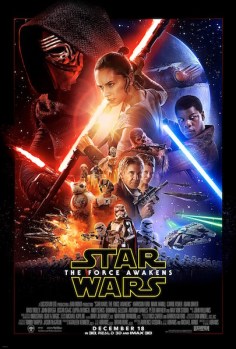
Star Wars: The Force Awakens (2015)

aka Star Wars – Episode VII: The Force Awakens

2015 #191
J.J. Abrams | 135 mins | cinema (3D) | 2.35:1 | USA / English | 12A / PG-13

Oscar statue2016 Academy Awards
5 nominations

Nominated: Best Editing, Best Original Score, Best Sound Mixing, Best Sound Editing, Best Visual Effects.


Star Wars: The Force Awakens is not the best film of 2015. Not according to the Academy of Motion Picture Arts and Sciences, anyway, who didn’t see fit to nominate it for Best Picture at tomorrow’s Oscars. Many fans disagree, some vociferously, but was it really a surprise? The Force Awakens is a blockbuster entertainment of the kind the Academy rarely recognise. Okay, sci-fi actioner Mad Max: Fury Road is among this year’s nominees, but with its hyper-saturated cinematography and stylised editing, it is action-extravaganza as art-film, further evidenced by some people’s utter bafflement at how anyone can like a film so devoid of story or character. (It isn’t, of course — those people are wrong.)

I’m sure the makers of Star Wars can rest easy, though, what with it being the highest grossing film ever at the US box office (at $924m and counting, it’s the first movie to take over $800m, never mind $900m), and third-ever worldwide (behind only Titanic and Avatar, both of which had re-releases to compound their tallies). Its reception has been largely positive too, with many fans proclaiming it the third or fourth best Star Wars movie — which doesn’t sound so hot, but when two of those previous films are unimpeachable all-time favourites, being third is an achievement. There are many dissenting voices though, disappointed thanks to their perception that it’s just a rehash of A New Hope, and that it’s a movie short on original ideas but long on modern-blockbuster bluster and noise.

I think, at this point, one or two other people on the internet have written the odd word about The Force Awakens — you have to really go looking, but trust me, there are some articles out there. (Of course, by “one or two other people” I really mean “everybody else”, and by “the odd word” I mean “hundreds of thousands of millions of words”. And by “have” I mean “has”, for grammatical accuracy in this completely-revised sentence).

I too could talk about the likeable new heroes; the triumphant return of old favourites; the underuse of other old favourites; Daisy Ridley’s performance; John Boyega’s performance; the relationship between Rey and Finn; the relationship between Finn and Poe; the success of Kylo Ren and General Hux as villains (well, I thought they were good); the terrible CGI of Supreme Leader Snoke; the ridiculous overreaction to the alleged underuse of Captain Phasma; that awesome fight between the stormtrooper with that lightning stick thing and Finn with the lightsaber; the mystery of Rey’s parentage; the mystery of who Max von Sydow was meant to be (and if we’ll ever find out); some elaborate theory about why Ben wasn’t called Jacen (there must be one — elaborate theories that will never be canon are what fandoms are good for); the way it accurately emulates the classic trilogy’s tone; the way it’s basically a remake of A New Hope; the way it isn’t that much of a remake of A New Hope; why ring theory and parallelism makes all this OK anyway; all of its nods to the rest of the saga; that death scene; that ending; those voices in that vision; and the single greatest part of the entire movie: BB-8 giving a thumbs up.

But I won’t talk about any of that. Not now, anyway. Instead, for an angle of moderate uniqueness, I’ll talk about the five elements of the film that have been singled out for recognition by the Academy of Motion Picture Arts and Sciences.

Editing
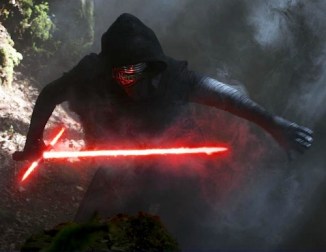
J.J. Abrams seems to have tricked some people into thinking he’s a great director with The Force Awakens (rather than just a helmer of workmanlike adequacy (when he’s not indulging his lens flare obsession, at which point he’s not workmanlike but is inadequate)), and I think that’s partly because it’s quite classically made. Yeah, it’s in 3D, but the style of shots used and — of most relevance right now — the pace of the editing help it feel in line with the previous Star Wars movies. Some of the more outrageous shots (often during action sequences) stand out precisely because they’re outside this norm. Perhaps we take for granted that Abrams delivered a movie in keeping with the rest of the series, because that’s The Right Thing To Do, but that doesn’t mean he had to do it. And the transitional wipes are there too, of course.

Score
Ah, John Williams — 83 years old and still going strong. Or still going, at any rate. I’m not the most musically-minded viewer, unless something really stands out to me. I don’t remember anything in Williams’ Force Awakens score standing out. Not that there’s anything wrong with it per se, but I didn’t notice anything new that has the impact of The Imperial March or Duel of the Fates (for all of the prequels’ faults, they at least gave us that). In Oscar terms, it’s apparently not looking so hot for Williams either: his return to a galaxy far, far away is being trumped by Ennio Morricone’s return to the West.

Sound Mixing & Sound Editing
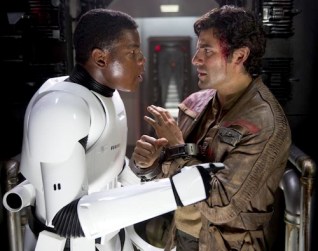
No one knows what the difference is between these two categories. I’m not even sure that people who work in the industry know. As a layperson, it’s also the kind of thing you tend to only notice when it’s been done badly. The Force Awakens’ sound was not bad. It all sounded suitably Star Wars-y, as far as I could tell. That’s about all I could say for it. It feels like these are categories that get won either, a) on a sweep, or b) on a whim, so who knows who’ll take them on the night?

Visual Effects
CGI is everywhere nowadays, and at the top end of the game it seems like it’s much-for-muchness in the photorealism department. So what dictates the best of the best, the most award-worthy? Well, innovations are still being made, they’re just less apparent in the end product, it would seem: reportedly there are a load of workflow-type innovations behind the scenes on Star Wars, which improved consistency, as well as some better ways of achieving things that were already achievable.

Nonetheless, for a franchise with which they have a long, close history, it’s understandable that ILM pulled out all their tricks here — fairly literally: they even used forced perspective to extend some sets, rather than the now-standard digital set extension (green screen + CG background). Most notably, a lot of BB-8 was done with working models and puppetry. Of course that’s still computer aided, be it with wire and rod removal or some bits of animation, but it still lends the droid greater presence and physicality. That kind of grounded, make-it-real mindset pervades — the effects team exercised “restraint […] applying the basic filmmaking lessons of the first trilogy,” according to this article from Thompson on Hollywood. Effects supervisor Roger Guyett says that attitude was about being “very specific about what the shot was about. And making it feel like you were photographing something that was happening.”

In terms of whether it will win or not, well, take your pick of the predictors. Some say Fury Road will sweep the technical categories, presumably in lieu of it winning any of the big-ticket prizes. Star Wars was the big winner at the Visual Effects Society awards though, which have predicted the Oscar on nine of the past 13 occasions. The times it’s failed have generally been prestige films that happen to have effects kicking blockbusters off their pedestal, like Hugo beating Dawn of the Planet of the Apes, or Interstellar beating Rise of the Planet of the Apes (the Academy clearly hates those damned dirty apes). With The Revenant taking secondary honours at VES, perhaps that’ll be an unlikely Oscar victor.

In truth, I don’t think any of those are the best things about The Force Awakens. What really works for it are the characters, the relationships, the pace of the story (rehashed or not), the overall tone. It was never going to get major awards in the categories that recognise those achievements (acting, writing, directing), and, frankly, those elements aren’t gone about in an awards-grabbing fashion anyway. In the name of blockbuster entertainment, however, they’re all highly accomplished.
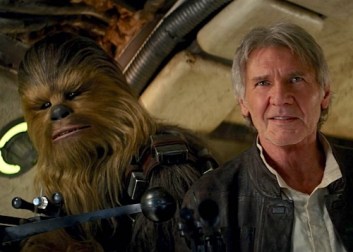
With the good ship Star Wars relaunched under a sure hand and with a surfeit of familiarity to help steady the ride, hopefully future Episodes can really push the boat out.

5 out of 5

Star Wars: The Force Awakens placed 9th on my list of The Ten Best Films I Saw For the First Time in 2015, which can be read in full here.
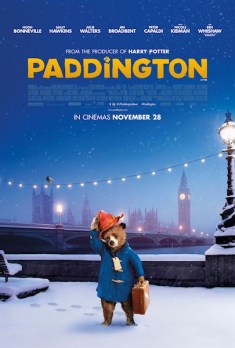
Paddington (2014)

2015 #182
Paul King | 95 mins | streaming (HD) | 2.35:1 | UK & France / English | PG / PG

The signs weren’t good for Paddington as it geared up for release: its star voice actor, Colin Firth, pulled out late in production; on posters, the CGI lead character looked like the personification of the uncanny valley; and the BBFC rating that cited “sex references” made it sound like it had entirely the wrong tone for an adaptation of a beloved classic children’s book. But these portents were quickly consigned to history when the film received an adulatory response from critics and audiences alike.
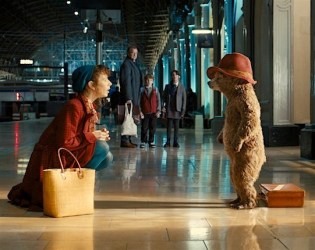
The story follows young bear Paddington (in the end voiced by Ben Whishaw) as he leaves his native Peru in search of a new home in London. There he temporarily falls in with the Brown family: reluctant father Henry (Hugh Bonneville), hippyish mum Mary (Sally Hawkins), moody teenage daughter Judy (Madeleine Harris), keen son Jonathan (Samuel Joslin), and their barmy housekeeper, Mrs Bird (Julie Walters). As they try to find Paddington a permanent home, he comes to the attention of museum taxidermist Millicent (Nicole Kidman), who wants to add him to her permanent collection…

Paddington is a fine example of why you can’t judge a film by its marketing, because the critics were right: this is a joyous, funny movie; a delight for all ages. It also shows that sometimes euphemistic PR phrases like “creative differences” or “we agreed he wasn’t right for the part” aren’t actually euphemistic at all: Firth would’ve been all wrong for Paddington, at least as he’s realised here, and so his departure was a wise move for the sake of the character. Whishaw, on the other hand, nails it, his boyish tones being resolutely character-appropriate.

The rest of the cast are all very safe pairs of hands, meaning viewers can rest easy that, if there is a weak link, it won’t come from the performances. This is further cemented by supporting turns from the likes of (in order of appearance) Geoffrey Palmer, Imelda Staunton, Michael Gambon, Matt Lucas, Peter Capaldi, and Jim Broadbent, plus a host of faces viewers may recognise from British TV comedy.
Fortunately, the screenplay (by director Paul King) is no slouch either. The film mixes various styles of comedy, as verbal humour rubs shoulders with pure slapstick, sight gags sit alongside witty spoofery, and there’s even a spot of pantomime-esque cross-dressing. This isn’t a case of “throw everything at the screen and see what sticks”, though. There’s a resolutely good-natured tone that’s liable to keep a smile on your face, and perhaps even win over more sceptical audience members — just as the initially-grumpier members of the Brown clan are too.

Inevitably a sequel is in development, but King is reportedly being given as much time as he feels he needs to get it right — always a good thing. Whenever it rolls around, I suspect it will be met with considerably fewer doubts. Not pandering to the criticisms of its pre-release hype, Paddington emerges with a sure-handed approach and material that merits such confidence. A delightful movie for viewers of any age.

4 out of 5

Heaven Can Wait (1943)

2015 #198
Ernst Lubitsch | 108 mins | TV | 4:3 | USA / English | U

My first experience of Lubitsch’s US output concerns a man who arrives on Hell’s doorstep and reflects on his life to explain why he’s there.
It starts brilliantly: the bookend scenes are excellent, and the early parts of the plot are buoyed by consistent wit and enjoyable characters, particularly Charles Coburn as a slyly raucous grandfather. As it heads into its second half, it loses momentum and focus, the most entertaining characters disappear, and it takes its time plodding to a finale.

An enjoyable film with a lot of amusement value, just a little too long for its own good.

4 out of 5

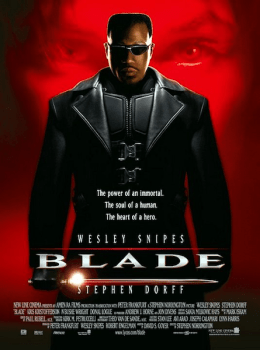
Blade (1998)

100 Films’ 100 Favourites #12

The power of an immortal.
The soul of a human.
The heart of a hero.

Country: USA
Language: English
Runtime: 120 minutes
BBFC: 18
MPAA: R

Original Release: 21st August 1998 (USA)
UK Release: 13th November 1998
First Seen: TV, c.2001

Stars
Wesley Snipes (White Men Can’t Jump, Demolition Man)
Stephen Dorff (Backbeat, Immortals)
Kris Kristofferson (Pat Garrett & Billy the Kid, Heaven’s Gate)
N’Bushe Wright (Zebrahead, Dead Presidents)

Director
Stephen Norrington (Death Machine, The League of Extraordinary Gentlemen)

Screenwriter
David S. Goyer (Dark City, Batman Begins)

Based on
Blade, a Marvel comic book character created by Marv Wolfman & Gene Colan.

The Story
When hospital haematologist Dr. Karen Jenson is bitten by a living corpse — actually a vampire — she encounters Blade, leather-clad badass vampire hunter. He mercifully takes her to his lair, where she hopes to create a cure for her impending vampirism. Meanwhile, mid-ranking vampire Deacon Frost aims to take over the world, for which he needs Blade’s unique blood…

Our Hero
The Daywalker — half-human half-vampire Blade, who can go out in sunlight (hence the nickname) and controls his bloodlust with injections. Passes his time helpfully killing vampires.

Our Villain
Being born human, turned vampire, and consequently looked down on by the purebred elders, probably gave Deacon Frost a chip on his shoulder, which may be why he believes vampires should enslave humanity. Which, despite his betters’ disapproval, he sets about doing.

Best Supporting Character
Blade’s mentor and Q-like gadgetmaster, Whistler. According to Wikipedia he was created for the film, but made his debut two years earlier in the Spider-Man animated series (voiced by Malcolm McDowell, no less). 20 years hence, apparently he still hasn’t appeared in any comics, which is very unlike Marvel.

Memorable Quote
Blade: “There are worse things out tonight than vampires.”
Karen: “Like what?”
Blade: “Like me.”

Memorable Scene
The opening action sequence sets the tone: a vampire nightclub, where the music pounds and blood pours from sprinklers, as the Daywalker slaughters everyone inside in a display of gleeful ultra-violence. Hard R indeed.

Letting the Side Down
Computer-generated liquid is still hard to do, so in 1998 it must’ve been a nightmare. Some CGI blood plays a key role in the climax — it looked terrible then, and I bet it looks worse now.

Next time…
Two direct sequels, the first directed by Guillermo del Toro, the second designed to launch a spin-off (it failed). A semi-related live-action TV series lasted one season in 2006, and an unconnected animated series was part of the Marvel Anime project in 2011. The rights have since reverted to Marvel, so there’s talk (largely from fans) of Blade joining their Cinematic Universe, with or without Snipes and possibly on the Netflix side of things.

Awards
2 Saturn nominations (Horror Film, Make-Up)
1 MTV Movie Award (Best Villain, tied with… There’s Something About Mary.)
1 MTV Movie Awards nomination (Best Fight, for “the fight against vampires”. Oh, that one!)

What the Critics Said
“Sure, the story is pretty standard, and the dialogue is laughable or worse. But creative cinematography and non-stop, decently choreographed gratuitous violence make watching this comic-book movie — Blade is a minor, almost-forgotten Marvel comic — entertaining. In fact, it’s arguably the best comic-book movie of the year” — John Krewson, A.V. Club

Score: 54%

What the Public Say
“Stephen Norrington’s direction is superb here, and he handles most of the action scenes very well, mixing some beautiful establishing shot with tighter, jumpier shots during the film’s immersive fight scenes. Fight scenes are well-choreographed and never feel like they are going on for too long, and thanks to the superb stunt work, feel thoroughly brutal.” — thatfilmbloguk

Verdict

Before comic book movies were the all-conquering box office behemoth they are today, Blade was a Marvel Comics adaptation in technicality only. A violent, dark, appropriately bloody (’cause, y’know, vampires) horror-tinged late-’90s actioner, Blade isn’t big or clever, but it has style and a glorious commitment to its extremeness. Some say the Guillermo del Toro-directed sequel is even better, but for me that came a little too far into the era of CGI dominance and comic book movie popularity — the original has a kind of analogue purity that can’t be beat.

#13 will have… moments lost in time, like tears in rain.

The Hobbit: The Battle of the Five Armies – Extended Edition (2014/2015)

2015 #180a
Peter Jackson | 164 mins | Blu-ray | 2.40:1 | USA & New Zealand / English | 15 / R

I just started shooting the movie with most of it not prepped at all. You’re going on to a set and you’re winging it. You’ve got these massively complicated scenes, no storyboards, and you’re making it up there and then on the spot […] I went to our producers and the studio and said […] ‘I don’t know what the hell I’m doing now.’

The Hobbit: The Battle of the Five Armies - Extended EditionSo says Peter Jackson in the special features accompanying this extended cut of his trilogy-closing saga-ending sixth Middle-earth movie, as widely reported on the set’s release back in November. Similar comments are echoed repeatedly throughout the special features, like how on Lord of the Rings they had racks and racks of metal orc helmets finished a whole year before they were needed for filming, whereas on The Hobbit they were delivering such props to set on the morning they were required for the shoot.

Another revelation: by making the late-in-the-day decision to split the intended two Hobbit movies into three, Jackson gained a whole year to prep and shoot the gigantic (sub)titular battle scene that forms the climax to his telling of Tolkien’s story. Various reasons have been suggested for Jackson and/or the producers’ trilogy-making decision, from genuine artistic intent, to poorly managed storytelling, to pure greed. In the wake of those special features, this new one — that everyone was making it up as they went along, too deep in to see the bigger picture, and desperate for a way to gain some time to get a handle on what they were doing — seems the most plausible of them all.

In the end, The Hobbit films are what they are. What, if anything, does extending the last one by 19½ minutes bring to the table? Well, as with The Desolation of Smaug, the third film counterintuitively doesn’t feel as overlong (note: as overlong) in the extended cut as it did in the theatrical, but I’d attribute that more to the re-watch factor than the extra scenes and moments making it magically quicker. The new material isn’t scattered about as freely as it is in the Lord of the Rings extensions, but instead is largely confined to three or four wholly-new scenes and some short additions throughout the battle, plus largely-immaterial alterations to the effects in existing footage. Anyone interested in a six-page account of every little change can find those details here.

War, huh, what is it good for? Chariots.Most obvious, and most discussed, is the dwarves’ war chariot action scene, whose bloody decapitations saw the film earn an R in the US and 15 over here. A seven-minute action sequence in the middle of the battle, it’s by far the largest single addition, and is mainly notable for all that blood and its use of the word “jambags”. Somewhat ironically, the sequence was a last-minute addition (the physical chariot was the last thing built for the films), which even as they’re shooting it Jackson acknowledges is an indulgence, and then of course it got bumped to the extended edition for being just that.
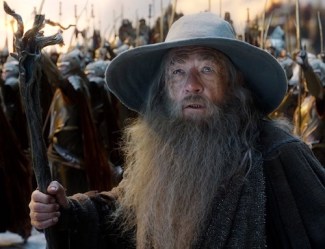
Elsewhere: the brief funeral scene at the end is good; more Billy Connolly is more Billy Connolly; an extended fight at Dol Guldur proves you didn’t need the Smaug confrontation to provide some up-front adrenaline; some extra comedy is uncomfortably, inappropriately silly; I don’t think there’s more of Ryan Gage’s over-featured Alfrid, thank goodness, other than that he’s treated to a death scene — hurrah! Fans who had hoped for more of Beorn fighting in the final battle get their wish… for all of ten seconds (literally). No wonder they weren’t best pleased.

In the comments on my review of the extended second film, I assessed that film’s new scenes between Gandalf and Thorin’s mentally-fractured father Thrain should pay off in the third film when Gandalf re-encountered a gold-mad Thorin. And… they don’t. At all. Gandalf the warriorNot a sausage, unless I missed something. It didn’t bother me too much because, quite frankly, I can’t quite remember what it was all about; but when I inevitably watch the extended trilogy back to back one day, it may do then. That said, I can’t imagine it’s a major fault, but again highlights the built-on-the-fly, ill-thought-through state of expanding The Hobbit 2 into The Hobbit 2 and 3.

That The Battle of the Five Armies feels less overlong on a second viewing demonstrates how draggy films come about in the first place: sat in an edit suite for weeks or months, watching a film over and over (and over) again, the material must become so familiar that you lose any sense of perspective about its length or pace. Nonetheless, I still feel The Hobbit would’ve been best served in two films, or by allowing Parts 2 and 3 to run considerably shorter than your usual Middle-earth excursion. Fans have already cut together book-faithful edits of the entire trilogy, which I believe run something like four hours. Maybe that would’ve been best of all.

4 out of 5

In case you missed it, my review of the theatrical cut can be read here.

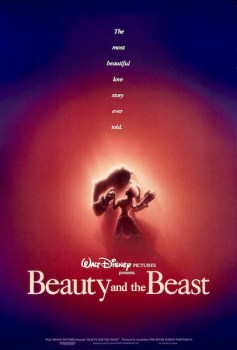
Beauty and the Beast (1991)

100 Films’ 100 Favourites #10

The most beautiful love story ever told.

Country: USA
Language: English
Runtime: 84 minutes | 92 minutes (special edition)
BBFC: U
MPAA: G

Original Release: 15th November 1991 (USA)
UK Release: 9th October 1992
First Seen: VHS, c.1993

Stars
Paige O’Hara (Beauty and the Beast: The Enchanted Christmas, Enchanted)
Robby Benson (Ice Castles, Dragonheart: A New Beginning)
Angela Lansbury (The Manchurian Candidate, Bedknobs and Broomsticks)

Directors
Gary Trousdale (The Hunchback of Notre Dame, Atlantis: The Lost Empire)
Kirk Wise (The Hunchback of Notre Dame, Atlantis: The Lost Empire)

Screenwriter
Linda Woolverton (Alice in Wonderland, Maleficent)

Story by
Deep breath… Roger Allers, Brenda Chapman, Burny Mattinson, Brian Pimental, Joe Ranft, Kelly Asbury, Christopher Sanders, Kevin Harkey, Bruce Woodside & Robert Lence.

Based on
La Belle et la Bête, a French fairy tale originally by Gabrielle-Suzanne Barbot de Villeneuve, but in this case (and most others) adapted from the retelling by Jeanne-Marie Leprince de Beaumont.

Music
Alan Menken (Aladdin, Hercules)

Lyrics
Howard Ashman (Little Shop of Horrors, Aladdin)

The Story
An arrogant prince is transformed into a beast, with one hope of redemption: someone must fall in love with him before his 21st birthday; if not, the curse’s effects become permanent. When elderly inventor Maurice is imprisoned by this Beast, his bookworm daughter Belle offers to take his place. Spying a chance to alleviate the curse, the Beast agrees. With only a short time until his 21st birthday, could a girl ever learn to love a beast?

Our Hero
A girl who’s strange but special — a most peculiar mademoiselle. With a dreamy far-off look, and her nose stuck in a book, she really is a funny girl, a beauty but a funny girl, that Belle.

Our Villain?
The Beast’s got fangs, razor sharp ones; massive paws, killer claws, for the feast. He was mean and he was coarse and unrefined, but now he’s dear and so unsure. Perhaps there’s something there that wasn’t there before…

Our Villain!
No one’s slick as Gaston, no one’s quick as Gaston, no one’s got a swell cleft in his chin like Gaston. Uses antlers in all of his decorating, my what a guy, that Gaston.

Best Supporting Character
The comedy double act of French candlestick Lumiere and English clock Cogsworth, voiced (respectively) by Law & Order’s Jerry Orbach and M*A*S*H’s David Ogden Stiers. Funny old business, acting.

Memorable Quote
“Try the grey stuff, it’s delicious / Don’t believe me? Ask the dishes / They can sing, they can dance / After all, miss, this is France / And a dinner here is never second best.” — Be Our Guest

Quote Most Likely To Be Used in Everyday Conversation
“It’s not right for a woman to read. Soon she starts getting ideas, and thinking…” — Gaston. (I didn’t say it should be used.)

Memorable Scene
The film’s prologue tells the story of how the Prince became the Beast through the medium of stained glass windows. It’s a beautifully realised fairy tale within a fairy tale.

Best Song
Titular Beauty and the Beast may’ve won the Oscar (“Tale as old as time, song as old as rhyme” — that one), but the actual best song is clearly Be Our Guest. A toe-tapping tune married with fun lyrics, fantastic choreography and superb animation combine to make it, for me, one of the greatest numbers in any musical, animated or otherwise.

Making of
Be Our Guest was originally to be sung to Belle’s father, Maurice, when he’s trapped in the castle. It was writer Bruce Woodside who pointed out that it was in the wrong place because such a key song shouldn’t be performed to a secondary character, so it was moved later to be sung to Belle. This is why you should always listen to writers.

Previously on…
Beauty and the Beast is Disney’s 30th Animated Classic, their official canon of animated movies. It’s the third film in the “Disney Renaissance”, the decade-long period (starting with The Little Mermaid and ending with Tarzan) when the studio enjoyed revived creative and financial success. In terms of this particular retelling of the tale, it owes a clear debt to Jean Cocteau’s La Belle et la Bête.

Next time…
Two direct-to-video animated sequels and a spin-off educational live-action TV series. In 1994, it was the first Disney animated film to become a Broadway musical. In 2002, it was extended with a new song, and in 2012 was re-released in 3D. An all-star live-action remake is out next year.

Awards
2 Oscars (Original Song (Beauty and the Beast), Original Score)
4 Oscar nominations (Picture, Sound, Original Song (both Belle and Be Our Guest))
2 BAFTA nominations (Original Score, Special Effects)
2 Saturn nominations (Fantasy Film, Music)
2 Annie Awards (Animated Feature, Individual Achievement in the Field of Animation)
Nominated for the Hugo for Best Dramatic Presentation.

What the Critics Said
“A lovely film that ranks with the best of Disney’s animated classics, Beauty and the Beast is a tale freshly retold. Darker-hued than the usual animated feature, with a predominant brownish-gray color scheme balanced by Belle’s blue dress and radiant features, Beauty engages the emotions with an unabashed sincerity.” — Variety

Score: 93%

What the Public Say
“The voice cast are perfectly suited to their roles and imbue them with dexterity and flair. Paige O’Hara splendidly combines strength and touching bravery as Belle. Her singing voice is a marvel as well, singing with clarity and loving kindness. Robby Benson’s deep but engaging voice is ideally suited to the Beast, and gives him depth and mournful sorrow that subsides into happiness as he develops feelings for Belle.” — vinnieh

Elsewhere on 100 Films
Back in 2010 I reviewed The Special Edition of Beauty and the Beast (to give its full on-screen title), describing it as “impossible to fault in any significant way. The design and animation are beautiful, the voice acting spot-on, the score exquisite, the story fast-paced and enthralling […] It’s hilariously funny, remarkably exciting, surprisingly scary, relentlessly romantic […] Every [song] bursts with memorable tunes, witty rhymes, genuine emotion — even the Soppy Girly Song is a good one!” Beat that, verdict section…

Verdict

Beauty and the Beast was, famously, the first (and, for a long time, only) animated movie to be nominated for Best Picture at the Oscars, and you could hardly think of a more deserving candidate. Every element of it displays artistry, from the the witty dialogue and lyrics, to the likeable and engaging characters, to the fluid and detailed animation, to the songs which help the film to run the gamut of emotions. In the field of Broadway-style Disney musicals, Beauty and the Beast is animation perfection.

#11 will be… a long nap.

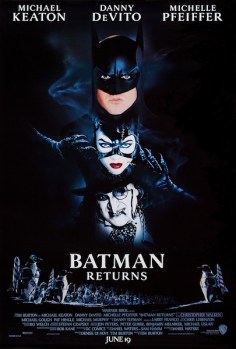
Batman Returns (1992)

100 Films’ 100 Favourites #9

The Bat
The Cat
The Penguin

Country: USA & UK
Language: English
Runtime: 126 minutes
BBFC: 12 (cut, 1992) | 15 (cut, 1992) | 15 (uncut, 2009)
MPAA: PG-13 for “brooding, dark violence”

Original Release: 19th June 1992 (USA)
UK Release: 10th July 1992
First Seen: VHS, c,1993

Stars
Michael Keaton (Beetlejuice, Birdman)
Danny DeVito (Twins, The Rainmaker)
Michelle Pfeiffer (Ladyhawke, Hairspray)
Christopher Walken (The Dead Zone, Seven Psychopaths)

Director
Tim Burton (Edward Scissorhands, Dark Shadows)

Screenwriters
Daniel Waters (Heathers, Demolition Man)

Story by
Daniel Waters (see above)
Sam Hamm (Batman, Monkeybone)

Based on
Batman, a comic book superhero created by Bob Kane and Bill Finger.

The Story
Batman has a lot on his hands when abandoned Oswald Cobblepot, aka the Penguin, emerges from the shadows seeking acceptance by running for mayor, backed by corrupt businessman Max Shreck. Meanwhile, a newly-created Catwoman has an axe to grind with Shreck, and won’t let Batman stand in her way…

Our Hero
Nana-nana-nana-nana nana-nana-nana-nana Batman! But, y’know, with a kind of ’30s Gothic edge.

Our Villains
A triumvirate of terror! Danny DeVito is the Penguin, deformed, abandoned as a child, and out for revenge against the city. Michelle Pfeiffer is Catwoman, PVC-clad, kinky, and also out for revenge. Christopher Walken is Max Shreck, a morally corrupt businessman with political needs, who clashes with Bruce Wayne as much as Batman.

Best Supporting Character
The one significant constant through the four ’80s/’90s Bat-movies, Michael Gough is a near-peerless Alfred.

Memorable Quote
Batman: “Mistletoe can be deadly if you eat it.”
Catwoman: “But a kiss can be even deadlier if you mean it.”

Memorable Scene
Batman and the Penguin are having an argument. Suddenly, a figure comes backflipping towards them — Catwoman. They stare. “Meow.” The building behind her explodes. It’s not actually her first appearance, but it’s quite an introduction.

Technical Wizardry
The whole design of the film, and Gotham City in particular, is fantastic; a kind of ’30s-but-also-modern art deco style. It’s all quite Burtonesque too, though not too much so for my taste.

Truly Special Effect
The Penguin’s army of penguins, an effective mix of real birds, animatronics, and actors in suits.

Making of
The first draft of the screenplay was intended to be more of a direct sequel to Batman: subplots included gift shops selling fragments of the destroyed Bat-Wing, revelations about the past of the Joker, and Bruce Wayne proposing to Vicki Vale by the end of the film. However, Tim Burton was uncomfortable with making a direct sequel, so the script was rewritten. Ah, the days when people wanted sequels to be less connected…

Previously on…
Tim Burton’s first Batman film brought the dark ‘n’ gritty ’70s/’80s evolution of the character from the comic books to the big screen for the first time. It was a huge success, though I think it feels notably more dated today than Returns does.

Next time…
Two semi-direct sequels — though with Burton and Keaton both abandoning the series, they took a distinct downward turn in quality. The 2005 reboot has so far led to three more Bat-movies, and now another new series dawns starring Ben Affleck.

Awards
2 Oscar nominations (Visual Effects, Makeup)
2 BAFTA nominations (Special Effects, Make Up Artist)
1 Saturn Award (Make-Up)
4 Saturn nominations (Fantasy Film, Supporting Actor (Danny DeVito), Director, Costumes)
1 Razzie nomination (Worst Supporting Actor (Danny DeVito))
3 MTV Movie Awards nominations (including Most Desirable Female (Michelle Pfeiffer))
Nominated for the Hugo for Best Dramatic Presentation.

What the Critics Said
“Burton couldn’t play it safe if he wanted to, and he doesn’t want to. Entrusted with one of the most valuable franchises in movie history, he’s made a moody, grotesque, perversely funny $50 million art film. […] Something about the filmmaker’s eccentric, surreal, childlike images seems to strike a deep chord in the mass psyche: he makes nightmares that taste like candy.” — David Ansen, Newsweek

Score: 80%

What the Public Say
“unmissable in Batman Returns, Burton tends to employ the film noir style in his movies. […] a visual sensation from start to finish, nearly all to the credit of Tim Burton, and all of the other elements of the film noir style come together quite brilliantly to reintroduce Batman, as flawed antihero, back into popular culture.” — Kate Bellmore, Reel Club

Elsewhere on 100 Films
Just before the release of The Dark Knight Rises I went back over all the live-action Bat-films of the ‘modern era’. Of Returns, I wrote that “Tim Burton’s first Batman film is great, no doubt, but Returns is a much better film in so many ways. The direction, writing, acting, action and effects are all slicker. They spent over twice as much money on it and it really shows.”

Verdict

Controversial on release — and since — but for me, Batman Returns holds up best out of the four ’80s/’90s Batman movies. Tim Burton brings his own stamp to the Bat-universe, crafting a darkly Gothic fantasy world that’s both striking and effective, populated by grotesques (in different senses) like the Penguin, Catwoman, Shreck, and perhaps even Batman himself. There’s chemistry between the entire cast, memorable scenes and set pieces, and the sense of an entire artistic vision that the Bat-series wouldn’t have again for over a decade.

#10 will be… a tale as old as time.

The Golem (1920)

aka The Golem: How He Came into the World / Der Golem, wie er in die Welt kam

2015 #163
Carl Boese & Paul Wegener | 85 mins | streaming | 4:3 | Germany / silent (English) | PG

The word “prequel” was first coined in the ’50s, arguably entered the mainstream in the ’70s, and was firmly established as a term everyone knew and used in the ’90s by the Star Wars prequel trilogy. Works that can be defined as prequels predate their naming, however, and surely one of the earliest examples in the movies must be this silent German horror.

Now lost, 1915’s Der Golem was set in the present day, when “an antiques dealer (Henrik Galeen) finds a golem (Paul Wegener), a clay statue brought to life by a rabbi four centuries earlier. The dealer resurrects the golem as a servant, but the golem falls in love with the dealer’s wife. As she does not return his love, the golem commits a series of murders.” The film was written and directed by both Galeen and Wegener, but the latter was reportedly unhappy with the film due to compromises he’d made during production. So, after a sequel (also lost), Wegener tried to more directly convey the legend as he’d first heard it — hence Der Golem, wie er in die Welt kam, translated as The Golem: How He Came into the World, and commonly abbreviated to just The Golem, what with the original The Golem being lost. (Got it? Good.)

Set in 16th Century Prague (not that there’s any way to know that from the film itself), The Golem 3 tells the story of that rabbi who brought the clay statue to life in the first place. When the Roman Emperor decrees that Jews must vacate their ghetto, a rabbi builds a monster out of clay then summons a spirit to bring it to life. Meanwhile, one of the Emperor’s knights has fallen in love with the rabbi’s daughter, who is also the object of the rabbi’s assistant’s affections, and this love triangle — combined with access to control of the Golem — will eventually spell “climax”.

Regarded as one of the first horror films, The Golem is more of a moderately-dark fantasy, or a fairytale-type myth. There are clear similarities to Frankenstein, though I don’t know if either influenced the other. However, it does feature what I presume is one of first instances of that most daft of horror tropes: running upstairs to escape the monster. It goes as well here as it ever does, i.e. not very. Said monster looks a bit comical by today’s standards. Built by the rabbi to defend the Jewish people, he immediately uses the hulking chap to chop wood and run errands — he doesn’t want a defender, he wants a servant! A terrifying beast nonetheless, it’s ultimately defeated because it picks up a little girl for a cuddle and she casually removes its magic life-giving amulet.
Golem aside, there are some good special effects, like the ring of fire that summons a smoke-breathing demon; composer Aljoscha Zimmerman’s score is largely atmospheric; and there are some nice shots, like when the rabbi walks up to camera, does something with his hands (in what is effectively now a close-up), then walks back to the Golem at the rear of the set. These are the exception, though: it’s mostly a mix of flat long and medium shots. Oddly, the credits on the version currently available note that it adds computer graphics and animation. Presumably this is the English text that’s been digitally pasted into the film on letters, decrees, books, and the like. It also means that the judder, grain, and print damage on the English intertitles is utterly fake. How silly.

Revered for its place in film history, The Golem has elements to commend it still, but doesn’t hold up as well as other films of the era.

3 out of 5

About Time (2013)

2015 #192
Richard Curtis | 123 mins | streaming (HD) | 2.35:1 | UK / English | 12 / R

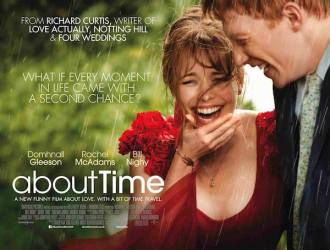
After Tim (Domhnall Gleeson) learns he can time travel back through his own life, his father (Bill Nighy) cautions him not to attempt anything too drastic — so he sets about finding love.
Ostensibly another of Curtis’ oh-so-British rom-coms, it plays that way for a while, but long before it’s done develops into something deeper: Tim gets the girl (Rachel McAdams), then learns about life, family, and what you might really want to do with such power.

About Time ultimately displays an emotional depth and maturity that marks it out from its science-fiction stablemates, and the rest of Curtis’ oeuvre too.

4 out of 5

Tomorrow: more time travel in my next 100 Favourites selection.

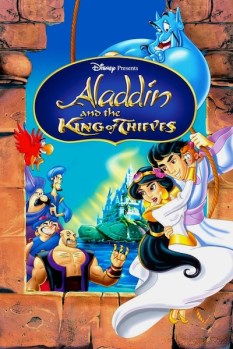
Aladdin and the King of Thieves (1996)

2015 #196
Tad Stones | 82 mins | streaming (HD) | 16:9* | USA / English | U

For most of the ’90s and ’00s, Disney churned out direct-to-video sequels to many of their most beloved animated classics. They have a reputation for being unremittingly awful, hence why Pixar’s John Lasseter put a stop to their production after he became Disney’s Chief Creative Officer in 2006. Despite that reputation, however, there are those who say one or two are actually quite good. One of those (and the only one I’ve previously seen) is The Lion King 1½ (released as The Lion King 3 in the UK), which is a sort of a Rosencrantz and Guildenstern Are Dead to the original film’s Hamlet, re-telling the story from the perspective of Timon and Pumbaa. I saw it years ago but would vouch for its relative quality — when I first re-watched The Lion King after, I briefly thought some scenes were missing, which I guess is testament to how well it fits.

Another such-praised sequel is this follow-up to Disney’s 1992 Animated Classic. It’s actually the second sequel (the first was also the first of those Disney DTV sequels) and also follows an 86-episode TV series. Fortunately, the makers dropped an early idea to use one of the series’ main villains as the film’s antagonist, and so it functions perfectly as a direct sequel to the original movie. Which is nice, because that first sequel isn’t meant to be very good and I imagine the TV series is hard to come by nowadays. Plus, neither of those can claim an ever-so-important distinction that this can: it features the return of Robin Williams as the Genie.

The film begins on the wedding day of Aladdin (Scott Weinger) and Jasmine (Linda Larkin), which is interrupted by the mysterious Cassim, the King of Thieves (John Rhys-Davies), and his gang of forty thieves seeking to steal an oracle from among the wedding gifts. Although they fail, the oracle informs Aladdin that the answers he seeks about his long-departed father are to be found with the forty thieves… I expect you can guess where that’s going. Fortunately the film gets there pretty quickly, then transitions into a story about the possible redemption (or not) of Cassim alongside the quest for the Hand of Midas, capable of turning whatever it touches into gold (natch).

The King of Thieves has a few things in its favour. It’ll come as no surprise that the biggest and best is Williams reprising his iconic performance, and consequently being responsible for most of the film’s humour. There are a couple of fun nods to some of Williams’ other best-remembered roles, and plenty to other Disney films too. The rest of the film offers a fast-paced, action-packed narrative, with a few musical numbers to boot. The songs are certainly not as memorable as those found in proper Disney movies, but most are decent while they last. Jasmine gets somewhat short shrift, but this is really a story about father and son.

Those who dislike Disney’s Aladdin won’t find anything to enjoy here, but for fans of the original, Aladdin and the King of Thieves is a solid, fun follow-up.

4 out of 5

* The film was made for release on VHS, so it’s no surprise that the OAR is 1.33:1. The HD version is cropped for 16:9. It’s mostly alright, though anyone with an eye for composition will find it obvious at times. ^