The Lord of the Rings: The Two Towers (2002)

100 Films’ 100 Favourites #54

The Journey Continues

Country: New Zealand & USA
Language: English & Sindarin
Runtime: 224 minutes (extended edition)* | 179 minutes (theatrical version)
BBFC: 12A
MPAA: PG-13
* 235 minutes with the interminable fan club credits.

Original Release: 18th December 2002 (UK, USA & others)
First Seen: cinema, December 2002

Stars
Andy Serkis (Burke & Hare, Rise of the Planet of the Apes)
Bernard Hill (Titanic, Franklyn)
Christopher Lee (Dracula, The Wicker Man)
Hugo Weaving (The Matrix, V for Vendetta)
David Wenham (The Crocodile Hunter: Collision Course, 300)

Director
Peter Jackson (Heavenly Creatures, The Lovely Bones)

Screenwriters
Fran Walsh (The Frighteners, The Lovely Bones)
Philippa Boyens (The Lord of the Rings: The Fellowship of the Ring, The Hobbit: An Unexpected Journey)
Stephen Sinclair (Meet the Feebles, Braindead)
Peter Jackson (Bad Taste, King Kong)

Based on
The Lord of the Rings, a trilogy of novels by J.R.R. Tolkien.

The Story
Frodo and Sam continue on their way towards Mordor, guided by the duplicitous Gollum. Meanwhile, the surviving members of the Fellowship attempt to bring the kingdom of Rohan into the fight against the hordes of orcs Saruman is assembling.

Our Heroes
As the Fellowship go their separate ways, you could argue that The Two Towers is where Aragorn really comes into his own: the self-exiled royal unveils his leadership qualities as he persuades the people of Rohan to abandon Edoras for the safe haven of Helm’s Deep, and leads the defence of that stronghold.

Our Villain
Once-good wizard Saruman is lent villainous credence by Christopher Lee — really, who else could it be? In one of Jackson’s few missteps, he deleted Saruman’s defeat from the theatrical cut of Return of the King… but the extended cut restores it, so that’s alright then.

Best Supporting Character
Although he’s covered by CGI in the final film, it’s Andy Serkis that really brings Gollum — and his alter ego, Sméagol — to life. It may have led to Serkis becoming the go-to expert in performance capture, but it’s also a great acting performance, full of light and shade, and creating sympathy for an ultimately villainous character. (See also: Truly Special Effect.)

Memorable Quote
“Where is the horse and the rider? Where is the horn that was blowing? They have passed like rain on the mountain, like wind in the meadow. The days have gone down in the West behind the hills into shadow. How did it come to this?” — Theoden

Quote Most Likely To Be Used in Everyday Conversation #1
“Po-tay-toes! Boil ’em, mash ’em, stick ’em in a stew.” — Sam

Quote Most Likely To Be Used in Everyday Conversation #2
“My precious…” — Gollum

Memorable Scene
The climactic battle of Helm’s Deep is surely one of the greatest battles ever put on screen, as thousands of orcs attempt to storm a fortress defended by a small force of soldiers supported by a ragtag gaggle of old men and boys. Like the ninth episode of a season of Game of Thrones, it plays out over about an hour, but doesn’t flag because it’s so well realised.

Memorable Music
Howard Shore’s excellent score continues to evolve and develop, with the stand-out theme this time being for the realm of Rohan. Also of note is the track that plays over the credits, Gollum’s Song, hauntingly sung by Emilíana Torrini.

Technical Wizardry
Although Lord of the Rings features expanses of excellent CGI, much of it was also created with miniatures — or “Bigatures”, as production nicknamed them, due to the massive scale of some that they built (the largest was 9 metres tall). It lends the final images a physicality and realism that demonstrates why a combination of multiple techniques is often the best way to create a superb end result.

Truly Special Effect
Just a couple of years after The Phantom Menace featured the first major all-CGI character, Weta perfected the form with Gollum, a fully believable creature and an essential part of the narrative. (See also: Best Supporting Character.)

Letting the Side Down
The problem with being the middle part of a series is the story can lack a beginning or an end. Two Towers handily makes up for the latter with the epic battle of Helm’s Deep and the Ents conquering Isengard, but the former is an issue — the film takes a while to get up to speed.

Making of
The prop gate of Helm’s Deep was so well built that a real battering ram failed to knock it down. The door had to be weakened to get the required shots. On the film’s commentary track, Peter Jackson notes that if he ever had to defend a castle he’d want Weta Workshop to build the door.

Previously on…
The story began in The Fellowship of the Ring.

Next time…
The story ends in The Return of the King.

Awards
2 Oscars (Sound Editing, Visual Effects)
4 Oscar nominations (Picture, Editing, Art Direction-Set Decoration, Sound)
3 BAFTAs (Costume Design, Visual Effects, Audience Award)
7 BAFTA nominations (Film, Director, Cinematography, Production Design, Editing, Sound, Make Up/Hair)
4 Saturn Awards (Fantasy Film, Supporting Actor (Andy Serkis), Costumes (tied with Star Wars: Episode II), Make-Up)
6 Saturn nominations (Actor (Viggo Mortensen), Younger Actor (Elijah Wood), Director, Writing, Music, Special Effects)
1 Broadcast Film Critics Association Award (Best Digital Acting Performance (Andy Serkis, obv.))
4 MTV Movie Awards (including Best Virtual Performance (Gollum, obv.), Best Action Sequence (Helm’s Deep))
1 Kids’ Choice Award nomination (Favorite Male Butt Kicker)
Won the Hugo for Best Dramatic Presentation Long Form

What the Critics Said
“Gollum is a wonderful creation: voiced by Andy Serkis, and given the most heartbreakingly expressive face, he’s far more than a digital effect: he’s really there, taking up space, displacing air (part of the impact comes from the meticulous care with which all the creatures of Middle Earth are scaled relative to one another). Gollum is a vile mixture of servility and malice, yet watching him being beaten, throttled, kicked by almost everyone he encounters is as distressing as watching a child being hit. Frodo, for all his faults, is kind to Gollum, seeing in him his own disturbing likeness; Sam, for all his virtues, is cruel.” — Suzi Feay, The Independent

Score: 96%

What the Public Say
“The tricky thing with being the second film in a trilogy is that there is no beginning and end. It is almost as if the entire story arc is getting sidetracked by some other battles and new creatures and characters to be met. The film is a intense adventure film but the emotional pull of the two main characters and their journey is out on hold. What makes the Fellowship of the Ring one of the most completely amazing films is because there is a both an emotional and a physical journey the characters take. In the Two Towers we are constantly being told by an assortment of characters that a real war is coming and what they are experiencing are just small skirmishes. Are the filmmakers deliberately teasing us with the excitement of the next film or attempting to do the story its rightful justice?” — Brian Baumann, brianbaumannmoviereviews

Verdict

I was less than impressed by much of The Two Towers when I first saw it — the first hour or so drags, and the intercutting of the deathly dull Entmoot slightly hampers the momentum of Helm’s Deep. Nonetheless, there’s an awful lot to commend it, and the pace becomes less jarring with multiple revisits (when the Extended Edition first came out I even watched both cuts back to back on the same day, which is very unlike me). Some of the trilogy’s best characters first appear here, bringing with them plenty of plot developments that make my notion it was all almost done at the end of Fellowship seem suitably foolish. And, of course, the Battle of Helm’s Deep can’t be beat.

A day may come when the courage of men fails, when we forsake our friends and break all bonds of fellowship… but it is not in #55.
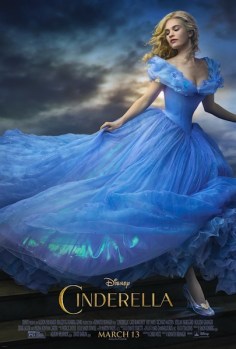
Cinderella (2015)

2016 #43
Kenneth Branagh | 101 mins | streaming (HD) | 2.35:1 | USA & UK / English | U / PG

Disney’s animated classic is re-imagined in live-action, losing the songs but expanding the story. The latter serves to find a little more realism in the setup (how Cinders became a servant to her stepmother, etc), as well as in the characters’ motivations and actions.


Cate Blanchett excels (as ever) as the evil stepmother, and Lily James sells Ella’s perfectness as delightful rather than irritating. It’s kinda odd to see Game of Thrones’ Richard Madden as a clean-cut Prince, though.

Branagh brings requisite class and gloss for a remake that, while not a classic like the original, is a worthy revisioning.

4 out of 5

The Lord of the Rings: The Fellowship of the Ring (2001)

100 Films’ 100 Favourites #53

One Ring To Rule Them All

Country: New Zealand & USA
Language: English & Sindarin
Runtime: 208 minutes (extended edition)* | 178 minutes (theatrical version)
BBFC: PG (“Battle violence and fantasy horror may not be suitable for under 8’s”)
MPAA: PG-13
* 228 minutes with the interminable fan club credits.

Original Release: 19th December 2001 (UK, USA & others)
First Seen: cinema, December 2001

Stars
Elijah Wood (The Ice Storm, Eternal Sunshine of the Spotless Mind)
Ian McKellen (Richard III, X-Men)
Viggo Mortensen (G.I. Jane, Eastern Promises)
Sean Bean (GoldenEye, Black Death)
John Rhys-Davies (Raiders of the Lost Ark, In the Name of the King: A Dungeon Siege Tale)
Orlando Bloom (Pirates of the Caribbean: The Curse of the Black Pearl, Kingdom of Heaven)
Sean Astin (The Goonies, The Colour of Magic)
Dominic Monaghan (I Sell the Dead, X-Men Origins: Wolverine)
Billy Boyd (Urban Ghost Story, Master and Commander: The Far Side of the World)

Director
Peter Jackson (Bad Taste, King Kong)

Screenwriters
Fran Walsh (Meet the Feebles, The Hobbit: An Unexpected Journey)
Philippa Boyens (King Kong, The Hobbit: The Desolation of Smaug)
Peter Jackson (Heavenly Creatures, The Hobbit: The Battle of the Five Armies)

Based on
The Lord of the Rings, a trilogy of novels by J.R.R. Tolkien.

The Story
Legend tells of a ring, created by an ancient evil that gave its wearer the power to enslave the world. Believed lost for centuries, it has now been found… in the possession of one Frodo Baggins, a Hobbit of the Shire. With an evil force thought long-defeated on the rise, and hunting for the Ring to cement his power, Frodo will do what few of his kind have ever done: venture beyond the confines of their homeland. Joined by eight companions, they must travel across Middle-earth to destroy the One Ring once and for all.

Our Heroes
Frodo Baggins lives a quiet life in the countryside idyll of the Shire, where the greatest drama is stopping his relatives from stealing the cutlery. When a dangerous artefact is found to be in his possession, however, the honest and good nature of his people comes to the fore. On his quest, he has eight friends and protectors: his best friend / bodyguard / gardener, Samwise Gamgee; two rambunctious but pure-hearted Hobbits, Merry and Pippin; the powerful wizard Gandalf the Grey; a mysterious ranger from the North, Strider, aka Aragorn; from the world of Men, warrior Boromir; elf Legolas, a skilled archer; and an axe-wielding dwarf, Gimli.

Our Villains
The Dark Lord Sauron is an almost intangible threat, though his manifestation as a giant flaming eye atop an imposing tower is pretty freaky. Of more immediate danger to our heroes are his armies of orcs, as well as former allies who may have been converted…

Best Supporting Character
In many ways the strongest character arc of this first film belongs to Boromir. From the kingdom of Gondor, who are on the front lines defending the world from Sauron’s forces, Boromir is understandably frustrated by the lack of support his people have received, and is eager to use the Ring — a power he is denied, because it is too dangerous. But the Ring’s temptation is hard to resist… At one point a threat from within, which ultimately tears the fellowship asunder, Boromir comes through in the end with a helluva death scene. (He’s played by Sean Bean, of course he dies.)

Memorable Quote
“One ring to rule them all. One ring to find them. One ring to bring them all, and in the darkness bind them.”

Quote Most Likely To Be Used in Everyday Conversation #1
“Keep it secret. Keep it safe.” — Gandalf

Quote Most Likely To Be Used in Everyday Conversation #2
“He is seeking it, seeking it, all his thought is bent on it.” — Gandalf (well, I use it all the time…)

Memorable Scene
In the Elven city of Rivendell, representatives from Middle-earth’s various kingdoms and races gather for a council to decide what to do with the Ring. Concluding it must be destroyed, they bicker over who will make the dangerous journey into Mordor to do so. As the arguments grow louder and more heated, a small voice pipes up: to Gandalf’s dismay, but not surprise, Frodo offers to carry the Ring.

Memorable Music
Howard Shore’s score across the trilogy is incredible, a well-considered and developed work of art that he’s even turned into a symphony. There’s at least one memorable motif in each film, but the first has the best of all: “The Fellowship” theme, which naturally resurfaces regularly throughout the film, is (for my money) one of the greatest pieces of film music ever composed. (For more information on the score, try this dedicated Wikipedia article.)

Technical Wizardry
The production’s dedication to creating the world of Middle-earth is extraordinary. It’s not just the faultless design work, which perfectly imagined the locations, costumes, weaponry, creatures, and so on, but the amount of effort that then went into realising those designs: they produced over 19,000 costumes, including linking 12.5 million plastic rings by hand to create all the chainmail; 48,000 swords, axes, shields, and other pieces of armour; 500 bows and 10,000 arrows… the numbers go on. Also, because Hobbits walk around barefoot, shoe-like fake feet were created for the actors — of which they got through 1,800 pairs.

Truly Special Effect
One of the biggest challenges for realising The Lord of the Rings on screen are the heights of the various races — Hobbits are under 4-foot tall, dwarves are a little taller, and men are… well, man-sized. Jackson and co achieved this by employing various techniques, including forced perspective, body doubles, and split screen, which of course necessitated building two versions of some sets, one of which had to be a precisely scaled up/down version of the other. Fortunately, all of the Hobbit actors were quite short and Gimli actor John Rhys-Davies is quite tall, so they were able to lump the Hobbits and Gimli together as being the same scale. On screen, the results are seamless.

Making of
Viggo Mortensen Method-ed his way through playing Aragorn, including living in his costume outside of filming, insisting on doing his own stunts and using a real steel sword instead of the significantly lighter aluminium and rubber duplicates, bonding with the horses before filming, and having the script revised so that more of Aragorn’s lines were in Elvish.

Previously on…
The Lord of the Rings was adapted as an animated movie in 1978, which I think has its fans but generally isn’t that well regarded. For various reasons it didn’t tell the whole story, either, leading to a TV movie adaptation of The Return of the King being produced in 1980. On radio, it was adapted by the BBC in 1955-6, in the US in the ’60s and again in the ’70s, and, most notably, by the BBC again in 1981. That last adaptation was so acclaimed that Jackson has said it was an influence on his film version.

Next time…
The Two Towers and The Return of the King complete the story. A decade later, cast and crew returned to adapt Tolkien’s preceding novel, The Hobbit, as a prequel trilogy. There are other Middle-earth books, but their film rights reside with people who aren’t fans of Jackson’s films, so that’s probably that for Middle-earth on the big screen.

Awards
4 Oscars (Cinematography, Score, Makeup, Visual Effects)
9 Oscar nominations (Picture, Supporting Actor (Ian McKellen), Director, Adapted Screenplay, Art Direction-Set Decoration, Costume Design, Editing, Song, Sound)
5 BAFTAs (Film, Director, Visual Effects, Make Up/Hair, Audience Award)
8 BAFTA nominations (Actor (Ian McKellen), Adapted Screenplay, Cinematography, Editing, Music, Production Design, Costume Design, Sound)
3 Saturn Awards (Fantasy Film, Supporting Actor (Ian McKellen), Director)
6 Saturn nominations (Writing, Music, Costumes, Make-Up, Special Effects, Cinescape Genre Face of the Future Male (Orlando Bloom))
Won the Hugo for Best Dramatic Presentation

What the Critics Said
“Jackson has given himself a mountain to climb in tackling Tolkien’s obsessively multi-layered fantasy (intricate back-stories, made-up languages and all). On the whole he copes beautifully. The Fellowship of the Ring honours the text without being enslaved by it. The explanatory dialogue may creak on occasion, but the action scenes have a snap and pace that suggests a film-maker not scared to bring his own touch to the material. Physically, too, the film is a triumph: an art-department’s dream during its lovely interior sequences and a potent advert for the New Zealand tourist board when it heads into the great outdoors. […] Jackson’s serious, high-minded approach looks defiantly out-of-fashion; worlds away from kid-friendly Harry Potter (the season’s other big fantasy film about wizards). Instead, The Fellowship of the Ring boasts some more unlikely influences. At times, Jackson’s film could almost pass for the Anglo-Saxon cousin of Crouching Tiger, Hidden Dragon; lacking the dark, liquid exoticism of Ang Lee’s Chinese-language epic, but compensating with old-school blood-and-thunder and a rash of fairytale monsters.” — Xan Brooks, The Guardian

Score: 91%

What the Public Say
“everything about the film is of the highest quality. Both the visuals and audio blend together so well, to create an incredible onscreen world. The set designers did a wonderful job; iconic locations from the book became iconic film locations, such as the rolling green hills of The Shire, pulling you in like a dream, or the mystic and elegant Rivendell or the deep dark of Moria. All of these places and more truly are another world, and no matter what you think of the film the images of these places will stick with you forever.” — Ben Foster, BFFRAP

Verdict

Now that it’s fêted as one of the greatest film trilogies ever made, it’s easy to forget what a gamble a three-film, $300 million adaptation of J.R.R. Tolkien’s unfilmable novel seemed back when production started in the late ’90s; especially as it was to be made by a director whose track record was low-budget horror films, with a cast mostly without star names, filmed on the other side of the planet, where little news leaked out to the wider world, and with all three films shot at once — no backing out if the first flopped. Then it was released and became an instant global phenomenon.

Watching it for the first time, unfamiliar with the story in all but the broadest sense, was an incredible experience. I remember it ending and having no idea how there could be two more films — it felt like Frodo and Sam were almost at Mount Doom already! Oh, how naïve I was. Anyway, for me Fellowship remains the strongest of the trilogy; the only one that feels like a complete work in its own right — even though it’s clearly nowhere near the end of the overall narrative, an awful lot of the plots and themes reach suitable climaxes. Finiteness aside, the quality of the work is unquestionable: this is exciting, funny, emotional, transportive, epic filmmaking of the highest order.

Next… nobody tosses #54.

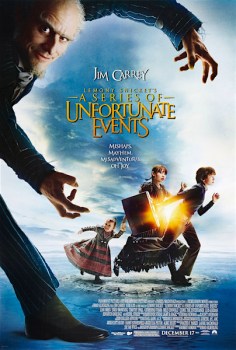
Lemony Snicket’s A Series of Unfortunate Events (2004)

100 Films’ 100 Favourites #50

Don’t say we didn’t warn you.

Title Commonly Abridged To: Lemony Snicket
Title on IMDb: A Series of Unfortunate Events

Country: USA & Germany
Language: English
Runtime: 108 minutes
BBFC: PG
MPAA: PG

Original Release: 16th December 2004 (Australia & New Zealand)
UK Release: 17th December 2004
US Release: 17th December 2004
First Seen: cinema, c.2004

Stars
Jim Carrey (Ace Ventura: Pet Detective, Eternal Sunshine of the Spotless Mind)
Liam Aiken (Stepmom, How to Be a Man)
Emily Browning (Sucker Punch, Pompeii)
Jude Law (The Talented Mr. Ripley, Sky Captain and the World of Tomorrow)
Billy Connolly (Mrs Brown, Quartet)
Meryl Streep (Sophie’s Choice, Mamma Mia!)

Director
Brad Silberling (Casper, Land of the Lost)

Screenwriter
Robert Gordon (Galaxy Quest, Men in Black II)

Based on
A Series of Unfortunate Events, a series of novels by Daniel Handler Lemony Snicket. In particular, the first three: The Bad Beginning, The Reptile Room, and The Wide Window.

The Story
After their parents are killed, the three Baudelaire siblings are placed into the care of a series of kooky relatives, while the scheming Count Olaf attempts to track them down and murder them for their money.

Our Heroes
This is the story of the three Baudelaire children: resourceful, inventive eldest sister Violet; bookish Klaus; and baby Sunny, who is very perceptive and can also bite things. No one knows the precise cause of the Baudelaire fire, but just like that, the Baudelaire children became the Baudelaire orphans, and were put into the care of…

Our Villain
Count Olaf, the kind and friendly guardian who wants to kill the orphans for their inheritance. A master of disguise… sort of.

Best Supporting Character
The film is wittily narrated in the erudite English tones of Lemony Snicket himself, who gets all the best insights.

Memorable Quote
“This would be an excellent time to walk out of the theatre, living room, or airplane where this film is being shown.” — Lemony Snicket

Quote Most Likely To Be Used in Everyday Conversation
“I will raise these orphans as if they were actually wanted!” — Count Olaf

Memorable Scene
The end title sequence re-tells the film in a pop-up book / shadow puppet show kind of style, which is awesome.

Memorable Music
The film has a great, fun score by Thomas Newman. The downside to it is you can hear the style bleed in to other, less appropriate work, like Skyfall.

Technical Wizardry
The entire film was shot on soundstages, including exterior scenes, utilising forced perspective and matte paintings, as well as greenscreen. No doubt that helped create its surreal, fantastical, timeless style. Indeed, the whole thing looks great, with superb gothic/steampunk-inspired design work across the board (and all of it Oscar nominated). If you want to be critical I suppose you could call it “Burtonesque”, but if it works… Plus, it was shot by Emmanuel “three time Oscar winner” Lubezki, so you know that’s good.

Truly Special Effect
Baby Sunny was largely played by a pair of twins, but certain sequences that were either dangerous or required specific actions necessitated the use of various effects techniques. Several scenes were created with an entirely CGI Sunny (motion captured from the animation supervisor’s own baby daughter); some shots of her talking have the lower part of her face replaced with a virtual version; and they built an animatronic baby, too.

Making of
Olaf: “I must say, you are a gloomy looking bunch. Why so glum?”
Klaus: “Our parents just died.”
Olaf: “Ah yes, of course. How very, very awful. Wait! Let me do that one more time. Give me the line again! Quickly, while it’s fresh in my mind!”
That’s Carrey genuinely asking for the line again, in character. Director Brad Silberling liked the moment so much he kept it in the film.

Next time…
Although plans for a sequel and/or sequels were mooted, the kids long ago aged out of such things. Instead, the books are being re-adapted as a Netflix series, starring the legen- (wait for it) -dary Neil Patrick Harris as Olaf and with Patrick Warburton narrating. It’s being produced/directed by Barry Sonnenfeld, who Handler Snicket had originally developed this film adaptation for. An eight-episode first season is due later this year. Personally, I’m quite excited for it.

Awards
1 Oscar (Makeup)
3 Oscar nominations (Score, Art Direction, Costume Design)
2 Saturn nominations (Fantasy Film, Make-Up)
1 Teen Choice Award (Choice Movie Bad Guy)
2 Teen Choice nominations (including Choice Movie Liar)

What the Critics Said
“As the title suggests, Unfortunate Events belongs to the grim but vital strain of children’s literature in which children suffer terribly, parents and kindly adults have the same life expectancy as villains in action movies, and courage and ingenuity are all that keep kids alive. […] At its best, A Series Of Unfortunate Events is the stuff nightmares are made of, a sick joke of a film that realizes the best children’s entertainment doesn’t hide from the bleaker side of life, but plunges into the void and respects kids enough to assume they can handle it.” — Nathan Rabin, The A.V. Club

Score: 72%

What the Public Say
“While there are certainly dark currents under the surface of this fantasy, the director Brad Silberling doesn’t let them overtake the film. Yes, bad things happen—people die and children are in jeopardy. But there’s a dry wit that balances out and also a sense of fun in how the kids use their abilities to discover a new way to survive whatever comes next. Lemony Snicket’s A Series of Unfortunate Events is a strange, dark film, and I recommend it for being just that.” — Tanner Smith, Smith’s Verdict

Verdict

I’ve never read A Series of Unfortunate Events, but I get the impression some of its fans aren’t too enamoured with this film adaptation and its changes. As a movie in its own right, however, it’s a clever, witty, gothic adventure… for kids! Jim Carrey is on fine form as the evil Count Olaf, there’s quality support from some recognisable thesps in guest-star-level roles, the kids are a likeable bunch, and baby Sunny’s subtitled observations are frequently the highlight. Some reviews describe it as “superficial” or a “pantomime”, but even if it is, it’s devilishly entertaining.

#51 will be… professional.

The Past Month on TV #5

Geek-friendly adaptations aplenty in this month’s (still spoiler-free) small-screen overview.

Arrow (Season 4 Episodes 19-23)
The Flash (Season 2 Episodes 20-23)
DC’s Legends of Tomorrow (Season 1 Episodes 10-14)

Legends of TomorrowFinally done with most of these (still need to find time for the last two Legends of Tomorrows). One shouldn’t have that attitude to something one is choosing to watch, should one? I have a certain loyalty to Arrow, because they did a good job for seasons one and two, even if it’s waxed and waned since; but I’ve never really got on board with the adulation The Flash has received, and Legends of Tomorrow is mediocre to poor with regularity… though now and then they all exhibit flashes of worthwhileness. I rarely make the conscious choice to give up on a series (do it all the time by accident, though), but I’d consider abandoning a couple of these before the start of their next seasons… were it not for the ‘promise’ that they’re all about to be completely interconnected, at least for one almighty four-way crossover (with moving-to-the-same-network Supergirl).
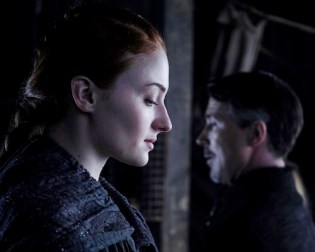
Y’know, I suspect this is why the interconnectedness and big crossovers in comic books works to boost sales, until it doesn’t and things crash and burn: because people who are invested feel compelled to buy the whole damn lot, but when they’ve had enough and want out, you can’t just reduce what you buy — it’s become all or nothing. So crossovers give you the short-term effects of everyone buying more than normal, but in the long run it just drives sales down. I don’t know what the current state of comic book sales figures is, but that certainly seemed to be the road they were on last time I looked. Maybe that’s where these TV series will end up, too — heck, maybe even the Marvel movies will end up there eventually — but those screen universes may still just be getting started, if you take the long-term view, so the resultant fall in popularity could be a ways off yet…

Game of Thrones (Season 6 Episodes 5-8)
Game of Thrones - The DoorFirst up: The Door, surely one of Thrones’ best-ever episodes. That ending rather overshadows everything else (because wow, in so many ways), but before that there was Sansa being badass, proper development of Arya’s storyline, the hilarious play-within-a-play, a marvellous scene between Dany and Jorah, and a great moment for Varys, too. The week after’s Blood of My Blood was more about setting things up the second half of the season, which is an important role to fulfil but less dramatic in itself. A couple of surprise returns, though, including a big reveal for book readers (maybe).

There was definitely a confirmation for book readers in The Broken Man, amid the return of several well-liked characters (three, by my count). Game of Thrones - The Broken ManSometimes it’s hard to separate what one might count as story development versus mere place-setting in Thrones, but at its best they can be one and the same, and episode seven managed that. Finally for now, No One did actually bring some storylines to a head, including some very long-awaited developments, particularly in Braavos. Throw in an equally-long-awaited reunion and a couple more unexpected returns, and you have a pretty satisfying episode.
Next time: fiiiiight!

Preacher (Season 1 Episodes 1-3)
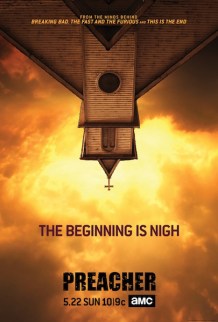
PreacherSam Catlin of Breaking Bad and Seth Rogen & Evan Goldberg of… all those films Seth Rogen & Evan Goldberg have made (you know the ones) are the lucky group to finally bring this perpetual Development Hell resident to a screen, after multiple aborted attempts at movies or HBO TV series (it’s finally wound up being made by AMC, carried by Amazon Prime on this side of the pond). For thems that don’t know, it’s based on an irreverent and/or blasphemous comic book from the ’90s by Brits Steve Dillon and Garth Ennis, concerning the adventures of Texas preacher Jesse Custer who (trying not to spoil too much) acquires the power to order people to do things, with which they have no choice but to comply. This is a very loose adaptation, throwing out most of the comic’s actual plotting in favour of the broad strokes of the concept, including the budget-saving decision to base the characters in a single small town, and shaving out some of the equally-expensive otherworldly concepts. At least for now — I wonder if they’re hoping for a Game of Thrones trajectory, whereby increasing popularity leads to increasing budgets. I guess we’ll see. On the bright side, the show has also inherited some of the books’ batshit insanity, lending it an air of unpredictable craziness. It’s certainly not the best thing on TV right now, but it may just be the wildest, and there’s promise of room to grow.

Also watched…
  • Gilmore Girls Season 7 Episodes 8-14 — 8 to go. Still no (confirmed) date for Netflix’s revival, though it does now have a name.
  • Upstart Crow Series 1 Episodes 3-5 — glad to hear this has been recommissioned for a second run.

    Things to Catch Up On
    The MusketeersThis month, I have mostly been missing anything I watch with my other half. It’s prime tennis season — eight weeks that starts with Geneva and flows through the French Open, Stuttgart, Nottingham, Birmingham, Queen’s, Eastbourne, and ends with the crowning jewel of all tennisdom, Wimbledon; all with near wall-to-wall coverage thanks to Eurosport, ITV4, and the BBC. It largely takes over the time we normally spend watching stuff together, so no room yet for the final seasons of Wallander or The Musketeers (not that we’ve watched season two yet, actually — oops), nor the just-finished fourth season of The Most Underrated Show On Television™, The Americans. Apparently it ended with “the Best Episode of TV So Far This Year”, according to one review’s headline (which obviously I can’t read because spoilers). Maybe in July.

    Next month… Game of Thrones reaches the ⅘-way point (if reports/rumours about its future are to be believed), as season six concludes.

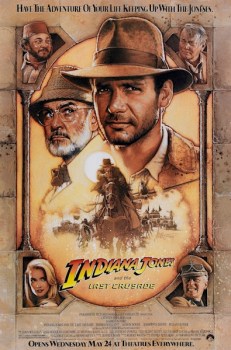
  • Indiana Jones and the Last Crusade (1989)

    100 Films’ 100 Favourites #45

    The man with the hat is back.
    And this time he’s bringing his dad.

    Country: USA
    Language: English, German & Greek
    Runtime: 127 minutes
    BBFC: PG
    MPAA: PG-13

    Original Release: 24th May 1989 (USA)
    UK Release: 30th June 1989
    First Seen: VHS, c.1991

    Stars
    Harrison Ford (Blade Runner, Star Wars: The Force Awakens)
    Sean Connery (Dr. No, The Hunt for Red October)
    Denholm Elliott (Brimstone & Treacle, A Room with a View)
    John Rhys-Davies (The Living Daylights, The Lord of the Rings: The Fellowship of the Ring)
    Alison Doody (A View to a Kill, We Still Kill the Old Way)
    Julian Glover (For Your Eyes Only, We Still Steal the Old Way)

    Director
    Steven Spielberg (The Lost World: Jurassic Park, Indiana Jones and the Kingdom of the Crystal Skull)

    Screenwriter
    Jeffrey Boam (The Dead Zone, Lethal Weapon 2)

    Story by
    George Lucas (Ewoks: The Battle for Endor, Strange Magic)
    Menno Meyjes (The Color Purple, Max)

    “Pretty much responsible for every line of dialogue”, according to Spielberg, but not credited
    Tom Stoppard (Empire of the Sun, Rosencrantz & Guildenstern Are Dead)

    The Story
    When an old professor goes missing while searching for the Holy Grail, there’s only one man to track him down: his son, Indiana Jones. With his father’s cryptic diary as a guide, Indy embarks on a race against the Nazis to be the first to find the Grail.

    Our Heroes
    Indiana Jones, the fedora-wearing, whip-wielding, quip-delivering, snake-fearing, Nazi-fighting archeologist adventurer. This time joined by his dad, Henry — who still has it with the ladies, apparently.

    Our Villains
    A pair of deceptive deceivers: respectable American businessman Walter Donovan sets both Indy and his father in search of the Holy Grail, but he’s secretly working with the Nazis because he wants the prize for his own selfish ends. Then there’s Dr Elsa Schneider, who seduces both Joneses (bit creepy) and is also secretly working with the Nazis. But might she come good in the end…?

    Best Supporting Character
    Indy’s dad, Henry Sr, is along for the ride this time. Sean Connery was always Spielberg’s first choice for the role, as an inside joke that Indy’s father is James Bond. (Not literally, obviously.) The father-son sparring is one of the highlights of the film.

    Memorable Quote
    Prof. Henry Jones: “I’ve got to tell you something.”
    Indiana Jones: “Don’t get sentimental now, dad. Save it ’til we get out of here.”
    Prof. Henry Jones: “The floor’s on fire, see? And the chair.”

    Quote Most Likely To Be Used in Everyday Conversation #1
    “He chose… poorly.” — Grail Knight

    Quote Most Likely To Be Used in Everyday Conversation #2
    “Nazis. I hate these guys.” — Indiana Jones

    Memorable Scene
    Any time you get Ford and Connery playing off each other is fantastic, but the scene where they’re tied back-to-back to be interrogated by the Nazis, then have to escape the burning fortress (see: memorable quote) is one of the best and (importantly, for this category) most memorable.

    Technical Wizardry
    In previous films, computer-generated effects elements had been printed onto film and composited into final shots the old fashioned way, using optical printers. For Donovan’s death scene in Last Crusade, several states of the character’s decay were created with make-up and puppets, filmed, then ILM scanned the footage and morphed the takes together digitally. This was the first time film had been scanned, digitally manipulated, and then output back to film as a finished shot.

    Truly Special Effect
    The “leap of faith” trial — a bridge rendered ‘invisible’ with the help of false perspective — doesn’t make a great deal of sense if you stop and think about it, but is a very effective special effect nonetheless. It’s actually a model bridge in front of a painted background (because it was cheaper than building a full-size set), with Harrison Ford shot on bluescreen and composited in. (More details on how it was done can be found in this article about the film’s post-production.)

    Letting the Side Down
    Conversely, some of the other special effects have aged pretty badly — see-through planes and that kind of thing. On the bright side, Lucas never tried to Special Edition it.

    Making of
    According to Robert Watts, who was a producer on the first three Indys, “The Last Crusade was the toughest Indiana Jones picture to do because of its scope. First of all, we had virtually every form of transportation people used during that period, planes, trains, boats, cars, horses, zeppelins, bicycles, motorbikes with sidecars, everything except skis. Also, we shot the movie in Spain, London, Venice, Jordan, Austria, Germany, Colorado, New Mexico, Utah, California and, finally, Texas. So it was quite a world tour.”

    Previously on…
    Indiana Jones made his debut in Best Picture nominee Raiders of the Lost Ark. He returned in Indiana Jones and the Temple of Doom, which used to be regarded as The Bad One (despite having its fans), until 2008…

    Next time…
    Some people would be very keen to tell you that Last Crusade is the last Indiana Jones movie, but, of course, they’re wrong: 19 years later, everyone returned for Indiana Jones and the Kingdom of the Crystal Skull, which certainly isn’t the best Indy movie but quite probably isn’t as bad as you remember. They’ll be doing the same again in a couple of years for a fifth adventure. There are further adventures of Indy in the three-season TV series The Young Indiana Jones Chronicles (I don’t know what the consensus on it is, but I used to love it). In print, Indy is the star of 13 adult novels, plus eight German novels that have never been translated into English, 11 “choose your own adventure”-style books, 33 Young Indiana Jones novels, and numerous comic books. There have been eight computer games based on the films, two Lego Indiana Jones games, and nine games with original storylines, at least one of which, Indiana Jones and the Fate of Atlantis, is a classic (which I’ve just discovered is available on Steam. It might be re-play time…)

    Awards
    1 Oscar (Sound Effects Editing)
    2 Oscar nominations (Score, Sound)
    3 BAFTA nominations (Supporting Actor (Sean Connery), Sound, Special Effects)
    4 Saturn nominations (Fantasy Film, Actor (Harrison Ford), Writing, Costumes)
    Won the Hugo for Best Dramatic Presentation

    What the Critics Said
    “Take a good look at this movie. In fact, go back four or five times and take four or five good looks. In this imperfect world, you’re not likely to see many manmade objects come this close to perfection. Director Steven Spielberg has taken all the best elements of Raiders of the Lost Ark (with little of the mystical mumbo jumbo) and Indiana Jones and the Temple of Doom (without the gratuitous violence and child abuse) and combined them into an adventure film that is fast, muscular, playful, warmhearted and sheer pleasure.” — Ralph Novak, People

    Score: 88%

    What the Public Say
    Raiders is lots of fun but it didn’t have the depth of characterization that The Last Crusade brings to Indy (in my opinion) and Steven Spielberg himself said that he enjoyed having the opportunity to do a real character study in the third movie. […] it’s just amazing to see [Sean Connery] and Harrison Ford play off one another. I love the subtle softening of their relationship […] There’s a depth to their father-son relationship that goes beyond mere banter and friendly insults” — Eva, Coffee, Classics, & Craziness

    Verdict

    I know we’re all supposed to love Raiders most, but I think Last Crusade is actually my favourite Indy movie. After the darkness of Temple of Doom, and the resultant criticism, Spielberg and co set out to make a lighter adventure more in the vein of Raiders. It’s possibly the funniest Indy movie because of that, but without tipping over into all-out comedy, thanks to plenty of the requisite derring-do, an almost Bondian globetrotting storyline, and a high-stakes climax, complete with gruesome death for the villain. Spielberg once said it was his favourite Indy movie too, so I’m in good company.

    #46 will be… the first of two films whose title begins with “J”, only one of which is directed by Steven Spielberg…

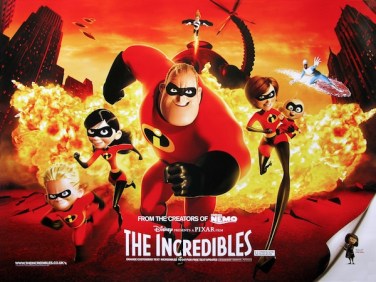
    The Incredibles (2004)

    100 Films’ 100 Favourites #44

    Expect the incredible.

    Country: USA
    Language: English
    Runtime: 115 minutes
    BBFC: U
    MPAA: PG

    Original Release: 5th November 2004 (USA)
    UK Release: 26th November 2004
    First Seen: DVD, 2005

    Stars
    Craig T. Nelson (Poltergeist, Action Jackson)
    Holly Hunter (Raising Arizona, The Piano)
    Samuel L. Jackson (Pulp Fiction, Snakes on a Plane)
    Jason Lee (Mallrats, Alvin and the Chipmunks)

    Director
    Brad Bird (The Iron Giant, Mission: Impossible – Ghost Protocol)

    Screenwriter
    Brad Bird (*batteries not included, Ratatouille)
    (I bet you could count on one hand the number of Western animated movies written by one person.)

    The Story
    After public opinion forced superheroes into a civilian relocation programme, Bob and Helen Parr — formerly Mr Incredible and Elastigirl — live a quiet domestic life with their three children. Bob is dissatisfied, however, and easily tempted back to heroic ways by a call to defeat an evil robot. When it emerges this is part of a plan to kill retired superheroes and give powers to everyone in the world, Bob’s wife and superpowered kids must enter the fray to save the world.

    Our Heroes
    The fantastic four titular heroes: Bob Parr, aka Mr Incredible, who has super strength and limited invulnerability; his wife Helen, aka Elastigirl, who can stretch her body like rubber; their daughter Violet, who can become invisible and generate a force shield; and her younger brother Dash, who has super-speed (name/power coincidencetastic!) There’s also their chum Lucius Best, aka Frozone, who can form ice from the air. He’s very cool, hence casting Samuel L. Jackson.

    Our Villain
    Disillusioned superhero fanboy Buddy Pine, who grew up and used technology to give himself powers, dubbing himself Syndrome. Wants to give everyone in the world powers, because when everyone’s super, no one will be.

    Best Supporting Character
    Fashion designer Edna Mode, who makes the superheroes’ costumes. Inspired by Hollywood costume designer Edith Head, Bird wanted Lily Tomlin to voice her, and provided an example of how she should sound. Tomlin thought it was perfect, so she instead persuaded Bird to play the role himself.

    Memorable Quote
    “No matter how many times you save the world, it always manages to get back in jeopardy again. Sometimes I just want it to stay saved! You know, for a little bit? I feel like the maid — ‘I just cleaned up this mess! Can we keep it clean for ten minutes?!’” — Mr. Incredible

    Memorable Scene
    After tearing his old costume, Bob visits Edna for a new one. He wants a cape. Cue montage of why capes are a bad idea.

    Technical Wizardry
    The film presented a whole host of new technical challenges for Pixar, not least fully animating a whole cast of humans for the first time — they had to develop new technology to animate detailed anatomy, clothing, skin, and hair. The latter was a particular challenge. On Monsters, Inc., the animators persuaded director Pete Docter to give Boo pigtails to make her hair easier to animate, but Brad Bird accepted no such compromises, particularly as Violet’s long, face-covering hair was integral to her character — and it had to be depicted underwater and blowing in the wind, too. Ultimately, Violet’s hair was only successfully animated toward the end of production.

    Next time…
    One of the few Pixar sequels people actually wanted, The Incredibles 2 is in development for a 2019 release. That’s only a 15-year wait.

    Awards
    2 Oscars (Animated Film, Sound Editing)
    2 Oscar nominations (Original Screenplay, Sound Mixing)
    1 BAFTA Children’s Award (Best Film)
    10 Annie Awards (Feature, Directing, Writing, Voice Acting (Brad Bird), Music, Production Design, Animated Effects, Character Animation, Character Design, Storyboarding)
    6 Annie nominations (Voice Acting (Samuel L. Jackson), Character Animation (again, x3), Character Design (again), Storyboarding (again))
    1 Saturn Award (Animated Film)
    2 Saturn nominations (Writer, Music)
    Won the Hugo for Best Dramatic Presentation Long Form

    What the Critics Said
    “what really makes The Incredibles work is the wit of Bird [though] much of it will be over the heads of very young viewers who account for so much repeat business. Bird’s satiric take on suburbia, conformity and forced notions of equality is surprisingly sophisticated and biting for an animated feature, matched by a visual panache that is often breathtaking.” — Kevin Lally, Film Journal International

    Score: 97%

    What the Public Say
    “Most Disney films are about people meeting and falling in love. Incredibles is one of the only ones I can think of about how important marriage is. It shows a couple fighting, getting along, and working together.” — Rachel Wagner, Reviewing All 54 Disney Animated Films and More!

    Verdict

    Even before the present glut of big-screen super-heroics, Pixar were in on the game with this affectionate genre entry. Writer-director Brad Bird mixes together classical superhero antics with elements of 1960s spy-fi to create a retro world of optimistic heroics and larger-than-life villainy — at odds with the dark-and-serious tone of so many superhero movies of the past 17+ years, but all the more memorable for it. It’s also great at the kinds of things Pixar is known for. The combination means it transcends both the kids’ animation and superhero subgenres.

    #45 will be… keeping up with the Joneses.

    Highlander (1986)

    100 Films’ 100 Favourites #43

    There can be only one.

    Country: UK
    Language: English
    Runtime: 116 minutes | 111 minutes (US theatrical cut)
    BBFC: 15
    MPAA: R

    Original Release: 7th March 1986 (USA)
    UK Release: 29th August 1986
    First Seen: TV, 6th October 2000 (probably)

    Stars
    Christopher Lambert (Greystoke: The Legend of Tarzan, Lord of the Apes, Mortal Kombat)
    Sean Connery (Goldfinger, The Rock)
    Roxanne Hart (The Verdict, Pulse)
    Clancy Brown (The Shawshank Redemption, The SpongeBob SquarePants Movie)

    Director
    Russell Mulcahy (The Shadow, Resident Evil: Extinction)

    Screenwriters
    Peter Bellwood (St. Helens, Highlander II: The Quickening)
    Larry Ferguson (Beverly Hills Cop II, The Hunt for Red October)
    Gregory Widen (Backdraft, The Prophecy)

    Story by
    Gregory Widen (see above)

    The Story
    Connor MacLeod is an immortal, a race of men living in secret among the rest of us, who must one day come together for the Gathering, after which there can be only one immortal left standing. That time comes in New York, 1985, as hulking savage the Kurgan hunts down the remaining immortals so that he can be the only one, and use the power that imbues to dominate the world. MacLeod is the only man in his way. Who will win? After all, there can be only— yeah, okay, you get it.

    Our Hero
    There can be only one Connor MacLeod, the 16th Century Scotsman with a suspiciously European accent who can live forever (who wants to live forever, anyway?)… unless someone lops his head off. That tends to do for most people, to be fair.

    Our Villain
    The strong and silent type, the Kurgan is certainly a physically imposing menace. Also immortal except for the decapitation thing. Wants MacLeod’s head, literally.

    Best Supporting Character
    Juan Sanchez Villa-Lobos Ramirez — the perpetually Scottish-accented Sean Connery as an Egyptian from Spain. It’s that kind of movie.

    Memorable Quote
    Connor MacLeod: “I’ve been alive for four and a half centuries, and I cannot die.”
    Brenda: “Well, everyone has got their problems.”

    Quote Most Likely To Be Used in Everyday Conversation
    “There can be only one!” — everyone

    Memorable Scene
    (Spoilers!) As Connor talks with his assistant Rachel, an old woman, the film flashes back to World War 2: fleeing from Nazi soldiers, Connor runs into a barn, where he discovers a little girl hiding — Rachel. When a German officer turns up, Connor takes a bullet for her… then gets up and kills the officer, of course. This scene wasn’t even in the truncated US theatrical cut (it’s the largest single deletion, as detailed here), but has always stuck in my mind. It’s one of the best executions of the concept of the immortal: his only friend, an old woman, is someone he rescued as a little girl. (Short-lived half-decent US procedural crime series Forever explored this same concept more thoroughly over its single season a couple of years ago.)

    Memorable Song
    Who Wants to Live Forever is one of Queen’s best songs — and it was written by Brian May on the cab ride home after watching some rough footage from the movie! The band had only intended to record one song for the film, but after enjoying that footage they were inspired to compose more. The exact number of tracks they produced varies depending which source you listen to — they’re all on the A Kind of Magic album, but not all the tracks on that album were for Highlander. The exception is their recording of New York, New York for the film, which has never been released.

    Technical Wizardry
    Before CGI, filmmakers had to find other ways to do things like make swords spark when they clash. Animation was one method, of course. Not in Highlander, though. No, they attached a wire to each sword that then went down the arms of the actors to a car battery. One wire was connected to the positive terminal, the other to the negative terminal, so that when the blades touched there was an arc of electricity. Sounds super safe. Imagine the insurance costs of possibly electrocuting two lead actors…

    Letting the Side Down
    You might say the accents, but I think they’re part of the charm.

    Making of
    The opening scene was scripted to take place during a hockey match, emphasising the violence of the sport in contrast to the flashbacks of Connor warring in Scotland. The NHL weren’t impressed and refused permission. It was replaced with a wrestling match, which is presumably less violent than hockey.

    Next time…
    There should be only one! No one pays much attention to anything Highlander-related beyond the first film anymore, it feels like, but there’s a whopping great franchise lurking underneath that surface. It begins with much-maligned sequel Highlander II: The Quickening, also directed by Mulcahy and starring Lambert and Connery, which is set in the future and explains away the immortals as being aliens, or something. In spite of the minor improvement in the form of a “Renegade Version” director’s cut, the rest of the franchise ignores it. Spin-off TV series Highlander: The Series began in 1992, following the adventures of Duncan MacLeod (Adrian Paul), another immortal from the same clan. It ran for six seasons, begetting a spin-off of its own, Highlander: The Raven, which only lasted one. An animated series set in a post-apocalyptic future began in 1994, titled Highlander: The Animated Series (imaginative with their names, weren’t they?), which followed “the last of the MacLeods”, Quentin. It lasted for 40 episodes across two seasons. Also in 1994, second sequel Highlander III: The Sorcerer (aka Highlander: The Final Dimension) returned to the story of Connor MacLeod, ignoring both The Quickening and the TV series. Apparently it’s just a rehash of the first movie. After the TV series ended, fourth film Highlander: Endgame attempted to merge the two branches of the franchise, with a movie that followed Duncan MacLeod and led him to encounter Connor. It’s been shown on the BBC with surprising regularity. For some reason they made an anime movie in 2007, Highlander: The Search for Vengeance, which pits Colin MacLeod (yes, another one) against an immortal Roman general in a post-apocalyptic future. What is it with animation and post-apocalyptic futures? The whole shebang ultimately ground to a halt with Highlander: The Source, a post-Endgame continuation that was supposed to be the first of a trilogy but didn’t go down very well (plus ça change). It’s also been shown on the BBC with surprising regularity. There are also novels, a Flash-animated webseries, a handful of comic books released in the mid-’00s, and a couple of series of audio dramas from Big Finish that continue the TV series. A remake/reboot has been in development since 2008.

    What the Critics Said
    “Film starts out with a fantastic sword-fighting scene in the garage of Madison Square Garden and then jumps to a medieval battle between the clans set in 16th-century Scotland. Adding to the confusion in time, director Russell Mulcahy can’t seem to decide from one scene to the next whether he’s making a sci-fi, thriller, horror, music video or romance – end result is a mishmash.” — Variety (they say that as if it’s a bad thing!)

    Score: 68%

    What the Public Say
    “I hear this won the Oscar for Best Movie Ever Made.” — Jope @ Blu-ray.com

    Verdict

    Highlander is a cult favourite — many reviews will tell you as much. I guess I’m in that cult, then, because I bloody love it. Of course it’s preposterous, of course the screenplay and performances are ridiculous, and of course it’s directed as much like an ’80s music video as it is a film… but it’s also a fantastic fantasy concept, so rich for further exploration that they keep trying to do just that (even though they keep messing it up). Also, it’s about men who have sword fights — excitingly choreographed sword fights — so, yeah, it’s right up my alley in that, too. Highlander may not be a “great film” in the artistic history-of-the-medium sense, but my goodness is it a great film.

    A 30th anniversary restoration of Highlander is released on DVD and Blu-ray next month.

    #44 will be… the best Fantastic Four movie.

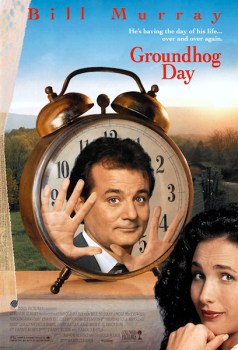
    Groundhog Day (1993)

    100 Films’ 100 Favourites #42

    He’s having the day of his life…
    over and over again.

    Country: USA
    Language: English
    Runtime: 101 minutes
    BBFC: PG
    MPAA: PG

    Original Release: 12 February 1993 (USA)
    UK Release: 7th May 1993
    First Seen: TV, c.1996

    Stars
    Bill Murray (Ghostbusters, The Life Aquatic with Steve Zissou)
    Andie MacDowell (sex, lies, and videotape, Four Weddings and a Funeral)
    Chris Elliott (Cabin Boy, There’s Something About Mary)
    Stephen Tobolowsky (Thelma & Louise, Memento)

    Director
    Harold Ramis (Caddyshack, Analyze This)

    Screenwriters
    Harold Ramis (Animal House, Ghostbusters)
    Danny Rubin (S.F.W.)

    Story by
    Danny Rubin (Hear No Evil, Stork Day)

    The Story
    Dispatched to cover the Groundhog Day ceremony in the small town of Punxsutawney, Pennsylvania, a TV news team get stuck overnight by a snowstorm. When weatherman Phil Connors wakes up the next morning, he finds it’s Groundhog Day again — he’s stuck in a time loop which no one else is aware of, reliving the despised day over and over again. The only advantage is he might be able to use the special knowledge he gains to woo his producer.

    Our Hero
    Grumpy TV weatherman Phil Connors definitely doesn’t want to be covering the ridiculous Groundhog Day ceremonies, so it’s a personal hell to relive that particular day over and over, possibly for the rest of time. Equally, it might just wind up making him a better man.

    Our Villain
    Who knows what caused Phil’s predicament? Maybe it was the groundhog — he’s in the title, after all.

    Best Supporting Character
    Now, don’t you tell me you don’t remember Ned because he’d sure as heckfire remember you. Ned Ryerson. Needlenose Ned. Ned the Head. From Case Western High. Ned Ryerson, did the whistling belly-button trick at the high school talent show? Bing! Ned Ryerson, got the shingles real bad senior year, almost didn’t graduate? Bing, again. Ned Ryerson, dated Phil’s sister Mary Pat a couple times until Phil told him not to anymore? Ned Ryerson? Bing!

    Memorable Quote
    “Well, what if there is no tomorrow? There wasn’t one today.” — Phil

    Memorable Scene
    Fed up with his limited immortality, Phil tries to commit suicide. It doesn’t work — so he keeps trying, in new and ingenious ways. I mean, when you put it like that it kinda doesn’t sound funny…

    Making of
    So, how long is Phil trapped in the time loop? Director Harold Ramis said the original idea was 10,000 years, though he later said it was probably more like 10 years. Various websites have tried to work it out, because of course. Estimates range from just under 9 years to more like 34 years, in order to account for all the time Phil spends learning to play the piano, become an ice sculptor, etc. In the film itself, we see events from just 38 days.

    Next time…
    The creative team behind the RSC’s successful musical Matilda are working on a stage musical adaptation of Groundhog Day, including songs by Tim Minchin, which will premiere at The Old Vic later this year before opening on Broadway in March 2017.

    Awards
    1 BAFTA (Original Screenplay)
    1 British Comedy Award (Comedy Film)
    1 Saturn Award (Actress (Andie McDowell))
    5 Saturn nominations (Fantasy Film, Actor (Bill Murray), Director, Writing, Costumes)
    Nominated for the Hugo for Best Dramatic Presentation.

    What the Critics Said
    “While Murray’s deadpan putdowns and dry dismissals of provincial peccadilloes are the comic highlights, Groundhog Day is no supercilious rip of small-town U.S.A. Under Ramis’ even-handed, smartly tilted direction, Groundhog Day also shows the strong virtues of small-town decencies and the maturing-effect they have on the glib media-slicker.” — Duane Byrge, The Hollywood Reporter

    Score: 96%

    What the Public Say
    “What has always come best from Bill Murray is a kind of flat, dead-pan delivery, a manner of looking at bizarre situations and sizing them up […] Groundhog Day is right at home for Murray because it affords him at least two dozen moments like that. It is the perfect playground for his kind of humor. Yet, it is something more than that. Here he begins by playing a man who is smug and self-important and slowly transforms into a man who is happy.” — Jerry, armchaircinema

    What the Philosophers Say
    “perhaps the ultimate meditation on man’s struggle to give meaning to his life within the abyss of an inconsequential existence, at least as far as ’90s comedies go.” — Colin Newton, Mind Over Movies

    Verdict

    A Twilight Zone-esque setup gets a comedic twist in the hands of co-writer/director Harold Ramis and star Bill Murray (teaming up in a version of that configuration for the sixth time). While the film is undoubtedly a showcase for Murray’s comedic talents (which is no bad thing), alongside that it develops an endearing vein about what it means to be a good person, touching on some pretty philosophical stuff along the way. It’s also a movie about leading a repetitious life, but it isn’t repetitious itself — surely a feat all of its own.

    How many #43s can there be? There can be only one.

    The Past Month on TV #4

    It’s the moments we’ve all been waiting for, as David Tennant returns to Doctor Who and Game of Thrones returns to our screens. Spoiler-free reviews of both (and more) follow…

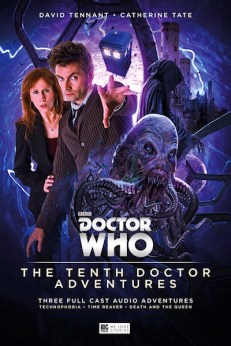
    Doctor Who: The Tenth Doctor Adventures Volume 1

    One of Doctor Who’s most popular eras is revived this week, as David Tennant returns to the headline role for the first time since 2013 for a debut series of Big Finish audio dramas. By his side is Catherine Tate’s Donna — what initially sounded like terrible casting but turned out to be a fantastic Doctor/companion pairing. (I know not everyone’s convinced by her even now, but you can’t win ’em all.) Given Tennant’s enduring popularity as the 10th Doctor, it’s no surprise his return to the role has brought Big Finish more attention than ever — their website even went down for a few hours on Monday, unable to cope with the rush of fans downloading the new stories. (And yes, I’m kinda bending the rules by reviewing audio drama in a TV column… but, a) these are designed to recreate a TV series in audio form, and b) it’s my column and I can review what I like.) So do they live up to expectations? Thankfully, yes. Setting out to emulate the era they’re from, they follow the model set out by the first three episodes of every Russell T Davies-helmed season of NuWho: a present day one, a future one, and a past one.

    The first is Technophobia by Matt Fitton, which is set in our recent past (and therefore Donna’s near-future) when the new M-Pad tablet computer seems to be causing the populace to forget how to use technology. Tennant and Tate hit the ground running — it’s a cliché, but it really does sound like they’ve never been away. Their sprightly performances contain little of the stilted “I’m reading this script aloud for the first time” acting that sometimes plagues audio drama. Fitton captures the style and tone of their single TV season to a tee — if they’d done a second year together, you can well believe this as its first episode. Even Howard Carter’s incidental music is a mostly-fitting substitute for Murray Gold’s iconic work.
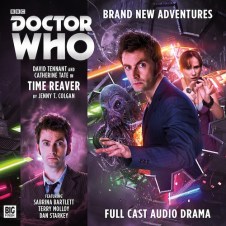
    The middle tale is sci-fi adventure Time Reaver by Jenny T. Colgan, a best-selling romantic novelist who’s turned her hand to multiple Who projects (including a 10th Doctor and Donna novel published last week to tie-in with these dramas). For me, this was the weak link of the trilogy, though it’s by no means bad. There are some fantastic ideas, but at times their inspirations show through too clearly, and the execution is sometimes lacking. This was Colgan’s first audio drama, and dare I say it shows. Sequences like an action-packed barroom brawl are a little too ambitious to convey in an audio-only medium, and the dialogue is regularly forced to describe what’s going on. On the bright side, Mr Carter offers more magnificent sound design — the noises made by cephalopod villain Gully are immensely evocative.

    The final episode is the group’s historical outing, Death and the Queen by James Goss, and it may be the best of the lot. Our intrepid duo find themselves in the kingdom of Goritania in 1780, when it comes under siege from a destructive cloud that contains Death himself. Goss mixes comedy with peril in just the right quantities to create a story that is an entertaining romp but also manages to expose different facets of the Doctor and Donna’s relationship. If Fitton has bottled the essence of RTD, here Goss evokes Steven Moffat, with a time-jumping opening ten minutes that you can well imagine on TV, but which also work perfectly in audio. Things slow a bit later on, with the dialogue sometimes going in circles — a fault of all three of these plays, actually. They could’ve benefited from a trim to fit within the TV series’ 45-minute slot, rather than allowing the freedom of not having to conform to a schedule let them to slide to 55-ish.
    That’s only a niggle, though, and one that pales beside the excitement of having Tennant and Tate back in the TARDIS. This is a run of adventures that largely evoke the pair’s time on TV without being a needless carbon copy of it, meaning they work as both a marvellous hit of nostalgia and exciting new adventures in their own right.

    All three stories are currently available exclusively from the Big Finish website, going on general release from 1st September. They can be purchased individually (either as a CD+download or download-only), or as part of a limited edition box set (CD+download) that comes with a 78-minute behind-the-scenes documentary and an hour-long introduction to other Big Finish works, all encased in a book with exclusive photography and articles.

    Eurovision Song Contest: Stockholm 2016
    Ah, love a bit of Eurovision, even if the songs weren’t as good this year. Ok, you might say they never are, but there’s often one or two half-decent ones (I still listen to Conchita Wurst’s Rise Like a Phoenix sometimes, mainly because it’s the best Bond theme released in the last decade). Even then, the winner wasn’t the best of that middling bunch, though it probably had the best message. In fact, the best song of the night was the Swedish hosts’ half-time number, Eurovision-spoofing Love Love Peace Peace (watch it here). The much-heralded new voting system worked like a charm… at least for audience tension purposes. Poor Australia with that last-minute lose… though as they shouldn’t really have been there in the first place, it’s hard to feel too bad for them.
    Game of Thrones (Season 6 Episodes 1-4)
    Good luck to you if you’re not watching Game of Thrones but still trying to avoid spoilers this year, with the huge and widely-covered news that [REDACTED] was [REDACTED], or that [REDACTED] killed [REDACTED], or when [REDACTED] and [REDACTED] were [REDACTED] for the first time since [REDACTED], or when [REDACTED] was [REDACTED] but [REDACTED] the [REDACTED] and [REDACTED] of [REDACTED] in the process — even if more people seemed interested in discussing her [REDACTED]s.
    Trying not to add to the tumult of spoilers (just in case), I thought that The Red Woman was the now-standard GoT season opener (a mix of recapping/establishing where everyone is, and just beginning to shuffle those players around the board for their next moves) done as well as it’s ever been. Home was where the season really kicked into gear, though — quicker than some other years have managed, that’s for sure. One particular moment was much discussed, understandably, but events elsewhere — both in Westeros and Essos — would’ve been enough to excite interest without it. Oathbreaker engaged more with its flashbacks than its ‘present day’ actions, though another episode-ending scene at Castle Black reiterated the series’ warts-and-all vision of the world. Finally, Book of the Stranger was an immensely satisfying hour — the kind of thing Thrones allows us all too rarely, considering how often its heroes are crushed. Apparently the writers have said this is the year the series’ female characters finally begin to really ‘fight back’, and it would seem this episode is where it begins.

    Upstart Crow (Series 1 Episodes 1-2)
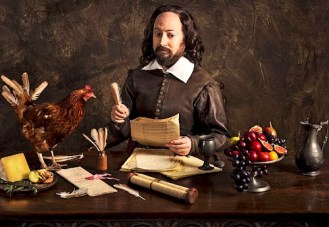
    I can’t remember the last time I saw a new multi-camera sitcom that wasn’t either, a) a bit meta (like Miranda or Mrs Brown’s Boys), or b) a revival (like Red Dwarf X). I don’t know if that says more about the current TV landscape or the kind of things I watch, but either way it surprised me when that was the form Upstart Crow took. It’s just one element that gives it the feel of Blackadder, which I don’t mean as a criticism. Even if it feels a little dated in its execution, there are plenty of laughs — some easy, some clever — and, really, what more do you want from a comedy than to laugh? It may not be up to Blackadder’s highest highs (yet — there’s still time; you never know), but I’d wager it stands fair comparison to the classic’s comparatively-lesser instalments… which I mean to be a less critical assessment than it sounds.
    Also watched…
  • The British Academy Television Awards 2016Wolf Hall director Peter Kosminsky’s barnstorming defence-of-the-BBC acceptance speech set the tone for the evening, which consequently was one of the best BAFTA ceremonies ever. The BBC broadcast had to cut some of his speech, no doubt out of fear of the government, but the full text can be read here.
  • The Flash Season 2 Episodes 15-19 / Arrow Season 4 Episodes 15-18 / DC’s Legends of Tomorrow Season 1 Episodes 6-9 — this is all getting a bit much now… and next year they’re probably adding Supergirl to the mix, as it’s moving to The CW too. I may have to give up on one or two of them at that point, I think.
  • Gilmore Girls Season 6 Episode 10-Season 7 Episode 7 — the much-maligned seventh season really is not good. I just want it to be over so I can switch to being excited for the Netflix revival.
  • Person of Interest Season 4 Episodes 16-22 — with the cancelled-after-filming final season underway in the US now, one of the showrunners was talking about how the series will nonetheless come to an ending, because they’ve tried to conclude every season with a suitable stopping point. I really, really hope they’ve done something different with season five, though, because the cliffhanger endings of seasons three and four would actually have been terrible places to end forever.

    Things to Catch Up On
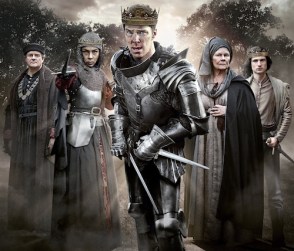
    This month, I have mostly been missing the second run of The Hollow Crown, the BBC’s all-star adaptation of Shakespeare’s War of the Roses plays… though as I still haven’t got round to watching the first run from 2012, that’s no real surprise. In fact, Upstart Crow aside, I’ve not yet watched any of their still-running Shakespeare Festival, other highlights (so I’ve heard) of which have included the Shakespeare Live from the RSC celebration and spoof documentary Cunk on Shakespeare. There’s also Russell T Davies’ new version of A Midsummer Night’s Dream, which is on Monday 30th.

    Next month… as was just announced yesterday, AMC’s Preacher adaptation comes to the UK via Amazon.