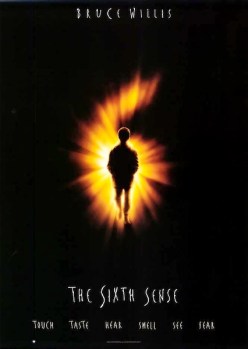
The Sixth Sense (1999)

100 Films’ 100 Favourites #85

Not every gift is a blessing.

Country: USA
Language: English
Runtime: 107 minutes
BBFC: 15
MPAA: PG-13

Original Release: 6th August 1999 (USA)
UK Release: 5th November 1999
First Seen: DVD, c.2000

Stars
Bruce Willis (Pulp Fiction, Sin City)
Haley Joel Osment (Bogus, A.I. Artificial Intelligence)
Toni Collette (Muriel’s Wedding, Little Miss Sunshine)
Olivia Williams (Rushmore, The Ghost)

Director
M. Night Shyamalan (Unbreakable, Signs)

Screenwriter
M. Night Shyamalan (Wide Awake, The Village)

The Story
Child psychiatrist Dr Malcolm Crowe tries to help a new patient, Cole Sear, who claims he can see ghosts.

Our Heroes
Dr Malcolm Crowe doubts his abilities to help people after a former patient shot him before committing suicide, an event which has also left him distanced from his wife. But he may be the only person who’ll believe young Cole Sear, a reclusive child who’s struggling with delusions of seeing dead people… unless they’re not delusions…

Our Villains
Are the dead dangerous, or do they just need help?

Best Supporting Character
Cole’s mom, Lynn, who loves him a great deal and worries about him just as much, but has no idea what’s really wrong or how to help her son.

Memorable Quote
“I see dead people… Walking around like regular people. They don’t see each other. They only see what they want to see. They don’t know they’re dead.” — Cole

Memorable Scene
Stuck in traffic, Cole reveals his ability to his mother for the first time — that there’s been an accident ahead and someone died, which he knows because they’re stood at his window. Naturally Lynn doesn’t believe her son, but then he begins to talk about his grandmother…

Technical Wizardry
The twist ending is immaculately constructed. There are clues throughout the film, but, like all the best twist-ending clues, the vast majority of viewers will completely miss them first time through, even though they seem almost blatant when revisited.

Making of
The colour red is used only to indicate times and items where the worlds of the living and the dead have connected; if something red was present in a scene where this wasn’t relevant, Shyamalan had it changed. There’s a massive list of these moments here, but if you somehow haven’t seen The Sixth Sense yet, do beware of spoilers.

Next time…
There are no actual sequels to The Sixth Sense, but it kicked off M. Night Shyamalan as a kind of one-man genre, making supernatural thrillers with a twist ending — and decreasing critical acclaim with each new movie. It seemed to end with The Happening and he transitioned to be a director-for-hire, but he’s coming back somewhat with The Visit and next year’s Split.

Awards
6 Oscar nominations (Picture, Supporting Actor (Haley Joel Osment), Supporting Actress (Toni Collette), Director, Original Screenplay, Editing)
4 BAFTA nominations (Film, Director, Original Screenplay, Editing)
2 Saturn Awards (Horror Film, Performance by a Younger Actor/Actress (Haley Joel Osment))
2 Saturn nominations (Actor (Bruce Willis), Writer)
2 Teen Choice Awards (Choice Drama, Choice Breakout Performance (Haley Joel Osment))
1 Teen Choice nomination (Choice Sleazebag (Trevor Morgan))
Nominated for the Hugo for Best Dramatic Presentation

What the Critics Said
“the film eventually abandons the heroic-therapist model and ventures toward other ground, ever so gently tightening its squeeze. It seems really to achieve something that Stanley Kubrick was possibly groping after in Eyes Wide Shut, or that Nicolas Roeg achieved in Don’t Look Now, which might be called an extreme sense of the bizarre, not as invented by special-effects wizards with unlimited space on the hard drive but in the subtler ways of film craftsmanship. […] The movie is a maximum creep-out. It’s invasive. It’s like an enema to the soul as it probes the ways of death – some especially grotesque in a family setting. You leave slightly asquirm. You know it will linger. It becomes a clammy, chilly movie building toward a revelation that you cannot predict. As I say: I cannot tell you. You’d hate me if I did. I can only say, don’t look now, but look sometime.” — Stephen Hunter, Washington Post

Score: 85%

What the Public Say
“The film is rich in symbolism, and colour plays a large part in signifying spirits invading the real world. This is what makes The Sixth Sense so captivating. Watching the film for the first time, you don’t expect the ending, and so the shock of it tends to overshadow the subtlety of the beginning. It is only once you have re-watched the film, that you begin to notice little suggestions of what is to come. A success from start to end, this is at once an exercise in potent suspense, and a carefully crafted tale of child psychology.” — Cat Barnard, Screen Muse

Verdict

M. Night Shyamalan gets such a bad rep these days, it’s easy to forget how great his breakthrough movie was. It flew completely under the radar back in 1999: the guy at Disney who bought the screenplay was fired for doing so without permission; Bruce Willis starred in it because he owed Disney two films, and was paid half his normal salary; Entertainment Weekly’s extensive summer preview detailed over 140 films, but The Sixth Sense wasn’t even mentioned. By coming out of the blue, and in an era before the internet was dominant (these days there’d be plot dissections and spoiler-filled director interviews online by the Monday after release, wouldn’t there?), the film obviously had surprise on its side, which is particularly effective when it has such a memorable twist. But even before that ending, it manages to mix plausible emotional drama with scenes of chilling everyday horror, crafting something that is undoubtedly a genre movie but also not out of place in a list of Best Picture nominees.

The Sixth Sense is on Film4 tomorrow night at 1am.

#86 will do… whatever a spider can.
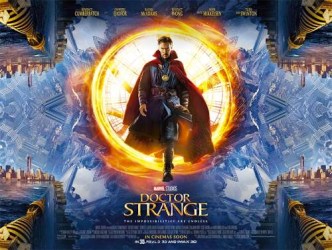
Doctor Strange (2016)

2016 #169
Scott Derrickson | 115 mins | cinema | 2.35:1 | USA / English | 12A / PG-13

Doctor StrangeThe latest from Marvel (or Marvel Studios, as they’re now branded, presumably in a bid to differentiate themselves from the properties owned by other studios that have been only too keen to use the Marvel logo and blur the line for the casual moviegoer) opens the door on a new facet of their shared cinematic universe, though does so in a movie whose plot follows the familiar “superhero origin story” rulebook. On the bright side, Doctor Strange has several other qualities to recommend it.
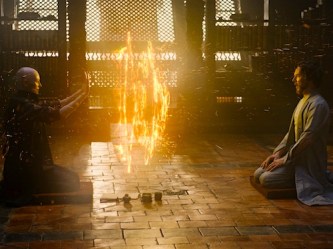
It’s the story of Dr Stephen Strange (Benedict Cumberbatch), a brilliant but cocky New York neurosurgeon, whose hands are ruined in an accident, taking his career — the sole focus of his life — with them. In search of groundbreaking healing, he travels to Nepal, where he meets the Ancient One (Tilda Swinton) — not a doctor, but a mystic, who introduces him to the world of magic. Which in this case is real and not just, like, some Derren Brown stuff, because that wouldn’t make a very good superhero movie. Then there’s some stuff about evil sorcerer Kaecilius (Mads Mikkelsen), who wants to destroy the world, blah blah blah.

So yes, the story is familiar — but you can say that about most superhero movies, especially origin films. It’s only a problem if you think movies are entirely about their plot. What Strange offers to accompany this through-the-motions narrative is its visuals, and oh, what visuals they are. You’ve likely seen some of it in the trailers — the folding cities, which look like Inception run through a kaleidoscope. Certainly, their complicated detail and intricacy leaves Nolan’s movie in the shade. The old idea of “an effects movie” — Wowzerswhere the incredible effects are half the point — seemed dead in an era where every movie has CGI and every blockbuster has its share of once-impossible visuals. Strange demonstrates the form can be alive and well. The way the effects are created — with green screen and pixels — is the same as any other movie, but the designs and the visual imagination are exciting.

The action scenes that are choreographed around and through these effects are suitably imaginative also, making use of the concepts and ideas of the magic, rather than just having people punch each other in front of swirly backgrounds. To say too much would be to spoil the movie, but the Inception-y stuff is not the film’s climax — it has several other tricks up its sleeve. There’s one bit where time flows backwards, which I specifically mention because at that point the music does a bit too, which is primarily notable because the rest of the score is your typical bland, generic, forgettable Marvel music. On the other hand, I’ve read others praise the music for being more memorable than Marvel’s usual temp-tracked output, so maybe I’m wrong.

When the film isn’t tickling your adrenal glands, it at least has the courtesy to sweeten the pill of its Superhero 101 storyline. For one thing it’s very funny, though in a way that doesn’t steal from the drama. This lightness of touch has become Marvel’s forte, and Strange handles it as well as any, without going all-out like Guardians of the Galaxy or half of anything starring Tony Stark.

Practical magicThen there’s the cast. Obviously keen to avoid being typecast after playing an arrogant British genius in both Sherlock and The Imitation Game, Benedict Cumberbatch here plays an arrogant American genius. Strange doesn’t have the charm of Cumberbatch’s Sherlock, nor of some of his Marvel stablemates, like Tony Stark or Peter Quill, but his character arc takes that arrogance and transforms it into a kind of caring aloofness that, with flashes of dry wit, makes him an appealing character — even if it may take further films for that appeal to be fully realised.
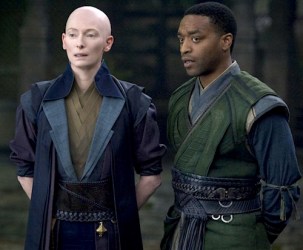
Mads Mikkelsen is somewhat wasted as Marvel’s typically lightweight villain, though his inherent skill as an actor allows him to flesh out the few speeches he is given. You could expand that assessment out to most of the cast: they’re all above this — four of them are Oscar nominees or winners (clearly Mikkelsen has been overlooked by the Academy) — but the fact that quality flows through their veins helps elevate some of the material. You could argue their talent is wasted with this stuff, but what do you expect? It’s an action-adventure blockbuster from a company known for their consistently light tone — that’s never going to dig into proper emotive character drama. Suffice to say that such top-tier actors effortlessly add resonance to their roles, however little they had to work with on the page.

More controversial was Tilda Swinton’s casting. You could see it as whitewashing, or you could see it as dodging a racial stereotype — there’s a visual gag to that effect, in fact. “Oscar winners get bigger parts than Oscar nominees, okay?”Besides, one of the film’s best characters is of Asian ethnicity, so it kinda balances out. That’s Benedict Wong as the sorcerers’ librarian, who’s likely to emerge as the film’s most popular character. It helps that viewers aren’t likely to expect much of him. Conversely, Chiwetel Ejiofor and Rachel McAdams are seriously underserved, perhaps hoping for more meat in the no-doubt-intended sequel(s).
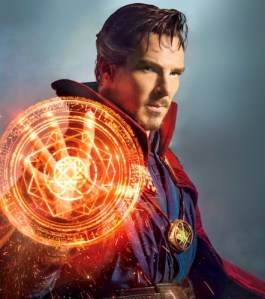
Actually, that’s an understatement, isn’t it? This is a Marvel movie, and one that’s garnered positive reviews thus far to boot — it’s going to be a box office success, and sequels will inevitably follow. Nonetheless, some reviews have been bizarrely keen to frame Strange as “Marvel’s greatest risk yet” and “a radical departure for the studio”. That’s all empty hyperbole at this point and I don’t know why they do it. Guardians of the Galaxy already proved that no change of genre is a risk for the studio — and Guardians was a much bigger change of form for Marvel than Strange is. Plus, the way Strange handles magic is no more out-there than the way it handled gods ‘n’ that in two Thor films. Indeed, if anything Strange should look like a moderately safe bet: it’s following in Thor’s footsteps with the whole magic/other worlds/dimensions thing, but married to a fairly standard superhero origin arc. It’s no riskier a proposition for Marvel than any other new property. Nonetheless, it does open up some tantalising possibilities, especially when it comes to teaming Strange with the Avengers… though they’ll have to find a way to remove some of his abilities, otherwise he’ll be far too powerful.

To further those connections, there are two end credits scenes. I shan’t spoil their contents, of course, but in my opinion they’re the wrong way round. One is basically Magic toucha teaser for another Marvel film, the other relates to the plot of the movie we’ve just seen. The former is first (and about 10% of my screening walked out before it came on) and the latter is, obviously, second (by which time about 90% had left). Those percentages ‘matter’ because, a) how do people not know Marvel’s rep for these scenes by this point?, and b) I think the scene related to the film you’ve just watched is the one that should be more attached to it, with the ‘teaser trailer’ being a fun bonus for those dedicated to stick around to the bitter end. But maybe that’s just me.

Much earlier in the movie, shortly after encountering the Ancient One, Strange is offered tea. He drinks it, then something amazing happens, and he asks what was in the tea. The Ancient One answers, “Just tea. With honey.” That line struck me because it rather sums up Doctor Strange as a movie. In its well-rehearsed superhero-origin-story-ness, it’s just tea; but the quality cast, the genuine laughs, the imaginatively choreographed action, and, most of all, the mind-bending visuals add a very pleasurable sweetness.

4 out of 5

Doctor Strange is in UK cinemas now, and is released in the US next month.

Lost River (2014)

2016 #79
Ryan Gosling | 95 mins | streaming (HD) | 2.35:1 | USA / English | 15 / R

Lost RiverThe directorial debut of uber-hearththrob movie star Ryan Gosling is not what you might expect someone of that particular adulation to produce. It’s not just that it has a dark heart, but that it’s slow, opaque, perverted, and not easily summarisable.
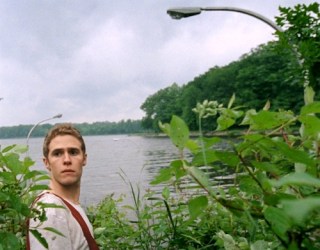
To try nonetheless: Bones (Iain De Caestecker) lives in a possibly-near-future rundown Detroit, where his mother (Christina Hendricks) is struggling to repay the loan so they can keep their house. A meeting with the bank manager (Ben Mendelsohn) leads to him offering her a job at a mysterious nightclub. Meanwhile, Bones salvages copper for cash, which brings him into the orbit of vicious criminal Bully (Matt Smith). Escaping Bully’s clutches, Bones discovers an old road that leads under a lake. He learns from his neighbour, Rat (Saoirse Ronan), that there’s a town under there, which may hold the key to breaking the curse hanging over their town…

If it’s not obvious, there’s definitely some magical realism going on in Lost River. Adult fairytale would be another term for it; there are slices of some form of Gothic, too. To put it another way, it’s definitely Lynchian. Other directors may have been an influence on Gosling as well, but it specifically brought Blue Velvet to mind for me, without in any palpable way being a clone of that movie. Nonetheless, it also engages with some very real present-day issues, like the recession, albeit in an elliptical fashion (despite the plot being about someone under threat of losing their house). Perhaps this is just a convenient way to touch of themes of family, home, and what home means (i.e. more than just a house), as well as the importance or otherwise of escaping that home, or somehow reconstituting it.

Lake lightsIt comes to a very cathartic ending, on multiple levels. I almost didn’t realise I needed that catharsis at the end — I knew I wanted certain characters to get their comeuppance, but the load that seems to lift at the end, with all the different climaxes combined, including parts that might not seem ‘good’… well, it’s almost like Rat is right about Bones’ actions lifting a bad spell.
On a technical level the film is superb, combining fantastic cinematography with evocative costumes, expressive sets, and an effective score. Some of the imagery is the visual equivalent of ambient mood music, as is some of the score (er, literally). That occasionally comes across as self-consciously Arty, therefore, but in the right mood or mindset it works. There are several strong performances as well: Christina Hendricks does understated desperation; Matt Smith is a credible schoolyard bully writ large; Ben Mendelsohn exudes menace as a nightclub-owner-cum-devil-incarnate; and Saoirse Ronan is marvellous in everything.

By giving it a 4, I’m maybe being a tad generous; certainly it’s poor consumer advice, because this is a “not for everyone” film. But if I gave it a 3, I’d be underselling how much I eventually liked it. It’s certainly flawed — slow, slight, maybe pretentious, and Arty. But it also takes us to an intriguing world, toys with some interesting ideas, conveys a few memorable moments, and stuns with consistently arresting visuals. I’ll take that mix over “blandly fine” any day.

4 out of 5

The Quay Brothers in 35mm (2015)

2016 #159
Quay Brothers + Christopher Nolan | 68 mins | Blu-ray | 2.35:1 + 1.85:1 + 1.33:1 | UK & USA / English | 12*

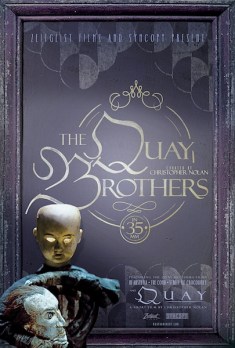
The Quay Brothers in 35mmChristopher Nolan made a few headlines last year when his first post-Interstellar film was announced for near-immediate release. Not Dunkirk, of course, but an eight-minute short documentary, Quay, about British-based American-born identical-twin animators the Quay brothers. The short was screened theatrically as part of a programme of animated shorts directed by the brothers, curated by Nolan to accompany his documentary, all from 35mm prints — because it’s Nolan, so of course. One critic reckoned it “will always be one of [Nolan]’s most important contributions to cinema.”
Today, the BFI release a Blu-ray set of the Quay brothers’ short animations, containing 24 of their works plus special features, among which is Nolan’s short. As a complete neophyte to the Quays’ work, I thought the best way to begin approaching it might be via the selection Nolan programmed, which was at least partly minded as an introduction to the brothers’ oeuvre. (Now, obviously I’m not watching this on 35mm, nor in its intended form (i.e. in a cinema), and it’s technically a selection of short films, so can I really count it towards my list? We’ll leave that to my conscience.)

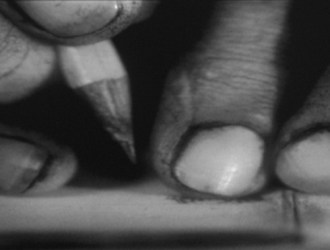
Though if it is a beginner’s course, it’s the kind that throws you in at the deep end. In Absentia (2000) was, remarkably, made for the BBC as part of a season about sound on film — you can’t imagine them commissioning anything like this today. Maybe for BBC Four. Maybe. It’s an inscrutable 20-minute nightmare of a film, with sci-fi landscapes, a demonic puppet, sentient pencil leads, and the graphite-stained fingers of too many hands. It’s clear from the outset that these are films more about mood, atmosphere, and feeling than they are strictly concerned with plot or character, and to an extent one needs to be open to just going along with it in the hope that meaning or significance reveals itself.

In AbsentiaFor all that In Absentia initially feels like flailing in deep water without armbands, accompanied with “what have I got myself into?!” thoughts, in retrospect I found it to be the most accessible of the three animations. It’s abstract and confusing for most of its running time, but by the end you can decipher some meaning; you can understand the relevance of the feelings it aims to generate — and if you haven’t got there yourself, or if you’re unsure, there’s a dedication to point you in the right direction. I didn’t get that with the next two; not so easily, anyway, which is why I say they’re less accessible rather than less good per se.

Nolan follows this opening salvo with his documentary, Quay. It provides a sliver of insight into the brothers’ methods and thought processes; the merest glimpse into how they do what they do, with little or no explanation for why or what it means. I suppose Nolan wasn’t aiming for enlightenment or explanation, but to instead acknowledge the craftsmanship of the animators. Rather than the kooky outré bohemians you might imagine from their bizarre films, the brothers seem quiet, calm, and, for want of a better word, ordinary. By placing his documentary here, Nolan gives you an idea of the people whose hands you’re in, before diving back inside their imagination…

The Comb (1990) professes to be adapted from something and has immediately obvious characters, both human and puppet. “Ah,” you may think, “a clearer narrative.” No chance! I came away with even less of an idea what this was about than I did In Absentia, and certainly no clue what a comb has to do with most of it — the exception being the bits where there is a comb, because then there is a comb there. In a piece on the film at BFI Screenonline, The CombMichael Brooke notes that it is “setting out to wrong-foot the viewer at every turn, and the result wilfully defies verbal analysis.” What can be easily discerned is that it’s about a dream, and it probably shouldn’t be a surprise that there’s some dream-logic involved. As to what else is to be gleaned, your guess is as good as mine.
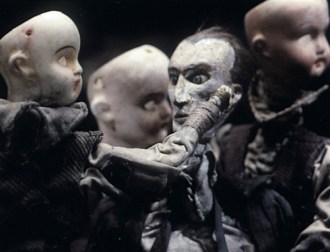
Last up is the film that’s reckoned to be the Quays’ masterpiece, Street of Crocodiles (1986) — Terry Gilliam picked it as one of the ten best animated films ever, while critic Jonathan Romney has twice nominated it in Sight & Sound’s famous “greatest films of all time” poll. Once again, I was left initially floundering for significance. There’s some fascinating imagery, and the implication again that parts function though dream-logic, but as to an overall story or message… Reading various sources before writing this, a theme emerges: that to search a Quay Brothers film for direct meaning is futile; it’s more about somehow accessing the same otherworldly psychological and/or emotional space that’s peculiar to these filmmakers. Even when the Quays themselves describe what’s going on in Street of Crocodiles, you’ll notice there’s nary a nod to meaning — though even an outline of the plot as they conceived it is illuminating, unlocking something you sort of already knew, but providing a kind of clarity that felt absent before. A bit like that title card at the end of In Absentia, I suppose.

It’s true what they say: watching Quay Brothers shorts is like being given a glimpse into another world, connected to our own but also other to it — hiding in the cracks or around the corner, perhaps; or only in our dreams and nightmares; on the other side of the mirror, were we able to pass though it. Their work is our conduit to this otherness, which is Street of Crocodilessometimes informative about the world the rest of us live in (In Absentia), sometimes a twisted analogy for it (Street of Crocodiles), and sometimes just fascinatingly unknowable (The Comb). All the films are teasingly oblique, and by all rights that should make them frustrating to the point of irritation, even abandonment… yet they’re kind of compelling nonetheless.
Oh, and do I need to throw in a “they’re not for everyone” at this point? I imagine that’s implicit.

4 out of 5

The aforementioned Blu-ray collection, Inner Sanctums – Quay Brothers: The Collected Animation Films 1979-2013, is released by the BFI today. The genuine Quay Brothers in 35mm is screening at London’s Prince Charles Cinema in November.

Further Reading

* Although this particular presentation hasn’t been certified by the BBFC, a collection of Quays shorts featuring these is rated 12, and Nolan’s short is classified U. ^

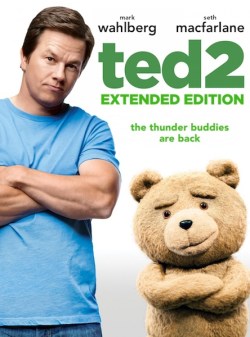
Ted 2: Extended Edition (2015)

aka Ted 2: Unrated

2016 #94
Seth MacFarlane | 121 mins | streaming (HD) | 2.35:1 | USA / English | 15

Ted 2Comedy sequels often struggle, and writer-director-producer-star Seth MacFarlane’s in-between feature was sporadically odious, so I approached Ted 2 with trepidation. While it can’t match the freshness of its predecessor, it’s certainly no AMWtDitW.*

The plot (about Ted trying to become a legally recognised person) exists to string together comedic set pieces. Perhaps that’s why the pace feels off: individual parts are funny, but it’s slow going. That’s not the fault of the extended cut (details here) — the additions include at least one of the funniest bits.

Not a surprise success like the first, then, but an amusing couple of hours.

3 out of 5

* The length of that title is anathema to a word-limited review. ^

Return of the Jedi (1983)

100 Films’ 100 Favourites #73

Return to a galaxy far, far away.

Also Known As: Star Wars: Episode VI – Return of the Jedi

Country: USA
Language: English
Runtime: 132 minutes | 135 minutes (special edition)
BBFC: U
MPAA: PG

Original Release: 25th May 1983 (USA)
UK Release: 2nd June 1983
First Seen: VHS, c.1990

Stars
Mark Hamill (The Empire Strikes Back, The Guyver)
Harrison Ford (Indiana Jones and the Last Crusade, Patriot Games)
Carrie Fisher (The Empire Strikes Back, The ‘Burbs)
Anthony Daniels (The Lord of the Rings, Star Wars: Episode I – The Phantom Menace)
Peter Mayhew (Star Wars, Comic Book: The Movie)

Director
Richard Marquand (Eye of the Needle, Jagged Edge)

Screenwriters
Lawrence Kasdan (Raiders of the Lost Ark, Silverado)
George Lucas (American Graffiti, Star Wars: Episode III – Revenge of the Sith)

Story by
George Lucas (Indiana Jones and the Temple of Doom, Radioland Murders)

The Story
As the Galactic Empire construct a new Death Star, Jedi-in-training Luke Skywalker — the Rebel Alliance’s best hope of defeating the evil Darth Vader — is busy rescuing his friend Han Solo from the clutches of crime lord Jabba the Hutt. Meanwhile, the powerful Emperor waits, intending to convert the young Jedi to the Dark Side…

Our Heroes
Luke Skywalker: Jedi Knight.
Han Solo: defrosted resistance captain.
Princess Leia: sister, love interest, bikini-wearer. Is it just me or does Leia get a pretty poor deal as the trilogy goes on?

Our Villains
Quite possibly the greatest villain ever created for the movies, Darth Vader. Here he’s on an arc of redemption, so there’s also the Emperor, who has the appearance of a wizened old man but is strong in the Force. As Vader himself puts it, “the Emperor is not as forgiving as I am.” Uh-oh!

Best Supporting Character
R2-D2 is the best supporting character in every Star Wars film, but in this one we are introduced to Jabba the Hutt (well, unless you watched Episode I or the New Hope Special Edition first). A giant, fat, slug-like crime lord who is impervious to Jedi mind tricks and apparently has a fondness for metal bikinis, he’s as physically repulsive as are his methods and mores.

Memorable Quote
“Many Bothans died to bring us this information.” — Mon Mothma

Quote Most Likely To Be Used in Everyday Conversation
“It’s a trap!” — Admiral Ackbar

Memorable Scene
The speeder bike chase — arguably the best action sequence in the entire original trilogy. Considering this is a series of films that include three or four duels with frickin’ laser swords, that’s some feat.

Memorable Music
John Williams’ music is an essential part of the Star Wars experience. While no single tune in Jedi is as iconic as the Main Theme from A New Hope or the Imperial March from Empire, the overall score is as good as ever.

Technical Wizardry
The background plates for the speeder bike chase were captured by having a Steadicam (operated by the system’s creator, Garrett Brown) walked through a forest while filming less than one frame per second. When played back at regular 24fps, this 5mph stroll came out more like a 120mph hurtle. They spent three days filming to get enough footage for the whole sequence.

Truly Special Effects
These days, the answer to the question “how did they do that?” is “CGI”. Back in the ’80s, however, they had to be a bit more creative — leaving an abundance of achievements worthy of inclusion here. For example, the shot where the Imperial fleet spring their trap on the Rebels was the most complex matte shot ever attempted, with dozens of separate model elements having to be printed in. Or there’s the puppet work. Jabba was full-size, of course, and the 2,000lb costume was operated by four puppeteers: one for his right arm and jaw, another for his left arm and tongue, both of whom moved his body; another had a cable control to move the mouth and nostrils, using his feet to work bellows to simulate breathing; and the fourth moved his tail. Plus the smoke for when Jabba uses his pipe was apparently created by someone smoking a cigar and blowing it up a tube. For the Rancor, on the other hand, Lucas wanted to use a Godzilla-style man in a suit, but the tests didn’t work very well. The final result is not stop-motion, as you might expect, but an 18-inch rod puppet. Filming it was treated as a live-action shoot, though various techniques were used to conceal the methodology, like slow-motion or running the film backwards — anything they could think of to help remove the sense of “Muppet-ness”.

Letting the Side Down
When it comes to Lucas’ Special Edition fiddling, most people focus on the “Han shot first” complaint. Personally, I find the change at the end of Jedi — where Hayden Christensen has been pasted over Sebastian Shaw as Anakin’s Force ghost — more egregious. That said, the stupid song & dance number in Jabba the Hutt’s palace runs it a close second. On the bright side, the added shots of planets around the Empire celebrating the destruction of the Death Star helps aggrandise an otherwise low-key post-climax celebration.

Making of
So, that metal bikini, eh? What a blatant bit of fan service by that dirty old George Lucas! Well, apparently it actually came about because Carrie Fisher herself complained about her all-covering costumes in the first two films meaning you couldn’t tell she was a woman. Costumer Aggie Guerard Rodgers’ design was inspired by the work of famed fantasy artist Frank Frazetta, but whoever decided it should be made as such a rigid piece wasn’t thinking ahead: the solidness of the top meant it didn’t move with Fisher’s body, and she refused to use double-sided tape, so before each take someone from wardrobe had to (to quote IMDb) “ensure that her breasts were still snug inside the costume”. Nice work if you can get it. Nonetheless, several scenes had to be reshot due to what we now call “wardrobe malfunctions”.

The Ewok Line
To quote from the How I Met Your Mother Wiki, “The Ewok Line correlates the birth year of a person and the subsequent appreciation of Ewoks […] Those born on or before May 25, 1973 have a low appreciation of the film’s creatures, while those born after this date have an affinity for them. This is because those who saw the Ewoks in Return of the Jedi, which was released theatrically on May 25, 1983, who were 10 or under still loved their teddy bears, giving them an increased appreciation for the Ewoks.” I was born in 1986 and, yes, I love Ewoks. I mean, how can you not enjoy their silly mix of teddybear cuteness, gobbledegook language, and Empire-beating military competence?

Previously on…
Return of the Jedi picks up on the cliffhanger from The Empire Strikes Back, which of course continued the story of Star Wars. Many, many other films, TV series, novels, comic books, computer games, and whatever other media you can think of, take place before and around these movies.

Next time…
Ooh boy… Well, primarily: 16 years later, George Lucas returned to the world he created for the infamous Prequel Trilogy, finally filling in those missing first three Episodes. Chronologically, the saga picks up after Jedi with last year’s Episode VII: The Force Awakens, and will continue in Episodes VIII and IX. Aside from those main tenets, there’s an unimaginable mass of stuff in what’s known as the Star Wars Expanded Universe: TV series, novels, comic books, computer games, and anything else you can imagine — and it’s only going to continue growing in the future. Most of what was generated before Disney bought Lucasfilm may have been wiped out by whoever’s in charge now, but that doesn’t mean people don’t care about what went on in it. Of particular note is Timothy Zahn’s Thrawn trilogy of novels, which kickstarted the prominence of the Expanded Universe, and which many fans used to view as effectively being Episodes VII, VIII and IX.

Awards
1 Oscar (Special Achievement in Visual Effects)
4 Oscar nominations (Score, Art Direction-Set Decoration, Sound, Sound Effects Editing)
1 BAFTA (Visual Effects)
3 BAFTA nominations (Make Up Artist, Production Design/Art Direction, Sound)
5 Saturn Awards (Science Fiction Film, Actor (Mark Hamill), Costumes, Make-Up, Special Effects)
5 Saturn nominations (Actress (Carrie Fisher), Supporting Actor (Billy Dee Williams), Director, Writing, Music)
Won the Hugo for Best Dramatic Presentation

What the Critics Said
“The characters and dialogue get lost somewhere between the bug-eyed monsters and the exploding spaceships, but it is all so much fun it probably really does not matter a whole lot. […] Because so much of Return of the Jedi concentrates on makeup and special effects, and perhaps also because much of the dialogue (and acting) is so bad, it is pretty hard to get too involved with the characters, who came across with much more human interest in The Empire Strikes Back, the second of the movies. In a sense, the extraterrestrials are a lot more human than the people.” — Harper Barnes, St. Louis Post-Dispatch

Score: 80%

What the Public Say
“[A] thing I like about the scene in Jabba’s palace is the teamwork between all of the heroes in their mission to rescue Han Solo. It reminds me of a heist in way, since you got the droids, Chewbacca, Lando, Leia and Luke all working together and serving different purposes in rescuing Han. I also love the fact that the reason they are all working together is because they all care about Han. It just goes to prove that Star Wars isn’t just a huge spectacle but a story about family and friendship, which makes it a lot more personable.” — Jacob Bartley, Apocaflix! Movies

Elsewhere on 100 Films
I’ve written about the original Star Wars trilogy twice before, both times back in 2007. Of Return of the Jedi’s modified DVD version, I said that “there seem to be only minor differences or effects improvements here — it does make you wonder what the fans were kicking up such a fuss about”, and noted that “the speederbike chase is one of the trilogy’s greatest action sequences. And Ewoks are cute.” Then, treating the film as the sixth part of the saga, I wrote that it had “the biggest failing of the films as a single series: the prequel trilogy is endlessly obsessed with the prophecy about Anakin bringing balance to the Force; it isn’t mentioned once here. A dubbed line or added shot with Yoda saying something would’ve been nice.”

Verdict

Once upon a time I decided Return of the Jedi was actually my favourite Star Wars movie. I watched them again last year and changed my mind again, and wondered quite what I’d been thinking before. Jedi does have a lot to commend it, from multiple memorable set pieces to some effective character work with most of the principals, but it’s certainly not without its flaws, which have only been exacerbated by the prequel trilogy — as the climax to a mythic six-film saga, the finale of Jedi lacks some heft. Arguably it only reaches towards classic status by association with its two predecessors, but on its own merits it’s still an exciting space adventure.

#74 will be… six weeks on the road in the winter of 1931.

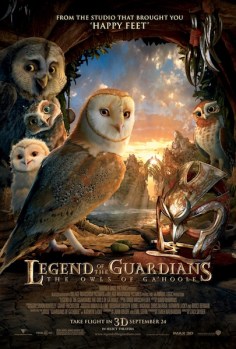
Legend of the Guardians: The Owls of Ga’Hoole (2010)

2016 #104
Zack Snyder | 93 mins | streaming (HD) | 16:9 | USA & Australia / English | PG / PG

Legend of the GuardiansLegend of the Guardians is pretty odd.

It’s an action-fantasy movie… starring owls. It’s animated, but in a dark, realistic way (think Rango with less cartoonishness and less light). It’s based on a kids’ book series… but directed by Zack Snyder, clearly reining in his R-rated impulses (violence occurs just off screen, leading to “did that happen?” confusion). The story has been relocated to Australia, the cast filled with well-known antipodean actors and their accents.

The cumulative effect is kind of surreal, retaining too much Snyderness to function properly as the kind of movie it wants to — perhaps should — be.

3 out of 5

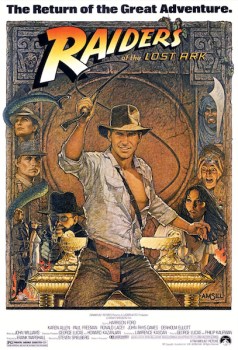
Raiders of the Lost Ark (1981)

100 Films’ 100 Favourites #72

The Return of the Great Adventure.

Also Known As: Indiana Jones and the Raiders of the Lost Ark

Country: USA
Language: English (and German, Hebrew, Spanish, Arabic & Nepali)
Runtime: 115 minutes
BBFC: A (1981) | PG (1987)
MPAA: PG

Original Release: 12th June 1981
UK Release: 30th July 1981
First Seen: VHS, c.1991

Stars
Harrison Ford (Star Wars, Witness)
Karen Allen (Animal House, Starman)
Paul Freeman (The Long Good Friday, Mighty Morphin Power Rangers: The Movie)
Ronald Lacey (Take a Girl Like You, Red Sonja)
John Rhys-Davies (The Naked Civil Servant, The Lord of the Rings)

Director
Steven Spielberg (E.T. the Extra-Terrestrial, The Adventures of Tintin: The Secret of the Unicorn)

Screenwriter
Lawrence Kasdan (The Empire Strikes Back, The Bodyguard)

Story by
George Lucas (THX 1138, Return of the Jedi)
Philip Kaufman (The Outlaw Josey Wales, The Right Stuff)

The Story
1936: adventurer Indiana Jones is hired by the US Army to retrieve the mythical Ark of the Covenant, which they believe is on the verge of being uncovered in Egypt, before the Nazis can get their grubby mitts on it.

Our Hero
Professor of archeology, expert on the occult, and obtainer of rare antiquities, Indiana Jones. Good with a whip; not good with snakes.

Our Villains
Dr. René Belloq, essentially the evil Indy: a fellow archeologist with fewer scruples, who often takes credit for Indy’s hard work and is now in bed with the Nazis. They’re most memorably represented by creepy Gestapo agent Toht, played by Ronald Lacey, who was cast because he reminded Spielberg of Peter Lorre.

Best Supporting Character
The daughter of Indy’s mentor, and his one-time love, Marion Ravenwood, who’s roped in because she happens to possess an artefact with a clue to the Ark’s location. Feisty and capable of holding her own (some of the time, anyway), it’s a shame she didn’t appear in the initial sequels — at Lucas’ insistence, apparently (he also kept her out of the spin-off novels). She eventually returns in Kingdom of the Crystal Skull, the only character from the first three films to be brought back for that adventure (besides Indy, obv.)

Memorable Quote
Sallah: “Indy, why does the floor move?”
Indiana: “Give me your torch… Snakes. Why’d it have to be snakes?”

Memorable Scene
Goodness, where do we start? Well, how about the start! Having made his way safely through a boobytrapped cave, Indy switches a bag of sand for the idol he’s come to retrieve. Unfortunately the trap is not fooled, and Indy has to run out as the place collapses around him and all the traps are triggered — including, most famously, a giant rolling boulder.

Write the Theme Tune…
It’s only one of the greatest movie main themes of all time. Composed by John Williams (of course) it’s technically called The Raiders March, and is a combination of two ideas Williams wrote for Jones’ theme that Spielberg suggested be put together to make one piece.

Technical Wizardry
The film is naturally packed with stunts, one of the most memorable being when Indy is dragged under and out behind a moving truck. To achieve it safely, more clearance was created under the truck by constructing one that was higher than normal and digging out the centre of the road. The shot was filmed at 20fps, lower than the standard 24, so that when played back the truck appeared to be moving faster. The feat was performed by stuntman Terry Leonard, but Harrison Ford was actually dragged behind the truck for some shots. When asked if he was worried, Ford replied, “No. If it really was dangerous, they would have filmed more of the movie first.”

Truly Special Effect
The climax, when the Ark is opened, was a field day for ILM. Techniques used include “animation, a woman to portray a beautiful spirit’s face, rod puppet spirits moved through water to convey a sense of floating, a matte painting of the island, and cloud tank effects to portray clouds.” Plus the villains’ heads melt (a gelatine and plaster model exposed to a heat lamp), collapse (a hollow model with the air sucked out), and explode (which nearly landed the film with an R rating).

Making of
Have you heard the one about the scheduled sword fight and everyone being ill? You have? Oh, okay then.

Next time…
The film was a massive success, so has spawned tonnes of media. Primarily, three direct sequel films, with a fifth set for 2019. Then there’s the three-season TV series The Young Indiana Jones Chronicles, 13 adult novels, 33 Young Indiana Jones novels, 11 “choose your own adventure”-style books, eight German novels (which have never been translated into English), numerous comic books, and 19 computer games, including nine with original storylines and two Lego Indiana Jones games. Also, a stunt show at Walt Disney World in Florida based on Raiders that has been running for 27 years. Whew!

Awards
5 Oscars (Editing, Art Direction-Set Decoration, Sound, Visual Effects, Special Achievement in Sound Effects Editing)
4 Oscar nominations (Picture, Director, Cinematography, Score)
1 BAFTA (Production Design/Art Direction)
6 BAFTA nominations (Film, Supporting Artist (Denholm Elliott), Cinematography, Editing, Music, Sound)
7 Saturn Awards (Fantasy Film, Actor (Harrison Ford), Actress (Karen Allen), Director, Writing, Music, Special Effects)
2 Saturn nominations (Supporting Actor (Paul Freeman), Costumes)
Won the Hugo for Best Dramatic Presentation

What the Critics Said
“Yes, it’s as entertaining as you have heard. Maybe more so. Raiders of the Lost Ark is, in fact, about as entertaining as a commercial movie can be. What is it? An adventure film that plays like an old-time 12-part serial that you see all at once, instead of Saturday-to-Saturday. It’s a modern Thief of Baghdad. It’s the kind of movie that first got you excited about movies when you were a kid. (Translation for today’s children: It’s better than anything on TV.)” — Gene Siskel, Chicago Tribune

Score: 94%

What the Public Say
“Spielberg and George Lucas had, in the same year, rewritten the rules of the science fiction genre; Lucas with Star Wars and Spielberg with Close Encounters of the Third Kind, but what could they do together? Greatness, it turns out. Their contribution: Raiders of the Lost Ark, one of the best, most exciting, most brilliantly written action movies of all time. It’s fun, it has a great sense of wonder and adventure. It’s scary, it’s bloody, it’s violent but you never come away feeling unclean. It has a hero, Indiana Jones, who is fallible but not a wimp. […] I can talk all day about Raiders of the Lost Ark, but I must simply conclude that the movie is just plain fun” — Jerry, armchaircinema

Verdict

George Lucas and Steven Spielberg teamed up for the first time here, recycled elements from movies beloved in their youth, and produced something new and exciting that is still a reference point for blockbusters 35 years later. (We’re getting homages to homages now, aren’t we? Weird.) It’s pretty much a perfect adventure movie: relentlessly paced, packed with action, lightened with humour, full of likeable heroes, who are brave and competent but also a little bit flawed, and hissable villains, with scene after scene of imaginative situations and fabulously staged derring-do. It’s perfectly distilled pulp adventure, and pure cinematic entertainment.

Many Bothans… died to bring us #73.

Pirates of the Caribbean: The Curse of the Black Pearl (2003)

100 Films’ 100 Favourites #70

Prepare to be blown out of the water.

Country: USA
Language: English
Runtime: 143 minutes
BBFC: 12A
MPAA: PG-13

Original Release: 9th July 2003 (USA)
UK Release: 8th August 2003
First Seen: cinema, August 2003

Stars
Johnny Depp (Edward Scissorhands, Finding Neverland)
Orlando Bloom (The Lord of the Rings, Troy)
Keira Knightley (Bend It Like Beckham, Pride & Prejudice)
Geoffrey Rush (Quills, The King’s Speech)

Director
Gore Verbinski (The Ring, The Lone Ranger)

Screenwriters
Ted Elliott (Aladdin, Pirates of the Caribbean: On Stranger Tides)
Terry Rossio (Small Soldiers, Pirates of the Caribbean: Dead Man’s Chest)

Story by
Ted Elliott (Treasure Planet, National Treasure: Book of Secrets)
Terry Rossio (The Mask of Zorro, The Lone Ranger)
Stuart Beattie (Collateral, 30 Days of Night)
Jay Wolpert (The Count of Monte Cristo)

Based on
Pirates of the Caribbean, a theme park ride at Disneyland.

The Story
When feared pirate ship the Black Pearl lays siege to the British outpost Port Royal and kidnaps the governor’s daughter, Elizabeth Swann, her childhood friend (and secret admirer) Will Turner teams up with notorious pirate Captain Jack Sparrow to rescue her. Jack has his own axe to grind with the crew of the Pearl, who are afflicted by a supernatural curse that they believe Elizabeth may be the key to breaking.

Our Heroes
Will Turner, a humble blacksmith and self-taught expert swordsman. Doesn’t like pirates, but is forced to team up with one. That would be self-proclaimed captain Jack Sparrow, who is apparently a bumbling buffoon prone to wild exaggeration about his exploits, but is actually strangely competent and honourable. Not to forget Elizabeth Swann, the governor’s daughter who is more strong-minded and capable than women of her time are supposed to be. Hates corsets, too.

Our Villains
Captain Barbossa (a villain of Rickman-esque likeability) and his undead pirate crew just want to lift their terrible curse, but, being pirates, tend to go about that mission with excessive violence.

Best Supporting Character
Two of Barbossa’s crew, Ragetti (Mackenzie Crook) and Pintel (Lee Arenberg), who make a comedy double act. Or maybe triple act, with Ragetti’s wooden eye.

Memorable Quote
“You best start believing in ghost stories, Miss Turner… you’re in one!” — Barbossa

Memorable Scene
Barbossa orders his crew to attack a British Navy ship from underwater. As the moon emerges from behind a cloud to reveal the true skeletal form of the undead crew, they march along the seabed to their target…

Memorable Music
Originally set to be scored by Alan Silvestri, who’d worked with director Gore Verbinski on a couple of previous movies, the composer fell out with producer Jerry Bruckheimer and it was decided to go with Hans Zimmer instead. Unfortunately Zimmer was busy, but he pointed them in the direction of newer composer Klaus Badelt, one of Zimmer’s mentees at his company Media Ventures. Presumably Badelt struggled, because Zimmer ended up drafting several of the score’s main themes in one night, and a team of additional composers (anywhere from seven to fifteen, depending which source you listen to) was brought in to help finish it off. (One of them, incidentally, was Ramin Djawadi, who has since gone on to be noticed for Game of Thrones.) The final score is credited to Badelt, but the soundtrack’s most famous cue — He’s a Pirate — is actually a development of a piece Zimmer wrote for forgotten Wesley Snipes action-thriller Drop Zone. You can’t really argue a score created like that has any artistic integrity, but it’s fun and exciting, and He’s a Pirate is a really, really good piratical action theme.

Truly Special Effect
All of the CGI was strikingly photo-real at the time, the main showcase being the skeletal pirates, especially as they switched from being normal humans to skeletons (and back again) as they moved in and out of the moonlight. I guess it’s aged a little now, but, to be fair, it is 13 years old. Couple this with the even-better work featured in the sequels and it shows ILM are still at the forefront of the industry.

Making of
There’s always been something of a tonal similarity between the Pirates films and the Monkey Island series of computer games, which turned out to be more than coincidence when it eventually emerged that, just a couple of years before Pirates, screenwriter Ted Elliott had been working on a Monkey Island film for Steven Spielberg which never came to fruition. As if to compound the point, Monkey Island creator Ron Gilbert revealed in 2004 that the original game was inspired by the novel On Stranger Tides, and in 2007 Disney bought the rights to the novel and used its title and bits of its plot for the fourth Pirates film.

Next time…
Initially followed by a pair of shot-back-to-back trilogy-forming sequels, their cumulative success turned it into a franchise: a fourth movie followed in 2011, with a fifth shot last year for release next summer. Also inspired a host of piratical TV series, and Disney to attempt various other ride adaptations and genre mash-ups (see: The Lone Ranger).

Awards
5 Oscar nominations (Actor (Johnny Depp), Makeup, Sound Mixing, Sound Editing, Visual Effects)
1 BAFTA (Make Up/Hair)
4 BAFTA nominations (Actor (Johnny Depp), Costume Design, Sound, Visual Effects)
1 Saturn Award (Costumes)
10 Saturn nominations (Fantasy Film, Actor (Johnny Depp), Supporting Actor (Geoffrey Rush), Supporting Actress (Keira Knightley), Director, Music, Make Up, Special Effects, DVD Special Edition, Genre Face of the Future (Keira Knightley))
2 MTV Movie Awards Mexico (Sexiest Hero (Orlando Bloom), Best Look (Johnny Depp))
1 World Stunt Award (Best Fight for the blacksmith shop sword fight)
Nominated for the Hugo for Best Dramatic Presentation Long Form

What the Critics Said
“it’s Johnny Depp’s inspired turn as Captain Jack Sparrow that really marks the spot. Depp, arguing that pirates were the rock stars of their day, models his entire performance on Keith Richards of the Rolling Stones: it’s there in every slurred vowel and every drug-fried wiggle of the head. There’s an endearing dignity to Sparrow’s hunger for fame. “You are, without doubt, the worst pirate I’ve heard of,” says one British officer. “Yes,” replies Jack, “but you have heard of me.” Gloriously over-the-top, this performance is pitched only as high as the film’s fun factor itself. In terms of physical precision and verbal delivery, it’s a masterclass in comedy acting.” — Alan Morrison, Empire

Score: 79%

What the Public Say
“manages the weird assignment of capturing the sensibility of a theme park boat ride inside a Spielbergian adventure romp. This is all the things popcorn movies should be: fun, energetic, simple enough to quickly grasp but full enough to not seem stupid, anchored by strong personalities among all the side characters (Geoffrey Rush’s florid villain is a great bit of acting in its own right, unfairly overshadowed by Depp), and a cohesive world with a sense of history and depth.” — Tim Brayton, Antagony & Ecstasy

Verdict

It seemed like such a terrible idea when it was first announced: films based on Disney theme park rides? What the hell were they thinking?! The other movies produced by this initiative turned out to be as terrible as everyone expected, but somehow Pirates of the Caribbean — which also had to contend with the fact that cinematic pirates were deeply unpopular after the studio-killing disaster of CutThroat Island eight years before — wasn’t. Not just “not bad”, either, but an exciting, humorous, creepy, fun movie. That the sequels haven’t lived up to it is disappointing, but the first still stands as a near-perfect example of big-budget swashbuckling entertainment — it’s basically the dictionary definition of a summer blockbuster.

#71 goes to show… you never can tell.

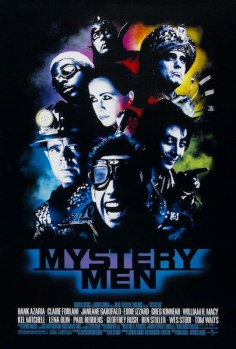
Mystery Men (1999)

100 Films’ 100 Favourites #65

They’re not your average superheroes.

Country: USA
Language: English
Runtime: 120 minutes
BBFC: PG (uncut, 1999) | PG (cut on video, 2000)
MPAA: PG-13

Original Release: 6th August 1999
UK Release: 26th December 1999
First Seen: DVD, c.2000

Stars
Ben Stiller (There’s Something About Mary, Night at the Museum)
Hank Azaria (Grosse Pointe Blank, Night at the Museum: Battle of the Smithsonian)
William H. Macy (Fargo, Magnolia)
Geoffrey Rush (Shine, Pirates of the Caribbean: The Curse of the Black Pearl)

Director
Kinka Usher

Screenwriter
Neil Cuthbert (Hocus Pocus, The Adventures of Pluto Nash)

Based on
The Mysterymen, a superhero team originally appearing in Flaming Carrot Comics, a comic book by Bob Burden.

The Story
When supervillain Casanova Frankenstein is released from prison, wannabe superhero Mr Furious overhears his plan to destroy reality. With the city’s genuine protector out of action, Mr Furious and his chums the Shoveler and the Blue Raja recruit a gang of other wannabes to defeat Frankenstein.

Our Heroes
They’re not your classic heroes, they’re the other guys: a ragtag gaggle of people with “powers”, like the Shoveler, who fights with a shovel, or Mr. Furious, who gets really angry, or the Blue Raja, who throws cutlery with great accuracy. These founding three are joined by Invisible Boy (Kel Mitchell), the Spleen (Paul Reubens), and the Bowler (Janeane Garofalo), and recruit the mysterious Sphinx (Wes Studi) to train them.

Our Villain
Criminally insane genius Casanova Frankenstein. Released from prison so that genuine superhero Captain Amazing had someone to fight, Frankenstein manages to capture his nemesis and plots to unleash the reality-bending Psycho-frakulator on the world — with only our inept heroes to stand in his way.

Best Supporting Character
Captain Amazing! Played by Greg Kinnear, the resident superhero of Champion City is too darn good at his job. With no crime left to fight, his corporate sponsors are pulling their funding — unless he can use his alter ego, influential billionaire Lance Hunt, to get one of his adversaries released…

Memorable Quote
The Shoveler: “If we had a billionaire like Lance Hunt as our benefactor…”
Mr. Furious: “That’s because Lance Hunt is Captain Amazing!”
The Shoveler: “Oh, here we go… Don’t start that again. Lance Hunt wears glasses, Captain Amazing doesn’t wear glasses.”
Mr. Furious: “He takes them off when he transforms.”
The Shoveler: “That doesn’t make any sense, he wouldn’t be able to see!”

Quote Most Likely To Be Used in Everyday Conversation
“We are number one. All others are number two, or lower.” — The Sphinx

Memorable Scene
Mr Furious, the Blue Raja, and the Shoveler gather at the latter’s house (despite his wife’s protestations) to audition potential team members. Cue a stream of daft and/or outrageous ideas for superheroes, including the Reverse Psychologist, Squeegeeman, and PMS Avenger.

Making of
For some reason a rumour has persistently done the rounds that Mystery Men was actually directed by Tim Burton, and Kinka Usher was just an alias. Goodness knows why. Usher is in fact a commercials director, and went back to that world after his miserable experience here.

Awards
1 Saturn nomination (Costumes)
1 Teen Choice Awards nomination (Choice Hissy Fit — it lost to Hanging Up. If you have any idea what Hanging Up is, your memory’s better than mine.)

What the Critics Said
“This slapstick and effects vehicle depends on poker-faced performances, production design that enhances the story partly because it doesn’t have to compensate for it, and a premise that provides seemingly inexhaustible opportunities for pratfalls and clever lines. The characters have been designed to make fun of themselves, disguising the craft of writer Neil Cuthbert and director Kinka Usher in getting us to laugh at them.” — Lisa Alspector, Chicago Reader

Score: 60%

What the Public Say
“this movie is incredibly underrated because it parodies other Superhero movies unbelievably well, and no one had the chance to see that 15 years ago. […] It does what any good parody does, by taking the expected and turning it on its head. How do other Superhero groups form? The government decides it’s a good idea to have a Supergroup. Or they all meet in some intergalactic prison. Or they form to protect the world from the Legion of Doom. None of them hold a barbecue. None of them have a female team member who kicks ass, speaks her mind, angers everyone, and wears real clothing. The movie takes every expected and turns it on its ass […] I believe if it came out this summer, or even in the fall, it would have a much bigger and better reaction. People would watch it and instinctively compare it to the other Superhero super groups they’re familiar with. It would resonate better now, and fans would have a chance to really laugh at the ridiculousness of Superheroes.” — Maria Spiridigliozzi

Verdict

Was Mystery Men ahead of its time? Coming out in 1999, it was a year ahead of the superhero revival that X-Men kickstarted. Or maybe it was behind its time? Visually, it’s on a par with other ’90s superhero efforts like Batman Forever (and I don’t mean that derogatorily). Either way, it’s an undervalued comedy. The ensemble cast are all perfect — I didn’t even have room above to mention Tom Waits as mad inventor Dr A. Heller, Eddie Izzard as henchman Tony P., or Claire Forlani as the love interest. The material they have to deliver is both witty and suitably silly, and it incorporates superhero tropes and references without relying on them. In the sub-subgenre of superhero comedies, all others are number two, or lower.

#66 never happened… to the other fella.