
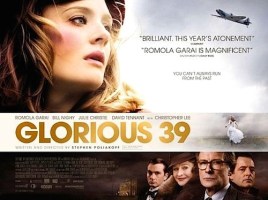
 “This year’s Atonement,” proclaims the poster, and DVD cover, and probably much more of the marketing for Stephen Poliakoff’s first venture into the cinema for 12 years, in the process probably explaining why he’s made (or “how he found the funding to make”) the return-jump from exalted TV auteur to cinematic hopeful: the titular “39” means “1939”, the year World War II began. Throw in a plot that concerns the aristocracy and an ‘English rose’-type to stare thoughtfully open-mouthed into the distance on all the posters, and Poliakoff’s film is automatically lumped in the same ballpark as Joe Wright’s Ian McEwan adaptation. Only this one comes light on awards nominations.
I was going to add “light on star power” too, but whereas Atonement could only offer Keira Knightley and a still-rising James McAvoy, Glorious 39 offers a host of above-the-title names: trailing behind Atonement‘s own Romola Garai we find Bill Nighy, Julie Christie, David Tennant, Jenny Agutter, Jeremy Northam and Christopher Lee, not to mention a host of other recognisable British faces. If the combined cult might of Mr.s Tennant and Lee wasn’t enough to make this a hit, nothing could be. Some quite critical reviews obviously didn’t help.
 I, however, thought it was rather good. I can see what turned some people off though. It’s a thriller, but it moves leisurely, especially early on. It’s also quite elliptical at times, not so much requiring you to pay attention as put the pieces together yourself. Plus it lacks a grand finale in which the hero triumphs, or at least loses in dramatic style — it’s quieter than that. Yet I liked the ending, finding it triumphant in a whole other way. But I won’t go spoiling that here.
It’s very much a Poliakoff work, I think. Perhaps that catches some film critics unawares: as noted, he worked solely in TV for over a decade before this, albeit in an auteur mode, writing and directing his own TV movies and miniseries, and perhaps this means he passed them by. But then that’s just about managing expectations. It’s not a melodramatic epic love story like Atonement, nor is it a pacey wartime thriller like… no example comes readily to mind, actually. Can someone please make a pacey wartime thriller? Or tell me which I’ve missed/forgotten?
By taking its time it creates a mood of creeping terror and dread; of an oppressive conspiracy that our hero, who’s just a fairly ordinary girl, has no chance of overturning — if it’s even real, and if she can find details about it if it is. And, by extension, by taking its time it’s being A Bit Different, and that means you can never be sure where it’s going to go; never be sure who’s on the side of the angels and who of the devils; of who is reliable and what is really happening; of who will survive.  What’s better in a thriller than not actually knowing what will come? There should be twists in this genre — genuine twists when possible, not a stock array of “small character played by famous actor turns out to be vitally important” or ” good guy is actually bad guy” or what have you — and Glorious 39, with its balanced uncertainty, pulls some of those off.
It’s also well written, prettily shot, and expertly performed by that array of quality performers. I don’t recall a weak link.
Ignore the critics, ignore the comparisons to Atonement, and give Glorious 39 a chance on its own terms. I very much liked it.

* I own Glorious 39 on DVD, but watched it on TV when it premiered because it was shown (and available on iPlayer) in HD. There is no UK Blu-ray of the film, but I believe one is available in America. Such a fate seems to have befallen several British films of late — Easy Virtue is another example that quickly comes to mind. ^
 Half a decade ago I would surely have hated this film. I had no love for animals in general, certainly not pets. But in the past few years I’ve become a certified canine convert, and watching it now I loved it.
 but to be honest I could’ve done without some of the meagre scenes we did get, never mind more of them. Supposedly character building stuff like the teeny party to get to know future classmates — bleurgh. Luckily, such things are brief. And someone wanted more of Lisa Kudrow and Kevin Dillon’s failed-rocker foster parent characters? I’d rather have had less, thanks.
 a scruffy white terrier with an exceptional ability to sniff out food (featured in every picture, because… aww, just look at him!), but then he reminded me so much of my own dog that I may well be biased. There’s all sorts of mutts here for pretty much every kind of dog lover.
 Judged as simply a movie, on its story and its characters and all that regular palaver, I can see why Hotel for Dogs attracts so many poor scores (it has an exceptionally low
  I’ve
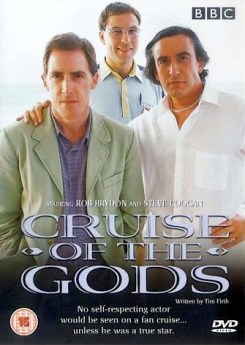
I’ve 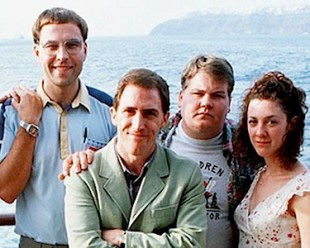 Though the film pokes fun (fairly good-naturedly) at sci-fi obsessives, the underlying story here is about a man overshadowed by his past. In this Brydon gives a strong performance — I think he’s a better actor than he’s normally given credit for — and he’s ably supported by Corden in particular, though to say what gives his role such quality might spoil a twist. He’s another one who’s actually a very good actor, but it gets hidden beneath a public persona that led to such dross as that sketch show with Mathew Horne.
 without ever realising all those disparate things were penned by the same human being. Poor writers.) Lowney, meanwhile, has stuck to TV, with episodes of
 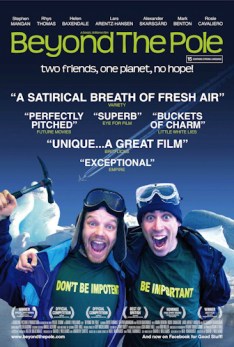 Adapted from a cult Radio 4 series, Beyond the Pole is a British mockumentary about “the first carbon neutral, vegetarian and organic expedition ever to attempt the North Pole”, starring Stephen Mangan Off
 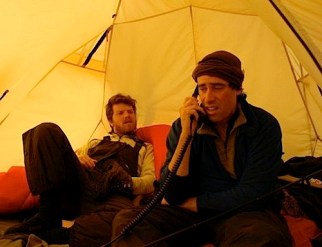 It’s also impressively realised. Its apparent low budget led me to assume we’d, a) see very little of the actual trip, and b) what we did see would be all inside-a-tent and green-screened. But no, it was really shot on floating sea ice off the coast of Greenland, and it makes for a highly effective polar landscape. Good work, filmmakers.
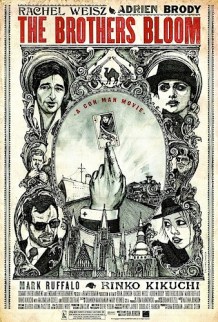 “Crikey, time flies!” I thought when I compiled this listing and saw that The Brothers Bloom was released in 2008. Somehow it felt like it was only last year, not three (or, if at the start of 2008, closer to four) years ago.
 but then the job of a trailer is to sell you a film, so if the end result doesn’t match it 100% is that a failing? How are you meant to summarise the entire tone of a film in a two-minute spoiler-free sales burst anyway? That dilemma is emphasised in this case because it’s the opening that feels least like the trailer. I mean, the pre-titles is kinda quirky-fun, but then it gets a little serious and slow, and later — perhaps half-an-hour or three-quarters of an hour in — you get to all the stuff the trailer was selling. And then the last act is back to something more unusually — or, if we’re to be unkind, unevenly — paced and toned. I can imagine the marketing meetings for this were a struggle…
 Perhaps the problem for others was that the ending doesn’t quite spell everything out. I’m certain every question you might have is answered, more or less, but it doesn’t lead you by the hand back over the film pointing everything out, as many twist-ending-ed films do. Part of me appreciates this assumption of intelligence; part of me would like it all handily explained so I don’t sit here wondering it for myself. I don’t feel completely lump-headed not wanting to do that — there’s no Deeper Meaning or Philosophical Insight gained from sorting this out, I don’t believe; just an understanding of who was being conned and when, and who knew what and why.
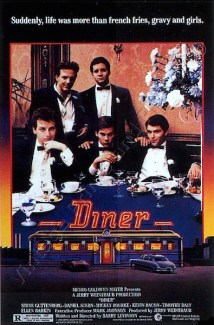 Baltimore, the week between Christmas and New Year, 1959: the lives of six friends in the run-up to one of them getting married, during which period they spend surprisingly little time at the titular establishment.
 There are no big turning points or revelations or developments for any of these characters. One is in trouble thanks to deep gambling debts, but there’s the equivalent of a magic wand that wipes them all out; another is permanently drunk with serious family issues, but neither of those go anywhere; another pines for a girl he barely sees and has never been with — well, except for one significant night — but by the end I’m not sure if they were going to get together or leave it be or… what. Similar things could be said for all the others.
 Like I said, this kind of storytelling works for some viewers and not for others. If it hadn’t been for the pat ending of that gambling debt plot, or the non-development of some other promising threads, maybe I would have liked it more. As it stands, Diner certainly has its moments, but maybe not enough of them for me.
 Holiday stars Cary Grant as an everyday chap who falls in love with a girl who, it turns out, is a wealthy heiress type… but who it also turns out may not share his views on the future. Her kooky sister, played by Katharine Hepburn, on the other hand…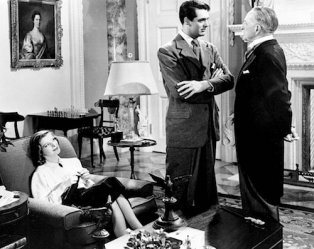

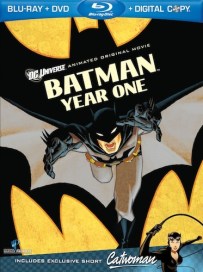 DC Comics’ latest direct-to-DVD animated movie is an adaptation of Frank Miller and David Mazzucchelli’s seminal 1987 Batman story, acclaimed as one of the greatest graphic novels of all time, and one of those that is often credited with helping the comic book medium grow up in the late ’80s.
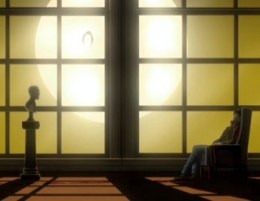 As with the comic, this is a very down-to-Earth version of the Batman story. It’s even less sci-fi-y than Chris Nolan’s much-praised realistic films, in fact. There’s no Batmobile, no Batcave, no Bat signal, only a few gadgets (and those that are used are fully plausible), no cartoonish super-villains… This Gotham is a city where crime comes from gangsters, drug dealers, muggers and a thoroughly corrupt police force, and that’s what Batman sets out to fight. As in the Nolan films, the costumed foes will come later, a response to the Bat himself. It’s not afraid to take its time telling this story either. Especially at the start, the pace is very measured — there’s no rush to action or to Batman, but instead a slow build of character and drama. Some may see this as a flaw — those after a Batman Action Movie, largely — but it sets the tone for what is a more character-driven tale.
 Cranston, given easily the fullest character, gives the best performance too. Star of
 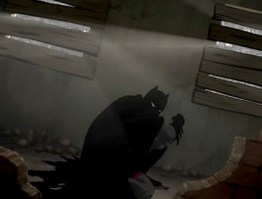 Indeed, you can tell Nolan cherry-picked most of Year One’s best scenes for his version, because they’re generally speaking the ones that shine here too. (It makes me want to watch Begins again to see just how much of this made it in there.)
 Unfortunately Batman: Year One has arrived at the party a bit too late to be the definitive screen telling of Batman’s origin — by taking the best bits of Miller & Mazzucchelli’s tale and expanding it with some work of their own, Chris Nolan & friends take that title. But as a film in its own right, Year One is largely successful. Children (or childish fans) seeking animated Batman thrills may be disappointed by its slower pace and focus on character, because this is solid adult-focused entertainment.
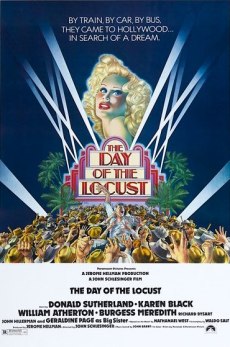 Adapted from the novel by Nathanael West, The Day of the Locust is a slightly scrappy film about the seedy underside of Hollywood’s golden age. The plot is neither here nor there in many respects — the film is about the grotesques who are attracted to Hollywood, and that being exactly what it feeds on. The bizarre, surreal ending definitely makes more sense if you’re already thinking about the film in this way.
 Also brilliantly staged is the collapse of a Waterloo battle set. Appropriate as it’s one of the novel’s most memorable moments.
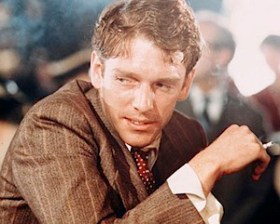 The Day of the Locust may be a mess, or it may be a flawed masterpiece. It may very well be both. For much of it’s running time it pootled along at 3 stars, pushing down toward 2 the more diluted it began to feel. But seeing the completion of Donald Sutherland’s performance in the final scenes, plus the way those scenes seem to draw together the whole film, revealing and fulfilling themes I hadn’t even noticed developing until that point, in a spectacular orgy of apocalyptic violence… well, the stars suddenly ratchet back up.
 If The Locket is known for anything, it’s for a plot structure that places flashbacks within flashbacks within flashbacks. There’s always the potential for good fun in that kind of structure, though it’s usually the kind of thing that sounds more complicated than it is — the straightforward ‘concentric circle’ arrangement here makes them a doddle to follow; so straightforward, in fact, that it would be easy to miss how it was so structured.
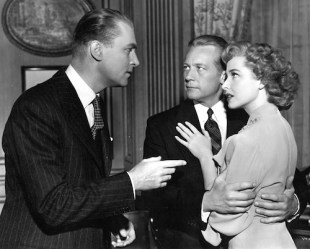 It might have been more interesting if the doctor had been making it all up; or if it had been left open ended, with Nancy set to ruin someone else’s life. That could well have worked, leaving the audience to come to its own conclusions, etc. Considering the film’s age, however, I’m sure there were demands we see this thief and murderess brought to justice.
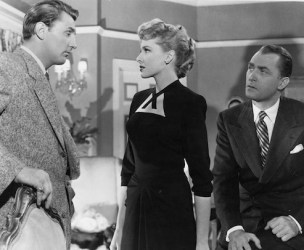 manipulative criminal it seemed all along, but instead a damaged individual doing these things involuntarily. This isn’t the wholly nonsensical part of the film — her apparently-accidental marriage to the son of the house she grew up in would be that bit — but I preferred it when she was just a villain. Psychologically it holds relevance, but at the same time she’s rather taken it to extremes. Or maybe I was just fed up by then.
