100 Films’ 100 Favourites #63

Truth — Beauty — Freedom — Love

Country: USA & Australia
Language: English
Runtime: 128 minutes
BBFC: 12
MPAA: PG-13
Original Release: 16th May 2001 (L.A., USA)
UK Release: 7th September 2001
First Seen: DVD, 2002
Stars
Nicole Kidman (Eyes Wide Shut, The Hours)
Ewan McGregor (Trainspotting, Star Wars – Episode III: Revenge of the Sith)
John Leguizamo (Super Mario Bros., Land of the Dead)
Jim Broadbent (Iris, Harry Potter and the Half-Blood Prince)
Richard Roxburgh (Mission: Impossible II, Van Helsing)
Director
Baz Luhrmann (Romeo + Juliet, Australia)
Screenwriters
Baz Luhrmann (Strictly Ballroom, The Great Gatsby)
Craig Pearce (Romeo + Juliet, The Death and Life of Charlie St. Cloud)
Music by
Craig Armstrong (Love Actually, The Great Gatsby)
The Story
Paris, 1899: while pitching a show to the owner of the Moulin Rouge nightclub, writer Christian falls for the venue’s leading lady, Satine. Despite her mutual attraction, Satine has been promised to the Duke of Monroth in exchange for his investment in the cabaret. As preparations for the show continue, Christian and Satine’s love blossoms nonetheless. Will true love conquer commerce?
Our Heroes
Christian is just a poor, miserable poet living among Bohemians in turn-of-the-century Paris, until he meets and falls in love with Satine, the Moulin Rouge’s star act and courtesan.
Our Villain
Unfortunately for Christian, Satine has been promised to the Duke of Monroth, a nasty piece of work who will have his way or have Christian killed.
Best Supporting Character
The Moulin Rouge’s exuberant owner, Harold Zidler, is prepared to essentially sell Satine for investment in his establishment. Which makes him sound like a horrible so-and-so, but actually he cares for her deeply.
Memorable Quote
“The greatest thing you’ll ever learn is just to love and be loved in return.” — Christian
Memorable Scene
Zidler convinces Satine that she must tell Christian she doesn’t love him, to save his life from the murderous intentions of the Duke. As she leaves the Moulin Rouge to break Christian’s heart, Zidler delivers an emotional rendition of Queen’s The Show Must Go On.
Best Song
The film is packed with interesting reinterpretations of modern pop hits. Personally, I love a reimagined cover version, so picking just one is bloody tough. There are a couple of mash-ups that work particularly well: the big number when Christian & friends first arrive at the eponymous establishment, which crashes Lady Marmalade against Smells Like Teen Spirit; and the Elephant Love Medley, which wittily re-appropriates lyrics from a gaggle of love songs (eight, to be precise) into one number. However, the best of all may be a reimagining of the Police’s Roxanne as a dramatic dance number, El Tango de Roxanne.
Technical Wizardry
One of the most controversial aspects of what is a love-it-or-hate-it film anyway is its editing style. Eschewing the familiar trappings of Hollywood musicals, Luhrmann has the entire film shot (by Donald M. McAlpine) and edited (by Jill Bilcock) as if it were a modern music video. In total, there are just shy of 3,600 shots in the film (according to this analysis), which gives it an Average Shot Length (ASL) of just 2 seconds. For comparison, the mean ASL for US films released the same year was around 5 seconds. Even now, over a decade later, the ASL for English-language films sits at about 2.5 seconds.
Making of
It’s now quite well known that musicals need to contain a brand-new song to be eligible for the Best Song Oscar. Obviously this is normally relevant to adaptations of stage musicals, but naturally it applies to Moulin Rouge, too. The film’s one new song is Come What May, but it was ruled ineligible for the Oscar because it was actually written for Luhrmann’s Romeo + Juliet, even though it wasn’t used in that film. The music arm of the Academy really are a tricky bunch.
Previously on…
Moulin Rouge is the third part of Baz Luhrmann’s thematically-linked Red Curtain Trilogy, following Strictly Ballroom and Romeo + Juliet.
Awards
Nominated for the Palme d’Or
2 Oscars (Art Direction-Set Decoration, Costume Design)
6 Oscar nominations (Picture, Actress (Nicole Kidman), Cinematography, Editing, Makeup, Sound)
3 BAFTAs (Supporting Actor (Jim Broadbent), Music, Sound)
9 BAFTA nominations (Film, Director, Original Screenplay, Cinematography, Production Design, Costume Design, Editing, Visual Effects, Make Up/Hair)
5 Australian Film Institute (AFI) awards (Cinematography, Editing, Sound, Costume Design, Production Design)
5 AFI nominations (Film, Director, Actor (Ewan McGregor), Actress (Nicole Kidman), Supporting Actor (Richard Roxburgh))
3 World Soundtrack Awards (including Most Creative Use of Existing Material on a Soundtrack)
2 World Soundtrack Awards nominations (including Best Original Score of the Year Not Released on an Album)
What the Critics Said
“The time, the effort and the sweat are all up there on the screen in this opulent, no-holds-barred and multilayered movie. [It] is wrapped up in such an audacious mix of traditional and contemporary song — including David Bowie, Elton John, Madonna and Nirvana — and staged with a near-insane visual ambition, you will either fall in love with every camp flourish, or find yourself exhausted after 20 minutes. It’s a singular achievement either way.” — Andrew Collins, Radio Times
What the Public Say
“one of the great movie spectacles of this generation, an undertaking of vast scope made all the more fascinating by how it transforms commonplace undercurrents into rich sensations […] There is a sense that these concepts are simplified for the sake of basic comprehension, but the picture doesn’t so much strip them of complexities as it penetrates to the core of their meaning. That creates a scenario where the story simply observes the indulgences that manifest in the rhythms, the music, the dance moves, the vocals, the dialogue, the facial expressions and the daydreams that inhabit the characters. It seeks no more profound a purpose. Some find the implication startlingly straightforward in an endeavor where the technical achievements are such a subversive triumph, but I applaud it; how frequently has any ambitious Hollywood production been willing to see past the varnish of a formula and deal directly with the ideals[?]” — David M. Keyes, Cinemaphile
Verdict
These days there are plenty of musicals appearing on the big screen, and they’re often contending for the top gongs come awards season. This wasn’t the case back in 2001 — Moulin Rouge, divisive as it is, changed all that (it was the first musical nominated for the Best Picture Oscar in a decade, and the previous one was a Disney animation). Baz Luhrmann’s injection of modern MTV style gave the genre a kick up the arse, which isn’t necessarily to the taste of classic musical fans but certainly brought the genre renewed mainstream attention. Mixing in his theatrical storytelling, melodramatic emotions, and vibrant and extravagant costumes and sets, Luhrmann created a heady film designed to give modern audiences a sense of how visiting the Moulin Rouge would’ve felt in 1899 (well, it’s certainly not the literal experience!) It’s clearly not a film that meets all tastes, but if you’re on its wavelength then it’s magnificent.

The first half of Baz Luhrmann’s Netflix series, The Get Down, was released on Friday, which is a neat coincidence.
#64 will be… a lot of fuss over very little.

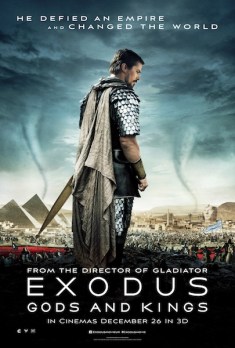 For his most recent historical epic, Ridley Scott tackles the story of Moses. It’s easy to nitpick, depending on your proclivities: whitewashed cast; lack of adherence to the Bible; Ridley’s typically flexible attitude to historiography; it was even banned in Egypt for the negative depiction of both rulers and slaves.
 Score:



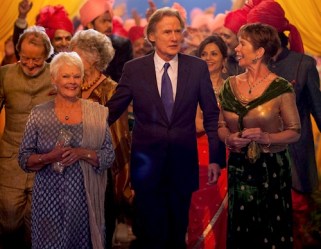 though this time there’s an added dose of romance in pretty much every plotline. It works because the cast are so darn good at delivering their material. Dev Patel and Maggie Smith are both hilarious, though everyone gets a moment to shine in the comedy stakes; conversely, Judi Dench and Bill Nighy carry the heart of the movie — though, again, everyone gets their emotional moment.
 Neill Blomkamp seems to be on M. Night Shyamalan’s career path: a massively-praised Oscar-nominated breakthrough genre movie, followed by a series of increasingly maligned follow-ups.
 British Academy Film Awards 2016
 Adapted from Colm Tóibín’s award-winning 2009 novel by novelist-turned-screenwriter Nick Hornby and director John Crowley (
 Guiding us through this, the film’s heart in every respect, is Saoirse Ronan’s leading performance. I will watch Ronan in essentially anything at this point, both because she seems to choose good material and because, even when she doesn’t, she’s great in it. This is probably her first really mature performance, convincing as a somewhat shy young woman who makes her way out into the world, in the process realising all the confidence she should have in herself. It’s the kind of character and performance that works by accumulation; it’s about the journey, not heavy-handed emoting in a scene or two.
 John Crowley’s direction is largely unobtrusive, but that is a very different kettle of fish to lacking quality. The subtle changes in framing, lighting, and colour palette as the film moves through its locations and stages helps emphasise how Eilis is changing, and how the world changes in her perceptions, too. It makes the story’s times and places look beautiful without quite slipping into picture-postcard rose-tinted-memories territory.
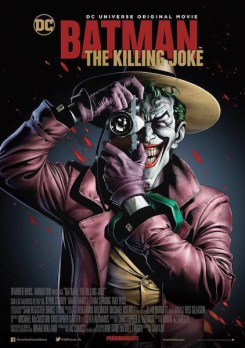 Alan Moore and Brian Bolland’s 1988 graphic novel The Killing Joke is one of the seminal works of superhero comic books’ move into seriousness in the ’80s, sitting just behind the likes of Watchmen, The Dark Knight Returns, and Batman: Year One in terms of significance. It’s also seen by many as the definitive story about Batman’s nemesis, the Joker, and has influenced the live-action interpretations of both Jack Nicholson & Tim Burton and Heath Ledger & Christopher Nolan. It is not without controversy, however, thanks in large part to its treatment of Barbara Gordon / Batgirl; and Moore has since semi-disowned it, saying it has no intrinsic value because it has nothing to say about real human beings, only commenting on the comic-book-y relationship between Batman and the Joker.
 we get to the familiar meat of the story, where the Joker (Mark Hamill) decides to prove a point — in a violent and twisted fashion, naturally.
 To say the least, this doesn’t seem like the best way to go about making her an independent, rounded human being — it comes off like fan service. No, worse: fan fiction. A scene earlier on where she explains her Bat-infatuation to her gay best friend is presumably meant to suggest a genuine motivation for the eventual sexy times, but it all comes across as a great big excuse.
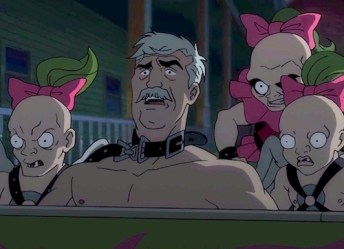 which brings its own problems to the story. But while he is a familiar figure in the Batman mythology, and so by extension to anyone who’s likely to watch this film, it’s also a standalone movie, not part of a series, and so it would be beneficial to establish his character somewhat before the Joker’s plan for him gets underway.
 (It’s somewhat ironic, then, that (as ever) Alan Moore doesn’t receive an onscreen credit while Bolland does.) There are a handful of effective visuals here (the Joker’s gleeful face as he turns on the amusement park, its lights twinkling in his eyes), but they’re the exception to work which is adequate — good for what it is, even — but unremarkable.
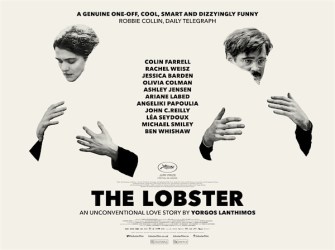 The first English language feature from Greek writer-director Yorgos Lanthimos (of
  Even if you accept these goals, Lanthimos’ film eventually goes off the rails. Without meaning to spoil too much, David eventually falls in with the loners, who have their own very specific social rules designed to inhibit partnering up. Revelation: the outsiders are fundamentally the same, just with different rules! That’s about the extent of what I got from this portion of the film; unfortunately, it goes on for a really, really long time. Among this group David meets ‘Short Sighted Woman’ (everyone aside from David is similarly named) and falls in love with her — I mean, of course he does, she’s played by Rachel Weisz. They develop a secret mode of communicating, but will be harshly punished if caught. This storyline is what the film uses to occupy its remaining time, but what it lacks in the offbeat humour of the time in The Hotel it makes up for with… nothing.
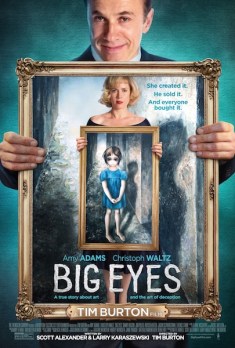 After a smidgen of early awards buzz that pegged it as a dark-horse major contender (which obviously never materialised into anything), everyone seemed to stop talking about Big Eyes, Tim Burton’s latest, and the first thing he’s made in over a decade that doesn’t instantly strike you as an obvious Burton-esque choice.
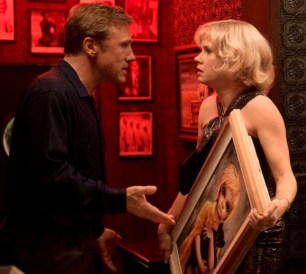 There’s thematic meat that could’ve filled the sandwich between those establishing and climactic, er, pieces of bread(?) — the tastes of critics versus the general public, and the disparity that exists there and what it means; or the inbuilt sexism of the era (though maybe everyone thought
  Fighting a losing war against Mexican drug cartels in Arizona, FBI agent Kate Macer (Emily Blunt) is keen to be enlisted to an interagency task force run by Department of Defense consultant Matt Graver (Josh Brolin). Taken along for the ride but kept in the dark, Macer becomes increasingly concerned that all is not as it seems — especially when it comes to Alejandro (Benicio Del Toro), a mysterious task force member whose motives seem to be a big secret…
 Arguably, the film loses its way a little when it does reach that point. Answers are forthcoming eventually, and the third act occasionally abandons the conflicted and complex world that came before it for more straightforward and satisfying turns of events. Fortunately, the film survives such wobbles thanks to the strengths it’s already established, and with an even deeper dive into moral greyness even while it seems to be offering a simplistically fulfilling climax.
 Brolin may be a headline lead alongside those two, but his character is given little to work with beyond being a son-of-a-bitch who keeps Macer onside with (deceitful) charm. He’s fine but unremarkable in that role. Perhaps
  Tension is definitely the name of the game when it comes Jóhann Jóhannsson’s score, which was also Oscar nominated. Dominated by elongated, heavy strings and pacey, heartbeat-emulating percussion, it makes the threats lurking in every corner feel tangible; makes the sense that everything is doomed and liable to go south at any moment palpable. It’s a major contributor to the film’s mood.
 100Films.co.uk