
With lots of stuff still on a summer break, the last month has proven a handy time to catch up on things I’ve been meaning to get round to.

24: Live Another Day
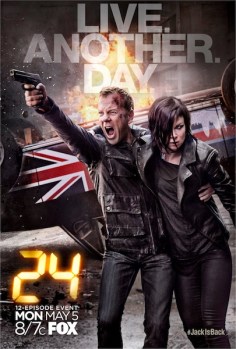 The “event miniseries” short-lived revival of a once-popular TV series is all the rage these days, with 24, Heroes, and The X-Files all trying it out in the past couple of years, Gilmore Girls doing essentially the same thing on Netflix in a couple of months, and Twin Peaks at it sometime next year. The thing that seems to have defined these revivals so far is that time has made no difference: none of them have come back radically new or changed, but have just been “more of the same” as the series they’re resuming, for good or ill. 24: Live Another Day is absolutely an example of this. It may be four years on, set in London, and only 12 episodes long, but if you didn’t know the circumstances behind production you’d be unlikely to think this was anything other than season 9 — after all, the show has always had years-long in-universe time jumps between seasons, and the last few have varied the location also (after seasons 1-6 were set in LA, season 7 was relocated to Washington, DC, and season 8 to New York). On top of that, the way the storyline drags back old characters who hadn’t been in the series for years cements the assumption that it’s a for-the-fans bonus run rather than a fresh-start relaunch attempt (which I guess next year’s spin-off, 24: Legacy, is hoping to be). All of this means that it has its good points, especially the action scenes, but some of the storytelling is overfamiliar, the dialogue at times terribly clunky, and there’s a continued half-arsed application of the real-time concept (which has been a bugbear of mine since season four or five). The fact it ends without really resolving the on-going story of Jack Bauer also feels like a daft mistake.
Doctor Foster (Series 1)
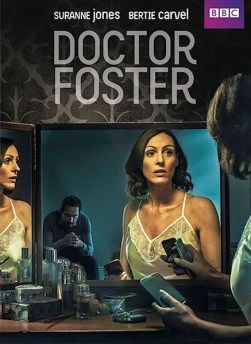 Finally got round to this popular series (from a year ago! Time, where do you go?). I was pleasantly surprised by the plot. The setup was sold as a woman (the titular GP) becoming suspicious her husband was cheating on her — is he, or is she imagining things? For whatever reason I’d presumed that would be the mystery of the entire series, and it would inevitably turn out he was cheating because there’s not much story otherwise. But actually, that’s kind of dealt with in the first episode, and then it spins off in various twists and turns. It’s exciting and unpredictable without quite descending into the easy trap of having characters make completely ridiculous decisions or take extreme actions. It’s a pretty finite story, though, so quite where the commissioned second series is going is anyone’s guess.
One of Us
 A new miniseries (it only finished on Tuesday — get me, watching something when it’s actually on!) from writers Harry and Jack Williams, who penned 2014’s excellent James Nesbitt drama The Missing (which, like Doctor Foster, has an unexpected second series in production). This is a slighter affair: essentially a murder mystery, but with a few well-executed twists along the way. It starts with the murder of a young couple whose families are neighbours on isolated farms in Scotland. When the suspected murderer turns up injured at those farms on the storm-afflicted night after the murder, they lock him in the barn while they await an ambulance… and then one of them murders him. Whodunnit? And what will they tell the police? And why the hell did he kill the couple, anyway? It’s funny to think of a four-hour drama as slight — imagine thinking a four-hour film was a bit short and lacking incident — but at least it’s not slow with it, somehow. A subplot about the investigating officer’s home life has no relevance to the main story and could’ve been cut, and the final revelations are somewhat farfetched, but other than that it’s a decent little thriller.
The Tick (Pilot)
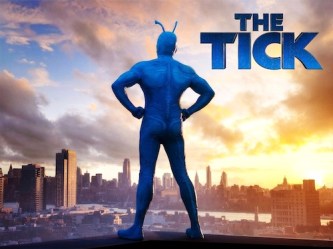 I’ve never read any Tick comics, nor seen the ’90s animated series, nor the short-lived ’00s live-action series, but I am vaguely aware of it, so was somewhat looking forward to this Amazon pilot. For those not in the know, it’s basically a spoof of superheroes — what better time than right now to launch a show like that? Amazon should be chuffed to be hitting the zeitgeist on the head with this one. Unfortunately, on the evidence of this pilot, The Tick isn’t quite all it could be. It comes alive a bit whenever Peter Serafinowicz’s eponymous hero is on screen, but the rest of the plot is too serious — the central character (who’s not The Tick, incidentally) is a young man who has mental health problems after watching his father be killed during a supervillain attack! Unsurprisingly, this leaves it a little short on laughs for a half-hour comedy. Indeed, it finishes just as it seems to be getting going. They either need to extend it to 45 minutes, or get a wriggle on and squeeze more into the half-hour. If it manages to get the full series commission then I’ll probably give it a go to see if they can improve these aspects, but, on the strength of the pilot, I won’t be too upset if they don’t bother. Shame.
Things to Catch Up On
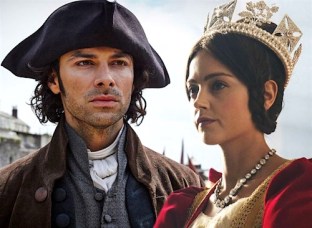 This month, I have mostly been missing Poldark and Victoria, respectively the BBC’s big period drama hit and ITV’s big period drama hope, which are currently going head-to-head on Sunday nights. For some reason I find myself not caring one iota about the latter (has it gone down well, or not? I don’t even know), but will get round to Poldark eventually.
Next month… Netflix time! Definitely Marvel’s Luke Cage; probably Stranger Things, to see who’s right: the fuss or the backlash.
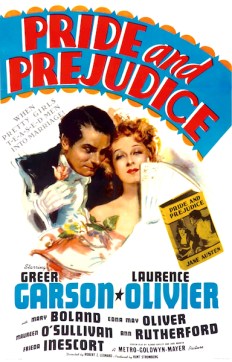 The first adaptation of Jane Austen’s ever-popular novel, MGM’s film is a compromised endeavour: by executives softening dialogue and rewriting characters; by changing its setting to permit grander costumes; by
 Score:



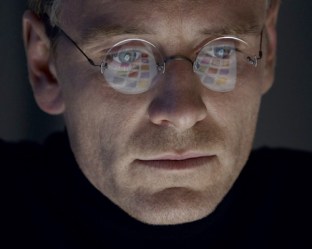
 Written by Aaron Sorkin and directed by Danny Boyle, with a name cast and plenty of awards buzz, this biopic of the eponymous tech genius was an inexplicable box office flop on its release last year — proof if proof were needed that box office does not equal quality, because I thought it was thoroughly excellent.
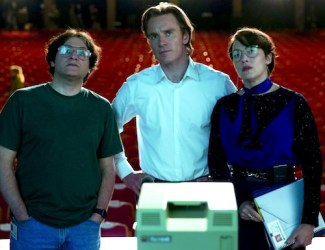 Boyle’s decision to use different film formats for each section — 16mm, then 35mm, then digital HD — helps delineate the eras and, in a way, reflect the products being launched (though I’ll instantly concede that last point may be a bit of a stretch). I imagine it’s too technical a concern to be noticed by your average filmgoer, but I’m sure it must have a subtle effect; and for those of us who are so minded to spot the change, it’s kinda fun and effective. Shot by Alwin H. Küchler, each section has its own charm, from the warm fuzziness of 16mm, to the gloss of 35mm, to the precision of digital. This is a mighty fine looking film, and while modern tech meant the 1080p Amazon Video stream I was watching looked darn near Blu-ray quality, I’m still miffed I didn’t just go straight for the disc, because now I’m going to have to pay for it again at some point.
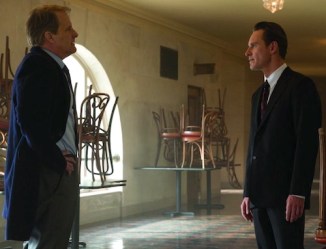 The dialogue they’re delivering is so Sorkin. Rearrange character names and you could drop this into
  In a similar vein, I suspect it would make a great companion piece to
 1960 Academy Awards
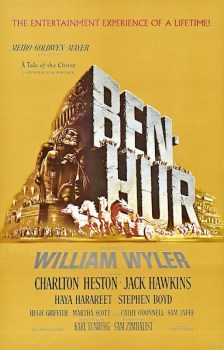 So claims Ben-Hur’s 1961 trailer. They were cocky back then, weren’t they?
 but was so invested that I stuck with it regardless. There are things that have aged poorly, be that the model effects in the sea battle or using a white actor in heavy make-up to portray an Arab, but I think you have to take these things with a certain element of the spirit of the era — I’m sure no offence was intended (see also:
 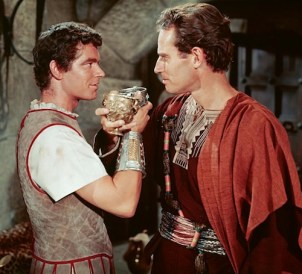 This Christian aspect contrasts sharply with the other subtext I alluded to earlier: the possibility that Judah and Messala were once lovers. The claim originates with screenwriter Gore Vidal, who may or may not have written some or all of the screenplay that was used for shooting. According to Vidal, he and Stephen Boyd discussed the idea before shooting began, and then Boyd played the scenes with it in mind. However, it was kept hidden from Charlton Heston because he’d never agree to it, and when the notion was put to him later he naturally denied there was any homosexual subtext. Whether this tale is true in the literal sense of that subtext being written into the screenplay and Boyd choosing to incorporate it into his performance, I don’t know, but the content of the film makes it easy to believe — the scenes between Messala and Judah, especially when they’re first reunited, absolutely play like there’s a romantic history between them. Bear that in mind and it seems to reoccur later, too: when the story returns to Jerusalem after several years, Messala seems particularly close to his deputy; and there are a couple of shots of Judah being chummy towards a random stableboy (I mean, they’re not much, but if you watch it with the assumption that Judah is gay or bi…) What does this signify? Perhaps not a great deal. I’m sure you can choose to completely ignore it. I imagine some would passionately deny even the possibility it’s there. Personally, I think it adds something to the characters’ relationship.
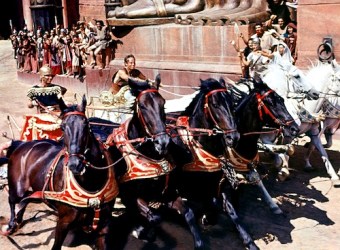 the technical awards the film scooped up are certainly merited. The cinematography is fantastic, with the landscape shots making particularly excellent use of the extra-wide frame. As for the chariot race, it stands up as an incredible action sequence even today, driven by thrilling camerawork and editing, and showcasing some daring stunt work.

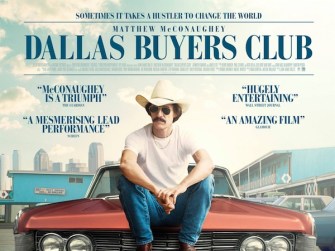 Every time I see a trailer for Dallas Buyers Club at the start of another Blu-ray I think, “that looks really good; I should watch it”. Then every time I get near watching it I think, “that sounds quite worthy and/or grim; maybe not right now”. So I guess kudos is due to Amazon UK for removing it from Prime Video
 That’s just some of what’s going on, anyway, because there’s also Ron’s growing acceptance of the community he finds himself a part of, especially after he’s ostracised from his former friends who assume he’s gay; there’s his business partner, trans woman Rayon (an also-Oscar-winning Jared Leto), who has drugs and familial problems of her own; and the doctor (Jennifer Garner) who battles her conscience over the drug trials and Ron’s less-than-scientific but effective methods. If this makes Dallas Buyers Club sound unfocused, it’s more that it’s got a lot of different aspects to examine. It’s not just about narrating what really happened, either, because Leto and Garner’s characters are fictional.
 McConaughey is very good as Ron, though I’d wager he won the Oscar as much for his extreme weight loss as his actual acting. He was up the same year as Chiwetel Ejiofor for
 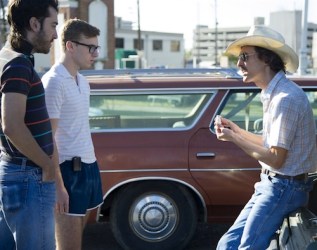 For all the heaviness of the topics it touches on, the film isn’t without the humour that made its trailer so attractive. That said, if you’ve seen the trailer you’ve seen most of that material, and in a more condensed and highlighted form, too. It almost makes it look like a heist movie — how this clever chappy pulled the wool over the authorities’ eyes with his vicar costumes and amusing way of filling out forms — but that’s just a small part of the film; and, actually, those tricks often go wrong or flat out don’t work, which is not the heist movie way.
 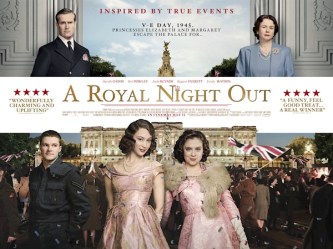 A somewhat remarkable true story gets romanticised in this likeable comedy about
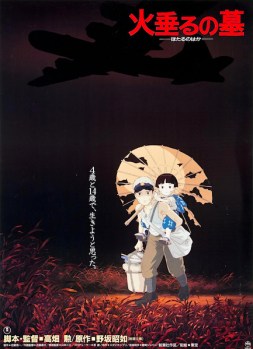 One of the most praised animated films of all time, this Studio Ghibli feature tackles grim subject matter: it’s the story of Seita and his little sister Setsuko, a pair of Japanese children who are orphaned and eventually left to fend for themselves in the closing months of World War 2. It begins with Seita dying of starvation and joining the spirit of his dead sister, so you know it’s not going to end well. A Disney movie this is not.
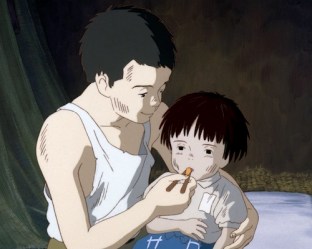 Another thing is that the film is often cited as a powerful anti-war movie, because it depicts the ravaging effects on innocents. However, director Isao Takahata insists it isn’t, saying it’s about “the brother and sister living a failed life due to isolation from society”. I’m inclined to believe him, because, from what we actually see on screen, these two kids are the only ones to be so badly affected! Okay, we do see people have died, and we’re told that food is running out… but there’s a gaggle of kids who seem to be having a fun day out when they stumble across the siblings’ makeshift shelter; or, right at the end, people who merrily arrive home and pop their music on. The film doesn’t try to claim that only these two kids suffered, but — aside from a few other destitutes at the start, and the bodies we see after the first bombing (later bombings don’t make any casualties explicit) — we don’t really see anyone else suffering. I’m not arguing that Takahata is saying no one else suffered, nor that these observations make it pro-war (I mean, any children dying, even if others are surviving, is not a good thing), but I didn’t get an anti-war message that was as powerful or as overwhelming as other viewers seem to have.
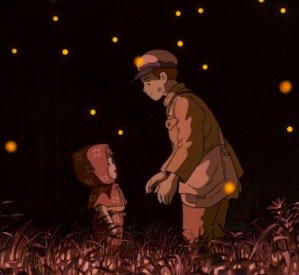 and, really, this story shouldn’t be “bearable”. That’s not to say you can’t feel an emotional connection to animated characters, but, as a medium, animation regularly deals in fantastical subjects, so with material this gruelling it does make it seem less real.
 Inspired by real events (more on that later), The Bank Job sees the British Secret Service covertly enlist a gang of crooks to rob a bank’s vault in order to retrieve some compromising photos of a member of the royal family — not that the robbers know this is what they’re up to. Unfortunately for them, the vault also contains property belonging to an organised crime boss, who isn’t too happy it’s been pilfered.
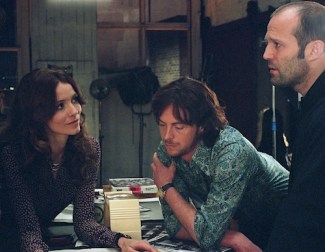 but, most pertinently, solid TV thrillers like
  100Films.co.uk