Into the Wild (2007)

2017 #7
Sean Penn | 148 mins | streaming (HD) | 2.35:1 | USA / English & Danish | 15 / R

Into the WildThe true story of Christopher McCandless, who abandoned regular life after college to go hitchhiking and become one with nature or something, then accidentally killed himself by being a pretentious wanker.

The filmmaking is driven by this same youthful pomposity, which when you consider it was “screenplay and directed by” (to quote the awkward credits) a 47-year-old Sean Penn makes it feel both inauthentic and also, frankly, a little pathetic.

At least there’s some stunning scenery; and Hal Holbrook’s performance as a lonely old man, whose outward cheerfulness masks inner sorrow and a need reengage with life, is suitably affecting.

2 out of 5

Into the Wild was viewed as part of my What Do You Mean You Haven’t Seen…? 2017 project, which you can read more about here.

It featured on my list of The Five Worst Films I Saw For the First Time in 2017, which can be read in full here.

Hunt for the Wilderpeople (2016)

2017 #4
Taika Waititi | 101 mins | streaming (HD) | 2.35:1 | New Zealand / English | 12 / PG-13

Hunt for the Wilderpeople

The most recent feature from the director of the very-different-to-each-other What We Do in the Shadows and Thor: Ragnarok, this very-different-again* adventure-comedy-drama was a surprise hit in its native New Zealand, then around the rest of the world, before it wound up as Empire magazine’s pick for the best film of 2016.

Young Ricky Baker (Julian Dennison) is a delinquent who’s been rejected by every foster family in the city, so in a last-ditch attempt to avoid juvie he’s homed at the remote farm of kindly Bella (Rima Te Wiata) and her terse, irritable husband, Hec (Sam Neill). Despite initial misgivings, Ricky warms to his new home, so when child services threaten to take him away again he runs away into the bush. He’s soon found by Hec, but as child services launch a nationwide manhunt for the missing pair, they decide to go on the run as fugitives.

So yes, let’s get the obvious out of the way: Ricky and Hec end up bonding and working together and all that jazz. But this isn’t the kind of movie where it’s all about developing mutual respect and having heartfelt hugs and making declarations of everlasting father-son love. Well, maybe it is a little, in its own way — but it’s also the kind of movie where they (spoilers!) write awesome birthday songs, end up in a punch-up with some hunters, steal all-important loo roll, meet a girl worthy of the old Flake adverts, eat relaxing sausages, stumble into a vicious fight with a giant boar, and engage in the wildest third-act police car chase since… I dunno, Blues Brothers or something.

Skuxx 4 life

Writer-director Waititi (adapting the book Wild Pork and Watercress by Barry Crump) keeps a fairly tight hand on the film’s tone, a slightly leftfield view of the world that isn’t as extremely stylised as, say, Wes Anderson, but nonetheless is heightened beyond the normal boundaries of real-life. I only say a “fairly tight” grip because a couple of comic cameos arguably stretch things a little too far, but that’s a minor complaint. Mostly he’s skilful in balancing the comedy with genuine emotion, so that the former never neuters the latter, but equally the latter never dares become too sickly. The events of the plot may not be plausible, but the emotional underpinnings are.

Nonetheless, it’s regularly hilarious, especially when centred on Dennison and Neill’s interactions. It’s the kind of role and deadpan performance that will no doubt have some hailing Dennison as a real find, and maybe he will be, or maybe he’ll go the way of most child stars with “breakthrough” roles like this and never be heard from again. Pardon my cynicism, but it seems to be such a perfect marrying of actor and role that I’m not sure it marks the start of a glittering career so much as one superb turn. Maybe I’m wrong; time will tell. Neill, on the other hand, juggles grumpiness, likeability, and pathos in a manner that suggests his near-relegation to “the guy from Jurassic Park” for the last quarter-century is a real shame. I’m not intending to dismiss everything he’s done between then and now (some of which I’m a definite fan of), but this is likely the best showcase of his abilities for a long time.

Unhappy campers

The rest of the cast don’t shirk, with particular note to the kind of double act performed by Rachel House and Oscar Kightley as (respectively) the ‘dedicated’ child services agent and her escorting policeman who lead the manhunt. Whoever was in charge of the soundtrack did an excellent job with several amusing song picks, while the highlight of the score (credited to three composers) is an unusual use of the increasingly ubiquitous Christmas tune Carol of the Bells (the scene in question has nothing to do with Christmas, for starters). Cinematographically, DP Lachlan Milne makes marvellous use of New Zealand’s truly majestical scenery — well, why wouldn’t you?

Whether or not Hunt for the Wilderpeople is the best film of last year is immaterial — I mean, it’s a little film from a small country on the other side of the world: it’s not like it’s going to be in competition this awards season, is it? But maybe it should be. Few films get to be this funny without being overworked, this sweet without being cloying, and this quirky without being keraaazy, all at the same time.

5 out of 5

In the UK, Hunt for the Wilderpeople is available on Netflix now, and is released on DVD and Blu-ray tomorrow.

It placed 4th on my list of The 17 Best Films I Saw For the First Time in 2017, which can be read in full here.

* Well, from what I know they all seem very different to each other — I’ve not seen the other two. ^

Witness for the Prosecution (1957)

2016 #157
Billy Wilder | 112 mins | DVD | 1.85:1 | USA / English | U

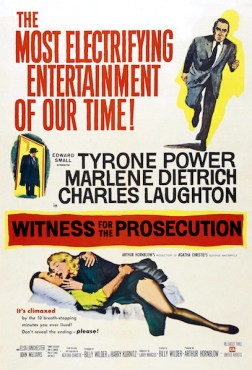
Witness for the ProsecutionCharles Laughton and Marlene Dietrich shine in this adaptation of Agatha Christie’s play (in turn based on her short story), about a man accused of murder but who proclaims his innocence (Tyrone Power), the barrister who decides to take the case (Laughton), and the man’s wife who agrees to alibi him but seems somehow suspicious (Dietrich).

Despite expanding the action from the play, it’s still dialogue-heavy and a little stagey in places — but between the engrossingly labyrinthine plot, those captivating performances, and some humour added by screenwriters Billy Wilder and Harry Kurnitz, such potential criticisms are irrelevant.

Helluva twist, too.

5 out of 5

A new adaptation of The Witness for the Prosecution begins on BBC One tonight at 9pm.

Young Adam (2003)

100 Films’ 100 Favourites #100

Everyone has a past.
Everyone has a secret.

Country: UK & France
Language: English
Runtime: 98 minutes
BBFC: 18
MPAA: NC-17 (uncut) | R (cut)

Original Release: 4th September 2003 (Netherlands)
UK Release: 26th September 2003
First Seen: DVD, c.2005

Stars
Ewan McGregor (Shallow Grave, Big Fish)
Tilda Swinton (Orlando, We Need to Talk About Kevin)
Peter Mullan (Trainspotting, Tyrannosaur)
Emily Mortimer (Lovely & Amazing, Match Point)

Director
David Mackenzie (Starred Up, Hell or High Water)

Screenwriter
David Mackenzie (The Last Great Wilderness, Hallam Foe)

Based on
Young Adam, a novel by Alexander Trocchi.

The Story
Joe is earning his keep helping transport coal on a barge between Glasgow and Edinburgh, spending his free time lusting after his employer’s wife, when he spots a woman’s dead body floating in the canal — something Joe knows more about than he lets on…

Our Hero
Joe is a young drifter, who’s wound up working on a barge with Les and Ella Gault and their son. He’s a horny bugger, sex obsessed to the point of distraction, which will have an effect on everyone’s lives.

Our Villain
It wouldn’t be quite accurate to say the film is a murder mystery — especially as it’s not clear if the woman was indeed murdered. But how did she die? How was Joe involved? He’s the main character, which makes him the hero, but is he actually a bad’un?

Best Supporting Character
Harried barge wife Ella is not anyone’s typical image of desirability, but nonetheless becomes the object of Joe’s own brand of affections, which brings her some happiness… for a while. Mainly, it’s a brilliant, layered performance by Tilda Swinton.

Memorable Quote
Joe: “Are you sorry?”
Ella: “Fat lot of good that would do me.”

Memorable Scene
Cathie, another of Joe’s lovers, comes home soaking wet. As she undresses, she berates him for doing nothing useful with his time. He informs he has made custard, which he throws over her, followed by various other condiments. Then there is, shall we say, an act with (at best) debatable consent. I believe this is a version of something called “sploshing” (thanks, internet).

Memorable Music
David Byrne’s ambient score haunts the soundtrack, as essential to the film’s grey mood as the drizzly Scottish locations and overcast photography. My favourite part is the plaintive closing song, The Great Western Road.

Awards
4 BAFTA Scotland Awards (Film, Actor in a Scottish Film (Ewan McGregor), Actress in a Scottish Film (Tilda Swinton), Director)
4 British Independent Film Award nominations (British Independent Film, Actor (Ewan McGregor), Actress (Tilda Swinton), Director)
3 Empire Awards nominations (British Film, British Actor (Ewan McGregor), British Actress (Emily Mortimer))

What the Critics Said
“Joe is a hard case. Opaque. Not tender, not good with the small talk. Around women, he has a certain intensity that informs them he plans to have sex with them, and it is up to them to agree or go away. He is not a rapist, but he has only one purpose in his mind, and some women find that intensity of focus to be exciting. It’s as if, at the same time, he cares nothing for them and can think only of them. […] He is not a murderer but a man unwilling to intervene, a man so detached, so cold, so willing to sacrifice others to his own convenience, that perhaps in his mind it occurs that he would feel better about the young woman’s death if he had actually, actively, killed her. Then at least he would know what he had done and would not find such emptiness when he looks inside himself. This is an almost Dostoyevskian study of a man brooding upon evil until it paralyzes him. […] The death of the girl and the plot surrounding it are handled not as a crime or a mystery but as an event that jars characters out of their fixed orbits. When you have a policy of behavior, a pose toward the world, that has hardened like concrete into who you are, it takes more than guilt to break you loose.” — Roger Ebert, Chicago Sun-Times

Score: 62%

What the Public Say
“McGregor, putting his meat and two veg on show once again, is really good as the conflicted and sex addict, Swinton does almost steal the show as the sex-craving barge woman, who also gets naked, and Mortimer in the flashbacks is very good, with her clothes off too. The film is just stuffed with sexual scenes, and with the dead body premise it combines film noir and melodrama, all adding up to a well crafted and most watchable period drama.” — Jackson Booth-Millard @ IMDb

Verdict

Part murder mystery, part beat character study, part erotic drama, Young Adam is an enigmatic, moody, conflicted film — in a good way. It presents a grimily realistic view of life and sex, around which writhes a murder mystery that, as it turns out, doesn’t contain a murder and, relatively quickly, isn’t much of a mystery. Instead it’s something of an ethical dilemma, presented to a character who’s not exactly unethical but isn’t necessarily concerned about doing what’s right either, especially if it’s against his own interests. Not a cheery one, then, but a film of grey morals, grey imagery, and grey mood — in a good way.

Next time… looking back over my 100 favourites.

Midnight Special (2016)

2016 #145
Jeff Nichols | 112 mins | streaming (HD) | 2.35:1 | USA & Greece / English | 12 / PG-13

Midnight SpecialI’m not sure I’d even heard the name Jeff Nichols before Midnight Special came along, at which point most of the gushing reviews that followed seemed to mention him with cult-like reverence. He’s the writer and director, by the way, for anyone still in the dark, and unbeknownst to me (and, I rather suspect, most people outside certain cinephile circles) he’d amassed something of a following over his first three movies (Shotgun Stories, Take Shelter, and Mud, two of which I’d at least heard of). It’s kind of odd to feel like everyone else loves this guy and has been eagerly anticipating his next work and is now discussing how it chimes with his existing canon, when you’ve not even heard of him.
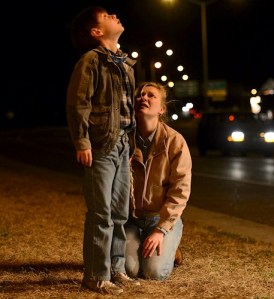
Anyway, his latest film* has a plot that makes me want to dub it Starman: A World Beyond… though that might indicate something about the ending, so, uh, shh! Anyway, the story concerns a dad (Michael Shannon) who’s kidnapped his son (Jaeden Lieberher) from some kind of cult, and is now on the run from both the authorities and the cultists who want the kid back. All the furore stems from the fact that the kid has some kind of special abilities, one of which has given them a destination to head for and time to be there…

The story’s style has made a comparison to Spielberg the go-to, not only for reviewers but for the writer-director himself, who’s labelled the film an homage to E.T. and Close Encounters. You can see that influence, certainly, but it lacks the effortless charm that Spielberg brings to his movies. If this is Spielberg, it’s by way of more indie arthouse fare. Is that a bad thing? Not necessarily. You could argue that it’s more refreshing than any of the I want to believestraight-up Spielberg rehashes we’ve seen over the past four decades; conversely, a strand of wilful obscurity means it may be ultimately less satisfying. Again, some people derive satisfaction explicitly from that lack of resolution or explanation, while others will find it damagingly frustrating. Even more than Spielberg, I felt the thing most evoked by this structure was The X Files: intriguing sci-fi mysteries that eventually lead to semi-reveals which don’t quite satisfy in themselves in part because they’re trying very hard to remain open-ended.

In that regard, it’s arguably a little too woolly on its sci-fi elements, and executes the chase-thriller aspect of its plot too slowly, to be fully considered a genre movie; but it’s also too indistinct on its cast to fully convince as a character-driven drama. You can certainly begin to infer some things about what their exact motivations are, what they’re thinking and feeling and why they’re doing what they do, but I’m not sure if it’s actually there or if I’m endeavouring to build something out of the little that we’re given. That said, if I’m prepared to do Zack Snyder the courtesy of reading something into his work that may or may not be there (cf. Sucker Punch), then Jeff Nichols deserves at least the same level of kindness. But for the kind of movie whose style makes it seem like it should be about Character or Theme over more genre- and/or narrative-focused concerns, it feels there’s an awful lot of attention paid to plot over anything else. Speaking as a fan of sci-fi and high-concepts and B-thrillers and blockbusters, I actually think I’d’ve liked it more if it toned down the sci-fi and the plot, and instead focused on the characters’ soul-searching and the unusual family dynamics.

That said, there’s some great imagery. Mainly the sci-fi stuff at the end — I don’t think it’s unfair to describe most of the movie as looking solidly unremarkable, but the climax is pretty darn good. However, I’ve read many reviews that criticise the effects. Are we not past that yet? Especially when it comes to a film of this budget and scale. Nuclear familyI thought they perfectly conveyed what they were intending to convey — usually, just a kind of otherworldly light. It’s not like it’s even over-stretching its means, like so many network TV series or Sharknado-esque movies do when they try to emulate a $200 million blockbuster on a TV budget. If you’re expecting some grand CGI, maybe go watch one of those $200 million blockbusters instead of an $18 million drama.

Midnight Special seems to provoke a wide range of responses — I mean, you can say that about most films, ultimately; but some more so than others, and skimming across reviews and comments online, this is definitely one of them. Fans of American indie-ish drama-driven semi-genre movies, or of more thoughtful science-fiction, will surely want to give it a go, but how much you’ll connect with its characters or its ideas seems to be a roll of the dice. I liked it well enough, but I don’t remember seeing any particular indication of what’s inspired the notion that we should all be fawning over Jeff Nichols as the best auteur to happen to cinema since sliced bread. (Sliced bread’s early movies were great, weren’t they?)

3 out of 5

Midnight Special is on Sky Cinema from today.

* In a coincidental similarity to when I started viewing the work of another much-hailed star-to-be indie director (Ben Wheatley), I’m beginning with his fourth film. ^

Unbreakable (2000)

100 Films’ 100 Favourites #95

Are you ready for the truth?

Country: USA
Language: English
Runtime: 107 minutes
BBFC: 12
MPAA: PG-13

Original Release: 22nd November 2000 (USA)
UK Release: 29th December 2000
First Seen: DVD, 2001

Stars
Bruce Willis (Armageddon, Looper)
Samuel L. Jackson (Pulp Fiction, Avengers Assemble)
Robin Wright Penn (The Princess Bride, The Conspirator)

Director
M. Night Shyamalan (The Sixth Sense, The Village)

Screenwriter
M. Night Shyamalan (Stuart Little, The Visit)

The Story
When security guard David Dunn is the only survivor of a train crash, and without a scratch on him, he encounters comic book fan Elijah Price, who has an unusual theory: that David is indestructible, a real-life superhero.

Our Hero
David Dunn is just an ordinary guy, with a low-key job and a wife and kid, but after his near-impossible feat of survival he begins to test himself. Could he be more remarkable than he ever imagined?

Our Villain
Spoilers! Which, considering this is an M. Night Shyamalan movie, is basically a red flag saying “here’s where the twist is”. All I’ll say is, keep an eye on David’s kid, Joseph. I mean, pointing a gun at your parent is never innocent, is it?

Best Supporting Character
Comic book art dealer Elijah Price was born with Type I osteogenesis imperfecta, a rare disease that makes his bones extremely fragile and prone to fracture. Losing himself in the world of comic book superheroes throughout his childhood, he develops a theory: that if he represents an extreme of human weakness, there must be someone at the opposite extreme…

Memorable Quote
Elijah: “Why is it, do you think, that of all the professions in the world you chose protection?”
David: “You are a very strange man.”
Elijah: “You could have been a tax accountant. You could have owned your own gym. You could have opened a chain of restaurants. You could’ve done of ten thousand things, but in the end, you chose to protect people. You made that decision, and I find that very, very interesting.”

Memorable Scene
As well as his indestructibility, David comes to believe he may have a form of ESP, that allows him to glimpse people’s criminal acts when he touches them. Encouraged by Elijah, he goes to a bustling train station, stands in the middle of the crowd, and holds out his arms…

Next time…
Reportedly the plot of Unbreakable was merely Act One of Shyamalan’s original concept, until it wound up expanding into an entire movie. Talk of a sequel and/or trilogy used to occur regularly, but Shyamalan made a bunch of crap no one liked instead. 16 years on, I guess hopes of a continuation are long dead.

Awards
1 Saturn nomination (Action/Adventure/Thriller Film)

What the Critics Said
The Sixth Sense was no fluke. Unbreakable, writer-director M. Night Shyamalan’s dazzling reunion with Bruce Willis confirms he’s one of the most brilliant filmmakers working today. […] The deliberately paced Unbreakable, make no mistake about it, is a vehicle form-fitted to Bruce Willis’ burgeoning gifts as an uncommonly subtle and affecting actor. Willis should get the Oscar nomination he deserved for The Sixth Sense, and Jackson’s enigmatic Elijah – who has devoted his life to searching for the sole survivor of a disaster, for reasons that won’t be explained here – is equally commanding in a difficult if somewhat underwritten role.” — Lou Lumenick, New York Post

Score: 68%

What Quentin Tarantino Says
“The final film, alphabetically, on my top twenty list is M. Night Shamalamadingdong’s Unbreakable, which I actually think, 1) not only has Bruce Willis’ best performance on film that he’s ever given. I think he’s absolutely magnificent in the film. It also is a brilliant retelling of the Superman mythology. In fact, so much so that, to me, the film was very obscure when it came out as far as what it was about. I actually think they did themselves a disservice, because you can actually break down what the film is about by basically one sentence, that I should think would’ve proved far more intriguing than their ad campaign, which is basically, “what if Superman was here on Earth and didn’t know he was Superman?”, which is what the film is about. Course, you don’t know that until actually you see the movie. Anyway, Unbreakable is, I actually think, one of the masterpieces of our time.” — Quentin Tarantino’s Favourite Movies from 1992 to 2009

What the Public Say
“The story is unique… I mean we see stories about superheroes everywhere… everywhere, and despite things here and there changed, they are still the same stories we have heard a thousand times before. This film had an original story that was both compelling and intense. The use of the camera angles is so well done it is a shock that Unbreakable is not at the top of everyone’s favorite Shyamalan film. It is masked under the presumption that it is moving slowly, because in reality… a lot is going on.” — Dave, Dave Examines Movies

Verdict

Some people view Unbreakable as the start of M. Night Shyamalan’s inexorable quality slide after the debut peak of The Sixth Sense (not that it was his debut). Those people are wrong. Partly because that degeneration doesn’t really start until the final act of The Village; partly because Unbreakable is Shyamalan’s best film. We’ve now had countless big-screen takes on superhero mythology, but none are quite like this. Man of Steel may have attempted to ask “what would happen if Superman were real?”, but it’s Unbreakable that better answers that question. With subtle performances, including arguably a career-best turn from Bruce Willis, and a plausible handling of its fantastical material, which nonetheless develops into a satisfying climax, Unbreakable is still one of the most original and best superhero movies ever made.

#96 will be… gunpowder, treason, and plot.

The Past Fortnight on TV #11

As discussed yesterday, I’m out of the country for a fair chunk of December, including when my regular monthly TV review is due. So to placate the ravenous need for my opinions about television that you will surely feel if such thirst goes unquenched for six-to-eight-weeks, here’s what I watched in the fortnight since my last TV post.

Crisis in Six Scenes
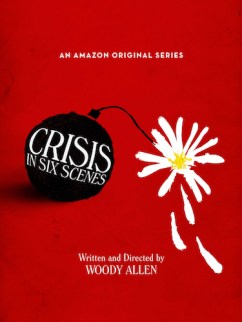
Crisis in Six ScenesWhen Amazon started making a serious effort to challenge Netflix in the field of streaming original series, one of their early moves was the headline-grabbing signing of Woody Allen to create his first TV series. As has since become clear, Allen didn’t know what he was letting himself in for. To summarise his comments from various interviews (and read between the lines a little), it seems he had a view of TV that’s about 20 years out of date, and thought he’d be able to dash off something suitable between two of his annual movies. At some point he obviously realised how much more sophisticated TV has become, and coopted a movie idea he’d had on the back-burner to expand into a short TV season. Allen’s been vocal about how miserable he found this process, but I’m not sure if he’s aware that he made a rod for his own back: he essentially made three movies in two years instead of his usual two. It probably would’ve been wise to swap out one of the films for the TV series, but you get the sense that, despite having been shown TV’s burgeoned respectability, Allen’s still something of a film snob. Rather than the potential of TV coming as a revelation to him, he’s declared he won’t be making any more.

On the evidence of the single six-episode season we did get out of him, that’s neither here nor there: Crisis in Six Scenes is just a slightly-longer-than-average Woody Allen film split into instalments. The first episode is the worst offender in this regard — it doesn’t reach a climax of any description, it just stops. The rest of the episodes aren’t as blatant (episode five’s ending even feels like it’s genuinely meant to be the end of an episode!), but none of them are particularly satisfying as a discrete segment. I’m not really one for binge-watching — I get fidgety and want a change; or if a show’s too good, I want to savour it rather than race on — but I watched all of Crisis in one sitting, because at heart it’s just a chopped-up movie. Some characters or events are confined to a single episode, but you get the impression that’s almost incidental rather than a deliberate attempt to make six finite units. The main storylines flow between episodes like the boundaries are artificially imposed — which, in a medium without the constraints of broadcast time slots and where all the episodes are released at the same time, they are.

A scene of CrisisBut enough of the form — what of the content? This is not prime Allen, that’s for sure. At times it makes for uncomfortable viewing, when it’s hard to tell if it’s half improvised or if half the cast are just a bit doddery (and I suspect it’s the latter). Other bits do work, though, and while it isn’t massively rewarding it is amusing at times. Even less assured are some broadly political points that it seems like Allen is trying to tap into, or maybe it’s just incidental. He appears to be using the series’ 1960s setting as a mirror of the present: the plot concerns a twenty-something anti-government protestor, and there’s lots of talk about unnecessary wars, campus demonstrations, young people staging protests, rights for women and black people, etc, etc. At first blush these parallels are all well and good, but I’m not sure they develop into much more than wry observations. The best I can take from it is a result of the particularly farcical last episode, where it may be that he’s trying to say people in general should be more aware and active, like the young are — to walk the walk of political change rather than just talking the talk.
If he was trying to spread such a message, it’s a bit buried. Maybe he was just picking on some low hanging fruit. Considering Allen’s half-arsed attitude to the whole endeavour, I guess that’s more likely. Oh well.

The Grand Tour (Season 1 Episodes 1-2)
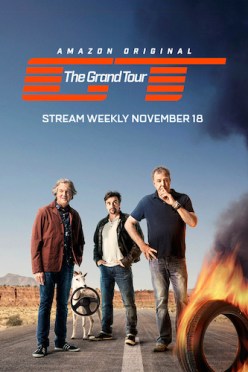
The Grand TourAnother big gun in Amazon’s streaming mission, their £160 million “Not Top Gear, Honest” original series kicked off last month to widespread positive reviews and, apparently, big ratings (relatively speaking). I’m not really a ‘car person’, but like millions of others I wound up watching Top Gear during the height of the Clarkson / Hammond / May era for all the other hijinks. I thought it was going off the boil a bit even before their semi-enforced departure — I didn’t even get round to watching their last series. They come to Amazon after a short break (a long break for us, but it takes time to film these things, so, short break), and I think reinvigorated — possibly by the rest, possibly by the change of management, possibly by the huge budget.

There’s no denying that this is their Top Gear with just a few tweaks… unless you’re an Amazon lawyer, in which case it’s a completely different show. But the freedom from being a motoring programme on a public service broadcaster means they’re not quite so constrained by that remit. Episode 2, for instance, is half given over to them attacking a military training course in Jordan, a riff on Edge of Tomorrow in which they get to play at being action movie stars, and which features cars because action movies feature car chases, not because they’re actually reviewing how the motor performs while in a high-speed chase. There are still genuine car reviews, and they’re as dull / interesting (delete as applicable) as they always were. At least they’re excitingly shot and scored (still using cues from film music, as they always have).

Some bits are improved: the famous Star in a Reasonably Priced Car segment was always one of the weakest parts of the show (the track times were fun, but Clarkson is no interviewer), but here the need for celebrity guests is neatly pilloried. Conversely, a couple of things are weaker: their blatant attempt at a Stig replacement, The American, doesn’t really work. It’s also one of the bits that most feels “changed just enough to avoid a legal challenge”. I imagine there are only so many different ways to do a car show, so of course there are going to be similarities, but you could imagine them having done this as their next run of Genuine Top Gear (well, aside from the expense) without people thinking, “wow, they’ve completely changed the show!”

Still, it is what it is, and if you liked it before I can’t imagine you wouldn’t like it now, maybe even a little more.

Class (Series 1 Episodes 6-7)
ClassThe Doctor Who spin-off that no one’s watching continues with two of its strongest episodes. A two-parter that isn’t, the first is a “bottle episode”, with most of the cast stuck in detention and forced to confess their secret feelings by an alien rock. Cue arguments. Not Class’ strongest instalment — it’s a good idea, but the characters haven’t amassed quite enough secrets over just five episodes to make it feel as cathartic as it should — but it’s considerably better than the weaker ones. Even better is the next episode, which shows what Quill was up to while the kids were bickering. A world-hopping quest (presumably paid for by saving so much money on episode 6), it has several good ideas that it burns through like they’re going out of fashion. It feels most like Doctor Who, too, which provokes no complaints from me.

Next time: the Shadow Kin are back, again. Ah well.

Also watched…
  • Castle Season 7 Episodes 16-21 — by sheer bloody coincidence, the night before flying from London to the US I watched the episode where Castle flies from the US to London and has to deal with a murderer and possible terrorist on his flight. Super timing.
  • The Flash Season 3 Episodes 3-5 / Arrow Season 5 Episodes 3-5 — the much-anticipated four-way crossover between The CW’s superhero shows finished last night in the US, which means it’s at least a few weeks away over here. I’ll say something about it next time, then. Or the time after.
  • Junior Bake Off Series 4 — the main thing I take from this is that all kids are incredibly clumsy and slapdash.
  • The Moonstone — the recent BBC adaptation of Wilkie Collins’ novel, which is generally regarded as the first full-length English-language detective novel. This decent miniseries version was produced for daytime, and was the kind of series certain viewers proclaimed was good enough for prime time. It wasn’t.

    Gilmore GirlsThings to Catch Up On
    This fortnight, I have mostly been missing Netflix’s Gilmore Girls revival, subtitled A Year in the Life. Rather than race through the four feature-length instalments between their release last Friday and our departure yesterday, we decided to save them for when we’re back, like a Christmas treat. Maybe we’ll just watch them in four days then instead, but at least we’ll feel like we have a choice.

    Next time… a festive special, looking at what seasonal delights the tellybox has provided us with this year. As far as December 29th or so, anyway.

  • The Good Dinosaur (2015)

    2016 #130
    Peter Sohn | 90 mins | streaming (HD) | 2.35:1 | USA / English | PG / PG

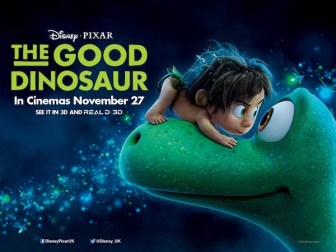
    The Good DinosaurOnce upon a time, Pixar could do no wrong. Then Cars happened; and worse, its sequel. Now, their movies remain an event, and some people still swear by everything they do, but I think there’s a greater awareness that they’re fallible. When it came out at the tail end of 2015, The Good Dinosaur was received as further evidence of that. Especially coming in the same year that gave us the universally praised (*coughoverratedcough*) Inside Out, it was instantaneously dubbed a “lesser Pixar”. But here is where completism has its merits, because I really enjoyed it.

    Set in an alternate world where the dinosaurs were never wiped out and so have evolved to the point where they talk, farm, etc, the film tells the story of little Arlo, an Apatosaurus who’s regularly overshadowed by his siblings. When an accident leaves him stranded many miles from his family he must make the long trek home, finding his inner courage on the way ‘n’ that kind of thing.

    There’s no denying that The Good Dinosaur contains an abundance of re-heated elements: there are multiple plot beats shared with The Land Before Time, not to mention the general “talking child dinosaurs” thing; a major inciting incident is taken from The Lion King; the episodic structure is reminiscent of The Jungle Book; animated dinosaurs on photo-real backgrounds recalls Dinosaur; and the moral message and main character arc are lifted from any number of children’s animations. While I did find this bothersome at first — especially as the worst offenders are concentrated in the saccharine first act — by the time the film had settled into its meandering middle I came to quite like it.

    MalickianPixar have on several occasions produced films with an innovative opening act that descends into derivative kids’ animation runaround territory. WALL-E and Up are the worst offenders for this; Inside Out does it too, though there’s more of a mix of the two throughout the film. For many critics and viewers, the quality of those openings seem to be enough to earn the films heaps of praise. The Good Dinosaur inverts the formula: the easy, overfamiliar material is at the start, while the more meditative, mature content comes later. Clearly this didn’t work for many viewers, so I guess the lesson for Pixar is to put the clever stuff up front if they want universal praise.
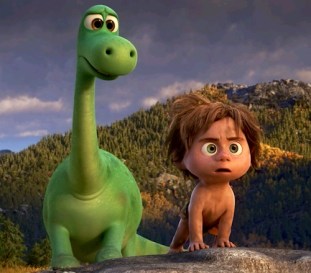
    Instead, The Good Dinosaur was often dismissed as only being for very young children. Some bits do come over that way, but it has quite a harsh edge at times, and the scene where the heroes get high on rotten fermented fruit is freaky even for adults (or this adult, at any rate). It’s a bit of a tonal oddity in this respect, especially when you also factor in some of the leisurely, silent moments spent admiring nature that evoke a filmmaker like Terrence Malick. No, seriously. That’s helped by the animation being mind-blowingly good. Not so much the character animation (which is still strong — the character models are more detailed than you first suspect), but the scenery those characters are placed in… wow. If you didn’t know better I’m sure much of it could pass for photography. And the way they’ve achieved water, a notoriously hard thing to capture in CGI, is absolutely incredible.

    You've got a friend in mePerhaps most powerful of all is the relationship it creates between Arlo and a young human child he befriends, Spot. With humanity in a much earlier state of evolution, Spot is basically characterised as a dog — the way he moves, comes to his name, follows scents, shakes, scratches and enjoys being scratched, and so on — so of course I warmed to him. Nonetheless, though the building blocks used to create their friendship are very familiar, the way the film sells its emotional arc is ultimately immensely effective. Its resolution may even bring a tear to the eye.

    While it may take a while to warm up, The Good Dinosaur is ultimately a very affecting entry in Pixar’s canon. It’s by no means a perfect movie, but I do think it’s an underrated one. And, in all honesty, I enjoyed it more than Inside Out.

    4 out of 5

    The Sting (1973)

    2016 #127
    George Roy Hill | 129 mins | Blu-ray | 1.85:1 | USA / English | PG / PG

    The StingSet in Chicago during the Great Depression, The Sting follows a young street-level con artist (Robert Redford) as he seeks revenge for his murdered partner by teaming up with a seasoned big-con pro (Paul Newman) to scam the mob boss responsible (Robert Shaw).
    If that sounds like a somewhat violent crime movie… well, it kinda is. Although The Sting is often billed as a caper, sometimes even as a comedy (look at those grinning mugs on the poster!), it actually has more of an edge. I mean, it’s not The Godfather, but it’s not Ocean’s Eleven either. The star power and chemistry of Redford and Newman are what give the movie a buoyancy to overcome the storyline’s inherent darkness, though I wouldn’t say that reaches far enough to regard the film as a romp, which is the impression I’d obtained over the years.

    Indeed, I wonder if it suffers from its age more broadly. Not because the filmmaking quality has dated (they may not make ’em like this anymore, but great filmmaking is timeless), but because it was so influential that it’s been copied to death. It still has a lot of points to commend it, but the heist — the driving force of the plot — lacks freshness to modern eyes. Newness is not the be-all-and-end-all, of course, but the con only really comes to life in a flurry of last-minute twists… most of which have also been copied ad nauseam, of course.

    The Sting is certainly not a bad movie — and, for all my talk of it being mercilessly copied, it did manage to con me in a couple of places — but it wasn’t exactly what I’d anticipated. Perhaps I’ll like it more on some future re-watch.

    4 out of 5

    The Sting was viewed as part of my What Do You Mean You Haven’t Seen…? 2016 project, which you can read more about here.

    The Survivalist (2015)

    2016 #150
    Stephen Fingleton | 99 mins | streaming (HD) | 2.35:1 | UK / English | 18

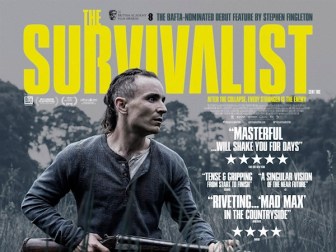
    The Survivalist’70s self-sufficiency sitcom The Good Life meets bleak post-apocalypse drama The Road* in this technically-science-fiction dramatic thriller, the BAFTA-nominated debut of writer-director Stephen Fingleton.

    A man (Martin McCann) lives in a woodland cabin, farming just enough for himself and fending off raiders. When a woman (Olwen Fouéré) and her daughter (Mia Goth) turn up, they build an uneasy alliance in spite of mutual suspicion.

    With a Malickian eye for both nature and pace, it has a grim plausibility about the end of the world and, more than that, the fundamentals of human nature. Depressing but truthful — and, post-Trump, possibly prescient!

    4 out of 5

    * I’ve still not actually seen The Road so this comparison may be faulty, but it was the first super-grim (so I’ve heard) post-apocalyptic drama that came to mind. ^