2014 #71
Producer:
William F. Jury* | 74 mins | DVD | 1.33:1 | UK / silent (English)
 Arguably the most famous clash of the First World War, the Battle of the Somme lasted four-and-a-half months from July to November 1916 and, with over a million men wounded or killed, is “one of the bloodiest battles in human history.” As the BBC’s History website puts it, although it was “intended to be a decisive breakthrough, the Battle of the Somme instead became a byword for futile and indiscriminate slaughter”. Not that you’d guess it from this contemporary documentary, which is essentially a propaganda piece produced by the British government.
Centred around 1st July 1916, the day of the first British assault on the German trenches, the film mostly covers the build-up and aftermath of the initial fighting — despite the title, there’s very little footage of combat. There’s probably two reasons for that: one, the footage of the battle wasn’t very good and so, infamously, was staged (aka faked) later; and two, the battle was a bloodbath, making it a somewhat inappropriate spectacle to show to the general public, especially when it was their friends and relations being slaughtered on “the worst day in the history of the British Army” (they suffered around 60,000 casualties on that first day alone). Not that we’re spared the sight of dead bodies elsewhere in the film, but the moment of death itself is another matter.
The faked footage of men going ‘over the top’ has dogged the film’s reputation to a degree. As Roger Smither, the keeper of the Imperial War Museum’s film & photograph archives, notes in the booklet accompanying their DVD release, “despite a common perception that The Battle of the Somme is ‘full of fakes’, the staged ‘over the top’ scene is in fact a significant anomaly in a film that is otherwise characterised by nothing worse in the way of fabrication than the kind of ‘photo-opportunity’ arrangement that remains a continuing part of television news and photo-journalism to this day.” It’s also one that lasts only a few minutes, if that; a tiny fraction of the entire film.
 The British press certainly believed they were seeing “the real thing at last” (the Manchester Guardian), feeling it showed “war, grim, red war; the real thing” (the Daily Sketch). The British public agreed, flocking to see the movie en masse: twenty million admissions were sold in the first six weeks of release. At the time, the battle still raged (the film debuted on 10th August 1916) — as Smithers notes, “to its original audience, the film was not history but a despatch from the front”. It is such an historical document now, but at the time it wasn’t even recent-history — it was produced as newsreel, a record of current events, designed to make people at home feel connected to the everyday lives of their family, friends and countrymen serving on the frontline.
It can still serve that role today, to an extent. From much of how World War One is presented in modern fiction, documentary and education, you’d be forgiven for thinking troops were shipped directly into trenches, went over the top and died or, if one of the few lucky enough to survive, then went directly to hospital/home/back to the trench. The Battle of the Somme puts lie to that from the start: we begin with preparations for the battle, lines and lines of troops marching or standing around waiting for something to do, in normal-looking fields and towns, far removed from the cramped, muddy, horrid trenches of our imagination. Smiling faces follow the camera, running around to remain in shot, lifting tarps uninvited to helpfully show off stacks of ammunition. It’s all very jolly.
 Equally striking is the scale of the operation. You know it was a monumental effort, but actually seeing so many men… You never see that scope in dramas because they don’t have the budget for all those extras, I guess, but here the crowds of soldiers just waiting around are remarkably large. And crikey, the heavy artillery! Even though you know these were real weapons, today they look more like some fantastical steampunk creation, so covered are they in rivets, and so damn huge.
Signs of disruption to the happy masses creep in, though: it’s surprising how scruffy the uniforms are — not when the soldiers are at rest, but while performing duties like reloading guns. Hats are at odd angles, some are jacketless — just a general lack of the smartness you’d expect to see in an official documentary about the military. Later, we see a gaggle of smiling and laughing faces as men attach special barbed wire cutters to the end of their rifles. Hindsight lets us know few of those men would’ve got close enough to need them.
But there’s no hindsight here; no mention of the incompetent strategy and the severe loss of life it led to. If anything, it makes even the post-battle front look not-so-bad. We see some of the wounded, but they’re either walking or seem to be enjoying a nice stretcher ride, the intertitles informing us we’re seeing “how quickly the wounded are attended to”. Even the captured enemy look just as chipper as the British soldiers escorting them. When we do see action, any British attack is successful and described with words like “glorious”, while any German counterattack is “one of five unsuccessful” ones. It’s brazenly propagandistic. Towards the end we’re shown — and I quote the intertitle accurately — “some of the booty”! (That being artillery, etc, salvaged from the captured German lines.) The closing section opens with shots of devastation wrought on the landscape by British shellfire, accompanied (in the 1916 musical medley) with triumphant music. The tone is shocking.
 Speaking of the music, the Imperial War Museum DVD release offers up a choice of two scores: a newly-commissioned (in 2008) one by film composer Laura Rossi, and a recreation of the kind of music that would have accompanied the film in 1916. The film’s producer and distributor, William F. Jury, was also the editor of trade paper The Bioscope, and had columnist J Morton Hutcheson draw up a list of suitable pieces to be performed alongside screenings, which was published days before the film’s release. To quote Dr Toby Haggith (the Imperial War Museum’s film programmer), again in the DVD booklet**, “for this reason, it may be fair to describe this medley as the ‘official score’ for the film. Although cinemas were not obliged to use these recommendations, we know that it was used in at least seven of the cinemas where the Somme film was screened and there is other evidence that it was widely adopted. However, the point is not that the Morton Hutcheson medley was used on every occasion The Battle of the Somme was shown, but that it is the kind of selection that was typical for this film”.
Rossi found the “medley was much more positive and light-hearted than I imagined… I think it’s interesting to hear the medley and see how it was watched in 1916… but I think someone watching the film today would watch in a totally different way, as we can now look back in hindsight, and we have a pre-conceived idea of what the war was like”. This is partly why I chose to view the film with the 1916 soundtrack: to get an idea for how the film was originally perceived, rather than the laden retrospective view. Rossi avoided listening to other scores when composing her own, preferring to respond to just the film itself. Admirable, and probably the ‘right’ way to do it; but it also brings all that associated baggage of “this was a terrible thing”, whereas the original film, produced as propaganda-newsreel, is going for more “this is hard but honourable”. The 1916 music selection is indeed quite jovial on the whole, though marginally more somber when the occasion calls. The (very small) sampling I listened to of Rossi’s score was more ominous, rumbling, haunting and haunted — much more in tune with our modern understanding, I’m sure.
 Haggith summarises many of Hutcheson’s choices as “motivated wholly by the needs of propaganda… jaunty, martial and unashamedly heroic. Given the nature of the scenes recorded and the bloody history of this phase of the battle, the selection of such upbeat music seems deeply inappropriate.” However, other selections “reflect Hutcheson’s personal response to scenes that he found distressing on a universal level, and which led him to warn musicians that ‘they must realise the seriousness and awfulness of the scenes’… These contradictions suggest that Hutcheson had difficulty selecting music for the film because he was torn by the contrasting images and messages it conveyed. In this way the medley highlights the tension at the heart of the film.” Musician Stephen Horne, who leads the 1916 medley recreation, agrees that the film is torn “between a sense of propagandist duty and a desire to honour the reality that had not evaded the camera’s gaze.” It’s true that, however positive the final movie wants to be, it can’t completely escape reality. At one point it cuts abruptly from a jauntily-scored scene of men happily receiving post to “German dead on the field of battle”. A deliberate juxtaposition of happiness with the fate that awaits them with near inevitability? Seems a bit radical for a propaganda piece…
As a whole, The Battle of the Somme offers little atmosphere or sense of narrative; just the presentation of a series of broadly-chronological tableaux that the cameramen captured. Even the intertitles only describe what exactly the following shots will be showing us, almost like an onscreen footnote or picture caption. This is formative documentary making, and that apparent simplicity only adds to its veracity: because it seems so determinedly unstaged, we believe it must be real.
 But it can’t avoid drawing parallels: the film ends almost as it began, with artillery being moved up for the next assault and men marching to the front, waving merrily as they go. History repeats — probably not the lesson a propaganda film wants to impart, but one it can’t quite escape. And one that, even a hundred years later, we can’t quite learn.
This review is part of the World War One in Classic Film Blogathon, which you can read more about from hosts Silent-ology and Movies Silently.
In that spirit, you might be interested in my reviews of certified-classic Lawrence of Arabia and Stanley Kubrick’s anti-war diatribe Paths of Glory; or, for World War One in modern film, my pieces on the very good Canadian melodrama Passchendaele, and Steven Spielberg’s exceptional, epic adaptation of War Horse. Plus, if you want to really push the definition of “films about the First World War”, there’s always Sucker Punch.
* There’s no credited director. As well as producer Jury, the full credits include cameraman and editor Geoffrey H. Malins, cameraman J.B. McDowell, and editor Charles Urban. ^
** Believe it or not, I’ve avoided quoting too heavily from the Imperial War Museum’s DVD booklet in this review. It’s filled with insights, into not only the film but also its different musical scores and the in-depth restoration process, that make it an enlightening read for anyone interested. ^
 Heartwarming crowdfunded documentary about the power of Batman — not to beat supervillains, but his positive influence on real people.
 Originally produced for the 2010 FrightFest film festival, horror director Jake West’s feature-length documentary with the unwieldy title explores the ‘video nasty’ scare that gripped early-VHS-era Britain. Starting with a primer on the birth of home video, and what it was like to watch movies in those days (because, ladies and gents, we’ve now reached a point where even fans of that (second-)most adults-only of genres, the gory horror flick, are young enough to not recall a time before DVD), West uses archive news clips and a wide array of new talking head interviews to take the story from the UK’s first video recorders in 1978, through a newspaper-led panic, up to the infamous Video Recordings Act of 1984, which irrevocably (thus far, anyway) changed the face of home entertainment releasing in the UK.
 Focusing on the scare rather than the films embroiled in it makes this less a “horror documentary” and more a social history/pop culture one, though the liberal use of extreme clips from the movies in question shuts out anyone without a hardened stomach. (If you did want more on the films themselves, the DVD set that contains the documentary — Video Nasties: The Definitive Guide — includes 7½ hours of special features discussing all 72 ‘official’ video nasties alongside their trailers.) There’s room for little asides amongst the main narrative, though. One of the highlights is the story of an interviewee who was invited on to Sky News in the wake of the James Bulger murder and asked if the film many were holding responsible,
  There was some counterargument, however, which leads us to the film’s best interviewee, and surely a new hero to many: Martin Baker. Baker was one of a few (certainly the first, and for a time the only) critical/intellectual-type voices to speak out in defence of the films that were outraging so many. He’s to be commended not only for his valiant defence of, essentially, free speech at a time when his views were immensely unpopular; but also because he remains one of the most lucid and fascinating commenters in the documentary. He makes the clearest points about the need to not forget both what happened and how it was allowed to happen, lest it occur again.
 that force ISPs to attempt to censor what we can and can’t see on the internet, and just yesterday rushed through anti-privacy legislation without proper debate. Sad to say, many of the valuable lessons of the ‘video nasties’ brouhaha — lessons made explicit with superb clarity in Jake West’s excellent documentary — have not been heeded.
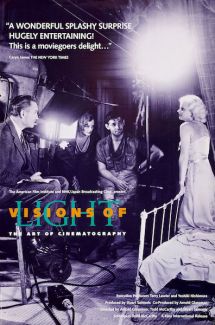 Cinematographers discuss cinematography in this AFI-produced documentary. Initially a whistlestop history of film photography, it segues into analysis of movies the interviewed DPs had shot. Unfortunately, casual film fans may judge it monotopical, while hardened cineastes may find it a haphazard, Hollywood-centric overview.
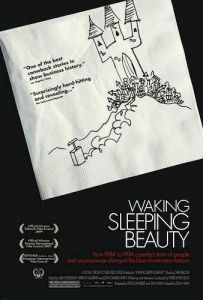 However, Waking Sleeping Beauty is told from the inside: director Don Hahn started out as an assistant director at Disney animation in the ’80s, graduating to producer by the time of Beauty and the Beast. With him he brings behind-the-scenes home movies and access to a stunning array of interviewees. Almost everyone who was anyone at Disney during that time is interviewed, either through archive footage or new audio commentary. It was a tough time, and while Hahn’s portrait is probably not quite warts-and-all, it comes damn close; for example, we get to see some of the caricatures the animators drew in disgust at their new boss, Jeffrey Katzenberg.
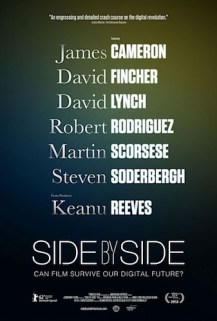 Side by Side is a documentary on camera technology. No, wait, come back! It’s much more interesting than that sounds.
 The significance of the debate is emphasised by the interviewees. Nearly every high-profile name who has at any time factored in the film vs. digital debate pops up, however briefly (renowned film advocate Christopher Nolan gets just a couple of comments; I think Peter Jackson is the only notable omission). Indeed, you can tell how significant the interviewees are just by looking at the poster — what more do you need to know? There are also others — producers, cinematographers, and so on — whose names you might not be familiar with, whose work you might not even know, but have insightful contributions to make. Presenter Keanu Reeves is not just a celebrity voiceover but also the primary (sole?) interviewer, and believe it or not he does a sterling job.
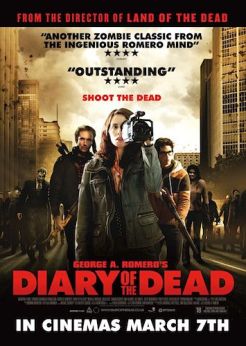 While making a horror movie in the woods, a group of friends hear news of the dead coming back to life. As they try to reach home, their aspiring documentary-maker director keeps his camera rolling, recording their encounters with the living dead…
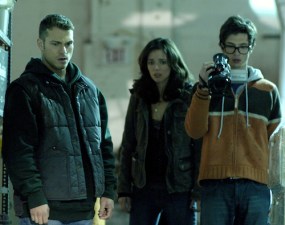 so goodness knows how it’ll look after even ten. Thing is, despite all that, Diary still has one ace up its sleeve: it’s written and directed by George A. Romero.
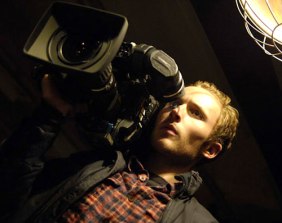 That said, the thematic concerns feel less resonant than in Romero’s previous work. The found-footage has led him to frame this as a film-within-a-film — the first title card reads The Death of Death, followed by one noting it’s “a film by Jason Creed”, the aforementioned aspiring director — complete with montages of news footage and, at times, a voice over narration. This rather rams the point home at times, over-explaining features that previously Romero would have allowed us to spot for ourselves. In some respects you can’t blame him being more obvious in this day and age — it needs to be on the nose to get through to some people — but it’s less satisfying, the blunt information coming across as a statement rather than asking us for our own interpretation, which I feel can lead to a more insightful analysis.
 Such folks, and even genuine Romero fans, seem to have two major problems with Diary (aside from arguments about the acting, the storyline, or even the entire concept). First, the gore: where Land added CGI to the traditional mix, Diary’s almost exclusively courtesy of computer wizardry. That’s the age we live in: computer effects are so commonplace that they’re now the cheap and easy thing to achieve, rather than men with buckets of red food colouring and entrails from the local butcher. For me, it’s a mixed bag. I don’t think this is the worst CGI I’ve ever seen (unlike some commentators), but I do think it lacks the distinctive Romero feel — there’s none of his trademark eating of intestines, for instance, or the tearing a human in half that’s become a key visual in every film since Dawn. Perhaps that’s because of the realism angle? No one would film that; they’d turn away. Of course, when zombies get shot/beaten/etc, that’s different; that we can watch.
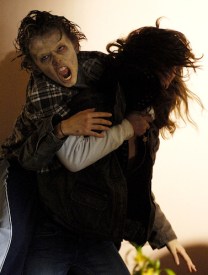 The other problem bemoaned by fans is that this is a reboot, of sorts. Romero’s previous zombie films feature no recurring characters and don’t sit properly within the same timeline, but they nonetheless feature an evolution of the zombie epidemic: it spreads from a one-night issue in Night to a dragging problem in Dawn, to an all-consuming one by Day, in which we see the zombies gaining in intelligence, to the point where they consciously form an invading force in Land. But Diary scraps all that, going back to the start of the epidemic. It doesn’t remake Night — in fact, it handles a few things notably differently (in Night the radio and TV report factual and helpful information; in Diary, they obscure the fact the outbreak is even happening) — but it does disregard the development Romero had taken the undead through.
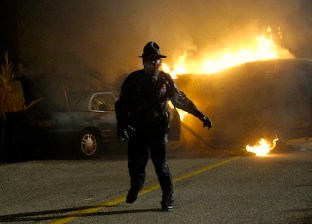 But, nonetheless, the epidemic did develop and evolve across Romero’s previous films, and that’s been lost here. Maybe there’s nowhere further to go with it? I’m not convinced of that. Perhaps Romero will have another idea and get to tell that story someday in the future, leaving Diary (and
 If you don’t know that name then you must be a young whippersnapper, because otherwise Ray Harryhausen needs no introduction.
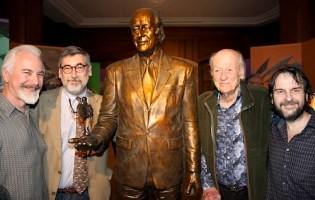 Sometimes they’re a bit jerky, maybe, and the inevitable issues of scale show they’re models fighting or interacting with actors on set… but for all that they’re still not significantly less realistic than so many modern computer-based techniques, and they carry a charm and obvious level of skill that said renderings usually lack.
 One thing I always wonder about ‘specialist’ documentaries is, do they have crossover appeal? Will someone with no interest in Harryhausen, or even in Cinema, get something out of this? Probably not, I guess. But that’s not a bad thing per se, because this is an informative overview of a man’s influential body of work that deserves all the appreciation it can muster. Even if, like me, you’re not that familiar with said work, this is a film that will show you why you should be.
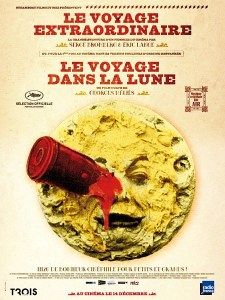 Documentary about the life and work of Georges Méliès, with particular attention to
 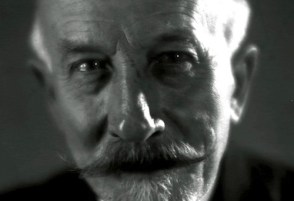 The Extraordinary Voyage accompanies A Trip to the Moon on DVD (or, if you fancy spending a small fortune, Blu-ray), but arguments that it goes beyond a mere ‘special feature’ are worth hearing. It’s a worthy biography/tribute to a cinematic force whose influence is still felt today, coupled with the extraordinary story of how his supremacy is being preserved.
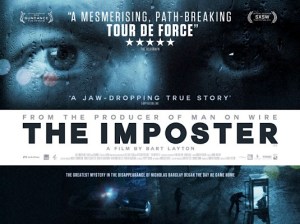 Some films benefit from knowing as little as possible going in; some are at their best when you know nothing at all. But that’s pretty much impossible — unless you go purely on someone’s “you’ll like this, trust me” recommendation about a film you’ve never even heard of, you’ll be aware of something. Normally this comes from a review or blurb, and you just have to trust that the reviewer or copywriter was kind enough to keep it spoiler-free.
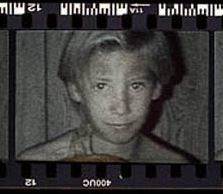 So here’s what the film lets you in on in the opening moments: in 1993, 13-year-old Nicholas Barclay went missing in Texas. In 1997, a boy claiming to be him surfaced… in Spain. He had Nicholas’ tattoos, but he had a French accent and the wrong colour eyes. And yet the first relative to see him, Nicholas’ older sister, gave a positive ID, and upon returning to America he was accepted into the family. Why did they take in such an obvious fraud?
 but, nonetheless, it makes the documentary itself feel untrustworthy, just like its participants. Is that an intended effect? Arguably the film’s main theme is lies — the lies we tell ourselves, the truths we want to believe; confirmation bias, perhaps, though that term is never mentioned — but the documentary itself never lies to us… I don’t think. It just feels like it might be.
 as the poster prominently tells us, this is “from the producer of
  100Films.co.uk