
Pierre Morel | 93 mins | Blu-ray | 18
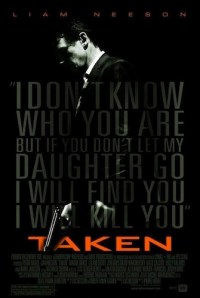 “I don’t know who you are. I don’t know what you want. If you are looking for ransom, I can tell you I don’t have money. But what I do have are a very particular set of skills; skills I have acquired over a very long career. Skills that make me a nightmare for people like you. If you let my daughter go now, that’ll be the end of it. I will not look for you, I will not pursue you. But if you don’t, I will look for you, I will find you, and I will kill you.”
So goes Liam Neeson’s famous (ish) mission statement in the latest (ish) action-thriller from the team behind The Transporter series. You need know little more of the plot, though it still takes half an hour to get to that little speech.
If you do want to know more of the plot… well, remember Man On Fire? The Tony Scott/Denzel Washington one (I presume the older one’s the same, but I’ve not seen it). Well, replace Washington with Neeson and Dakota Fanning’s character with “his daughter” and you’ve more or less got it. Taken is practically a remake, only in Europe, with a happier ending, and an hour shorter. It’s also not as good, but that’s a different matter.
You may be wondering why it takes a half-hour to get to that mission statement. Well, Man On Fire style, it’s because we’re treated to a significant chunk of character-based drama before the kidnapping occurs. This stuff at the beginning is either Character Deepening and Motivation Revealing or just dull and needless, depending on your point of view. And while I’m all for character and motivation and all the other stuff that actually makes A Good Script rather than A Series Of Scenes, I’m inclined towards the latter here, because of the comparison with Man On Fire.
The Scott film showed us a character (this would be Washington) who’d shut down emotionally, who had nothing to care about. He meets a girl who he has to protect; that’s his job. But she brings him out of his shell, gives him a reason to live, to genuinely care about her rather than as a means to a pay-packet. And then she’s taken and he hunts those SOBs down. This is character building. In Taken, we’re shown an ex-CIA-or-something dad who loves his daughter. We spend half an hour being shown this. Then she’s taken and he goes after those SOBs.
See the difference? Washington has to go from point A to point C via point B before he’s ready to go on his killing spree/rescue mission. Neeson goes from point A to point A. Establishing he’s an ex-CIA-or-something dad who loves his daughter would take five minutes — indeed, it does, there’s just Some Other Stuff too — but the action portion of the film lasts less than an hour, so something needs to make it feature length, right? There’s nothing wrong with the early dramatic scenes in themselves — Neeson is an excellent actor, he could work this material in his sleep — but they’re needless for the real story.
So what of the real story? Well, at times it feels like someone filmed a treatment — once underway it’s all plot, action and not much else. Characters arrive only to be quickly dispatched, either because their purpose is served — the Albanian translator, for example — or in a body bag — which is nearly everyone else. In many ways it has an admirable efficiency — the plot is an action delivery system, not a proper story —  but after half an hour spent setting things up, it’s like screenwriters Luc Besson and Robert Mark Kamen felt they’d done their dramatic dues and just wanted to watch people get beaten up. Or shot. Or blown up. Or hit by trucks.
The action sequences are quite good. The thing is, Neeson’s an Actor, not a martial arts expert or glorified stuntman. He beats people up fine, he shoots a gun fine, he drives a car fine, but he can’t show the physical dexterity of Jason Statham in The Transporter, never mind Jackie Chan/Jet Li/insert Eastern star of preference here. The fights entertain while they last in the way any above-competent action movie is, but there’s nothing distinctive about any of them to raise them to a level where they’ll be remembered. And that’s pretty much fine, just not special.
Not to criticise director Pierre Morel, though. Largely pointless though they may be, there’s nothing wrong with his handling of the earlier scenes, and the same goes for the later ones. Visually he gives the film a slickness and sheen that seems to lift it slightly above Besson-and-co’s other recent Euro-American action/thrillers. Or that might just be because it’s the first I’ve watched on Blu-ray. (Incidentally, is it me or are the subtitles ineffective on the UK disc? None of the French or Arabic was subbed — and it seems it’s meant to be, because the English HOH track has it so. I was reduced to flicking that on and off every time someone spoke Foreign, which is A Pain. And rarely worth it. The special features seem to suffer a similar defect too.)
 Despite all this, Taken’s an entertaining actioner. Unsurprisingly, there’s something satisfying about an apparently calm and controlled father being allowed to explode in precision violence against a bunch of scumbag white slavers. It’s wish fulfilment; proper justice finally being done. And, for extra gratification, he’s got the requisite spy skills — the bit with the radio and walkie-talkie, for example — and, even better, edge — perhaps the film’s most memorable moment (after that speech, anyway), when he shows the lengths he’ll go to when visiting a ‘friend’ for dinner.
If you think about it too much post-viewing, Taken begins to fall apart. Quickly. But for nearly 90 minutes while Liam Neeson shows those Evil Eastern Europeans who’s boss, it’s action-packed wish-fulfilment of the morally satisfying variety. Either that or bile-filled hate-driven xenophobic venom. Each to their own.

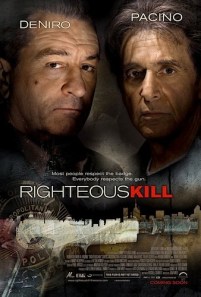 You remember Righteous Kill, right? It’s the film that reunited De Niro and Pacino, only the second time they’d appeared on screen together. And while the first,
 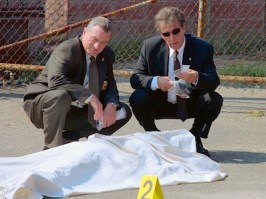 he’s lensing a procedural thriller about a pair of 60-something cops and not Miami Vice 2. Suffice to say, it doesn’t work; if anything, it makes it worse.
 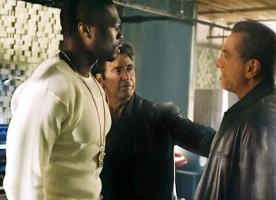 The film’s at its best when focusing on the De Niro/Pacino pairing, granting us the occasional good scene. Or just line — every little helps. But there’s not enough of that and too much of the dross. Other characters come and go with near-random irregularity, subplots are abandoned, or if they were resolved I missed it, and there are so many clichés you wish the DVD came with a spotters’ guide — at least ticking them off would give you something to do.
 Apparently, the recent Michael Caine-starring
 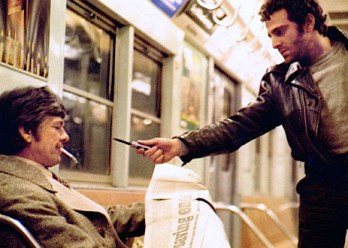 The strongest element is probably Wendell Mayes’ script, because it constructs all this. Weakest is Michael Winner’s direction — some of it’s fine, the occasional shot even good, but largely it’s pedestrian and sometimes mediocre. That said, Winner has become such an unlikeable public figure that it’s somewhat difficult to gauge how much of this is bad direction and how much bias. Still, it’s not the kind of work to make one think, “he’s an idiot, but he knows how to do his job”.
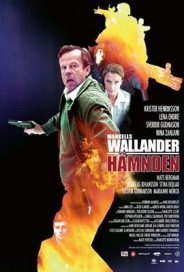 Krister Henriksson returns as the titular Swedish detective for a second — and final — series of feature-length investigations, though this time only this first has received a theatrical release (which means it’s likely the only one I’ll review, unless the series finale offers something that persuades me otherwise).
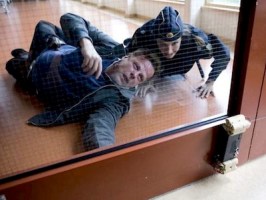 The climax is a case in point. There’s no grand shoot-out or serious race-against-time-for-the-last-bomb, just Wallander and the criminal having a calm chat. OK, so there’s a kidnapped government minister, a gun, snipers and a big vest-bomb, but these are set dressing to the conversation. It’s proof if proof were needed (it isn’t) of Henriksson’s controlled skill in this role. As great as Branagh could be, it’s hard to imagine his introspective interpretation of a weepy Wallander slotting into this scene without making it unpleasantly histrionic.
 but also by adding two new recruits to Wallander’s team, Isabelle (Nina Zanjani) and Pontus (Sverrir Gudnason), and the introduction of prosecutor Katrina (Lena Endre). All are set up as key new characters for this run, though it’s clearly Only The Beginning here. Katrina is a little too blatantly a potential love interest for Wallander, while Isabelle and Pontus are… well, new characters. There’s little to say about them yet.
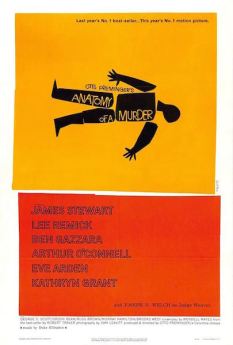 Anatomy of a Murder is a courtroom drama, adapted from a novel by a real-life defence attorney (“defense attorney”, I suppose), who in turn based his fiction on a real case. This background not only adds to the veracity of what we see, but likely explains the film’s style and structure.
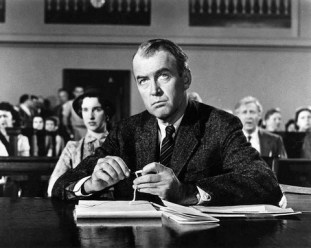 A lot of this support is down to Stewart’s performance — it feels wrong to be cheering the defence counsel of a murderer, even if he had a justifiable motive (which, remember, he may not have) — but we’d probably cheer Stewart on if he was the murderer. His Biegler is always in control, from investigation to courtroom, even when by rights he should be completely out of it. He manipulates the judge, the prosecution, the jury and the crowd to perfection; the viewer sits by his side — we know he’s playing them so we can revel in it — but, in turn, he manipulates us too, tempting us to his team — to laugh at his jokes, to support his case, to loathe the prosecution, even though they might be right. It’s a stellar lead performance.
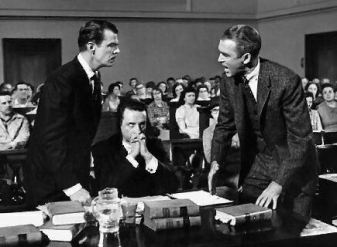 I could just as well go on to praise Ben Gazzara, Arthur O’Connell, Eve Arden, Brooks West, even the smaller roles occupied by Kathryn Grant, Orson Bean, Murray Hamilton and others. Some criticise Joseph N. Welch’s judge, and it’s perhaps true that his performance is a little less refined than the others, but as a slightly eccentric judge he comes off fine. And to round things off, there’s an incredibly cute dog. Mayes’ screenplay is a gift to them all, finding room for character even within the ceaselessly procedural structure, using small dashes of dialogue or passing moments to reveal and deepen each one.
 There are times when one feels under-qualified to review a film in a way that gives it its due. This happens particularly frequently when one’s blog covers first-time viewings of films that are often classics/significant/beloved/etc. My appreciation for Exiled has been increased by two other, more qualified, reviews: one from
  M is a film of immense significance, not least because of its place on
  the public reaction and hysteria; the police’s flailing investigations and increasing exasperation; the criminal underworld, who begin their own manhunt because police inquiries are “bad for business” (despite sounding like a filmic conceit, this element was directly inspired by a newspaper article); and the criminal himself — trying to lay low, but constantly having to fight his urges… and ultimately giving in to them again.
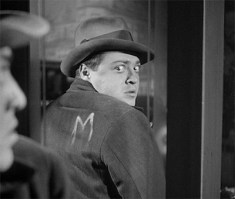 how they search crime scenes with a fine-tooth comb; another sequence shows their methodology for staging a raid; and so on. Such precise and clinical methods ultimately pay off: it’s a pair of tiny clues, carefully reasoned and sought out, that reveal the killer’s identity — and if it weren’t for the criminals getting there first, they’d’ve surely caught him too. Indeed, were it not for this breakthrough then the film might hold a
  like tracking from outside to inside through a window within a single shot — are present here). M’s individual moments of brilliance go on — perhaps my favourite is when the police arrive just after the criminals have apprehended Beckert. We don’t even see an officer on screen, but the burglar’s reactions let us know who’s there. Its a funny moment (even if we’ve seen it dozens of times since) and a lovely shot too.
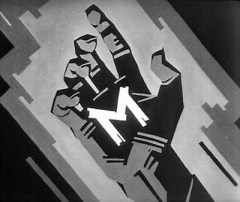 the murderer won’t bring the children back, and warns viewers to watch out for their own. It’s not the triumphant “we got him!” that concludes most serial killer films, but a blunt warning that, though Beckert has been caught, there are always more out there, waiting to strike. History has sadly proven her right; but while the world has produced many men and women like M’s villain, it hasn’t produced many films quite like M.
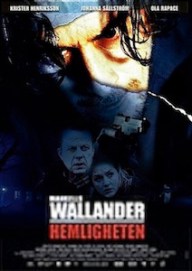 The third theatrical release to star Krister Henriksson as Henning Mankell’s detective is the thirteenth and final episode in the first series. It has a suitably Season Finale feel to it — “this time it’s personal” and all that — but also subtly constructs itself to work as the standalone piece necessary for a theatrical release schedule that skipped six whole episodes.
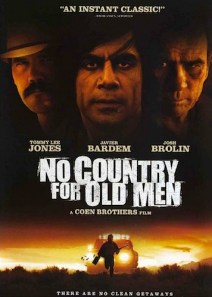 When I saw No Country for Old Men, a new round of films were vying for the Best Picture Oscar. Now, as I finally post my review, a whole new load have been nominated, voted on, and await the final result. Sometimes I feel decidedly behind the times.
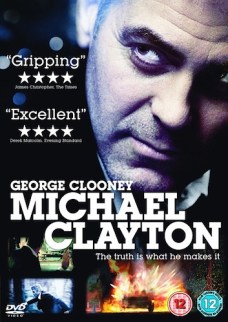 When Michael Clayton turned up among the contenders for 2008’s Best Picture Oscar I was a little surprised, because as far as I could recall I’d never heard of it. Then as I read about it a memory came floating back… a memory of a half-page (at best) review in Empire, of a George Clooney film that sounded like it should be good but was, they asserted, only worthy of three stars. As you’ve surely guessed, when I dug out this review it was indeed of Michael Clayton.
 100Films.co.uk