The Falcon and the Co-eds (1943)

2013 #65
William Clemens | 65 mins | download | 4:3 | USA / English | PG
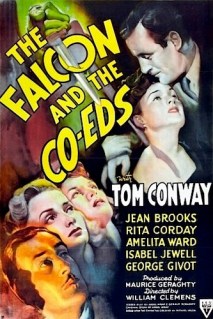
The Falcon and the Co-eds

In American colloquial language, “coed” or “co-ed” is used to refer to a mixed school… As a noun, the word “coed” is used to refer to a female student in a mixed gender school.

I Wikipedia’d that just to check, because in his fourth outing as the Falcon, Tom Conway investigates a mystery at an all-girls school.

Minor oddnesses aside, The Falcon and the Co-eds is one of the series’ better entries. I suppose these days the plot would only sustain a TV murder mystery rather than a theatrical release, but it’s a solid whodunnit — not something these Saint and Falcon films can always claim. Here, the students of a remote girls’ school are suspicious that the death of a teacher wasn’t sudden heart failure as the faculty claim, and one who previously had a dalliance with our titular hero calls on him to investigate. Mystery and intrigue ensue, with a plot that thickens and an array of potential suspects.

Alongside this is the series’ trademark humour. Here it’s served by both the college girls’ infatuation with our suave English hero, and a trio of younger lasses who are part Greek chorus and part sidekick team. The series’ regular comic relief, Inspector Donovan and Detective Bates, are on hand too, thankfully without their grating catchphrase. It’s not all light, though: the film was cut on its original UK release, presumably for the things noted in its 2012 classification: “references to suicide and a drugs overdose”.
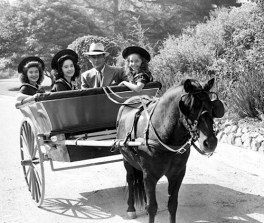
The Falcon and the girlsIn fact, the worst thing about the film is purely a result of its age, and that’s the occasional bout of misogyny. Let’s face it, the girls going all giggly over the Falcon is pretty defensible (look at modern-day reactions to the likes of One Direction, Justin Bieber, or even Benedict Cumberbatch), but the bit where he picks a twenty-something girl up to smack her bottom is a bit much. Still, it opens with a great bit: the Falcon parks his car, a girl immediately runs up to it: “Mr Lawrence?” “Yes?” She jumps in, instantly kisses him full on the lips, and when she pulls away all he can say, with a slightly surprised look, is, “Nice!” You could put that in something today and it’d still work.

The Falcon’s high point to date was surely the previous film, The Falcon in Danger, which was also directed by Clemens and featured two of the same leading ladies — I guess RKO didn’t think anyone would notice, even when the films were released just a few months apart. Co-eds perhaps doesn’t reach quite that level, though it makes a good fist of it. The twisty plot is engrossing and the humour entertaining, though I felt more could have been made of the potentially atmospheric remote cliff-top setting. It’s the kind of film where I began imagining how it might be remade to even greater effect. That may sound like a criticism but, when it comes to B-movies of this vintage, Nice lightingsuch thoughts always endear them to me.

I often find star ratings a bit useless on these long-running series. They all fall into roughly the same bracket in the grand scheme of movie-watching, but within the series there are distinct highs and lows. In Danger is the only one so far I’ve seen fit to give a whole 4 stars too, but Co-eds sits right behind it.

3 out of 5

Kick-Ass 2 (2013)

2013 #107
Jeff Wadlow | 103 mins | Blu-ray | 2.40:1 | UK & USA / English | 15 / R

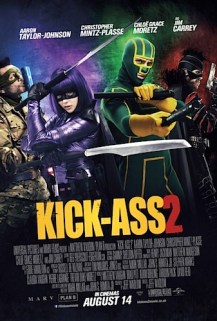
Kick-Ass 2When the first Kick-Ass was released back in 2010, one of the main stories was that it had flopped at the box office. That was poppycock: it opened at #1 in the US, and because it was made for just $30m it more than broke even in the US alone, eventually earning a total of $96m worldwide. It was an even bigger hit on DVD and Blu-ray, with an uncommonly large percentage of home entertainment sales being on BD, helping it earn even more cash.

Come the release of Kick-Ass 2 in September 2013 and the first film was suddenly referred to as a renowned box office hit. I guess the media have very short memories. And it made a good stick to beat the sequel with, when it opened at #5 in the US with just $13m. What a flop! Except it only cost $28m, has gone on to make just over that in the US, and has climbed to a total of $59.6m worldwide. Not close to as big as the first film, but even before the inevitably-successful DVD & Blu-ray numbers that’s a strong performance.

Will we see a third film? That certainly looks plausible. Should we? Well…

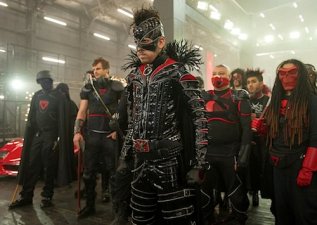
Written and directed by Jeff Wadlow, based on two comic book miniseries (Hit-Girl and Kick-Ass 2) by Mark Millar and John Romita Jr., the movie of Kick-Ass 2 rejoins the characters a couple of years on. A wave of Kick-Ass-inspired costumed heroes now patrol the streets, though Kick-Ass himself, Dave Lizewski (Aaron Taylor-Johnson), has more or less retired. Mindy Macready (Chloë Grace Moretz) still fights crime as Hit-Girl, HG, KA, MFhiding that fact from her disapproving guardian (Morris Chestnut). Meanwhile, Chris D’Amico (Christopher Mintz-Plasse) wants revenge on Kick-Ass for murdering his father, but is being kept out of the way by his mother and the remains of his father’s mob organisation… until she dies in a freak accident, when Chris dubs himself “the Motherfucker” and sets about forming a gang of supervillains…

If that sounds like a convoluted setup, that’s kind of how it plays on screen too — and it’s only the start of it. This is a somewhat muddled second instalment, taking time to re-introduce us to various characters and follow all their stories. Whereas the first film introduced elements gradually as they came into contact with the central narrative of a schoolboy-turned-superhero, Kick-Ass 2 picks up each character when they’ve more or less gone their separate ways, then sets about bringing them together again. So rather than one straightforward thread that others naturally emerge alongside, here Wadlow must juggle three disparate tales from the start, before he eventually ties them together.

It feels a little meandering, then, as Kick-Ass joins up with a superhero team trying to do good, the Motherfucker gradually assembles his own team of villains, and Mindy tries to fit in as a regular high school girl. You can see the germs of good ideas here, but how well they function is debatable. Whereas the first film riffed on archetypal characters and plots from regular superhero movies, as such providing an entertaining deconstruction of the genre, Regular high school ass-kickerthe sequel doesn’t feel as focussed. The themes are somewhat familiar — superheroes leading to supervillains, as seen in Christopher Nolan’s Batman trilogy, or the assembly of superhero teams, as seen in The Avengers — but it seems these are coincidental similarities, not conscious points of reference, comparison, juxtaposition, or examination.
Wadlow is an inadequate replacement for the first film’s director/co-writer Matthew Vaughn. In fairness he’s working to an even tighter budget (in the deleted scenes, he reveals a whole 30-second action beat in the Hit Girl/Mother Russia fight was cut purely because they couldn’t afford a small patch of green screen replacement in one shot), but that’s not the real problem. There just aren’t as many gags, the action sequences aren’t as viscerally satisfying, the story meanders a bit in the middle rather than barrelling through like the first. In part this is the widely-identified fact that Moretz is now a teenager behaving like a teenager rather than the shocking/amusing pre-teen swearing like a sailor of the first movie, but it’s a more endemic problem than that. Whether it stems from Millar’s original comic or Wadlow’s treatment of it, I don’t know, but on the whole it feels less inventive, less vital, and consequently less exciting (though there are some good sequences) and less funny (though there are some proper laughs).

Bad assWadlow does make welcome changes to Millar’s notoriously nihilistic comic, however: instead of gang-raping Kick-Ass’ girlfriend, the Motherfucker can’t get it up (I guess because Kick-Ass isn’t dating his mother (ho ho!)); instead of murdering Colonel Stars & Stripes’ dog, he remarks that “I’m not that evil!”; and so on. The film version still has its points of offensiveness and some outré ideas, certainly, but the needlessly-harsh edge has been taken off, especially when it comes to punishing characters who are innocent. With the exception of Kick-Ass’ dad, but then that’s a superhero staple… just one that’s more violently executed here than normal.

The quality cast keep the film watchable at all times, and the tight budget doesn’t always stand in the way — some of the green screen work may be shockingly cheap, as seen in the van sequence ever since the trailer, but the action choreography of such sequences is still good — meaning that Kick-Ass 2 remains entertaining for fans of the first outing. But it isn’t as strong a production all round, and doesn’t exceed the original in any regard — indeed, any emotional investment in the characters (and there is some) is carried over from the first film’s groundwork — meaning that those fans may be entertained, but will also be a bit disappointed.

FriendsSo is Kick-Ass 3 a good idea? Kick-Ass 2 does provide a kind of conclusion to the story… but it also leaves it wide open for more, not to mention that Millar & Romita’s third comic book miniseries (currently running) is supposed to be the definitive final act for the characters. It would be a shame not to see that completed on screen, but perhaps with more care in how it’s executed.
3 out of 5

This review is part of the 100 Films Advent Calendar 2013. Read more here.

The Hitch-Hiker (1953)

2013 #57
Ida Lupino | 71 mins | TV | 4:3 | USA / English & Spanish | 12

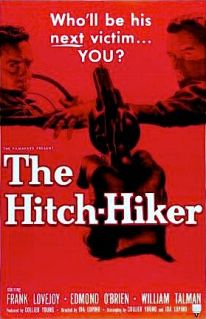
The Hitch-HikerBased on a true story, this film noir sees two chums on the way home from a fishing trip pick up a hitchhiker. As you can tell from the title, he turns out to be rather significant: he’s a murderer on the run, and pulls a gun on the men so they’ll do his bidding, which is take him to Mexico so he can escape justice. Oh dear.

What follows is, at barely more than an hour, a lean thriller. Is the killer a man of his word who’ll let the friends go when they reach his destination? Can the two unfortunates escape his grasp before they have to find out? The aim of the game is tension and suspense, unencumbered with little else besides glimpses of the faltering manhunt for the kidnapping hitchhiker. Excellent use is made of a barren landscape to heighten the sense of hopelessness — there’s few signs of other living souls; though even if there were, surely the hitchhiker wouldn’t hesitate to kill ’em all.

Of particular note is that The Hitch-Hiker is directed by a woman, the first noir to be so. We live in an age where a woman has only recently managed to win the Best Director Oscar, and female directors are still a rare beast in Hollywood, so I can only assume they were even fewer and farther between back in the ’50s. Katherine Bigelow received additional praise in some quarters for taking said award while playing in the “men’s world” of the action/war movie (thereby negating any potential sense of “well done little woman, you made a nice little Women’s Movie”), but that’s also what Lupino did here.

The female perspective is from the passenger seat, am I right?But does her gender add any different perspective? I think perhaps it does. If you read the review at Films on the Box (which you should, it’s a fantastic overview and analysis), Mike notes that “the two fishermen take on the film’s ‘female’ roles, out of both control and their depth and steered by the stronger man.” While I’m sure a male director could tell this story, perhaps it’s that little bit more effective when helmed from a female perspective, especially in an era when they were even more socially and professionally confined than today.

The Hitch-Hiker may support an even deeper reading along those lines; but if you have no desire to engage in that kind of thing, it remains an effectively tight and tense experience. A lesser-known noir, I think, but one not to be forgotten.

4 out of 5

This review is part of the 100 Films Advent Calendar 2013. Read more here.

Lady of Deceit (1947)

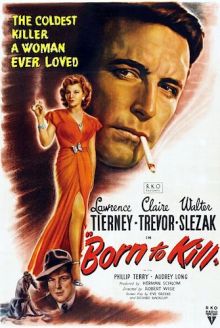
aka Born to Kill / Deadlier Than the Male

2013 #88
Robert Wise | 88 mins | TV | 4:3 | USA / English | PG*

Lady of DeceitDirector Robert Wise certainly had an eclectic career. Depending on your genre predilections, you may feel he’s best known for The Sound of Music and West Side Story, or The Day the Earth Stood Still and Star Trek: The Motion Picture, or The Haunting and The Body Snatcher, or perhaps even a string of film noirs including The Set-Up, I Want to Live!, Odds Against Tomorrow, and this mid-’40s thriller.
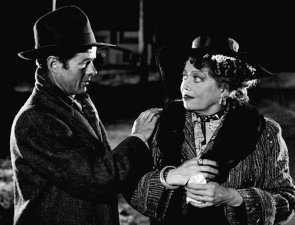
Based on the novel Deadlier Than the Male** by James Gunn (not that one), the story sees a young woman, Helen (Claire Trevor), getting a divorce in Reno so she can marry her fiancee (Phillip Terry). On the night she’s due to leave, Helen discovers the murdered bodies of her friendly neighbour and her new boyfriend, but chooses to skip town early rather than tell the police. On the way back to San Francisco she runs into the murderer, Sam (Lawrence Tierney). He inveigles his way into Helen’s life, but when she refuses his advances he turns his attention to her rich sister (Audrey Long), and… well, I’m getting quite far into it now, aren’t I? Suffice to say there are affairs, investigations, and more murders. It’s “an hour and a half of ostentatious vice”, as one contemporary critic put it. You should read their full review, it’s full of more gems, concluding that “discriminating people are not likely to be attracted to this film.”

Deadlier Than the MaleEven today, it’s quite a nasty little work, although tastes have evolved to the point where “discriminating people” are likely to be attracted to it — though not purely for the violence. You’d imagine that would pale by today’s standards, but even now the opening double homicide — presented pretty much in full on screen — is quite shocking, especially because it seems so horrendously plausible. Much movie violence is heightened, involving gangsters or spies or whatever, but here it’s a lover in a jealous rage killing two people in the kitchen of a regular house. Grim.
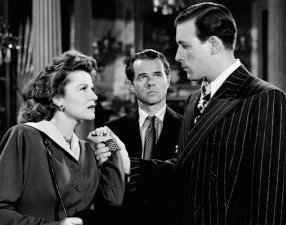
The real reason to watch is the quality cast. Trevor and Tierney are excellent as the secretly-duelling central pair: her, scheming but oft thwarted; him, an unreadable mass of brazen nerve, cunning, and a fatally short temper. There’s able support from the ever-reliable Elisha Cook Jr. as Sam’s only friend, attempting to aid his cover-up, and Esther Howard as the gregarious landlady who won’t let the murder of her friend go unavenged. Plus, Walter Slezak as a strangely jovial investigator, one of those left-field characters who never quite seem like real people but, thanks to their appealing affectations, Born to Killsometimes develop a cult following.

Nasty it may remain, but Lady of Deceit is really probing dark corners of human nature; mining its story from the places people might find themselves if they’re a little too prepared to dig fresh holes to avoid potential troubles. Performed by a cast all firmly on their game, it adds up to a quality noir.

4 out of 5

This review is part of the 100 Films Advent Calendar 2013 — the first on it to be more than four years old, in fact. Read more here.

* Here’s yet another Odeon Entertainment release that doesn’t seem to have been before the BBFC recently (in this case, it was last classified A in 1948). I’m not sure how they get away with it. ^

** The film is called that in Australia. In the US, it’s Born to Kill. In the UK, it was released as Lady of Deceit and the print aired on TV bears the same title, though the DVD release plumps for Born to Kill. For my money, the novel’s title is the best, followed by the UK one, while the US title is blandly generic. ^

Jack Reacher (2012)

2013 #70
Christopher McQuarrie | 125 mins | streaming (HD) | 2.35:1 | USA / English | 15 / PG-13

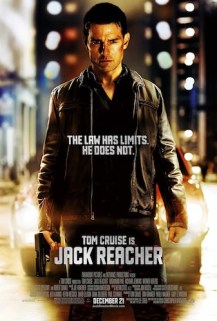
Jack ReacherI don’t like Lee Child. I’ve never read one of his novels, but I’ve read and seen interviews with him, and always felt he comes across as intensely pompous and irritating. I disclose this up front because it leaves me predisposed to dislike Jack Reacher, the first (they hope) movie adaptation from Child’s series of novels starring ex-military policeman and now all-purpose vigilante Jack (you guessed it) Reacher.

They’ve presumably gone down the name-as-title route for brand recognition value; plus to give them the choice to call the sequel simply Jack Reacher 2, because, as we all know, a series needs the same umbrella title on every entry to succeed — just look at the billion-dollar earnings of James Bond 23. (Oh wait, no.) The film is actually adapted from Child’s ninth Reacher tome, One Shot, which concerns a retired sniper who kills five civilians with six shots. When arrested, all he says is, “get Jack Reacher”. But Reacher isn’t his friend — thanks to past crimes, Reacher wants to see the man go down. But only if he’s actually guilty…

Writer-director Christopher McQuarrie (writer of The Usual Suspects, and The Wolverine script that Darren Aronofsky loved but James Mangold clearly felt could be improved(!)) has delivered an enthralling action-thriller with an unusual-these-days emphasis on the thriller part. There’s still a well-executed car chase, an epic punchy-shooty climax, and the odd spot of running and fighting along the way, but primarily this is a mystery that our heroes must wind their way through. It’s an intriguing yarn, which unfurls neatly to a largely satisfying climax. Say hello to my little friend, said RosamundHow much you consider the twists to be twisty will depend on which suspects your guesswork picks out, but in that regard it’s as strong as other similar genre examples.
Whether Cruise is a good fit for the literary Reacher (“literary” is a bit of a stretch, isn’t it?) I don’t know, but he’s as likeable a leading man as ever (i.e. if you don’t like him normally, this won’t change your mind), albeit a little terser than usual. I’d happily watch a sequel, let’s put it that way, and I’m very nearly tempted to pick up one of the books. There’s strong support from Rosamund Pike as the accused’s legal defender, and an array of fun cameo-sized supporting roles, which you may have heard about but, in case you haven’t, I shan’t spoil. (I mean, their names are on the poster, but I’d somehow missed that.)

A general apathy from cinema audiences (read: low box office) and Child’s fans declaiming Cruise’s casting (he’s far too short) may have led to the impression that Jack Reacher was a mediocre offering. Happily, that’s not the case. If anything, it’s underrated — the final product is a classily-made thriller that merits your time.

4 out of 5

This review is part of the 100 Films Advent Calendar 2013. Read more here.

Fast & Furious (2009)

2013 #86
Justin Lin | 102 mins | TV | 16:9 | USA / English | 12 / PG-13

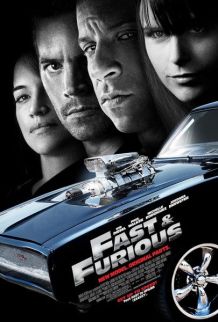
Fast & FuriousSome say this is the worst of the series, and I think I agree. 2 Fast 2 Furious has a stupid name and Tokyo Drift is almost a direct-to-DVD cheapo, but they embrace their trashy roots and are kinda fun.

#4 takes itself too seriously as a revenge/drug-smuggling thriller. There’s only the occasional uninspiring driving sequence, many featuring CGI that looks straight out of a computer game — and not even a computer game now, but a computer game back when the film was made.

The tagline — “New model. Original parts.” — was very neat, but is also the best thing here.

2 out of 5

This review is part of the 100 Films Advent Calendar 2013. Read more here.

In the interests of completing my ever-growing backlog, I decided to post ‘drabble reviews’ of some films. For those unfamiliar with the concept, a drabble is a complete piece of writing exactly 100 words long.

Dredd (2012)

2013 #6
Pete Travis | 96 mins | Blu-ray | 2.40:1 | UK, USA, India & South Africa* / English | 18 / R

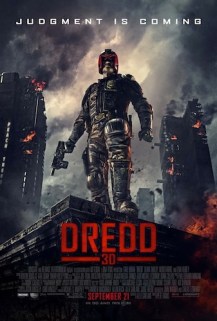
DreddDogged by comparisons to The Raid (which filmed after but released before), and enforced 3D that its 18+ audience didn’t go for, Dredd underwhelmed at the box office.

Huge shame. It’s the gritty take on 2000AD’s primary hero that aficionados have long desired, but also an exemplary sci-fi/action movie in its own right. With impressive gun battles, dry humour, and Karl Urban nailing the title character (yes, including the voice), it’s an hour-and-a-half of unencumbered testosterone entertainment.

Screenwriter/producer Alex Garland’s trilogy outline sounded unmissably good. We must hope home media sales are ultra-strong and the ongoing sequel campaign ultimately succeeds.

5 out of 5

This review is part of the 100 Films Advent Calendar 2013. Read more here.

Dredd placed 6th on my list of The Ten Best Films I Saw For the First Time in 2013, which can be read in full here.

In the interests of completing my ever-growing backlog, I decided to post ‘drabble reviews’ of some films. For those unfamiliar with the concept, a drabble is a complete piece of writing exactly 100 words long.

* IMDb used to list the countries of production as UK, USA and India, while the end credits of the film itself refer to it being “A South Africa/United Kingdom co-production”. With that in mind, I found the BFI list all four. Seems only fair. (IMDb have since taken my suggestion and added South Africa.) ^

Armored Car Robbery (1950)

aka Armoured Car Robbery*

2013 #8
Richard Fleischer | 65 mins | TV | 4:3 | USA / English | PG**

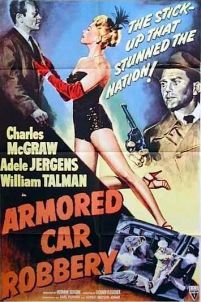
Armored Car RobberyA B-picture from the middle of the classic film noir era, Armored Car Robbery is perhaps most notable today for being one of the first films directed by Richard Fleischer, who would later call the shots on 20,000 Leagues Under the Sea, Doctor Dolittle, Tora! Tora! Tora!, Soylent Green, and Conan the Destroyer, amongst many others.
To be honest, I’ve never seen a Fleischer film, and, like most cheap productions, Armored Car Robbery doesn’t seem to display much of a directorial voice. Which isn’t to say it’s badly done — there are some effectively tense sequences, and the titular act is well staged, plus some nice low-angle shots of the criminals scheming.

The story sees a gang of thieves go on the run after their plan results in the death of a copper. As ever, policemen are more important than anyone else when it comes to the effort exerted in investigating their demise, and so the dead guy’s partner is doggedly on the gang’s tail. The execution of his search at times makes the film feel like CSI: 1950s, as the cops track down the crooks via tyre treads, fingerprints, lipstick types, and so on.

A solid rather than exceptional film noir, Armored Car Robbery is worth a look for fans of the genre if they get a chance.

3 out of 5

* Normally my review-titling rule is to go with the UK title and/or the title card on the version I watched (generally the same thing). But Armored Car Robbery is universally referred to by its US-spelt title (understandably). That said, UK prints did feature the correct spelling of “Armoured”, as per the one shown on BBC Two.

** As with many films released on DVD by Odeon Entertainment, this has apparently not been passed by the BBFC since its original release. Nonetheless, it’s available on DVD rated PG. ^

On Dangerous Ground (1952)

2013 #49
Nicholas Ray | 79 mins | TV | 4:3 | USA / English

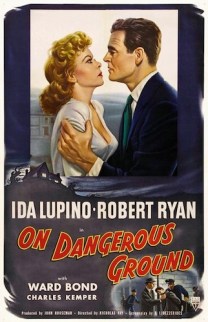
On Dangerous GroundHelmed by acclaimed director Nicholas Ray (Rebel Without a Cause, In a Lonely Place, Johnny Guitar), On Dangerous Ground is a film noir in which an over-zealous city cop (Robert Ryan) is punished by being sent upstate to investigate a murdered girl. There he encounters a blind woman (Ida Lupino) and, perhaps, finds redemption…
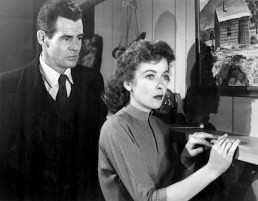
Despite the praise emanating from some quarters (“the material achieves a nearly transcendental beauty in the hands of Ray”, “a touching psychological drama about despair and loneliness”, and so on), I’m afraid this one provoked a lukewarm reaction from me. I didn’t feel the redemptive character arc was particularly clear, though perhaps this was in part the fault of Ray having to change the ending by studio mandate, and maybe having to pull punches in certain areas due to it being the ’50s.

I also didn’t ‘feel’ the juxtaposition of shadowy city in the film’s early sections with bright snowy country later on. Nonetheless, there is a clear contrast on screen, particularly as the city is all shot at night and is very black, while most of the country scenes occur in daylight, emphasising the near-ceaseless white of the snow. Expectation is a factor here: plot summaries all emphasise the “sent upstate” part, whereas a good chunk at the start is spent in the city, which threw me.

In dangerous houseOn the plus side, Bernard Herrmann’s score is unequivocally excellent, particularly the pulsating opening theme and the insistent action climax.
On Dangerous Ground is quite possibly a better film than I’m giving it credit for, but I just didn’t connect with it in the way I hoped. Definitely one to watch again.

3 out of 5

The Italian Job (2003)

2013 #34
F. Gary Gray | 106 mins | TV | 2.35:1 | USA, UK & France / English | 12 / PG-13

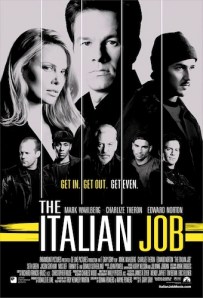
The Italian Job 2003This came in for quite a bit of stick on release — how dare they re-make a British classic, etc etc. It didn’t help matters that one of the stars, Edward Norton, was apparently forced to appear against his will as part of his contract with the studio.
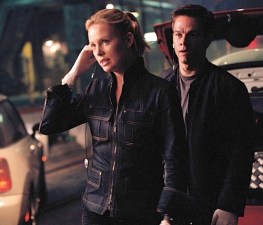
Now, I’ve never seen the original Italian Job, but from what I gather the only similarity is they both feature Minis in their climactic sequence — and even then, the original used ‘real’ Minis while this uses those daft big-as-a-regular-car new ones. In that respect it’s one of those remakes/reboots that is just using the name for brand recognition, and they normally turn out to be awful.

But maybe The Italian Job is the exception, because it’s actually a pretty decent little film. OK, it’s not high art, but it is a good time. The characters are amusing, the action sequences moderately thrilling, and while the plot is no great shakes, it’s a decent enough structure to encompass all the expected antics. Most of the supporting cast — the likes of Jason Statham and Seth Green — seem to be having fun, which is occasionally infectious.

In the lead roles, Marky Mark is fortunately not trying too hard to be serious, Charlize Theron makes for a The Female One who isn’t too far into the realms of eye-candy-over-character, On the job...and while Edward Norton’s performance is hardly remarkable, it doesn’t smack too much of being phoned in.

I doubt there’s anyone who loves this remake in the same way some people treasure the original, but that’s fine — very rarely (if ever?) do you produce a new classic when you remake a classic. But for a slickly entertaining modern action/heist movie, this does the job.

4 out of 5

I am far too pleased with myself for that pun.