
Robert Rodriguez & Frank Miller with Quentin Tarantino | 142 mins | Blu-ray | 1.85:1 | USA / English | 18
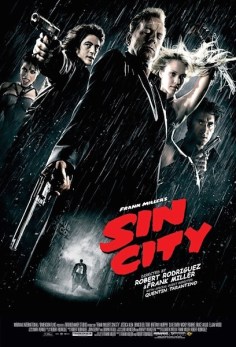 Adapted from a series of graphic novels by Frank Miller, Sin City is a noir homage, replete with high-contrast black-and-white cinematography, dialogue so hard boiled you couldn’t crack it with a sledgehammer, and all the requisite downtrodden heroes, corrupt authority figures, dangerous dames, etc. There’s also the very modern inclusion of shocking ultra-violence and nudity, but I guess a fair degree of that would’ve crept into classic noir if the mores of the time allowed — pretty much the point of the genre is the dark grubbiness of the world, after all.
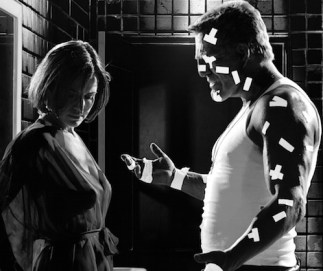
Anyway, Sin City: The Film is probably best known for its slavish faithfulness to Miller’s original comics; or rather the way that manifested itself: the film was shot digitally (when that was still remarkable rather than the norm, as it has become since) and almost entirely on green screen, with cast members who share scenes sometimes not even meeting, and whole roles being recorded in a day or two rather than the usual couple of weeks. It helps that the movie is a collection of short stories, meaning no one person is in it for more than about 40 minutes. The point of this was to then emulate the comic’s visuals: black-and-white with minimal grey in between, but occasional splashes of colour and other striking effects — blood is sometimes stark white, sometimes red; one character has blue eyes, another golden hair; plasters or necklaces are sometimes rendered as flat white blocks; and so on.
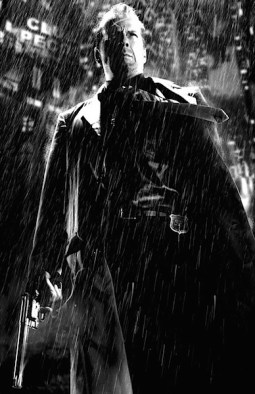 The DVD-premiering extended version, dubbed Recut & Extended (or, in the US, “Recut, Extended, Unrated”) is even more faithful to the comics than the theatrical version. Some of the books’ scenes that were excised are now included, and the structure has been rejigged to present each of the four stories one by one in their entirety (whereas the original version had a small amount of intercutting). The total running time is 17 minutes and 40 seconds longer, an increase of some 14.2%… which is a thoroughly misleading figure. As a presentational choice, each of the four stories is offered for individual viewing, plus option to “play all”. However, rather than that showing them as a single film, they play as four shorts back to back, with a full set of section-specific end credits rolling each time. The actual amount of new material in the film itself is reported to be 6 minutes and 55 seconds, or only a 5.6% increase from the theatrical cut. I’m sure the extensions are great for die-hard fans, but for most the additions are all but unnoticeable — look at that Movie-Censorship.com list and you’ll see there are only three or four new bits that could reasonably be described as “scenes” (ranging from under 30 seconds to about two minutes), and then just a bunch of extended ‘moments’.
The lack of notable new material isn’t the issue, though. The real problem is the re-structure. Let’s not beat around the bush: it scuttles the film. Individually, each of the three longer narratives is fine, but when watched back-to-back as if it were still one film, the structure is unbalanced. Then there’s the shorter story, The Customer is Always Right, starring Josh Hartnett as The Man. In the original cut, his character features in a standalone pre-titles style-establisher (both for the visuals and the kind of tough tales we’re about to be told), and then a neat coda bookend before the end credits. These two scenes have been placed together in this version, and it sucks.
 For one, the second scene belongs more truly to The Big Fat Kill (the final story, starring Clive Owen’s Dwight and the whores of Old Town led by Rosaria Dawson). For another, because this recut purports to be in chronological order, The Customer is Always Right plays second. So we get 47 minutes of Bruce Willis protecting Jessica Alba from a paedophile in That Yellow Bastard, then we get a one-scene story that rightly belongs at the beginning (complete with title card, now 50 minutes into the ‘film’), then we get a scene that, actually, belongs in a completely different place. The next full story is The Hard Goodbye (the one with Mickey Rourke under a slab of prosthetics as Marv), followed by The Big Fat Kill — and it’s after this that the second scene with The Man belongs. Divorced of that context, the scene is robbed of almost all its meaning.
I guess Sin City: Recut & Extended isn’t really meant to be viewed as a single film — hence why there are four sets of end credits, and why the cool opening titles featuring Miller’s original art is nowhere to be seen. Even allowing for that, though, I think the second scene with The Man has been badly placed. A chronological cut of a non-chronological film is an interesting idea, but this doesn’t even get that right. And even if it weren’t for the regular interruption by lengthy credits sequences, the re-order makes for a very stop-start viewing experience, something the theatrical version avoided by divvying up one story and having characters make brief cameos in each other’s tales.
 In the end, I enjoyed Sin City considerably less than I did nine years ago in the cinema. This is partly down to the restructure, but I’m not sure wholly so. I don’t think it’s aged particularly well, as things produced at the forefront of emerging technology are wont to do: some of the CGI looks dirt cheap, the shot compositions are often unimaginatively flat, and there’s an occasional internet-video style to the picture quality. It’s not just the visuals, sadly, with amateurish performances from reliable actors, possibly a result of the hurried filming schedule. Just because you can capture an entire part in a single day doesn’t mean you should. Then there’s Jessica Alba, who’s just awful here.
For all that, there are shots that are striking, when the elements come together to make something that still looks fresh and creative even after nearly a decade of the film’s visual tricks being emulated by lesser movies or integrated into general cinematic language. One thing that struck me was that the most memorable moments were all from the trailer — Sin City did have one helluva trailer. The stories and characters aren’t bad, thanks to the hyper-noir style being a deliberate choice, though perhaps it sometimes goes too far with the voiceover narration. Maybe, again, this is the fault of watching the longer cut; maybe there’s just a little too much of it in any version.
Quite often an extended cut will become the definitive version of a film — these days, it’s often a way to get the originally-intended cut past a studio who insist on a shorter running time or PG-13 certificate; or it’s a chance to revisit and improve a project that hadn’t quite worked. Not so with Sin City. This is a version for fans of the books who want to see every last drop included… but even then it falls short, because apparently a few moments are still nowhere to be found.  None of the present additions are game-changing, and though some are good in their own way, there’s nothing noteworthy enough to compensate for the destruction of the original cut’s well-balanced structure. For the average punter — and certainly for the first-time viewer — the theatrical cut is unquestionably the way to go.

This year’s sequel, Sin City: A Dame to Kill For, will be reviewed tomorrow.
Both reviews are part of the 100 Films Advent Calendar 2014. Read more here.
Sin City: Recut & Extended received a “dishonourable mention” on my list of The Five Worst Films I Saw in 2014, which can be read in full here.
 Multi-hyphenate Robert Rodriguez takes his
 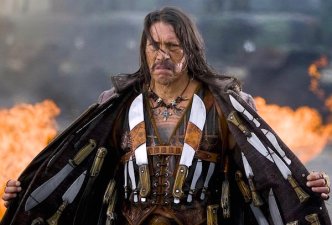 to fleetingly include something that ‘needs’ to be there purely because it was in that trailer.
 Comic book creator Frank Miller brings what he learnt co-directing
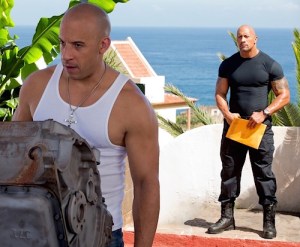 For all the intent of this being “Part 2 of 2”, there’s a post-credits tease which sets up
 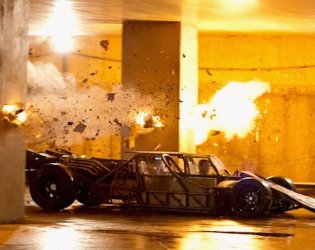 There’s plenty of backstreet, underground, grim-and-gritty bits on display here — entirely appropriate given the characters’ street-racing roots and criminal know-how. Still, these are little more than cosmetic bonuses.
 Box office gross is one of the methods most often used to summarise a film’s success and standing, and yet it’s one of the most useless markers of quality — and quotes like the above, from Terrence Rafferty in his article “Holy Terror” for Criterion’s Blu-ray release of Night of the Hunter (and available online
  In another piece in Criterion’s booklet, “Downriver and Heavenward with James Agee” (online
  And yet, as Rafferty explains, “the most radical aspect of The Night of the Hunter… is its sense of humor. More conventional horror movies overdo the solemnity of evil. The monster in The Night of the Hunter is so bad he’s funny. Laughton and Mitchum treat evil with the indignity it deserves.” I wouldn’t say that humour is one of the film’s defining characteristics, to be honest, but it does undercut its villain. He’s not some unstoppable supernatural creature, but a man who can trip over while chasing you up the stairs, and so on. In some respects it’s this very ordinariness that makes him so scary: however much they creep you out during the film itself, you know there’s no such thing as vampires or werewolves or ghosts. There are Powells in the world, though; an everyday evil that you might not see coming, but can still get you. Brr.
 In
In 
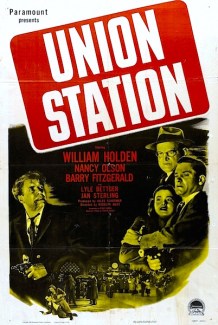 Often noted merely for being filmed in Los Angeles’ busy train station, there are some spirited defences of Union Station to be
  Based on a radio serial that spawned film serials, a famous TV series, and, eventually, comic books, The Green Hornet is a ‘superhero’ saga with a difference. For one thing, technically he’s just a vigilante — no superpowers here — and for another, as noted, it didn’t originate as a comic book. But that’s the milieu the character slots into these days, and so this attempted revival plays in that ballpark.
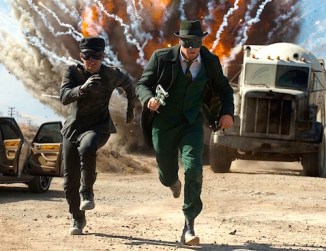 Well, screw them — The Green Hornet is brilliant. If you’re after the po-faced angsty worthiness of
 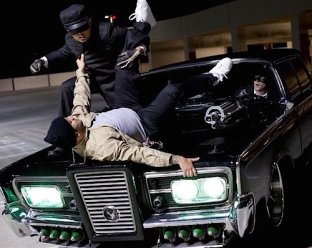 Then there’s Gondry’s direction, which is often as idiosyncratic as you’d expect. He’s at his peak during the action sequences, which explode in an array of effects and slow-motion to create multiple memorably unique fights and chases. Highlights are the first time Kato unveils his martial arts prowess, and the crazy car-driven climax. Chou and the tricked-out car, Black Beauty, are undoubtedly the stars of these bits — indeed, the film has an overall good line in making Kato the brains behind the operation. I imagine this is subverting the depiction of the Asian sidekick from previous versions, considering when they were made, but as I’ve never seen any I can’t comment fairly.
 Disgraced national TV journo Dustin Hoffman is slumming it on a local network, covering dull stories like something-or-other going on at the local museum… until a recently-fired security guard from said museum (John Travolta) turns up with a shotgun, accidentally shoots the other security guard, and takes a party of schoolchildren hostage. Suddenly Hoffman finds himself with the inside scoop — literally — as the eyes of the national news turn on the unfolding situation.
 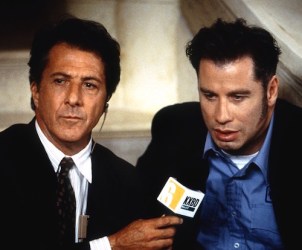 He plays against type as Sam, the nervous, naïve, childlike, and easily-manipulated hostage taker. It’s Travolta’s performance that makes Sam someone you care about, even if you don’t exactly root for him, so that the outcome — which, unusually for this kind of film, remains completely uncertain right until it’s happened — is something you’re fully invested in. There are many better-regarded films than this that don’t achieve that.
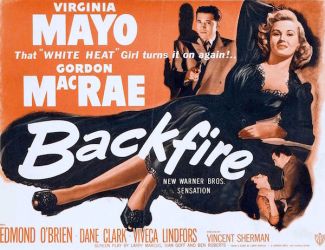 Before he was the romantic male lead in musicals like
  Besides, even if the film seems to forgo the usual gritty noir trappings for a pleasant “English murder mystery”-type tale at first, it actually has its fair share of dark elements and noir-ish features, which only increase as it goes on: secretive gangsters, nightclub singers, revenge shootings… Then there’s the photography which, again, transitions from a fairly ‘regular’ (for want of a better word) style early on, to a world of rain-slicked streets and high-contrast lighting.
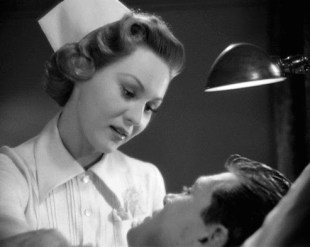 It’s in the latter’s case that the writing gets a chance to shine, too: the chief’s flashback is littered with snappy dialogue that feels kinda like he’s telling you the story himself, not just a matter-of-fact “here’s what happened earlier” objective account. Other flashbacks retain a degree of subjectivity — we only see events the characters could have witnessed, and in some cases the way they witnessed them (like the cleaning lady who only sees customers’ feet, before spying through a keyhole in a shot complete with keyhole matte) — but there’s an idea there, briefly glimpsed in that detective’s flashback, that would’ve made for an even more interesting film.
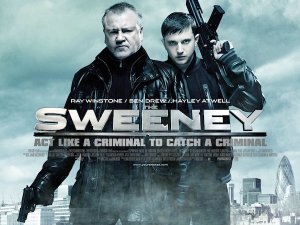 Despite a mediocre pedigree and TV-scale budget, this re-imagining of the iconic ’70s cop show is a solid thriller.
 100Films.co.uk