Love on a Leash (2011)

2020 #173
Fen Tian | 86 mins | digital (SD) | 16:9 | USA / English

Love on a Leash

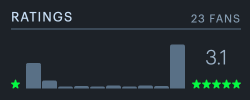
Love on a Leash first gained a degree of notoriety when some YouTuber happened upon it on Amazon Prime and made a video about it, in which he instructed his followers to rate it 10-out-of-10 on IMDb. Enough of them did that it apparently resulted in his account being banned. (At time of writing, it has a score of 9.2 from almost 6,500 ratings.) I came across it more recently on Letterboxd, where it was featured on a list of divisive films. You only have to look at its ratings spread to see why:

Love on a Leash Letterboxd ratings

Are the 1,504 people who’ve rated it 5 stars in on the same joke as those YouTuber’s fans who rated it 10 on IMDb? Or is there in fact something to this movie that makes some people think “this is worth full marks”? You might be surprised to learn that, actually, I think it’s the latter.

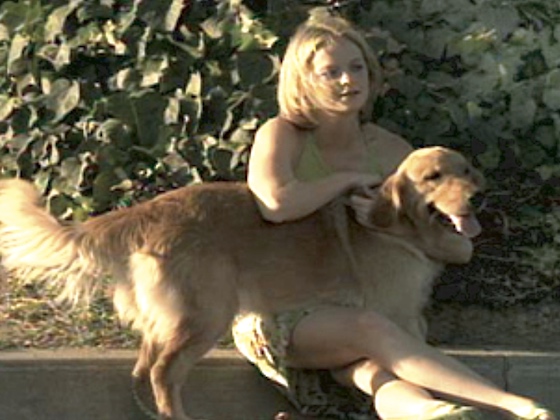
The film tells the story of Prince, a golden retriever who is actually a man turned into a dog (and whose human name may have been Alvin Flang. Or maybe not — I feel like the dog is an unreliable narrator). How has this happened? Why? Who knows? Who cares? (The film has a lot of random shots of ducks for no obvious reason (it’s almost Lynchian), so my guess is they did it to him. Still don’t know why, though.) Prince learns (from a magic rock-pool) that he can only return to human form by finding the true love of a woman. Enter unlucky-in-love shopgirl Lisa (Jana Camp), who meets Prince in a park and eventually takes him home. What unfolds is not as straightforward as the Beauty and the Beast narrative you might imagine, but to describe any more of the craziness would be to ruin half the fun. The plot’s constant twists and developments beggar belief — it’s genuinely imaginative, in its own way. By which I mean I don’t think you’ll have ever seen anything else quite like this.

Pizza-faced cinder block and Alvin Flang

I give full credit to Love on a Leash for just going for it. It’s hard to pigeonhole what genre it was even aiming for. The poster and basic concept suggest a cheesy kids’ film or Hallmark movie; the way it initially plays, you kinda assume it wants to be a romcom; but then it gets so fucking dark (suicide attempt! abusive coworkers! dead dog!), and there’s so much fantastical strange stuff… it’s so much weirder, wilder, and more unique than you can imagine. That’s without even mentioning the bizarre production quirks, like the fact Lisa only wears green clothes and lives in a green house with a green phone and green mugs and green plates… Or that it’s shot with a kind of documentary realism… um, maybe; or maybe it was just done quickly on digital video. There’s definitely no music, though. Like, at all. Even though there’s a composer credited.

Well, except for a couple of songs the dog sings. Prince is constantly chatting away to himself in voiceover, and sometimes sings little childish ditties too (I suspect they weren’t actually composed by anyone). He can be a right snarky little bugger (he describes the love of his life as a “pizza-faced cinder block”), to the point that I suspect it may all have been improvised by the voice actor in post-production — he seems to be taking the piss out of what’s going on as often as we are.

Love on a Leash was written and directed by Fen Tian, a 64-year-old Chinese woman who came to America in her 40s “with fifty dollars in her pocket, and not one word of English in her possession,” according to her production bio. It asserts that the screenplay won an award and funding from the Taiwan government, and at one point she took an American cast and crew to China to shoot it but funding fell through. After decades of trying, the film was eventually produced “with barely enough money to cover craft services”, and during post-production she “slept on the couches of her editors, dragging around her blanket, toothbrush, pillow and thirty-nine DV cam reels” and “spoiled” her team by “cooking up huge feasts of homemade Chinese food, and fixing her crew’s love lives with a motherly heart and some Chinese wisdom.” I feel like this deserves a Disaster Artist-type biopic…

What people get up to in the privacy of their own homes...

So, we come to the issue I touched on at the start: how do you rate a film like this? As an exercise in moviemaking, it’s a 1. The storyline is borderline nonsensical; it’s shot like an amateur using a camcorder for the first time; the sound mix is so unfinished I’m not sure it was ever started… And yet it’s constantly enjoyable, partly through a “so bad it’s good” hilarity (see the aforementioned terrible filmmaking), but also for the barminess with which it conducts itself, the relentless forward momentum of the storyline leading us in unpredictable narrative directions. Like famous cult favourite The Room, it transcends its amateur awfulness to be an artistic experience all of its own. In fact, it achieves a higher level of genuine artistry than The Room for me, because Wisseau’s film sometimes mires itself in wannabe-seriousness and runs out of stuff to laugh at, whereas Love on a Leash is restless in its creativity and consequently almost non-stop entertaining. It transcends its obvious awfulness through a kind of perverse innovation; a commitment to not hewing to any recognisable conventions. And it’s really funny — sometimes deliberately, often not.

With reservations duly noted, then, I honestly and unequivocally give Love on a Leash full marks.

5 out of 5

Ready or Not (2019)

2020 #90
Matt Bettinelli-Olpin & Tyler Gillett | 95 mins | streaming (HD) | 2.39:1 | USA & Canada / English | 18 / R

Ready or Not

In my review of Get Out, I took issue with the fact that some people labelled it a “comedy horror”, because it wasn’t particularly funny. I mention that because Ready or Not takes a broadly similar premise to Get Out (albeit with white people and no commentary on racial issues) but does take things in a comedic direction.

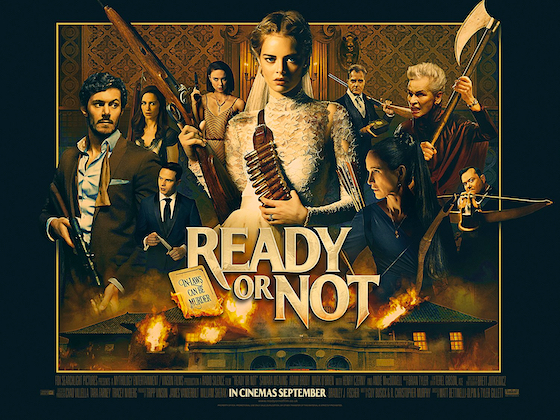
The similarity comes in that it’s about bride-to-be Grace (Samara Weaving) meeting her fiancé’s family for the first time at their wedding. On the wedding night, she’s introduced to an odd family ritual: she must select a card from a puzzle box and they play whatever game is on the card. Unfortunately for her, Grace gets “hide and seek”, which in this case is not just regular hide and seek: while she hides, the family arm themselves to hunt and kill her. Hilarity ensues.

Badass bride

Well, okay, maybe not hilarity per se, but this is definitely a comedy-horror, with more laughs than scares and an appropriate amount of gore. It obviously owes a debt to other movies, or at least has points of similarity (You’re Next particularly comes to mind), but it also has a few nice subversions and doesn’t always go the way you’d think — and when it subverts things that have already been subverted, like some kind of triple-cross of subversion, then you know it’s not as dumb a movie as some people think. Its biggest failing for me was the photography, too much of which is caked in over-graded green. The final shot is fab, though; indeed, the whole climax is an all-timer.

There were times I wanted a bit more from Ready or Not to push it over into classic status, but even without that final extra something, if you enjoy your horror-thrillers laced with laughs, it’s an exceptionally fun time.

4 out of 5

Ready or Not is available on Sky Cinema and Now TV from today.

Yes, God, Yes (2019)

2020 #191
Karen Maine | 78 mins | digital (HD) | 1.85:1 | USA / English | 15 / R

Yes, God, Yes

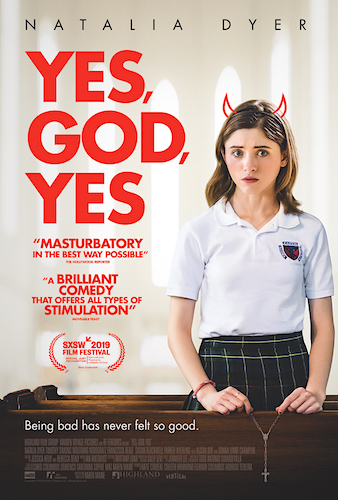
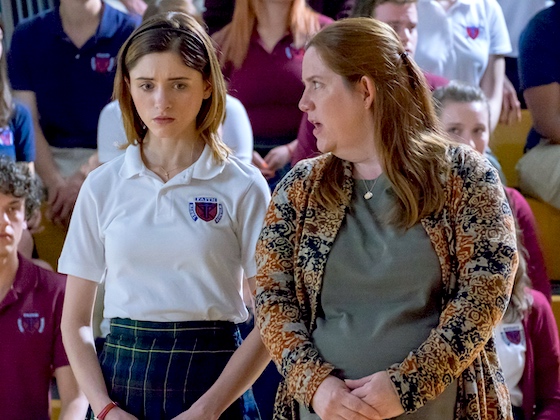
It’s the early 2000s, and Alice (Stranger Things’ Natalia Dyer) is a pupil at an ultra-Christian high school (“in America” goes without saying there, right?) But Alice is feeling conflicted. In morality class, she’s being taught about the wrongs of sex, while at home she likes to rewind the Titanic VHS to rewatch the sex scene. One day, a chat on AOL turns naughty, and Alice finds herself putting her hand down her skirt and… well… Of course, for a good indoctrinated little Christian girl, access to pleasure is not an instant revelation, and soon she’s off to her school’s weekend camp to learn to connect with Jesus, or something. Instead, she’ll learn a little something about the hypocrisy of those around her.

It would be easy to label Yes, God, Yes a “cumming of age movie” (such a pun is certainly not below my level of humour), but it would feel slightly inaccurate. Put another way, if you’ve come to see Nancy Wheeler cum, you’ll be disappointed. There is, perhaps, a whole analysis of the film to be written from the starting point that Alice doesn’t seem to reach orgasm — I mean, the film already (comically) touches on the difference between men and women in this regard; but also, Alice only needs to touch herself to feel sinful and transgressive, so how would she feel if she got ‘all the way’? But I am not necessarily best placed to write such an analysis of the depiction of female self-pleasure. It could be as simple as the fact the film has a female writer-director and didn’t want to show that moment on screen, for any number of reasons.

A touching moment

Indeed, despite it providing the plot hook and title, wanking is only one part of the film’s exposure of religious hypocrisy when it comes to sex. Alice’s desire to go to camp is as much provoked by a nasty rumour doing the rounds at school as it is by her personal discoveries. Said rumour is that, at a party, Alice “tossed the salad” of a classmate. She has no idea what this means; everyone else seems to know (if you don’t know either, don’t worry, the film has a dictionary definition at the start). Alice may go to an ultra-conservative school that teaches repressive values, but it’s clear her classmates are still learning about the wider world from elsewhere, while she believes everything she’s being taught and remains naïve. Ironically, the camp does teach her something about herself, just not what was intended. It’s the realisation of Christianity’s hypocrisy, more so than of the power of touching herself, that prompts Alice’s personal development by the end of the film.

Throughout all this personal revelation, the film leans heavily on Natalia Dyer’s ability to convey confused inner thoughts with just her face, and fortunately she’s up to the task. Indeed, it feels like overkill on the handful of occasions when it resorts to underlining a point via a kind of flashback-audio. We get what Alice is thinking when she looks at a microwave, we don’t need the soundtrack to repeat the Father’s microwave/oven analogy. Nonetheless, such moments are relatively rare, and instead we’re left to identify with the shy, wary, quiet Alice — something I’m sure a lot of us can relate to from our own adolescence. And if your own adolescence occurred around the turn of the millennium, boy does this film have you pinned down: playing Snake on a Nokia phone; AOL chatrooms… Small incidental details that very much specify the time (and place — AOL wasn’t such a thing here in the UK, but we had our alternatives).

Christian 'teaching'

I’m surprised I’ve managed to get this far in the review without calling up Saved!, a film to which Yes, God, Yes bears more than a passing resemblance. For those who’ve not seen it (why not? It was on my list of 100 Favourites over four years ago!), Saved is about a girl at an ultra-Christian high school in the early ’00s who discovers religious hypocrisy after a sex-related revelation. Both films criticise that hypocrisy through humour and satire. The main difference is that Saved is an outright comedy, whereas Yes, God, Yes is a comedy-drama, where its laughs come more from wry observations grounded in real-life rather than outright comedic bits, which is perhaps the result of it being semi-autobiographical by writer-director Karen Maine. Others have compared it to Lady Bird, another semi-autobiographical early-’00s-set coming-of-age drama about a girl at a Christian high school, including her first experiences with sex.

But let’s not lean too heavily on the fact there have been other films a bit like this, because Yes, God, Yes is still its own beast — more grounded than Saved; hornier than Lady Bird. If it seems more focused, or even niche, than some other coming-of-age movies, is that a bad thing? Part of the point about recent calls to enable more women and people of colour to make films is that we get to hear new stories and different perspectives, and Yes, God, Yes is an example of exactly that.

4 out of 5

Yes, God, Yes is available to rent and buy digitally in the UK as of yesterday.

Jumanji: The Next Level (2019)

2020 #78
Jake Kasdan | 123 mins | digital (UHD) | 2.39:1 | USA / English | 12 / PG-13

Jumanji: The Next Level

The previous Jumanji movie, Welcome to the Jungle, was officially a sequel to the 1995 original. In practice, however, that amounted to little more than a brief nod / tribute to original star Robin Williams, and maybe a few Easter eggs scattered about. The Next Level, on the other hand, is much more in the traditional “direct followup” mould.

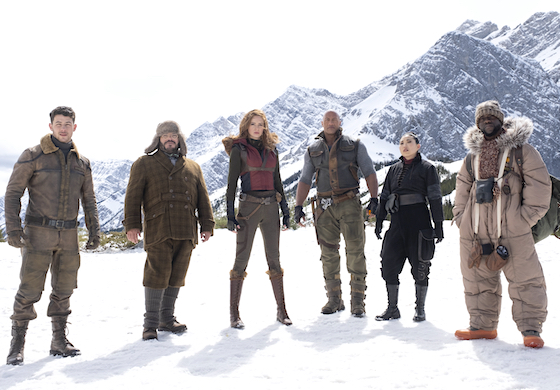
Despite our quartet of heroes having destroyed the eponymous game at the end of the last movie, one of them rescued and repaired it, and when he goes back in (for old times’ sake or something) the others must follow to rescue him. But he’s not repaired it properly, and so his septuagenarian grandfather and his chum are sucked in too, and everyone’s inhabiting a different character. And so The Next Level plays with a lot of the same comedic ideas as its predecessor — i.e. the mismatch between real-life person and in-game persona — but mixes up who’s imitating who. Primarily, this means The Rock gets to do an impression of Danny DeVito, Kevin Hart is being Danny Glover, and Jack Black is a black American football player. Karen Gillan doesn’t immediately get to join in the fun, but the film has some tricks up its sleeve. Anyway, once in the game, they head off on an Indiana Jones-type adventure — again, much like the first movie.

For many, this repetition of ideas has been a stumbling block. “The same but slightly different” doesn’t really cut it for a sequel nowadays, when you can easily rewatch the thing it’s repeating. However, I don’t think The Next Level is actually such a slavish clone. The “mismatched identities” schtick arguably worked better the first time, when it was a shiny new gag, but the fact most of the cast get to play at being someone else keeps it at least a bit fresh. There are also several new characters in the mix, with an especially entertaining performance from Awkwafina. More importantly, the adventure itself is considerably different. In my review of Welcome to the Jungle I noted that its locales were “jungle, jungle, and jungle”. Here, we get snowy mountains, vast desert, plus towns and castles. To me, it feels like they took what worked in the first movie and polished it. It’s still fundamentally the same kind of comedy action-adventure — if you disliked the first movie, there’s no reason this should appeal to you more — but refined.

Snow wonder it's better

That said, there’s still ideas left on the table. That game malfunctioning only affects who gets zapped in and which characters they play, but what if it kept glitching throughout? It’s arguably a tricky conceit to manage — if you’re going to do it, you’ve got to integrate it; but you can’t really have our heroes winning (or losing) thanks to random mistakes. But this is why Hollywood filmmakers get paid the big bucks, right? To solve these kind of things. Do it right and the glitches could’ve added an extra zing, either to the humour or as an obstacle to winning or, ideally, both. (Also, on a slightly more personal level, I think it’s a shame they didn’t release it on 3D Blu-ray this time. It was released theatrically in 3D, so a conversion exists, but they didn’t bother to put it on disc anywhere in the world. Adventure movies like this can look great in the format, and there’s a sequence with rope bridges that could’ve been really special.)

I was surprised how much I liked Welcome to the Jungle, but I held back somewhat on the sequel because of the reactions I’d seen. As it is, I was surprised again, because I think The Next Level is an even more enjoyable adventure.

There’s now a third (aka fourth, or you could even say fifth, depending what you count) Jumanji in development, which a credit scene here teases might go off in a new direction; plus cast and crew interviews have hinted at some other intriguing additions to the mythology that spin out of this movie. There’s no guarantee it’ll be a success, of course, but, nonetheless, next time I won’t be so reticent.

4 out of 5

Jumanji: The Next Level is available on Sky Cinema and Now TV from today.

The 100-Week Roundup IX

I’ve not been doing too well with reviews lately — this is my first for over a fortnight, having missed self-imposed deadlines for the likes of Knives Out (on Amazon Prime), The Peanut Butter Falcon (on Netflix), Joker (on Sky Cinema), and Spaceship Earth (on DVD & Blu-ray). I’ve also slipped on these 100-week updates — this one should really have been at the end of July, and there should’ve already been another in August, with a third due soon. Oh dear.

So, it’s catchup time, and it begins with my final reviews from August 2018

  • The Most Unknown (2018)
  • Zorro (1975)


    The Most Unknown
    (2018)

    2018 #185
    Ian Cheney | 92 mins | digital (HD) | 2.35:1 | USA / English

    The Most Unknown

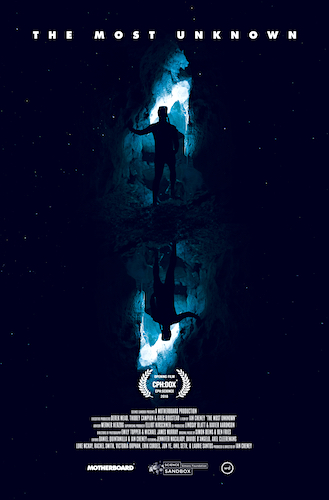
    This film is an experiment. Nine scientists meet for the first time in a chain of encounters around the world. It begins under a mountain, and ends on a monkey island.

    In this documentary, nine scientists working on some of the hardest problems across all fields (the “most unknowns”) meet each other in a daisy chain of one-on-one interviews / lab tours. It not only touches on the basics of what the unknowns they’re investigating are, but also how they go about investigating or discovering these things — the day-to-day realities of actually “doing” Science. Alongside that, it reveals the scientific mindset; what motivates them. The nine individuals are very different people working on very different problems in very different fields, but the film draws out the similarities in their natures that drive them to explore the unknown.

    If you’re concerned it might be all a bit “inside baseball” if you’re not a science geek, don’t be. These people work in vastly different fields — to us laypeople they’re all “scientists”, but to each other their specialities make them as different from one another as we are from them. This, arguably, is an insight in itself. It feels kind of obvious — of course a physicist and a microbiologist are completely different types of scientist — but I do think we have a tendency to lump all scientists together. Think of news reports: it’s not “chemists have discovered” or “psychologists have discovered”, it’s “scientists have discovered”.

    Science, innit

    It also reminds you that scientists are humans too, via little incidental details. For example, the equipment that vibrates samples to sheer out the DNA is labelled, “My name is Bond, James Bond. I like things shaken, not stirred.” Or the woman who plays Pokémon Go on her remote research island, because the lack of visitors means you find really good Pokémon there.

    You might also learn something about movies. The last scientist, a cognitive psychologist, talks about how people assess the quality of movies. Turns out, rather than considering their overall experience, they tend to focus on two points: the peak of how good it was, and how it ended. Pleasantly, this kinda confirms my long-held theory that an awful lot of movies are judged primarily on the quality of their third act. (My exception to this “rule” has always been films that lose you early on and put themselves on a hiding to nothing. Well, science can’t explain everything, I guess.)

    Plus, as a film, it’s beautifully shot. A lot of this science is taking place in extreme locations, which bring with them a beauty and wonder of their own.

    4 out of 5

    The Most Unknown is currently available on YouTube from its production company, split into nine instalments. (It used to be on Netflix, but was removed just the other day. If I’d published this review on time…)

    Zorro
    (1975)

    2018 #186
    Duccio Tessari | 118 mins | digital (HD) | 1.85:1 | Italy & France / English | PG / G

    Zorro

    This Italian-French version of the adventures of the famous masked vigilante (played by the great Alain Delon) is tonally similar to Richard Lester’s The Three Musketeers: genuine swashbuckling (including some elaborate stunt-filled sequences) mixed with plenty of humour and daftness. Plus, being set in 19th century California but filmed in Spain, it also has more than a dash of the Spaghetti Western in its DNA. The whole mix makes it a lot of fun.

    Of particular note is the final sword fight, an epic duel for the ages. It sees Zorro and chief villain Colonel Huerta pursue each other around the castle, clashing blades at every turn, at first accompanied by a crowd of spectators but, as their fight moves higher and higher, ending atop the bell tower, each with a rapier in one hand and a flaming torch in the other, thrashing their weapons at each other with all the vigour and vitriol of men who really, really want to kill each other.

    Another highlight is, arguably, the cheesy main theme. On the one hand it’s slathered all over the film inappropriately; on the other, it underlines the light, silly, comic tone. Plus it’s sung by someone called Oliver Onions. Can’t beat that.

    4 out of 5

  • The Past Month on TV #60

    I suppose lockdown is officially over now, for good or ill, but we begin this month’s TV review by reliving those heady days…

    Staged  Series 1
    StagedThis filmed-in-lockdown comedy stars David Tennant and Michael Sheen as they attempt to rehearse a play over the internet, the goal being they’ll be ready to put it on as soon as theatres reopen. Naturally, there’s much more to it than two actors practising a play — indeed, I’m not sure they ever actually get round to any proper rehearsing. Conflicts abound, both broadly relatable (Sheen is blackmailed into helping look after his elderly neighbour, but develops genuine concern for her) and actorly (a running debate/gag about which of the pair should get top billing), and there are a couple of big-name surprise cameos along the way (no spoilers — the surprises are worth it). With all episodes in the 15- to 20-minute range, the series is hardly a big time commitment (it runs well under two hours in total), but it’s well worth it and consistently funny. Indeed, I wish there was going to be more. Well, a second lockdown isn’t out of the question yet, is it…

    Lockdown may be over, but Staged is still available on iPlayer.

    Hamilton’s America
    Hamilton's AmericaThis documentary first aired back in 2016, in the wake of Hamilton’s success on stage. I’m not sure if it’s ever been screened in the UK, but I tracked down a copy after watching Hamilton on Disney+. So, firstly, I’m glad I didn’t watch this before seeing the film — I feel like it would’ve somehow ruined, or at least tarnished, the experience of seeing the full production, because this contains extensive-but-far-from-complete clips from the show. I guess, back in 2016, when the only way to actually see Hamilton was by securing hard-to-come-by, insanely-expensive Broadway tickets, getting to see those clips was probably great for fans.

    Aside from that, the documentary is part making-of (it follows lyricist, composer, and leading man Lin-Manuel Miranda starting in 2014, when he’s writing the musical with an impending rehearsal deadline, and then continues on to cover the show’s opening and success) and part history lesson (various cast members and experts discuss the real events and visit relevant historical locations to learn more about their characters). Rather than half-arse either of these aspects, the feature-length running time allows the doc to offer genuine insights into both. For just one example, there’s a bit where they discuss the issue of the Founding Fathers being slave owners, and although it’s only a couple of minutes long, it contains more intelligent commentary than the entire bloody social media debate about it that the film’s release provoked.

    It’s a real shame this isn’t on Disney+ to accompany the film, because I think a lot of people who’ve enjoyed that would enjoy this as a chaser. It’s definitely worth a watch if you can track it down.

    Star Trek: Picard  Season 1 Episodes 9-10
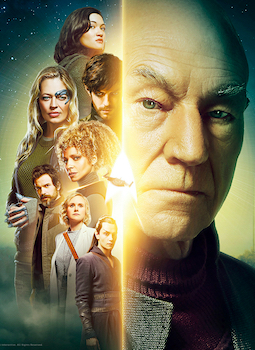
    Star Trek: PicardI started this when it began in January, and have been slowly trekking through it ever since — it’s taken me six whole months to get through just ten episodes. That’s a commentary in itself as to what I thought of it, I suppose, though if you asked me I’d say it’s “not bad”.

    From what I’ve seen of other people’s reactions, Picard seems to be a real “love it or hate it” show. A lot of people I read and/or whose opinion I respect either can’t stand it or find it thoroughly mediocre, but there are definitely people out there — more than an odd handful, apparently — who think it’s fantastic. As often seems to be the case with something so divisive, I find myself somewhere in the middle. After a rocky start (the first three episodes should’ve been condensed into one feature-length opener, at most), I felt the series settled down reasonably well, with a couple of almost-standalone episodes of varying quality eventually giving way entirely to its arc plot, which from then was executed with a relative consistency of pace — a major problem with many “one long story” streaming series nowadays. The quality of the dialogue and acting remained somewhat turbulent, which perhaps belies the franchise’s roots as predating “prestige TV” — what’s acceptable for Star Trek doesn’t necessarily wash with the modern sophisticated non-die-hard-fan viewer.

    That said, for every scene or plot development that worked well, there was something truly ridiculous or implausible just around the corner, with the finale being one of the worst offenders. Some might say “it’s sci-fi — implausible is its stock in trade”, but even sci-fi has rules, and Picard seemed to merrily flout them, often in the name of fan service. And that’s why I end up somewhere in the middle, because overall I thought it was a solid-enough space adventure, undermined by frequent blips in quality and sense. I believe the writing team is undergoing some significant changes ahead of the already-commissioned second season, so maybe they’ll iron out the kinks.

    Fleabag
    Fleabag (the play)I’ve never got round to Phoebe Waller-Bridge’s much-acclaimed sitcom, but, during lockdown, Amazon offered the original one-woman-show stage version (recorded last year during a live cinema broadcast) as a charity rental, so I thought I’d see what the fuss was about. My reaction was… muted, to be honest. I can certainly see how it pushes at boundaries, both of the depiction of women in fiction and of taste in general, and for that reason it’s significant, but I only found it sporadically funny, which makes it somewhat unsatisfying as a comedy. Also, I wasn’t expecting it to get so dark — if you’re a lover of small furry animals, beware.

    James Acaster: Repertoire
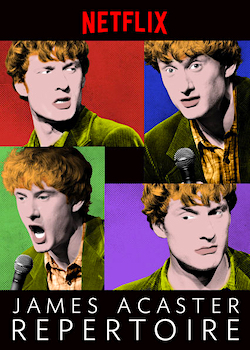
    James Acaster: RepertoireAnother filmed stage comedy that left me somewhat underwhelmed. This is more straightforward stand-up, however, and as that it was more often amusing — whether you find Acaster’s “wacky” style (his word) to your taste will dictate exactly how funny. For me, he’s not the most consistently hilarious standup I’ve seen, but provoked laughs regularly enough. The real selling point here, however, is that it’s a four-parter. Ever heard of a multi-part stand-up gig before? Me either. These aren’t just four entirely independent gigs box-set-ed up either, but were conceived and shot as four connected sets.

    Despite that high-concept pitch, it turns out the four-part structure isn’t particularly clever after all. The cross-episode callbacks are sometimes good and clever, but sometimes just elicit recognition (accompanied by an “I got that reference!” laugh from the audience). It’s not anything unique to the four-part structure — plenty of other comedians structure their standalone shows in the same way. The only differences are (a) if you watch it in four sittings then some of the callback are to a different episode rather than something earlier in the same set, and (b) it’s three-and-a-half hours of material, all of which were all performed on the same day, which is a remarkable feat. Otherwise, the connectivity is basically limited to episode 4 ending in such a way as to imply it’s ‘set’ before episode 1, including a cleverly staged final shot. But, unless I missed something, the other episodes don’t line up in such a way that 2 must follow 3 and 4 must follow 3, so it doesn’t create some kind of ouroboros loop, which I guess was the kind of structural inventiveness I was looking for.

    Overall, Acaster is whimsically amusing — not my favourite standup, but solid with some excellent bits — and the sheer volume of material at a sustained quality level is impressive. But I don’t buy that this miniseries structure is innovative In any way except volume. And I can’t help but wonder if, had he condensed these 205 minutes into a normal 60- to 90-minute set, it might’ve felt like a higher density of pure gold.

    The Twilight Zone  ‘Best Of’
    After a few months spent scraping the bottom of what the original Twilight Zone has to offer, it’s back to the cream of the crop. (At this point you may be wondering “how many episodes can he reasonably class as ‘the best’?!” My final answer is: the top third. Yes, that’s quite a broad definition, but I like to be generous. For what it’s worth, today’s selection gets me to 20.5% on my consensus ranking.)
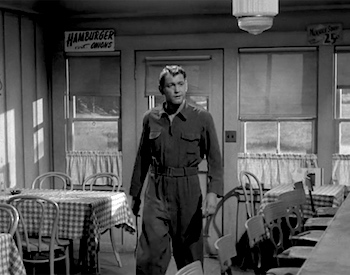
    Where is Everybody?This month’s selection begins at the very beginning: the first-ever Twilight Zone episode, Where is Everybody? The title alone is a pretty succinct pitch of the episode’s theme, and the episode is as one-note as its premise. This is an exciting story in which a bloke… gets himself coffee, and… talks to a mannequin, and… tries to phone the operator but can’t get through, and… has an ice cream, and… yeeeaaah. The twist ending isn’t much cop either, 50% “it was all a dream”, 50% a thin moral about humans’ need for companionship. It could’ve been better: Rod Serling’s original pitch for episode one was a tale about a society where people were executed when they turned 60, which I think is a better concept, but it was deemed too depressing (imagine what they would’ve made of Logan’s Run, where the executions happen at 30!) That said, “everybody’s gone” is a reasonable starting idea, but the episode needs (a) more places to go with it, and (b) a more interesting reveal. (See The Quiet Earth for essentially the same premise being more thoroughly explored.)

    Next is one of the very few Twilight Zone episodes that doesn’t have a sci-fi or fantastical element (apparently there are only four such instalments). The Silence concerns a wager between an old rich dude and a talkative guy at his club: if the latter can manage to stay silent for a whole year (while under constant observation, natch), the former will pay him $500,000 (equivalent to over $4 million in today’s money). What the episode really asks is how far would — could; should — you go to win (or keep) half-a-million dollars? Whatever your answer, the episode gives us a very dark version, primarily because of the ending — in traditional TZ fashion, there’s a twist (or two) and no one comes out of it well. Although it’s less allegorical than the series’ usual fantastical episodes, there’s no less of a lesson to be learned.

    Conversely, some Twilight Zone episodes feel like a concept without a plot, and The Odyssey of Flight 33 is one of them. It concerns a transatlantic flight that finds itself in some weird midair phenomena, and to say where it goes would be to spoil the only card this episode has up its sleeve — as Oktay Ege Kozak of Paste puts it, the episode is “a light sci-fi rollercoaster ride” without “a clear sociocultural theme or complex existential narrative”. To be less kind, it’s a nice idea but the story doesn’t have anywhere to go with it — it doesn’t even end, just sort of peters out. Conversely, Matt Singer at ScreenCrush argues the ending is “an unsolved mystery [with] total ambiguity, which makes it … that much more disturbing.” Despite that, I actually think is one of those rare episodes that would’ve worked better with season four’s extended running time. Most of the story is set in the plane’s cockpit with its crew, but we meet a couple of the passengers, only for the episode to do nothing with them. At least if their reactions had been fleshed out, maybe there would’ve been more meat here.

    Nightmare as a ChildI’ve written before that some episodes suffer from the series’ own influence, or just from an ensuing 60 years of sophistication on the part of the viewer, and Nightmare as a Child is a case in point. It has two reveals, and they’re both not so much guessable as obvious and inevitable. There’s even a bit of a coda to thoroughly explain it all again in case you didn’t get it. Maybe that was necessary back in 1960, when stories like this were breaking new ground in the audience’s minds, but today it feels like overkill. However, I wouldn’t say it’s a bad episode — indeed, the story of a woman meeting a strange little girl who seems to know an impossible amount about her life is still suitably eerie and tense in places — but it is one that plays less effectively today. That said, if you engage with it not as a mystery with a surprise but as simply a story, it has more to offer — Kozak compares it to “a tightly wound Hitchcockian thriller/murder mystery”, while Scott Beggs of Thrillist reckons it “replaces the usual slow burn of horrifying realization with tense, immediate danger” while it “confronts memory and PTSD in a fascinating way”. They’re not wrong.

    Another episode with a tricky-to-parse twist is Third from the Sun. It’s a famous one — I won’t directly spoil it here, but I feel like the title gives it away rather. But, a bit like Nightmare as a Child, the episode is saved by being rather good even without the ironic final note (indeed, Kozak reckons the twist is “unnecessary… cheap and immediately predictable”). It’s about two families who, aware that nuclear annihilation might be imminent, try to escape, but a suspicious government figure potentially stands in their way. It’s a decent little tale of Cold War paranoia, but the twist probably is a little distracting. It reshapes what we’ve already seen, and explains some of the deliberate oddities in direction and set dressing, but it sort of doubles back on itself because the characters are now heading into the situation we thought they were in in the first place…

    More successful, for my money, is And When the Sky Was Opened, about a pair of pilots of an experimental spaceship that crashed on its return to Earth — except one of the pilots maintains there used to be three of them, but no one else can remember him. A bit like Flight 33, there are no overt morals or explanations to be found here, just a lot of mystery and madness. Unlike Flight 33, I thought it had enough of that to fuel the narrative, leaning in to how the unexplainable phenomena affects the characters. It’s a neat little sci-fi tale — and, incidentally, is based on a story by Richard Matheson, making this his first credit on the series. I know in some circles Matheson is rightly exalted, but I feel like he’s not as widely known as he deserves — Serling gets much of the credit for TZ’s success, but several of the very best episodes are by Matheson.
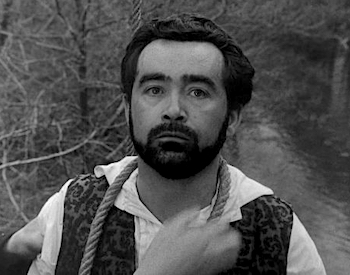
    An Occurrence at Owl Creek BridgeHaving begun today with Twilight Zone’s first episode, we end with the last one produced — although they didn’t actually produce it. An Occurrence at Owl Creek Bridge is an award-winning French short film that Serling saw and liked so much he bought the TV rights (saving so much money on the cost of producing another episode that he brought season five in on budget). Even if Serling didn’t point out its alternate origin in his introduction, it’s immediately clear this came from somewhere else, because it doesn’t look or feel at all like a normal TZ episode. So what made Serling think it would fit the show? Why, it has an ironic last-minute twist, of course! This is regularly one of the best-regarded episodes of the series, and the short film itself has a pretty strong rep too, but I don’t get it. There’s some pretty photography and the beginning is fairly atmospheric, but it quickly starts to drag — the story is thin and slow, ending with a twist that I found inevitable from early on.

    I feel like I’ve been quite negative on this month’s selection of episodes, but that’s only because I have very high standards for The Twilight Zone. Owl Creek Bridge was the only one I truly disliked, while The Silence and And When the Sky Was Opened are definitely deserving of their higher reputation.

    Also watched…
  • Elementary Season 6 Episodes 15-21 — I guess the threat of cancellation hung over Elementary’s head as this season ended, because it very much gets to a place they could’ve left it if necessary. It’s one of those “that’ll do”-type endings, though, so I hope to find the final, foreshortened seventh run does a better job.
  • Jonathan Creek Series 2 — I didn’t remember this second series as vividly as I did the first, but it still has some very fine and baffling mysteries. Particular highlights include a man seen on two continents at the same time, and a priceless painting stolen from a closely-watched empty room.

    Things to Catch Up On
    CursedLast month, I didn’t include this section because I couldn’t think of anything to put in it. Naturally I then spent the next couple of days remembering things, like the recent re-adaptations of Alex Rider on Amazon and Snowpiercer on Netflix. Obviously, I still haven’t watched either of those. More recently, Netflix launched Cursed, a young adult (I think) take on Arthurian legend from the point of view of the Lady of the Lake. I’m not wholly convinced by the trailers or buzz, but I do love a bit of Arthurian whatnot so it’s on my radar. Also passingly of note is that Amazon just released season three of Absentia. I started out moderately enjoying the first season, but by the end was not at all impressed. I was surprised when it got a second run, so I’m even more flabbergasted to see it back for a third. I guess someone must be watching it. Each to their own.

    Next month… the second season of Netflix’s superhero show The Umbrella Academy is out soon, but as I never got round to season one, I doubt I’ll do season two next month. Elsewise, more of the best of The Twilight Zone, and I really should get round to The Mandalorian (how long’s it been now?!)


  • The Three Caballeros (1944)

    2020 #61
    Norman Ferguson | 72 mins | download (HD) | 4:3 | USA / English | U / G

    The Three Caballeros

    At one point Disney had a reputation for churning out rubbish direct-to-video sequels to their animated classics, a practice they put a stop to because, well, they were getting a reputation for churning out rubbish direct-to-video sequels to their animated classics. But there have also been a small selection of films in the Disney Canon that were granted sequels also within the canon. I have no insight into why this was the case, but I’d love to know the thinking because some of them are random. Like, okay, Frozen was a mega-hit, so makes sense you’d make the sequel ‘official’. Winnie the Pooh? Sure, Pooh is awesome (and also a reliable moneyspinner). Fantasia? Well, it was a passion project, and I guess its inherently artistic nature seems a reasonable way to mark the millennium. Wreck-It Ralph? Um… The Rescuers? Er… Saludos Amigos? Wait, really?

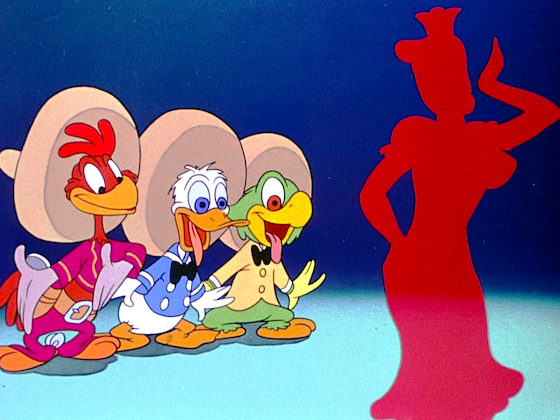
    Yep, The Three Caballeros is, technically, the first sequel in the Disney Canon, and that’s only really surprising when considered without context. It’s from the period when Disney were bundling together shorter films to make package features, of which there are half-a-dozen spanning the gap between Bambi (Canon #5) and Cinderella (Canon #12). The first of those was Saludos Amigos, which was basically a propaganda film to showcase South America with the aim of improving relations between the continents. Donald Duck starred in two of that film’s segments, and it introduced José Carioca, a Brazilian parrot character. The Three Caballeros is a sequel in that it also presents a series of shorts about lands south of the US, strung together via a linking device of Donald Duck opening birthday presents from his Latin American friends. José eventually pops up, and the titular trio is rounded out with the introduction of Panchito Pistoles, a Mexican rooster.

    The three sex pests

    For all the similarities, I thought The Three Caballeros was considerably more enjoyable than its predecessor. Its depiction of South America is perhaps a little more twee, leaning on culture and tradition rather than the modern cityscapes that were so important to the impact of the first film, but that doesn’t grate too much because it’s not striving so hard to be educational. Because of that, it’s also able to be more straightforwardly entertaining. That said, it very much has the feel of a “kids’ cartoon”, rather than the artistry that’s to be found in Disney’s best efforts. Although Donald Duck comes across as a bit of a sex pest at times, which I guess is just changing attitudes. Conversely, the sequences that blend live-action and animation hold up incredibly well, although that might be because Disney’s use of DNR is so heavy-handed that the live-action practically looks the same as the animation. And the finale, where it suddenly explodes into a psychedelic nightmare, feels like someone didn’t know how to end the film and so had a mental breakdown all over the screen.

    While I’d chalk up The Three Caballeros as a superior movie to its immediate predecessor, it undoubtedly remains a minor entry in the Disney canon. That said, apparently they updated it into a spinoff series a year or two ago (which I only know about because I happened to spot it on Disney+ the other day), so it obviously endures somewhat.

    3 out of 5

    The 100-Week Roundup VIII

    As I mentioned last time, these films are technically from the same week as that last bunch, but seven films seemed a lot for one post. Plus, although they were all watched in the same week, they were watched in different months: the last four were my final films from July 2018, whereas these three are some of my first from August 2018.

    In this roundup…

  • Beneath the Planet of the Apes (1970)
  • Pride and Prejudice and Zombies (2016)
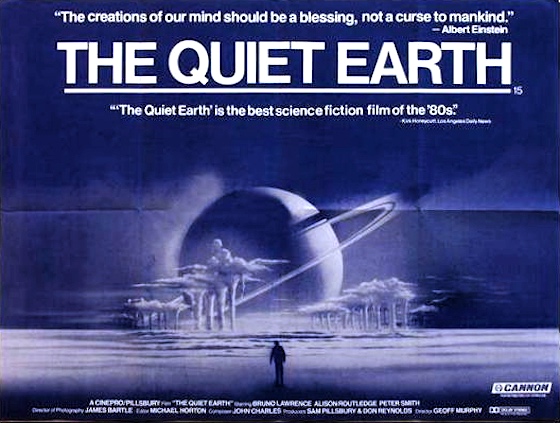
  • The Quiet Earth (1985)


    Beneath the Planet of the Apes
    (1970)

    2018 #174
    Ted Post | 95 mins | Blu-ray | 2.35:1 | USA / English | 15 / G

    Beneath the Planet of the Apes

    Beneath the Planet of the Apes is the sequel no one wanted to make, including the studio — quite a different attitude to today, eh? But Fox were in financial troubles. For his part, Heston managed to negotiate a reduced role and suggested an ending that would kill off the potential for any more sequels. Well, that worked

    Picking up where the first film left off, it sees Heston’s character, Taylor, disappear mysteriously. After a second Earth spaceship crashes on the planet, its only survivor teams up with Taylor’s girl, Nova, to find him, which leads them to encounter a society hiding (you guessed it) beneath the planet of the apes.

    Overall, this feels like trashier sci-fi/adventure than the first one, with a certain B-movie aesthetic to the underground mutants, and a first half that’s just a bunch of running around. Yet, despite that, there are some powerful ideas and solid social commentary here, mainly about blind faith and the terror of military leadership. Plus, the mutants’ use of telepathy as a weapon is quite clever, and their unmasked designs are suitably eerie rather than just ugly. It also has one of the most brutal and bleakest endings ever seen in a Hollywood blockbuster — or probably outside of one, come to that.

    The violence in the final act was originally cut in the UK, and when it was finally released uncut on video some 17 years later, it earnt a 15, a rating its retained ever since. In the US, it’s always been rated G. Those Americans and their insouciant attitude to violence…

    Obviously I watched this two years ago, and at the time I assigned this three-star rating. But I will say that I remember it more fondly than that. As noted above, it takes a while to get going, and it doesn’t have the same classy aspirations as the first film, but its unrepentant fatalism is almost admirable.

    3 out of 5

    Pride and Prejudice and Zombies
    (2016)

    2018 #175
    Burr Steers | 103 mins | TV (HD) | 2.35:1 | UK & USA / English | 15 / PG-13

    Pride and Prejudice and Zombies

    Here’s another one I found more enjoyable than I feel I should have.

    For starters, it’s wild this ever actually got made. I mean, the title is an amusing idea — it’s basically a five-word gag, isn’t it? — but ponder for a moment how that’s going to play out as a full narrative. To live up to its title, it has to make an effort to follow the plot of the novel, and there lies the rub: no one wanting a zombie movie really wants to sit through a Regency romance, and no one wanting a Regency romance really wants it sullied by zombie-based action and gore. Well, inevitably someone will fall into that Venn diagram, but, as someone who’ll quite happily watch either of those genres in isolation, even I struggled to find the idea of such a mash-up too appealing. It needs a clever hand on the tiller to negotiate those treacherous waters, and I’m not sure the director of 17 Again and Charlie St. Cloud was that person.

    But, as I said at the start, I did find it surprisingly watchable. It does have a certain amount of wit and fun with the concept, like turning arguments about accomplishment into ones about fighting style. Sometimes the zombies and fights are tacked on to the existing story, but sometimes the narrative is neatly remixed to include the zombie threat. And like any true action movie, scenes of high emotion are settled not with words but with a good dust-up. There’s a solid cast too, including Lily James (always a bonus) and reliable stalwarts like Charles Dance, although, as Darcy, Sam Riley sounds like he’s battling a nasty throat infection. But Sally Phillips is basically a perfect Mrs Bennet for this or any other version, and the same could be said of Douglas Booth as Bingley, or Matt Smith, on fine comedic form as Mr Collins.

    Pride and Prejudice and Zombies and Knickers

    It does drop the ball sometimes. The climax doesn’t put enough effort into eliciting tension (it’s like they ran out of money or time or effort: “can the heroes make to the bridge in ti— oh, they just did”); at least one apparent subplot doesn’t go anywhere at all; and a mid-credits scene suggesting the story isn’t over feels lame. It definitely pulls some punches in aid of landing a PG-13 rating in the US, which is unfortunate — it’s a mad concept; it needs to do it properly, go all out and get an R. (I’d still say it’s perhaps a bit too gruesome for PG-13, which is why it landed a 15 over here.)

    I still think the director is the problem. A surer hand would’ve made more of the verbal sparring during the physical sparring; would’ve sold the tension of the action. Apparently David O. Russell was original set to direct, which is mad — can you imagine choosing to follow awards-winners like The Fighter, Silver Linings Playbook, and American Hustle with this? Apparently other directors “considered” included Matt Reeves, Neil Marshall, and Lord & Miller. Presumably they turned it down rather than any producer thinking Burr Steers was a better pick — Lord & Miller, in particular, probably would’ve nailed the tone. But, all things considered, what we got could’ve been a lot worse.

    3 out of 5

    The Quiet Earth
    (1985)

    2018 #178
    Geoffrey Murphy | 91 mins | Blu-ray | 1.85:1 | New Zealand / English | 15 / R

    The Quiet Earth

    Here we reach the first real hurdle in these two-year-old roundups, because it turns out I made no notes whatsoever after viewing The Quiet Earth. I did note down some quotes from the booklet essay accompanying Arrow’s Blu-ray release, but it seems a bit rich just to list those excerpts.

    What I can tell you is that The Quiet Earth is a science-fiction film about a scientist who wakes up one morning to find everyone else has disappeared — not fled, not died, just gone. What unfolds from there is a mix of mystery (what happened?) and a kind of existential character examination, both of this man and of ourselves — what would you do if you were the only person on Earth? Only, it doesn’t play quite as heavily as that makes it sound. There are more plot developments, but to say too much would spoil the discovery. And it is a film worth discovering. As Amy Simmons puts it in the aforementioned essay, it’s a “deeply relevant work which reflects darkly upon our age of estrangement and isolation. […] Shifting in tone from horror to comedy to pathos and back again, the film’s great strength is in the themes it explores and satirises — namely nuclear fears, technophobia, and cultural and geographical isolation — which are even more urgent now than when the film premiered in 1985.”

    I’m doing it a disservice with this pathetic little ‘review’, but hopefully someday I’ll revisit it and come up with something more insightful.

    4 out of 5

  • The 100-Week Roundup VII

    If I were being slavishly accurate about weeks, there should be seven films in this roundup. But that seemed a bit much, so — as the next one of these wasn’t due until the end of the month — I’ve split it in two.

    In this roundup, the final films I watched in July 2018.…

  • The Garden of Words (2013)
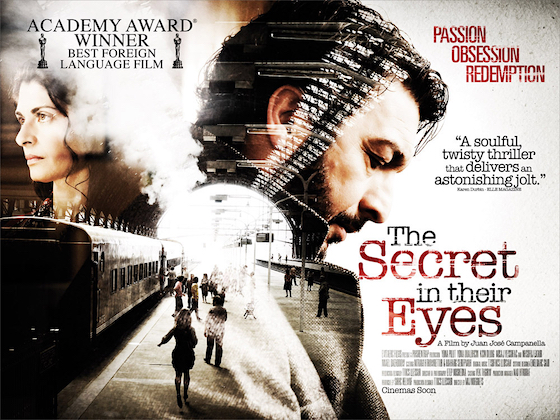
  • The Secret in Their Eyes (2009)
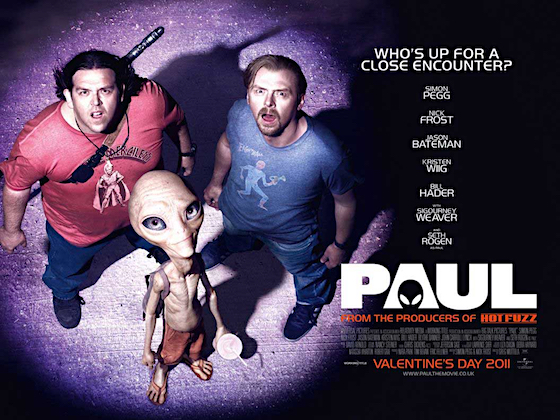
  • Paul (2011)
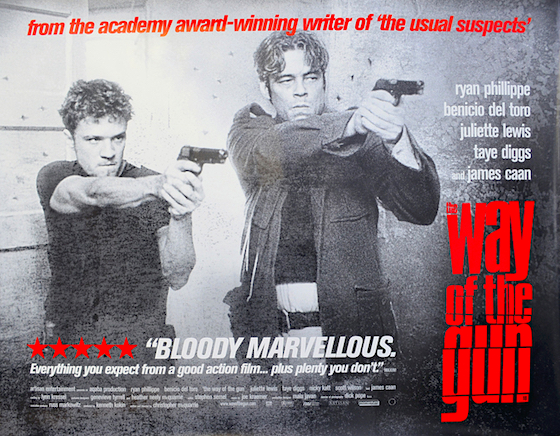
  • The Way of the Gun (2000)


    The Garden of Words
    (2013)

    aka Koto no ha no niwa

    2018 #170
    Makoto Shinkai | 46 mins | streaming (HD) | 16:9 | Japan / Japanese | 12

    The Garden of Words

    If the only anime director’s name you know is Hayao Miyazaki, you could do worse than familiarise yourself with Makoto Shinkai, director of recent popular hits Your Name and Weathering with You. He’d already been gaining attention with the films he made before those, which include short feature The Garden of Words.

    It revolves around two individuals: a 15-year-old schoolboy who aspires to be a shoemaker, and a 27-year-old woman. They meet one day in a park during a rainstorm and develop a connection. According to Shinkai, the film is a love story between two people “who feel lonely or incomplete in their social relations, but who don’t feel that they need to fix this loneliness.” That’s an interesting perspective, because while there’s undoubtedly a significant element of loneliness in the film, it’s accompanied by an element of depression; that these two characters seem unfilled. Without wanting to spoil anything, it seems to be the connection between the two that ‘saves’ them and elevates their lives — i.e. they did need to fix their loneliness. Perhaps it’s a disconnect between intention and execution that led me note that “where it ends up going isn’t as good as where it begins”. Nonetheless, the characters are engaging, and their emotional turmoil and connection are affecting. It also leaves room for personal interpretation with an open ending — it does reach a conclusion of sorts, but there’s clearly space the viewer to imagine what comes next.

    The animation is simply stunning — both beautiful in itself, and in its technical accomplishment. For that reason, if given the choice, it might be tempting to opt for an English dub, but I’d advise to stick with the original Japanese. I’ve written before about how I’m regularly conflicted when watching anime about whether to go for the original Japanese or an English dub, and I do often I go for the latter — I must admit I’m swayed by the recognisable voice casts on Ghibli films, for example; and, generally speaking, it allows you to appreciate the visuals more when you’re not having to read a lot of subtitles. Nonetheless, this time I chose the Japanese audio, and I’m glad I did: it’s subtle and calm, like the film itself, and the quietness and gentle pace mean there’s not an overabundance of distracting reading (unlike in Your Name, for example). I popped on a bit of the American dub afterwards and it felt all wrong by comparison — somehow brash and decidedly inauthentic. On the bright side, either track sounds luscious in 5.1, with the rain falling all around you, which serves to really immerse the viewer in the situation alongside the characters.

    4 out of 5

    The Secret in Their Eyes
    (2009)

    aka El secreto de sus ojos

    2018 #171
    Juan José Campanella | 129 mins | download (HD) | 2.35:1 | Argentina & Spain / Spanish | 18 / R

    The Secret in Their Eyes

    A surprise winner of the Best Foreign Language Oscar in 2010 (it beat A Prophet and Michael Haneke’s The White Ribbon), Argentina’s The Secret in Their Eyes is a murder mystery, two very different love stories, and a musing on the nature of justice, especially within a corrupt system.

    Primarily, it’s a procedural thriller about a decades-old unsolved case that one of the original investigators is revisiting in the hopes of finding closure. As that, I thought the film was probably a bit too long — despite some solid thematic weight, the unnecessarily slow pace at times make it feel a smidge self-important for what is fundamentally a crime thriller. That said, those other facets that have been added to supplement the storyline — the romance side; the passage of time (how do people deal with such life-changing events over the ensuing decades?) — do bring something to the film, elevating it beyond standard police procedural fare.

    Even as ‘just’ that, it pulls off some spectacular feats: the famous single-take at the football match really is an all-timer, and the final twist is unexpected and a perfect capper. I was this close to giving it full marks, and maybe when I revisit it someday I will.

    4 out of 5

    Paul
    Extended Edition
    (2011)

    2018 #172
    Greg Mottle | 109 mins | Blu-ray | 2.35:1 | UK & USA / English & Klingon | 15

    Paul

    On a post-ComicCon road trip around the US’s UFO heartland, a pair of British geeks (Simon Pegg and Nick Frost) bump into an actual alien, the eponymous Paul (Seth Rogen), who’s on the run from a government facility. Cue a kind of “E.T. for grownups” as the trio — and a widening assortment of supporting characters — endeavour to evade the authorities and get Paul home.

    Mistaken by some for the third part of the Three Flavours Cornetto trilogy (thanks to it starring Pegg and Frost, but it’s missing the vital ingredient of director Edgar Wright, who was committed to Scott Pilgrim), Paul lacks the sharpness of that trilogy at its best. However, it’s full of likeability — in the characters, and of course the humour — to the point where it actually manages to get a bit emotional at the end. It’s also chock full of references and quotes for fellow geeks to spot, some of which are incredibly well-timed to have fantastic impact.

    As for the extended cut, there’s a comparison here. As usual, the theatrical cut was R-rated in the US but the extended one is unrated there, but (also as usually) I don’t think there’s anything that wouldn’t pass at R. The running time difference is about five-and-a-half minutes, but there are 41 differences crammed into that time. It seems like some fairly memorable jokes were cut and others added back — nothing earth shattering, but enough to call the extended cut the preferable one.

    4 out of 5

    The Way of the Gun
    (2000)

    2018 #173
    Christopher McQuarrie | 120 mins | Blu-ray | 16:9 | USA / English | 18 / R

    The Way of the Gun

    The debut directorial feature from screenwriter Christopher McQuarrie (who made his name penning the likes of The Usual Suspects and more recently has found success as the regular writer-director of the Mission: Impossible movies), is one of those ’90s crime comedy-dramas — you know, the kind of thing we describe as “Tarantino-esque”, for good reason. It has its fans, but McQuarrie tends to refer to it disparagingly on social media, no doubt in part because it landed him in “director jail” for over a decade. Personally, I agree with McQuarrie (I usually do): it’s not a failure, but it’s not much of a success either.

    My main problem with it is that it’s over-long and over-complicated. Both of those are thanks to too many characters with too many motivations. It’s possible to get your head round it all in the end, but there’s a stretch in the middle where it feels like work. But rather than slow things down and spell it out, it might be better if it moved through them all quicker — at least then it would be pacy. It’s also rather dully shot by Dick Pope, who was later Oscar-nominated for the likes of The Illusionist and Mr. Turner, but has plied most of his trade in the grounded world of Mike Leigh movies, which perhaps explains that. There are still two or three good shots, plus a neat oner that indicates the direction McQ’s style would head.

    There are flashes of McQuarrie’s brilliance elsewhere too, including some nice bits of dialogue and a couple of good sequences. The action scenes, in particular, demonstrate he had a strong skill there from the start. They feel very grounded and real — just the way the characters move; that they’re constantly reloading; how it ends when everyone’s out of bullets. McQuarrie’s brother, a Navy SEAL, was the technical advisor for these scenes, which explains their accuracy. The final shoot-out, with all of that going on, is the best bit of the movie. Well, at least it ends on a high.

    3 out of 5

  • Eurovision Song Contest: The Story of Fire Saga (2020)

    2020 #153
    David Dobkin | 123 mins | streaming (UHD) | 1.85:1 | USA / English & Icelandic | 12 / PG-13

    Eurovision Song Contest: The Story of Fire Saga

    The Eurovision Song Contest: if you’re from Europe or Australia, or one of the other countries that competes but isn’t really in Europe, it needs no introduction. If you’re from somewhere that hasn’t been enjoying/subjected to it every year for the past seven decades… well, it’s hard to explain. Actually, the basics are easy: it’s a continent-wide song competition, where each participating country submits one artist performing one song, and everyone votes for the winner. But, oh, the cultural connotations and ramifications are so, so much more! For some countries, it’s deadly serious — it’s a way to get noticed on the world stage; it may even make the artist famous. For others, like us Brits, it’s a big campy silly joke… except we’re also rather fond of it (some of us), and we’re terribly annoyed that we don’t win it every year (or at least on a regular basis. Like, once a decade or so would probably keep us happy). And that’s just scratching the surface — it would probably take a book (or, at least, a reasonably long article) to fully explain every nuance.

    Will Ferrell’s latest comedy attempts to distill all that history into a globally-friendly movie-length spoof. It’s a big ask, not just because there’s so much background information to assimilate, but because us Brits have been ripping the piss out of Eurovision for decades. And not just sometimes, but constantly: each country provides a local commentary over the live broadcast, and each year ours is basically a roast. (Notoriously so: some countries are not impressed by the sarcastic, piss-taking attitude being our ‘official’ stance on the contest.) We’re not alone, either: a few years ago when Sweden hosted the contest, they did a pitch-perfect sketch about creating the perfect Eurovision song. If you want to get a feel for the entire Eurovision experience in just six minutes, watch Love Love Peace Peace.

    And so with all that in mind, Ferrell and co are on a hiding to nothing; especially as the film has been made with the cooperation and endorsement of Eurovision’s producer, the EBU (they even get a credit right up front), so it was never going to be able to truly get stuck in for fear of offending its subject. So I guess that’s why they barely even bothered. Oh, there are certainly references to and riffs on Eurovision-y things, so viewers in the know can pick up on them and not feel like it’s about Generic Foreign Singing Contest; but this isn’t really a comedy about Eurovision, it’s about a small-town music duo wanting to make it big. Their chosen method is Eurovision, but it could just as well be The X Factor or The Voice or, well, anything, and it wouldn’t change the core narrative.

    And a man in a hamster wheel

    Said narrative goes through all the motions you’d expect. About the only thing that could be described as a twist is that the smarmy “bad buy” isn’t actually up to anything evil after all, he’s genuinely quite nice. As he’s another contestant, you do wonder if that was an EBU stipulation… The man in question is the Russian entry, Alexander Lemtov (Dan Stevens, who’s excellent as usual), renowned as a “sex player” and the subject of an overlong bit about how he probably has a massive penis. “Overlong” is the watchword for most of the comedic routines in the movie. It’s a form of self indulgence that plagues many a comedy nowadays, and here it helps contribute to a running time that’s simply too long. I always feel like the best comedies are within sight of 90 minutes, but this runs a full two hours. Of course, a comedy made for a famously hands-off studio like Netflix is hardly likely to be exempt from indulgence. Maybe a more interfering one would’ve questioned the wisdom of letting Ferrell include a bit where his character criticises American tourists for coming to Europe and ruining it. Um… It could work in a meta way, but it feels like it’s lacking any kind of knowing wink, beyond it’s very existence.

    One thing that does often work are the songs. You may well have heard Volcano Man when Netflix released it as the first promo for the film, but Fire Saga themselves get two or three more numbers, all of which are varying degrees of “surprisingly catchy”. The one they sing as the climax even made me feel a little emotional. I expect it’s the manipulation of the key changes or whatever (I’m no musician), because I didn’t really feel invested in the characters’ relationship before that point, but hey, if it works it works. Then there are the other contestants… where, unfortunately, the film drops the ball again. Lemtov’s number, Lion of Love, clearly had the most effort put into it — it’s quite fun and very Eurovisiony. But a montage of other acts is weird because it feels like it’s been edited to emphasise the jokes, only there aren’t any. I’m not even being clever, saying “there aren’t any” because I didn’t find them funny — the lyrics aren’t humorous, the staging isn’t particularly laughable… they’re just mediocre songs. It’s a wasted opportunity to provide some quick-fire riffs on Eurovision staples. The best it can do is the first of the montage, a rock song by guys in monster costumes — a reference to Lordi, who won in 2006. As far as I remember, no one has tried the same trick in the intervening 14 years.

    Lion of Love

    The weirdest musical number comes halfway through: at a party Lemtov is hosting for all the contestants, a “song-along” breaks out. Not a singalong, a “song-along”. Suddenly, a bunch of previous real Eurovision contestants show up (much to the bafflement of viewers who’ve never seen the real thing, I suspect) to sing a medley of… songs. Not Eurovision songs, just… songs. Well, Waterloo is in there, but I think that was the only one. It sort of almost works as a kind of mid-film celebration of the real Eurovision, but it’s all so random. Why isn’t it a medley of previous Eurovision tracks? Who even are some of the singers? (I recognised most but not all.) Do people who aren’t fans even get what’s going on during that sequence? It’s a cheesy but potentially fun idea, which I’d embrace wholeheartedly if I felt they’d nailed it. Or even if they’d just had them all cover Love Love Peace Peace.

    Yet for all the film’s faults, I’d be lying if I said I didn’t enjoy it. By sticking to tried and tested plot beats and gags, it has an unchallenging comfortableness. There are laughs along the way — some are just echoes of better versions, yeah (most notably, a bit that’s almost jumping through hoops to avoid Rachel McAdams repeating her iconic line from Game Night. It would’ve been better if they’d just leaned into it and let it be a meta-gag), but there were a couple that caught me with a genuine chuckle.

    Sporadically funny; often dated; with tired and rehashed routines; longer than Alexander Lemtov’s penis; and surprisingly emotional at the end… Actually, maybe The Story of Fire Saga is like Eurovision after all.

    3 out of 5

    Eurovision Song Contest: The Story of Fire Saga is available on Netflix now.