The IMDb New Filmmaker Award 2020

Last night on AMPLIFY!, FilmBath presented the 9th annual IMDb New Filmmaker Award, in which a trio of industry judges choose the best short film by a new filmmaker (clue’s in the name). The winner gets £1,000 cash, £1,000 in gear hire for their next project, a natty trophy, and an IMDb pin badge (normally only given to IMDb employees). If you missed the evening, never fear: the whole 90-minute event is available to rewatch for free, worldwide, here.

Why would you watch an awards show after it’s happened? Well, in this case, you get to hear the judges’ musings on what makes a good film — and when those judges are BAFTA-nominated director Coky Giedroyc (The Virgin Queen, How to Build a Girl), Oscar-nominated and BAFTA-winning producer Amanda Posey (An Education, Brooklyn), and the CEO of IMDb, Col Needham, those are opinions worth listening to. Even better, you get to watch the five nominated shorts in full, and they’re good a bunch.

But don’t just take my word for it: take my, er, word for it, in the form of these reviews…

If you do intend to watch the awards, fair warning: I’m going to ‘spoil’ who won.
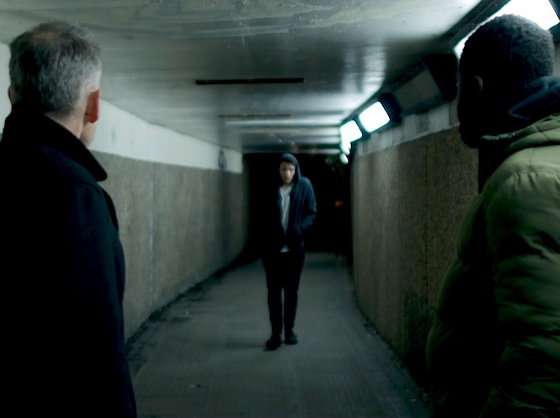
Under the Full Moon

Taking the films in the order they were shown, first up is Under the Full Moon (2020, Ziyang Liu, UK, English, 9 mins, ★★★★☆), about a guy who has his phone pickpocketed and decides to confront the mugger. The most noteworthy aspect here is the whole short is achieved in a single unbroken eight-minute take. I love stuff done in single long takes; at this point it’s a bit of a cliché to enjoy such things — a real film nerd kind of obsession — but, sod it, it’s still cool. To do a thriller storyline like that — something which requires management of tension and suspense, and of information being revealed at the right time in the right way — is even more impressive. You might say, “well, that’s what theatre is — a drama performed in ‘one take’”, but theatre doesn’t have to factor in camerawork; making sure we’re seeing the right stuff at the right time, framed in the right ways. Under the Full Moon manages every different element almost perfectly, the only real flaw coming right near the end, when the camera fails to clearly capture a phone screen with an incoming call, so the director resorts to a subtitle to make sure we get this final ironic twist. And that’s the other thing: this isn’t just a technical stunt, or an exercise in escalating suspense, but a dramatic work with some neatly-drawn character parts and a sense of dramatic irony. Really strong work.

The winner (told you I’d spoil it) was Flush Lou (2020, Madison Leonard, USA, English, 9 mins, ★★★★★), and I entirely agree. It’s a black comedy about the reaction of three women to the death of a man: his daughter (who narrates), his wife, and his mother. It’s got a quirkiness that could be inappropriate, but the tone is juggled just right that it remains hilarious rather than at all distasteful. It’s there in the performances, the shot choices, the editing — the piece really works as a whole to hit precisely the right note. It might call to mind the work of someone like Wes Anderson, but it’s far from a rip-off; it also reminded me of certain just-off-reality American-suburbia-skewering TV shows, like The Riches or Suburgatory (I’m sure there are some more mainstream examples that are eluding my reach right now). Also, it manages to pack eight chapters into its eight minutes, without ever feeling like that’s an unnecessary affectation; if anything, it helps clarify the structure, which is exactly the kind of thing chapters are good for. A huge success all round.
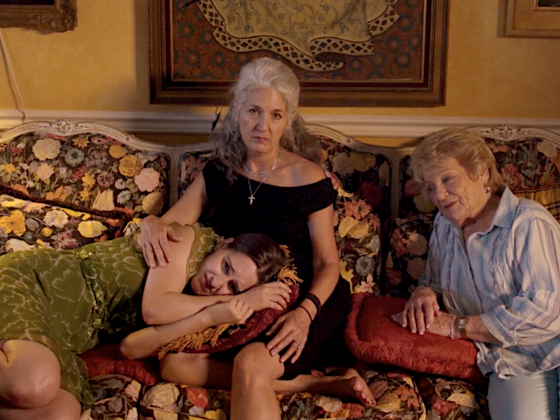
Flush Lou

At the other end of the seriousness spectrum was the winner of the audience vote, The Monkeys on Our Backs (2020, Hunter Williams, New Zealand, English, 8 mins, ★★★★★), a documentary about the mental health of farmers in New Zealand. I think we often have a very positive view of New Zealand — they seem like nice people; their government is doing awesomely well; they make great movies; they’re good at rugby; and so on. But the country has one of the highest suicide rates in the developed world, and mental health problems disproportionately affect those living and working in isolated rural communities. This is not only a succinct explanation of the problems, with real-life examples as well as expert opinions, but also talks about the solutions, what help is out there and how it’s working. Plus it’s a beautifully shot film (some outtakes in black & white at the beginning show the fundamental quality underlying the colour photography in the rest of the film), with lovely views of countryside life, as if to help remind you that the world is a wonderful place. A wholly different film to Flush Lou, but an equally deserving winner.

The shortest of this year’s five is Players (2020, Ava Bounds, UK, English, 3 mins, ★★★★☆), but that’s not the most noteworthy thing about it. This is: it was made by a 14-year-old. But you’d never guess, because it has a competency and, more strikingly, a surrealism that belies someone much more experienced. Heck, the sound design most reminded me of David Lynch! And the comparison goes beyond the sound work, with an ending that calls to mind some of Lynch’s work where nature and technology clash. Subtitled “a clearly confused film”, I think that was somewhat how the judges felt about its mix of retro costumes and music, computer-generated vocals, and a sci-fi sting in the tail. It’s the kind of film that clearly doesn’t work for everyone — just another way it’s a natural successor to Lynch, then. A 14-year-old making a competition-worthy short film is incredible in itself, but that it also merits so many comparisons to David fucking Lynch? Remarkable.

The Monkeys on Our Backs

The final film was Home (2020, Hsieh Meng Han, UK, English, 10 mins, ★★★☆☆), in which a girl living with her mother in a single room in a dingy apartment block finds the communal toilet locked, but then hears music coming from a nearby ventilation grill. Climbing through, she finds herself in a brightly-lit world of opulence, with people in elegant clothes dancing to genteel music, and an array of luscious food on offer. She even makes a friend. But then uptight officiousness arrives in the form of a stuffy manager, who refuses to let her use the toilet. It’s like a modern socially-conscious take on Alice in Wonderland, though I’m not sure what point it was ultimately making — kindness is nice and everyone deserves to be allowed to use the toilet?

If any of that tickles your fancy, don’t forget you can still watch the whole event, free, here.

Disclosure: I’m working for AMPLIFY! as part of FilmBath. However, all opinions are my own, and I benefit in no way (financial or otherwise) from you following the links in this post or making purchases.

Jojo Rabbit (2019)

2019 #145
Taika Waititi | 108 mins | cinema | 1.85:1 | USA, New Zealand & Czech Republic / English | 12A / PG-13

Jojo Rabbit

So much was said about Jojo Rabbit on its release (last October in the US; at the start of this year here in the UK) — and, indeed, before its release, thanks to it debuting on the festival circuit — that, coming to it now, it feels like there’s nothing fresh to add. Doubly so as it’s been through the usual cycle of backlash and backlash-to-the-backlash (rinsed and repeated several times over). That said, it does seem to have dropped out of the conversation and consciousness somewhat, which perhaps hints at its longer-term reception — in short, it’s no Parasite. (Maybe that’s an unfair comparison anyway, given Parasite is the kind of movie that’s already attracted “greatest of all time” status some places.)

And so, faced with nothing fresh to say, I will instead just explain and/or justify my own full-marks star rating. “Justify” feels like the right word, because some people (some critics, in particular) really took against the film. Others, less vitriolic, thought it didn’t measure up to writer-director Taika Waititi’s high standard. I don’t think it’s as good as Hunt for the Wilderpeople or What We Do in the Shadows (both modern classics, more or less), but I did like it a lot. When it hit the mark with its humour, it was very, very funny; but it balances this with emotional and hard-hitting bits. The balance it strikes between the two is uncommon but well managed. On a micro level, some parts are outstanding (like the title sequence cut to the Beatles), but I also felt it was a little long in places.

My friend Hitler

Before it came out, some were worried about the wider reaction to a comedy where the ‘heroes’ were Nazis. But, of course, Nazis aren’t the heroes, and it’s not difficult to understand that. Indeed, I can see why some critics were saying that, despite expectations, it’s not actually a particularly hard-hitting movie, because it’s not really shocking (unless you’re easily shocked by an imaginary-friend Hitler being a comedic character; and considering that humorous screen depictions of Hitler date back to at least The Great Dictator, so it’s hardly a revolutionary idea).

Despite some doubts, in the end I rounded my score up to a full 5 because, while it’s not perfect, it contains an awful lot that I enjoyed an awful lot. One to rewatch and reconsider, perhaps.

5 out of 5

Jojo Rabbit is available on Sky Cinema and Now TV from today.

Patrick (2019)

aka De Patrick

2020 #221
Tim Mielants | 96 mins | digital (HD) | 2.39:1 | Belgium & Netherlands / Flemish, Dutch, French, English & German

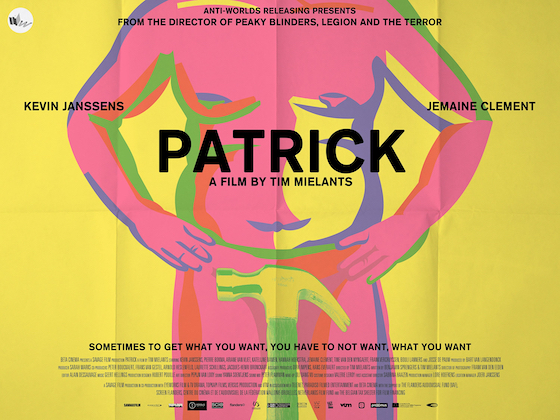
Patrick

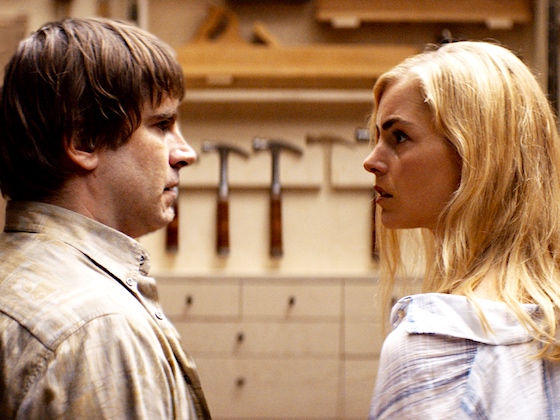
Patrick’s hammer is missing. More accurately, one of Patrick’s hammers is missing — he has seven, of different sizes, arranged in a neat row on a bespoke wall mount, and the middle one is no longer there. Patrick is the handyman at a nudist campsite run by his father, who is old and sick. The head of the residents’ council is a busybody; his wife is secretly sleeping with Patrick, not that Patrick seems to care. A famous musician Patrick has never heard of arrives to stay, followed by his pretty but frustrated girlfriend. Then Patrick’s father dies. But, most importantly, Patrick’s hammer is still missing. Fortunately, a former police officer friend turns up to pay his respects, and gives Patrick advice on how to find his hammer — so Patrick launches his investigation.

To sum Patrick up as “Agatha Christie meets the Coen brothers in a nudist camp” doesn’t feel too wide of the mark. Okay, there’s no murder, so perhaps mystery-genre fans could think of a better (though, unavoidably, less famous) author than Christie to sub in. But the fact remains that the missing hammer isn’t just a story hook to hang something else on: it’s a solid mystery narrative, with clues and red herrings and twists. Conversely, it’s not just a mystery, which is where the second comparison comes in. The overall quirky, just-left-of-reality, slightly-heightened tone evokes the Coens’ work, without (thank goodness) being a rip-off. It’s very much a comedy-drama, in that it’s not out-and-out seeking to provoke laughs, but it’s frequently absurd to the point of being laughable — although, with What We Do in the Shadows’ Jemaine Clement among the supporting cast, you can be assured of some genuinely humorous moments too.

One element that isn’t mined for amusement, to the film’s credit, is the nudity. Equally, if you’re the kind of person who hears “set in a nudist camp” and thinks “wah-hey!”, don’t get your hopes up. These are real nudists, not pretty movie ones: middle-aged to older, with lumpy flesh wobbling around all over the place. The one conventionally attractive member of the cast (Hannah Hoekstra as the musician’s girlfriend, Nathalie) remains clothed. Indeed, the positive aspect of how the film treats nudity is that… it doesn’t really treat it at all. It’s doesn’t use the nudity for laughs, nor does it sexualise it, nor does it linger on it, nor does it avoid it. It’s just there; a fact of life. This story takes place in a nudist camp, so people are naked — that’s that. Even if all sorts of bits flopping about strikes you as giggle-worthy at first, before too long you stop even noticing.

Anyone could have taken it

What is often visually appealing is Frank van den Eeden’s cinematography. There are some beautiful shots and scenes, from your obvious screen-cap-able pretty lensing (like a funeral where the whole camp are scattered around a smoke-filled forest), but the way the camera moves, with slow pans (like the one when Nathalie first visits Patrick’s workshop), or clever angles (like when Patrick has to climb out of a tipped-over caravan).

The combination of all of the above made me rather love Patrick. While the limits of a five-star rating system mean I’m only going to give it a 4 for now, it’s sort of a 4+, thanks to a litany of great shots and moments that spike above the overall quality of the film (which, I should make clear, is still high). It’s a movie that appeals to my taste: unmistakably absurd, but without revelling in that absurdity to the point where the wheels of momentum come off and it all falls apart. It satisfies as a mystery; as a pillorying of the politicking that goes on in small organisations; and as a character study of a man who just wants to find his hammer.

4 out of 5

Patrick is streaming on AMPLIFY! from today until 17th November. It’s on general UK release from 20th November.

It placed 16th on my list of The Best Films I Saw in 2020.

Disclosure: I’m working for AMPLIFY! as part of FilmBath. However, all opinions are my own, and I benefit in no way (financial or otherwise) from you following the links in this post or making purchases.

Vampires Suck (2010)

2020 #233
Jason Friedberg & Aaron Seltzer | 82 mins | digital (HD) | 1.85:1 | USA / English |
15* / PG-13

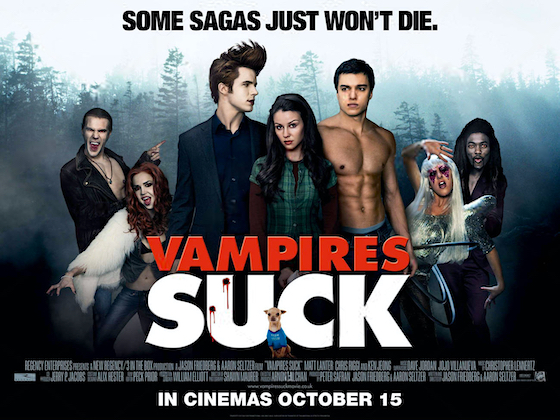
Vampires Suck

Since 2015, I’ve been marking Halloween by reviewing the Twilight movies. Last year, I finished them. Or did I?!

…well, yes, I did. But here’s something of a coda: a spoof of the series, produced in 2010 when Twilight was still at (more or less) the height of its popularity. At the time, making a Twilight spoof must have seemed a great idea — it was popular, but also widely lampooned. The only problem is, isn’t Twilight already so fundamentally ridiculous as to be unspoofable? Maybe; maybe not… but when you put Jason Friedberg and Aaron Seltzer in charge, you’re not likely to get great results.

There’s a fair chance you won’t recognise Friedberg & Seltzer’s names, but you might know their body of work. They started out as co-writers of the Leslie Nielsen-starring spoof Spy Hard, but more significant is their second movie: Scary Movie, the 2000 horror spoof that provoked a whole string of similar genre-centric spoofs over the next 15 years. They graduated to directing with 2006’s Date Movie, which IMDb voters think is the 23rd worst movie ever made, and they followed that with spoofs Epic Movie (the 12th worst movie ever made), Meet the Spartans (the 22nd worst movie ever made), Disaster Movie (living up to its name, the #1 worst movie ever made), The Starving Games (the 45th worst movie ever made), and Superfast! (by this point, too few people are watching their movies to even get the score low enough to appear on that ranking — I don’t know about you, but I hadn’t even heard of Superfast until today, and it came out in 2015).

Black Eyed Peas

In the middle of all that sits Vampires Suck, only the 46th worst movie ever made — by Friedberg & Seltzer’s standards, a success! Now, I’m not about to mount a full-blown defence of the movie, but I will say it’s certainly not one of the worst things I’ve ever seen. Indeed, just within the subgenre of 21st-century genre spoofs, I’d say Superhero Movie is much worse (though, re-reading my review, it sounds pretty similar to my thoughts on Vampires Suck). Sure, there are plenty of cheap, uninspired, crass, and rip-off gags, but some of it also made me laugh, so it’s not a total washout. It’s never as funny as the real thing at it’s funniest (Face Punch forever!), but it wasn’t as uninspired as I expected.

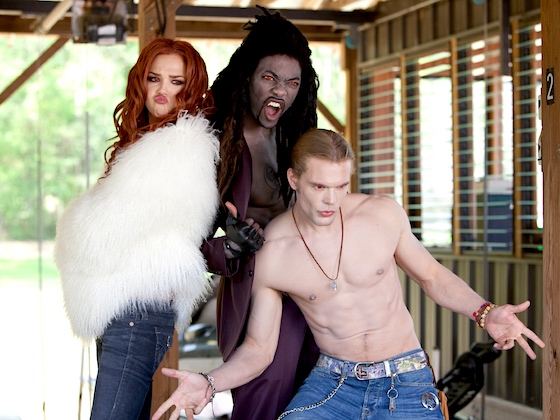
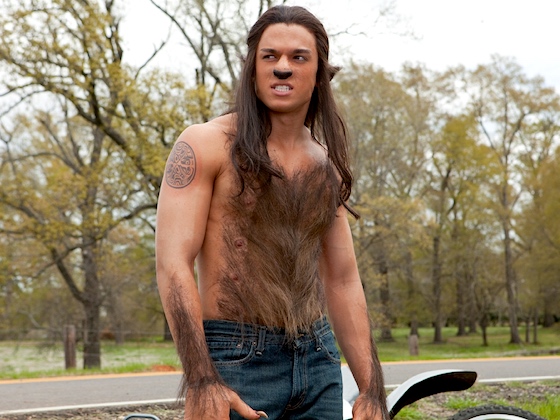
I keep calling these “genre spoofs” but, as with Superhero Movie (and so, I extrapolate, all the other Movie movies), it’s not truly a spoof of an entire genre, but instead sticks closely to one film; or, in this case, two films (only the first two Twilights had been released at the time, so it bundles them both in). Every scene is a recreation of one from the original, but with a comedic twist. As such, I’m not sure whether it works better if you have seen the original (so you know exactly what’s being referenced) or if you haven’t (so you don’t realise just how simplistic all its ideas are). I guess it’s aimed at the former kind of viewer, though. I mean, some parts are barely more than repeats of stuff from the real film framed in such a way as to say “isn’t this stupid?” Some of the pop culture references in gags are painfully dated, too. That’s always a risk with this kind of comedy, but then I guess they’re not expecting longevity — if they were, they might put more effort in.

Team Body Hair

On the other hand, highlights include Jenn Proske doing a very good job of imitating Kristen Stewart’s acting style. It’s unmistakable, but a relatively subtle and consistent bit of humour; or, at any rate, not as overblown a gag as… everything else the film is doing. And if you listen, the lyrics in some of the music tracks are decent parodies of the kind of songs Twilight was soundtracked with (“I feel so lonely / Nobody gets me”). Other times, you’re left to provide your own punchline. “We’re just like any other normal American family,” the head vampire comments; “except, of course, we have no souls and we walk the Earth trying to satisfy an unquenchable thirst for blood.” That’s it for the film, but you’ll probably be thinking, “sounds like a normal American to me.” Arguably the best joke is in the title — and whether you think it’s moderately amusing or an obvious and tired pun, I’d argue my assessment holds true.

At the end of my review of Breaking Dawn Part 2, I pondered if I’d wasted my time watching the Twilight Saga — I mainly engaged with it because of its prominent place in pop culture, but that seems to have quickly faded. The same thought, then, is even more true of a middle-of-the-road spoof of the series. If you’re a dyed-in-the-wool Twilight fan, I guess a pisstake is not going to agree with you; but if you despise the main series, this kind of close parody is as bad as the real thing. It did tickle me at times, but I won’t be watching it again.

2 out of 5

* For its theatrical release, the BBFC suggested cuts to five scenes to earn the film a 12A. That cut was also released on DVD and Blu-ray, but it’s uncut and a 15 on streaming. In the US, there’s an unrated “Extended Bite Me Edition”, but it’s only 96 seconds longer. ^

The 100-Week Roundup XIV

I love deadlines. I like the whooshing sound they make as they fly by.

While I’ve been busy with FilmBath and AMPLIFY!, a lot of review dates I intended to hit have flown by, which naturally brought to mind the Douglas Adams quote above. All those reviews that would’ve tied in to something now won’t, but they’ll find a home here someday.

In the meantime, I’m far behind on my 100-week roundups, which is why I’ve put some energy into this little lot. They finish up my reviews from October 2018, as well as dipping a toe into the waters of November 2018. It’s a mixed bag in every sense: very different genres; very different styles; very different ratings…

The films in question are…

  • It’s Such a Beautiful Day (2012)
  • The Lives of Others (2006)
  • Jennifer’s Body (2009)
  • Going for Golden Eye (2017)


    It’s Such a Beautiful Day
    (2012)

    2018 #218
    Don Hertzfeldt | 62 mins | Blu-ray | 1.33:1 | USA / English

    It's Such a Beautiful Day

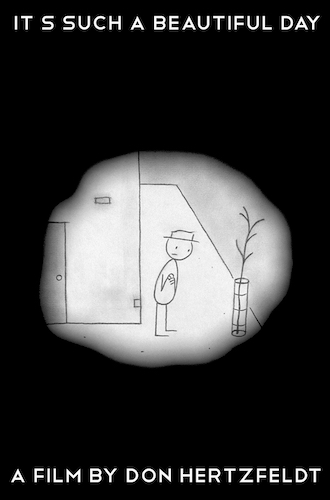
    In 2014, when Time Out New York ranked It’s Such a Beautiful Day 16th on their list of the 100 Best Animated Movies Ever Made, critic Tom Huddleston described it as “one of the great outsider artworks of the modern era, at once sympathetic and shocking, beautiful and horrifying, angry and hilarious, uplifting and almost unbearably sad.” That’s a description I’m about to singularly fail to better.

    Animator Don Hertzfeldt enjoys a cult following — you might never have heard of him (though chances you heard about his Simpsons couch gag, if nothing else), but if you have, well, you have. After releasing numerous shorts, It’s Such a Beautiful Day was his first feature — and, indeed, it was first released as a trilogy of short films between 2006 and 2011. Hence my notes break down into three parts, which I shall now share unedited…

    Part 1, Everything Will Be OK. Okay, so, this is weird. Interesting depiction of some kind of mental collapse (I guess we’re meant to infer it’s a brain tumour). Odd everyday events — what does it mean? Maybe that’s the point — Bill [the central character] is pondering what it all means too, after all.

    Part 2, I Am So Proud of You, is like, “you thought that was weird? Get a load of this!” A lot of it seems to be weird — what some people would describe as “disturbed — just for the sake of it. But at other times, it’s almost casually profound. There’s something interesting about its relationship to time and the order of events, or at least the presentation of the order of events.

    Part 3, It’s Such a Beautiful Day. See above. It’s interesting that it was three short films, made over a period of six years, because it really does feel of a piece. Maybe it was just easier to fund/produce shorts rather than a feature, and this was always the end goal.

    Well, there you go. This is not an animated movie for everyone (if you think “animated movie” means “Disney musical”… hahaha), but it’s certainly something unique and special.

    4 out of 5

    The Lives of Others
    (2006)

    aka Das Leben der Anderen

    2018 #220
    Florian Henckel von Donnersmarck | 137 mins | digital (HD) | 2.35:1 | Germany / German | 15 / R

    The Lives of Others

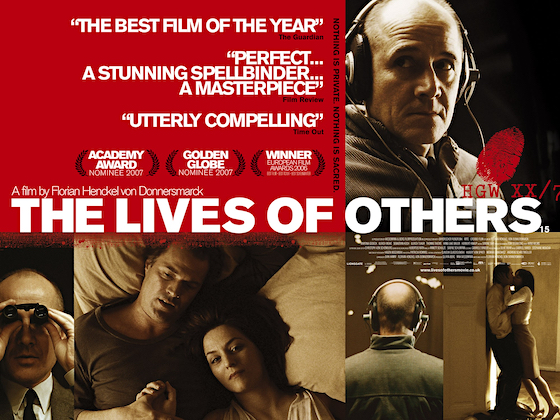
    In 1984 East Berlin, an agent of the secret police, conducting surveillance on a writer and his lover, finds himself becoming increasingly absorbed by their lives.IMDb

    This German movie won the Best Foreign Language Film Oscar and BAFTA (as well as a host of other similar awards), and is currently ranked as the 59th best film of all time on IMDb. It lives up to its accolades. It’s tense and thrilling like a spy movie; emotionally and politically loaded like an art house drama.

    Of particular note is Ulrich Mühe, superb as the increasingly-conflicted Stasi agent. He conveys so much with so little — the character’s massive ideological change is all portrayed as inner conflict. I was wondering why we hadn’t seen a lot more of him since, but sadly he passed away the year after the film came out, aged just 54.

    As the film focuses so much on him, it might be easy to underrate the technical merits, especially because they’re unobtrusive; but it’s perfectly shot by Hagen Bogdanski, with crisp, cold, precise photography. As for writer-director Florian Henckel von Donnersmarck, his followup was infamous Johnny Depp / Angelina Jolie vehicle The Tourst, a film so maligned it seems to have derailed his career. Shame.

    5 out of 5

    The Lives of Others placed 24th on my list of The Best Films I Saw in 2018. It was viewed as part of What Do You Mean You Haven’t Seen…? 2018.

    Jennifer’s Body
    (2009)

    2018 #222
    Karyn Kusama | 102 mins | digital (HD) | 1.85:1 | USA / English | 15 / R

    Jennifer's Body

    Jennifer’s Body didn’t go down well on its original release, but the past few years have seen it develop a cult following, with people regularly recommending it on social media as an under-appreciated horror flick. I didn’t dislike it, but I’m not ready to join their ranks.

    You can see what they were going for, in some respects — it’s trying to be a very feminist horror movie, with the female friendship at the core and so on. And yet, despite the female writer and female director and female stars, chunks of it feel so very male fantasy. I mean, Megan Fox goes skinny dipping for no reason. We don’t see anything explicit, but I’d wager that has more to do with Fox’s contract than authorial intent. Later, there’s a lingering kiss between the two girls that looks like it’s trying its hardest to best the famous one from Cruel Intentions. And talking of references, the whole film sounds like it’s trying really, really hard to be Heathers, with an overload of slang ‘n’ shit. It’s a bit, well, try-hard.

    Megan Fox is surprisingly good though, and there are some neat bits of direction, like the intercut murder/virginity-losing scene. It’s just a shame the whole film doesn’t show that kind of consistency. It did grow on me as it went on (I’m not sure if it took me time to settle into its rhythm or if it just had a clunky start), though exactly how much is debatable: it ends up being a moderately entertaining comedy-horror, but one that’s never really scary and rarely that funny.

    3 out of 5

    Going for Golden Eye
    (2017)

    2018 #224
    Jim Miskell | 60 mins | digital (HD) | 16:9 | UK / English

    Going for Golden Eye

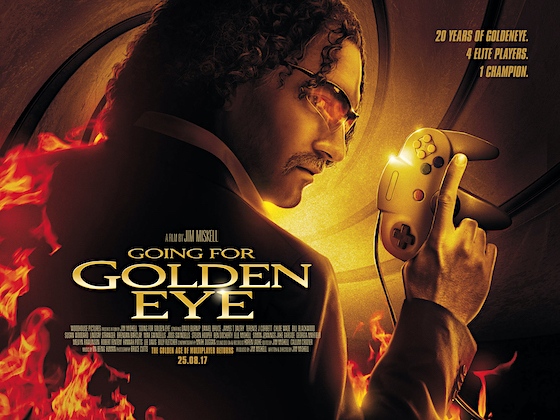
    According to IMDb trivia, this is “the first video game mockumentary”. Well, you’re not going to mistake it for a real documentary — the acting is uniformly amateurish, which is one of the film’s biggest hindrances (it certainly gets in the way of selling the documentary conceit).

    Making allowances for such amateur roots, the film does manage some decently amusing bits, although just as many that don’t land. Very little about it will surprise or delight, but more forgiving or nostalgic viewers may be tickled at times. Plus, you have to have a certain amount of admiration for zero-budget filmmakers who managed to produce and get distribution for their film. Even if there’s an occasional for-friends-and-family feel to parts of it, they’ve still completed something many wannabes only dream of.

    Outside of aforementioned relatives, this is only really going to appeal to people with nostalgia for playing GoldenEye on N64 back in the day. In a way, the best part of the whole film is the opening montage about how GoldenEye was unexpectedly great, bucking expectations of both movie tie-in games and first-person shooters. A genuine well-made documentary about the game — why it was so important; what made it so popular — would be interesting…

    2 out of 5

  • The 100-Week Roundup XIII

    Horror, comedy, romance, and singing Nazis in this week’s roundup…

  • TiMER (2009)
  • Suspiria (1977)
  • Matinee (1993)
  • The Producers (1967)


    TiMER
    (2009)

    2018 #210
    Jac Schaeffer | 100 mins | streaming (HD) | 1.85:1 | USA / English & Spanish | 15 / R

    TiMER

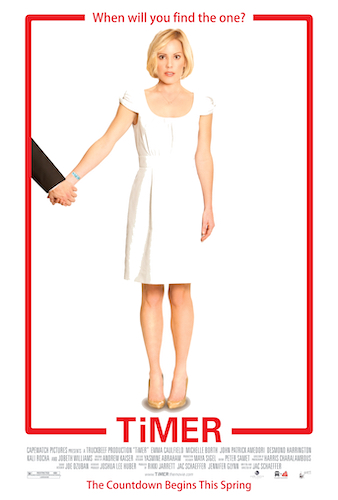
    The debut feature of writer-director Jac Schaeffer (who hasn’t helmed a feature since, but is now the showrunner of Marvel’s WandaVision) is a sci-fi romcom that doesn’t sell out its high concept to make its romance work. Said concept is that you can buy an implant that will count down to the day when you meet your soulmate. So, there’s the usual romcom “will they/won’t they” shenanigans, but with this added SF complication.

    As a sci-fi fan, I thought the concept was very well done indeed. At it’s core it’s quite a simple idea — I mean, such a device is hardly something that would change the entire world, but it would certainly affect our attitude to relationships and dating. The writing has thought through those effects, the way it would modify people’s reactions and behaviour and so on, and applied all of that to its story in a natural way; that is to say, it influences what happens, rather than the plot being little more than an exercise in exploring the permutations of the concept. Couple that with a solid romcom element, and you have a likeable little film.

    4 out of 5

    Suspiria
    (1977)

    2018 #211
    Dario Argento | 98 mins | Blu-ray | 2.35:1 | Italy / English | 18

    Suspiria

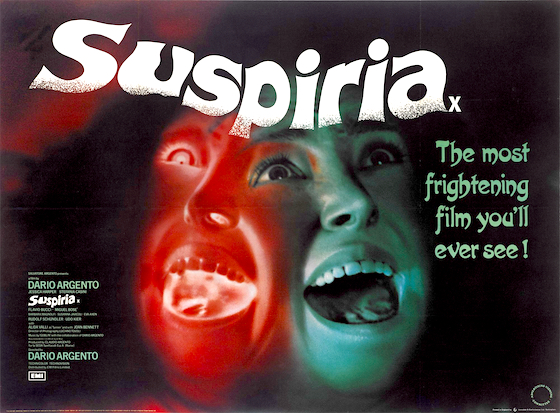
    Perhaps horror maestro Dario Argento’s best-known movie, Suspiria is the story of American ballet dancer Suzy Bannion (Jessica Harper), who travels to Germany to train at a prestigious dance academy, where she instead uncovers many creepy goings-on.

    There’s a bit more to the story than that, but, really, Suspiria is more about its unnerving atmosphere, creepy scares, and strikingly brutal murders than emphasising a traditional narrative. According to the film’s Wikipedia page, “film scholar L. Andrew Cooper notes ‘aesthetic experience is arguably the ultimate source of ‘meaning’ in all of Argento’s films’,” and that was certainly my main takeaway here — as I wrote in my year-end summary, it’s a masterpiece of uneasy atmosphere, with striking colours and music.

    There’s a lot more that could be written about Suspiria (and, of course, has been written in the 43 since its release), but if you were expecting deep-dive insight in a roundup column, you’re in the wrong place.

    5 out of 5

    Suspiria placed 16th on my list of The Best Films I Saw in 2018. It was viewed as part of Blindspot 2018.

    Matinee
    (1993)

    2018 #213
    Joe Dante | 99 mins | TV | 1.85:1 | USA / English | PG / PG

    Matinee

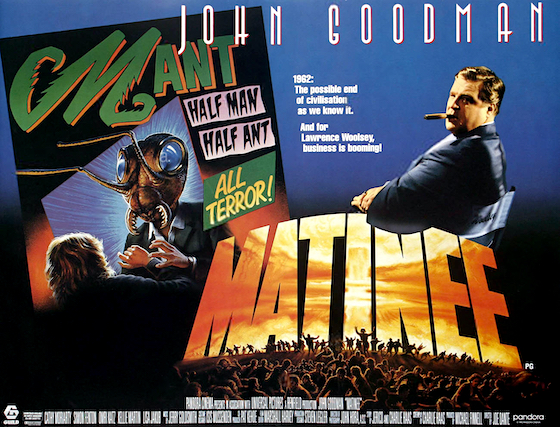
    I confess I’d not even heard of Matinee before Arrow put out a Blu-ray a few years back, but it seems to be something of a cult favourite — it’s laden with high-scoring reviews on Letterboxd nowadays. It’s about a producer of horror B-movies (modelled on William Castle) who attempts to promote his latest piece of monstrous schlock, Mant, to a military-base town during the Cuban Missile Crisis. Thematically, it’s a tribute to and evocation of the magic of the movies, which probably explains its popularity on a movie-logging website. That’s definitely its strongest aspect, with John Goodman getting to deliver some nice speeches about the wonder of going to the pictures. Shame today’s cinema managers and employees don’t seem to share his romanticism for the experience…

    Other than that, I thought it was a bit something and nothing. The movie-within-a-movie is a lot of fun, and setting a good chunk of the film during its premiere screening is a neat bit of structure, but overall the antics get a bit daft.

    There’s a bit of unintended mirroring in the inclusion of a school drill for the atomic bomb about to drop, with safety precautions that would be fundamentally useless were it to actually happen — it calls to mind how today US schools do drills for school shooting situations, again with virtually useless advice (or so I’ve heard). You could possibly draw out some commentary on the changing nature of threats to US citizens (it used to be from without, now it’s from within), but Matinee was made in 1993, so the chances of it being intentional are nil.

    3 out of 5

    The Producers
    (1967)

    2018 #216
    Mel Brooks | 86 mins | DVD | 1.85:1 | USA / English | PG / PG

    The Producers

    Writer-director Mel Brooks is best known for his fourth-wall-breaking movie parodies like Young Frankenstein, Spaceballs, and Robin Hood: Men in Tights, but his debut feature is a different kettle of fish. It takes place in (broadly speaking) the real world, where failing Broadway producer Max Bialystock (Zero Mostel) and accountant Leopold Bloom (Gene Wilder) come up with a moneymaking scam that involves putting on a show so terrible that it closes on opening night.

    Cue a mix of black humour (the play they settle upon is called Springtime for Hitler: A Gay Romp with Adolf and Eva at Berchtesgaden) and slapstick, with scenes and moments indicating the direction Brooks’ style would later take (like an aside about another character being delivered direct to camera, or someone answering a comforting “there, there” with “where, where?”).

    Although originally opening to mixed reviews, the film was a box office hit, earnt Oscar nominations (Best Supporting Actor for Wilder) and wins (Best Screenplay for Brooks), and was eventually adapted into an actual Broadway musical (you couldn’t make this up) which was then (re)made as another film (you really couldn’t make this up) and as recently as 2016 was used as the basis for a spoof of Trump (sadly, he’s not made up either). That, I think, speaks to the enduring hilarity of the original.

    4 out of 5

  • Bill & Ted’s Double-Bill

    As Bill (Alex Winter) and Ted (Keanu Reeves) slightly belatedly face the music in UK cinemas, now seemed a good time to review their first excellent adventure and second bogus journey

    Bill & Ted’s Excellent Adventure
    (1989)

    2020 #91
    Stephen Herek | 90 mins | digital (HD) | 2.35:1 | USA / English | PG / PG

    Bill & Ted's Excellent Adventure

    I’ve written before about how my childhood film viewing involved a lot of catching up on the family-friendly blockbusters of the ’80s — Star Wars, Indiana Jones, Back to the Future, Ghostbusters, etc — but Bill & Ted was one of the ones that passed me by. Maybe if I’d seen it at the time I’d now put it on a pedestal with those others; or maybe I missed it back then because it simply isn’t as good.

    The titular duo are a pair of slackers and aspiring rock musicians, but they’re struggling to complete a high school History presentation and, if they fail, they’ll be separated forever. Fortunately, help arrives in the form of Rufus (George Carlin), a time traveller from the year 2688, when mankind lives in a utopian society thanks to the music of Bill and Ted — but only if they pass this project. So he lends them his phone-booth-shaped time machine, and off they go into the past to roundup some real historical figures.

    Where Back to the Future was a sci-fi/comedy that took its sci-fi relatively seriously (applying proper scientific theories of time travel’s possible effects to provide jeopardy for our hero), Bill & Ted is an outright comedy. It revels in its silliness, which makes for fun, laidback viewing, but it’s at the expense of any tension or suspense in the plot. Ostensibly they must race against the clock to get their presentation together (thanks to some half-arsed gubbins about time still progressing in the present even while they’re gadding about in a time machine), and the phone booth gets broken and stuff like that, but it never really feels like there’s a hurry, or that things might not work out. I mean, it’s a daft comedy, so of course we know they’re going to pull it off, but the film seems to use that inevitability as an excuse to not even try.

    If I seem overly critical, it’s only because expectations are high. The film has a marked cult following, and the fact there’s another 1980s comedy about a time travelling high schooler is an unavoidable point of comparison. It’s not Bill & Ted’s fault that Back to the Future is a fundamentally perfect movie, whereas this is just an easygoing 90 minutes of frivolity. It’s not all it could be, but it’s likeable enough to squeak up to 4 stars.

    4 out of 5

    Bill & Ted’s Bogus Journey
    (1991)

    2020 #96
    Pete Hewitt | 94 mins | digital (HD) | 1.85:1 | USA / English | PG / PG

    Bill & Ted's Bogus Journey

    In the run up to Face the Music, I’ve observed a trend on Twitter for people, who consider themselves connoisseurs, to declare Bogus Journey better than Excellent Adventure. Everyone’s entitled to their opinion, but that’s one I definitely disagree with. So too, I guess, would Excellent Adventure director Stephen Herek, who declined to return for this sequel because he thought it was “almost a parody of a movie that was already a parody”.

    Originally titled Bill & Ted Go to Hell (until that was vetoed by typically puritanical Yanks), the plot sees Bill and Ted, um, go to Hell. They’re killed by evil robot replicas of themselves, sent back in time by a future terrorist who wants to disrupt the utopia they created. While the robot doubles set about destroying their reputations, the real Bill and Ted are stuck in the afterlife, where they must convince Death (William Sadler) to restore them to life.

    Apparently the first idea for the sequel was to have our slacker heroes struggling with an English assignment, which would lead to them entering classic works of literature. That storyline appeals to me (well, I do have an English degree), but it does sound like a mere do-over of the first movie’s plot. It’s to Bogus Journey’s credit that it’s not merely a rehash, but it doesn’t feel like there was a solid concept to go in its place. Excellent Adventure had a driving idea (“use time travel to do a History project”), but Bogus Journey feels like the result of a forced search for something else to do with the same characters. Heck, it even switches genres, from sci-fi to fantasy. That kinda doesn’t matter when they’re just silly comedies, but it didn’t sit right with me.

    Perhaps that’s simply because I didn’t think it worked. The whole film is much scrappier and less inspired than the first. There are good bits — Sadler is quite fun as the Grim Reaper, and some of the Hell stuff is inventive — but it’s mostly a whole load of mediocrity, lacking the spark that enlivened the original. The climax even reminded me of a Doctor Who spoof, The Curse of Fatal Death. Okay, that came eight years after this, but it did the same gag better.

    Bogus Journey is definitely barmy, like they were allowed to do whatever they wanted and went crazy with it. I kind of admire that, even as I didn’t think the result was particularly entertaining. In fact, I found it annoying rather than funny.

    2 out of 5

    Bill & Ted Face the Music is in UK cinemas from today.

    Safety Last! (1923)

    2020 #172
    Fred Newmeyer & Sam Taylor | 74 mins | Blu-ray | 1.37:1 | USA / silent | U

    Safety Last!

    I’ve seen films by Charlie Chaplin and Buster Keaton, so it’s overdue that I acquaint myself with the so-called “Third Genius” of silent comedy, Harold Lloyd. I would say that, of those three, Lloyd is considered a distant third place today: Chaplin is a name that transcends cinema to be known in the general consciousness; Keaton has accrued fame down the years for his still-impressive stunts; but Lloyd, I feel, has faded from consciousness a bit. If everyone’s heard of Chaplin, and a lot of people have heard of Keaton, I feel like only those in the know even consider Lloyd. But that wasn’t always the case. In fact, some would assert that, in their day, Lloyd was the most successful of them all — per Wikipedia, he made $15.7 million to Chaplin’s $10.5 million. (Nothing is ever as straightforward as all that, of course. Here’s a good article at Silentology all about the history of popularity of the silent comedians, which ultimately makes it quite clear that (a) Chaplin was the biggest; (b) Lloyd and Keaton were the runners-up; and (c) the pack of other comedians was far behind that trio.)

    The dwindling of his reputation seems to be at least partly his own fault: according to revered film historian Kevin Brownlow (paraphrased in this article), “Lloyd was so nervous about how audiences would react to his later movies that he withheld the films from distribution, so that only some very early pictures (made before his talent blossomed around 1920) were widely available for viewing. An effort to reintroduce his work after his death in the early ’70s was also botched, adding narrations and showy music scores to movies that don’t need extra gimmicks.” Nowadays, silents are re-released with more respect to their original presentations, but, for whatever reason, I think Lloyd still awaits the reappraisal that the other two have enjoyed and/or never even needed. Indeed, if we look at their current availability on disc in the UK, Chaplin has several extensive Blu-ray sets to his name; Masters of Cinema have made a fine fist of getting Keaton onto Blu-ray, with four box sets so far; and Lloyd… has a total of two films. And one of those (this one) is only out today. (I’ve focused on the UK because that’s where I am, but it’s not a whole lot better in his native US, where a total of four of his films are on Blu-ray.)

    What a way to make a living

    My opinion on the three is still forming — as I said, this is the first Lloyd film I’ve seen, so it wouldn’t be fair to base an entire comparison off it. But I have now seen the majority of Chaplin’s most-acclaimed features, and a couple of Keaton’s too, so a view is beginning to coalesce. And that is that, either I’m always in the wrong mood when I watch a Chaplin film, or I just completely prefer Keaton, and now Lloyd too. Aside from The Great Dictator, I’ve found every Chaplin I’ve seen to be a bit of a slog. That’s not to say I dislike them — I can see admirable stuff aplenty, and greatly enjoyed some of the exceptionally amusing sequences — but they always feel very long to me. That’s not a sensation I’ve yet experienced during a Keaton film, nor with Safety Last. But who knows, maybe Safety Last is Harold Lloyd’s Great Dictator in terms of how my opinion pans out. Only time, and more films, can tell.

    But, for now, Safety Last is why we’re here. It’s the story of a small-town boy (Lloyd) who travels to the city to find employment, planning to have his girl (Mildred Davis) follow him out just as soon as he makes his fortune. His letters home inform her of his increasing success, but in reality he works a lowly job at a department store, rushed off his feet to serve the baying mass of consumers. The ensuing century has conferred on that a degree of timelessness: working hard to appease others but getting nowhere yourself. It’s not the American Dream, but, for many low-level workers, it’s the American Reality. Replace working on the fabric counter of a department store with filling packages at an Amazon warehouse and, really, how much has changed?

    This is the milieu the film plays in for the first 50-or-so minutes, more or less. There are digressions outside the workplace, the best being a fateful morning commute that sees Lloyd accidentally bundled into a van heading further and further in the wrong direction, leading to an array of tricks and stunts to head back to work on time. Keaton may be the more famed daredevil, but here Lloyd appears every bit his equal.

    Climbing a building? Sounds like an impossible mission...

    And never more so than in the film’s final act. A series of events leads us to the point where Lloyd has to climb the sky-scraping outside of the department store building in order to earn the big payday he’s been needing. What follows is a 20-minute climb; a phenomenal extended sequence that is both funny and tense. It was shot on location, on fake buildings built atop real buildings — not as dangerous as fully doing it for real, but not exactly health-and-safety conscious (if Lloyd had fallen, he would’ve dropped only a storey or so onto a mattress; but if he bounced off that…) It has the same kind of thrill that Tom Cruise employs today when he climbs skyscrapers or dangles off the side of planes, only with more humour. You might think that would undercut the tension, but, if anything, it exacerbates it. You can push things closer to the edge when being funny, and, boy, does Lloyd get close to the edge…

    The first two-thirds of the film are a very solid 4-out-of-5 farce, but the final act mixes laughs with thrills in a perfectly executed, constantly escalating sequence that is a 6-out-of-5-level climax.

    5 out of 5

    The Criterion Collection edition of Safety Last! is released in the UK today.

    The 100-Week Roundup XII

    In the interests of catching up, this roundup combines two separate weeks.

    The first contains two of the most acclaimed films of all time (both feature on numerous “greatest ever” lists, including those from IMDb, Letterboxd, TSPDT, and Empire), which happen to be my final reviews from September 2018.

    The second is a pair of movies I watched back-to-back in October 2018 that share an obvious pregnancy theme — but, oh, they could hardly handle it more differently.

    This week’s films are…

  • Network (1976)
  • Ran (1985)
  • Prevenge (2016)
  • Bridget Jones’s Baby (2016)


    Network
    (1976)

    2018 #201
    Sidney Lumet | 121 mins | digital (HD) | 1.85:1 | USA / English | 15 / R

    Network

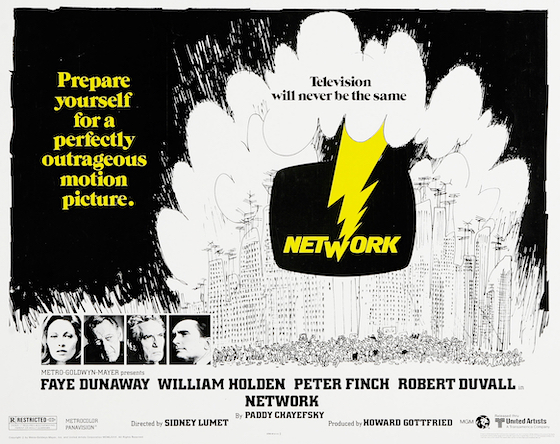
    no predictor of the future — not even Orwell — has ever been as right as Chayefsky was when he wrote Network.

    So wrote Aaron Sorkin, who has cited Network’s screenwriter Paddy Chayefsky as a major inspiration on his own writing; he even cited the man when accepting his Oscar for The Social Network; and Sorkin’s TV series The Newsroom feels like it could’ve been called Network: The Series.

    Well, maybe not. The first half-hour or so of Network feels like The Newsroom (which was a series very much aimed at being realistic, to the extent that it was set in the recent past and mostly used real news stories for its plots), whereas Network spirals off into its own level of satirical craziness, far beyond what Sorkin’s series attempted.

    But whereas The Newsroom looked to the recent past and real events, Network is as indicative of the future as Sorkin said in that opening quote. The film may be 44 years old, but I’m pretty sure you could Chayefsky’s this screenplay, change only a couple of minor specific words, and film it as being set today. It forecasts the future of TV news as angry men ranting as if they were prophets (this was 20 years before Fox News launched), as well as commentating on the place of terrorism in driving TV ratings.

    It’s cynical and ultimately bleak, but, worst of all, it’s entirely accurate.

    5 out of 5

    Network placed 21st on my list of The 26 Best Films I Saw For the First Time in 2018.

    Ran
    (1985)

    2018 #203
    Akira Kurosawa | 161 mins | Blu-ray | 1.85:1 | Japan & France / Japanese | 12 / R

    Ran

    Akira Kurosawa returns to Shakespeare (after Throne of Blood quite closely adapted Macbeth and The Bad Sleep Well may or may not have been based on Hamlet) for an adaptation of King Lear, relocated to feudal Japan. At the time, it was speculated to be his final film. It wasn’t — he made three more — but this was his last large-scale work.

    The title translates roughly as “chaos”, “pandemonium”, or “turmoil” — I guess they didn’t bother retitling it for the West because the original is a nice, simple word we can understand. But the original meaning is clearly apt, because the film depicts the mayhem that ensues when a warlord abdicates and tries to divide his kingdom between his three sons.

    It’s testament to Kurosawa’s greatness that he can make a movie this magnificent and I wouldn’t even put it in his top five. That might be my failing, though — this is a longer and more complex work than, say, Throne of Blood or Sanjuro. I need to revisit all of Kurosawa’s movies, but none more so than this.

    5 out of 5

    Ran was viewed as part of What Do You Mean You Haven’t Seen…? 2018.

    Prevenge
    (2016)

    2018 #208
    Alice Lowe | 88 mins | TV (HD) | 2.35:1 | UK / English | 15

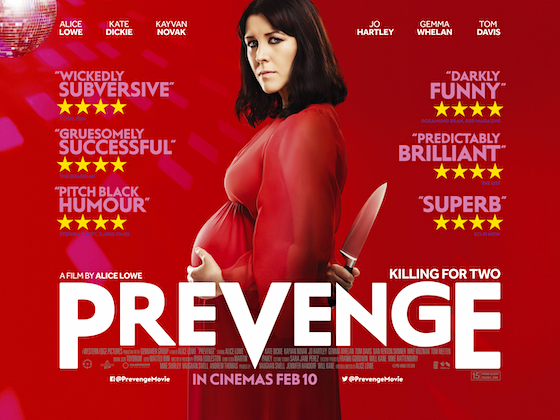
    Prevenge

    Seven-months-pregnant Ruth (played by Alice Lowe, who also writes and directs) believes she can hear the voice of her unborn baby, and it’s telling her to kill people. Why is a mystery… unless you read the Wikipedia entry, which just tells you upfront. (Don’t read the Wikipedia entry.)

    The behind-the-scenes story of Prevenge is impressive: it was made while Lowe herself was pregnant; she wrote it in just four days, and shot it in just 11. Speed is no indicator of quality, either positively nor negatively, but Prevenge is very good. The premise is obviously absurd, but it leans into that by being darkly funny. As a horror movie, it’s not scary, more kind of creepy, although not even quite that — it’s not playing on those kind of thrills.

    Perhaps this means it fails to satisfy “horror fans”, thus explaining its fairly low score on IMDb, which I think is unwarranted. But it’s also not what people have started to call “elevated horror” (i.e. horror that is acceptable as a Quality Movie too), because it’s too transgressive for that. Perhaps it is best taken as an exceptionally black comedy.

    4 out of 5

    Bridget Jones’s Baby
    (2016)

    2018 #209
    Sharon Maguire | 123 mins | digital (HD) | 2.39:1 | UK, USA, France & China / English | 15 / R

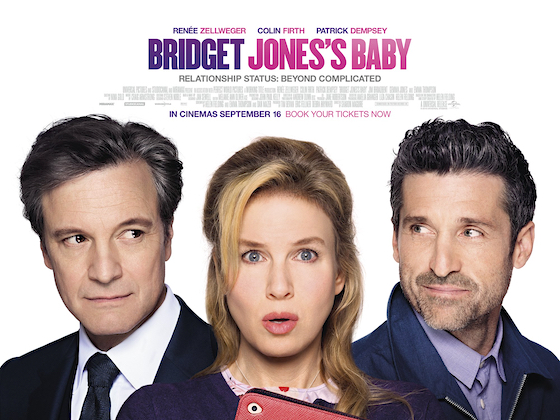
    Bridget Jones's Baby

    I first and last watched the original Bridget Jones’s Diary and its sequel, The Edge of Reason, many years ago (probably close to when they were originally released, in 2001 and 2004 respectively; certainly well before this blog existed). I didn’t dislike them, but all I can really remember about them is broad-sweep stuff, including barely anything from the second one. So I didn’t come to this belated third movie as an all-read-up fan; but, just like the first two, I didn’t dislike it… and, 100 weeks later, can barely remember any details about it. (I read the detailed plot description on Wikipedia and some of it came back to me.)

    The storyline is mostly pretty obvious — it’s a recycle of the previous films’ love triangle thing, now with the added complexity of a pregnancy — which means the over-two-hours running time feels somewhat excessive (I continue to believe all comedies should be about 90 minutes). In spite of that, it’s often pretty funny. Some of the riffs on modern media and whatnot are a bit tired (“those young people, just posting photos of their food on Instagram!”), but other gags land well enough.

    In the earlier movies, Renée Zellweger attracted praise for her ability to inhabit a British lass. It feels like she’s forgotten how to do the accent in the 12 year gap; or maybe it’s just thanks to the work she’s obviously had done on her face… At least she’s helped by a supporting cast so stuffed with quality performers from UK comedies that some literally just appear in the back of shot (presumably there were deleted scenes).

    Reasonably successful at what it sets out to do, then; enough so that there’s been talk of a fourth one.

    3 out of 5

  • The 100-Week Roundup XI

    This week: an underrated crime thriller based on the same true-life story as a Hitchcock classic; an investigation of the trauma left by conflict in a film I’ve nicknamed “Gulf War Rashomon”; and a test of this “just post my notes already” roundup format with one of my favourite films I watched in 2018.

    They are…

  • Compulsion (1959)
  • Heathers (1988)
  • Courage Under Fire (1996)


    Compulsion
    (1959)

    2018 #194
    Richard Fleischer | 99 mins | TV | 2.35:1 | USA / English | 12

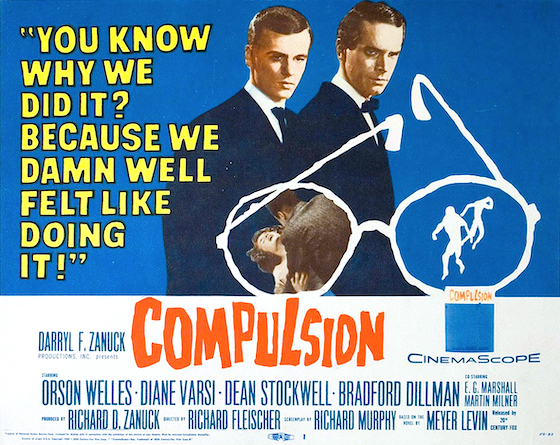
    Compulsion

    Based on a novel that was based on the Leopold and Loeb case (which has also been the inspiration for various other films, most notably Alfred Hitchcock’s Rope), Compulsion is the story of two students who think their intellectual superiority will allow them to get away with the perfect murder.

    Playing the students, Dean Stockwell and Bradford Dillman are both fantastic. They’re two different types of well-to-do prodigies: Dillman charming and cocksure; Stockwell both awkward and supremely confident of his own exceptionalness. Their performances keep things compelling, even as the events unfolding are a foregone conclusion. You should and will hate them — even if they weren’t murderers, they’d be insufferable pricks (they sound like any number of modern-day politicians, don’t they?); that they’re cold-blooded killers just makes them worse. But even though you’ll never root for them, they’re still addictively watchable. Also, bearing in mind when the film was made, there’s a strong undercurrent of their homosexuality. It disappears as the film goes on, becoming more concerned with the case than the relationship between the two guys, but it’s discernibly there at the start.

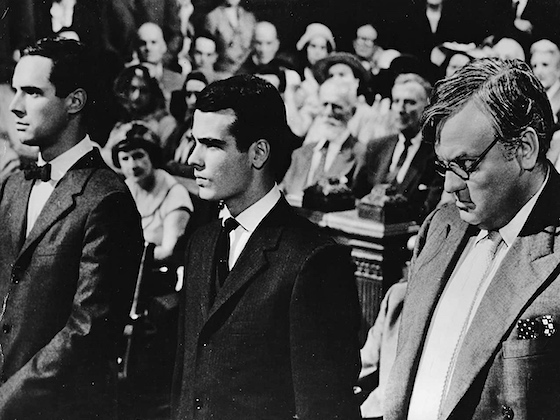
    And then Orson Welles turns up. Despite getting top billing, he has more of a third act cameo that turns into the film’s most grandstanding moment: his closing speech at the trial; a real tour de force against capital punishment. Apparently it was issued on vinyl, it’s that good. The three stars got and get all the recognition (they shared Best Actor at Cannes that year), but there are also fine supporting performances from Martin Milner and Diane Varsi as a couple of fellow students who get caught up in the case in different ways; and E.G. Marshall is very good as DA Horn, the man who eventually catches the guys and therefore becomes Welles’ courtroom nemesis. He’s particularly understated during Welles’ big speech, gradually shifting from annoyance and hatred to agreement, ultimately rising to his feet at the end as if in a silent standing ovation.

    Stillman, Stockwell and Welles

    Aside from that obvious Big Scene, there are several other memorable ones: Dillman calmly talking to his teddy bear while Stockwell frantically searches for misplaced glasses, for example; or the cat-and-mouse scenes where the DA interviews the lads separately. Much of it is fantastically shot, too. There’s an occasional showy bit (like focusing on glasses on a nightstand as it gets dark outside, then showing the culprit and investigator reflected one in each lens), but also a general level of quality that often helps emphasise the darkness in the lads’ souls.

    I don’t think Compulsion is widely discussed anymore (it has fewer ratings on IMDb than Love on a Leash!), but I thought it was a brilliant film; one that can withstand comparison to more-acclaimed versions of the same story. It’s definitely underrated today.

    5 out of 5

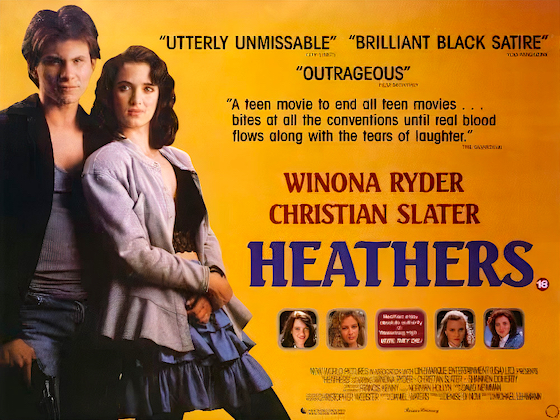
    Heathers
    (1988)

    2018 #196
    Michael Lehmann | 103 mins | Blu-ray | 1.85:1 | USA / English | 15 / R

    Heathers

    Heathers was one of my favourite films I watched in 2018 (it placed 5th on my list of The 26 Best Films I Saw For the First Time in 2018), but I didn’t make any notes on it at the time, and (obviously) it’s now two years since I watched it. Oh dear.

    So, in the spirit of the point of these roundups (to clear old unreviewed films, regardless of how much or little I have to say about them), we’ll have to make do with repeating my brief summary from the aforementioned “best of” list. Though I’ll also add that I watched this on Arrow’s then-new Blu-ray edition, which comes from a 4K restoration and looks absolutely fantastic.

    The darkness that’s barely concealed beneath the pleasant veneer of American high schools is exposed in this pitch-black comedy, which mixes violent teen wish fulfilment with a certain degree of societal satire to boundary-pushing effect. It’s not as transgressively shocking 30 years on as it might’ve been back in the ’80s, but it’s still so very.

    5 out of 5

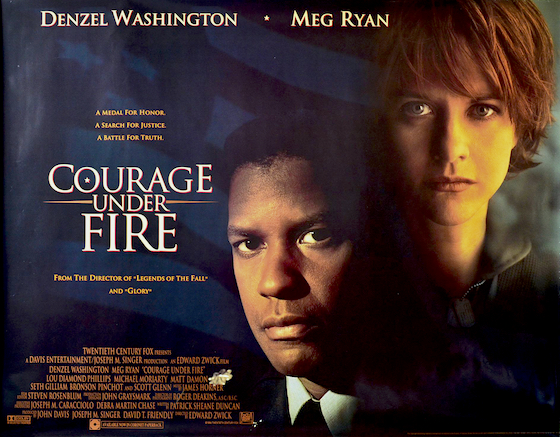
    Courage Under Fire
    (1996)

    2018 #197
    Edward Zwick | 108 mins | TV (HD) | 1.85:1 | USA / English | 15 / R

    Courage Under Fire

    It’s “Gulf War Rashomon” when a traumatised tank commander (Denzel Washington) encounters conflicting accounts of what happened while he investigates whether a helicopter pilot (Meg Ryan) deserves to be posthumously awarded the Medal of Honor, which would make her the first woman to receive it. As higher-ups put pressure on him to just push the honour through, he remains committed to uncovering the truth…

    The mystery of what really went on is not as clever or engrossing as the film thinks it is, but it still works as a meditation on how we acknowledge wartime heroism and the place of truth in doing so. It’s also a consideration of how many people are affected, in different ways, by the sacrifices of war.

    There are some decent performances along the way: Washington is always good value, and a before-he-was-famous Matt Damon demonstrates his commitment to the profession by losing a ton of weight between filming the flashback and “present day” scenes (endangering his health in the process) to portray a medical specialist indelibly affected by what went on ‘over there’. Apparently Mark Kermode said the casting of Meg Ryan as a chopper pilot was “the benchmark for a casting decision so ludicrous that it takes the viewer out of the film,” but I suspect that says more about how she was regarded at the time (best known for romcoms) than her actual performance (she’s no standout, but she’s fine).

    3 out of 5