
Joel & Ethan Coen | 96 mins | Blu-ray | 15 / R
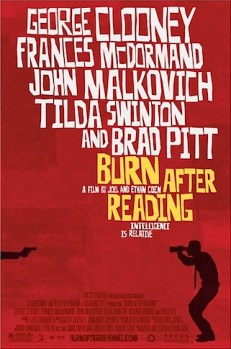 Ah, the Coen Brothers! Those indie-mainstream praise-magnets that I’ve never particularly got on with. But then, perhaps I was just too young and under-read (or, rather, under-viewed) to get The Man Who Wasn’t There when I watched it; and I did like Fargo, even if I awarded it ‘only’ four stars; and I had a similar perspective on No Country for Old Men, though leaving if off my end-of-year top ten list when some have claimed it’s the only worthy Best Picture winner of the last decade may be seen as filmic blasphemy. (On the other hand, those claimants are wrong. Not very wrong, maybe, but still wrong.) Nonetheless, the rest of the pair’s ’80s and ’90s output (bar, for no particular reason, Raising Arizona) sits in my DVD collection waiting to be got round to… but first, this: their star-studded follow-up to No Country that seemed to disappoint so many. Probably because it was a comedy.
Turns out Burn After Reading is another film I don’t have much to say about. I liked it. It’s nothing like No Country for Old Men, other than being occasionally obtuse, but that’s the Coen’s style. Still, I’m sure No Country is the better — or Better — film, but in the same way I prefer eating a bacon cheeseburger to a pile of vegetables, I think I enjoyed watching Burn After Reading more. Or maybe eating a Chinese would be a better analogy — in the same way you’re hungry again not long after, Burn After Reading is kind of unsatisfying.
You see, as two minor characters observe at the end, we’ve learnt nothing. There’s been a sporadically complex set of coincidences and accidents, some good laughs and some surprises too, but the end result is… what? But maybe that’s the point. 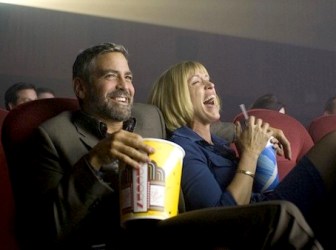 For the characters in the film, it’s a confusing mess of a situation they find themselves embroiled in — no one has the full picture, and most don’t properly comprehend the bit they do see. For the viewer, it’s a fun bit of nothing. Things have changed by the end, certainly — most notably, several people are dead — but the events that got us there are pretty quickly forgotten.
Perhaps this is the Coens’ response to No Country for Old Men — not intellectually or artistically, but as people and filmmakers: a break from the existential seriousness of their Best Picture winner with a romp-ish bit-of-nothing, which entertains well enough for the 90-something minutes it occupies our vision but is all but forgotten before the credits have finished rolling.

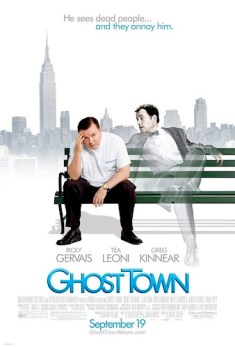 Before I come to write a review, I tend to check out the sort of scores it’s received at a few different sites. This isn’t to help form my opinion, but actually just a side effect of the fact I go to places to rate the films myself. What one usually encounters is some degree of discrepancy, be it as little as half a mark or as large as several. As you may have guessed, Ghost Town is going to prove the exception: on
 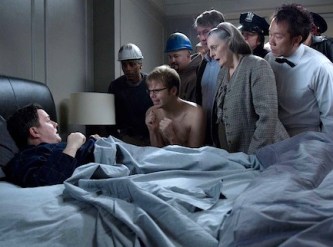 The high-concept at the film’s centre — that Ricky Gervais sees dead people and doesn’t want to — is neat enough. It largely sticks to its rules, it manages a few moments of humour, it doesn’t get too repetitive, it often plays the most obvious card (someone thinks Ricky’s talking to them when he’s actually talking to a ghost! Oh, my sides.) And Gervais, as you’re no doubt aware, plays himself. He doesn’t do characters but variations on a theme, and while this means he’ll never be a good actor per se, he can fulfil such characters very competently.
 Whenever a star, director, writer, or other key creative dies during or around the production of a film, it’s apparently tempting to draw some kind of correlation between their death and the themes or content of their work. To force such a link between the murder of writer/director/co-star Adrienne Shelly and Waitress seems inappropriate, however, when the film is so much about life.
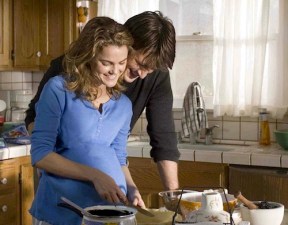 I know I
 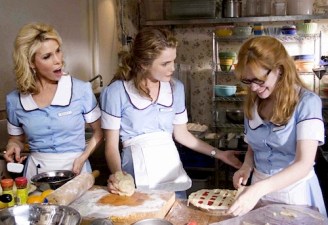 Waitress is a “woman’s film”, but in a good way: written and directed from a female perspective, with its central roles being female, it doesn’t pander to a perceived female demographic and nor does it bellow “this is what we women think, and it’s so different to you damn men” — it’s more subtle than that.
 Speed Racer feels like an unfair place to kick off
  Even some of the performances stand out, not something you’d expect from such a (for want of a better word) lightweight tale. Of particular note are Susan Sarandon as Mom and Christina Ricci’s Trixie, whose huge eyes help render her perhaps one of the most perfect live-action versions of an anime character ever seen. Yes, the characters mostly exist to service their place in the plot, but the odd scene or glance or line delivery adds some subtlety here and there.
 And, to specifically rubbish his opinions here, Phantom Menace is praised for being “made to be looked at more than listened to… filled with wonderful visuals” and condemns Speed Racer because “whatever information that passes from your retinas to your brain is conveyed through optical design and not so much through more traditional devices such as dialogue, narrative, performance or characterization… you could look at it with the sound off and it wouldn’t matter.” Not that Film’s unique factor (over novels or radio or what have you) is its visual sense, and a silent film that can be told through image alone, devoid of any intertitles, was once a lofty aim. I’m sure Ebert could readily explain why Phantom Menace’s visual splendour is a good thing and why Speed Racer’s is so terrible, but, on the other hand… pot, meet kettle.
 Back to Speed Racer. In every respect it’s like a living cartoon, and it’s the Wachowskis’ commitment to this aesthetic in every single respect that makes it work where others have floundered. It’s not perfect, I suppose. It may run a little long at two-and-a-quarter hours; but then, it so rarely lets up that I didn’t mind a jot. And the kid is often annoying; but then, as annoying little kids in films go, I’ve seen worse. At times I even liked him.
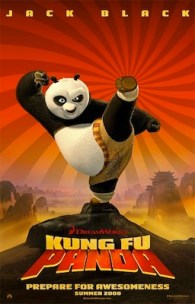 I nearly watched Kung Fu Panda on a plane once, but planes are rubbish places to watch films so I decided against it. (I watched
 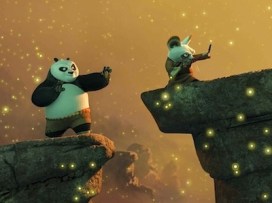 Panda features some beautiful animation — not a phrase you usually associate with CG ‘toons (though Pixar are pushing into this area with the likes of
 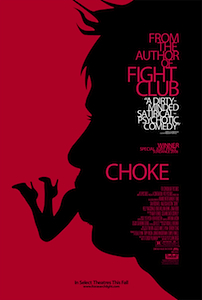 Choke is adapted from a novel by Chuck Palahniuk, the author of Fight Club, and you can tell.
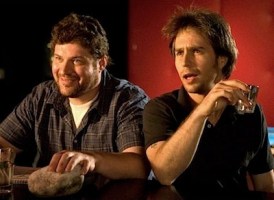 The cast are without fault. Sam Rockwell is brilliant as ever, continuing to build a body of work that suggests he’s been underrated. Perhaps there’s a similarity to some of his roles, but he has a sort of rough likability that can make one overlook that. I’ve still not seen
 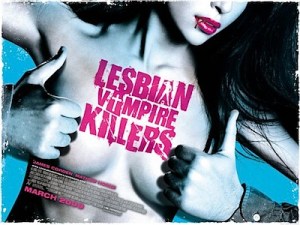 Pre-release hype pegged Lesbian Vampire Killers as the next
 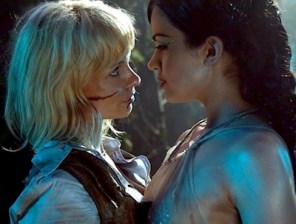 Unfortunately, even with corrected expectations, the film fails to deliver on its twin promises of raunch and horror. Aside from a couple of brief surgically-enhanced medieval boobs, a flash of knickers and the odd girl-on-girl kiss, the film’s sexy content is non-existent. Said Nuts audience would certainly get more from their weekly wank mag; this is mostly 12A-level. The horror, meanwhile, is reduced to well-signposted jump scares — and even then few enough to count on one hand — and the odd bit of comical decapitation/melting with holy water/axes in the head. To be fair, this is meant to be more comedy than horror, and in this sense a few such moments succeed passably.
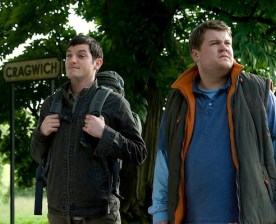 Indeed, consistency is not the film’s strong point. Everyone makes a big fuss about the vampires and how hard they are to kill, yet every one is dispatched with ease, the level of threat never allowed to even attempt an increase before there’s white goo splurting everywhere (that’s what happens when they die, incidentally, not someone’s reaction to the lesbianism). The climax is a mere extension of this, substituting a rising scale of action for running around avoiding the easy killing bit. Any good will amassed in the middle — and there may be a tiny bit — is dismissed in boredom.
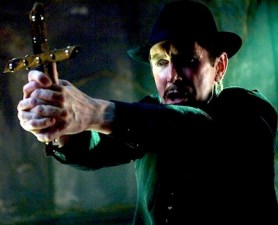 shot for the lowest-common-denominator lad’s-mag-buying audience, though quite what they made of the classic horror reference points that do remain is anyone’s guess. If we’re talking about expectations (and, clearly, I am), Lesbian Vampire Killers did somewhat defy mine — though as I was expecting it to be one of the worst comedies I’d ever seen, that might not be saying much.
 What About Bob is a comedy about mental health. As such, it feels primed for misunderstanding and inappropriateness. And it is indeed a little worrying early on: Bill Murray’s performance is, from the off, superbly believable, but it’s undercut by bad ‘this is a comedy’ music that suggests we’re meant to laugh at his impairments rather than feel sympathy. And maybe that’s what the screenplay, direction and performance were actually aiming at, but, personally, I don’t find laughing at the mentally disabled all that funny, even in a film nearly 20 years old. At one point, people clap as Bob gets off a bus he struggled to even get on — perhaps this is meant to indicate “thank God he got off!”, but I choose to take it as them celebrating his achievement, because, if not, it’s just attacking the disabled again.
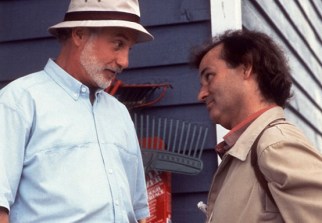 The film hinges entirely on Murray and Dreyfuss, and both are excellent in their respective roles. Murray portrays Bob’s mental health struggles early on in a way that would garner wider praise for accuracy if this were a drama, showing the potential he’s only unleashed in more recent years to play straight roles. But he’s equally good as the film becomes a clear-cut comedy: Bob doesn’t suddenly become a caricature, but is revealed as a good-natured, child-like, fun-loving person who, perhaps, just needs some care and love from others to help his conditions. Dreyfuss, meanwhile, is slickly believable as the uncaring fame-minded therapist, whose true nature — and problems — begin to unravel the more he’s confronted with Bob.
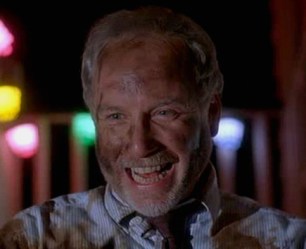 more about you as a person than it does about the film, the characters or the performances. It seems starkly obvious to me that Bob is the ‘good guy’, a nice but troubled chap who just wants to get by and have a good time, while Dr Marvin is a control freak with a raft of suppressed problems that are gradually unveiled throughout the film until they ultimately overwhelm him. He’s not a bad chap per se, but he is in the wrong.
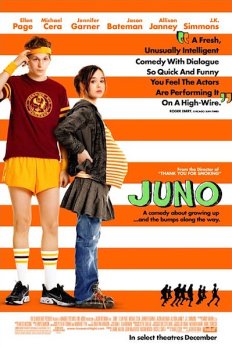 Juno followed in the footsteps of films like
 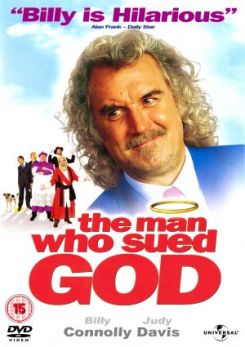 I always assumed this was British, probably because it stars Billy Connolly and has a suitably quirky premise — one can see it fitting in with the school of British comedy that’s brought us
