2013 #73
Julie Taymor | 110 mins | Blu-ray | 2.35:1 | USA / English | PG / PG-13
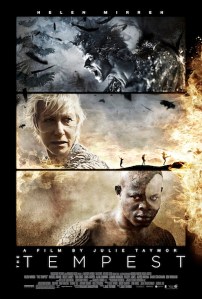 Film and theatre director Julie Taymor (infamous now for Spider-Man: Turn Off the Dark) here brings us a radical-seeming interpretation of Shakespeare’s final play. The main character’s changed gender! There’s CGI being tossed about everywhere! It’s got Russell Brand in it! If that sounds superficial, it is. Taymor’s film is still set in the Elizabethan period, in Elizabethan dress (broadly speaking), with a cast of mostly classical actors, enacted on an island that is admittedly a stunning setting but is nonetheless where the original play is set. If it’s a “modern retelling of William Shakespeare” (per the blurb), it perhaps missed what Baz Luhrmann brought to the table 14 years earlier.
Or perhaps not. Just because a temporal re-staging worked for one adaptation doesn’t mean they all have to do it, and Taymor’s adaptation is still packed with modernist flourishes. But that’s the thing: they’re flourishes. Luhrmann reconstructed Shakespeare in a way that worked for modern audiences, leaving the text untouched but adorning it with visual and stylistic touches that made it fresh and relatable for a new audience. Taymor may throw in some cool stuff, like a three-storey high Ariel setting a ship afire in a storm, or Russell Brand speaking how Russell Brand speaks, but there’s nothing in the surrounding work to appeal to the kind of audience who might think a ship on fire in a storm or Russell Brand being Russell Brand would fit nicely into the next Pirates of the Caribbean film that they’re really excited for.
I studied The Tempest at university and rather enjoyed it. It’s not too long, it has some striking ideas, and, as I remember it, it’s not too deep or complex, really. On screen, that doesn’t come across. 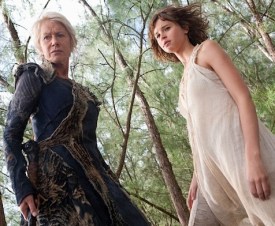 It goes on in the middle, a mess of scenes of characters traipsing about the island for no apparent reason. (This reminded me of A Field in England a little, actually: a group of people who don’t know what’s going on wandering through a weird supernatural landscape having tangential conversations.) When describing the plot the Shakespearean dialogue is clear enough to follow, but the story seems to be set in motion at the start and then put aside to be resolved at the end, with meandering asides in between. Either that’s Shakespeare’s fault or Taymor bungled it in her execution. Or I missed something.
It may be easy to jump on criticisms of the film — as many have, judged by its low scores on Rotten Tomatoes and IMDb — but there is quality here. The cast �is filled with recognisable names and faces, which naturally pays off in many instances. In the lead, Helen Mirren turns Prospero into Prospera, a transition so faultless you’d well believe it’s how it was written. She’s obviously a strong actress and delivers a powerful nuanced performance, justifying a gender change that would otherwise be labelled needless. Supporting roles are bolstered by names like Ben Whishaw (Olivier-nominated at just 24 for his Hamlet, lest we forget), Tom Conti, David Straitharn, Chris Cooper, Alan Cumming, Alfred Molina, and the latest constant-up-and-comer, Felicity Jones. If anything some of them are underused. By “some” I really mean Straitharn, who doesn’t have a great deal to tackle as King Alonso. Conti, Cooper and Cumming fare best, with Whishaw hampered by all the effects he’s buried in.
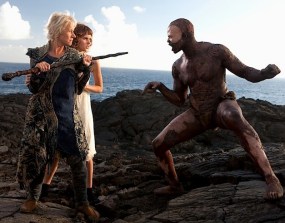 Another key role sees Djimon Hounsou as the slave Caliban, immediately suggesting a colonialist reading that isn’t exactly a huge reach anyway. And Russell Brand makes Shakespeare sound like Russell Brand talking, which at some points I’m not convinced he isn’t (I’ve no idea if Taymor allowed him to stray from the text or not). Love interest is provided by Reeve Carney. I’ve never heard of him, but he’s young and quite pretty and has a music video on the Blu-ray, so I guess he’s from that kind of arena. He speaks with an English accent, but so does everyone else (bar Caliban and the boatswain), so he may still be sourced from the other side of the pond’s teenybopper scene.
Talking of music, Elliot Goldenthal’s score also aligns itself with the film’s modern CGI-bolstered take on the material: it squeals with electric guitars and thunders with drums, evoking so many other computer-accented history-set films of recent years. It took me a while to recall what in particular it most reminded me of, but eventually realised it was 300. I checked that they didn’t share a composer, though that did lead me to notice that Goldenthal is listed on IMDb as providing uncredited stock music for 300. So there you go.
The most striking thing about the film is the visuals. Stuart Dryburgh’s cinematography sometimes offers up breathtaking imagery, aided by beautiful shooting locations in Hawaii, largely sparse and barren places with dramatic coastal settings. And then there’s the lashings of CGI, which render 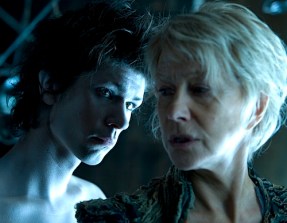 Ariel as a truly spiritual spirit, half invisible and jetting off into the sky on a regular basis. I found his realisation a mixed bag: it’s nice to take advantage of the medium to render the spirit in a way that’s impossible on stage, but sometimes it goes a bit far and looks a bit cheap. They’ve also tried to make him androgynous, but done it a bit weirdly: he’s always naked, occasionally making it clear he has no penis, sometimes has small breasts, but always has a moderately deep, clearly manly voice. Show it to a class of teenagers studying the play and you may illicit some confused feelings… That aside, the make-up effects are brilliant. Caliban’s patchwork skin is the best piece of work, but Ariel’s rendering as a giant crow is a fearsome sight as well. For all I know the latter may count as costume design, which is what earnt the film an Oscar nomination. But, hey, the clothes are nice too.
Taymor’s rendering of The Tempest is the kind of film you might dub a fascinating failure. It’s a bizarre mash-up of classical interpretation and modern filmmaking, and I don’t think it’s unfair to call the latter superficial flourishes rather than fundamental revelations. The story wanders, the humour isn’t funny, the visuals swing between a bit cheap and memorably staggering, there are strong performances but others that, while not out of their depth, do sit awkwardly. Some people will despise it, but I don’t know if anyone will love it. I’d have liked to, and early on I thought I might, but then it lost its way.
 It would be nice to say the magic and fantasy could convert new fans to Shakespeare, much as Leo DiCaprio and swishy editing did for teens nearly two decades ago, but there’s nothing beyond that trailer-friendly neat-looking stuff to convince them it was worth their time. Meanwhile, Shakespeare traditionalists may find it all a bit much. If that leaves it stranded on an ill-located isle of terrible beauty, then at least it’s an apt fate.
The UK TV premiere of The Tempest is on BBC Two and BBC Two HD tonight at 11:05pm. Note it’s not available on Blu-ray in the UK, so if you want to see it in HD, now’s your chance.

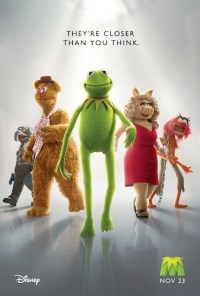 How I Met Your Mother’s Jason Segel (I believe he’s also in some movies from that Judd Apatow chap) co-writes, exec-produces and stars in this revival for the once-beloved puppet-y puppets.
 but the skill lies in making it all seem so effortless, when I’m sure it was anything but. There’s an awful lot going on for such a simple tale, which keeps things moving and means the next delight is never more than a few moments away, be it a surprise cameo, a witty film spoof, or one of the entertaining songs (one, Man or Muppet, managed to get an Oscar. I didn’t even think it was the best.)
 Normally I’m a stickler for watching film series in order, even when it doesn’t matter, so skipping 31 sequels really isn’t my style… but this was on telly one night in July and I was in just the right mood, so
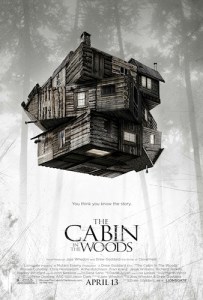 Co-written by geek god Joss Whedon and former
  The first film I watched as part of my new-this-year
  Much of the film’s emotional impact comes courtesy of Cherrill, who gives a suitably pretty and sweet performance. Chaplin wasn’t impressed with her as an actress and attempted re-casting (the film has a
 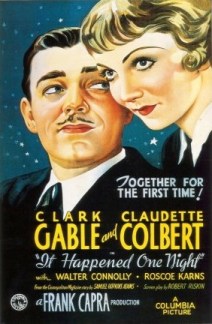 It Happened One Night was the first film to win the Oscar “grand slam” (Best Picture, Actor, Actress, Director, Screenplay), and is still one of the few to have won everything it was nominated for (alongside
 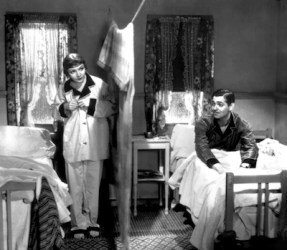 The Walls of Jericho running motif is also nicely executed, leading to perhaps the sauciest final scene not to feature a single shot of human beings that I can think of.
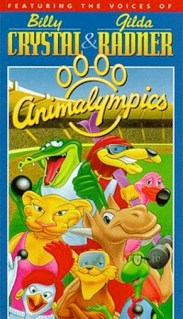 Originally commissioned as a pair of specials for US TV, Animalympics was dropped by the network when the US pulled out of the Moscow Olympics, then repurposed by its makers as a feature film. You might be able to guess the plot from the title: various animals compete in an Animal Olympics. It’s a series of sketches, essentially, although arranged to provide some narratives throughout.
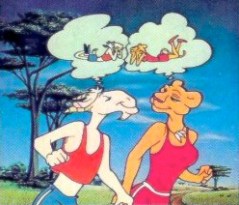 As per anything which is made up of sketches, some bits are funnier than others; and, as American animation, it is primarily aimed at kids, though I thought it was enjoyable enough for grown-ups too. Gouldman’s score is catchy in places, but nothing to rival The Things We Do For Love or Dreadlock Holiday or… I could go on for a few, actually. I’m just going to go listen to some 10cc…
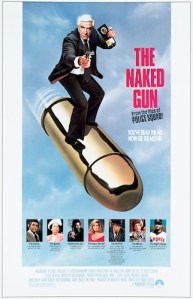 Classic spoof from the makers of
  In this big screen live-action version of some old US cartoon, a dog gets superpowers and, naturally, becomes a superhero. That’s pretty much it.
 The first Monty Python theatrical release (four more would follow; five if you count last year’s
  For my money, it becomes a bit tiring watching sketches for so long, even with the attempts made to link them together — it doesn’t form a narrative, so much as a series of casual crossovers that would make re-arrangement in an edit impossible. In and of themselves, however, many of the skits hit their mark.
 Reportedly the Pythons didn’t consider the film a success, hampered by interfering higher-ups and a ludicrously low budget (
 100Films.co.uk