2014 #128
Alex Cox, Merritt Crocker, Amanda Gostomski, Danny Beard, Alicia Ramirez, Jordan Thompson & Raziel Scher | 90 mins | download | 16:9 | USA / English
 Alex Cox was once the director of noticed movies like Repo Man and Sid and Nancy, tipped for Hollywood success. That wasn’t really his style, though, and he wound up heading into ultra-indie territory, ultimately to “microfeatures” — films made so cheaply they fall below the Screen Actors Guild cut-off of $200,000. I confess that the only previous film of his I’ve seen is one of these: Repo Chick, a non-sequel to Repo Man that most people hate but I kinda loved. So when it turned out he was crowdfunding a new film, and a satirical science-fiction comedy at that, I jumped on it (readers with long memories may remember I mentioned it at the time). The finished result finally came out back in December, and… well…
To start at the beginning, Bill the Galactic Hero is an SF comedy novel by Harry Harrison. It’s a spoof of right-wing militaristic sci-fi, specifically Robert Heinlein’s Starship Troopers (which was also lampooned in its own film adaptation (apparently — I’ve still not seen it)). The story sees a lad from a backwater planet, Bill (James Miller), being tricked into joining the intergalactic military, who are locked in a never-ending war with reptilian aliens called Chingers. We follow him through his training, his dispatch aboard a war(space)ship, and adventures beyond. The novel is very good — not packed with gags and perhaps not often laugh-out-loud funny, but consistently wry in its outlook. You can see it would be a tough sell as an adaptation, mind, so an alternative director like Cox is probably the perfect fit.
 The way he’s gone about filming it is as, essentially, a giant student film. Cox currently teaches film at the University of Colorado at Boulder, and it was along with his students (plus some professional colleagues from previous films) that this movie was produced — that’s partly why there’s the lengthy list of directors (Cox actually directed “most of the first act and all the third”, as discussed in this interview with Quiet Earth). For various legal reasons, it’s a not-for-profit venture; indeed, any venue in the world can acquire a good-enough-to-screen quality copy from Cox for free, so long as it’s being shown in aid of charity. (That, and other interesting points, are discussed in this interview with Boulder Weekly.) The film is also available online, for free, here. This combination of factors (student film; shown only for charity; etc) makes it a little hard to be judgemental about it — witness, for instance, this ‘review’ from Boulder Weekly. But judge we must, and, sadly, in many ways it’s just not very good.
Things start badly with a colourful animated opening. I can see why this was judged to be the most cost-effective way to relate that part of the tale, as it’s set on an alien planet and filled with background extras and future-technology, but considering the amount of cardboard-and-Sellotape set dressing later in the film, surely they could have rustled something up? I also simply don’t like the style of the animation. Its painfully-bright colourfulness provides a contrast to what follows that is nearly appropriate,  but there’s no transition from it into the black-and-white live-action main film, just an abrupt cut (a good place to have put the title credits, at the very least!) Worst of all, no effort whatsoever is made to establish that the cartoon guy we saw being enlisted at the start is now a live-action guy with a teddybear strapped to his spacesuit. It took me a minute to get it, and I’ve read the book.
The cast are kept in full spacesuit gear the whole time. This sounded like a bad idea, and it is. It’s hard to relate to their facelessness, harder still to tell the supporting characters apart. That’s also a flaw of the screenplay and direction, neither of which allow enough time to establish anyone. A lot of the supporting cast are fleeting anyway — as I said, we follow Bill across multiple situations, each with a new group of people around him — but the potential impact of certain scenes involving characters like Eager Beager and Deathwish Drang is lost thanks to the lack of early investment. Even central Bill is lacking in personality or identifiability, particularly so considering he’s the main character. This is in some ways a problem inherited from the novel, where Bill is a blank canvas floating through his various adventures. I don’t know if that was intentional on Harrison’s part, but it didn’t work for me in the book and it doesn’t here either.
 After a hurried start, the film does settle down to slightly longer scenes with more of a point, like Bill’s encounter with the Laundry Officer-cum-Chaplain, and some of these work pretty well. Sadly, too much of the time it’s a race through the novel’s story, feeling like a filmed recap for those who’ve read the book. Goodness knows what someone who hasn’t would make of it all. Goodness knows if they’d even be able to follow it at all, to be frank.
Not all of the adaptation’s ideas are poor, though. The novel was written in 1965, bang in the middle of the Vietnam War. For the film, Cox has substituted the final act’s Vietnam-inspired jungle planet for an era-appropriate Middle East-inspired dustbowl. An ingenious idea, though there’s little (or no) commentary on the past couple of decades of Western military intervention once you get past that obvious observation. Ah well.
The live-action parts (i.e. most of the film) are shot on black-and-white film stock, though I’m not convinced they should have bothered — video would’ve been cheaper, and probably looked much the same in the end. That said, there’s an oppressively dark feel to much of the cinematography, with numerous deep blacks crowding in, which is surely the result of using real film. It’s quite appropriate to the story’s tone, a very dry satire of a controlling future dystopia. Conversely, the special effects look great. They’re the kind of lo-fi models-and-basic-CGI style that I had been expecting, and they nail the intended tone in a way other elements are too amateurish to quite reach.

Unfortunately, the audio quality is quite poor. The spacesuit decision reveals itself to be a bad idea once again when it muffles all the dialogue. Halfway through one character is subtitled, and I’m not sure why — she’s just as clear as everyone else. That is to say, not very; but no one else has subtitles so why does she? Possibly this could all be to do with the film being mixed for 5.1 by people inexperienced in doing so (Cox admitted as much himself) and then poorly downmixed to stereo for the online version that I watched. Perhaps the 5.1 version on the DVD comes over better? (I do have a copy, but haven’t brought myself to watch it to find out.) The end credits scroll under a new song by Iggy Pop, which I actually rather liked.
The sad thing is, I think the film could have been so much better. And I don’t mean by making it ‘properly’, either. Cox has shown he can make microfeatures work, and I don’t believe student films (which this essentially is) are fundamentally meritless. Even the production values, low-rent as they are, are fine if that’s what you’re expecting (and, given the film’s background, you should be). No, the problem lies in the storytelling: a pace that rushes through the novel at such speed that only someone familiar with it could keep up; a lack of time spent establishing characters and situations; rough editing and sound design that obscure elements and, without any breathing room elsewhere, leave you no space to work out the gaps and catch up.
 Bill the Galactic Hero might be best described as a noble failure. It’s been created with the best of intentions, both in terms of adapting a quality novel that Hollywood had no interest in, and in training up a new generation of filmmakers in an independent and proactive way. It’s a shame the end result isn’t wholly as enjoyable as it might’ve been.
Bill the Galactic Hero is now available to stream or download, for free, on Vimeo.

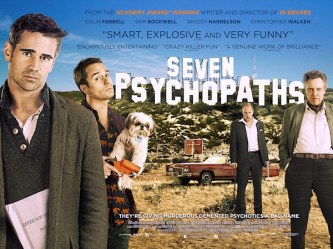 The writer-director and star of In Bruges re-team for the former’s sophomore feature; and if that doesn’t sound oddball enough for you, the lead cast is rounded out by Sam Rockwell, Woody Harrelson and Christopher Walken. Zaniness is sure to ensue.
 mainly via references to Farrell’s endeavours to pen a movie called, you guessed it, Seven Psychopaths. One wonders if there’s a hefty dose of autobiography in the writer’s struggle…
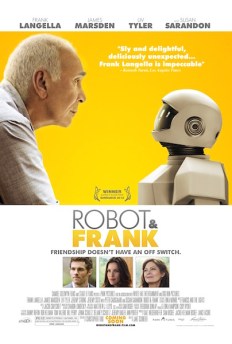 In “the near future”, Frank (Frank Langella) is an ageing jewel thief in denial about his dementia, contenting himself with visits to the local library, which is being taken over by a bunch of yuppies to turn into “the library experience”, and shoplifting from the beauty store that used to be his favourite restaurant. Concerned for his wellbeing, his son (James Marsden) gets him some home help in the form of a humanoid robot (voiced by Peter Sarsgaard). Initially reluctant to accept its presence, when the robot attempts to help by also shoplifting from the beauty store, Frank senses an opportunity…
 (part of a half-realised almost-subplot about robot rights, or something), we not only feel Frank’s (temporary) loss of his friend, but also urge the film to turn the robot back on and get back to what’s really making the movie work. The event serves a purpose (it’s the point Frank realises he’s stopped just putting up with the damn robot and actually come to appreciate its presence), but still.
 Equally, this is of a branch of science-fiction we see all too rarely on the big screen, but which is fertile ground for those wishing to explore it: using fantastical concepts to explore and enlighten our own world. Even if you learn nothing revelatory about old age and the rigours of dementia, the friendship between the robot and Frank is reason enough to enjoy.
 A bunch of obstreperous actors are too much to handle for the director of a Vietnam war movie, so he dumps them in the jungle to shoot it with hidden cameras. Things go awry; hilarity ensues.
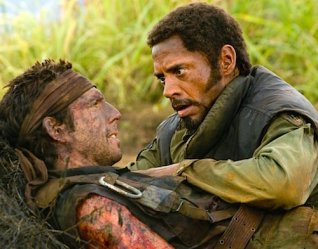 The film may run a little long in the middle, though I don’t think that’s the fault of this extended cut. It adds just over 17 minutes across many little changes and extensions
  Steven Spielberg’s second feature (or “first” if you’re American) is based, loosely, on a true story. The fictionalised version sees Lou Jean (Goldie Hawn) breaking her husband (William Atherton) out of prison so they can travel cross state to liberate their baby from foster care. Everything goes smoothly until they accidentally kidnap a police officer (Michael Sacks), hundreds of police cars begin to follow them, and a multi-day slow-paced chase ensues.
 when filmmakers became contractually obliged to keep their compositions “TV safe”). The camerawork is frequently extraordinary, including at least one unbroken shot where the camera moves around inside and outside the car, like something out of
 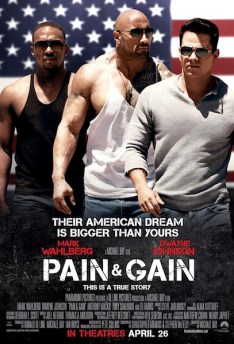 For his first non-sci-fi movie in a decade, divisive action director Michael Bay channels Tarantino (kinda) for this based-on-a-true-story crime comedy. Dwayne “The Rock” Johnson, Mark “Marky Mark” Wahlberg and Anthony “
 Bay is aided by leads who are surprisingly adept at comedy. Johnson is the best thing in it, consistently hilarious as his conscience battles former addictions and newfound religious convictions. I noted down some of his best lines to quote in the review, but they lose something without his delivery.
 After he’s become so sidetracked making the
 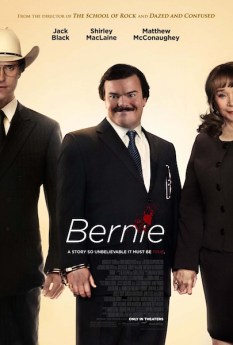 I seem to vaguely remember dismissing Bernie as just ‘Another Jack Black Comedy’ back whenever it came out (in the UK, that wasn’t until April 2013), and essentially forgot about it until earlier this month when it came up on
  (If you’re observing similarities to Midnight in the Garden of Good and Evil there, you’re not the first: the magazine article that inspired Bernie, published around the same time as
 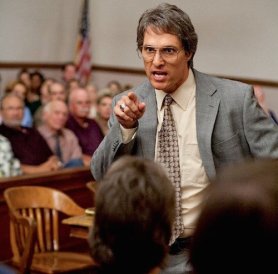 The local attorney seeking Bernie’s prosecution is played by man-of-the-moment Matthew McConaughey. I don’t know when we’re meant to deem the start of his “McConaissance”, but I’m not sure this really qualifies as part of it. Not that he’s bad, but it feels like the kind of played-straight comedy Southerner I’ve seen him do a few times now; indeed, it’s how he comes across in real life, from what I’ve seen. It fits the role like a glove, but doesn’t make for a remarkable performance.
 The second feature from
 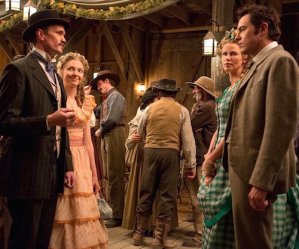 and two other men’s hats, briefly has a funny bit in the middle when he tries to acquire the second hat. The film also uses swearing as a comedic crutch too often. I’m not one of those people who’s only tolerant of swearing if they feel each and every use is absolutely justifiable, and I don’t object to it as just part of dialogue, but too often the film leans on someone saying “oh shit” (or whatever) as if that’s a serviceable punchline.
 The movie’s best running gag is its titular one. At first it just seems like the concept is going to be limited to Albert sitting in a saloon and listing ways to die, which isn’t funny; but then it keeps cropping back up, sometimes unexpectedly, which really works. The whole fair thing — a running gag within a running gag — is particularly effective. If the film had traded more on this, less on farting and other bodily functions, it would’ve been much improved.
 I dread to think what the
 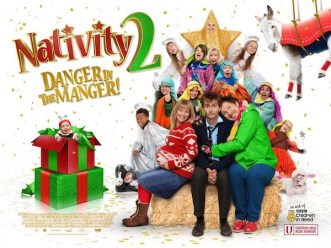 David Tennant replaces Martin Freeman as the teacher of a primary school class who enter themselves in a Christmas singing competition in this part-improvised sequel to the

 a supporting character who’s come and gone over the years, initially seeming one-note but revealing more in more recent seasons — but here you get that kind of arc condensed into 90 minutes. Barr is every bit his equal, the pair forming a genuine if sometimes complicated bond. That it acknowledges but dodges the whole “mid-life-crisis man and teenage girl” iffiness is further to its credit.
 100Films.co.uk