2015 #179
Pete Docter | 95 mins | Blu-ray | 1.78:1 | USA / English | U / PG
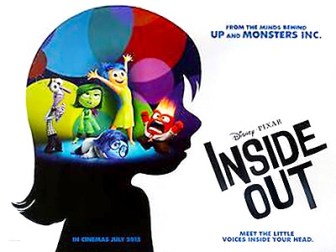 Pixar haven’t had the greatest start to the second decade of the 21st Century. After somehow managing to get lightning to strike thrice with Toy Story 3, they released two mediocre sequels (Cars 2 and Monsters University), and their only original film of the period, Brave, endured a mixed-to-poor reception also (I’ve still not got round to seeing it). This might go some way towards explaining why their release for this year has attracted such acclaim, despite it offering a pretty rote storyline dressed up in some fancy ‘original idea’ clothing (not that it is a truly original idea) and a modicum of genuine emotional resonance.
You see, this is the story of Riley (Kaitlyn Dias), an 11-year-old kid who moves from her small home town to San Francisco and struggles to cope. That’s because the anthropomorphised emotions who live in her head and control her moods and memories are thrown for six, especially when de facto leader Joy (Amy Poehler) and the accidentally-ruinous Sadness (Phyllis Smith) get sucked out of the control room and in to the depths of Riley’s memory, from where they have to find their way back in time to sort everything out. Fancy idea: anthropomorphised emotions. Rote storyline: mismatched pair get lost, have to find way back in time to fix things. Genuine emotional resonance: once-happy 11-year-old kid rendered miserable and struggling to find her place.
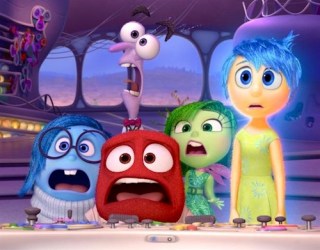 It surprises me not a jot that a Pixar film has been over-praised by critics and initial viewers. That’s pretty much my view of the their last couple of efforts before the recent doldrums, too. Those were, specifically, WALL-E and Up, both of which feature incredible, innovative, boundary-pushing openings followed by rote, familiar, genre-bound second halves. They’re both good films, but the five-star bits are contained within the first 10 to 30 minutes, followed by three- or four-star entertainments for the rest of the running time. Inside Out isn’t quite the same, because the super-high-quality bits aren’t concentrated anywhere. Instead they’re sprinkled here and there, moments of cleverness (though not genius — as I said, the concepts aren’t exactly original) hung on an easy, well-worn formula.
You don’t have to dig very deep into the Blu-ray’s special features to get an idea of how this happened. The story went through many, many, many iterations over the years and years it was in development. No wonder they wound up beating it into such a familiar shape as the quest narrative. It may also explain why some events don’t quite seem explained. I could’ve missed something, of course, but I was wondering why they were demolishing stuff in Riley’s Imagination Land until a deleted scene (culled from a very different take on the story) explained it. Many of the characters are just built from archetypes, too, like a sports-minded dad who doesn’t actually listen to mom — never seen that anywhere before!
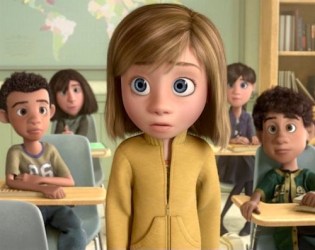 It certainly isn’t as clever or meaningful as some people have tried to make it out to be. For example, a whole internet discussion was sparked by the fact that Riley (an 11-year-old girl, remember) has emotions that are personified as a mix of male and female. When we get a glimpse inside other characters’ heads, their emotions are all of a single gender. ‘What is this saying?’, the internet wonders. Is it to do with the fact that all gender is fluid? That gender is fluid pre-puberty? As Riley is the only one with these mixed genders, are we meant to infer she’s transgender? Fertile ground for discussion. In fact, the answers are: no, no, and no. Director Pete Docter has said he just felt some emotions were more masculine (Anger in particular) and so that’s why they’re male in Riley’s head. Why the single genders in other characters? Shorthand. We only meet them briefly, after all.
Of course, now we’re touching on the issue of the relevance of authorial intent versus consumers’ reading of the final work, which isn’t a discussion I have much interest in engaging with right now. Suffice to say, whatever anyone’s readings of gender issues in Inside Out, none were intended by the filmmakers, and so you’re projecting something on to it rather than being able to unearth a coherent statement.
In other matters, there are some nice jokes and nods aimed squarely at adult viewers, the best being a passing reference to a ’70s noir. (Yes, really. Don’t worry, you’ll spot it.) Meanwhile, the animation and design is fine. I feel that’s the best I can say about it, 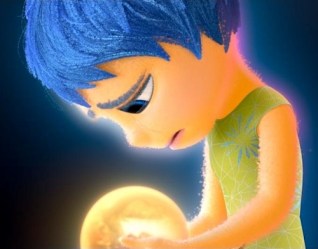 other than that the loose, floating, ‘bubbly’ edges of the emotion characters are quite neat. Apparently the effect was originally meant only for Joy and was immensely difficult to animate, but just as it was to be scrapped John Lasseter commented on how great it was and asked for it to be added to all the characters. Well done Mr Lasseter, though apparently it was an absolute headache for the technical team.
I do wonder if it’s just because this is the first really good original Pixar film for quite a long time (six years and five films on from Up, to be precise) that it’s gone down so well. It is good — there are some neat ideas and a strong moral lesson (even if, as with everything else, it’s not a totally original one; though from the way it’s discussed in some circles (not least the film’s own special features), you’d think it was a philosophical revelation of Nobel-winning proportions). In some respects, these qualities makes it almost a return to Pixar’s early praise-magnet form, which is enough for some to go wild for it. For me, the style and shape of the story those elements are airlifted into is so familiar that there’s little room for surprise (one highly emotional moment excepted). Maybe clearer heads will eventually prevail and people will rein it in a little.
Inside Out is released on DVD and Blu-ray in the UK tomorrow.
 In this ‘sequel’ to Inside Out, Riley is going to hang out with a friend… who turns out to be a boy, which sends her mum and dad — and their anthropomorphised emotions — into paroxysms of worry. Is this the 12-year-old’s first date?
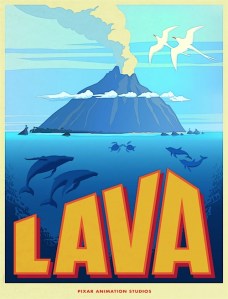 The short that accompanied Inside Out in cinemas is essentially a music video for a folksy ballad about a pair of volcanoes who are in ‘lava’ (read: love) with each other.
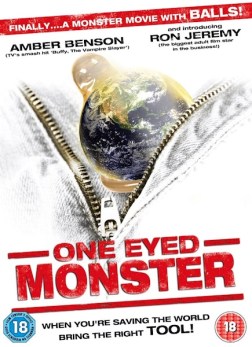 Sometimes, I swear off consciously watching any more likely-to-be-bad movies. And sometimes, I just feel like attempting something like One-Eyed Monster. And this is why: it’s actually pretty fun.
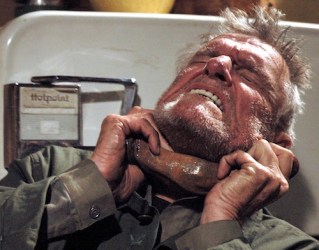 hide it behind an age barrier in the euphemistically-titled “adult” section of their website. Anyone looking for those kind of kicks is going to be disappointed, although there’s still plenty of vulgar and crude dialogue to justify its 18 certificate. In actuality, it’s mostly above using “we said a rude word!” as a ‘joke’, which is one positive it has over many more mainstream ‘comedies’.
 2015 Academy Awards
 I started the week by reviewing
 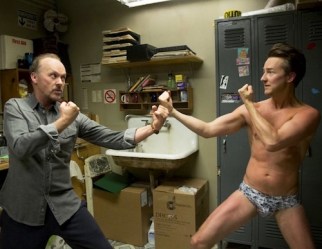 In part this is thanks to Keaton, who gives quite an immersive performance as the numbed, self-deluded star. Some people were very much behind him for the Best Actor gong, but I think it found its rightful home: Eddie Redmayne’s performance
 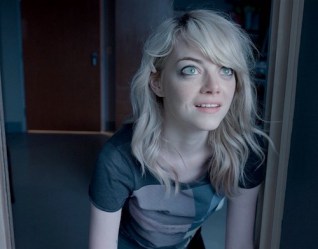 Famously, almost the entire film takes place in a single take. A fake one, of course. Well, I say of course —
 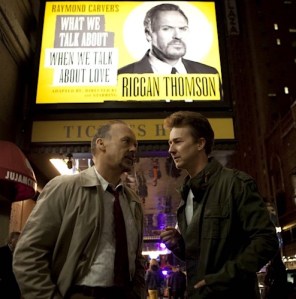 Birdman is an entertaining film, both funny enough to keep the spirits up and dramatic enough to feel there’s some depth there. It’s also a mightily impressive feat of technical moviemaking, but then I do love a long single take (even a fake one). Is it the Best Picture of 2014? Well, from the nominees, it’s not the funniest (
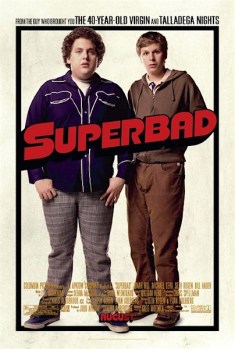 Seth Rogen and Evan Goldberg’s semi-autobiographical comedy sets Seth (Jonah Hill) and Evan (Michael Cera) (see what they did there?) on a quest to obtain booze for a party where they hope to copulate. Or, “every American teen comedy.”
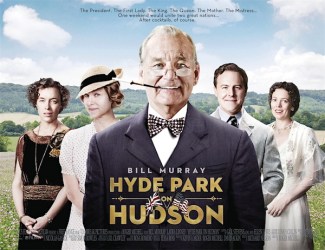 Wannabe-prestige picture Hyde Park on Hudson is like two films playing at once: the dramatic/romantic story of President FDR’s (Bill Murray) burgeoning affair with his distant cousin Daisy (Laura Linney), and the comedy-drama of his meeting with King George VI (aka “the one Colin Firth played in
  For what it’s worth, the film was born of the discovery of Daisy’s letters and diaries, which told of the relationship. Apparently the screenwriter was one of the people who found these, so I guess that’s where his interest lies. The film is a UK production from Film4, however, and made in the wake of the global success of The King’s Speech, so perhaps that explains the root of the royal involvement. While both stories have some potential, they aren’t made to gel, switching back and forth as if in some kind of narrative relay that enables the film to run a theatrical distance.
 with vibrant colours evoking a place of sunny happiness, but anything set at night is graded with a terribly extreme, not to mention awfully rote, case of teal-and-orange.
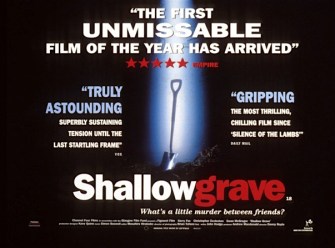 The debut feature of director Danny Boyle was hailed on release for being a British film that wasn’t another period-piece literary adaptation. Instead, it concerns three ultra-chummy flatmates in contemporary Edinburgh (Ewan McGregor, Christopher Eccleston, Kerry Fox) who take in a fourth lodger, who promptly dies, leaving behind an insane amount of cash. Rather than report it, they dispose of the corpse and keep the cash. You don’t get much further from Merchant-Ivory than that.
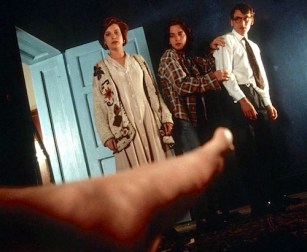 Consequently, it has that great discussion-generating feature of many a zeitgeist-y ‘watercooler’ film: what would you do?
 Four years ago, DreamWorks’
  Tonally, DeBlois has been productively inspired by
  If there’s a flaw, it’s in some of the new characters. The primary villain is underused, introduced too late in the game to become a palpable threat. More time spent building him up, seeing his evil on screen rather than just being told about it, would’ve been appreciated. So too for the mysterious vigilante dragon-rider, who turns out to have a very significant role. The deleted scenes include a prologue that would have introduced the character at the start, which would have better established the mystery and import of their role. It’s clear why it was deleted (to focus on Berk and keep the initial tone light), but I still think it would’ve worked better in the film. In the final cut, the vigilante is mentioned all of once, then turns up and is unmasked about two minutes later. Really, though, these are niggles — even for them, the cumulative consistency is certainly better than, say, its Oscar conquerer
 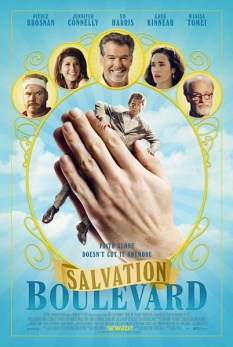 Reuniting Pierce Brosnan and Greg Kinnear, stars of comedy-thriller
  This is not the Salvation Boulevard that has ended up on film. I tried to hunt down an explanation for why co-writer/director George Ratliff had deviated so, but the best I could unearth was
  I shouldn’t have expected much given the poor reviews, but I like the cast (which also includes Ciarán Hinds and Marisa Tomei), I really enjoyed The Matador, and the trailer was suitably promising, all of which encouraged me to seek it out. I wouldn’t say Salvation Boulevard was an entire waste of time, but I couldn’t help but feel there was potential for a funnier, more cutting movie hidden in the material. Shame.
 Paul Thomas Anderson — the fêted writer-director of
 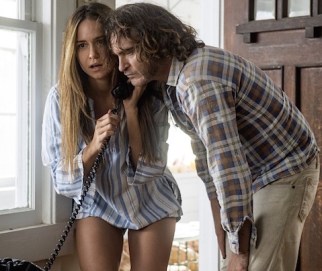 Anderson chooses to realise the movie mostly in long, unbroken takes, which not only lets the photography shine, but also allows his cast free rein to construct their own performances. I’m not sure how much that pays off, but it’s certainly not a hindrance. Turns from the likes of Josh Brolin and Martin Short border on the memorable, though your mileage will vary on if anyone truly achieves it, with the possible exception of Katherine Waterston, who surely deserves more — and more prominent — roles. Other recognisable faces (Jena Malone, Eric Roberts, Reese Witherspoon) are wasted in one- or two-scene appearances, which I suppose we could kindly call cameos.
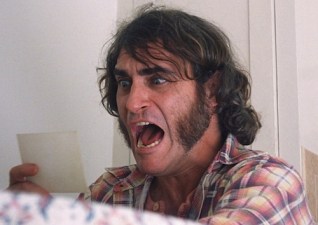 I am in neither of those groups, however. The aforementioned fleeting aspects of quality weren’t enough to swing it for me either. Sadly, I’ll be chalking this up alongside
  100Films.co.uk