A Royal Night Out (2015)

2016 #82
Julian Jarrold | 97 mins | streaming (HD) | 2.35:1 | UK / English | 12 / PG-13

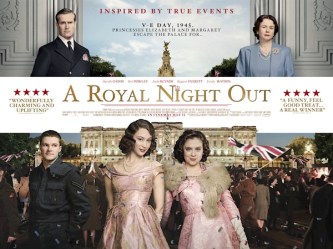
A Royal Night OutA somewhat remarkable true story gets romanticised in this likeable comedy about King Colin Firth (Rupert Everett) and Queen Olivia Colman (Emily Watson) allowing Princesses Elizabeth (Sarah Gadon) and Margaret (Bel Powley) to go out on the town on V.E. Day. When Margaret runs off, Liz teams up with a grumpy squaddie (Jack Reynor) to track her down.

Gently amusing and relatively briskly paced, A Royal Night Out is lightweight and unchallenging, the definition of Heritage-ish lazy Sunday afternoon viewing. That means it will rub some viewers up the wrong way, but others will love its simple, old fashioned charms.

3 out of 5

Mystery Men (1999)

100 Films’ 100 Favourites #65

They’re not your average superheroes.

Country: USA
Language: English
Runtime: 120 minutes
BBFC: PG (uncut, 1999) | PG (cut on video, 2000)
MPAA: PG-13

Original Release: 6th August 1999
UK Release: 26th December 1999
First Seen: DVD, c.2000

Stars
Ben Stiller (There’s Something About Mary, Night at the Museum)
Hank Azaria (Grosse Pointe Blank, Night at the Museum: Battle of the Smithsonian)
William H. Macy (Fargo, Magnolia)
Geoffrey Rush (Shine, Pirates of the Caribbean: The Curse of the Black Pearl)

Director
Kinka Usher

Screenwriter
Neil Cuthbert (Hocus Pocus, The Adventures of Pluto Nash)

Based on
The Mysterymen, a superhero team originally appearing in Flaming Carrot Comics, a comic book by Bob Burden.

The Story
When supervillain Casanova Frankenstein is released from prison, wannabe superhero Mr Furious overhears his plan to destroy reality. With the city’s genuine protector out of action, Mr Furious and his chums the Shoveler and the Blue Raja recruit a gang of other wannabes to defeat Frankenstein.

Our Heroes
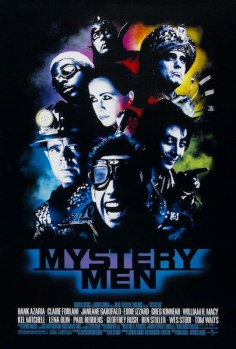
They’re not your classic heroes, they’re the other guys: a ragtag gaggle of people with “powers”, like the Shoveler, who fights with a shovel, or Mr. Furious, who gets really angry, or the Blue Raja, who throws cutlery with great accuracy. These founding three are joined by Invisible Boy (Kel Mitchell), the Spleen (Paul Reubens), and the Bowler (Janeane Garofalo), and recruit the mysterious Sphinx (Wes Studi) to train them.

Our Villain
Criminally insane genius Casanova Frankenstein. Released from prison so that genuine superhero Captain Amazing had someone to fight, Frankenstein manages to capture his nemesis and plots to unleash the reality-bending Psycho-frakulator on the world — with only our inept heroes to stand in his way.

Best Supporting Character
Captain Amazing! Played by Greg Kinnear, the resident superhero of Champion City is too darn good at his job. With no crime left to fight, his corporate sponsors are pulling their funding — unless he can use his alter ego, influential billionaire Lance Hunt, to get one of his adversaries released…

Memorable Quote
The Shoveler: “If we had a billionaire like Lance Hunt as our benefactor…”
Mr. Furious: “That’s because Lance Hunt is Captain Amazing!”
The Shoveler: “Oh, here we go… Don’t start that again. Lance Hunt wears glasses, Captain Amazing doesn’t wear glasses.”
Mr. Furious: “He takes them off when he transforms.”
The Shoveler: “That doesn’t make any sense, he wouldn’t be able to see!”

Quote Most Likely To Be Used in Everyday Conversation
“We are number one. All others are number two, or lower.” — The Sphinx

Memorable Scene
Mr Furious, the Blue Raja, and the Shoveler gather at the latter’s house (despite his wife’s protestations) to audition potential team members. Cue a stream of daft and/or outrageous ideas for superheroes, including the Reverse Psychologist, Squeegeeman, and PMS Avenger.

Making of
For some reason a rumour has persistently done the rounds that Mystery Men was actually directed by Tim Burton, and Kinka Usher was just an alias. Goodness knows why. Usher is in fact a commercials director, and went back to that world after his miserable experience here.

Awards
1 Saturn nomination (Costumes)
1 Teen Choice Awards nomination (Choice Hissy Fit — it lost to Hanging Up. If you have any idea what Hanging Up is, your memory’s better than mine.)

What the Critics Said
“This slapstick and effects vehicle depends on poker-faced performances, production design that enhances the story partly because it doesn’t have to compensate for it, and a premise that provides seemingly inexhaustible opportunities for pratfalls and clever lines. The characters have been designed to make fun of themselves, disguising the craft of writer Neil Cuthbert and director Kinka Usher in getting us to laugh at them.” — Lisa Alspector, Chicago Reader

Score: 60%

What the Public Say
“this movie is incredibly underrated because it parodies other Superhero movies unbelievably well, and no one had the chance to see that 15 years ago. […] It does what any good parody does, by taking the expected and turning it on its head. How do other Superhero groups form? The government decides it’s a good idea to have a Supergroup. Or they all meet in some intergalactic prison. Or they form to protect the world from the Legion of Doom. None of them hold a barbecue. None of them have a female team member who kicks ass, speaks her mind, angers everyone, and wears real clothing. The movie takes every expected and turns it on its ass […] I believe if it came out this summer, or even in the fall, it would have a much bigger and better reaction. People would watch it and instinctively compare it to the other Superhero super groups they’re familiar with. It would resonate better now, and fans would have a chance to really laugh at the ridiculousness of Superheroes.” — Maria Spiridigliozzi

Verdict

Was Mystery Men ahead of its time? Coming out in 1999, it was a year ahead of the superhero revival that X-Men kickstarted. Or maybe it was behind its time? Visually, it’s on a par with other ’90s superhero efforts like Batman Forever (and I don’t mean that derogatorily). Either way, it’s an undervalued comedy. The ensemble cast are all perfect — I didn’t even have room above to mention Tom Waits as mad inventor Dr A. Heller, Eddie Izzard as henchman Tony P., or Claire Forlani as the love interest. The material they have to deliver is both witty and suitably silly, and it incorporates superhero tropes and references without relying on them. In the sub-subgenre of superhero comedies, all others are number two, or lower.

#66 never happened… to the other fella.

Much Ado About Nothing (1993)

100 Films’ 100 Favourites #64

A romantic comedy for anyone
who’s ever been in love.

Country: UK & USA
Language: English
Runtime: 111 minutes
BBFC: PG
MPAA: PG-13

Original Release: 26th May 1993 (France)
UK Release: 27th August 1993
First Seen: VHS, c.1997

Stars
Kenneth Branagh (Henry V, Hamlet)
Emma Thompson (Howards End, Sense and Sensibility)
Kate Beckinsale (Underworld, Love & Friendship)
Robert Sean Leonard (Dead Poets Society, House)
Denzel Washington (Glory, Training Day)
Keanu Reeves (Bill & Ted’s Excellent Adventure, The Matrix)
Richard Briers (Watership Down, Hamlet)
Michael Keaton (Beetlejuice, Birdman)

Director
Kenneth Branagh (Henry V, Thor)

Screenwriter
Kenneth Branagh (In the Bleak Midwinter, The Magic Flute)

Based on
Much Ado About Nothing, a play by William Shakespeare.

The Story
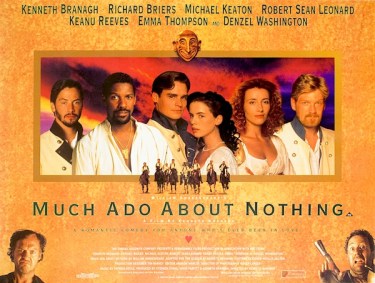
When Don Pedro and his chums visit his friend Leonato at his villa in Sicily, they wind up arranging a marriage between Leonato’s daughter, Hero, and one of Don Pedro’s men, Claudio. To bide time until the nuptials, the happy friends attempt to reconcile argumentative pair Beatrice and Benedick — but Don Pedro’s good-for-nothing half-brother, Don John, plots revenge by ruining Hero’s reputation…

Our Heroes
The plot hinges on the romance of Claudio and Hero, and the machinations of Don John to disrupt it, but the central characters are Beatrice and Benedick and the witty verbal sparring that characterises their love-hate relationship.

Our Villains
Don John, the bastard. Because he’s an illegitimate son. But also because he tries to ruin someone’s wedding by faking infidelity, which isn’t exactly the nicest way to behave.

Best Supporting Character
Don Pedro, a prince who has just quashed an uprising by his duplicitous half-brother (see above), seems to be an inveterate matchmaker, first arranging Claudio’s marriage to Hero, then plotting to see Beatrice and Benedick coupled — despite quietly professing his own feelings for Beatrice.

Memorable Quote
“He that hath a beard is more than a youth, and he that hath no beard is less than a man. And he that is more than a youth is not for me, and he that is less than a man, I am not for him.” — Beatrice

Memorable Scene
The plan to dupe Beatrice and Benedick into loving each other in action: in the villa’s gardens, Don Pedro, Leonato, and Claudio ensure Benedick is eavesdropping while they stage a conversation about how much Beatrice loves him, and Hero and her maid Ursula do the same to Beatrice.

Letting the Side Down
I’ve always thought the scenes featuring Michael Keaton and Ben Elton hamming it up are a bit… broad.

Making of
The CliffsNotes on the play also cover this film, and notes that “the [opening] scene is cut by more than half, and yet the omissions are seamless to any viewer who has not memorized the lines or is not following the script. Branagh has omitted or cut to the bone several subsequent scenes and their lines, sometimes inserting in their place a visual scene that conveys the incident more dramatically than the words. At other times, he has cut lines and thinned out long speeches to keep the story moving and to eliminate unnecessary details.” Other major cuts are listed at the link.

Awards
Nominated for the Palme d’Or
1 BAFTA nomination (Costume Design)
1 Razzie nomination (Worst Supporting Actor (Keanu Reeves))

What the Critics Said
“Shakespeare’s comedies were always meant for the people […] the subject matter was low: sexual politics, power games, nasty betrayals, romantic deceptions and other quintessentially human activities. […] Maybe these plays were classics of the future, but they were the Benny Hill of their time. With Much Ado About Nothing, Kenneth Branagh has, once again, blown away the forbidding academic dust and found a funny retro-essence for the ’90s.” — Desson Howe, The Washington Post

Score: 91%

What the Public Say
“For those who don’t find Shakespeare’s comedies funny, this is the film to see, because it’s hilarious. It isn’t just the lines that create laughter, but the manner in which they’re set up and delivered. Expressions and actions often play a large part in the comedy, some of which is decidedly physical. These are the kinds of things that don’t appear on the written page. The film also contains its share of drama, and the pathos and poignancy come as easily and naturally as humor. […] I’m not sure if ‘feel good’ has ever been used to describe a picture based on the Bard’s work, but the expression fits.” — James Berardinelli, ReelViews

Verdict

There’s a lot of comedy in Shakespeare — not just in his Comedies, but scenes in his Tragedies too (even a pretty dark one like Macbeth sees the story put on pause to indulge in a comedic monologue). The problem is, to modern ears at least, it’s just not funny (that one in Macbeth is commonly cut). So it’s an even greater achievement that writer-director-star Kenneth Branagh here produced a film that was both accessible and genuinely funny. Combining intelligent cuts to the text with assured performances produces a film that, at its best, plays like a period screwball comedy. Consequently, it was that rare thing: a Shakespeare adaptation that became a box office success. That’s something worth making much ado about.

#65 is… number one. All others are number two, or lower.

Scotland, Pa. (2001)

2016 #61
Billy Morrissette | 99 mins | streaming | 1.85:1 | USA / English | NR / R

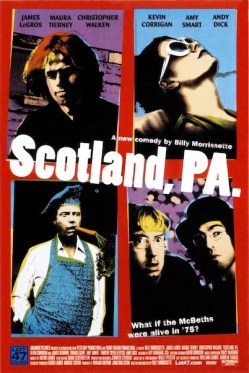
Scotland, Pa.Shakespeare gets transposed to 1970s Pennsylvania in this blackly comedic reimagining of Macbeth, which converts the Thane of Glamis into a diner chef and the Scottish throne into ownership of a new concept: drive-thru.

Writer-director Billy Morrissette cleverly reconfigures aspects of the original (the witches are hippies; the ‘spot’ on Mrs Macbeth’s hand is a burn from spitting oil), but dodges being literally beholden to the text, allowing the humour and new situations to drive matters — you don’t need to be a fan of the Bard to get it.

It’s probably a little too long, but still an amusing variation.

4 out of 5

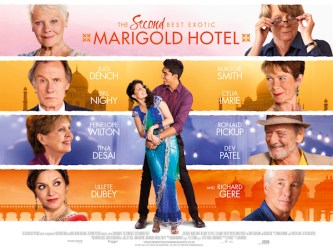
The Second Best Exotic Marigold Hotel (2015)

2016 #38
John Madden | 118 mins | streaming (HD) | 2.35:1 | UK & USA / English & Indian | PG / PG

The Second Best Exotic Marigold HotelThe Best Exotic Marigold Hotel is not the kind of movie you expect to spawn a sequel in the current climate (i.e. it’s not a CGI-fuelled PG-13 science-fiction action extravaganza), but when you consider that it made $136.8 million on a budget of just $10 million, the existence of this follow-up becomes more understandable. The first was based on a novel, but that doesn’t have a sequel, so you’d be forgiven for assuming the movie sequel is a shameless cash-in. Far from it — if anything, it may even be better than the first.

There’s little point me setting up the plot here, because if you haven’t seen the first movie then this one launches out of it enough that you’ll spend forever playing catch-up, and if you have seen it, well, “the storylines continue” sums much of it up. The sequel is given narrative shape both by the forthcoming wedding of the hotel’s owner (Dev Patel), and the fact that he wants to open a second location. For the latter he’s sought funding from a US chain, so when Richard Gere turns up he’s assumed to be a ‘secret shopper’ come to assess the hotel.

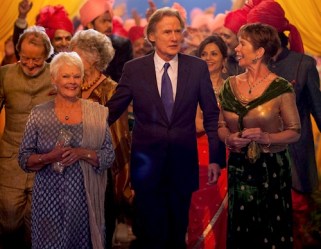
As that story unfolds, along with the film’s raft of subplots, it essentially repeats the tone of the first movie: gentle drama mixed with gentle humour in roughly equal measure; though this time there’s an added dose of romance in pretty much every plotline. It works because the cast are so darn good at delivering their material. Dev Patel and Maggie Smith are both hilarious, though everyone gets a moment to shine in the comedy stakes; conversely, Judi Dench and Bill Nighy carry the heart of the movie — though, again, everyone gets their emotional moment.

It’s easy to dismiss films like this as twee vehicles chasing the so-called ‘grey pound’, but, in this instance at least, that would do it a disservice. When a film is as amusing and emotional as this one, while also exploring an increasingly relevant aspect of life — an aspect which is too often ignored by mass entertainment that’s more concerned with acquiring the easily-earned disposable income of youngsters — and is as well-made, too (in particular, Ben Smithard’s cinematography is rich with gorgeous light, colour, and contrast) — then its audience should reach far wider than the age bracket of its principal characters.

4 out of 5

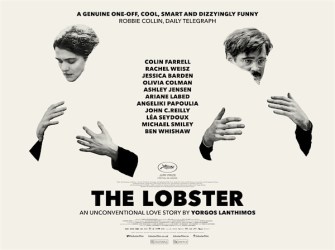
The Lobster (2015)

2016 #114
Yorgos Lanthimos | 114 mins | streaming (HD) | 1.85:1 | Ireland, UK, Greece, France & Netherlands / English & French | 15 / R

The LobsterThe first English language feature from Greek writer-director Yorgos Lanthimos (of Dogtooth) is set in a relationship-obsessed near-future dystopia. Any person not in a relationship is sent to The Hotel, where they have 45 days to find a partner among the other guests or they get turned into an animal of their choice. Guests can earn extensions to their time in The Hotel by shooting loners — singleton escapees who live in The Woods nearby — during regular hunting trips. The film begins with David (Colin Farrell) discovering his wife has left him, thereby automatically banishing him to The Hotel, where he arrives with his brother — who has been before and failed, so is now a dog. Not an anthropomorphic dog, just a dog. As David makes friends and tries to make a romantic connection, events push him closer to the loners…

The Lobster is the kind of odd movie that critics adore (90% on Rotten Tomatoes) and then, I always feel, spend some of their time looking down their noses at regular folk who don’t get it. In my experience, you have a 50/50 chance of such movies actually being any good. For me, The Lobster straddles that divide. At times it provides wryly amusing absurdist comedy, with the cast’s deliberately stilted performances and the strange situations the characters are subjected to. It also presents almost-thought-provoking observations on the objectively-bizarre rituals of social niceties, filtered through the prism of these unusual individuals and how they use, or don’t, methods of social interaction familiar from our world. If that all sounds a bit pretentious, well, that’s the level you have to engage with The Lobster on if you want to get anything out of it beyond a smattering of oddball laughs.

Even if you accept these goals, Lanthimos’ film eventually goes off the rails. Without meaning to spoil too much, David eventually falls in with the loners, who have their own very specific social rules designed to inhibit partnering up. Revelation: the outsiders are fundamentally the same, just with different rules! That’s about the extent of what I got from this portion of the film; unfortunately, it goes on for a really, really long time. Among this group David meets ‘Short Sighted Woman’ (everyone aside from David is similarly named) and falls in love with her — I mean, of course he does, she’s played by Rachel Weisz. They develop a secret mode of communicating, but will be harshly punished if caught. This storyline is what the film uses to occupy its remaining time, but what it lacks in the offbeat humour of the time in The Hotel it makes up for with… nothing.

At its best, The Lobster is like a Wes Anderson movie run through the mind of a sci-fi-loving sociopath (the dog even gets similar treatment to that of an Anderson movie, again with the same extreme filter). Unfortunately, as you might expect of a sociopath, it doesn’t know when to stop, leaving behind social commentary and alternative humour to drudge through an uninteresting romance to a limp ending. What starts well — though certainly an acquired taste — ends up feeling like a waste of time. Shame.

3 out of 5

The Lobster will be available on Netflix UK from Monday.

Big Eyes (2014)

2016 #39
Tim Burton | 102 mins | streaming (HD) | 1.85:1 | USA & Canada / English | 12 / PG-13

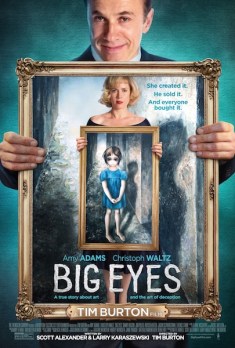
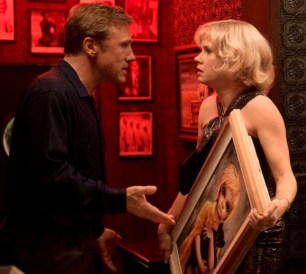
Big EyesAfter a smidgen of early awards buzz that pegged it as a dark-horse major contender (which obviously never materialised into anything), everyone seemed to stop talking about Big Eyes, Tim Burton’s latest, and the first thing he’s made in over a decade that doesn’t instantly strike you as an obvious Burton-esque choice.

It’s the true story of Margaret (Amy Adams), an amateur artist who ends up marrying Walter Keane (Christoph Waltz), who also dabbles in painting. He manages to get their art publicly displayed, but while people don’t care about his French scenes, they love her huge-eyed waifs. For various reasons Keane claims them as his own, and before the couple know it the paintings are a pop culture phenomenon du jour, loved by the masses but despised by the critical establishment. Nonetheless, Keane reaps the fame and fortune of ‘his’ art — which Margaret is stuck at home churning out for her increasingly demanding and abusive husband…

It’s certainly a bizarre tale, and given even more of an otherworldly edge in Burton’s hands. He’s reined in here compared to his more fantastical leaps, but even when he does the real world it’s not quite our world (see also: Ed Wood). Nonetheless, it makes what could have been a slight tale more interesting than it would’ve been as a straight-up clean-cut biopic, even though it still runs a little long in the middle — the most interesting parts are the “how did that come about?!” setup and the famed denouement, where a court case culminates in a paint-off.

There’s thematic meat that could’ve filled the sandwich between those establishing and climactic, er, pieces of bread(?) — the tastes of critics versus the general public, and the disparity that exists there and what it means; or the inbuilt sexism of the era (though maybe everyone thought Mad Men had that covered) — but I’m not sure Burton was interested in such matters, at least not as much as he is in the kooky tale of some unusual characters and the odd turns of events that shape their lives.

It makes Big Eyes a very watchable and often diverting film, but not one to linger long in a viewer’s affections. A bit like the transitory impact of an artistic fad, then, which is at least apt.

4 out of 5

Mary Poppins (1964)

100 Films’ 100 Favourites #58
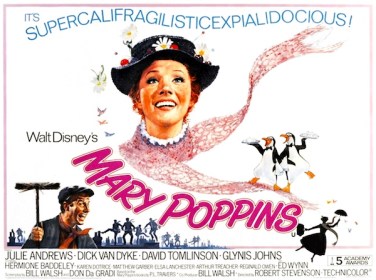
It’s supercalifragilisticexpialidocious!

Country: USA
Language: English
Runtime: 139 minutes
BBFC: U
MPAA: G (1972)

Original Release: 27th August 1964 (USA)
UK Release: 23rd December 1964
First Seen: by osmosis in childhood.

Stars
Julie Andrews (The Sound of Music, Torn Curtain)
Dick Van Dyke (Bye Bye Birdie, Chitty Chitty Bang Bang)
David Tomlinson (The Love Bug, Bedknobs and Broomsticks)
Karen Dotrice (The Gnome-Mobile, The Thirty-Nine Steps)

Director
Robert Stevenson (Jane Eyre, Bedknobs and Broomsticks)

Screenwriter
Bill Walsh (The Love Bug, Bedknobs and Broomsticks)
Don DaGradi (Blackbeard’s Ghost, Bedknobs and Broomsticks)

Based on
the Mary Poppins books by P.L. Travers.

Music and Lyrics
Richard M. Sherman (The Jungle Book, Chitty Chitty Bang Bang)
Robert B. Sherman (Bedknobs and Broomsticks, The Many Adventures of Winnie the Pooh)

The Story
Not impressed by the nannies selected by their domineering father, Jane and Michael Banks write a letter describing their ideal applicant. Conversely, Mr Banks is not impressed with their requirements, and tears up the letter and throws it in the fire… from whence it reaches Mary Poppins, who floats down to bring fun and discipline to all of the Banks household.

Our Hero
The magical nanny who comes from the sky, Mary Poppins can be (whisper it) actually a little bit annoying at times. Julie Andrews, on the other hand, is practically perfect in every way.

Our Villains
Ultimately, bankers. Some things never change.

Best Supporting Character
Ostensibly this is the story of children Jane and Michael Banks and their need for a SuperNanny to help them with their oh-so-terrible father — and, as a child, that’s where your focus lies. Really (and I guess you need to grow up at least a bit to see this), it’s about how said SuperNanny saves their father, Mr Banks, helping to transform him from a miserable corporate drone into a joyful family man. David Tomlinson negotiates this arc fantastically.

Memorable Quote
“You know, you can say it backwards, which is ‘docious-ali-expi-istic-fragil-cali-rupus’… but that’s going a bit too far, don’t you think?” — Mary Poppins

Quote Most Likely To Be Used in Everyday Conversation
“Just a spoonful of sugar helps the medicine go down.” — Mary Poppins

Memorable Scene
Chimneysweeps dancing on the rooftops! (Fun fact: I always thought Step In Time was called Stepping Time. I mean, the dance does contain a lot of, sort of, steps…)

Best Song as a Child
Iiiiiiit’s Supercalifragilisticexpialidocious, even though the sound of it is something quite atrocious. If you say it loud enough, you’ll always sound precocious. (Sacrilege maybe, but the version from the 2004 stage musical is even better.)

Best Song as an Adult
When I was little, the whole part of the film around the bank, Feed the Birds, etc, was The Boring Bit between the fun and the return of the fun. Now, I still think most of Feed the Birds is a little insipid, but the instrumental reprise as Mr Banks walks slowly back to the bank, his world and everything he knows torn asunder, his humiliation imminent… It’s heartbreaking, and the music is most of the reason why.

Technical Wizardry
The sequence where Mary, the children, and Bert jump into one of the latter’s street paintings — all of it animated, with the exception of the leads — is a sterling extended example of combining live-action with cel animation.

Truly Special Effect
As a lad, I could never work out how exactly they’d managed to create Mary’s bottomless bag. I haven’t watched the film for a while and imagine it’s painfully obvious now… I also used to think the little bird that lands on her hand was a miraculous effect and didn’t understand why some people slagged it off, but then I watched that bit on YouTube a couple of years ago and finally saw what everyone else saw. Oh, the sadness of ageing…

Letting the Side Down
The fact that real cockneys don’t sound like Dick Van Dyke. No, I don’t mean it the other way round — the fact that the real-life denizens of East London sound nothing like Bert is the problem here, not Bert’s accent. That is how I think cockneys should sound, and it always will be.

Making of
See: Saving Mr. Banks. Knowing biopics it’s probably not 100% accurate, but it is a good film.

Next time…
Despite several attempts, a sequel never happened. The director and/or writers worked together on multiple films at Disney over the next few years — most famously, an early-’70s blatant attempt to recreate the Poppins magic, Bedknobs and Broomsticks. Mary Poppins herself returned in 2004 in a Cameron Mackintosh-produced West End musical, based on the film but re-incorporating more from the books. Talk of it being adapted into a film seem to have come to nowt. Instead, a (very) belated sequel with Emily Blunt in the title role is due in 2018.

Awards
5 Oscars (Actress (Julie Andrews), Song (Chim Chim Cher-ee), Substantially Original Score, Editing, Visual Effects)
8 Oscar nominations (Picture, Director, Adapted Screenplay, Color Cinematography, Color Art Direction-Set Decoration, Color Costume Design, Sound, Scoring of Music Adaptation or Treatment)
1 BAFTA (Most Promising Newcomer to Leading Film Roles (Julie Andrews))

What the Critics Said
“Of course, it is sentimental. And, as Mary Poppins says, “Practically perfect people never permit sentiment to muddle their feelings.” But being not practically perfect, I find it irresistible. Plenty of other adults will feel the same way. And, needless to say, so will the kids.” — Bosley Crowther, The New York Times

Score: 100%

What the Public Say
“It is the single glowing moment of sheer unmixed genius in the long stretch of lightweight successes and dreary failures that made up nearly three whole decades of Disney’s output in the ’60s, ’70s, and ’80s; a fantasy of the most delicate touch and charming disposition, sweet and precious while being neither sickening nor cloying.” — Tim Brayton, Antagony & Ecstasy

Verdict

I feel like Mary Poppins is the kind of movie that it would’ve been easy to overlook in putting together this list of favourites — a childhood favourite, that’s maybe so obvious you kind of forget about it as A Movie — which is one of the reasons I made sure to get it on here. Another is how well it works for both children and adults. As the former, the magical adventures and toe-tapping songs are pure joy, a wonder-filled experience that doesn’t date. As the latter, those elements are still entertaining, but the depth of some of the film’s messages (especially pertaining to the adults) really comes through. It’s a film for all ages, and one for the ages too.

#59 will be…

Zootropolis (2016)

aka Zootopia

2016 #116
Byron Howard & Rich Moore | 109 mins | Blu-ray | 2.39:1 | USA / English | PG / PG

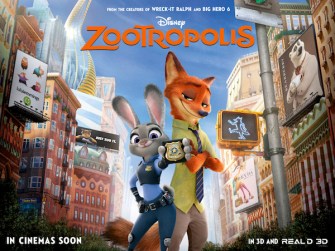
ZootropolisDisney’s 55th Animated Classic is their second highest-grossing ever, the 25th film to take over $1 billion at the worldwide box office, which makes it a hit of Frozen-sized proportions (at least financially — parents must be glad there’s no Let It Go-esque earworm involved). That said, I’d perhaps argue it’s a Disney movie aimed as much (perhaps even more) at the studio’s adult fans as its child ones. But I’ll come to that in a bit.

Set in a world of anthropomorphised animals, Zootropolis introduces us to Judy Hopps (Ginnifer Goodwin), a small-town bunny who joins the police force in the titular big city,* the first rabbit to do so. Despite there being a spate of mysterious disappearances across the city, Judy gets lumped with traffic duty, where she soon encounters small-time con artist fox Nick Wilde (Jason Bateman). That association comes in handy when she manages to get assigned one of the missing person animal cases and notices that Nick may have been a witness to the abduction. Soon, the mismatched pair begin to uncover an aggressive conspiracy…

Disney animations may be best known as musicals based on fairytales, but they certainly don’t make up 100% of their Classics line, especially in recent years. I think Zootropolis may be the first time they’ve attempted a neo-noir crime thriller, though. And I bet no one ever thought they’d see a Disney film with a sequence set at a nudist resort. Or in a drugs lab, for that matter. Or one with a substantial parody of The Godfather and clear references to Breaking Bad. And you thought Inside Out was clever for having one line from Chinatown

Once you factor in the many references to discussions that currently dominate social discourse — there are abundant riffs on the language of real-life concerns about race, gender, and sexuality — you begin to see how Zootropolis could be seen as a Disney film that’s primarily aimed at adults. Those concerns ultimately become thematic points so large that they cross the line from being subtextual “one for the adults” asides into being textual “vital to the plot” tenets of the film. So given the genre trappings, nudist resorts, drugs labs, parodies of 18-rated media, and very grown-up thematic points, you do have to wonder if Zootropolis functions better for adults who like Disney films than it does for kids who like Disney films. That sounds like a criticism, but it’s only one to an extent, because the kind of adult this notion supposes the film is aimed at is… well, me.

However, that’s not to say kids can’t get enjoyment out of it: there are plenty of colourful characters and locations, relatable situations, cross generational humour, and a moral lesson young’uns will understand. There’s the DMV sequence, for instance, which is grounded in an adult experience but so funny it must cross over. Considering all the praise I’ve heard for that one scene, it’s also a feat it lives up to the hype. It’s gorgeously animated throughout, bolstered by a world that has been magnificently realised, with all the different themed districts of the city. (After all the Disney movies that have had contrived TV series spin-offs, this is a film that actually feels like it deserves one. The setup is obvious — a police procedural — and the world the film suggests is big enough to warrant it. Heck, it practically demands it — there’s so much more of this world, you want to see it explored.) Michael Giacchino’s score is different too: memorable and fun, in part thanks to using a cornucopia of unusual instruments to provide a ‘world music’ sound that’s in-keeping with the movie.
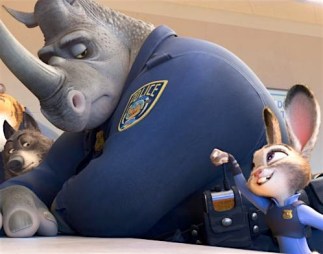
If I had any problem it’d be that the story takes a little while to warm up, really coming alive (at least for me) once it gets stuck into the main investigation. That’s not to say the first act is without its merits (there are both amusing and awe-inspiring sequences there, plus some moments that are nicely paid off later), but the film’s need/desire to establish the familiar “you can be whatever you dream if you just try” moral message makes it take a little longer than might be ideal. Adults will probably guess whodunnit well before the reveal, too, but that doesn’t mean the journey getting there is any less fun.
There’s a quote on the cover of Zootropolis’ US Blu-ray that calls it the best Disney movie in 20 years. As much as I liked Bolt and Tangled,** and Mulan and The Princess and the Frog, and, yes, even Frozen, I think Zootropolis is at the very least a contender for that crown.

4 out of 5

Zootropolis is released on DVD and Blu-ray in the UK today.

It placed 15th on my list of The 20 Best Films I Saw For the First Time in 2016, which can be read in full here.

* I watched a US copy of the film, so I have a question for anyone who watched it in the UK: we all know they changed the title from Zootopia to Zootropolis, but did they actually change the name of the city in the film too? That’s a lot of redubbing if they did… ^

** Both co-directed by Zootropolis’ Byron Howard. Developing a pretty good track record, that man. ^

Just Friends (2005)

2016 #97
Roger Kumble | 91 mins | streaming | 1.85:1 | USA, Canada & Germany / English | 12 / PG-13

I was aware of the existence of Just Friends in the way you’re aware of any movie with name actors that came out during the period in which you were cognisant of films that were being released — that is to say, I knew it was a film and it was a comedy, and I had paid it no heed beyond that. Until a couple of months back, when an article at the A.V. Club about a different topic referred to it as a “pop culture dud”, and the comments section got half overtaken with people defending it. Couple that with it being available free on Amazon Prime Instant Video and my curiosity was suitably piqued.

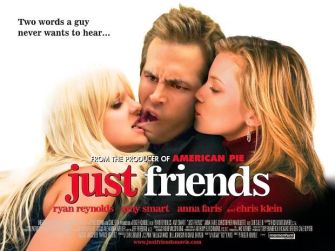
It’s the story of Chris Brander (Ryan Reynolds), a fat kid at school who was publicly ridiculed when he declared his love for his best friend and most-popular-girl Jamie Palamino (Amy Smart). Years later, he’s got fit and become a womanising record company exec who hasn’t been home since that incident. However, events conspire to strand him back home for Christmas, with crazy popstrel Samantha James (Anna Faris) in tow, where he finds Jamie stuck in a dead-end job. Can he reclaim his past love, etc, etc, etc.

For all kinds of reasons, Just Friends spends a long time feeling like a morally bankrupt movie. It’s unclear if it’s praising or condemning Chris’ frivolous lifestyle, if he needs saving by coming home, or if he deserves revenge on the people who mistreated him. We know what the standard Hollywood perspective on these things is, so kudos to some degree for dodging it (at least for a while), but it doesn’t commit to the other direction either. What the story really amounts to is wish fulfilment on an epic scale. Its message is essentially: you can go back to your past and make it better. Maybe I’m just a cynic, but that’s not something I believe.

So it was on course for 2 stars, the inconsistency and moral questionability of its worldview tempered by the fact that it was sometimes pretty funny, even hilarious once or twice, particularly when it nails some slapstick. However, at around the halfway point it seems to lose all control of its story, veering wildly around from subplot to subplot, and from conclusion to conclusion (it feels like it’s reached its final play at least three times). Normally that would make things worse, but, concurrently, it settles down in to what it’s trying to say (as much as it’s trying to say anything). It even delivers laughs more consistently, too. To a degree, from that midpoint the movie is slowly rescued.

One lesson I took from watching Just Friends (as if I didn’t know this already) was that just because a bunch of people defend something they like in a comments thread on the internet, it doesn’t mean you’ll like that thing too, even if that comments thread is on the A.V. Club. Nonetheless, while Just Friends is not any kind of “must see” film, as a 90-minute diversion — with, at this temporal distance, a splash of mid-’00s nostalgia — it’s passably entertaining.

3 out of 5