
saves the world entire.”
Country: USA
Language: English, Hebrew, German & Polish
Runtime: 195 minutes
BBFC: 15
MPAA: R

Original Release: 15th December 1993 (USA)
UK Release: 18th February 1994
First Seen: VHS, c.2001
Stars
Liam Neeson (Darkman, Star Wars: Episode I – The Phantom Menace)
Ben Kingsley (Gandhi, Iron Man 3)
Ralph Fiennes (The English Patient, The Grand Budapest Hotel)
Director
Steven Spielberg (Amistad, Lincoln)
Screenwriter
Steven Zaillian (Awakenings, Moneyball)
Based on
Schindler’s Ark, a Booker Prize-winning novel (released in America as Schindler’s List) by Thomas Keneally.
The Story
In occupied Poland in the early days of World War 2, German businessman Oskar Schindler opens a factory supplying the German military, staffed by Jewish workers. As the Nazis begin to close the ghettos and ship Jews to concentration camps, Schindler uses his connections and profits to surreptitiously save as many as he can.
Our Hero
Oskar Schindler is a self-interested businessman, womaniser, and member of the Nazi Party. Initially employing Jews merely for financial reasons (they’re cheaper than Polish workers), his innate humanity begins to come to the fore.
Our Villain
Nazis! But in particular Amon Goeth, the sadistic commander of the Paszów labour camp, who’s fond of executing Jews at random, amongst other horrors. Nonetheless, Schindler has to deal with him to ensure the (relative) safety of his workforce.
Best Supporting Character
Schindler’s contact on the local Jewish Council, Itzhak Stern, who becomes essential to making his business a success, and facilitating his operation to save the workers.
Memorable Quote
“I could have got more out. I could have got more. I don’t know. If I’d just… I could have got more.” — Oskar Schindler
Memorable Scene
During the destruction of the ghetto, Schindler sees a little girl in a red coat (the one splash of colour in the body of the film), wandering alone through the devastation. Later, as the Nazis burn piles of the dead, corpses are ferried to the pyres on small wagons. On one, Schindler sees a small body in a red coat… (There’s a good piece on the psychology of why these scenes are so effective here.)
Technical Wizardry
Spielberg chose to shoot in black-and-white to match actual documentary footage of the era, which was how he ‘saw’ the events. It was also shot without storyboards, Steadicams, cranes, or zoom lenses, and about 40% was filmed using handheld cameras, to emphasise a documentary feel. For a similar level of realism, Spielberg originally intended to make the film entirely in German and Polish with English subtitles, but changed his mind because he thought he wouldn’t be able to accurately direct performances in foreign languages.
Making of
Acting as producer, Spielberg initially tried to attract another director because he felt he wasn’t capable of doing the story justice. Martin Scorsese turned it down because he felt it should be done by a Jewish director, and Roman Polanski rejected it because it was too personal (he lived in the Krakow ghetto, only escaping on the day of its liquidation, and his mother died at Auschwitz). Finally, there was Billy Wilder — depending which version you believe, he either wanted to direct but Spielberg was already prepping the shoot, or he actually convinced Spielberg to direct it. Ultimately, Spielberg waited ten years between acquiring the rights and making the film, when he finally felt capable of tackling it.
Awards
7 Oscars (Picture, Director, Adapted Screenplay, Cinematography, Editing, Score, Art Direction-Set Decoration)
5 Oscar nominations (Actor (Liam Neeson), Supporting Actor (Ralph Fiennes), Costume Design, Sound, Makeup)
7 BAFTAs (Film, Supporting Actor (Ralph Fiennes), Director, Adapted Screenplay, Cinematography, Editing, Score)
6 BAFTA nominations (Actor (Liam Neeson), Supporting Actor (Ben Kingsley), Costume Design, Make Up Artist, Production Design, Sound)
What the Critics Said
“If E.T. The Extraterrestrial is Steven Spielberg’s fantasy masterpiece, and Jurassic Park is his commercial masterpiece, then Schindler’s List is certainly his artistic masterpiece. It’s an extraordinary work of vision and passion that raises even the gifted Spielberg to a new level of artistry. And like all great works, it elevates everyone who views it.” — Dennis King, Tulsa World
 Score:
 96%
96%What the Public Say
“It’s very, very hard-going and not an easy film to watch, but its importance is unparalleled. You sit there for three hours feeling uncomfortable – because these monstrosities really happened, because we live in a world where people are capable of these acts of inhumanity – and you still can’t even begin to imagine what it must have really been like, to live through that, to see your family and friends shot dead in the street or transported away en masse to the gas chambers. And yet, despite all that, you end the film feeling inspired. Someone made a difference.” — Millicent Murdoch, Millie’s Movie Reviews

Schindler’s List wasn’t Spielberg’s first ‘serious’ film, but I think it shows a marked increase in quality over his good-but-flawed previous efforts, The Color Purple and Empire of the Sun. Liam Neeson gives a commanding performance as the imperfect hero, while Ralph Fiennes finds what little humanity there is in Goeth (and there isn’t much) to pull him short of being an Evil Nazi caricature. The stark black-and-white cinematography acknowledges the incomprehensibly horrific events, while Spielberg’s divisive penchant for sentimentality seems well-matched to the tale, offering a measure of hope from humanity’s darkest days.

What’s in #81? What’s in #81?
 There are two stars in Mike Leigh’s biopic of famed British artist J.M.W. Turner: Timothy Spall, grunting his way through the title role with a deceptively layered realisation of an apparently simple but deeply complex man; and Dick Pope’s cinematography, which makes almost every frame look like a rich landscape painting, so that you feel you can almost see the brushstrokes.
 sometimes lack clear relevance (recognisable-off-the-telly actors turn up silently for what we’d call cameos if they were more famous). It creates a measured pace that is surely not to every taste, especially over the long running time, though personally I only found it sluggish towards the very end.
 Written by Aaron Sorkin and directed by Danny Boyle, with a name cast and plenty of awards buzz, this biopic of the eponymous tech genius was an inexplicable box office flop on its release last year — proof if proof were needed that box office does not equal quality, because I thought it was thoroughly excellent.
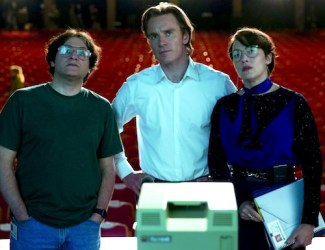 Boyle’s decision to use different film formats for each section — 16mm, then 35mm, then digital HD — helps delineate the eras and, in a way, reflect the products being launched (though I’ll instantly concede that last point may be a bit of a stretch). I imagine it’s too technical a concern to be noticed by your average filmgoer, but I’m sure it must have a subtle effect; and for those of us who are so minded to spot the change, it’s kinda fun and effective. Shot by Alwin H. Küchler, each section has its own charm, from the warm fuzziness of 16mm, to the gloss of 35mm, to the precision of digital. This is a mighty fine looking film, and while modern tech meant the 1080p Amazon Video stream I was watching looked darn near Blu-ray quality, I’m still miffed I didn’t just go straight for the disc, because now I’m going to have to pay for it again at some point.
 The dialogue they’re delivering is so Sorkin. Rearrange character names and you could drop this into
  In a similar vein, I suspect it would make a great companion piece to
 2014 Academy Awards
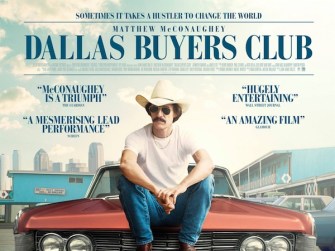 Every time I see a trailer for Dallas Buyers Club at the start of another Blu-ray I think, “that looks really good; I should watch it”. Then every time I get near watching it I think, “that sounds quite worthy and/or grim; maybe not right now”. So I guess kudos is due to Amazon UK for removing it from Prime Video
 That’s just some of what’s going on, anyway, because there’s also Ron’s growing acceptance of the community he finds himself a part of, especially after he’s ostracised from his former friends who assume he’s gay; there’s his business partner, trans woman Rayon (an also-Oscar-winning Jared Leto), who has drugs and familial problems of her own; and the doctor (Jennifer Garner) who battles her conscience over the drug trials and Ron’s less-than-scientific but effective methods. If this makes Dallas Buyers Club sound unfocused, it’s more that it’s got a lot of different aspects to examine. It’s not just about narrating what really happened, either, because Leto and Garner’s characters are fictional.
 McConaughey is very good as Ron, though I’d wager he won the Oscar as much for his extreme weight loss as his actual acting. He was up the same year as Chiwetel Ejiofor for
 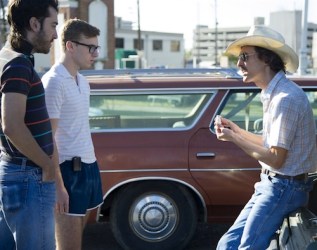 For all the heaviness of the topics it touches on, the film isn’t without the humour that made its trailer so attractive. That said, if you’ve seen the trailer you’ve seen most of that material, and in a more condensed and highlighted form, too. It almost makes it look like a heist movie — how this clever chappy pulled the wool over the authorities’ eyes with his vicar costumes and amusing way of filling out forms — but that’s just a small part of the film; and, actually, those tricks often go wrong or flat out don’t work, which is not the heist movie way.
 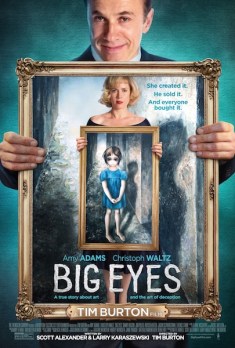 After a smidgen of early awards buzz that pegged it as a dark-horse major contender (which obviously never materialised into anything), everyone seemed to stop talking about Big Eyes, Tim Burton’s latest, and the first thing he’s made in over a decade that doesn’t instantly strike you as an obvious Burton-esque choice.
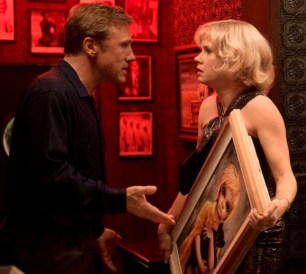 There’s thematic meat that could’ve filled the sandwich between those establishing and climactic, er, pieces of bread(?) — the tastes of critics versus the general public, and the disparity that exists there and what it means; or the inbuilt sexism of the era (though maybe everyone thought
 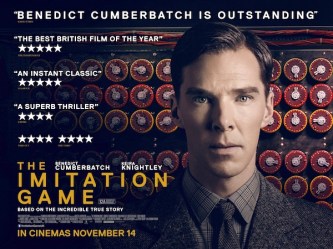 Alan Turing was a war hero: he led a team of cryptologists who managed to break the Germans’ Enigma encryption, thereby giving the Allies access to tonnes of vital information that (historians estimate) helped shorten the war by up to four years. This information was beyond top secret — so much so that they created a new designation for it, “ultra secret” — so when the war was over, Turing & co’s contribution went unrecognised for decades. Alan Turing was also a homosexual in an era when that was illegal. When he was caught, he was sentenced to chemical castration, which caused (or at least contributed) to him taking his own life. Fine way to treat a war hero, but that’s what you get with discriminatory attitudes.
 The screenplay by newcomer Graham Moore topped the Black List in 2011, so it’s probably of little surprise that it went on to win an Oscar, but I think it’s fair to say its quality, while good, isn’t that good. The use of three concurrently-told timelines seems to be too much for Moore and/or director Morten Tyldum to handle at times, occasionally flitting to a different era with little purpose beyond “it’s about time we told more of that storyline”. That’s not to say a wholly chronological telling would’ve been more effective — though perhaps it would’ve placated critical viewers who expected (and retrospectively demand) a cryptography-based wartime thriller — but the period juggling clouds the point as often as it illuminates it.
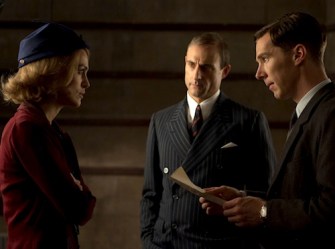 Also up for the golden man was Knightley, who does give one of her better turns as Turing’s sort-of-sidekick. The pair have a fairly complex relationship — both halves are key to conveying that, and they both do. At least as remarkable as either is young Alex Lawther, who arguably gets the film’s stand-out acting moment in his final scene, where a tumult of emotion is contained beneath a stiff-upper-lip surface in a tight close-up. On the strength of this, an actor to watch out for. The rest of the cast don’t get the same depth of material, but Charles Dance and Mark Strong provide exceptional value, as always, and Rory Kinnear does his best to bring some nuance and interest to a part he’s overqualified for.
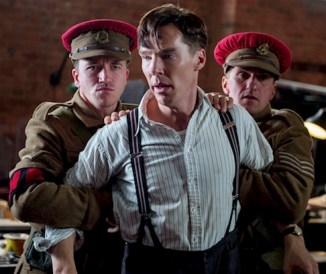 Perhaps that just stems from a frustration at some of the film’s other issues. It clearly has a flexible relationship with historical accuracy — well, what biopic doesn’t? Without wanting to spoil plot developments, some viewers feel the film suggesting Turing knew of the spy at Bletchley Park is insulting to his memory, because in real-life he didn’t even know the individual. Alternatively, is it not a way to integrate that part of the Enigma story into a film that otherwise wouldn’t have a satisfactory way to touch on it? Everyone’s mileage will vary on whether that should’ve been done or not.
 Without meaning to sound too judgemental (though when has that ever stopped me?), those factors making me think this is the kind of film “normal people” will probably love a lot more than “film fans” — which probably explains why it’s in the IMDb Top 250 but all the most-liked reviews on Letterboxd have exceptionally low scores. Personally, I’m going to side with the populous: not everything has to be a groundbreaking feat of Cinema to be a story worth telling and told well, and if it is indeed some kind of “historical revisionism” to say that there’s nothing wrong with being gay and the way Turing was treated post-war was horrendous, well, I’m OK with that revisionism.
 Donnie Yen returns as the eponymous kung fu master, who’s most famous for training Bruce Lee, to complete a trilogy of biographically-dubious but broadly entertaining actioners.
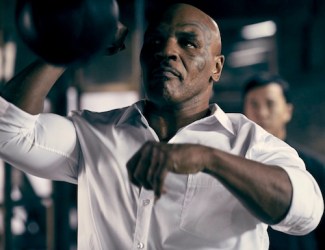 the less said about the film’s attitude to foreigners the better (though I guess Hong Kong’s British occupiers weren’t exactly above reproach).
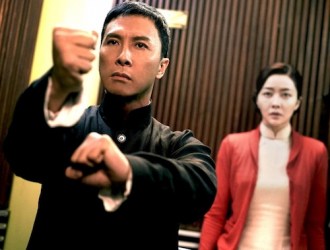 After an awkward first half, Ip Man 3 gradually transitions into a rewarding set of circumstances, on both the action and emotional fronts. The lack of consistency may mean it doesn’t satisfy fans as much as the first film did, but I’d say it’s a step up from the second, and definitely worth a look for fans of the old punching-and-kicking-and-hitting-each-other-with-poles-and-knives.
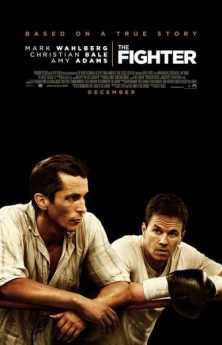 Oscar-winning true-story drama that relates the early career of boxer Micky Ward (Mark Wahlberg), a coulda-been-a-contender type held back by the training of his half-brother, ex-boxer turned drug addict Dicky (Christian Bale), and the management of his controlling mother (Melissa Leo), not to mention the cadre of harpy-ish sisters. Micky gains some confidence after entering a relationship with barmaid Charlene (Amy Adams), who’s prepared to stand up to his family. He breaks away from them and gets better opportunities, but soon realises that to win he’ll need to combine the best of both worlds.
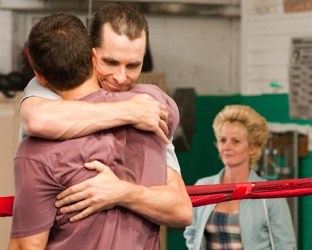 Although this is technically Ward’s story, it’s as much about his older half-brother, washed-up fighter turned part-time trainer and full-time crack addict Dicky Eklund. It’s another of Christian Bale’s extreme weight gain/loss roles (in this case, loss), but there’s more to it than such physical exertion. Bale inhabits the character, and a brief clip of the real Dicky during the credits suggests he’s done so very accurately. His performance is mesmeric and definitely worthy of that Oscar. For the rest of the cast, Amy Adams holds attention equally in a less showy role, and even Marky Mark isn’t half bad. Melissa Leo also won an Oscar for her performance, which I forgot until I read so after — it was the one she controversially funded her own ad campaign for. I guess that paid off.
 The Fighter isn’t without its faults, though. There’s a certain element of cliché to the story arc — whether that’s just fact emulating fiction, or the screenwriters imposing familiar shapes on to what really happened, I don’t know. It could also stand to lose a few minutes here and there, especially when it goes round in circles about whether Micky should be trusting his family or not. And talking of movie clichés and comparisons to other films about fighting, watching it in close proximity to
 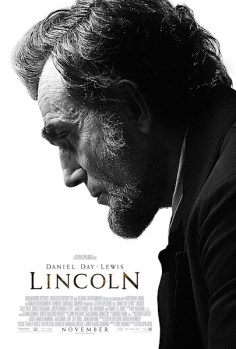 Daniel Day-Lewis allegedly stars in this account of the final months of President Abraham Lincoln’s life, which might more pertinently be called The 13th Amendment due to where its focus lies. I say “allegedly” because I’m not convinced they didn’t find a way to resurrect Lincoln to appear as himself, then just pretended it was Day-Lewis acting.
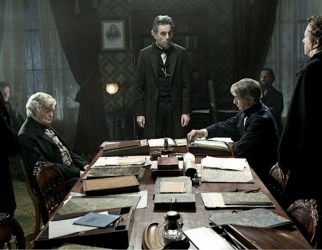 who might be persuaded to vote which way, and how they might be persuaded, and what they will want in return, and what deals need to be struck, and so on and so forth — sounds like it might make for an engrossing movie, then there’s a fair chance Lincoln will be your cup of tea. A not-insignificant proportion of viewers protest that it is boring, however, and while I in no way agree with them, your mileage may vary.
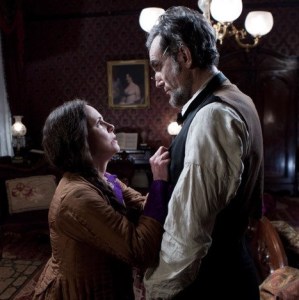 Not to do anyone else in the film — or, indeed, any other performance in any film ever — a disservice, but Day-Lewis embodies the President in a way few other actors have ever embodied a role. It’s quite remarkable.
 For me, there are few black marks (unfortunate choice of phrase…) to be held against Lincoln. Does it give in to Spielberg’s sentimentality? Yeah, a little — but it’s a long, long way from the worst case of that, and I think you’d be nitpicky (or have a different opinion on history, which, you know, is a matter of opinion) to criticise the film too harshly for that. As to whether it’s boring, that’s entirely a matter of preference. If you think The West Wing is boring, people who write lists of “the greatest TV shows ever” will disagree with you, and you also likely won’t like Lincoln. I like The West Wing, though.
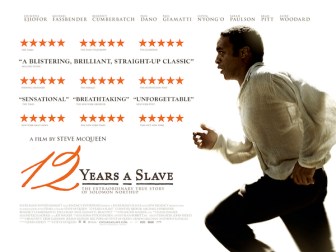 As we know, the Oscars are racist and always have been, especially recently. Like two years ago, when they didn’t give a load of nominations and several awards to a film about slavery from a black director and black screenwriter.
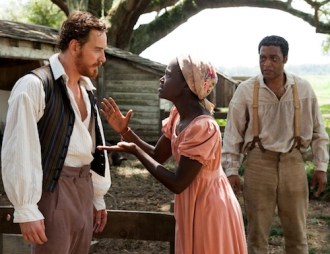 who will break your heart, and Michael Fassbender, who is overdue the gong for his many varied and accomplished performances. (I doubt his forthcoming triple of
  100Films.co.uk