
Jay Oliva | 76 mins | Blu-ray | 1.78:1 | USA / English | 15 / PG-13
 Mainstream US superhero comics underwent something of a revolution — or an evolution, if you prefer — in the ’80s, moving from simplistic good vs evil tales-of-the-week to deeper, thematic- and character-driven stories that in some cases took months or even years to relate in full. It’s a change that’s still felt today (some would contend that they’ve been stuck for decades in a rut these developments ultimately led to). It’s generally considered that there were three works at the forefront of this wave of more adult-orientated comics, all of which still rotationally top Best Graphic Novel Ever polls today: Alan Moore and Dave Gibson’s Watchmen (filmed in 2009 by Zack Snyder); Frank Miller and David Mazzucchelli’s Batman: Year One (a significant contributor to Chris Nolan’s Batman Begins in 2005, and animated in its own right last year); and Frank Miller’s The Dark Knight Returns — a definite influence on Nolan’s The Dark Knight Rises, and currently in the middle of being adapted as a two-part animation. This is, obviously, the first half; the second is out in the US at the end of January 2013.
Set in a near-future Gotham City, Batman has been retired for ten years and the crime levels in the city have risen. Bruce Wayne seeks thrills — and possibly death — while an aged Alfred does his best to rein him in. As Commissioner Gordon nears retirement, a new threat on the city rises, inspiring Bruce to don the cowl once again…
 Like Year One before it, the team behind these direct-to-DVD DC animated movies have taken a reverent route to bringing DKR to the screen. It’s in two parts because the original story is too long to faithfully adapt in their limited-length movies (it’ll work out at about two-and-a-half hours all told, which isn’t commercially viable for a direct-to-disc animation), but that also works out OK from a storytelling point of view: this first half ends with a major threat wrapped up and a great cliffhanger to kick off the second half. Those with less appreciation for the economics of film production have slated DC/Warner for splitting the film in two like this, but in some ways it works to its benefit artistically as well as commercially.
Others question the need for adapting it at all, if they’re just going to plonk what we’ve read on the page directly onto the screen. They do have something of a point, and it’s hard to argue DKR is any better off for having been animated. The obsession with faithfulness is borderline problematic at points, in fact: despite near-future tropes like gigantic tanks and mutant gangs, this is clearly a vision of the ’80s, with fashions, comic books glimpsed on shelves and references to Pearl Harbor that lock it fairly firmly some 25 years before now, never mind the future. At another point, a reveal at the climax of Two-Face’s part in the story, which works marvellously on the page, is a dud on screen when copied so precisely. It needs a little re-imagining to make it properly filmic.
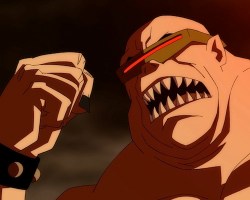 Stylistically, the film retains Miller’s designs, albeit a bit smartened up to work consistently as animation. Some will bemoan that homogenising but others may delight in it — Miller’s art is generally a bit on the scruffy side, I think. Is it an appropriate mark of respect that they’ve translated it so literally from page to screen, or would it have been more interesting for the filmmakers to have taken Miller’s plot and situated it in a world drawn from their own designs? I’m not going to argue that they could have improved on Miller’s work, but it might have been interesting to see the story given a spin in a different artistic style.
A benefit of being animated (well, arguably) is that action sequences get fleshed out. With a verve typical of these DC original movies, these sequences benefit from a fluidity and real punch imbued by animators who clearly relish this opportunity. There’s variety too, from an opening car chase, to shadowy stalking around a building site, to a silhouette-ish smoke-covered takedown of a gang of henchmen, to a mud-drenched single-take (ish) final smack-down. These sequences aren’t overplayed, but pack the necessary weight to back themselves up. They’re ably supported by Christopher Drake’s score, which betrays the influence of Hans Zimmer’s work on Nolan’s films but is too good to just be a straight-up copy.
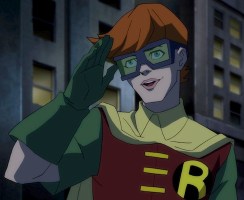 Voice work — the other major addition of an animated re-telling, of course — ranges from solid to very good. I wasn’t convinced by the casting of former RoboCop Peter Weller as Bruce Wayne/Batman, but he’s pretty darn good, carrying exactly the right kind of aged gruffness. It’s unique, I think, to see an active Batman this old on screen — sure, Nolan forwarded things eight years for Rises, but he’s still played by a relatively young and fit Christian Bale, whereas this Batman is grey, in his mid 50s and looking even older. I don’t recall a significant weak link in the rest of the cast, with Modern Family’s Ariel Winter’s performance as the new teenaged Robin perhaps being the most memorable of the supporting roles.
Reviews and commentary on the ‘net seem to swing between finding this a pointless, Saturday-morning-ised version of Miller’s seminal work, and an engrossing and exciting adaptation of it. I side more with the latter. It was never going to replace the original, and in surer hands — ones more prepared to change stuff, essentially — there’s an even better film lurking within (and it isn’t Nolan’s Rises, which only takes elements to construct its own new narrative). But on its own merits, I think this is a solidly entertaining Batman film. And I can’t wait for Part Two, which is surely a recommendation in itself.

Batman: The Dark Knight Returns, Part I is released on Blu-ray and HMV-exclusive DVD today in the UK. The second part is available in the US on DVD and Blu-ray from 29th January 2013.
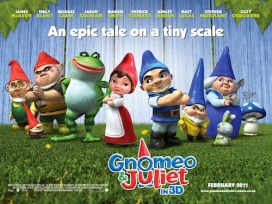 Gnomeo & Juliet is the latest British attempt to crack the lucrative CGI animated kids’ movie market, after the lack of success (or, alternatively, failure) from the likes of
 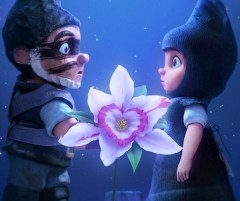 My only other note is that it ends with a truly awful cover of Crocodile Rock by Nelly Furtado. A storyboarded “all’s well that ends well” ending (included on the BD, and the DVD for all I know) looks much better.
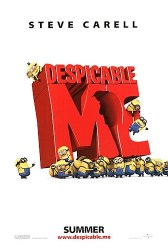
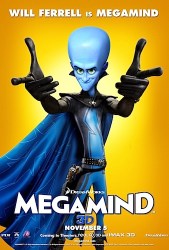


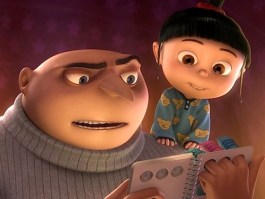
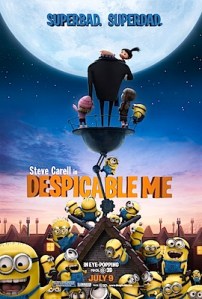 A venture into the increasingly-popular CG family film market from Universal, Despicable Me is about a supervillain who comes to question his evil ways. It was released the same year as the similarly-themed
  The film’s country is officially listed as USA because it’s made with American money, but it feels more like a French production (albeit dubbed with US voices). Look at those directors’ names (though only Coffin is French — Renaud is actually American); it was made entirely in a French studio (Mac Guff in Paris); and it has a kind of feel that doesn’t seem like it came from a US studio. So while technically, yes, it’s American, I don’t think the French side should be wholly ignored. I’m not saying it makes it bad, but perhaps it lessens the apparent superhero feel — that’s a very American genre, after all.
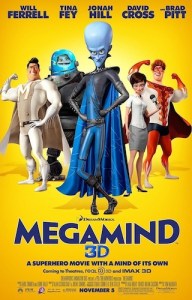 From the co-director of
 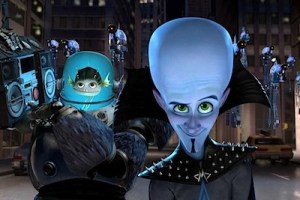 There’s a starry voice cast behind the characters, and fortunately they never overwhelm their roles. Which is good, because I’m not really a fan of Will Ferrell and he’s the lead. There’s also the likes of Brad Pitt, Tina Fey, Jonah Hill and Ben Stiller rounding out proceedings — not that it matters because, as I say, the voices fit their roles seamlessly.
 Pixar have always attached original short films to their feature releases. As part of what seems to be their increasing franchisation, however, they’re not always wholly original now: Hawaiian Vacation was the short attached to
 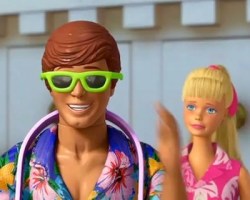 Hawaiian Vacation doesn’t exactly allay these fears — its very existence is proof of that — but at least it’s an entertaining piece in its own right. It succeeds partly by not overreaching itself — this isn’t Toy Story 4 and it doesn’t try to be. It reminds us of the characters and gives them each a story beat, while remaining funny, entertaining and sweet, all in under six minutes. Cars 2 can’t manage that in 106.
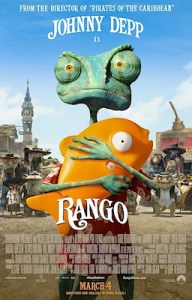 There seem to be an increasing number of live-action directors sticking their oar into animated films; and not just lending their ideas and name, as Tim Burton did with
 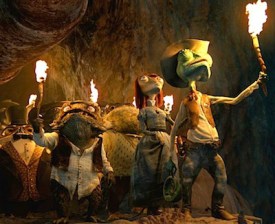 Indeed, perhaps the most striking thing about Rango is ILM’s hallmark, the extraordinary realism. Though some of the characters are rendered cartoonishly (just look at Rango’s face) and all are of course anthropomorphised, the textures and lighting are as true-to-life as any of their work in live-action movies. They consciously went for a photographic look, as if it had been shot with real cameras, including consultation with Oscar-winning cinematographer Roger Deakins, and it paid off because the whole thing looks incredible. I know I only just recommended it in the last paragraph, but the making-ofs are really great for an insight into why the film looks and feels so different to most current computer-animated films. The sequences of them recording performance reference are incredible — they essentially shot some scenes in full, with the entire cast, in costume, with full props, some sets, blocking, marks, camera angles, improvisation… (The only thing lacking on the Blu-ray is a
 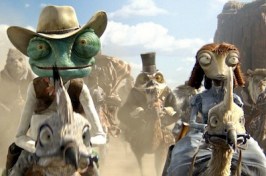 Back to the film itself. I know it’s less interesting, and it is far too slow at the start, but when it eventually gets underway it becomes very entertaining. Somewhere in the middle there’s a five-minute wagon/bat chase that’s a properly exciting action sequence, excellently realised. It was so good I watched it again immediately afterwards. It’s got a clever use of Wagner too, as well as some regular Hans Zimmer action scoring. Zimmer’s score throughout is top quality, referencing Morricone and all the other staples of Westerns.
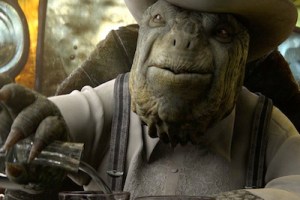 The plot, however, is clearly borrowed from
  With its detailed references to other films and real-world visual aesthetic, Rango may be more likely to find appreciation among grown-ups than the children who are the typical target for English-language feature animation. Then again, there’s that immature humour I mentioned. A ‘family’ film indeed. Either way, it’s an entertaining addition to — and alternative from — American animation’s usual offerings.
 Pixar, oh exalted studio of wondrous excellence, who produce naught but critically-acclaimed and audience-beloved films that may as well just be given the Best Animated Feature Oscar without the need for fellow nominees, dropped the ball with
 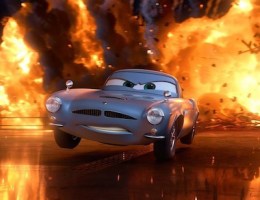 here we get an international spy movie — much more fun. The espionage stuff is clearly inspired by Bond (the primary secret service is British, for starters), and the opening eight minutes — an action sequence starring the film’s Michael Caine-voiced Bond analogy — is probably the best stuff in either Cars movie. Actors like Caine and Emily Mortimer lend the whole affair some much-needed class.
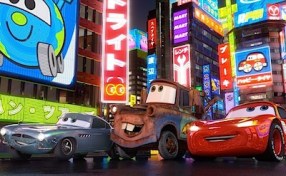 the back-and-forth battling, the last-minute surge, etc etc — so it’s not really any loss.
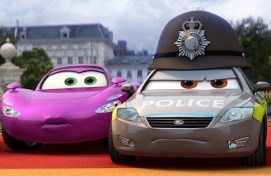 why is the police car wearing a giant hat?!
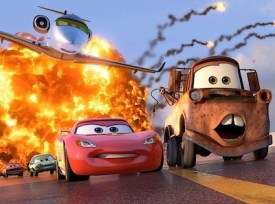 entertaining films, how can they also produce something so uninspired?
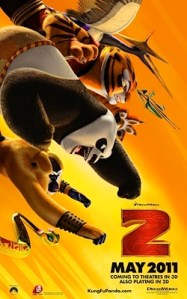 The first
  Thirdly, it has Gary Oldman as a villain. That should be wondrous, but it isn’t. He’s fine. Gary Oldman villains aren’t fine, they’re classic characters. But no, this one’s just fine. I guess he needed some cash.
 Hopefully the inevitable third entry (this ends with a very obvious setup for where the series will go next) can regain some more of the first film’s magic. As things stand, I found Panda 2 to be a fairly decent 90 minutes — though, saying that, a slightly slow one — but not one that came close to the numerous joys of its forebear. Disappointing.
 Included on releases of
  The quality of the action sequences outweigh anything seen in the main Year One feature. They’re original, exciting and very fluidly animated. Apparently Montgomery is known in fan circles for liking a bit of violence and trying to add it to the action in DCU films she’s worked on, and that’s in evidence here too. It gives it an edge, I think.
 100Films.co.uk