
Mike Newell | 116 mins | Blu-ray | 2.40:1 | USA / English | 12 / PG-13
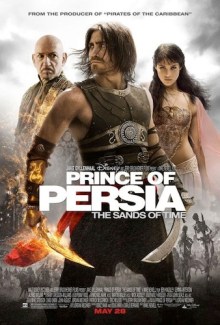 Disney’s attempt to launch a second franchise in the mould of Pirates of the Caribbean, this time based on a long-running series of computer games, seemed to sink without trace last summer. Despite that failure, it’s not all bad.
To give a quick idea of its quality, Prince of Persia is analogous to an average entry in the Pirates series, only without the craziness and humour provided by Johnny Depp’s Captain Jack Sparrow. This probably explains Persia’s relative lack of success: Pirates began with an exceptionally good blockbuster flick, and has since coasted on goodwill and affection for Depp’s character; Persia has neither of these benefits.
There’s not much to get excited about here, however. Like On Stranger Tides, it suffers from a surfeit of ideas that are equally undeveloped. Even though this shares no writing credits with that film, it’s what it most reminded me of. There’s an adventure story that wants to reach an Indiana Jones-esque style but fumbles it. It often feels like the genuinely important bits of plot and character development are quickly brushed over, instead spending inexplicably long stretches on barely-relevant asides. It jumps about like a loon too, feeling like a lot of linking scenes or establishing shots have been excised for whatever reason.
 There are some good action beats, but there’s also plenty of disorientatingly-edited, CGI-enhanced sequences, as per usual for the genre these days. For the former, see for instance Dastan’s climb up the wall into Alamut (or whatever it was called), or the knife-thrower-on-knife-thrower battle near the end. For explosions of CGI, see the massive logic-shattering ‘sand surfing’ sequence in the climax. Visually they’re clearly trying to evoke 300, but without going quite so far in the stylization stakes. Also worthy of note is the opening, the latest CGI-enhanced rendition of the opening sequence from The Thief of Bagdad and Aladdin: Westernised Middle Eastern streetchild-thief chased acrobatically through streets of Middle Eastern Town by Middle Eastern Guards. (None of the above pictured.)
As this is a Hollywood version of the ancient Middle East, naturally everyone is a Westerner with deeply tanned skin who speaks with an English accent. Everyone in the past had an English accent. Jake Gyllenhaal’s accent is actually very good, in my opinion; Gemma Arterton’s voice doesn’t grate as much as it seemed to in the trailer (I have no problem with her in any other film, but there was something about the Persia trailer that made her sound… weird). That’s probably the best that can be said for either of their performances. They’re not bad, just not in anyway endearing. Dastan makes a fairly bland hero — I think he’s meant to be something of a cheeky chappy, but they didn’t get close to achieving that — whereas Arterton has the role Keira Knightley would’ve played five years ago. I think she’s meant to be a Strong Independent Princess but, much like Dastan, we’re told we should be inferring it rather than seeing any evidence of it.
Alfred Molina has the best shot at creating a likeable supporting role, but it’s a part that resurfaces for no good reason, acts inconsistently, and all his best elements are cribbed from better films. Like most of the film, then. An attempt is made to conceal that Ben Kingsley is the villain, and it might have worked if anyone else was in the role — heck, I almost believed it even with him… but only “almost”. Like most of the story, it’s all a bit stock-in-trade. It’s good to take inspiration from other action-adventure classics, but it also means that it all feels very familiar. The time travelling dagger, the film’s truly unique point, is too powerful as a plot point, meaning rules have to be established that limit its use… which means that the one unique element doesn’t actually turn up very often.
Prince of Persia is riddled with flaws, it would seem. Its characters are unmemorable, their relationships unbelievable; its plot is disjointed and, while always followable, still half nonsensical; the other half is by-the-numbers predictable; its action sequences occasionally shine, but are largely whizzily edited or CGI burnished (though, in fairness, they’re far from the worst example of either problem). I should probably dislike it quite a lot, yet while part of me says I should rank it lower than even the Pirates sequels (owing to the lack of charming characters or any trace of humour), looking back I kind of liked it. It’s not Good, but it is sort of Fine, and it’s by no means bad enough to inspire genuine hatred.
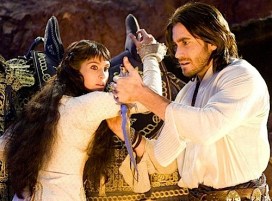 Plus, the sword-and-sandals milieu makes a bit of a change. I know we’ve had plenty of swords-and-sandals-flavoured movies in the wake of Gladiator, suggesting this is hardly unique, but whereas they’ve all unsurprisingly shot at the Gladiator mould, Persia is aiming for the PG-13 adventure-blockbusters style. It’s a shame that it’s not better, because said milieu and some of the talent involved could have produced a film in the vein of quality of, say, The Mummy, if we’d been lucky.
If you’re less forgiving than me, knock a star off. Or if you think you’d like the Pirates films better without Depp’s silly captain, maybe leave that star on.

 The thoroughly blockbusterised remake of
 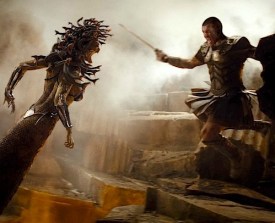 What the film is built to do is provide action sequences, though these are passable and rarely more. They’re fine while they’re happening, but pretty much forgotten after — none of it shows a great deal of inspiration. The history of film is littered with far worse examples, but that’s about the best I can say. I can see why it would be painful in 3D too: quite aside from the use of always-criticised post-conversion, and the apparent rush job on that, Letterier favours the modern action style of handheld jiggly shots and fast cuts, neither of which lend themselves to the 3D experience. Heck, even Michael Bay acquiesced to adapt his similar style when shooting
 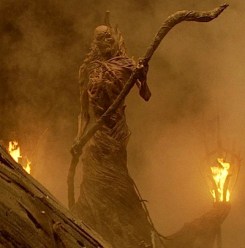 Design is probably the film’s strong point, particularly sequences that feature the three witches and the ferryman. Clearly these dark, borderline-horror-film settings are the design team’s strongpoint. Elsewhere, the gods have an appealingly retro lens-flared-silver-armour look about them — I don’t remember the ’80s original very well, but one could imagine this iteration of the gods being dropped in without anyone noticing.
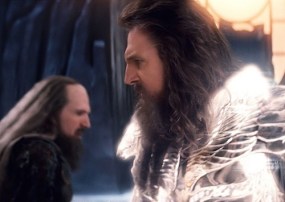 some plot elements could do with greater clarity, most of the characters could do with some depth.
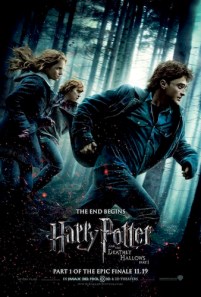 While the final Harry Potter film continues to obliterate records at box offices around the world, I finally caught up on the penultimate instalment in the phenomenal fantasy series. It’s Part 1 of
 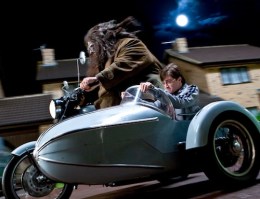 of having seven books each covering a school year, but hush, let’s overlook that (everyone else seems to).
 Talking of exceptional sequences, the animated one can’t go unmentioned. It’s wonderfully done, inspired by old silhouette animations, though achieved in 3D animation here, which is a pity. It’s still beautiful to look at, and it’s very fluid, but I can’t help but feel it would’ve been even more effective if they’d gone all out and done it in 2D.
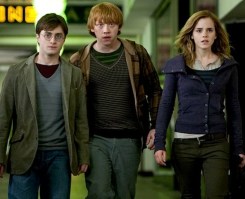 Themes of Nazi/Stalinist-style oppression are played up in the story (trials of those whose “blood status” is in doubt; listening to the radio for news of loved ones; Bellatrix’s torture of Hermione) and production design (the muggle-crushing new statue in the Ministry; the art style of anti-mudblood propaganda leaflets; the uniforms of the Ministry guards), but it’s subtle enough that it doesn’t batter you around the head.
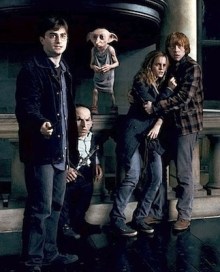 And so, the ending — which isn’t, because we’re in the middle of the book. So how well does it work as, y’know, an ending? Quite well, as it turns out — indeed, one might even compare it to something like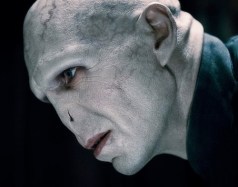

 Disney’s 50th animated feature is Rapunzel in all but name, for no particularly good reason. It seemed to be met with universal praise on its release last year, critics hailing it as a return to Disney’s previous quality after a run of lacklustre releases, in particular the underwhelming return to 2D in the year before’s
  a number I usually particularly enjoy. It has one, I suppose, but it’s one of the weakest examples I’ve ever heard.
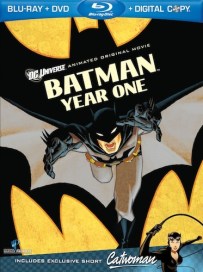 DC Comics’ latest direct-to-DVD animated movie is an adaptation of Frank Miller and David Mazzucchelli’s seminal 1987 Batman story, acclaimed as one of the greatest graphic novels of all time, and one of those that is often credited with helping the comic book medium grow up in the late ’80s.
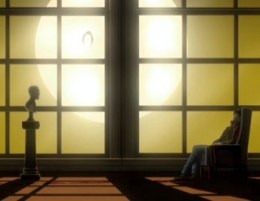 As with the comic, this is a very down-to-Earth version of the Batman story. It’s even less sci-fi-y than Chris Nolan’s much-praised realistic films, in fact. There’s no Batmobile, no Batcave, no Bat signal, only a few gadgets (and those that are used are fully plausible), no cartoonish super-villains… This Gotham is a city where crime comes from gangsters, drug dealers, muggers and a thoroughly corrupt police force, and that’s what Batman sets out to fight. As in the Nolan films, the costumed foes will come later, a response to the Bat himself. It’s not afraid to take its time telling this story either. Especially at the start, the pace is very measured — there’s no rush to action or to Batman, but instead a slow build of character and drama. Some may see this as a flaw — those after a Batman Action Movie, largely — but it sets the tone for what is a more character-driven tale.
 Cranston, given easily the fullest character, gives the best performance too. Star of
 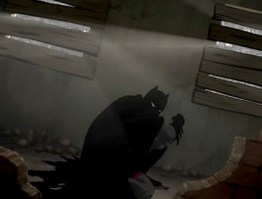 Indeed, you can tell Nolan cherry-picked most of Year One’s best scenes for his version, because they’re generally speaking the ones that shine here too. (It makes me want to watch Begins again to see just how much of this made it in there.)
 Unfortunately Batman: Year One has arrived at the party a bit too late to be the definitive screen telling of Batman’s origin — by taking the best bits of Miller & Mazzucchelli’s tale and expanding it with some work of their own, Chris Nolan & friends take that title. But as a film in its own right, Year One is largely successful. Children (or childish fans) seeking animated Batman thrills may be disappointed by its slower pace and focus on character, because this is solid adult-focused entertainment.
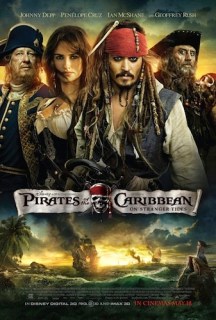 No one had high hopes for
  It still cost $250m, mind, and the fact that’s what’s considered a cutback arguably shows.
 The love story between a missionary and a mermaid barely factors. Word was this pair would be the series’ new Orlando Bloom and Keira Knightley, but whereas Elizabeth Swann and Will Turner were central to the plot of all the previous films (appearing before even Captain Jack in the first, if I recall), these two turn up late in the day and never have a chance to go anywhere. There’s also a surfeit of villains, meaning they either barely appear (the Spanish) or aren’t given close to enough screen time (Ian McShane’s Blackbeard). Every introduction is rushed, every subplot underdeveloped, every ending unsatisfactory. There’s too much, even for a movie that still runs over two hours.
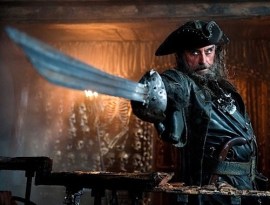 (much-heralded work like
 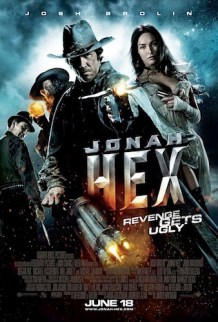 Jonah Hex is not a good film. Let’s just establish that, before I start being nice about it.
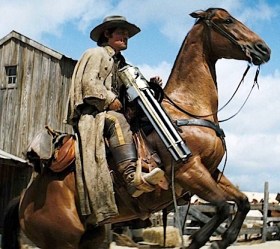 Much of the film rattles on in this way. And rattle it does: 73 minutes before credits. As blockbuster running times spiral out of control, such brevity is almost welcome. It doesn’t feel exceptionally short, mind, except for when the plot occasionally jumps forward.
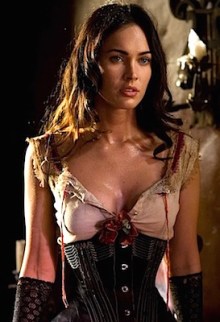 — usually improbably — or generally be a female. By “female” I mean “cleavage delivery device”. Considering her acting ability, her lack of presence is no real shame.
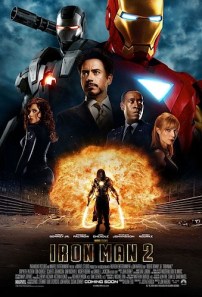 I’ve always contended that the first
  For starters, it relies on the story rather than the action. There are certainly some good sequences of the latter (more about those later), but there’s also a lot of story in between them — it’s not wall-to-wall explosions and punch-ups. Neither was the first, if you remember, and so it fits in that respect. It’s helped along by the ending of the first film, in which Tony Stark revealed he was Iron Man. That’s not something you do in superhero movies, which immediately lends this one a few new plot devices to play around with. Considering the burgeoning critical assessment that all superhero movies ever only tell the same two or three stories (an argument I think has a lot of validity), it’s nice to see anything to challenge the norm.
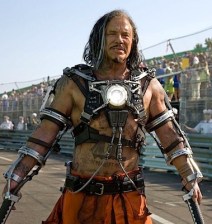 it’s the Penguin and whover-Christopher-Walken’s-character-was rather than Mr Freeze and Poison Ivy, if you will. They play to different sides of the hero: one is fighting Stark, one Iron Man (though there is naturally crossover); though they’re both intelligent, one functions as the brains and the other as the brawn. Mickey Rourke may go slightly underused, but it’s also part of the character, a quiet, thoughtful, intelligent hulk partnered with Sam Rockwell’s jabbering wannabe-Stark.
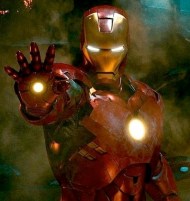 watched again later on Blu-ray, I enjoyed it a lot more. With Iron Man 2 I’m obviously distanced from trailers by a good year or so, and though one of their best moments is missing from the final cut, and the suitcase-suit is unavoidably spoilt by being so thoroughly screened during the promotion, watching now doesn’t have all the trailer-generated expectation to live up to. That famous Onion spoof about the first film’s trailer is, perhaps, even more applicable to the sequel.
 Aside from one unnecessary scene featuring Captain America’s shield and Agent Coulson leaving for New Mexico, and the fact that the film assumes everyone will know who Nick Fury is despite him being introduced fleetingly after the credits of the last film, the whole S.H.I.E.L.D./Avengers Initiative thing is worked into the plot well. If we didn’t know it was the beginning of the build-up to The Avengers, I think it would have sat much better with viewers. Even if it does end up blatantly laying the foundation for further stories, that’s hardly uncommon in franchise films of all kinds these days — at least we know this series will definitely pay it off, unlike so many franchise-wannabes that don’t make it past their first film. Plus, the film’s primary plot has its own villains and comes complete with a resolution; Fury, S.H.I.E.L.D. and co are a subplot that feed other subplots.
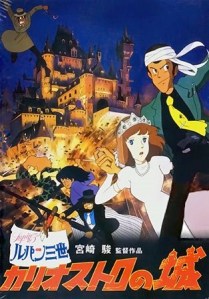 The Castle of Cagliostro, the second animated big-screen spin-off from manga-inspired anime TV series
 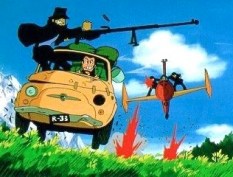 As I mentioned, this is the second spin-off film from a TV series, and at times it does feel like it: characters turn up under the impression the audience already knows who they are and what their connection is to the others. It’s not a major problem — most are introduced well enough within the context of the film that it can still be easily followed — but it’s there.
 Um, where was I? Oh yes: Indiana Jones; Roger Moore-era James Bond — it’s that kind of tone, more or less, and if you enjoy that kind of film then I don’t see why you wouldn’t enjoy this. Unless you think cartoons are for kiddies only (in which case, see the long sentence at the end of the last paragraph).
 Bolt is the 48th film in Disney’s animated canon (whatever the official name for that is these days), from their CG-only era that filled most of the ’00s. It’s a period already remembered as When Disney Lost Its Way, after the second (or is it third? I forget) ‘golden era’ of the early ’90s; the time that produced flops like
 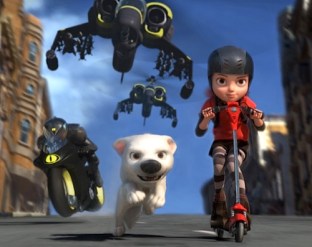 Also noteworthy are the action sequences. Far from being perfunctory attempts at liveliness, these are properly exciting, making full use of 3D CGI to create exciting and dynamic sequences. I’m not just talking about the couple we get from the TV-series-within-the-film either, but also the ‘real world’ ones as Bolt, Mittens and Rhino jump onto trains, out of moving vans, escape from a pound, etc. Of course, the TV-series-within-the-film is completely implausible — like you could film a TV show with massive action sequences in such a way that you only ever do a single take, never mind achieve all those effects on a TV budget. But then this is a film where a talking dog, cat and hamster work together to travel from New York to Hollywood entirely of their own volition — I think it’s safe to say no one’s aiming for documentary levels of realism.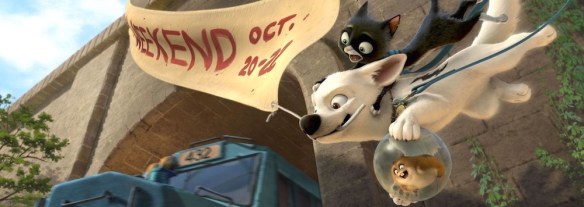
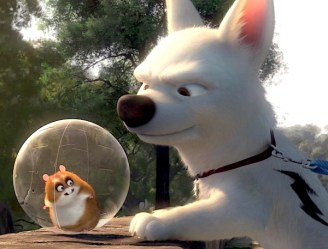 It would be easy to dismiss Bolt as part of Disney’s CG folly, especially as it stars Miley Cyrus and is immediately followed by their return to 2D animation, but I think that would be a mistake. It’s a fast-paced and fun adventure, with accurately-captured animals meaning it’s especially likely to appeal to dog lovers. Disney’s next golden era just might begin here.
 100Films.co.uk