
Zack Snyder | 143 mins | Blu-ray | 2.40:1 | USA, Canada & UK / English | 12 / PG-13
 When Doctor Who returned in 2005, eager to find a new mainstream audience, can you imagine how well it would have gone down if it spent the first six or seven minutes on an alien world where old men with silly names wearing strange costumes argued about politics? Fastforward the best part of a decade and, buoyed no doubt by the various scales of success enjoyed by the likes of Avatar (strange alien world, silly names) and Game of Thrones (arguing about politics, silly names), that’s exactly how Superman reboot Man of Steel chooses to spend its opening 20 minutes. (In percentage terms, “6 or 7” is to Doctor Who’s brisk 45 minutes as “20” is to Man of Steel’s indulgent 143.)
Produced by Christopher Nolan and other creatives behind the uber-successful Batman reboot The Dark Knight Trilogy, this is intended to do a similar thing for Superman: a present-day, real-world relaunch. Which begins with a huge sequence on a crazy alien world. Well done, chaps. And that’s before we get into the merits of grounding clean-cut Boy’s Own all-American hero Superman in our ideologically complex modern world. Is that what Superman is? Based on critical and fan reaction to Man of Steel, your mileage may vary — some seem to find it fresh and invigorating, others a betrayal of what this archetypal superhero is meant to be.
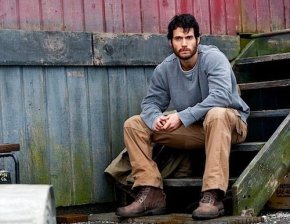 Personally, I find it a valid thing to attempt. Rather than take the Superman mythology as read, here Nolan and co — including screenwriter David Goyer and director Zack Snyder — have tried to imagine what would really happen if an alien baby with incredible powers arrived in our world. So Clark Kent hides his abilities, goes on a trek around the world to ‘find himself’, and when he’s uncovered there’s mass media and military interest. Which is pretty accurate, I think. If some guy started stopping oil rigs collapsing single-handed, or flying around the place, the military’s hardly going to sit back and go, “oh OK then”.
Snyder emphasises this “it’s real!” tone with grainy handheld cinematography, which I’m sure is consciously designed to look like a ’70s independent drama. It’s also designed to mask a simple fact: such presentation details and a languorous first half aside, this is a pretty standard blockbuster. Shoot it with clean digital visuals and cut the “finding himself” segments back to a brisk first act and you’d have a completely standard array of big punch-ups and faintly ludicrous plotting. It’s interesting how much a ‘gritty’ sheen (as it were) can persuade people that what they’re watching is revolutionary across the board, but really it’s just a different way of presenting your common-or-garden blockbuster content.
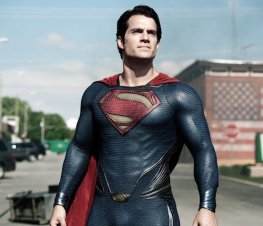 The filmmakers have certainly bought into their own conceit, to a frankly laughable extent. The Blu-ray contains a featurette called All-Out Action, which the menu describes as follows: “The action in Man of Steel soars to new heights with a level of realism never before seen in a super hero film.” Hahahaha! Realism my arse. Once the action kicks in it’s positively comic book. Men are hurled around like rag dolls; Metropolis is destroyed in a huge flying punch-up, which just feels like a less effective re-hash of The Matrix Revolutions. There’s nothing wrong with comic book action in a comic book movie, in my opinion, but shooting it on desaturated grain-addled film stock with handshake and ragged zooms does not make your OTT computer-generated fight “soar to new heights with a level of realism never before seen”.
This is before we even get on to the morally divisive aspects of said fighting. Much talk focused on two elements (spoilers follow for the next three paragraphs): the large-scale destruction of Metropolis, and Superman killing Zod. Defenders say that destruction happens, that Metropolis was evacuated, and that Superman had no choice but to kill Zod to save innocent lives. Opposers say we don’t need to see so much disaster on screen (especially in the wake of other films, like The Avengers, showing similar city-level destruction), and that it’s out of character for Superman to murder someone in cold blood and it simply shouldn’t have happened. My view is split between the two.
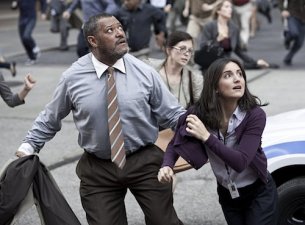 As to the destruction of the city, I think the criticism is right. The city clearly isn’t evacuated before buildings start falling — it’s being evacuated, but no one even knew to start running before the Massive Machine Of Destruction (I forget what it was actually for) turns up and starts destroying things. People run into the streets as buildings fall on them. As a viewer, how can you miss that hundreds, possibly thousands, of innocents are dying? The cinematography makes it look like 9/11 — incredibly like 9/11, in fact. That was 12 years ago by the time of the film’s release, but is it OK to trade on such iconography in a blockbuster entertainment? Should we just ignore the notion that so many ‘extras’ are dying because, hey, it’s just a superhero movie? But aren’t we meant to be taking this as Real World, chaps?
The fate of Zod, on the other hand, is a different matter. I think it’s interesting to push heroes — heck, characters fullstop — in new and challenging directions. It’s all too easy to just avoid putting a character in a certain situation so you don’t have to see what they’d do; to give Superman an easy way to lock the villain up so he doesn’t have to make any other decision. But what if that isn’t an option? What if someone just as powerful is running around killing people at random; what if it’s within your power to stop him from imminently murdering a family with kids, but the only way to achieve that is to kill him? That’s the position Snyder, Goyer and Nolan put Superman in at the climax, and that’s the decision he has to make. Does he do the right thing? In fairness, I think that’s the debate the film is asking for. It’s not like Superman walks away fine with what he did, and I expect the idea is that his actions will have an impact on his values going forward.
 There’s a lot else that Man of Steel plays with in the Superman legend besides the violence and cinematography. Some people will surely miss the bumbling Clark Kent, the burgeoning relationship with Lois Lane, and so on. These elements are eventually brought in, sometimes in a modified way, which makes it feel like they’ve been put in place — Superman Begins style — to be used in a sequel. Except we know the sequel is headed off in the Batman vs Superman direction, so how much ‘clumsy Clark’ we’ll get to see is questionable. I have to say, I don’t blame the makers going a new way — how do you compete with the Christopher Reeve classics? And if you try to emulate them, you end up with Superman Returns, which was a box office and critical success but for some reason is remembered as a failure in both regards.
A 21st Century reinvention of the oldest superhero is an interesting notion, and in some regards Man of Steel works; but those successes are regularly marred by superficial ‘innovations’ that don’t click. The final result is a standard blockbuster masquerading as something revolutionary; an adequate film that indulges itself, leading to a belief it’s something more, which is ultimately to the detriment of its audience.

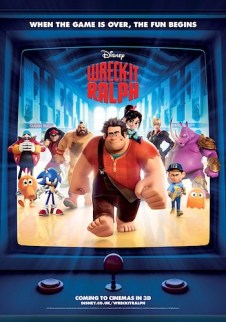 Disney’s 51st and/or 52nd animated classic (depends who you listen to) is, essentially,
  Unfortunately, despite the rarely-filmed milieu of video games, it’s all a bit predictable — like I said, it basically does with video game characters what Toy Story did with toys, both in terms of the story and its themes of acceptance. At least one wearing subplot had me involuntarily exclaim “oh get on with it!” out loud (and I was watching by myself). The pace rarely lets up, and at 101 minutes that becomes tiring. When it does give you a break, you kinda wish it would get a wriggle on, because it’s obvious where things are going and it’s wasting time getting there. Of course, most mainstream films (especially kids’ movies) are going to follow broadly the same arcs — however bad it gets we know the hero will win, etc — but the trick is to make you enjoy the journey, not long to arrive at the destination. I spent most of the third act almost drumming my fingers as I waited for it to get to the latter.
 Wreck-It Ralph isn’t actually a bad film. There’s a fair bit of inventiveness with the concept, and the makers have worked hard to establish a world with rules (though your mileage may vary on how successfully they’ve done that), but it descends into a breathless, sugar-fuelled, reheated runabout. I imagine young kids will adore its colourfulness and its energy, and won’t be bothered by the over-familiar plotting and life lessons; but, beyond nostalgia for arcade gamers, I don’t believe it has huge amounts to offer a grown-up viewer.
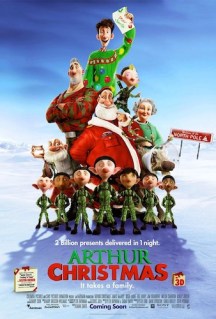 Aardman’s second CG feature attracts a starry cast (not just the leads — check out who’s credited as “Lead Elf”!) to the story of how Santa really delivers all those presents in one night: a giant spaceship-like craft and thousands of SAS-esque elves. But when one child is missed, Santa’s clumsy son Arthur resolves to fix it.
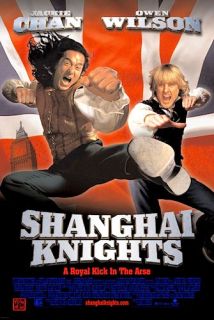 Jackie Chan and Owen Wilson are back as… um… whatever their characters were called, in this follow-up to
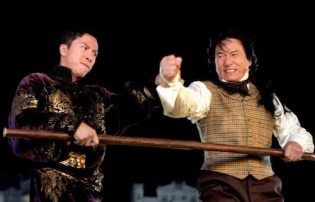
 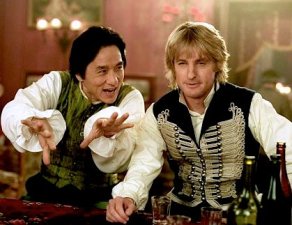 Knights as a whole feels like it moves better than its predecessor — it gets going quicker, without the need to establish these characters and force them together; there’s a greater reliance on those quality action sequences. The guest cast feels a bit bargain basement, though the villains — Aiden Gillen and the aforementioned Yen — are of a higher calibre. This means we’re treated to a pair of great climaxes, with Chan first having that punch-up with Yen, followed by a three-sword duel with Gillen (or possibly a stuntman).
 In the end, I’m not sure if I like it more or less than the first film. The Western setting was a smoother fit in many ways, but here there’s a less stodgy plot, a general reduction in the overlong comedy sequences, and even better action sequences. All things considered, I think Knights may actually have the edge.
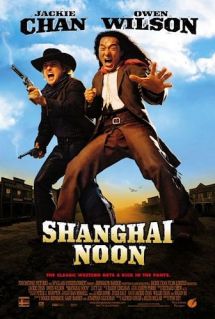 Hong Kong martial arts legend Jackie Chan and Hollywood funnyman also-ran Owen Wilson team up for a film that I don’t think anyone involved could reasonably deny is just “
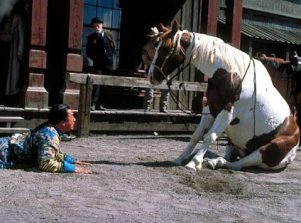 Things that could have (should have) been fixed way back at the writing stage leer out at the viewer. The plot is treated almost perfunctorily, as if it’s not interesting enough to bother explaining or expounding upon. It’s hardly highly original or complex, but it feels as if important beats or character motivations have just been skipped over. For instance, the character/story impact of the final fight would be so easy to build up a bit, but they haven’t and so it falls a bit limp. Not to mention the bit when two characters who are essentially on the same side have a duel when they have more pressing things to worry about — save the Princess first, fight amongst yourselves later! Then there’s all the time given to Wilson’s rivalry with the local sheriff/martial/whatever, which we’re told exists, isn’t really built from anything, and suddenly is half the focus of the climax.
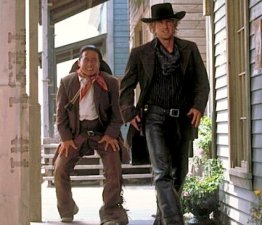 Shanghai Noon should be a lot of fun. It should be Jackie Chan and Owen Wilson engaging in a bit of comedy between skilfully choreographed, occasionally amusing, balletically staged fight sequences. But it isn’t. It’s laden with an underwritten plot, bulked up by clichés, stereotypes, overplayed character scenes, humour that doesn’t work, and a shortage of judicious editing. It is still kinda fun, but it could so easily have been more.
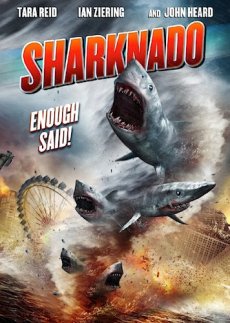 Sharknado is a defining film of 2013. The volume of conversation it generated, which achieved the near-impossibility of higher viewing figures for its repeats, is exceptional. So I was determined to give it its due in a full-length review. But I can’t be bothered — it doesn’t merit such attention.
 If you were looking for the archetype of an epic movie, Lawrence of Arabia would be a strong contender. It has a wide scope in just about every regard, from the desert locations that stretch as far as the eye can see, to the thousands of extras that fill them, to the glorious 70mm camerawork that captures it all, to the sweeping story that also contains a more personal throughline, to the 3½-hour running time.
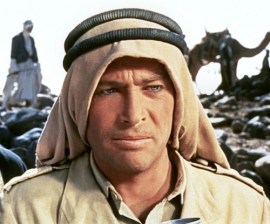 As such, the film hangs on the performance of O’Toole. We’re told Lawrence is an enigmatic figure and his depiction arguably supports that — we never fully get inside his head; we’re always observing him. And yet that’s no bad thing, because even as Lawrence’s confidence waxes and wains, as his allegiances shift and alter, we can feel what he wants to achieve, why he thinks he can. He attempts the impossible and succeeds, which is why he later attempts a bigger impossibility, and must leave the pieces to the more level-headed men, who didn’t have his genius but can therefore play the political game better than he.
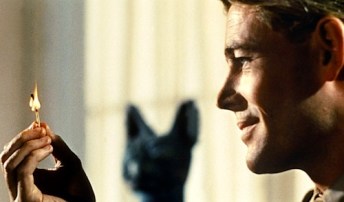 A similar legacy is left by those behind the scenes. Maurice Jarre’s score is the reference point for many a period desert epic — indeed, his music is so synonymous with such settings that it has arguably transcended its source to simply be what music for those locations and times is. It graces a film edited with class by Anne V. Coates, where scenes are allowed to play in luxuriantly long takes at times, while at others smash edits throw us from one location to another. This is undoubtedly supported by F.A. Young’s cinematography, where the wide frame can encompass so much action that there’s no need to cut amongst close-ups; and which can show the world in such majesty that you want it to hold for long, lingering takes. Even viewed on the small screen, the 70mm photography shines, especially on Blu-ray.
 As with any great film, Lawrence of Arabia is at least the sum of its parts. Replace any of the artists I’ve mentioned, or surely many more, and it would not be the film it is. In fact, when working on such a scale, this is more than a film — it’s an experience. And if that sounds pretentious, well, tough. If you haven’t experienced it yet, try not to leave it as long as I did.
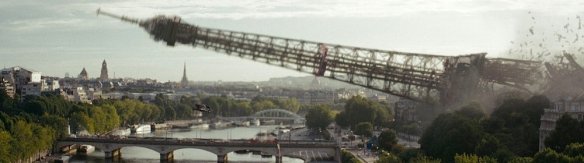
 It’s tough to know where to begin slagging it off — there are too many options. How about the groundwork for any film: the screenplay. Never mind the storyline (a MacGuffin hunt designed to facilitate action sequences), but take a look at the dialogue — it’s all of the “oh hello, brother” / “you are finally home, my wife” / “I’ve not seen you for four years” level. After a while, you just have to accept it’s pushing so-bad-it’s-good; by the final act, I was laughing out loud at nearly every line.
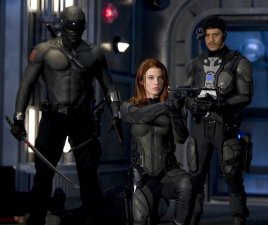 Almost as unintentionally hilarious is
 Most action-thrillers are cast from the same mould; it’s the decoration which dictates whether the final product is a Steven Segal or a Jason Bourne.
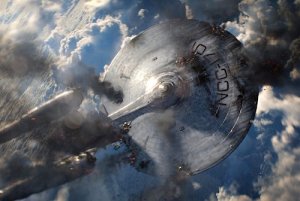
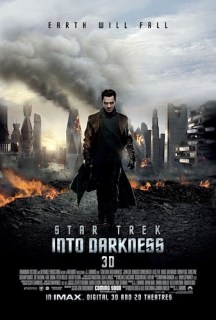 In an ethnically diverse and equal future, white American Kirk and white Vulcan-American Spock are commanded by white American Pike and white American Marcus to lead their crew to capture a Starfleet-targeting terrorist: John Harrison, a white Englishman who may be more than meets the eye…
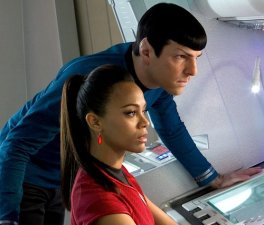 There’s still humour, mind; something which marked the first film out for a kind of geek controversy, as some felt it went too far. Because the original Star Trek TV series was dark and super-serious? An increased role for Simon Pegg’s Scotty provides most of the laughs, as everyone else is busy going Into Darkness. Unfortunately, despite the sporadic likability of several cast members, they don’t seem to have much to give. An inversion of a famous scene from a previous Trek movie ought to be tremendously moving, but doesn’t even stir.
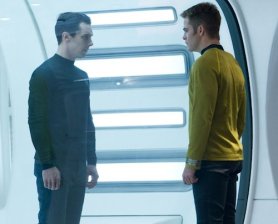 and I think the same process may have been used for some finished scenes. Which is a sarky way of saying that sometimes he phones it in. Take his first proper face-to-face with Kirk, when he’s in the Enterprise’s brig: he’s on Posh British Villain autopilot. There’s no menace, no tension; just words in our accent. It’s Cumberbatch’s Sherlock robbed of any of the charm, wit or intelligence.
 There are good bits — in fact, I’d say that’s a pretty apt description: good bits in amongst mediocrity. There’s an arty dialogue-free bit starring Noel Clarke that’s kind of good… and kind of self consciously “look, we done told a story with no speaking!” Shot on a mix of 35mm and IMAX, the film occasionally looks very nice. I imagine some sequences were visually stunning in IMAX, though Paramount haven’t done us the courtesy of preserving the ratio shifts on Blu-ray (unless you buy some German version, apparently). I felt there was considerably less lens flare this time out too; if it was still there in hefty doses then the film was obviously doing something right because I didn’t notice it.
 You probably remember that, just a few months after its release, a convention of Trekkies voted Into Darkness the worst Star Trek film ever made. That’s a bit much — for all its flaws, it’s still better than most of
  100Films.co.uk