
Nick Hurran | 77 mins | TV (HD) | 16:9 | UK / English | PG
The longest-running science-fiction TV show in the history of the world ever marked its 50th birthday with a feature-length cinema-released one-off special — I think we can count that as a film, right? Good.
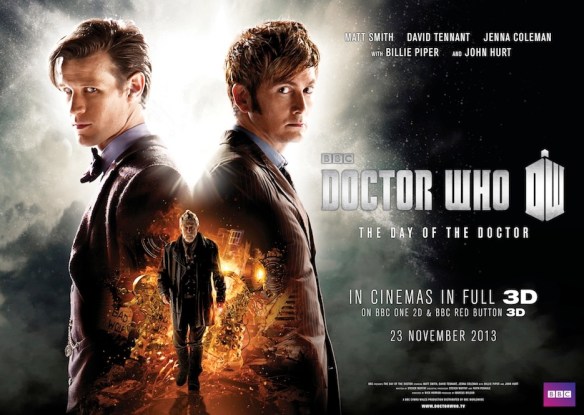
The pressure on showrunner/writer Steven Moffat when it came to this special must have been immeasurable. To distill over 30 seasons of television and 50 years of memories into a relatively-short burst of entertainment that would satisfy not only fans, both hardcore and casual, but also Who’s ever-widening mainstream audience. Not only that, but to produce it in 3D, preferably in such a way that the 3D wasn’t pointless, but also that played fine in 2D; and to make it of a scale suitable for a cinema release, but for only a BBC budget; plus, the weight of an unprecedented (indeed, record-shattering) global TV simulcast audience. And all that in the wake of years of griping and disappointment about the direction he’d led the show in, not least the less-than-usual number of episodes being released during the 50th anniversary year as a whole. Yeah, no pressure…
That The Day of the Doctor delivers — and how — is part miracle and part relief, and all joy for the viewer. Well, most viewers — you’ll never please everyone, especially on a show as long-running, diverse, and indeed divisive, as Doctor Who has become. But for the majority it wasn’t just a success, it was a triumph. Evidence? There was that record-breaking global audience; it was the most-watched drama in the UK in 2013; its theatrical release reached #2 at the US box office, despite being on limited screens two days after it aired on TV  (and it made more than double per screen what The Hunger Games 2 took that night); it recently won the audience-voted Radio Times BAFTA for last year’s best TV programme; and, last week, a poll of Doctor Who Magazine readers asserted it was better than the 240 other Who TV stories to crown it the greatest ever made.
Phew.
As we well know, popularity in no way dictates quality, especially when it comes to TV viewing figures or opening-weekend box office takings… but those audience polls tell a different story, don’t they? The story of something that managed to satisfy millions of people who it seemed impossible to please.
There are many individual successes in The Day of the Doctor, which come together to make something that is, at the very least, the sum of its parts. The star of the show, however, is Moffat’s screenplay. Eschewing the “standard” Whoniversary format of bringing back all the past Doctors and a slew of their friends for an almighty stand off with a huge array of popular enemies (so “standard” it was only actually done once), he instead opts to tell a different kind of story: the series is never about the Doctor, just the adventures he has, so what could be more special than shifting that focus? And with the backstory previous showrunner Russell T Davies had created for the revived show in 2005 — the Time War, and the Doctor’s role in ending it — Moffat had the perfect canvas to tap in to our hero.
 The Doctor’s role in the Time War has not only dominated many of his actions and personalities since it happened, but it also stands awkwardly with his persona as a whole. Here’s the man who always does the right thing, always avoids violence, always finds another way, even when there is no other way… and this man wiped out all of his people and all of the Daleks? The same man who, in his fourth incarnation, stared at two wires that could erase the Daleks from history and pondered, “do I have the right?”, before concluding that he didn’t? Doesn’t really make sense, does it?
So Moffat crafts a story that shows a little of how the Doctor came to make that decision… and then, thanks to this past Doctor getting to see a little of how his future selves reacted to it, the chance to make a different one after all. If that sounds a little bit Christmas Carol-esque, it shouldn’t be a surprise: it’s a favourite form of Moffat’s. Indeed, for a series about time travel, very few pre-2005 Doctor Who stories involve it as a plot point (merely as a mechanism to deliver the main characters into that week’s plot), whereas Moffat has frequently tapped into the whys and hows of that science-fictional ability. In these regards — and others, like the sublime structure where things are established in passing, or for one use, and then resurface unexpectedly later with a wholly different point — The Day of the Doctor is inescapably a Moffat story, albeit one without some of his other, less favourable, predilections that have coloured the series of late.
 I think some fans would have preferred a big party history mash-up; they certainly would have liked to see their favourite faces from the past. But let’s be honest: from the classic era, only Paul McGann could pass muster as still being the Doctor he once was (and he got his own, fantastic, mini-episode to prove it); and how the hell do you construct a story with a dozen leading men? It’s clearly enough of a struggle with three. The Doctor is always the cleverest person in the room, so what do you do with multiples of him? Moffat finds ways to make all of the Doctors here (that’d be David Tennant’s 10th, Matt Smith’s 11th, and John Hurt’s newly-created ‘War Doctor’) have something to do, something to say, and something to contribute — because really, the oldest (i.e newest) Doctor should be the most experienced and have all the ideas, right? There are ways round that, but only so many.
No, instead Moffat treats us to a proper story, rather than an aimless ‘party’… and then serves up a final five or ten minutes that deliver fan-centric treat after treat, without undermining what’s gone before. I guess a lot of that is meaningless to the casual viewer, or is at least unintrusive, but to fans there are moments that provoke cheers and tears — often at the same time. All the Doctors flying in to save the day! Capaldi’s eyes! Tom Baker — as the fourth Doctor, or a future Doctor? Doesn’t matter! And then the final shot, with them all proudly lined up! It’s an array of effective, emotional surprises that far surpasses what could have been achieved if the whole episode had been executed in this style.
 Along the way, Moffat nails so many other things. The dialogue and situations sparkle, and frequently gets to have its cake and eat it: familiar catchphrases and behavioural ticks of the 10th and 11th Doctors are trotted out to a fan-pleasing extent, and then Hurt’s aged, grumpier, old-fashioned Doctor gets to criticise their ludicrousness, speaking for a whole generation of fans who hate “timey-wimey” and “allons-y” and all the rest. I think it’s this self-awareness that helps so much with selling the episode to everyone, both calling back to well-known elements of the series that many love, and pillorying their expectedness for those that aren’t so keen. Well, it would be a pretty awful party if you had a cake but couldn’t eat it, right?
Tasked with delivering all this, the cast are uniformly excellent, to the point where it’s difficult to pick a stand out. Hurt makes for a creditable ‘new’ Doctor in a relatively brief amount of screen time, while Tennant slips back into the role as comfortably as he does his suit. Special praise should be reserved for Billie Piper, though, having a whale of a time as the quirky Bad Wolf-inspired interface to The Moment. She could’ve been an excuse for exposition and plot generation, two roles her character does fulfil, but if you think that’s all she was then I suggest you watch again: there’s more complexity at play there; a weapon not only with sentience, but with a conscience too. She’s not Rose Tyler, but perhaps she has a part of her…
 Smith and Jenna Coleman are on form too, of course, but as the series’ regular cast members that feels less remarkable. That’s not intended to sell them short, however, as they hold their own against actors who are arguably more, shall we say, established. If there’s one weak link it may be Joanna Page’s eyebrows, possibly the side effect of duelling with an English accent. (Complete aside: I’m rewatching Gavin & Stacey as I write this, and feel horrible even going near criticism of such a lovely person.)
They’re backed up by a cornucopia of technical excellence. Yes, OK, it’s a TV episode really — but gosh darn, it looks like a movie. I’m sure some would dig in to criticism of the direction (don’t get me started on the increasingly-regular internet commenter’s cry of “the direction was made-for-TV quality”, but suffice to say I generally don’t hold with that as a complaint), but Nick Hurran’s work is suitably slick. The battle of Arcadia is a sequence any modestly-budgeted big screen extravaganza would be proud to contain, and all achieved on a tighter-than-most-people-realise BBC budget. It won a BAFTA Craft award for special effects, which is more than deserved. Combining full-scale effects, CGI, and even model work (personally, I didn’t even realise there were models involved until I read so in an article months later), it looks incredible, with a scale that’s completely appropriate for a major battle in the war to end all wars. Elsewhere there are a few slip-ups, like a bit of heroic slow-mo undermined by not being recorded at a higher frame rate, but these are few and far between.
 Credit too to editor Liana Del Giudice, not only for crafting cinematic action sequences, but for stitching together a narrative that is often told with imagery and flashbacks, rather than people stood around chatting. Look at the sequence just after the Doctor sees the painting for the first time as just one clear example. That sequence may be dialogue-driven, but the faded-in and intercut flashbacks and glimpses of other events are what’s really conveying information. This is first-class visual storytelling, not just when compared to the rest of British TV, or international TV, or cinema, but the whole shebang.
Perhaps (as in “it isn’t, but let’s see what some people think”) the editing is even too snappy. In the run up to the special’s release, some fans moaned about its length: an hour-and-a-quarter wasn’t enough to do justice to 50 years, they said; it should be at least 90 minutes. Which is exactly the kind of ludicrous small-minded pettiness some fanbases talk themselves into these days. Moffat commented in an interview somewhere that his scripts for The Snowmen (the 2012 Doctor Who Christmas special) and A Scandal in Belgravia (the first episode of Sherlock season two) had exactly the same page count, and yet, when shot and edited, one episode was an hour long and the other 90 minutes. Screenwriting is an inexact science like that. I seriously doubt anyone at the BBC commissioned a 75- or 80-minute Doctor Who special; instead, I would imagine Moffat wrote a roughly-feature-length script that seemed achievable within Who’s limited-despite-what-the-Daily-Mail-think budget, then it was filmed, edited, and it ended up being the length it is. Indeed, the scheduler-unfriendly final running time of 77 minutes is merely further indication of such a notion.
 Still, you can’t please all of the people all of the time, and not everyone liked The Day of the Doctor: it may’ve topped DWM’s poll, but there were voters who scored it just one out of ten. But then, that’s true of 239 of the series’ 241 stories; and almost 60% of voters gave it a full ten out of ten — that’s a pretty clear consensus. I didn’t get round to voting myself, but I would’ve been amongst them. There are undoubtedly some weak spots that I haven’t flagged up, but conversely, there are myriad other successes — both minor (the opening! The dozens of sly callbacks!) and major (the use of the Zygons! Murray Gold’s music!) — that I haven’t mentioned either.
Even if The Day of the Doctor isn’t flawless, as a Doctor Who story — and certainly as a great big anniversary celebration — it is perfect.

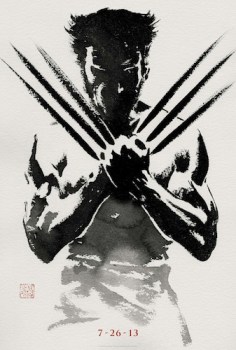 Rather than a sequel to the poorly-received
  and the end result is a moderately unique movie. OK, it doesn’t ooze originality, but nor does it feel quite like your run-of-the-mill powered-people-punch-each-other comic book yarn.
 Talking of women, you can’t overlook Logan’s lost love, Famke Janssen’s Jean Grey. Considering the build-up pitched The Wolverine as a standalone film, with perhaps the occasional nod to the wider X-universe, including rumours of a Jean cameo, the final film is surprisingly tied-in to previous events: there’s actually loads of Jean (how? Well…), and Wolverine’s personal journey is very much grounded in the events of The Last Stand. I’m sure you could watch this without having seen or remembered a previous X-movie, because the bulk of the plot is indeed standalone, but the emotional journey is invested in what came before.
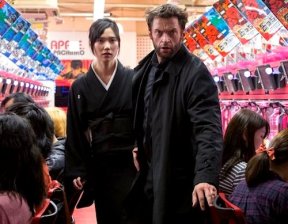 Without seeing all the behind-the-scenes goings-on it’s difficult to know whose fault this was, but it’s equally difficult to imagine the screenplay that Darren Aronofsky (far from your regular blockbuster director) described as “a terrific script” could have concluded this way; and knowing that his replacement, James Mangold, fiddled with the script before shooting commenced… well, draw your own conclusions.
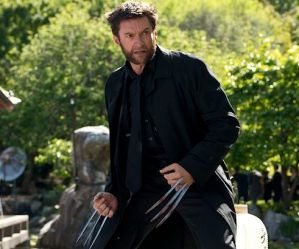 The Wolverine isn’t quite the movie it could have been; nor, I think, quite the one the makers hoped they were producing. Jackman has intimated since that it’s studio interference that pushes for silly-big action sequences and the like, but that fan feedback might slowly be winning them around to the things viewers actually care about. Whether that’s true or not, I guess we’ll see in the next instalment…
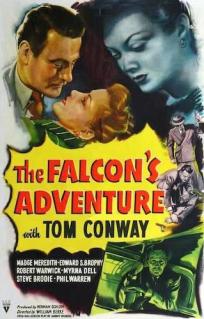 The final Falcon film to star Tom Conway (three more were made a few years later, but there seems to be debate about whether that was the same character) sees our avian-monikered detective planning to take a fishing holiday… until he can’t resist saving a damsel in distress and gets dragged in to a plot involving kidnap, theft, and murder. I think I saw someone jaywalking too, so it’s a veritable hotbed of criminality.
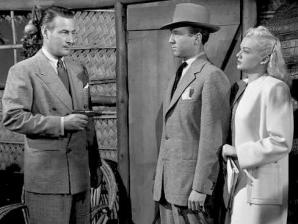 The Falcon’s Adventure is a terribly generic title for a film that isn’t the series’ very best, but is a solid upper-end instalment. They’re mostly quite formulaic films, naturally, but Adventure gets the mix right with some good sequences and gags. As the last film it doesn’t represent much of a conclusion, but then they didn’t really go in for big “series finales” back then, did they.
 The year 1600: British ship’s captain Solomon Kane is not a nice man, a mite too fond of pillagin’ and killin’ and quite possibly other not-nice things ending in —in’. That is until he has a run in with the Devil’s Reaper. Hell has claimed his soul, and its time to collect. Solomon does not plan on being collected, renouncing his former life and trying to hide at a monastery in England. But as a gang of possessed men lay waste to the countryside, burning its towns and enslaving its people, will Solomon be able to stick to his newfound pacifism? Yeah, we all know the answer to that…
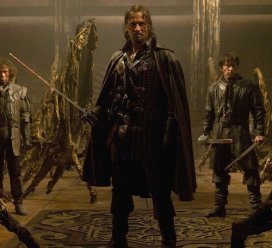 but also a more-than-requisite amount of swordfighting and the like — all told, Kane is more period action-adventure (with demons) than period horror.
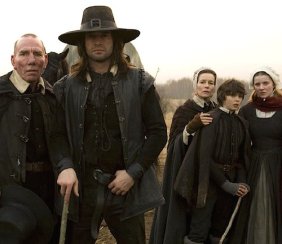 In support there’s the likes of Pete Postlethwaite, Alice Krige and Max von Sydow, all of whom bring instant heft to roles that need it. I don’t mean to say the screenplay doesn’t contain it, but the shorthand the actors bring with them certainly does favours. Cameo-sized appearances by Mackenzie Crook and Jason Flemyng are also effective, and watch out for a pre-
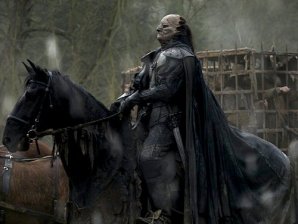 My praise also extends to those responsible for the film’s location shooting. Shot in the Czech Republic, for once that genuinely looks like Britain. OK, the style of some buildings give the game away occasionally (in particular the monastery), but until I read different, I just assumed the fields, forest and coastline had been found in our real South West, on the moors or what have you.
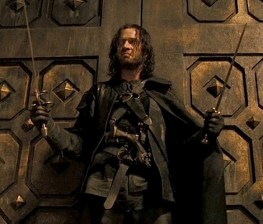 At the end of the day, Solomon Kane is a period fantasy action-adventure, something which doesn’t seem to be everyone’s taste — it has relatively weak scores on the likes of IMDb and Rotten Tomatoes (though, in the context of how this kind of movie often performs in those arenas, they’re far from awful). For my money, however, it’s a great little film. It looks beautiful, it renders the tone of pulp fantasy brilliantly, its action sequences are exciting (so many swordfights! Heaven!) and its creepy bits unnerving. It may not be ‘trash’ elevated to art — it’s not a Tarantino movie — but it is pulp fiction treated with due reverence.
 The director of Disney’s woeful
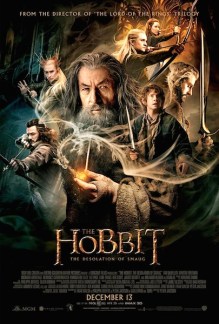 The Desolation of Smowg-not-Smorg begins in the same way
 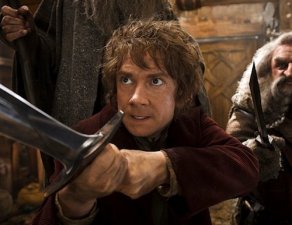 It’s my understanding that the originally-planned (and shot) two-part version of Jackson’s Hobbit adaptation was transformed into a trilogy by, essentially, taking what was to be film #2 and splitting it in half. That might explain why individual sections are allowed to go on so long here: to bulk up the running time to the kind of epic proportions audiences expect from a Middle-earth movie. Anything less than two-and-a-half hours isn’t going to cut it. But when your climax is a battle between a giant dragon (cool!) and a small army of dwarves (kick ass!) around a deserted underground city (hell yeah!), but my main thought afterwards is, “God that went on a bit”, then you’ve failed at something.
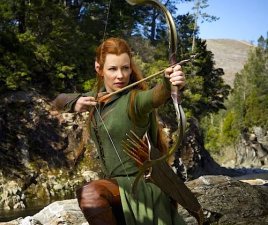 Meanwhile, Luke Evans’ Bard is as Welsh as the actor’s name suggests, which is a little bit of a surprise. But then the dwarves’ accents have all the rest of the UK covered, so why not. Benedict Cumberbatch sounds like Benedict Cumberbatch playing ‘big’ as Smowg-not-Smorg. It feels like this should be an iconic villain performance but, while good, I found it somehow lacking. Expectation may be scuppering him; maybe I’ll warm to it on future viewings.
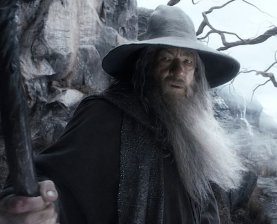 I haven’t picked apart everything that’s wrong with the film (what purpose is there switching from one made-up-for-the-film orc general to another?!), but then nor have I praised everything that works (there are some quality actors in amongst all that crashing and banging). It seems a fair few people liked this Hobbit instalment more than the first; the best explanation I can find is, “because it’s got more action”. Far be it from me to accuse other film viewers of being shallow, but… really? I genuinely enjoyed An Unexpected Journey as a return to the beloved realms and peoples of Middle-earth. The Desolation of Smowg-not-Smaug has some of that, and the charm of introducing us to new parts of the world too, but it’s drowned out by so much aimless noise. Here’s hoping it improves with repeat viewings and/or the inevitable extended edition, because this time I nearly slipped down to a lowly 3 stars.
 Few would deny that Peter Jackson’s extended versions of
 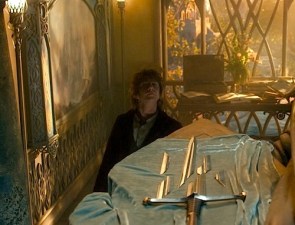 There’s not as much extra time with the dwarves as I expected, though, with most of the character time still going to Bilbo.
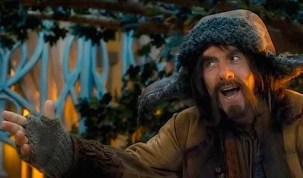 having to work alone on a green screen for many of his scenes with the smaller characters), but newcomers Martin Freeman, Richard Armitage and James Nesbitt shine too. This is Freeman’s film to be the centre of attention, but Armitage and Nesbitt will have much more to do in the follow-ups, and the groundwork is nicely laid here.
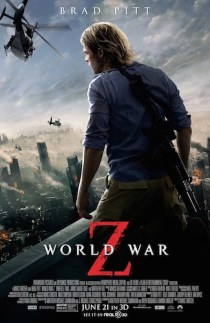 In the weeks leading up to its theatrical release, it was already known that World War Z was going to be an almighty flop. An unscrupulous movie studio had taken a cult novel and thrown away everything but the title, alienating its existing fanbase. They’d spent a fortune making a movie in a traditionally R-rated genre that, if released at R, could never make its money back, and if released at PG-13 would never attract an audience. Then they reshot the entire third act, pushing the budget through the roof and ensuring the resultant film would get critically mauled. A fanbase snubbed, an impossibly huge budget, a genre/rating disconnect, and unavoidably poor reviews to come — World War Z was going to flop, and it was going to flop hard.
 That, at least, is something different. The first half-hour races through stuff we’ve seen time and again: zombie attacks, humans turning on humans as they loot supermarkets, etc. Here the zombies are of the
 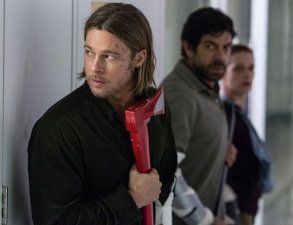 It’s a Wales populated by a Londoner, a Scotsman and a Spaniard, but still. I say “more tense” because this is far from the most nail-biting zombie film you could see. The finale is a nice change of pace, and does work as a climax in spite of the bombast that precedes it, but these are zombies as teen-friendly action movie menace, not adult scare-inducers, so don’t except to feel much fear or surprise.
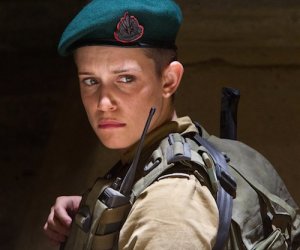 but I don’t think it was the filmmakers’ aim to make us feel the characters’ plight, but instead to show the scope of a worldwide disaster. It does that pretty well, even if the occasionally-CGI zombies prove to be an
 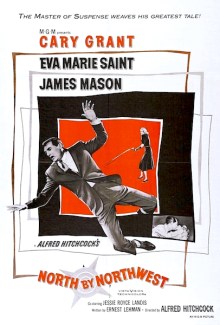 Alfred Hitchcock is famous for a good many movies — I wager most people would jump to
 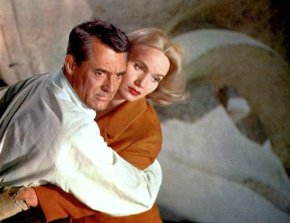 Grant is as wonderful as ever, a perfect ‘everyman’ to guide us through the crazy turns of events, but also finding the appropriate level of humorous edge where it exists. Eva Marie Saint is a textbook ‘Hitchcock Blonde’, attractive but duplicitous — women, eh? James Mason makes for an excellent English-accented villain — today it may be a terrible cliché to use Brits as villains in Hollywood movies, but we’re so damn good at it. That said, Martin Landau makes for a deliciously creepy henchman, so there’s no monopoly. There’s also Leo G. Carroll, who to me will always be best known from
 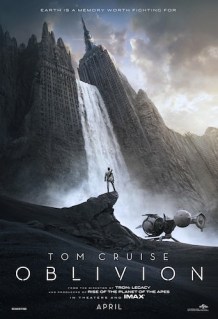 As Oblivion informs us in a hefty chunk of voiceover exposition at the start, the year is 2077, several decades on from a war with aliens that we won but left the Earth in ruins. Humanity fled to a colony on Titan, but the last party to depart remain in orbit aboard a giant space station. Waiting to join them are Tom Cruise and Andrea Riseborough, the last humans on Earth, serving the final few weeks of their mission to watch over the drones that guard giant water-collecting machines, sucking up the oceans for the benefit of the new colony.
 Also, as with many a tale desperate to surprise its audience thus, there are holes in the story and its logic (for a good summary of some of the major sticking points, check out
  I like a good action sequence, and some of the ones Kosinski presents have their moments, but I also found I could have done without most of them. To a degree they seemed to have been slotted in so it could look like an Action Movie in the trailers, the aim (as ever) being to pull in the punters, thereby justifying the budget needed to create such a slick SF world.
 With the aforementioned plot issues, not to mention an ending that some will find too twee (I saw the broad strokes of the epilogue coming from quite a way out, so can’t say I was surprised), Oblivion is not quite all it could have been. But it gets considerably closer than I expected — it’s undoubtedly an A for effort — and that, bolstered by faultless technical aspects, makes for an all-round enjoyable experience.
 100Films.co.uk