2014 #104a
David Carson & Herbert Wise | 416 mins* | DVD | 4:3 | USA, UK & Germany / English | 15**
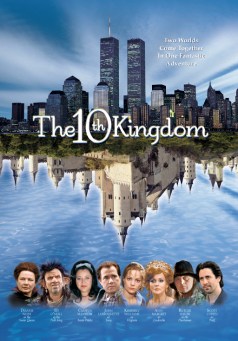 Created by British screenwriter Simon Moore (writer of Traffik, the Channel 4 miniseries that went on to inspire Steven Soderbergh’s Oscar-winning film, and the first Dinotopia miniseries, which could not-too-inaccurately be described as “The 10th Kingdom with dinosaurs”), The 10th Kingdom is a miniseries that I seem to remember Sky made quite a fuss about when they aired it over here, nearly 15 years ago. Sadly it flopped on NBC in its native America, so we haven’t been treated to the mooted sequel(s), but that doesn’t mean it isn’t worth investigating now: unlike the abundance of Lost-inspired rolling TV narratives that are ruined when (almost inevitably) they’re cut short, The 10th Kingdom tells a complete self-contained story.
Said story takes place in both present-day (well, turn-of-the-millennium) New York and the fantasy world of the Nine Kingdoms — unlike the depiction in the title sequence, New York doesn’t mutate into a fantasy kingdom. Although it may not be storyline-accurate, I don’t think it’s an exaggeration to say that’s one of the greatest title sequences of all time. In just a couple of minutes it conveys the style and theme of the show with effective, striking imagery. OK, the CGI is a little dated now, looking kinda rough around the edges, but it’s not so bad that it diminishes the sequence’s impact. It won an Emmy for Outstanding Main Title Design, and it was well deserved.
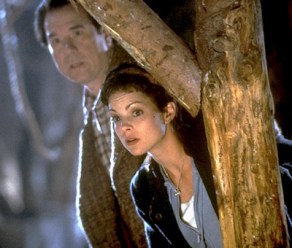 Anyway, the Nine Kingdoms is the place all our fairytales come from — the part of the narrative set there takes place “almost 200 years” after the “Golden Age”, when the events we know from stories actually happened. We’re led into this world by Virginia (Kimberly Williams) and her dad, Tony (John Larroquette), after indolent monarch-to-be Prince Wendell (Daniel Lapaine) flees to our world while escaping the Evil Queen (Dianne Wiest) and winds up taking the two New Yorkers back to his world. Along with Wolf (Scott Cohen), a chap with animalistic tendencies, the quartet try to stop the Evil Queen’s evil machinations.
So it’s a quest narrative, the staple of fantasy storytelling; but, in this case, that allows Moore to explore a fair chunk of the world he’s created. It goes about that at its own, somewhat literary, speed. Published alongside the miniseries’ airing was an epically-sized novelisation by Kathryn Wesley (a pen name for couple Kristine Kathryn Rusch and Dean Wesley Smith), which is how I first got into the programme. Unlike the innumerable sub-par novelisations published in the history of moviedom, this one was very good (and well-reviewed, if I recall, so it’s not just me). It’s ironic to me, then, that the series itself feels like a page-for-page adaptation of a novel. It’s something to do with the pace and style — the amount of time it’s prepared to devote to certain scenes or story elements, the way big twists and developments aren’t perfectly timed for episode endings (for example, our Manhattanite heroes enter the Nine Kingdoms just before the one hour mark — right in the middle of the first episode as originally aired, somewhere early in episode two of the ten-part version). 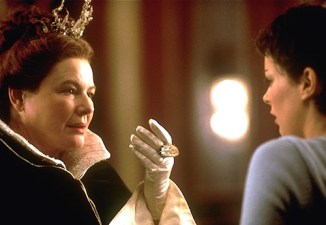 It also means the way it’s been edited into one long movie on DVD feels quite natural: it’s one long story with arbitrary breaks, not a series of finite episodes. (If you’re thinking, “of course it’s one story, it’s a miniseries”, plenty of single-narrative series and miniseries still function as discrete episodes that build to a whole.)
Like a certain recent TV programme, the Nine Kingdoms is a world stitched together from numerous familiar stories; but, unlike that programme (the less said about which the better, in my opinion), it isn’t a land of po-faced ‘adventure’. Instead, it’s loaded with wry humour — after all, “fairytales are real and all took place in the same place” is a pretty silly concept, so why not mine it for laughs? As one character informs us, “things have gone down hill a bit since [the Golden Age] — happy ever after didn’t last as long as we’d hoped”. Rather than that meaning things are Serious and Troubling (and, based on how Once Upon a Time turned out, inadvertently laughable), things have gone to pot in a way that is amusingly reminiscent of our own world. This is mainly through a witty appropriation of real-world tropes: it begins at Snow White Memorial Prison, for example, with a worldmap that features a large arrow proclaiming “you are imprisoned here”; when some trolls believe they’ve been trapped in a witch’s pocket, they hope that if they behave they’ll be let out after serving only half the spell; later, there’s a cocktail bar that serves “A Long Slow Spell Against the Wall”; and so on (I don’t want to spoil them all!)
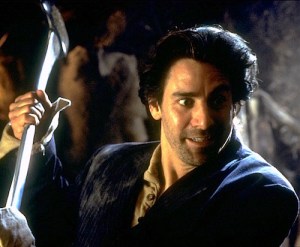 This gives the whole thing a heightened comedy tone, emphasised by many of the performances. A gaggle of troll siblings are irritatingly over-played, but Cohen’s meat-obsessed Wolf is a hammy delight (pun very much intended). The entertainment value means we quickly warm to the characters, so that when more perilous aspects of their quest do come into play later on, we care what happens. Plus, like most of the original fairytales (as opposed to Disney-style sanitised re-tellings), there’s the odd darker undercurrent. For instance, you may think the story of Snow White ends with a kiss and “happily ever after”, but here we’re told how the stepmother who poisoned Snow White was made to wear fire-heated iron shoes and ‘dance’ at the wedding until her feet were burnt raw, before being thrown out into the snow. Very dark and grim (and possibly from the original tale, for all I know).
In the main, however, The 10th Kingdom takes fairytales, not for their grimness, but for the chance to subvert, play with, or expand on them. So, for example, when Wolf and Tony come across a woodchopper who’ll tell them what they want to know if only they can guess his name — and if they get it wrong, he’ll chop off one of their heads — Tony signs them up without a second thought: he knows this one. With Wolf’s head on the block, he declares “Rumpelstiltskin!” The woodchopper replies, “wrong!” Uh-oh. This feeds into Tony’s growing annoyance with why people in this world can’t just tell you things, or exchange money for services, but instead always pose riddles — real-world logic clashing with the fairytale tradition. And it has a funny pay-off, too.
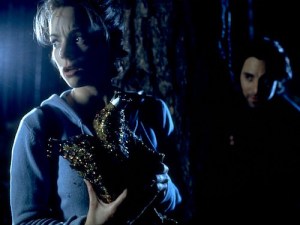 Little details in this vein abound: an apple tree has grown by Snow White’s cottage (don’t eat those apples!); the site of her glass coffin is now a tourist attraction; if you break a mirror, you genuinely get seven years’ bad luck… There’s also a pair of golden shoes that can turn you invisible, but the more you wear them the more you desire to use them all the time — what a precious idea (wink wink nudge nudge). These subversions also manifest in a strain of pleasant practicality; for instance, the abundant magic mirrors aren’t “just there”, but instead have been manufactured by dwarves. It lends the feel of a fully-conceived and rule-bound world, rather than an “anything can happen”, “just because” environment.
Even with all this, there remain a few major fairytales that aren’t touched upon. The Little Mermaid is one; another obvious omission is Beauty and the Beast — except there is a version of that included: the romance between Virginia and Wolf. The comparison isn’t drawn out in the text, particularly as Wolf isn’t an ugly hairy monster (though he does have a tail), but the similarities are there: his first encounter is actually with her father; he pursues Virginia even though the attraction isn’t mutual; she gradually comes around to him; there’s a third-act complication (spoilers!), before they eventually end up together (surprise!) It doesn’t have the same thematic heft as a proper retelling of Beauty and the Beast because it doesn’t have the whole “seeing the true beauty inside” thing — Wolf may give in to his urges once or twice, most notably in a storyline set in a town dominated by the Peep (as in Little Bo) family, where prejudice comes to the fore and Virginia has to defend him, but he’s never a full-on monster. There are elements of the tale’s other subtext, about a woman having power and control (or not) over her future, but, again, not in quite the same way: Wolf is besotted with Virginia and she doesn’t (initially) reciprocate his numerous advances — 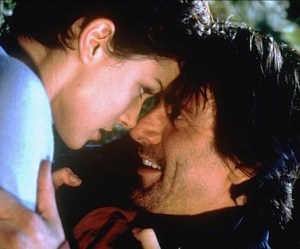 a world away from being locked in a castle until you change your mind. If this sounds like criticism, it isn’t. I’m not arguing the love story element of the series is unsuccessful — I’m sure it engages plenty of fans as the series’ primary attraction, even — but, on reflection, I’m not sure reading it as a Beauty and the Beast variation is actually that illuminating.
That’s fine, because the value of The 10th Kingdom lies not in how it retells its fairytale inspirations, but how it takes their familiar symbols and tropes and then reconfigures and expands on them, how it follows their implications through with real-world-logic, or mashes them up against the banalities of our world, often to comical effect. It’s a series that requires a basic knowledge of the tales used as its basis — not in an academic way, but in the way most of us have, thanks to exposure through childhood story-time or endless Disney movies. By playing on such ingrained knowledge, the pay-offs can be huge. Put those amusing subversions alongside likeable characters and a story that is at once world-endangering and deeply personal for our heroes, and you have top-drawer entertainment.

This review is part of the Fairy Tale Blogathon. Be sure to check out the many other fascinating articles collated at Movies Silently, and come back here on Tuesday for my second contribution, a review of Jean Cocteau’s 1946 adaptation of La Belle et la Bête.
* That’s just under seven hours to you and me. Most DVD releases present that as a non-stop movie, however in the US it was originally aired as five two-hours (which is reportedly how it’s presented on the 2013 DVD re-release), and in other regions (including the UK) as ten one-hours. ^
** Yes, it really is a 15. That must be thanks to some kind of technicality (use of knives, imitable violent techniques, etc), because it feels completely unwarranted. ^
 Westerns don’t come more renowned than this Ford-Wayne collaboration about the years-long hunt for a girl kidnapped by Native Americans.
 Of late there seems to have been a glut of sci-fi films with highly generic, near-meaningless titles —
 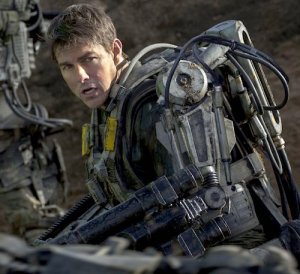 suitably exciting, surprisingly funny, and actually quite clever. It’s also boldly standalone. OK, so it’s an adaptation, but the book is hardly a
  Reflect too heavily and some bits may begin to crumble more but, for me, not too severely.
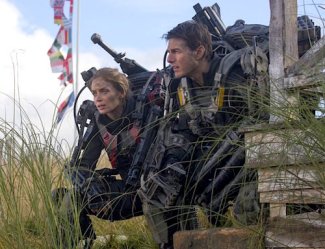 Edge of Tomorrow isn’t an unqualified success, but more than enough of it works to make for a well-above-average modern blockbuster. Excellent action sequences, plenty of amusing asides, and a couple of solid sci-fi concepts to chew on combine to render it quality entertainment. Bonus points for being a true original in a sea of remakes, sequels and spin-offs.
 Despite the fact that
  Then we have the much-maligned backstory about just what Peter Parker’s parents did all those years ago, before they abandoned him with Uncle Ben and Aunt May. There are pros and cons to this: it’s all new, which at least makes it interesting and unpredictable because it has no forebear in comics or films; but it’s also a pretty stock set of circumstances. Worse still, it robs Spidey of a major defining trait: Peter Parker is bitten by a spider by accident — it could’ve been anyone. In this version, it could only have been him. Boo. Sony clearly want an arc plot they can run across a trilogy (or more), so presumably this thread will rumble on… though whisperings that they’re considering some kind of soft-reboot may see it cut short. I wouldn’t complain.
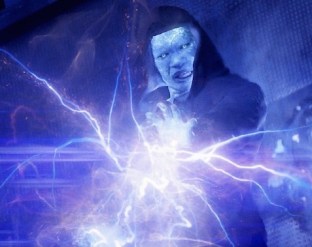 but it’s more textured, at least. Then there’s Electro, who (as mentioned) may have a familiar story, but is nonetheless perfectly pitched by Foxx. His powers lead to some excellent sequences, including but not limited to the aforementioned Times Square duel. He also contributes to the music, in a way, as Electro’s whispered/sung thoughts ‘bleed out’ into the score. It’s creepy, especially as it’s so subtle in the mix — I wondered what the hell was going on at first. I thought it was a fantastic score all round, in fact, bringing in a modern music element that fits the notion of Spidey as a young character perfectly.
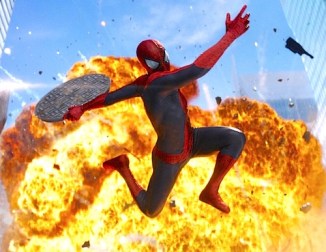 It lacks the confidence, heart and flair that mark out Spider-Man 2, and the bold originality and clarity of purpose that define
 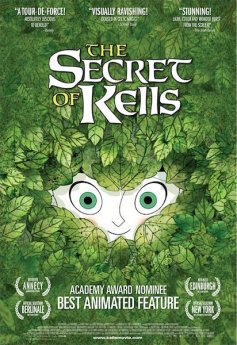 You can lament the quality of Oscar voters’ choices all you want, but if it wasn’t for their 2010 Best Animated Feature nominations I’m not sure many would have heard of this Celtic gem.
 Based on a radio serial that spawned film serials, a famous TV series, and, eventually, comic books, The Green Hornet is a ‘superhero’ saga with a difference. For one thing, technically he’s just a vigilante — no superpowers here — and for another, as noted, it didn’t originate as a comic book. But that’s the milieu the character slots into these days, and so this attempted revival plays in that ballpark.
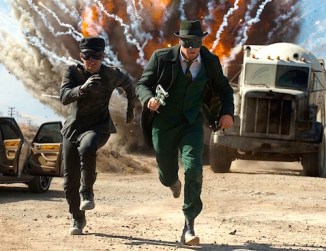 Well, screw them — The Green Hornet is brilliant. If you’re after the po-faced angsty worthiness of
 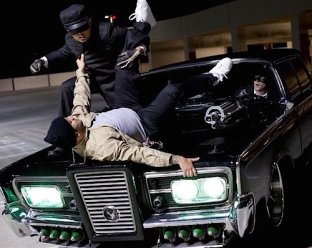 Then there’s Gondry’s direction, which is often as idiosyncratic as you’d expect. He’s at his peak during the action sequences, which explode in an array of effects and slow-motion to create multiple memorably unique fights and chases. Highlights are the first time Kato unveils his martial arts prowess, and the crazy car-driven climax. Chou and the tricked-out car, Black Beauty, are undoubtedly the stars of these bits — indeed, the film has an overall good line in making Kato the brains behind the operation. I imagine this is subverting the depiction of the Asian sidekick from previous versions, considering when they were made, but as I’ve never seen any I can’t comment fairly.
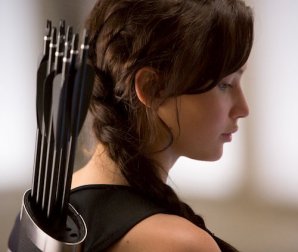
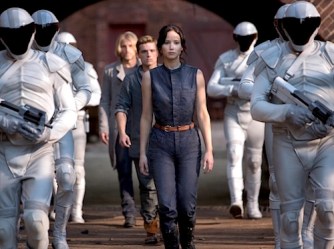
 Jennifer Lawrence (who, depending on your mileage, is either “the most charming young movie star in, like, forever” or “actually kind of a little bit irritating”) returns as the totally-plausibly-named Katniss Everdeen in this super-successful follow-up to the super-successful
  Tonally, however, it’s more similar to
 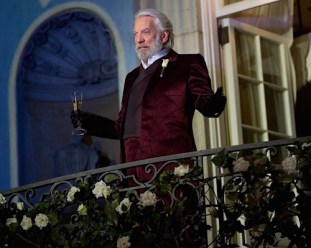 Of course, to an extent the tone of this ending comes from it being an adaptation: the filmmakers haven’t looked at the history of movie cliffhangers and chosen which to emulate, but instead brought someone else’s ending to the screen. Adapting doesn’t mean you have to take the original work faithfully, mind — you could go the
  which seems richer, more detailed, despite no genuine increase in resolution. I guess it’s true what they say: if you start with a higher quality source, it filters all the way down. The “bigger screen” effect probably wouldn’t work for a film entirely shot on IMAX — it’d just fill your TV from the start — but, after an hour-or-so of black bars, it really feels like the screen has grown.
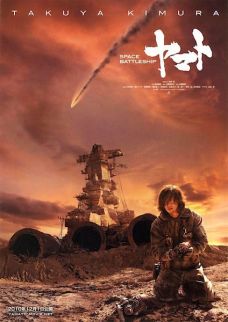 A live-action adaptation of the popular, influential and long-lasting anime franchise, known in the US as Star Blazers (here’s
  But this isn’t a mega-budget production (
 Conceived by movie star Will Smith primarily as a vehicle for his wannabe-movie-star son, and helmed by auteur-apparently-turned-director-for-hire M. Night Shyamalan, After Earth is a far-future sci-fi actioner about a militaristic father and son who crash land on a long-abandoned Earth, which has evolved into a hostile environment from which they must try to escape, while also being hunted by an alien super-predator.
 I want to spot the neat callbacks and gradual character development for myself, not have the screenplay or direction screaming “look at the subtle thing we did! Wasn’t it subtle!”; I’d also quite like the film to set up some of its developments better, rather than charge ahead with “now he needs to fly — by-the-way, did we mention he can fly? No? Well, now he is.”
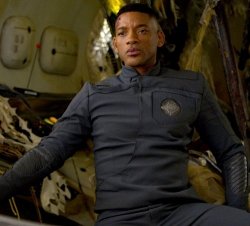 Even with these faults, however, I mostly quite enjoyed After Earth. For all the complaints levelled at it, primarily centred around it being a vanity project for the Smiths, there’s actually good stuff buried here — given more intelligent development and a different cast, perhaps it could even have been a genre classic. It certainly isn’t that, but it’s not as bad as some say. And it’s definitely M. Night Shyamalan’s best film for years. Sadly, that’s not saying much, is it?
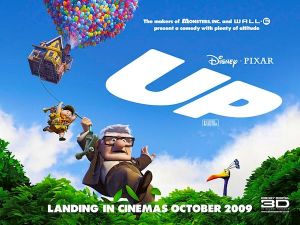 You know Up: it’s the Pixar movie where everyone talks about how amazing the first 10 minutes are, and never seems to have anything to say about the rest of the film.
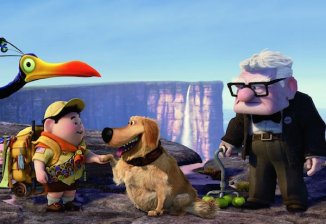 the best bits were shown off in advance. The special features reveal the extent the animators went to when researching real-world locations to influence the film’s strange, alien landscape; sadly, the fact the bizarre rock formations are actually a real thing somewhere in the world is more interesting than how they’re used in the film.
 100Films.co.uk